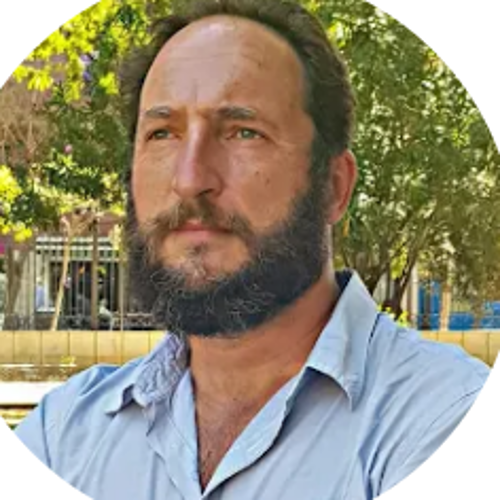
Francisco Contreras de Villar is an Associate Professor in the Department of Industrial and Civil Engineering at the University of Cadiz, Spain. He is affiliated with the Coastal Engineering Research Group (RNM912) and specializes in Natural Resources and Environmental research. He holds a PhD from Universidad de Málaga (2017), where his dissertation focused on validating electric arc furnace slag as a concrete additive under the supervision of Dr. Francisco José Rubio Hernández and Dr. M.ª Dolores Rubio Cintas. His research integrates coastal dynamics, infrastructure resilience, and sedimentology. Key interests include: Coastal defense monitoring using UAV-SfM photogrammetry Sediment settlement analysis and beach nourishment Climate resilience of coastal zones in Andalusia Innovative engineering education techniques Recent publications (2021-2024) emphasize practical solutions for coastal management, geotechnical testing, and educational technology. Trends include drone-assisted coastal surveys, sediment parameter optimization, and e-learning tools for hydraulic and navigation training. His work consistently bridges field applications with academic pedagogy. He leads laboratory development for hydraulic engineering and mentors through the Coastal Engineering Research Group, though specific advisees or awards are not documented.
Dr Gongkui Xiao is an Adjunct Research Fellow in the Department of Chemical Engineering at the University of Western Australia . His research focuses on adsorption science, pressure swing adsorption (PSA) processes, and their applications in carbon capture, helium separation, and hydrogen purification. He collaborates with industry partners on projects like upgrading landfill gas to renewable natural gas and sustainable mining tailings utilization. Dr Xiao has secured over $2.8 million in research funding since 2016, leading projects in zeolite synthesis, low-cost helium production, and biogas upgrading. He holds a PhD in Chemical Engineering from Monash University (2012) and degrees from Dalian University of Technology. Teaching roles include coordinating courses such as Gas Processing Technologies and supervising engineering design projects. His work aligns with UN SDGs related to affordable and clean energy, industry innovation, and responsible consumption. Key research outputs span advanced adsorbent materials, non-cryogenic helium recovery, and phase-change mechanisms in CO₂ capture systems. Grants: Over $1.4M as Lead CI and $1.4M as Co-CI since 2016. Collaborations: North American/European industry partnerships, Future Energy Exports CRC. Labs/Teams: Focus on adsorption technology, sustainable resource recovery, and process optimization.
Tom Sizmur is a Professor at the University of Reading, specializing in soil science, environmental toxicology, and biogeochemical processes. His research focuses on soil microbial dynamics, biochar applications for contaminant remediation, mercury cycling, and the ecological impacts of earthworms on heavy metal mobility. Key Research Areas: Biochar for soil recovery, nitrogen and carbon cycling, earthworm-plant-soil interactions, and floodplain/marine ecosystem health. Recent Publications (2022–2025): Sizmur's work examines how biochar and organic amendments immobilize heavy metals in contaminated soils, the role of soil microbial biomass in nitrogen retention from anaerobic digestate, and the influence of climate factors like temperature oscillations on soil respiration and microbial activity. He investigates microplastic fibers as mercury vectors and evaluates sustainable farming practices such as Zero Budget Natural Farming in India. Collaborative Efforts: Sizmur collaborates with international researchers on topics spanning cocoa agroecosystems, heathland restoration, and pollutant source diagnostics in marine sediments. His studies often integrate multidisciplinary approaches to address soil fertility, contaminant management, and ecosystem sustainability.
Prof. Dr. Jürgen Franke is a renowned academic in statistics and applied mathematics. He held the position of Professor C4 (Chair) for Applied Mathematical Statistics at Technische Universität Kaiserslautern from 1988 to 2017. Since 2017, he has been a Consultant Researcher at the Fraunhofer Institute for Industrial Mathematics (ITWM) in Kaiserslautern. His research focuses on nonlinear time series analysis, stochastic processes, and their applications in finance, risk management, and biomedical data analysis. Education: - Diplom in Mathematics, Goethe-Universität Frankfurt a.M., 1974. - PhD (Dr. phil.nat.) in Mathematics, Goethe-Universität Frankfurt a.M., 1980. - Habilitation in Mathematics, Goethe-Universität Frankfurt a.M., 1985. Research Interests: Franke's research emphasizes the development of statistical methodologies for nonlinear time series, spatial data, and stochastic processes. Key areas include local smoothing techniques (kernel and wavelet-based estimates), functional data analysis, resampling methods (bootstrap), and nonparametric approaches in machine learning. His applied work addresses challenges in finance, risk management, and biomedical data analysis where traditional methods may be insufficient. Advising and Grants: While specific grants are not detailed, Franke has collaborated extensively with researchers in applied mathematics and statistics, contributing to numerous projects. His work often intersects with interdisciplinary applications, reflecting a commitment to bridging theoretical and practical domains. Labs/Teams: Affiliated with the Department of Mathematics at TU Kaiserslautern and the Fraunhofer Institute for Industrial Mathematics (ITWM), where he focuses on applied statistical research and collaboration with industry.
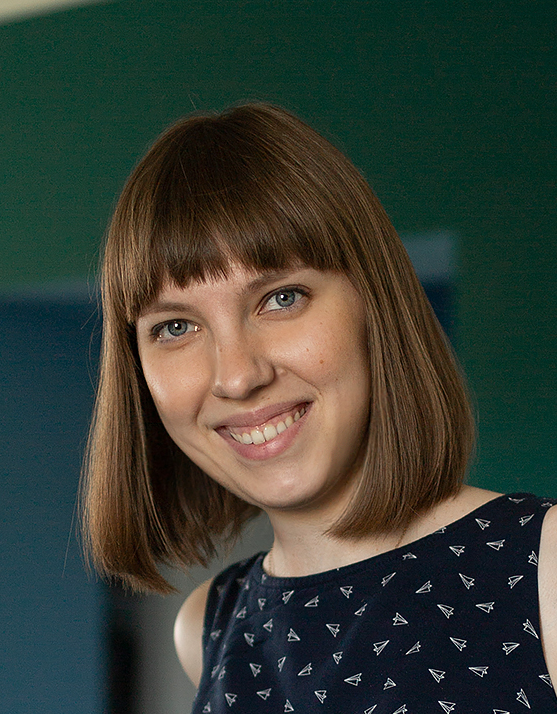
Elena Kirshanova is a part-time Lecturer at I.Kant Baltic Federal University and Lead Cryptographer at Technology Innovation Institute. Her research focuses on practical and theoretical cryptanalysis of lattice-based and code-based cryptographic primitives, with applications to post-quantum security. Research interests include: Lattice-based cryptanalysis Quantum algorithms for cryptographic problems Decoding attacks on McEliece variants Sieving techniques for codes and lattices She teaches courses in lattice-based cryptography, coding theory, and information security. Dr. Kirshanova serves on program committees for major cryptography conferences including Crypto, Eurocrypt, and PQCrypto. Her work bridges theoretical cryptanalysis with practical implementations for post-quantum cryptographic schemes.
Dr. Jaya Bishwal is an Associate Professor in the Mathematics & Statistics Department at the University of North Carolina at Charlotte. Her research expertise centers on Probability and Stochastic Processes, with applications in mathematical finance and statistical inference. Her extensive publication record demonstrates deep specialization in fractional processes, stochastic differential equations, and statistical estimation methods. Recent work focuses on advanced econometric applications including Levy process modeling, fractional Ornstein-Uhlenbeck systems, and volatility estimation in financial mathematics. Methodological innovations include developments in quasi-likelihood estimation, Kolmogorov distance analysis for estimators, bootstrap methods for financial derivatives, and asymptotic theory for nonergodic systems. Her research bridges theoretical probability and practical applications in quantitative finance.
Susanne Kramer is a Professor in the Department of Cell and Developmental Biology at the University of Würzburg's Biocenter. She leads the Kramer Lab, focusing on mRNA metabolism and posttranscriptional gene regulation in trypanosomes. Her academic journey includes a PhD from LMU Munich (2005), postdoctoral research at the University of Cambridge (2005–2011), and a DFG-funded Junior Group Leader position (2011–2018) before earning a Heisenberg Professorship in 2022. Education: 2005: Dr. rer. nat., LMU Munich 2016: Habilitation, University of Würzburg Research Interests: Susanne's work centers on RNA granules, mRNA export mechanisms, and trypanosome-specific post-transcriptional control. She developed novel methods for RNA granule purification, uncovering key insights into mRNA de-capping enzymes and co-transcriptional export in trypanosomes. Her lab uses cutting-edge techniques like super-resolution microscopy and single-molecule FISH to study subcellular RNA dynamics. Publications Trends: Her recent work highlights advancements in nuclear pore architecture, mRNA export pathways, and enzyme discovery (e.g., ApaH phosphatases). These studies bridge molecular mechanisms in trypanosomes with broader implications for cellular biology. Awards: 2022: Heisenberg Professorship (RNA Biology of Kinetoplastids) 2018: Heisenberg Funding (DFG) Advising & Labs: As a group leader, Susanne mentors graduate and undergraduate students. Her lab collaborates on projects involving RNA granule dynamics, mRNA processing, and trypanosome biology. Future research focuses on untangling the interplay between RNA metabolism and pathogenic mechanisms in trypanosomes. Lab Infrastructure: Located at the Biocenter, the Kramer Lab houses advanced imaging and molecular biology facilities to support its interdisciplinary studies.
Carl Pomerance is a Professor in the Department of Mathematics at Dartmouth College. His research spans various areas of number theory, including analytic number theory, cryptography, and computational methods. He is renowned for his work on prime numbers, pseudoprimes, and the distribution of arithmetic functions. Pomerance has authored or co-authored numerous influential books, including Prime Numbers: A Computational Perspective , and has edited volumes on cryptology and computational number theory. His research interests include the study of arithmetic functions, such as Euler's totient function and Carmichael's function, as well as topics in algebraic number theory, combinatorics, and algorithms. Pomerance has delivered invited talks at major conferences and institutions worldwide, focusing on themes like additive number theory, multiplicative functions, and the interplay between number theory and cryptography. Key contributions include advancements in primality testing algorithms (e.g., the quadratic sieve), the study of Carmichael numbers, and investigations into pseudoprimes and their distribution. He has also explored topics such as covering congruences, elliptic curves, and the properties of algebraic numbers.
Michael Strauss is an Assistant Professor of Chemistry at the University of Illinois Urbana-Champaign, joining in 2025. He holds a B.S. in Biochemistry from Winona State University (2016), a Ph.D. in Chemistry from Northwestern University (2021), and completed postdoctoral research at MIT (2022–2025). His research focuses on synthetic methods development and polymer science , with a goal of achieving unprecedented control over polymer microstructure to engineer emergent material properties. Key areas include catalyst design, environmental remediation of plastic waste, and application-based materials design. His research group (SRG) emphasizes interdisciplinary collaboration, training students in synthetic, organometallic, physical organic, polymer, and materials chemistry. Strauss has received prestigious awards, including the NIH Ruth L. Kirschstein Postdoctoral Fellowship and NSF Graduate Research Fellowship. Current projects aim to develop novel synthetic tools for polymer synthesis and functionalization, with applications in energy storage, separation science, and optoelectronics. Education: B.S., Winona State University (2016) Ph.D., Northwestern University (2021) Postdoc, MIT (2022–2025) Awards: National Institutes of Health Ruth L. Kirschstein Postdoctoral Fellowship NSF Graduate Research Fellowship Edmund W. Gelewitz Award Labs/Teams: Strauss Research Group (SRG), focusing on 2D polymers and catalytic methodologies. Future work includes expanding applications of self-assembled nanotubes and exploring sustainable polymer design strategies.
Jonathan Webster is a Professor in the Department of Mathematical Sciences at Butler University. He holds a Ph.D. from the University of Calgary and has a dual background in Mathematics and Computer Engineering from Rose-Hulman Institute of Technology, along with a Master's in Mathematics from the University of Illinois at Urbana-Champaign. His academic work bridges mathematics and computer science with a strong emphasis on undergraduate research mentorship. Education Ph.D., University of Calgary, 2010 M.S. in Mathematics, University of Illinois at Urbana-Champaign, 2004 B.S. in Mathematics, Rose-Hulman Institute of Technology, 2001 B.S. in Computer Engineering, Rose-Hulman Institute of Technology, 2001 Jonathan Webster's research focuses on algorithmic and computational number theory , particularly in areas such as Carmichael numbers, pseudoprimes, Legendre's conjecture, and the multiplication table problem. He develops and implements algorithms to explore deep number-theoretic questions, often pushing computational limits. His work is highly collaborative, frequently involving undergraduate students and established researchers like Andrew Shallue and Jonathan Sorenson. His recent publications (2024–2025) highlight a consistent trend in computational number theory, with several papers accepted to the prestigious Algorithmic Number Theory Symposium (ANTS) and journals like INTEGERS and Mathematics of Computation . These works involve extensive data generation, algorithm design, and verification, often accompanied by publicly released source code and datasets. In parallel, he contributes to mathematics education, particularly in designing and promoting undergraduate research experiences. His scientific contributions include: Tabulation of all Carmichael numbers below 10^22 Verification of Legendre’s conjecture up to 7·10^13 Advancing the understanding of absolute Lucas pseudoprimes Developing efficient algorithms for the multiplication table problem Historical research on inessential discriminant divisors with Fernando Gouvêa Webster actively mentors undergraduate researchers, with students like Chloe Helmreich, Nick Sorenson, and David Purdum co-authoring peer-reviewed publications. He has secured research support through collaborative grants and institutional funding, enabling student participation in conferences and computational projects. His pedagogical work, including publications in MAA Focus and PRIMUS , emphasizes creating accessible research opportunities for undergraduates. While not explicitly mentioning a lab, his research group functions as a computational number theory team, producing open-source tools and large-scale datasets. Future work likely includes extending computational bounds, exploring new pseudoprime families, and expanding undergraduate research models.
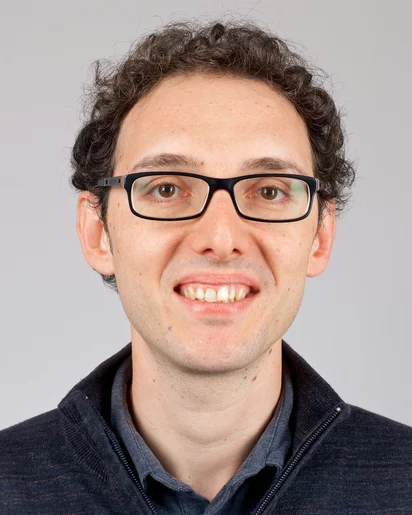
Karsten Reichold is an Assistant Professor of Econometrics at TU Wien (Vienna University of Technology), affiliated with the Institute of Statistics and Mathematical Methods in Economics within the Faculty of Mathematics and Geoinformation. His work bridges theoretical and applied econometrics with a focus on time series modeling and inference. His research interests include: Econometrics Time Series Analysis Statistical Learning Empirical Macroeconomics Forecasting Bootstrap Inference Cointegration Analysis His recent publications and software contributions reflect a strong focus on robust inference in cointegrating regressions using self-normalized test statistics and bootstrap methods. His work enables more reliable hypothesis testing in non-stationary economic time series data. Notable scientific contributions include: Development of self-normalized bootstrap inference for cointegrating regressions Implementation of Group-Mean Fully Modified OLS for panel cointegrating polynomial regressions He has advised no publicly listed students and has not received any explicitly mentioned awards. However, his publication in the Journal of Business & Economic Statistics indicates recognition in the field. He actively supports open science by providing ready-to-use MATLAB code on GitHub for reproducible research. He is involved in research projects related to: Bootstrap methodology in econometrics Panel cointegration Stochastic process modeling
Nicola Colonna is a Tenure Track Scientist (mapped to Researcher) at Paul Scherrer Institute's Laboratory for Materials Simulations. Focuses on Koopmans spectral functionals and electronic structure theory. Research develops computational methods for predicting electronic properties of quantum materials, perovskites, and nanoporous systems using orbital-density-dependent functionals. Recent publications (2021-2024) demonstrate: 60% focus on Koopmans functional methodology development, 25% on perovskite electronic structures, and 15% on quantum material characterization. Common themes include spectral accuracy, high-throughput screening, and validation against experimental benchmarks. Software Development: Contributed to open-source koopmans package for spectral property prediction.
Saurabh Kumar Singh serves as an Associate Professor in the Department of Mathematics & Statistics at the Indian Institute of Technology Kanpur, one of India's premier technical institutions. Specializes in Analytic Number Theory with research focus on L-Functions, Sub-convexity problems, Sieve Methods, and the Riemann Zeta Function Office located in Old SAC A Block Room no 7, IIT Kanpur campus Dr. Singh's academic journey includes a PhD from Tata Institute of Fundamental Research (TIFR), Mumbai (2010-2015), followed by postdoctoral research at Indian Statistical Institute (ISI) Kolkata (2015-2019) and Université de Limoges (ULM) (July-December 2017). He completed his Master of Science at IIT Kanpur (2008-2010) and earned his Bachelor of Science from Banaras Hindu University (BHU) (2005-2008). His research bridges classical number theory with modern analytical techniques, advancing our understanding of prime distribution and related phenomena. Dr. Singh is accessible to students and colleagues through his office phone (0512-679-2136) and email (saurabs@iitk.ac.in).
Yang Yang is an Associate Professor in the Department of Civil & Environmental Engineering at Clarkson University, affiliated with the Coulter School of Engineering & Applied Sciences and the Institute for a Sustainable Environment. They hold dual roles as faculty advisor to the NYWEA Student Chapter and undergraduate advisor for the Class of 2023. Yang’s research focuses on advanced materials for environmental remediation, including PFAS destruction, decentralized water treatment, and electrochemical oxidation technologies. They have received prestigious awards such as the NSF CAREER Award (2023) and the ES&T Letters Excellence in Review Award (2024). Education: Ph.D. in Environment from Tsinghua University (2014), B.S. from South China University of Technology (2009), visiting scholar at Caltech (2013). Research interests include synthesis of electro-active materials, advanced oxidation techniques, and sustainable water treatment systems. Notable grants include the NSF-funded CAREER project on piezoelectric mechanochemical destruction of PFAS (2023–2028) and collaborations with organizations like the Bill & Melinda Gates Foundation for reactive electrochemical membrane development. Publications emphasize PFAS degradation, electrochemical ozonation for harmful algal blooms, and novel catalytic materials. Students advised include Shasha Yang (2021 awards) and Farideh Hosseini Narouei (2021 fellowship). Labs and teams focus on translating lab-scale innovations into scalable environmental solutions.
Hadrian Montes Campos is a Researcher in the Department of Particle Physics at the University of Santiago de Compostela. He holds a Doctorate in Science (2021) with a thesis titled Theoretical and Computational Study of Ionic Liquids Confined in Topologically Complex Micro and Nano Structures , directed by Dr. Luis Miguel Varela Cape. His primary affiliation is with the NaFoMat Group of Nanomaterials, Photonics and Soft Matter, where he explores advanced materials and computational methods. Research Interests: Montes Campos specializes in condensed matter physics, with a focus on ionic liquids, molecular dynamics simulations, and electrochemical interfaces. His work bridges computational modeling (e.g., DFT, MD) with experimental design, particularly in energy storage systems (e.g., batteries), nanomaterials, and hydrogen storage. Key themes include confinement effects, interfacial phenomena, and novel electrolyte development. Publications and Trends: His recent studies (2022–2025) emphasize hybrid electrolytes, water-in-salt systems, and the role of anions in solvation. Articles often integrate advanced simulation techniques like machine learning-driven force fields and uncertainty quantification. Notable contributions include insights into graphene-ionic liquid interfaces and gas uptake mechanisms in confined environments. Awards: No awards explicitly listed in the provided data. Advising & Grants: No advising record or grants specified. His work is likely supported through institutional or collaborative funding. Labs/Teams: Active member of the NaFoMat Group, collaborating on projects involving ionic liquid-based materials and computational modeling.