Pankaj K. Agarwal is the RJR Nabisco Distinguished Professor of Computer Science and Professor of Mathematics at Duke University, affiliated with Trinity College of Arts and Sciences. His research spans geometric algorithms, discrete geometry, data structures, and applications in databases, robotics, and geographic information systems. He teaches courses including Design & Analysis of Algorithms (COMPSCI 532), Geometric Algorithms (COMPSCI 634), and Complexity Theory (COMPSCI 290). His current research group includes students Ben Holmgren, Rahul Raychaudhury, and Keegan Yao. Professor Agarwal maintains an active publication record in top computer science venues, with recent work focusing on computational geometry algorithms, optimal transport problems, spatial data structures, and geometric optimization. His research develops efficient solutions for problems in motion planning, spatial query processing, and geometric approximation.
Romain Billot is an Associate Professor in Data Science at IMT Atlantique since 2016, affiliated with the Département Science des Données and Lab-STICC. His research focuses on data mining, optimization, and their applications in smart mobility and connected health. Prior to this, he worked as a researcher at LICIT (IFSTTAR/ENTPE) and completed a postdoc at Queensland University of Technology. He holds a PhD from École Centrale Paris (2010) and a Computer Science degree from Université de Technologie de Compiègne (2007). His teaching includes courses in statistics, machine learning, and data science across undergraduate and graduate programs at IMT Atlantique. He has supervised numerous PhD students, contributing to impactful work such as the 2017 ABERTIS Prize-winning thesis on traffic prediction and the 2014 ABERTIS Prize for research on cooperative highway traffic modeling. Key research areas include travel time modeling, shortest path algorithms, and multi-objective optimization. His work bridges theory and practice, addressing real-world challenges in transportation and healthcare. Collaborations with institutions like Lab-STICC and international conferences highlight his interdisciplinary approach.
Tianyi Zhang is a Researcher at the Professorship for Theoretical Computer Science, ETH Zurich, located at OAT Z 29, Andreasstrasse 5. His research focuses on advancing fundamental algorithms in graph theory, with particular expertise in dynamic graph problems, efficient spanner constructions, edge coloring optimizations, and shortest-path computations. Dr. Zhang develops both theoretical frameworks and practical implementations for complex computational challenges. His core research areas include the design of near-linear and subquadratic time algorithms for graph optimization problems, fault-tolerant network structures, streaming-optimized graph coloring, and geometric graph embeddings. Recent work emphasizes breakthroughs in Vizing's theorem implementations, dynamic set cover deamortization, and space-efficient distance oracles. Dr. Zhang's publications demonstrate consistent innovation in algorithm efficiency for planar graphs, Euclidean spaces, and dynamic network settings. His 2023-2025 articles reveal concentrated efforts on: 1) Optimizing edge coloring through multi-step Vizing chains and streaming adaptations, 2) Enhancing spanner constructions for doubling metrics and planar environments, and 3) Developing failure-resistant path algorithms with improved time/space complexity. These contributions address scalability challenges in large-scale network processing. He collaborates within the Theoretical Computer Science research group at ETH Zurich, contributing to the institution's leadership in algorithmic innovation. No information about awarded grants, supervised students, or educational background is available in the source materials.
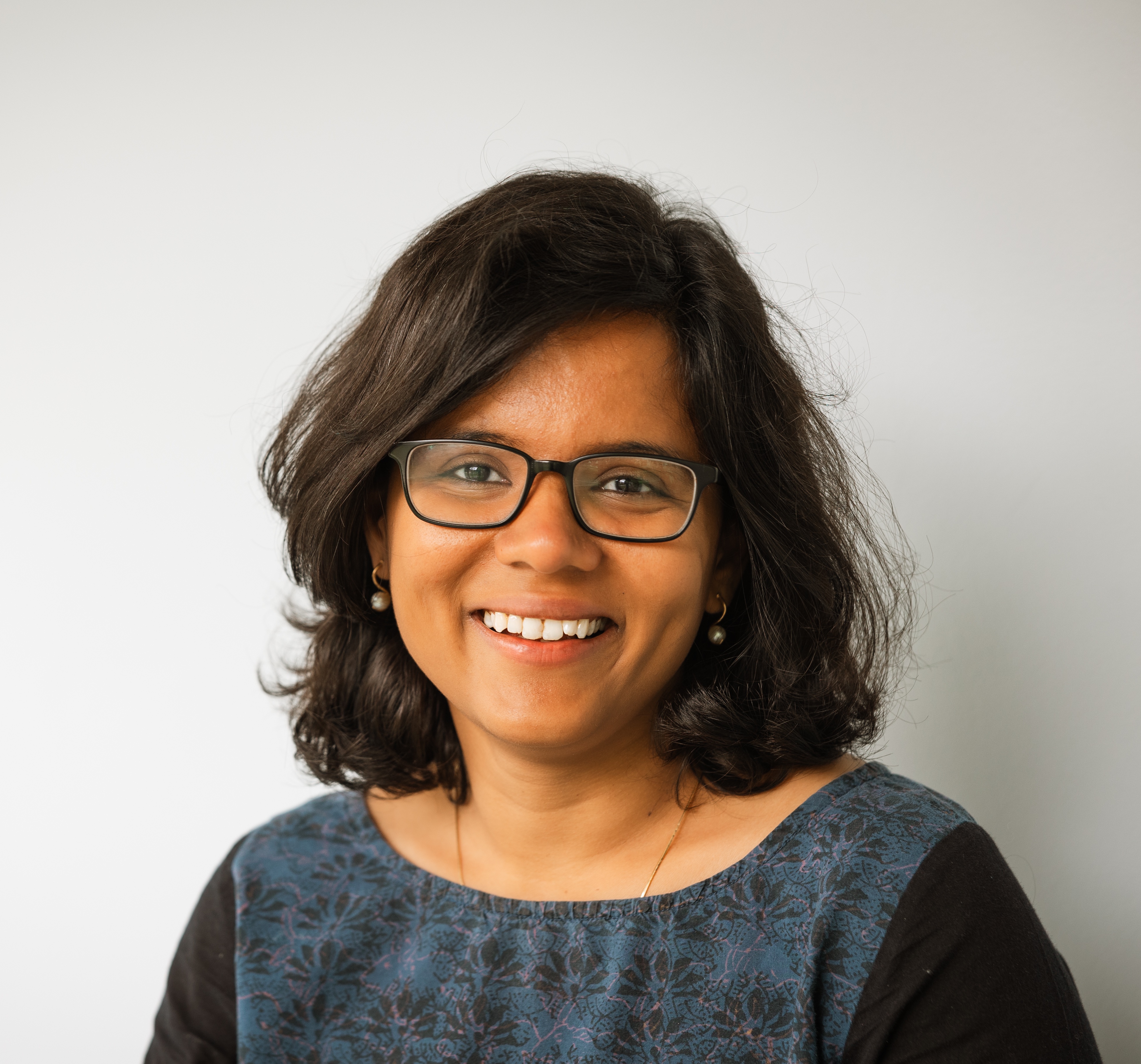
Shikha Singh is an Assistant Professor of Computer Science at Williams College. She holds a PhD from Stony Brook University (2018) and an Integrated BSc & MSc from IIT Kharagpur (2013). Her research focuses on algorithmic game theory, algorithms with predictions, and data structure optimization. She has received tenure at Williams College and was recognized for her work on adaptive filters at ESA 2021 and NeurIPS 2023. Education: PhD, Stony Brook University (2018); Integrated MSc & BSc, IIT Kharagpur (2013) Research Interests: Algorithmic game theory, adaptive and I/O-efficient algorithms, data structures with predictions. She explores how incentives influence algorithm outcomes and designs efficient algorithms for big data challenges. Key Contributions: Her work on online list labeling with predictions (NeurIPS 2023) and incremental shortest path algorithms (ICALP 2025) highlights her focus on predictive algorithms. Collaborations include visits to Carnegie Mellon University and Dagstuhl seminars. Awards: COCOA 2017 Best Paper Runner-Up, NeurIPS 2023 Spotlight Advising: Advised David Lee on adaptive filters (ESA 2021). Active in program committees for Euro-Par, TAMC, and ALENEX. Labs/Teams: Collaborates with Benjamin Moseley on scheduling and data structure research. Part of Williams College’s vibrant CS department.
Tomáš Peitl is a researcher and university assistant at the Institute of Logic and Computation, Vienna University of Technology, within the Algorithms and Complexity group. His roles include teaching courses like Algorithms and Data Structures and Structural Decompositions and Algorithms. He holds a PhD in Computer Science from TU Wien (2019) and has held postdoctoral positions at Friedrich Schiller University (Jena, Germany) and TU Wien, funded by FWF grants. His research focuses on Quantified Boolean Formulas (QBF), Dependency QBF, SAT solving, proof complexity, and algorithm development for formal verification. He has contributed to software tools like Qute (a QBF solver) and SAT Modulo Symmetries. Education: PhD in Computer Science (2015–2019, TU Wien), MSc in Mathematics (2013–2015, Comenius University, Bratislava), BSc in Mathematics (2010–2013, Comenius University). Research interests span theoretical aspects (e.g., proof complexity, computational complexity) and practical applications (e.g., SAT/QBF solver development). His work bridges algorithmic theory and real-world problem-solving. Recent articles explore dependency schemes in QBF, resolution paths, and SAT-based approaches to graph theory problems. Notable awards include the Best Paper Award at CP 2020 and the FWF Erwin Schrödinger Fellowship. Peitl collaborates on projects like the Austrian Science Fund (FWF) grant on DQBF theory and has developed tools for shortest proof calculation (short.py) and symmetry-handling in SAT solving. His contributions highlight advancements in automated reasoning and computational logic.
Marc Huber is a PreDoc Researcher (academic rank: Researcher) at the Institute of Logic and Computation within the Faculty of Informatics at TU Wien. Currently on leave, he conducts research at the intersection of combinatorial optimization and machine learning, focusing on algorithmic innovations for complex scheduling and sequence problems. His core research interests include: Combinatorial Optimization Machine Learning for Optimization Beam Search and Metaheuristics Staff and Flow Shop Scheduling Sequence Problems (Longest/Shortest Common Subsequence) Algorithm-ML Integration Huber's publication trajectory (2021-2024) reveals a consistent methodological evolution: progressively integrating reinforcement learning and value function approximation into beam search frameworks. This approach has yielded significant advances in staff rostering, multi-agent path finding, and sequence alignment, demonstrating how learned heuristics outperform traditional optimization techniques in solution quality and computational efficiency. Scientific Awards: No awards, fellowships, or medals were documented in available sources. As a thesis supervisor, Huber has guided four master's students at TU Wien through research on graph neural networks for clique problems, reinforcement learning for flow shop scheduling, e-mobility fleet scheduling, and staff resortering algorithms. His advising emphasizes practical implementation of learning-based optimization techniques. He operates within the Algorithms and Complexity research group (E192-01), collaborating closely with Prof. Raidl on algorithm engineering projects funded through TU Wien's research infrastructure. Current work focuses on extending learning beam search to multi-objective combinatorial problems.
Bettina Klinz is an Associate Professor at the Department of Mathematics, Technische Universität Graz (TU Graz), Austria, since March 2000. She holds a Diplom-Ingenieur (M.Sc.) in Technical Mathematics and a Dr. techn. (Ph.D.) from TU Graz, completed in 1989 and 1993 respectively. She obtained her Habilitation in Applied Mathematics in 1999, focusing on well-solvable classes of hard combinatorial optimization problems. Her research interests include combinatorial optimization, network flow problems, graph algorithms, and the design of efficient algorithms. She has supervised numerous diploma/master theses and PhD students, covering topics such as hospital layout optimization, nurse scheduling, and second shortest path problems. Teaching responsibilities include courses like Combinatorial Optimization 1 and 2, and she maintains active course materials. She emphasizes practical skills through problem-solving exercises and exams. Her work is also reflected in her contributions to online resources and academic link lists on mathematical programming and combinatorial optimization.
Frank Staals is an Assistant Professor in the Department of Information and Computing Sciences at Utrecht University. He holds a PhD from Utrecht University and was previously a PostDoc at MADALGO, Aarhus University. His research focuses on Computational Geometry , with emphasis on algorithms for moving objects, geometric data structures, and shortest-path problems. Applications include Geographic Information Science (GIS) and Visualization. Research Interests: Staals develops theoretically rigorous and efficient algorithms for geometric data. Key areas include: Trajectory analysis (grouping, segmentation) Geodesic computations in polygons and terrains Dynamic data structures for spatial queries Robust classification of geometric data His publications demonstrate a trend toward scalable algorithms for real-world spatial data, including trajectory grouping, visibility queries, and terrain analysis. Recent work addresses the computational complexity of geodesic spanners and dynamic connectivity in geometric graphs. Awards: Best Paper Award at SIGSPATIAL 2019 Staals leads courses in Functional Programming and Geometric Algorithms and develops open-source software (HGeometry). He collaborates with international teams on projects in GIS and algorithmic geometry.
Dr. Henry Han is a Professor and holds the McCollum Family Chair in Data Science at Baylor University’s Hankamer School of Business, Department of Data Science. His interdisciplinary research spans data science, fintech, artificial intelligence, bioinformatics, health informatics, cybersecurity, and quantum computing. PhD, Applied Mathematical & Computational Sciences, University of Iowa (2004) MS, Computer Science, University of Iowa (2001) MS, Applied Mathematics, University of Iowa (2001) Dr. Han’s research integrates advanced machine learning, optimization, and data analytics techniques to solve complex problems in finance, healthcare, and cybersecurity. His work emphasizes manifold learning , deep neural networks , evolutionary computation , and graph-based learning for real-world applications such as high-frequency trading, automobile damage classification, and single-cell genomics. He applies these methods across domains including financial modeling, biomedical data analysis, and sports forecasting. His recent publications demonstrate a strong trend toward interdisciplinary machine learning , with applications in computational finance, bioinformatics, and intelligent systems. Many of his works utilize optimization-based deep learning and unsupervised representation learning to extract meaningful patterns from high-dimensional data. Dr. Han has received recognition through prestigious appointments: McCollum Family Chair in Data Science He actively collaborates on research projects and has secured funding for advanced data science initiatives, though specific grant details are not listed. His work supports both academic advancement and practical innovation in data-driven decision-making. He advises graduate students and contributes to the development of next-generation data science methodologies. Dr. Han is a key member of the data science research team at the Hankamer School of Business, contributing to interdisciplinary labs and research groups focused on fintech, AI, and health informatics.
David Rey is a Professor at SKEMA Business School in Sophia Antipolis, France. His research focuses on optimization, game theory, and artificial intelligence applied to transportation and logistics. He holds a PhD in Operations Research from Université Grenoble Alpes (2012) and a Habilitation à Diriger des Recherches (2023) from Université de Toulouse. Previously, he was a Senior Lecturer at UNSW Sydney (2016–2021) and has held postdoctoral positions at rCITI UNSW. He leads the URBANE project, exploring green last-mile delivery solutions, and serves on editorial boards like Transportation Letters . Awards include multiple ARC grants and the INFORMS TSL Best Paper Award Committee role (2025). Education: Habilitation à Diriger des Recherches (2023), Operations Research, Université de Toulouse PhD (2012), Operations Research, Université Grenoble Alpes Master (2008), Sciences/Mathematics, Pontifical Catholic University of Rio de Janeiro Engineering Degrees (2004–2005), Electrical Engineering, University of Montpellier Research Interests: David’s work emphasizes optimization techniques (bilevel, stochastic, mixed-integer programming), game theory, and AI applications in transport systems. Key areas include drone delivery, autonomous vehicle integration, congestion pricing, and resilient logistics networks. His methods address real-world challenges like pandemic response, electric vehicle charging infrastructure, and fair resource allocation. Grant Highlights: URBANE (EU Horizon-funded), 2022–present 4 ARC grants as Lead Chief Investigator, including projects on concrete mixes, ethics in transport systems, and workforce logistics optimization Advising & Grants: Directed/co-directed 15+ PhD theses across SKEMA and UNSW Sydney Active in grant writing and editorial roles, including Transportation Science and Logistics Society Workshop (2024–2025) Labs/Teams: Leads the SKEMA Centre for Analytics and Management Science, focusing on analytics-driven solutions for business and urban systems.
Ryan Williams is a Professor of Electrical Engineering and Computer Science at MIT's Computer Science and Artificial Intelligence Laboratory (CSAIL) and the Department of Electrical Engineering and Computer Science. Previously, he held a faculty position at Stanford University from 2011 to 2016. He obtained his PhD in Computer Science from Carnegie Mellon University under Manuel Blum and completed his undergraduate studies at Cornell University. His research focuses on computational complexity theory, exploring the boundaries of efficient computation and connections between algorithm design and complexity lower bounds. He teaches advanced courses such as Automata, Computability, and Complexity Theory at MIT. Education: PhD in Computer Science, Carnegie Mellon University (Advisor: Manuel Blum) Bachelor's Degree in Computer Science, Cornell University Research Interests: His work addresses fundamental questions in theoretical computer science, including the P vs. PSPACE problem, circuit lower bounds, and the development of algorithms with provable efficiency. He investigates connections between algorithmic techniques and complexity-theoretic limitations, aiming to establish barriers to solving computational problems efficiently. Publications and Trends: Ryan Williams' recent work spans topics like space-bounded computation, probabilistic polynomial sparsity, circuit lower bounds, and algorithms for compression and graph problems. His research often bridges theoretical insights with practical algorithm design, emphasizing the interplay between computational models and their limitations. Advising and Grants: Current advisees include Rahul Ilango, Ce Jin, and Ted Pyne. He has mentored numerous PhD students who have contributed to areas like fine-grained complexity and circuit analysis. While specific grants are not detailed, his research aligns with foundational studies in theoretical computer science. Labs and Teams: Williams is affiliated with MIT CSAIL, where he collaborates on projects exploring computational complexity and algorithmic foundations.
George B. Mertzios is an Associate Professor in the Department of Computer Science at Durham University, affiliated with the Algorithms and Complexity Research Group (ACiD) within the School of Engineering and Computing Sciences. He has held academic positions at Durham since 2011, progressing from Lecturer to Senior Lecturer and then to Associate Professor since 2017. He has also held visiting positions at institutions including the University of Bordeaux/CNRS and the University of Haifa. His research interests lie at the intersection of theoretical computer science and network science, with a strong focus on temporal graphs , algorithmic graph theory , parameterized complexity , and combinatorial optimization . He investigates efficient algorithms for dynamic and evolving networks, geometric graph models, and computational problems in network evolution and connectivity. His work often bridges foundational theory with applications in network design and distributed systems. The recent publications and ongoing activities of George B. Mertzios demonstrate a consistent and impactful research trajectory centered on the algorithmic foundations of temporal and dynamic networks. His work spans complexity analysis, algorithm design, and structural graph theory, with a notable emphasis on temporal vertex cover, sliding window models, and connectivity in time-varying graphs. He frequently publishes in top-tier conferences such as ICALP, MFCS, AAAI, and STACS, as well as leading journals including the Journal of Computer and System Sciences and Algorithmica . Gold Medal, Balkan Mathematical Olympiad, 1998 Distinguish Diploma, Bulgarian National Mathematical Competition 'Chernorizets Hrabar', 1998 Certificate of Merit, Mediterranean Mathematics Competition, 1999 Best paper award of Track C, ICALP 2010 Best student paper award, SAND 2024 George B. Mertzios has been actively involved in research supervision and leadership. He has supervised multiple PhD students to completion and currently advises ongoing doctoral research. He has served as Principal Investigator for EPSRC grants on Algorithmic Aspects of Temporal Graphs and Algorithmic Aspects of Intersection Graph Models , and as a Co-Investigator on projects related to graph coloring. He is a frequent organizer of scientific workshops, including the Algorithmic Aspects of Temporal Graphs series at ICALP and Dagstuhl seminars, and serves on the program committees of numerous international conferences such as MFCS, IWOCA, and SAND. He is a key member of the Network Engineering Science and Theory in Durham (NESTiD) research group, where he coordinates seminar series and fosters collaborative research in network algorithms and theory.
Bettina Klinz is an Associate Professor at the Institute for Discrete Mathematics within Graz University of Technology , Austria. Her academic background includes a Diplom Ingenieur (M.Sc.) and Dr. techn. (Ph.D.) in Technical Mathematics from TU Graz, with a habilitation in Applied Mathematics. Research Interests: Combinatorial optimization, network flow problems, graph algorithms, and efficiently solvable cases of NP-hard optimization problems. Teaching: Regular instructor of courses like Combinatorial Optimization 1 and Optimization 1 , focusing on polynomially solvable problems, matroids, shortest paths, and flow problems. Supervision: Advised numerous diploma/master's and Ph.D. theses on topics ranging from spanning trees to nurse shift scheduling and MAX-SAT algorithms. Contact: Emails klinz@opt.math.tu-graz.ac.at (primary) and bettina.klinz@tugraz.at , with office in Steyrergasse 30/II, Graz.
Tina Eliassi-Rad is the Inaugural Joseph E. Aoun Professor at Northeastern University . She is also an external faculty member at the Santa Fe Institute and the Vermont Complex Systems Center . Her research lies at the intersection of Artificial Intelligence , Network Science , and their societal implications . Research Interests Data Mining & Machine Learning Network Science & Complex Systems Artificial Intelligence & Society Trustworthy Network Science Just Machine Learning Recent Article Trends Her recent work focuses on Graph Neural Networks , Hypergraph Mining , Adversarial Attacks , Algorithmic Fairness , and Human-AI Coevolution . Publications explore topics like Information Inequality , Network Resilience , and Explainable AI . Scientific Awards Inaugural Joseph E. Aoun Professor at Northeastern University Advising & Grants Current Students : Wan He (Network Science PhD), David Liu (CS PhD), Zohair Shafi (CS PhD), Samantha Dies (CS PhD) Major Funders : Defense Advanced Research Projects Agency (DARPA), National Science Foundation (NSF), Army Research Lab (ARL), Defense Threat Reduction Agency (DTRA), Lawrence Livermore National Laboratory (LLNL), MIT Lincoln Laboratory (MITLL), Volkswagen Foundation, PricewaterhouseCoopers (PwC), Washington Post Labs Labs & Teams She leads the RADLAB at Northeastern University and collaborates with the Network Science Institute . Her team includes postdoctoral researchers and PhD candidates working on AI, network science, and cybersecurity.
Prof. Pieter Vansteenwegen is a full professor at KU Leuven's Faculty of Engineering Science, leading the Centre for Industrial Management/Traffic and Infrastructure (CIB) and chairing the KU Leuven Institute for Mobility (LIM). With a PhD in Operations Research (2008), he works on robust public transport systems, metaheuristics for logistics, and demand-responsive mobility solutions. Chair, KU Leuven Institute for Mobility Program Director, Master of Mobility and Supply Chain Engineering Board member, International Association of Railway Operations Research His research integrates transportation engineering , logistics optimization , and smart mobility systems , focusing on: Demand-responsive public transportation Metaheuristic algorithm development Inventory routing problems Smart waste collection strategies Multi-robot scheduling Recent publications demonstrate expertise in variable neighborhood search , Benders decomposition , and genetic algorithms applied to public transport, satellite scheduling, and circular economy logistics. His work has been cited over 9,400 times (Google Scholar H-index 51). Scientific recognition includes: Multiple IAROR best paper awards Best Reviewer European Journal of Operational Research BIVEC-GIBET PhD awards (2009, 2021, 2023) RASIG-INFORMS Student Paper Prizes He directs KU Leuven's Planning and Operational Research subdivision , serves on faculty councils, and founded spin-off dyNAVic for electronic tourist guides. His teaching portfolio includes courses in Public Transportation Design , Distribution Logistics , and Operational Management .