
معرفی
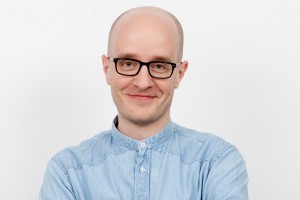
Tomáš Peitl is a researcher and university assistant at the Institute of Logic and Computation, Vienna University of Technology, within the Algorithms and Complexity group. His roles include teaching courses like Algorithms and Data Structures and Structural Decompositions and Algorithms. He holds a PhD in Computer Science from TU Wien (2019) and has held postdoctoral positions at Friedrich Schiller University (Jena, Germany) and TU Wien, funded by FWF grants. His research focuses on Quantified Boolean Formulas (QBF), Dependency QBF, SAT solving, proof complexity, and algorithm development for formal verification. He has contributed to software tools like Qute (a QBF solver) and SAT Modulo Symmetries.
Education: PhD in Computer Science (2015–2019, TU Wien), MSc in Mathematics (2013–2015, Comenius University, Bratislava), BSc in Mathematics (2010–2013, Comenius University).
Research interests span theoretical aspects (e.g., proof complexity, computational complexity) and practical applications (e.g., SAT/QBF solver development). His work bridges algorithmic theory and real-world problem-solving. Recent articles explore dependency schemes in QBF, resolution paths, and SAT-based approaches to graph theory problems. Notable awards include the Best Paper Award at CP 2020 and the FWF Erwin Schrödinger Fellowship.
Peitl collaborates on projects like the Austrian Science Fund (FWF) grant on DQBF theory and has developed tools for shortest proof calculation (short.py) and symmetry-handling in SAT solving. His contributions highlight advancements in automated reasoning and computational logic.
Tomas Peitl در سایتهای دیگر
جستوجوهای مرتبط
شاید اینها هم برایتان مناسب باشند
- TTomáš PeitlVienna University of Technology · عضو هیئت علمی
 Friedrich SlivovskyVienna University of Technology · پژوهشگر
- UUwe EglyVienna University of Technology · دانشیار
- FFriedrich SlivovskyUniversity of Liverpool · پژوهشگر
- MMarkus KirchwegerVienna University of Technology · پژوهشگر
- AAdrian Rebola PardoVienna University of Technology · پژوهشگر