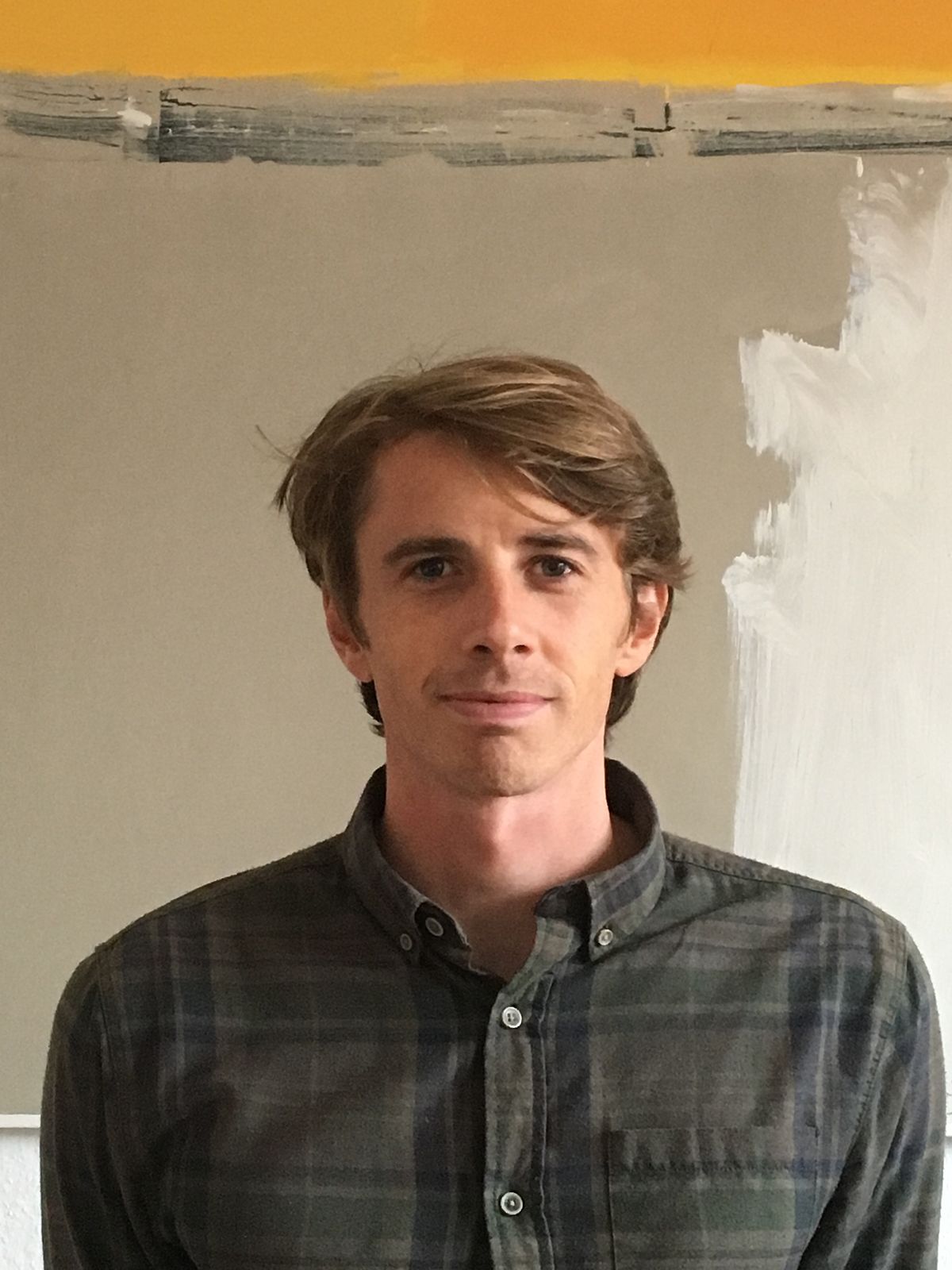
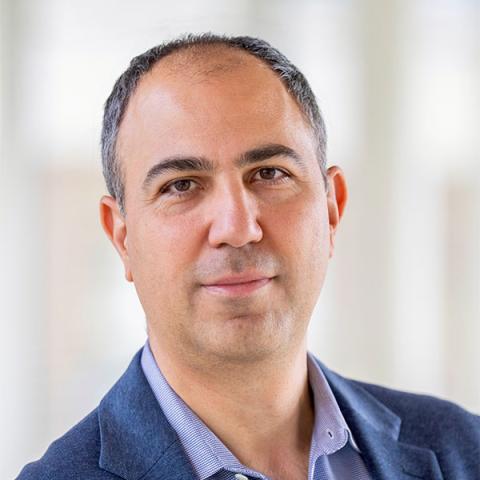
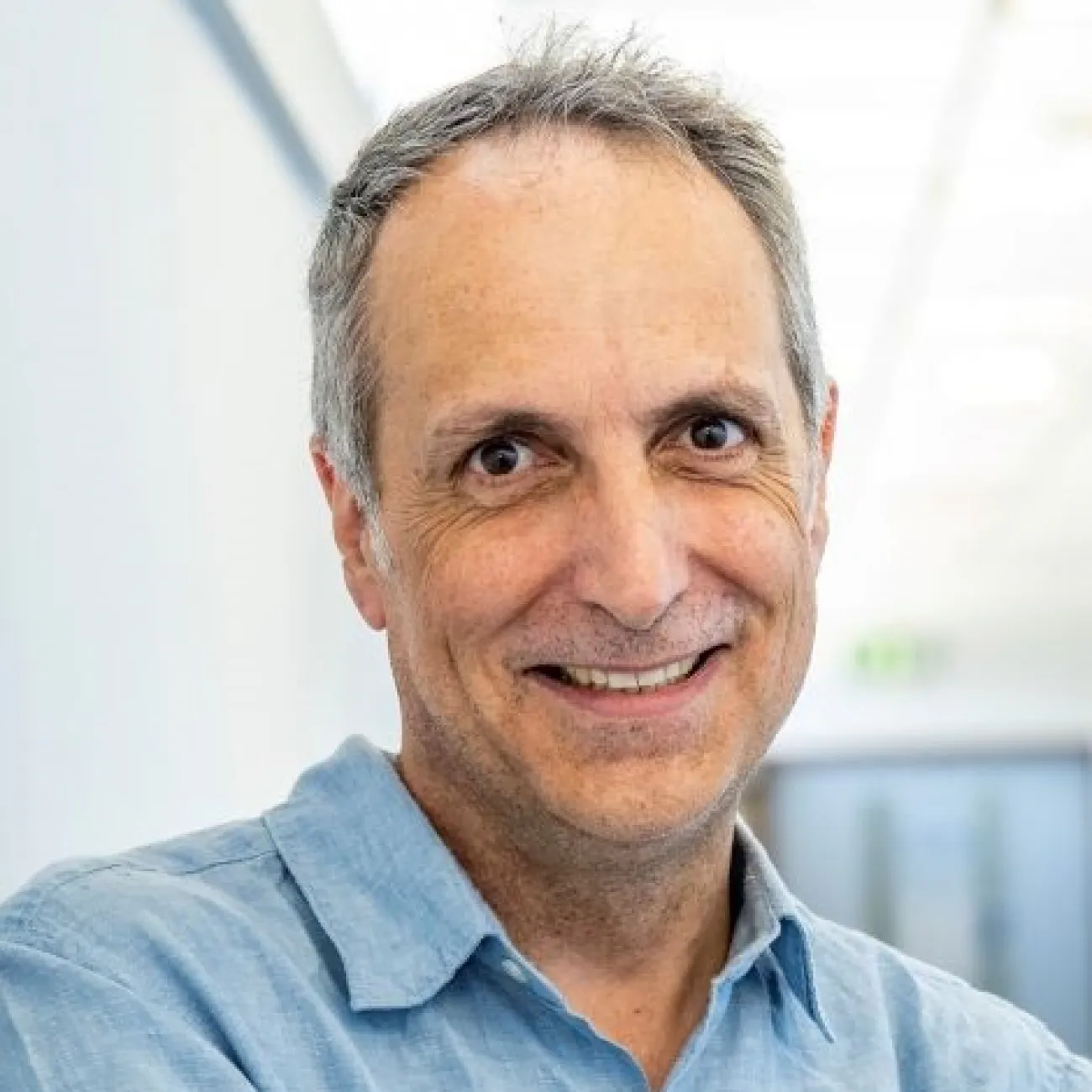
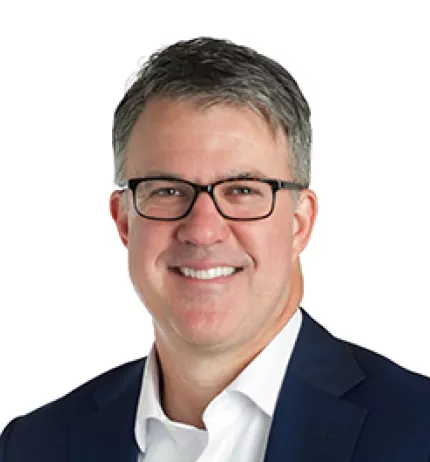
Dr Peter Hicks is a Senior Lecturer at the School of Engineering, University of Aberdeen, since 2013. He holds an MMath from the University of Oxford and a PhD in Mathematics from the University of East Anglia. Prior to his current role, he was a postdoctoral researcher at the University of Sheffield, University College London, and the University of East Anglia, with industrial secondments at AeroTex UK studying aircraft icing. Research focuses on fluid dynamics, mathematical modeling, and industrial mathematics. Key areas include violent fluid flows, gas entrainment, phase change, droplet impacts, sloshing, ship slamming, boundary layer receptivity, and porous media flows. He teaches undergraduate courses in thermodynamics and fluid dynamics, and previously coordinated postgraduate programs including MSc Subsea Engineering and MSc/undergraduate projects. His collaborations span academia and industry, with notable contributions to aircraft icing and subsea engineering challenges. Contact: p.hicks@abdn.ac.uk
Mihir Vinay Kulkarni is a Researcher at the Department of Technical Cybernetics, Norwegian University of Science and Technology (NTNU), specializing in autonomous aerial systems for complex environments. His work bridges simulation frameworks and real-world deployment in industrial and hazardous settings. His research focuses on: Developing vision-based navigation for cluttered environments Creating parallel simulation tools (Aerial Gym) for accelerated robotics development Implementing deep reinforcement learning for collision avoidance Deploying aerial robots in ship ballast tanks and subterranean spaces Publications since 2022 demonstrate consistent output in top robotics venues, with recent work emphasizing semantic path planning and neural safety frameworks. His research trajectory shows strong alignment with NTNU's field robotics initiatives and international collaborations, particularly with ETH Zurich. As a recent PhD graduate (2025), Kulkarni represents an emerging researcher with significant potential in aerial robotics. Prospective students should note his focus on practical applications and simulation-to-reality transfer, though supervision capacity may be limited during this early career phase.
Thomas Browning is a Group Leader and Senior Scientist at GEOMAR Helmholtz Centre for Ocean Research Kiel, where he leads research on biogeochemical controls on ocean productivity within the Marine Biogeochemistry division. He holds an ERC Starting Grant for his Ocean Glow project and maintains an active research program investigating nutrient limitations in marine ecosystems. His educational background includes a DPhil from the University of Oxford (2010-2014) and an MSci from the University of Bristol (2006-2010). Prior to his permanent position at GEOMAR, he was a Marie Skłodowska-Curie Fellow (2015-2017). Browning's research focuses on understanding the controls on phytoplankton abundance, ecology, and physiology in the ocean through phytoplankton culturing experiments, numerical analysis, and satellite remote sensing. His work spans multiple ocean basins including the Pacific, Atlantic, and Southern Oceans, with particular emphasis on nutrient limitation phenomena and trace metal biogeochemistry. His research reveals complex patterns of nutrient co-limitation across oceanic regions, challenging previous assumptions about single-nutrient limitation. Analysis of his recent publications shows a strong focus on nutrient interactions in marine systems, particularly iron, nitrogen, and phosphorus limitations across different oceanic regions. His work increasingly integrates satellite remote sensing with in situ measurements to understand large-scale biogeochemical patterns, with significant contributions to understanding how climate variability (including ENSO) affects ocean productivity. ERC Starting Grant 'Ocean Glow' (2022-2027) ReSEAt project (2022-2025) EMS-FORE/EMS-PS project (2021-2026) GEOTRACES GP11 participation Browning leads an active research group conducting field expeditions including recent work in the Eastern Mediterranean Sea (M197 cruise) and Cascadia region (SO294 cruise). His research integrates ship-based measurements, laboratory experiments, and satellite data to address fundamental questions about ocean productivity controls under changing climate conditions.
Dr. Qian Long Kweh is a Professor at the School of Management of Canadian University Dubai, United Arab Emirates, with over 10 years of experience in tertiary teaching and empirical research. His scholarly work spans multiple disciplines within accounting and finance, with particular emphasis on performance measurement systems and intellectual capital evaluation. Dr. Kweh earned his PhD in Accounting from Universiti Malaysia Pahang, establishing the foundation for his research career focused on methodological rigor in efficiency measurement. His educational background has enabled him to develop sophisticated analytical approaches to complex business problems. Dr. Kweh's research program centers on intellectual capital efficiency, corporate governance mechanisms, and performance measurement systems. His work examines nonlinear relationships between board characteristics and firm outcomes, with particular attention to how ownership structures influence financial decision-making. He has made significant contributions to understanding how intellectual capital components affect banking efficiency and how family control moderates the relationship between ownership concentration and strategic investments. His methodological approach frequently employs Data Envelopment Analysis (DEA) and related efficiency measurement techniques across diverse contexts including banking, airlines, shipping, and cultural industries. Analysis of Dr. Kweh's publication trajectory reveals consistent scholarly productivity with increasing international collaboration. His work demonstrates methodological sophistication through the application of advanced efficiency measurement techniques to increasingly diverse contexts. Recent publications show growing attention to environmental considerations in business efficiency and the impact of international financial reporting standards on corporate governance practices. Best paper award, 4th International Conference on Organization and Management & the 6th International Conference on CSR, Sustainability, Ethics & Governance, Abu Dhabi, UAE, 2019 Best Paper Award at AGBA Thailand Chapter Conference (ICBES 2014) Dr. Kweh has secured multiple competitive research grants including Foundation for Science & Technology Development (FOSTECT) Research Grants totaling VND 200 million each from Ton Duc Thang University for two two-year projects (January 2018 – December 2019), and Higher Learning Fundamental Research Grant Scheme (FRGS) grants from the Ministry of Higher Education of Malaysia totaling MYR 55,700.00, MYR 59,200.00, and MYR 95,620.00 for projects conducted between 2014-2018. His professional affiliations include the Malaysian Institute of Accountants (MIA) as an Associate member (Membership no.: 38192) and the Malaysian Finance Association (MFA) as a Life member (Membership no.: 120/13). Dr. Kweh is an active participant in international research networks, particularly the Benchmarking Research Group, collaborating with scholars from Taiwan, Vietnam, and Malaysia. His research methodology combines quantitative rigor with practical relevance, producing findings that inform both academic theory and business practice across multiple sectors.
Kerem Cosar is a Professor of Economics at the University of Virginia with research affiliations at NBER, CEPR, and CESifo. He serves as Director of Undergraduate Studies and Associate Editor at the Journal of International Economics. Ph.D., Economics, The Pennsylvania State University (2010) M.A., Economics, Bogazici University - Istanbul, Turkey (2004) B.A., Management, Bogazici University - Istanbul, Turkey (2002) His research focuses on international trade dynamics and economic geography, particularly examining how transportation infrastructure affects trade flows and regional development. Additional work explores labor market responses to globalization and the structural cost advantages of container shipping. Recent publications analyze trade cost estimation methods, geographic market segmentation, and the enduring 'home market advantage' in oligopolistic industries. His 2019 QJE paper on Bronze Age trade patterns was featured in New York Times and Science . 2025: New Zealand Economic Papers special issue 2023: IMF Economic Review editorial 2022: World Bank Policy Research Working Paper 2017: EBRD Transition Report As a structural trade economist, Cosar develops empirical models to quantify transportation cost impacts and market segmentation mechanisms. His 2016 AER paper with Guner and Tybout demonstrated how globalization increases cross-firm wage inequality while raising average worker incomes.
Takeshi Horinouchi is a Professor at the Faculty of Environmental Earth Science, Graduate School of Environmental Science at Hokkaido University, Japan. His academic work focuses on the dynamics of atmospheric phenomena with particular expertise in tropical cyclones and related meteorological processes. Geophysical fluid dynamics Cumulus convection and atmospheric waves Tropical meteorology and cyclone dynamics Middle atmosphere processes Dynamics of Venus's atmosphere Software development for geophysical fluid sciences His recent publications (2020-2024) demonstrate a strong focus on tropical cyclone structure and dynamics, particularly using advanced satellite observations from Himawari-8. His work frequently examines eye structure, wind distribution, asymmetric features, and intensity estimation techniques. A notable trend is his innovative use of high-frequency satellite imagery to derive atmospheric motion vectors, revealing previously unobserved dynamics within tropical cyclone eyes. His research often involves collaborations with international researchers and has practical implications for tropical cyclone monitoring and forecasting. Excellence in Refereeing for JGR-Planets (2021) Horinouchi serves as a mentor to numerous researchers, with several postdoctoral researchers joining his lab in recent years. He also holds a visiting professor position at the Typhoon Science and Technology Research Center, Yokohama National University. As chief editor of the Journal of Meteorological Society of Japan, he contributes significantly to the academic community. His laboratory, the Horinouchi Lab at Hokkaido University, maintains an active research program focusing on tropical cyclone dynamics. The lab has developed several software tools for atmospheric analysis, including VTTrac for cloud tracking and GVTD-X for vortex circulation retrieval. The lab regularly welcomes international researchers, including recent postdocs from IFREMER in France, demonstrating its global collaborative nature.
Minia Manteiga Outeiro is a researcher and educator at Universidade da Coruña (UDC), specifically affiliated with the Higher Technical School of Nautical and Machinery within the Department of Navigation Sciences and Marine Engineering. Her academic work spans both astronomy and nautical sciences, with a unique interdisciplinary approach connecting stellar evolution with maritime applications. Her research interests focus on stellar evolution, particularly stellar populations and late phases including planetary nebulae. She specializes in applying Artificial Intelligence techniques to astronomical data analysis, Big Data in Astronomy, optical and infrared spectroscopy, and nebula kinematics. Her work bridges astronomy with practical maritime applications, particularly in meteorology and oceanography. Dr. Manteiga Outeiro has been actively involved in numerous research projects funded by Spanish and European agencies since the late 1990s, with a particularly productive period from 2015 to present. Her recent publications (2023-2025) demonstrate continued productivity in both astronomical research and maritime applications. She frequently collaborates with researchers like José Carlos Dafonte Vázquez, D. Garabato, and M.A. Álvarez. She has supervised multiple master's theses on topics including meteorology in extreme conditions, climate change impacts on maritime transport, wave dynamics, and optimal maritime routes. Her work demonstrates a unique integration of astronomical data analysis techniques with practical maritime challenges. As an educator, she teaches courses in the Master's Degree in Nautical Engineering and Maritime Transport and the Degree in Nautical Science and Maritime Transport, including Nautical Meteorology in Extreme Conditions, Meteorology and Oceanography, and Final Degree Projects.
Dr. Andreu Seguí Beltrán serves as a Tenured Contract Senior Lecturer (Profesor Titular Laboral) in the Department of Applied Economics at the University of the Balearic Islands, where he has held progressively senior positions since 2021. His academic career demonstrates steady advancement from Assistant Professor positions to his current tenured status, with a consistent focus on economic and Mediterranean history. Specializing in the economic history of the Balearic Islands and Mediterranean corsair activity, Dr. Seguí Beltrán's research spans multiple centuries with particular emphasis on the early modern period. His work challenges conventional historical narratives about Mediterranean corsair activity, demonstrating through rigorous analysis that the threat was often less constant and more manageable than traditionally portrayed. His research output shows remarkable consistency with multiple publications annually across prestigious journals and academic presses. Recent work examines family economics in early 20th century Mallorca, Catalan commercial integration in early modern Europe, and the nuanced realities of corsair activity in the Mediterranean. His scholarship combines quantitative historical methods with traditional archival research. Premio Ramón Carande (Asociación Española de Historia Económica), May 2022 Premi Ricart i Giralt (Museu Marítim de Barcelona), November 2019 III Premi de Recerca i Divulgació Juníper Serra, November 2012 As an educator, Dr. Seguí Beltrán teaches Economic History of Enterprises across multiple Business Administration programs throughout the Balearic Islands, supervises numerous final degree projects, and contributes to the Economics curriculum. He is an active member of the Economic History Studies (GEHE) research group, where he contributes his expertise in Mediterranean economic systems and corsair activity.
Wengang Mao serves as an Assistant Professor in Marine Engineering at Chalmers University of Technology, where his research focuses on enhancing the energy efficiency and safety of shipping operations through advanced computational methods and digitalization. His work bridges traditional marine engineering with cutting-edge artificial intelligence techniques to address contemporary challenges in maritime transportation. Dr. Mao's research interests center on four main areas: (1) Machine learning and AI applications for ship performance and response modeling; (2) Ship weather routing and voyage optimization for energy-efficient shipping; (3) Autonomous shipping technologies including route planning, optimal control, and smart navigation systems; and (4) Statistical modeling of hydrodynamic loads, fatigue safety, and environmental conditions. His interdisciplinary approach combines marine engineering fundamentals with data science to develop practical solutions for the maritime industry. Analysis of his recent publications reveals a strong trend toward integrating machine learning techniques with traditional marine engineering problems. His work demonstrates increasing focus on autonomous shipping systems, environmental sustainability through optimized routing, and advanced fatigue assessment methods for marine structures. The research spans both theoretical developments and practical applications, with particular emphasis on real-world validation using ship operational data. Dr. Mao has contributed significantly to the field through numerous collaborative projects, though specific grant information isn't detailed in the available text. His research has practical implications for ship operators seeking to reduce fuel consumption and emissions while maintaining safety standards in increasingly complex maritime environments. His work appears to be closely connected with maritime industry applications, particularly in the areas of voyage optimization systems and ship performance monitoring, suggesting strong industry-academia collaboration in his research activities.
Jakob Kuttenkeuler serves as Professor in Naval Architecture at KTH Royal Institute of Technology, where he has been instrumental in engineering education since co-founding the CDIO Initiative in 2000. As CDIO co-leader at KTH since 2013 alongside Kristina Edström, he developed the institution's Master's program in Naval Architecture and currently oversees the doctoral program in Vehicle and Maritime Engineering, demonstrating sustained commitment to curriculum innovation. His research concentrates on high-speed craft design , fluid-structure interaction , and lightweight structural solutions , addressing critical challenges in naval architecture and marine engineering. Teaching spans foundational to advanced topics including propellers, hydromechanics, vessel maneuvering, ship design, and sailing mechanics, with emphasis on integrating theoretical principles with practical applications through CDIO's experiential framework. His scientific recognition includes: KTH Prize for Outstanding Achievements in Education (2001) Professor Kuttenkeuler mentors doctoral candidates in Vehicle and Maritime Engineering while expanding his educational impact through international CDIO collaboration, shaping next-generation engineering pedagogy across global institutions.
Professor Julian Wharton is a distinguished faculty member at the University of Southampton, specializing in corrosion science, tribology, and marine engineering. He is affiliated with the national Centre for Advanced Tribology at Southampton (nCATS) and the Southampton Marine and Maritime Institute, where he leads significant research initiatives focused on biofouling, antifouling technology, and marine renewable energy systems. Professor Wharton's research interests span several critical areas including: Microbiologically Influenced Corrosion (MIC) Marine Biofouling and Antifouling Technologies Advanced Materials for Marine Applications Corrosion Mechanisms and Prevention Tribology in Marine Environments Structural Integrity of Marine Vessels His recent publications demonstrate a strong focus on understanding corrosion mechanisms, developing advanced antifouling technologies, and optimizing marine renewable energy systems. The research shows significant interdisciplinary work bridging materials science, microbiology, and marine engineering to address critical challenges in shipping efficiency and marine infrastructure durability. His work on biofilm modeling, atmospheric corrosion mapping, and additive manufacturing of corrosion-resistant materials represents cutting-edge approaches to longstanding problems in the field. Professor Wharton has received funding from prestigious organizations including the European Union and EPSRC for projects such as FOUL-X-SPEL (Environmentally friendly antifouling technology) and ReC-ASM (Reducing costs of Marine Renewables via Advanced Structural Materials). As a consultant, Professor Wharton has provided expert advice to various organizations including DE&S, Carisbrooke Shipping, and others on corrosion-related issues ranging from propeller shaft corrosion to cathodic protection systems.
Michele Thums is an Adjunct Research Fellow at the UWA Oceans Institute, University of Western Australia, with extensive expertise in marine megafauna ecology. Her research primarily focuses on whale shark movement ecology, marine megafauna conservation, and the impacts of climate change on ocean species. With an h-index of 32 and over 4,128 citations, she is recognized as a leading researcher in her field, contributing significantly to global marine conservation efforts. Dr. Thums' research interests center on marine megafauna spatial ecology, with particular emphasis on whale sharks, pygmy blue whales, and other large marine species. Her work integrates satellite tracking, bio-logging technologies, and spatial analysis to understand movement patterns, habitat connectivity, and responses to environmental change. She investigates how natural and artificial structures influence marine megafauna behavior, and how climate change drives redistribution of ocean giants, creating new conservation challenges. Her recent publications demonstrate a clear trend toward interdisciplinary marine conservation science, with studies appearing in high-impact journals like Science and Nature Climate Change. This research combines movement ecology with conservation policy, addressing critical issues such as shipping threats to marine megafauna and sustainable development of offshore renewable energy. Her work increasingly incorporates large-scale collaborative approaches to tackle global marine conservation challenges. 78 total research outputs including articles, reviews, and reports 8 datasets documenting marine megafauna movements and environmental interactions 2 completed research grants focused on whale shark tracking and acoustic modeling Supervised 3 research students/projects Dr. Thums maintains extensive collaborative networks across marine science institutions globally, with particular strength in Australian marine research. Her work contributes significantly to UN Sustainable Development Goals related to life below water and climate action. Current research focuses on integrating movement ecology data with conservation planning to develop effective marine protected areas and mitigate anthropogenic threats to vulnerable marine species.
David LE TOUZÉ is a Professor of Fluid Mechanics and Director of the Research Laboratory in Hydrodynamics, Energetics & Atmospheric Environment (LHEEA) at Centrale Nantes. His research focuses on advanced computational methods in fluid dynamics, particularly Smoothed Particle Hydrodynamics (SPH) and its applications to ocean engineering, wave-structure interactions, and multiphase flows. Research Interests: Prof. LE TOUZÉ's work spans: Development of high-fidelity SPH algorithms for complex fluid-structure interactions Hydrodynamic modeling of offshore structures and wave energy converters Numerical wave tanks and experimental validation techniques Multi-scale coupling methodologies (SPH-FEM, SPH-FV) Free-surface flows and multiphase systems Publication Focus: His recent publications demonstrate strong emphasis on: 1) SPH methodology enhancements for industrial applications, 2) Experimental-computational synergy in marine hydrodynamics, and 3) Novel approaches to modeling fluid-elastic systems. Dominant themes include wave-structure interactions, particle method optimizations, and marine renewable energy applications. Laboratory Leadership: Directs the LHEEA laboratory, coordinating research in hydrodynamic systems, atmospheric environment studies, and marine renewable energy technologies through the MÉLUHSINE IIHNÉ research group.
Guillaume Ducrozet serves as Professor of Ocean Engineering at Centrale Nantes since 2022, where he also holds the position of Deputy Director of the Research Laboratory in Hydrodynamics, Energetics & Atmospheric Environment (LHEEA) and coordinates the Erasmus Mundus REM+ program. His academic journey includes progression from Associate Professor (2010-2022) to his current professorship, with a Habilitation to supervise research obtained in 2020 from the University of Nantes. His research expertise spans multiple critical areas of ocean engineering: Numerical modeling of nonlinear wave phenomena using High-Order Spectral (HOS) methods Wave-structure interactions and marine renewable energy systems Experimental wave tank studies in facilities including a 140m long towing tank and a 50m x 30m ocean engineering tank Real-time wave prediction and deterministic wave generation techniques Extreme wave analysis and design for marine structures Ducrozet's recent publication trend reveals a sophisticated evolution in wave modeling approaches, with increasing emphasis on multi-fidelity methods for extreme wave load evaluation, real-time phase-resolved ocean wave prediction, and advanced coupling strategies between numerical models and high-fidelity solvers. His work bridges theoretical advancements with practical applications in offshore renewable energy, ship design, and marine safety. His scientific contributions have been supported through numerous collaborative research projects including ANR projects (Dysturb, CREATIF, SOGOOD), European initiatives (FLOATECH, FLOATFARM), and French national investments (IRT Jules Verne, LabEx MER, ISite NExT). As an educator, Professor Ducrozet teaches fluid mechanics and water waves and sea states modeling across Centrale Nantes' engineering programs, Master of Science in Hydrodynamics, and Master Erasmus Mundus in Advanced Ship Design. His extensive supervision of PhD students demonstrates his commitment to developing the next generation of ocean engineering researchers. His laboratory work at LHEEA integrates experimental measurements with numerical modeling to advance fundamental understanding of complex wave phenomena while developing practical solutions for marine engineering challenges.
Eric Rosenbach is a Senior Lecturer in Public Policy at Harvard Kennedy School and serves as Director of the Defense, Emerging Technology, and Strategy Program at the Belfer Center for Science and International Affairs. He previously co-led the Belfer Center with former Secretary of Defense Ash Carter. Rosenbach currently holds significant advisory roles, serving on the Secretary of State's International Security Advisory Board and the Secretary of Defense's Defense Business Board. Harvard Kennedy School - Senior Lecturer in Public Policy Belfer Center for Science and International Affairs - Director of Defense, Emerging Technology, and Strategy Program Secretary of State's International Security Advisory Board - Member Secretary of Defense's Defense Business Board - Member Rosenbach teaches graduate courses in policy development, strategy execution, and international security. His academic background includes a Juris Doctor from Georgetown University, a Master of Public Policy from Harvard Kennedy School, and a Bachelor of Arts from Davidson College. As a Fulbright fellow, he conducted research on privatization programs in Eastern Europe. His research focuses on cybersecurity, defense strategy, emerging technologies, and international security. Rosenbach's publications include the books Confronting Cyber Risk: An Embedded Endurance Strategy and Find, Fix, Finish , which the LA Times described as 'an important volume in the secret history of a nasty war.' His recent work examines critical and emerging technologies, US-China relations, Arctic security, and defense innovation. Rosenbach's articles demonstrate expertise across multiple domains including cyber risk management, counterterrorism, defense innovation, US-China strategic competition, and Arctic security. His work often bridges technical and policy perspectives, with particular attention to implementation challenges in national security contexts. Secretary of State's International Security Advisory Board Secretary of Defense's Defense Business Board Former Chief of Staff to the Secretary of Defense (2015-2017) Former Senate-confirmed Assistant Secretary of Defense for Global Security and Homeland Defense Rosenbach has extensive government experience, having served as Chief of Staff to the Secretary of Defense from 2015-2017, where he was Secretary Ash Carter's closest strategic advisor on key policy initiatives including the war against ISIS, the rebalance to Asia, and countering Russian aggression. He previously served as Assistant Secretary of Defense for Global Security and Homeland Defense with responsibilities spanning cyber, space, weapons of mass destruction proliferation, counterterrorism, and defense support to civil authorities. Earlier in his career, he was Deputy Assistant Secretary for Cyber Policy, national security advisor to Senator Chuck Hagel, and a professional staff member on the Senate Select Committee on Intelligence. As an Army intelligence officer, he commanded a telecommunications intelligence unit supporting operations in Bosnia and Kosovo. Rosenbach leads the Defense, Emerging Technology, and Strategy Program at the Belfer Center, which focuses on the intersection of technology, security, and policy. His work examines how emerging technologies affect national security strategy, military operations, and international relations, with particular attention to implementation challenges and strategic implications.