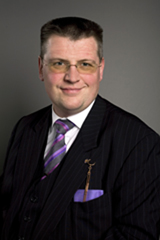
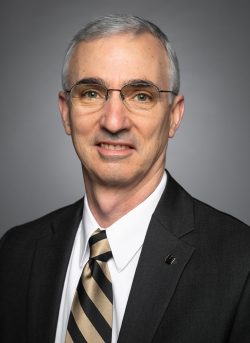
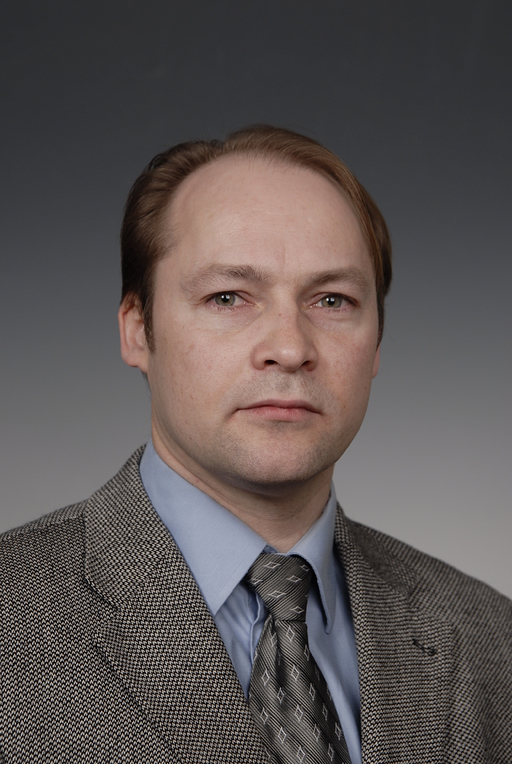
Sunder Kekre is the Vasantrao Dempo Professor of Operations Management at Carnegie Mellon University’s Tepper School of Business , where he has held academic appointments since 1984. His research focuses on manufacturing systems, global supply chains, and healthcare operations management. Research Expertise : New product development structures, strategic costing, lean innovation, knowledge sharing in enterprise networks, and business analytics for coordinated supply chains. Key Publications : Contributions to journals like Management Science , Operations Research , and Production and Operations Management , with work on LNG storage valuation, RFID logistics, and healthcare disparities. Scientific Recognition : Dempo Chair Professorship Bosch Chair Professorship Best Paper Award (1995) Teaching : Courses in Operations Management, Strategic Management of the Enterprise, and Information Systems Project. Non-Academic Experience : Prior engineering roles at Tata Steel (1974-1980) and consulting engagements with Fortune 500 firms like Bosch, Caterpillar, and IBM.
Myrto Kalouptsidi is a Professor of Economics at Harvard University. She specializes in Industrial Organization, International Trade, and Transportation Markets. Her research explores industrial policy impacts, global trade dynamics, firm investment patterns in volatile industries, and structural modeling of transportation markets. Education: BA from University of Athens, PhD from Yale University Former faculty at Princeton University Foreign Editor at Review of Economic Studies Research Fellow at NBER and CEPR Notable awards include the Frisch Medal (2022) for her work in Econometrica and the Bodossaki Young Scientist Prize (2021) . She has secured multiple NSF grants, including a CAREER grant in 2019. Her research has been widely recognized in outlets like The Economist, LSE Business Review, and Microeconomic Insights. She advises graduate students and contributes to structural modeling advancements through publications in top journals including American Economic Review, Econometrica, and Review of Economic Studies.
Dr. Wade Smith is a Senior Lecturer within the School of Mechanical and Manufacturing Engineering at the University of New South Wales. He is an active member of the WAVES research group (Wear, Aeroacoustics and Vibration in Engineering Systems) and conducts his research in the Tribology and Machine Condition Monitoring laboratory. His primary research interests include vibration-based diagnostics of rotating machinery, prognostics of rotating machinery, gear wear monitoring and prediction, simulation and modeling of rotating machines for diagnostic applications, and signal processing of machine vibration signatures using cyclostationarity. His work has significant applications in industrial machinery health monitoring and predictive maintenance systems. Dr. Smith's recent publications demonstrate a consistent focus on advanced diagnostic techniques for rotating machinery, with particular emphasis on gear systems and bearings. His research integrates traditional mechanical engineering principles with modern signal processing and machine learning approaches to develop more effective condition monitoring solutions. He actively supervises PhD and Masters students on projects related to gear diagnostics, wear monitoring, and vibration analysis. His current research projects include gear diagnostics in planetary gearboxes using internal sensors, gear wear monitoring and prediction, sliding contact-induced vibration studies, and transmission-error-based gear diagnostics. Dr. Smith's laboratory is equipped with specialized facilities including gearbox test rigs (both planetary and parallel configurations), a rolling element bearing test rig, an engine test rig, friction rig, tribometer, high-quality microscope, and extensive instrumentation for vibration analysis. His research has attracted collaborations with institutions including Queensland University of Technology, SpectraQuest (USA), Weir Minerals, University of Technology Sydney, RWTH Aachen University (Germany), and Safran.
Sverre Steen is a Professor and Head of the Department of Marine Technology at the Norwegian University of Science and Technology (NTNU). He leads the Kongsberg Maritime University Technology Centre focused on 'Ship Performance and Cyber-physical Systems' and is a member of the standing committee for the Symposium of Marine Propulsors. His research emphasizes ship propulsion, hydrodynamics, and big data analysis of in-service vessel performance. Key interests include seakeeping, high-speed marine vehicles, and model testing techniques. Steen teaches TMR 4217 Hydrodynamics of High-Speed Marine Vehicles , covering cavitation, experimental hydrodynamics, and propulsion systems. He collaborates internationally on projects like the Norwegian Ocean Technology Centre. His recent work explores wave-energy extraction via hydrofoil vessels, resistance modeling for fast ferries, and propulsion efficiency in real sea states. He has contributed to global shipping emission models (MariTEAM) and reliability analysis of structural components under vibration. Steen's publications span propulsion in waves, engine-propeller dynamics, and data-driven methods for ship performance monitoring. His applied research bridges experimental testing and computational modeling to address challenges in sustainable maritime transport and operational safety.
Professor Jonathan Adams holds a Chair in Archaeology at the University of Southampton's Department of Archaeology. He leads the Centre for Maritime Archaeology (CMA), established in 1997, and teaches at both undergraduate and postgraduate levels. His career spans over 30 years, including pivotal roles in the Mary Rose excavation and foundational work in deepwater maritime archaeology. Adams specializes in the Black Sea region, focusing on environmental change impacts on prehistoric populations, maritime connectivity, and naval technology's role in state-building. Affiliations: Centre for Maritime Archaeology, Southampton Marine and Maritime Institute Key Projects: Black Sea Maritime Archaeology Project (since 2015), Ships of State (with Södertörn University) Education: BA in Archaeology & Ancient History (Durham University), DPhil in Maritime Archaeology (Stockholm University). His research integrates ship science, oceanography, and historical analysis. He currently supervises seven PhD students and has mentored over 500 graduates through the MA/MSc in Maritime Archaeology program launched in 1995. Research Interests: Chronology of environmental change in the Black Sea Maritime connectivity across historical periods Role of naval architecture in early modern state development
Kristijan Poljanec is an Assistant Professor at the Department of Business Law, Faculty of Economics and Business, University of Zagreb. He teaches commercial law, EU internal market law, and digital market law in Croatian and English. He holds a law degree and doctorate from the University of Zagreb's Faculty of Law, specializing in auction sales. His research spans commercial law, corporate governance, EU regulatory frameworks, auction mechanisms, and digital market legal challenges. He has published extensively, including the monograph Legal Theory of Auction (Routledge, 2023), exploring auction structures and modern e-commerce implications. Poljanec received the Mijo Mirković Award (2018) for research on bankruptcy proceedings and recognition from the Dr Jadranko Crnić Foundation (2023) for co-authoring Private Law of the European Union - Special Part . He participates in international projects like the EU's Corporate Sustainability initiative and leads ICC Croatia's Commercial Law Commission.
Amir R. Nejad is a Professor at the Department of Marine Technology, NTNU, and leads the Marine Energy Systems and Autonomics (MESA) research group. He chairs the EAWE WindEurope Scientific Track Committee and co-founded the Drivetrain Technical Committee at the European Academy of Wind Energy (EAWE). He is also involved in ISO committees, editorial boards of journals like Wind Energy Science , and contributes to standards for offshore wind energy. Education: Ph.D. in Marine Technology, NTNU (top 10% international ranking) M.Sc. Subsea Engineering, University of Aberdeen (Distinction) B.Sc. Mechanical Engineering, Tehran University (Honors) Research Interests: Focus on stochastic and reliability-based design, dynamic modeling of electro-mechanical systems, fault detection, and condition monitoring in marine and offshore renewable energy applications. Key areas include wind turbine drivetrains, floating offshore systems, and digital twin technology. Awards: 2x Best Lecturer, NTNU (2015-2016, 2019-2020) Best Poster Award, Torque Conference 2016 Nowitech Ph.D. Fellowship, 2012-2015 Advising & Grants: Supervises Ph.D. students in drivetrain design and offshore systems. Leads projects on marine system dynamics and vibration through the MD Lab. Collaborates with industry on drivetrain testing and reliability. Labs & Teams: Director of the Marine System Dynamics and Vibration Lab (MD Lab), fostering innovation in offshore renewable energy systems and digital twin applications.
Hans Bihs is a Professor in the Department of Civil and Environmental Engineering, Faculty of Engineering. His research focuses on computational fluid dynamics (CFD), wave hydrodynamics, and wave-structure interaction using the open-source framework REEF3D. Key Research Areas: CFD simulations, wave modeling, floating body dynamics, ocean wave energy, aquaculture hydrodynamics, sediment transport, and high-performance computing. Projects: ERC Consolidator Grant PARTRES (2023-2028), EEA Grants Portugal SurfWave (2023), NFR KPN IPIRIS (2021-2025), EEA Baltic SolidShore (2021-2024), NTNU's MAPLE (2022-2025), and DigiCoast (2021-2024). Email: hans.bihs@ntnu.no His recent publications (2025-2020) analyze fluid-structure interaction, ship-induced waves, floating offshore wind turbines, submerged vegetation, and coastal structures using advanced CFD techniques. Topics include wave hydrodynamics, turbulence, and numerical modeling for marine and aquaculture systems.
Daniel McCoy is an Assistant Professor in the Department of Atmospheric Science and Founding Adjunct Faculty in the School of Computing at the University of Wyoming. His research examines the role of clouds in the climate system, focusing on cloud physics, climate modeling, and aerosol-cloud interactions. Education: B.S. in Physics, New Mexico Institute of Mining and Technology (2010) Ph.D. in Atmospheric Science, University of Washington (2016) Postdoctoral Fellow in Atmospheric Science, University of Leeds (2016-2020) Dr. McCoy’s work spans climate sensitivity analysis, aerosol forcing, and cloud feedback mechanisms. He employs climate models and remote sensing to study how clouds respond to warming and how aerosols influence radiative forcing and precipitation efficiency. Recent publications highlight his contributions to understanding extratropical cloud feedbacks, Southern Ocean cloud dynamics, and perturbed parameter ensembles for climate models. His research group investigates connections between cloud morphology, radiative susceptibility, and the hydrological cycle. Contact: Email daniel.mccoy@uwyo.edu , Office EN 6029, University of Wyoming.
Paolo Sellari is an Associate Professor in the Department of Political Science at Sapienza University of Rome, where he contributes significantly to research and teaching in political and economic geography, geopolitics, and infrastructure security. He is affiliated with the research group Geopolitics of the Sea and plays a key role in the Master in Geopolitics and Global Security , contributing to curriculum development and academic supervision. Department: Department of Political Science University: Sapienza University of Rome Email: paolo.sellari@uniroma1.it His research interests span a broad yet interconnected spectrum, including maritime geopolitics, Mediterranean and Arctic strategic dynamics, Chinese foreign policy (especially the Belt and Road Initiative), infrastructure as instruments of power, and the geopolitics of climate change. He also explores unconventional intersections such as sports and geopolitics. His scholarly work emphasizes spatial dimensions of power, resilience, and connectivity in a rapidly transforming global order. The analysis of his recent publications (2023–2025) reveals a strong thematic consistency focused on maritime routes, infrastructure security, and the evolving geopolitical roles of the Mediterranean and Arctic regions. His work frequently addresses the interplay between physical geography and power projection, with a particular interest in how climate change, technological evolution, and strategic investments reshape global and regional orders. He contributes to both academic journals and reference works, including the Italian Encyclopedia. While specific scientific awards are not listed in the provided texts, his consistent publication record in reputable venues and leadership in advanced academic programs suggest recognition within the academic community. Sellari advises students through the Master in Geopolitics and Global Security and is involved in organizing seminars and educational content. Although no direct mention of grants is made, his editorial roles and institutional leadership imply active engagement in academic projects and collaborations. He supervises thesis work and contributes to academic discourse through prefaces, introductions, and editorial reviews. He is a core member of the Geopolitics of the Sea research group, which focuses on maritime spatial dynamics, naval security, and the geopolitical implications of oceanic infrastructure and climate change. This group serves as a hub for interdisciplinary research connecting geography, political science, and security studies.
Markus A. Denzel is a Full Professor and Head of the Chair of Social and Economic History at the University of Leipzig since 2002. He also holds a Contract Professorship in Economic History at the Free University of Bolzano since 2000. He served as Dean (2005-2008) and Dean of Studies (2003-2005) at the Faculty of History, Arts and Oriental Studies in Leipzig. His research focuses on Economic History , Financial Systems , and Medieval/Early Modern Commercial Practices , with a particular emphasis on payment systems, merchant networks, and trade integration across Europe and its colonies. His work spans from the 13th century to the early 20th century , analyzing historical financial instruments like bills of exchange, marine insurance, and cashless transactions. 2009 : The Merchant Family in "Oberdeutsche Hochfinanz" 2008 : Latin America's cashless payments system 2007 : Munich's pre-modern financial systems 2006 : Marine insurance in the Mediterranean 2005 : Italian merchants in late Byzantium He received the Heinz Maier-Leibniz Prize (1998) for outstanding contributions to research in economic history.
James S. Noble is a Professor and Chair of the Department of Industrial and Systems Engineering at the University of Missouri, where he also serves as the MU Site Director for the NSF I/UCRC Center for Excellence in Logistics and Distribution (CELDi). His work bridges academia and industry through applied research in logistics, supply chain, and integrated production systems. PhD, Purdue University MS, Purdue University BS, University of Oklahoma Dr. Noble's research focuses on logistics and distribution , supply chain system design , and integrated production systems , with applications ranging from humanitarian logistics to intelligent warehouse systems. His work emphasizes modeling, analysis, and optimization of material flow and transportation systems. The 15 most recent articles reflect a consistent trajectory in logistics systems analysis , supply chain modeling , and material flow improvement . These publications demonstrate a strong integration of operations research, systems engineering, and real-world problem-solving, with applications in energy, transportation, humanitarian aid, and industrial logistics. Keywords span Operations Research , Supply Chain Management , and Industrial Engineering , while sub-fields include Bayesian forecasting, reverse logistics, winter road maintenance, and intelligent systems. Dr. Noble has been recognized with several prestigious awards: Society of Manufacturing Engineers Outstanding Young Manufacturing Engineering Award (1997) William T. Kemper Fellowship for Teaching Excellence (2022) Win Horner Award for Innovative Writing Intensive Teaching (2014) Elected Fellow of the Institute for Industrial and Systems Engineering (IISE) (2019) His research has been generously funded by the National Science Foundation , Bayer , Boeing , Hallmark Cards , Honeywell FMT , Medline , Ameren , UMB Financial , the U.S. Economic Development Administration , the Midwest Transportation Consortium , and the Missouri Department of Transportation . While specific advisees are not listed, his leadership in CELDi and role as department chair suggest extensive mentorship of graduate and undergraduate students in real-world logistics projects. He is also a registered Professional Engineer in Missouri. As MU Site Director for CELDi, Dr. Noble leads a multidisciplinary team of faculty from Industrial Engineering, Civil Engineering, Geography, and Biological Engineering, collaborating with over 30 industry, military, and government partners to solve real-world logistics challenges and develop implementable, cutting-edge solutions.
Craig Lee is a Professor of Oceanography at the University of Washington, where he also serves as Senior Principal Oceanographer and Assistant Director for Research at the Applied Physics Laboratory. His work focuses on physical oceanography with emphasis on observational studies and instrument development. Lee leads research programs studying upper ocean dynamics, coastal processes, and high-latitude oceanography across diverse regions including the Arctic, North Atlantic, and South China Sea. Dr. Lee's educational background includes: B.S. in Electrical Engineering and Computer Science from the University of California, Berkeley (1987) Ph.D. in Physical Oceanography from the University of Washington (1995) Lee's primary research interests center on three interconnected areas: (1) upper ocean dynamics, particularly mesoscale and submesoscale fronts and eddies; (2) interactions between biology, biogeochemistry and ocean physics; and (3) high-latitude oceanography in changing Arctic environments. His work often combines field observations with instrument development to address fundamental questions about ocean circulation and its role in climate systems. He has pioneered approaches using autonomous platforms to study difficult-to-access regions like ice-covered waters. Analysis of Lee's recent publications reveals a strong focus on Arctic oceanography, upper ocean mixing processes, and the application of autonomous observing technologies. His research spans multiple ocean basins with particular emphasis on the Arctic, North Atlantic, and western Pacific. A notable trend is the increasing integration of biogeochemical measurements with physical oceanography to understand coupled systems. His work often addresses climate-relevant questions about ocean circulation, heat transport, and ecosystem responses to environmental change. Dr. Lee provides leadership through service on science steering committees for large research programs and advisory panels for U.S. Arctic efforts. He actively supports and advises graduate students while teaching courses on ocean circulation observations and experimental design. His team has developed innovative technologies including autonomous gliders for ice-covered waters, high-performance towed vehicles, and lightweight mooring systems. Lee leads a research team pursuing diverse field programs including Arctic PISCES, Stratified Ocean Dynamics of the Arctic (SODA), and studies of the Kuroshio Current. His group collaborates extensively with institutions worldwide and contributes to major international research initiatives focused on understanding ocean processes and their climate implications.
Dr. Karim Sabra is a Professor at the George W. Woodruff School of Mechanical Engineering , Georgia Institute of Technology, specializing in Acoustics and Dynamics . He holds a Ph.D. from the University of Michigan (2003) and joined Georgia Tech in 2007 as an Assistant Professor. His research integrates theoretical and experimental approaches to study wave propagation in diverse fields including structural health monitoring, biomechanics, and ocean acoustics. Key areas of focus include passive imaging techniques using ambient noise and diffuse wave fields, with applications in non-invasive monitoring of mechanical systems and seismoacoustic environments. Education: Ph.D., University of Michigan, 2003 M.S., University of Michigan, 2000 M.Sc., École Nationale Supérieure de Techniques Avancées (France), 2000 Research Interests: Dr. Sabra’s work spans acoustics, structural health monitoring, biomechanical systems evaluation, underwater acoustics, and geophysics . Recent projects include developing passive elastography techniques for soft tissues using physiological vibrations and exploring ambient noise-based tomography for ocean environments. His interdisciplinary approach bridges multi-scale engineering challenges with multi-wave tools (acoustical, electrical, optical). Publications: His work focuses on advanced acoustic technologies, including underwater communication systems, passive acoustic identification tags, and ray-based tomography methods. Themes include seamount effects on sound propagation, machine learning for acoustic modeling, and environmental sensing using shipping noise. Awards: R. Bruce Lindsay Award (2011) Fellow of the Acoustical Society of America (2007) Institute of Acoustics A.B. Wood Medal (2009) Advising & Grants: Dr. Sabra mentors graduate students in acoustics and wave phenomena, emphasizing interdisciplinary collaboration. His research is supported by grants focused on underwater acoustics, environmental sensing, and biomedical applications. Labs/Teams: His research group develops novel sensors and algorithms for oceanographic and biomedical applications, collaborating with industry and academic partners.
Heikki Remes serves as Associate Professor in the Department of Energy and Mechanical Engineering at Aalto University's School of Engineering, where he investigates high-performance steel structures for marine environments with emphasis on lightweight ship designs using advanced materials and manufacturing techniques. His research integrates fundamental fatigue and fracture mechanics with practical structural challenges, spanning from crystal-level material behavior to continuum-scale modeling. Key focus areas include welded joint integrity, additive manufacturing defects, and computational analysis of marine structures under extreme conditions. Recent publications reveal strong trends in fatigue assessment methodologies for complex welded geometries, experimental validation of distortion effects, and AI-enhanced damage prediction systems, reflecting his commitment to bridging theoretical mechanics with shipbuilding applications. Scientific Awards: Aalto Education Impact Award (2018) for establishing Marine Technology study programs SNAME Honorable Mention for 2018 Vice Admiral E. L. Cochrane Award Teaching Award of Aalto School of Engineering (2012) for educational tools No specific student advising or grant information appears in available sources, though his active publication record indicates ongoing research leadership. He contributes significantly to the Marine and Arctic Technology research group, driving projects on structural integrity assessment and advanced manufacturing solutions for next-generation marine vessels.