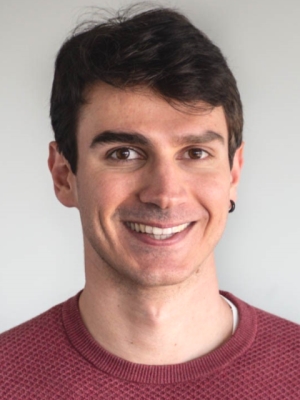
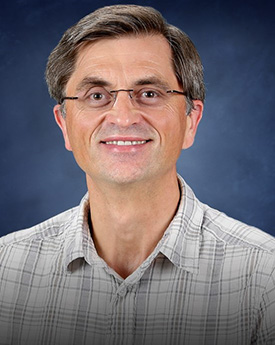
Dr. Iason Sideris is affiliated with ETH Zürich's Department of Neue Fertigungstechnologien (New Manufacturing Technologies), holding a Researcher position within the Professorship for Advanced Manufacturing. His work focuses on advancing additive manufacturing techniques, particularly in path planning optimization, temperature control, and material processing. He contributes to fields like Direct Energy Deposition, Wire-Arc Additive Manufacturing (WAAM), and data-driven finite volume methods. Key Research Areas: Additive Manufacturing, Thermal Modeling, Process Optimization, Materials Science Recent research emphasizes scalable path planning for temperature uniformity in AM processes, with publications addressing challenges in WAAM thermal management and real-time simulation methods. His work combines computational modeling with experimental validation to enhance manufacturing efficiency and material properties.
Joydeep Biswas is an Associate Professor in the Computer Science Department at the University of Texas at Austin, where he serves as the Director of the Autonomous Mobile Robotics Laboratory (AMRL). He is also affiliated with Texas Robotics, the UT Machine Learning Laboratory, and UT Good Systems. Previously, he was an Assistant Professor in the College of Information and Computer Sciences at the University of Massachusetts Amherst. Dr. Biswas earned his PhD in Robotics from Carnegie Mellon University in 2014 and his B.Tech in Engineering Physics from the Indian Institute of Technology Bombay in 2008. His educational background has provided him with a strong foundation in both theoretical and applied aspects of robotics and artificial intelligence. Dr. Biswas's research focuses on enabling long-term autonomy for mobile robots operating in human environments. His work spans robot perception, motion planning, control systems, and AI, with the ultimate goal of creating self-sufficient autonomous mobile robots that can perform tasks accurately and robustly in real-world settings. He is particularly interested in perception, planning, and failure recovery for autonomous mobile robots, which supports his vision of having autonomous service mobile robots deployed at campus-to-city scale, both indoors and outdoors, performing assistive tasks over deployments spanning years. His IJCAI 2019 Early Career Spotlight talk summarizes much of his research to date and ongoing interests. His recent research has shown a strong trend toward social navigation, human-robot interaction, and the application of machine learning techniques to robotics problems. There's a clear progression from fundamental robotics research toward more complex, real-world applications that require robots to understand and navigate human social spaces effectively. His work increasingly integrates large language models and other advanced AI techniques with traditional robotics approaches, as evidenced by his recent publications on topics like preference-conditioned navigation, social navigation benchmarks, and instruction-following navigation systems. Dr. Biswas has received numerous prestigious awards including the NSF CAREER Award (2021), J.P. Morgan Faculty Research Award (2019), Amazon Research Award (2019), and a grant from Northrop Grumman Mission Systems (2018). These awards recognize his innovative contributions to the field of robotics and autonomous systems. As a dedicated educator and mentor, Dr. Biswas actively supervises PhD and master's students, with his PhD student Sadegh Rabiee winning the student poster award at the Northrop Grumman University Symposium 2019. He has secured significant grant funding from the National Science Foundation for projects including 'Introspective Perception and Planning for Long-Term Autonomy' and 'Interactive Synthesis and Repair For Robot Programs,' demonstrating his ability to secure competitive research funding and his commitment to advancing the field. Dr. Biswas leads the Autonomous Mobile Robotics Laboratory (AMRL), which serves as a hub for interdisciplinary research in mobile robotics. The lab has developed notable resources such as the UT Campus Object Dataset (CODA) for 3D perception research and SOCIALGYM, a framework for benchmarking social robot navigation. His team regularly deploys robots on the UT Austin campus and in urban environments to test and refine their approaches in realistic settings, bridging the gap between simulation and real-world application.
John P. O'Doherty serves as the Fletcher Jones Professor of Decision Neuroscience within Caltech's Division of Humanities and Social Sciences, holding continuous faculty appointments since 2004 (Assistant Professor 2004-07, Associate Professor 2007-09, Professor 2009-present, Fletcher Jones Professor 2021-present). He previously directed the Caltech Brain Imaging Center (2013-17) and maintains affiliations with the T&C Chen Center for Social and Decision Neuroscience. His educational background includes a B.A. from University of Dublin, Trinity College (1996) and D.Phil. from University of Oxford (2000). His research focuses on computational and neural mechanisms of reward-based learning and decision-making , employing fMRI, intracranial recordings, and mathematical modeling to investigate how the brain solves complex decision problems through evolutionarily conserved algorithms. Key areas include Reinforcement learning systems (model-based/model-free arbitration) Observational and social learning mechanisms Neural representation of value, risk, and uncertainty Computational phenotyping of mental disorders Temporal dynamics of goal persistence Analysis of his 2023-2025 publications reveals dominant trends in computational psychiatry (problem gambling, autism traits), hierarchical decision-making, and neuroeconomic modeling of social behavior. His work consistently integrates cross-species computational frameworks with human neuroimaging to identify transdiagnostic mechanisms. While specific awards beyond his endowed professorship aren't detailed, his leadership as Brain Imaging Center Director and prolific high-impact publications demonstrate significant recognition. Current advising includes graduate researcher Sneha Aenugu on goal-persistence projects, with administrative support from Mary A. Martin (mmartin@caltech.edu). His active research program continues to pioneer computational approaches to understanding decision pathologies.
Prof. Dr. Markus Zimmermann leads the Chair of Product Development and Lightweight Design at the Technical University of Munich (TUM). With a background in mechanical engineering from TU Berlin and the University of Michigan, and a doctorate from MIT on solid-state singularities, he bridges academic rigor with industrial application. His career spans 12 years at BMW focusing on vehicle development before transitioning to academia. Specializes in solution space engineering for robust design Expert in additive manufacturing and systems engineering Develops methodologies for managing design complexity and uncertainty His research focuses on multidisciplinary design optimization and lightweight structures , particularly in robotics and automotive systems . His team applies digital twin frameworks and attribute dependency graphs to enhance design processes. Recent publications emphasize topology optimization in robotic systems and thermal management for medical X-ray sources. Key trends in his 2024-2025 publications include: Topological optimization for additive manufacturing and robotics Application of solution spaces to manage design uncertainty Development of compact X-ray systems for medical therapy Integration of digital twin technologies in industrial contexts
Assoc Prof Ng Teng Yong is an Associate Professor at the School of Mechanical & Aerospace Engineering (NTU), specializing in numerical modeling and simulation. With a background as Research Manager at A*STAR Institute of High Performance Computing, his work spans materials science, nanotechnology, and aerospace engineering. Current focus on graphene-based desalination membranes Expertise in molecular dynamics simulations Investigates nanoscale fluid mechanics and structural dynamics Recent publications highlight advancements in energy-efficient electrodialysis, smart robotics, and nonlinear vibration analysis. His interdisciplinary approach integrates computational methods with experimental validation in additive manufacturing and soft material mechanics.
Pablo Fajardo Peña is a Full Professor in the Department of Aerospace Engineering at Universidad Carlos III de Madrid (UC3M). He leads the Plasmas and Space Propulsion Team (EP2) and co-directs the Aerospace Engineering Research Group. His research focuses on advanced propulsion technologies for space applications, including plasma thrusters, electric propulsion, and fluid-thermal systems. Professor Peña's work spans computational modeling of plasma dynamics, experimental characterization of propulsion systems, and development of novel thrusters like Hall effect thrusters and electrospray systems. His recent publications analyze plasma discharge mechanisms, thruster plume behavior, magnetic nozzle effects, and propellant interactions. He leads multiple EU and Spanish-funded projects including HIPATIA (Helicon Plasma Thruster), CHEOPS (Hall Effect Orbital Propulsion), and ADAPT (Advanced Plasma Propulsion). These initiatives focus on developing efficient propulsion systems for spacecraft and addressing challenges in space debris removal. Professor Peña supervises doctoral research on plasma diagnostics and thruster simulation, and has developed simulation tools like HYPHEN (Hybrid Plasma Thruster Holistic Environment). His team collaborates with ESA, Airbus, and SENER Aeroespacial on propulsion technology validation.
Susanna Thon is an Associate Professor in the Department of Electrical and Computer Engineering at Johns Hopkins University (JHU), affiliated with the Whiting School of Engineering. She serves as Associate Director of the Ralph O’Connor Sustainable Energy Institute (ROSEI) and a member of the Data Science and AI Institute. Her research focuses on nanomaterials engineering for optoelectronic devices, emphasizing solar energy conversion and sensing. Notable areas include plasmonic-photocatalytic systems using aluminum nanoparticles and nanostructured materials like colloidal quantum dots for next-generation devices. Thon holds a BSc from MIT (2005) and MSc/PhD in Physics from UC Santa Barbara (2008/2010). She joined JHU in 2013 after postdoctoral work at the University of Toronto. Her work is funded by agencies such as the NSF, U.S. Army, and Maryland Energy Innovation Institute. She has published over 50 peer-reviewed papers and received JHU’s Catalyst and Discovery awards. Key research projects include developing plasmonic systems to enhance light absorption in titanium dioxide and creating scalable fabrication techniques for optoelectronic materials. Thon’s team also advances quantum dot solar cells and novel characterization methods for energy materials. She actively participates in professional societies, including the Optical Society of America and IEEE. Her grants and collaborations aim to train the next generation in sustainable energy research, with recent initiatives funded through NSF and Space@Hopkins seed grants. Thon’s lab integrates nanophotonics, materials science, and machine learning to address global energy challenges.
Dr. phil. André Fiebig is a Permanent Research Associate and PostDoc at the Institute of Fluid Mechanics and Technical Acoustics (ISTA) within Faculty V - Transportation and Mechanical Systems at Technical University of Berlin. From January 2019 to December 2024, he served as a Visiting Professor responsible for the field of psychoacoustics, funded by the HEAD Genuit Foundation. Since January 2025, he has been leading the 'Psychoacoustics and Noise Effects' working group at the Department of Technical Acoustics. His research spans multiple areas within psychoacoustics and soundscape studies, including fundamentals and modeling of psychoacoustic sensation variables, binaural psychoacoustics, assessment of ambient noise and soundscapes, and psychoacoustic evaluation of sound insulation measures. His work also addresses cognitive stimulus integration of auditory sensations, auditory recreation, acoustic quality of stay, characterization of quiet areas, and measuring sound-induced emotions. Analysis of his recent publications reveals a strong focus on urban soundscapes, noise-conscious behavior in transportation, and the development of methodological frameworks for soundscape assessment. His work often integrates psychoacoustic principles with environmental considerations, particularly examining the relationship between sound environments and human health. Recent research shows increasing emphasis on cross-cultural studies of noise perception and the development of standardized assessment methodologies. Dr. Fiebig is involved in the EARS (Education and Applied Research on Soundscapes) initiative and has contributed to numerous collaborative research projects examining the intersection of urban planning, environmental acoustics, and human perception. His work frequently appears in major acoustics conferences and journals, demonstrating his active role in advancing the field of psychoacoustics and soundscape research. His laboratory work focuses on psychoacoustic testing methodologies, soundscape assessment techniques, and the development of evaluation instruments for noise protection measures. The 'Psychoacoustics and Noise Effects' working group under his leadership conducts research on both theoretical aspects of sound perception and practical applications for urban noise management.
Dr. Farhad Aslani is an Associate Professor in the Department of Civil, Environmental and Mining Engineering at the University of Western Australia (UWA), serving as Director of the Materials and Structures Innovation Group. He leads the $250M Australian Composites Manufacturing CRC and co-leads UWA's Engineering Materials Research Cluster. His research focuses on innovative construction materials, including self-sensing concrete, 3D-printed composites, and fire-resistant materials. He has secured over $20M in CRC funding and holds leadership roles in national/international conferences. Key awards include the 2024 Concrete Institute WA Rising Star Award and multiple citation milestones. His work aligns with sustainable development goals, emphasizing eco-friendly materials and infrastructure resilience. Education: PhD in Structural Engineering, University of Technology Sydney (2014) Certificates in Leadership, Research Commercialization, Public Policy, and Project Management from Curtin University, Queensland University of Technology, RMIT, and UTS. Research Interests: Smart materials, sustainable concrete technologies, additive manufacturing, blast/fire resistance, and composites for infrastructure. His lab develops self-sensing concretes, lightweight engineered composites, and electromagnetic shielding materials. Grants & Projects: $4.3M ACM CRC project on composite repairs ARC grants for nanocomposite coatings and fire facilities Main Roads WA funding for timber bridge strengthening Expertise: Structural design, composite materials, and industrial collaborations (e.g., Woodside, Holcim). He advises on major projects like the Morley Ellenbrook Rail Line and Forrestfield Airport Link. Awards: 2024 Concrete Institute WA Rising Star Highly Cited Scholar (ScholarGPS, 2024) Most Cited Paper Awards (2018–2020)
Ranjan D'Mello is a full-time Professor of Finance at the Mike Ilitch School of Business, Wayne State University, where he has been a faculty member since 2001 and was appointed full professor in 2017. He previously served as Assistant Professor at the University of New Orleans from 1995 to 2001. His administrative roles include Interim Associate Dean (2011–2012) and Interim Finance Department Chair (2010–2011). Education: Ph.D., The Ohio State University, 1995 MBA, The Ohio State University, 1990 M.Com, Sydenham College, 1988 B.Com, Sydenham College, 1986 Ranjan D'Mello's research centers on corporate finance, with a focus on capital structure, executive compensation, trade credit, agency problems, internal capital markets, and corporate social responsibility. His work investigates how firms make financing and investment decisions, the role of debt and equity in corporate policy, and how governance mechanisms like institutional ownership and compensation structures influence firm behavior. He frequently publishes in top-tier finance and accounting journals. His recent publications (2023–2003) reflect a strong empirical focus on corporate financial policy, including trends in leverage, trade credit, CSR, and equity issuance. The articles span disciplines such as finance, accounting, and economics, with recurring themes in capital structure optimization, agency theory, and financial decision-making under uncertainty. Scientific Awards: Excellence in Teaching Award – 2013, Wayne State University Excellence in Teaching Award – 2006, Wayne State University Best Paper in Corporate Finance, Southwestern Finance Association (2006) Ranjan D'Mello has made significant contributions to finance education and research, advising numerous co-authors and contributing to working papers on topics like the marginal value of cash and climate change risk disclosure. He teaches advanced courses in corporate and international finance, including FIN5270 and BA7020, with scheduled instruction through Winter 2025, reflecting his active engagement in academic programs. Labs and Research Teams: While no formal lab is mentioned, Ranjan collaborates extensively with co-authors such as Mark Gruskin, Francesca Toscano, and Mercedes Miranda on research projects related to corporate finance and governance. His work is associated with the Finance department’s research initiatives at the Mike Ilitch School of Business.
Noel T. Clemens serves as a Professor and holds the prestigious Clare Cockrell Williams Centennial Chair in Engineering within the Aerospace Engineering and Engineering Mechanics Department at the University of Texas at Austin's Cockrell School of Engineering. He has been a faculty member since 1993 and served as department chair from 2012 to 2020. His research laboratory is part of the Center for Aeromechanics Research (CAR) where he directs the Flowfield Imaging Laboratory. Dr. Clemens' research focuses on experimental investigations of hypersonic flows, turbulent combustion, and advanced optical diagnostic techniques. His current work emphasizes 3D shock wave/boundary layer interactions, inlet unstart control, flashback in high-pressure combustors, turbulent combustion with non-equilibrium effects, and high-temperature ablation phenomena. He has pioneered laser-based measurement techniques for extreme environments, particularly for hypersonic flight applications where conventional measurement approaches fail. His recent publication record through 2025 demonstrates continued leadership in experimental fluid dynamics, with particular emphasis on plasma diagnostics for ablation studies, shock/boundary layer interaction physics, and advanced optical measurement techniques for extreme environments. The research spans fundamental fluid mechanics investigations to applied aerospace engineering problems relevant to hypersonic vehicle development. Elected to National Academy of Engineering (2024) AIAA Aerodynamic Measurement Technology Award (2022) Elected AIAA Fellow (2019) National Science Foundation Presidential Faculty Fellow (1996) Editor-in-Chief of Experiments in Fluids (2009-2013) Fellow of the American Physical Society Dr. Clemens has secured substantial research funding for his experimental investigations in hypersonics and combustion, leading multiple major research projects with government and industry partners. His laboratory facilities include advanced wind tunnels and state-of-the-art optical diagnostic systems for high-speed flow visualization. The Flowfield Imaging Laboratory at UT Austin serves as a national resource for advanced flow measurement techniques development. As an educator, he teaches core courses in compressible flow, viscous flow, combustion, experimental methods, and laser diagnostic techniques, training the next generation of aerospace engineers in both fundamental principles and cutting-edge measurement technologies.
Professor John D. Cressler is a tenured faculty member at the Georgia Institute of Technology, holding a position within the School of Electrical and Computer Engineering in the College of Engineering. His research focuses on cutting-edge semiconductor technologies, particularly silicon-germanium heterojunction bipolar transistors (SiGe HBTs) for mixed-signal applications spanning RF, microwave, mm-wave, analog, and digital domains. His research interests center on atomic-scale bandgap engineering for next-generation semiconductor devices, with emphasis on SiGe HBT technology development, radiation-hardened circuits for space applications, cryogenic electronics, and device-circuit interactions. His team explores fundamental device theory, broadband noise analysis, profile optimization, 2-D/3-D simulation, compact modeling, and radiation effects. Current projects include Europa-surface mission electronics, D-band/sub-THz systems, and radiation-tolerant receiver designs. Analysis of his 15 most recent publications (2024-2025) reveals a dominant focus on radiation-hardened electronics for space applications (40% of works), millimeter-wave circuit design (30%), and SiGe HBT reliability optimization (30%). Key trends include Europa mission electronics development, D-band/sub-THz circuit innovation, and advanced radiation mitigation techniques using SiGe BiCMOS technology. Professor Cressler teaches multiple courses including ECE 3040 (Microelectronic Circuits), ECE 3450 (Semiconductor Devices), ECE 6444 (Silicon-Based Heterostructure Devices and Circuits), and the interdisciplinary IAC 2002 course on Science, Engineering and Religion. His research is supported by industrial collaborations and Georgia Tech facilities including the Georgia Electronic Design Center (GEDC), NanoTECH, and C-STAR.
Mitchell L.R. Walker II is a tenured Professor and the W.R.T. Oakes Chair at the Daniel Guggenheim School of Aerospace Engineering , Georgia Institute of Technology . He serves as the Associate Chair for Graduate Studies and Director of the Joint Advanced Propulsion Institute . His research focuses on electric propulsion , plasma physics , and hypersonic aerodynamics/plasma interaction , with expertise in Hall thrusters, ion engines, and plasma diagnostics. Education : Ph.D. (2004), M.S.E. (2000), B.S.E. (1999) in Aerospace Engineering from the University of Michigan. Labs : Leads the High-Power Electric Propulsion Laboratory (HPEPL) , one of the largest academic vacuum test facilities for propulsion research. Dr. Walker has authored over 130 technical publications and holds patents in ion focusing and cold cathode technology . His 15 most recent articles focus on Hall thruster performance under varying propellants, advanced diagnostics (THz spectroscopy, Thomson scattering), and plasma-material interactions. His research trends highlight plasma stability , vacuum facility effects , and non-invasive diagnostics . Awards : AIAA Fellow (2023), Georgia Power Professor of Excellence (2017), AFOSR Young Investigator (2006), Lawrence Sperry Award (2010), NASA Faculty Fellow (2005). Service : Chair of AIAA Electric Propulsion Technical Committee, member of NASA Advisory Council, and contributor to national standards for electric propulsion testing .
Dr. Qingbo Sun is a researcher at the Department of Materials Physics, Australian National University, specializing in advanced materials for energy and electronic applications. His work focuses on defect engineering, dielectric materials, and photovoltaic effects in nanocrystalline systems. Research interests include: Defect-driven local symmetry breaking Colossal dielectric permittivity Photocatalytic heterojunctions High-pressure material transformations Doping strategies in semiconductors Nonlinear electric polarization Research trends from his publications highlight innovations in TiO2-based photocatalysts, SnO2 dielectrics, and ferroelectric heterostructures. Collaborations span materials synthesis, computational modeling, and international experimental studies. His work is cited extensively in Scopus with 294 citations.
Professor Stephen Croft is a faculty member at Lancaster University , affiliated with the School of Engineering . His research focuses on Nuclear Materials Measurement Science , with expertise in radiation detection, neutron interrogation, and X-ray/gamma-ray spectroscopy. Current projects include cosmic ray neutron monitoring , active neutron interrogation of nuclear materials , and radiation damage assessment . His recent publications emphasize semi-empirical modeling of atomic interactions and advanced detection techniques for nuclear applications. He has contributed to understanding vacancy transfer probabilities , X-ray fluorescence cross-sections , and water detection in nuclear environments . His work supports nuclear security, power plant safety, and space weather monitoring. Scientific awards : None explicitly mentioned in the text. Research groups : Involved in Nuclear Space Weather initiatives.