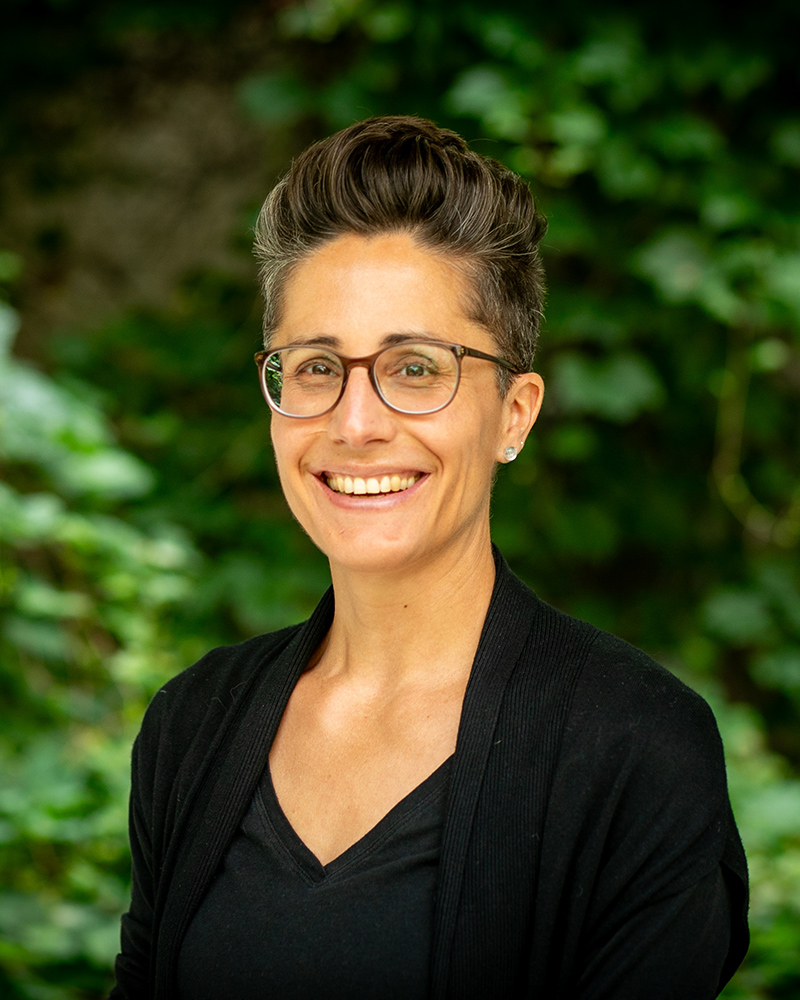
Alice de Boyer des Roches is a Teacher-researcher at VetAgro Sup's Veterinary Campus, affiliated with the Teaching Department of Livestock and Veterinary Public Health and the Research Unit UMR Herbivores. She serves as a key member of the Animal Welfare Chair, driving the development and dissemination of educational resources on animal welfare across French academic and agricultural institutions. Her research centers on Animal Welfare , Animal Behavior , and Pain Assessment in livestock, employing multiparametric methodologies to evaluate emotional states and physiological responses. She investigates critical issues including mastitis impacts in dairy cows, pain management during castration and disbudding procedures, and the influence of housing systems on behavioral welfare indicators, with strong emphasis on translational applications for farm management. Analysis of her publication record (2008-2019) reveals sustained focus on dairy cow welfare challenges, particularly disease-related behavioral changes and housing system evaluations, alongside innovative pain assessment studies in sheep and calves. Her work consistently bridges ethological observation with veterinary science to establish evidence-based welfare metrics. Within institutional frameworks, de Boyer des Roches actively shapes national discourse through her membership in the European College of Animal Welfare and Behavioural Medicine and the SN-GTV Animal Welfare Commission. Her leadership in the Animal Welfare Chair facilitates knowledge transfer via continuing education programs, MOOC development, and collaborative projects with INRA, ENSV, and the University of Lorraine.
Ana Maria Lopez Beceiro is a contracted professor at the Faculty of Veterinary Medicine , University of Santiago de Compostela , specializing in the Department of Anatomy, Animal Production and Veterinary Clinical Sciences . Her research focuses on Animal Medicine and Surgery within the MIV Veterinary Internal Medicine and Experimental Surgery groups. She earned a PhD in 1997 for her thesis on pharmacological agents in inhalation anesthesia for common voles. Her work spans Veterinary Hematology Infectious Disease Diagnostics Ruminant Health Reproductive Pathophysiology Toxicology . Her recent publications analyze: Canine Leishmaniosis diagnostics Rifampicin efficacy in monocytic ehrlichiosis Hematologic impacts of zearalenone Diagnostic cytology techniques Postpartum metabolic disorders Reproductive activity stress in rams .
Dr. Whit Stewart is an Associate Professor and Extension Sheep Specialist at the University of Wyoming , affiliated with the Department of Animal Science . His work integrates research, teaching, and extension to enhance the sustainability, productivity, and resilience of the U.S. sheep industry. Education: B.S. in Agriculture Education, Brigham Young University - Idaho M.S. in Animal Science, Oregon State University Ph.D. in Animal Science, New Mexico State University Research Interests focus on alternative feedstuffs, mineral supplementation, range sheep crossbreeding, and the role of plant secondary compounds in sheep production systems. His teaching portfolio includes advanced sheep production, wool evaluation, and lamb feeding systems. Extension Interests emphasize adopting emerging technologies, on-farm research, and decision-making tools for producers. He also serves as faculty advisor to the UW Collegiate Wool Growers and coach of the UW Intercollegiate Wool Judging Team. Professional Experience spans roles at the University of Wyoming (2017–present), Montana State University (2015–2017), and prior positions in research and extension.
Jingyue (Ellie) Duan is an Assistant Professor of Functional Genomics in the Department of Animal Science at Cornell University’s College of Agriculture and Life Sciences. Her research integrates genomics and computational approaches to study epigenetic regulation in animal health, fertility, and developmental biology. Bachelor of Science in Biology and Life Science, Sichuan University, China (2014) Doctorate in Animal Epigenetics, University of Connecticut (2018) Postdoctoral Research in Genetics and Genomics, Brown University (2021) Her research program focuses on: Molecular mechanisms of X chromosome dosage compensation across species Epigenetic dynamics during embryonic reprogramming Environmental influences (e.g., heat stress) on gene expression and animal health Comparative epigenetics in livestock and model organisms Transcriptional regulation via pioneer factors like CLAMP Maternal nutritional impacts on genomic imprinting The 15 most recent publications reveal trends in animal epigenetics with emphasis on X chromosome regulation , heat stress response , and embryonic developmental mechanisms . These works span functional genomics , transcriptomic analysis , and comparative aging studies . Scientific recognition includes: Schwartz Research Award (2025) Faculty Successful Program Fellowship (2023) Affinito-Stewart Grant Award (2022) She teaches graduate and undergraduate courses including Animal Genomics and Epigenomics (ANSC 4310/5310) and multiple thesis research courses. Her lab (Duan Functional Genomics Lab) emphasizes collaborative research, data integrity, and cross-disciplinary training in bioinformatics , NGS data analysis , and epigenetic mechanisms .
Tomas Norton is a Senior Lecturer at the Faculty of Bioscience Engineering, Department of Biosystems at KU Leuven. He is actively affiliated with multiple research units including the Division of Bio-Environmental Control, the KU Leuven Brain Institute (LBI), and the KU Leuven Institute for Integration of Micro- and Nano-scale Technologies (LIMNI). His work is centered at the Animal and Human (A2H) research unit located at Castle Park Arenberg. Dr. Norton's research focuses on precision livestock farming with particular expertise in computer vision, machine learning, and sensor technologies applied to animal monitoring. His current projects span sustainable agriculture, animal vocalization analysis, and bio-response monitoring systems across multiple species including poultry, pigs, and buffalo. He serves as promotor on numerous research initiatives funded through 2028-2029 that address critical challenges in sustainable food production while improving animal welfare. His recent publications demonstrate a strong trend toward AI-driven solutions for animal monitoring, with particular emphasis on behavior recognition, health assessment through sound analysis, and robotic management systems. These works appear primarily in agricultural technology journals with a focus on practical implementation of advanced computational methods in farming contexts. As an academic leader, Dr. Norton serves on the Faculty Council of Bioscience Engineering, the Doctoral Committee for Bioscience Engineering, and the Departmental Council for Biosystems. He teaches courses including Modelling of Biosystems, Bioresponse Measurements and Process Control, and Sustainable Precision Livestock Farming, integrating his research expertise directly into his educational practice. His laboratory work within the A2H unit represents a multidisciplinary approach that bridges engineering, computer science, and animal science to develop practical technological solutions for modern agricultural challenges, with particular emphasis on sustainability and welfare improvements in livestock production systems.
Ružica Trailović is an Associate Professor at the Department of Animal Husbandry within the Faculty of Veterinary Medicine at the University of Belgrade. She teaches a diverse range of courses including Clinical Pathology and Therapy of Hoofed Animals, Clinical Pathology and Therapy of Cats, Animal Husbandry, Cynology and Feline Science, Breeding and Care of Sports Horses, Sports Medicine, Breeding and Care of Dogs and Cats, Veterinary Genetics, and Biotechnology in Veterinary Medicine. Her educational background, while not explicitly detailed in the provided text, is evident from her extensive scholarly work and teaching responsibilities. She holds a doctorate (dr) and has achieved the rank of Associate Professor (vanredni profesor) at a prestigious Serbian academic institution. Professor Trailović's research focuses primarily on veterinary genetics and the conservation of autochthonous Balkan livestock breeds. Her work spans multiple species including sheep (particularly Zackel, Pramenka, and Karakachan breeds), horses (Yugoslav Trotters), dogs (Yugoslav Shepherds), goats, and donkeys. She has made significant contributions to understanding blood protein polymorphisms, genetic diversity, morphometric characteristics, and welfare assessment of traditional Balkan animal breeds. Her research methodology often combines classical animal husbandry approaches with modern genetic and biochemical analysis techniques. Her publication record shows a consistent research trajectory from the 1990s through 2020, with particular emphasis on preserving Balkan native livestock breeds through scientific documentation and genetic analysis. Her work demonstrates strong regional collaboration across Southeast Europe, particularly with researchers from Serbia, Kosovo, Macedonia, and other Balkan countries. Professor Trailović has co-authored numerous textbooks including 'Animal Husbandry - Farm and Social Animals' (2020), 'Animal Husbandry - Practical Guide' (multiple editions from 2007-2018), 'Horse Breeding and Equestrian Sports' (2009), and 'Diagnosis and Therapy of Horse Diseases' (2009), establishing herself as a leading authority in Serbian veterinary education. She has been actively involved in mentoring students through research projects, thesis supervision, and classroom instruction across multiple veterinary disciplines. Her teaching portfolio reflects comprehensive expertise spanning from basic animal husbandry to specialized clinical and genetic topics in veterinary medicine. Professor Trailović is part of a well-established research group at the University of Belgrade's Faculty of Veterinary Medicine, collaborating extensively with colleagues including Mila Savić, Vladimir Dimitrijević, and Dragiša Trailović (possibly a relative given the shared surname), indicating a strong research tradition in animal genetics and breeding at this institution.
Cyril Stephen is a Professor at the School of Agricultural, Environmental and Veterinary Sciences at Charles Sturt University, Australia. He is an active researcher and registered supervisor, with a strong focus on animal reproduction, particularly in beef cattle, sheep, and horses. His work integrates veterinary science, agricultural systems, and reproductive physiology, with significant contributions to understanding the impact of phytoestrogens on fertility and developing innovative technologies like the remote calving alert device. Education: BVSc & AH (Bachelor of Veterinary Science and Animal Husbandry) DVSc (Doctor of Veterinary Science) MANZCVS (Member of the Australian and New Zealand College of Veterinary Scientists) DipACT (Diploma in Animal Clinical Techniques) His research interests center on theriogenology , phytoestrogen effects on livestock fertility , embryo development , and reproductive management in agricultural animals . He investigates how natural compounds in pasture legumes affect conception rates and reproductive outcomes in cattle and sheep, aiming to improve breeding efficiency and animal welfare. The analysis of his recent publications reveals a consistent focus on reproductive challenges in livestock, particularly the influence of environmental and nutritional factors such as phytoestrogens. His work also extends to technological innovations in monitoring calving and improving neonatal survival. A recurring theme is the integration of clinical veterinary practice with agricultural science to solve real-world farming problems. Scientific Contributions and Recognition: Active editorial board member of Clinical Theriogenology Peer reviewer for the Ontario Agri-Food Innovation Alliance Tier 1 Research Program Invited speaker at the International Symposium of the Indian Society for Study of Animal Reproduction (ISSAR) 2021 Featured in multiple media outlets including ABC Southern Queensland for public engagement on calf loss prevention Cyril Stephen supervises both Honours and higher degree research (HDR) students, contributing to the next generation of veterinary and agricultural scientists. He has been involved in grant review responsibilities and collaborative research projects, particularly in the area of fertility control and reproductive technology. His work is supported by institutional and external engagement, reflecting strong interdisciplinary collaboration. He is affiliated with the Gulbali Research Institute at Charles Sturt University, which focuses on agricultural, environmental, and veterinary research. His team works on projects ranging from basic reproductive physiology to applied technology development, including sensor-based monitoring systems for extensive beef systems. Future research directions likely include expanding fertility control methods, refining reproductive technologies, and enhancing pasture management strategies to mitigate phytoestrogen risks.
Hannah Chazin is an Assistant Professor in the Department of Anthropology at Columbia University. Her office is located at 964 Schermerhorn Extension (Mail Code: 5523), with contact information including phone number (212) 854-7764 and email hc2986@columbia.edu. She maintains regular office hours on Mondays from 2:30-4 PM and has a professional website at http://www.hannah-chazin.com/. Her educational background includes: PhD in Anthropology from University of Chicago (2016) MA in Anthropology from University of Chicago (2011) Postdoctoral fellowship at Stanford Archaeology Center (2016-2017) Chazin's research focuses on human-animal relationships in the past and their connections to political power, inequality, and systems of value. She challenges conventional narratives that link contemporary inequality directly to deep historical processes like domestication. Her work spans Human/Animal Relations, Bodies & Medicine Empires, States and Sovereignties, Intellectual & Disciplinary Histories, Language, Social Theory, Critical Theory, and Art. More specifically, she concentrates on Human-Animal Relationships, Political Anthropology, Semiotics, Archaeological Theory and Methods, Zooarchaeology, and Isotope Analysis, with regional expertise in Eurasia, particularly the Caucasus and South Caucasus. Her scholarly output demonstrates a consistent interdisciplinary approach that bridges archaeology, anthropology, political theory, and material science. The 15 most recent publications reveal a strong focus on innovative zooarchaeological methods, particularly isotopic analysis, to investigate human-animal relationships in the Late Bronze Age South Caucasus. Her work consistently challenges deterministic narratives about the development of political systems and economic structures, emphasizing the diversity of human-animal entanglements in the past. Her major contributions include: 'Live Stock and Dead Things: Zoopolitics between domestication and modernity' (University of Chicago Press 2024) 'Animal work before capitalism: Sheep's reproductive labor in the ancient South Caucasus' (American Anthropologist 2023) 'Multi-Season Reproduction and Pastoralist Production Strategies' (Journal of Field Archaeology 2021) 'Isotopic Perspectives on Pastoralist Mobility in the Late Bronze Age South Caucasus' (Journal of Anthropological Archaeology 2019) Chazin is currently co-director of the Karashamb Animals Project, which analyzes animal remains in Bronze and Iron Age burials at Karashamb, Armenia. She has conducted extensive fieldwork across Armenia, Russia, Chile, Cambodia, and the western United States. Her teaching portfolio includes 'Think Like an Archaeologist,' 'Value, Objects, and Meaning,' 'Living with Animals: Anthropological Perspectives,' 'Thing Theory,' and 'Contemporary Archaeological Theory,' reflecting her interdisciplinary approach to understanding material culture and human-animal relationships.
Caroline Jacobson is Professor of Biochemistry and Nutrition and Head of the School of Agricultural Science at Murdoch University. With a background in veterinary science and livestock research, she leads initiatives to translate scientific innovation into practical farming solutions. Her research focuses on livestock disease impacts, production sustainability, and zoonotic disease control. Key research domains include gastrointestinal parasitology in ruminants and equines, reproductive disorders in sheep, antimicrobial resistance in livestock pathogens, and novel diagnostic development. Her work employs advanced molecular techniques and epidemiological approaches to address industry challenges. Recent publications demonstrate strong focus on parasitic disease management in horses, reproductive wastage in sheep flocks, and development of evidence-based guidelines for livestock health. Research frequently involves multi-institutional collaborations and direct industry engagement.
Fabienne Uehlinger is an Associate Professor at the Department of Large Animal Clinical Sciences within the Western College of Veterinary Medicine (WCVM) at the University of Saskatchewan. Her academic credentials include a PhD in Veterinary Sciences (2008) and a Med. Vet. degree from the University of Bern, Switzerland (2002). She is also a Diplomate of the American College of Veterinary Internal Medicine (Large Animal Internal Medicine) and holds National Board Certification from the Canadian Veterinary Medical Association. Dr. Uehlinger specializes in large animal internal medicine, with a focus on food and production animals. Her research integrates veterinary epidemiology, food security, and socio-economic impacts of animal health in resource-constrained regions like Kenya, Laos, and Haiti. Key areas include calf health management, zoonotic protozoa in livestock, and sustainable livestock production intensification. She collaborates globally on projects enhancing livestock management in context-specific settings. Her publications (2016–2020) address gastrointestinal nematode control, outbreak investigations, nutritional interventions in dairy farming, and One Health leadership frameworks. While no explicit awards are listed, her work reflects significant contributions to applied veterinary research and global health. Dr. Uehlinger’s advising and grants involve collaborative projects on livestock health economics and disease management. She is affiliated with WCVM’s clinical and research teams focused on production animal medicine and global veterinary challenges.
Bruna Tariba serves as an Assistant Professor in the Department of Animal Science within the Division for Animal Sciences at the Faculty of Agriculture, University of Zagreb. Her academic career includes roles as Assistant (2006-2015) and Postdoctoral Researcher (2015-2017) at the same institution. She teaches specialized courses including Management of Reproduction in Domestic Animals, Endocrinology and Biology of Sexual Organs, and Protection of Health of Domestic Animals. Education PhD in Theriogenology of Domestic Animals, Faculty of Veterinary Medicine, University of Zagreb Graduate Thesis: 'Agricultural pasture land in sheep production', Faculty of Veterinary Medicine, University of Zagreb Research Interests Dr. Tariba's work centers on Animal Reproduction , Goat Health , and Animal Genetics , with specialized focus on Caprine Arthritis Encephalitis Virus (CAEV) impacts on udder health and milk production. Her research extends to mastitis etiology, next-generation sequencing applications in livestock genomics, archaeogenetics of cattle, and conservation biology for species like the river turtle in Mediterranean wetlands. Publication Trends Analysis of her publications reveals sustained focus on goat health pathologies, particularly CAEV-related milk production impacts and subclinical mastitis. The 2017 publications demonstrate epidemiological field studies in Croatian goat herds, while earlier 2009 work established foundational research in mastitis etiology and reproductive ultrasound techniques. This trajectory shows progression from basic reproductive physiology to complex disease management in livestock systems. Research Projects LIFE for Mauremys (2022-2026): CINEA-funded conservation project as Coordinator, focusing on river turtle preservation in Dubrovnik-Neretva County wetlands NGS Methods in Genomic Variability Assessment (2018-2022): Croatian Science Foundation project as Coordinator studying genomic diversity in livestock Spatial Information in Animal Research (2017): University of Zagreb project as Coordinator Archaeogenetics of Cattle in Croatia (2016): University of Zagreb project as Coordinator for ancient DNA extraction and sequencing
Don Ely is a Professor and Instruction Coordinator at the Martin-Gatton College of Agriculture, Food and Environment , University of Kentucky. His work focuses on sheep production systems and livestock management. Research Interests include: Sheep breeding and reproductive management Livestock nutrition optimization Toxin mitigation in forage systems Economic viability of feeding strategies Body condition scoring methodologies Recent Publications analyze practical challenges in sheep husbandry, grazing systems, and feed efficiency across various breeds and environments.
Nadine Buys serves as a full Professor in the Department of Biosystems within the Faculty of Bioscience Engineering at KU Leuven. She is actively engaged in multiple institutional roles including membership in the BioAsyst Division and Leuven One Health Institute, while chairing the Assessment Committee of the Faculty of Bioscience Engineering. Her work spans animal genetics, genomics, and welfare-focused breeding across multiple species. Her research primarily focuses on livestock genomics with emphasis on welfare-driven breeding strategies. Key areas include disease resistance in farm animals (particularly psoroptic mange in cattle and PRRS in pigs), transcriptomic analysis of production traits, and genetic selection for improved animal health. Her work integrates advanced genomic technologies to address congenital disorders, growth uniformity, and reproductive efficiency in pigs, cattle, and horses. The recent publication portfolio demonstrates a strong trend toward applied genomics across diverse species. Her team frequently employs transcriptome analysis to identify genetic markers for feed resilience, disease resistance, and congenital disorders. Notable patterns include cross-species applications of genomic selection (from cattle to insects), integration of welfare considerations into breeding programs, and methodological innovations in performance evaluation for livestock and sport animals. Professor Buys actively supervises research students and leads numerous significant projects including GenoBreed (welfare-driven livestock breeding), StrongSheep (healthy sheep breeding), and initiatives targeting genomic solutions for insect protein production. Her grant portfolio demonstrates substantial funding for welfare-focused genomic applications across multiple farm animal species. She contributes to institutional governance through multiple committees including the Faculty Council of Bioscience Engineering and Departmental Council for Biosystems. Her laboratory work centers around the Animal and Human (A2H) unit at Arenberg Castle, with strong connections to KU Leuven's One Health Institute, reflecting her integrated approach to animal and human health challenges.
Samuel Clark is an Associate Professor in Animal Genetics at the University of New England , affiliated with the School of Environmental and Rural Science and the Faculty of Science, Agriculture, Business and Law . His work focuses on leveraging genomic technologies to enhance livestock breeding programs. Research Interests : Dr. Clark's research spans genetic resilience in sheep , genomic selection in beef cattle , and environmental sensitivity in livestock . He investigates how genetic variation interacts with environmental factors to optimize traits like meat quality, feed efficiency, and methane emissions. Publication Trends : Recent articles emphasize genomic prediction accuracy , genotype-environment interactions , and microbial profiling for health traits . His work includes large-scale studies on Angus and Hanwoo cattle and sheep resilience metrics , often integrating bioinformatics and statistical models. Collaborative Efforts : Dr. Clark contributes to initiatives like the Southern Multi-Breed Resource Population , which addresses complex phenotypes for genomic selection, and explores the impact of reproductive technologies on breeding programs .
Jeremy G Powell is a Professor in the Department of Animal Science within the Dale Bumpers College of Agricultural, Food and Life Sciences at the University of Arkansas. He serves as the Director of the Experiment Station and has been with the university since 2002, progressing from Assistant Professor to Associate Professor and ultimately to his current Professor position. His primary responsibilities include planning, coordinating and executing beef cattle research, with a focus on health management and disease prevention. Dr. Powell earned his BS in Animal Science from the University of Arkansas, Fayetteville, followed by a DVM in Veterinary Medicine from Oklahoma State University, Stillwater, and completed his PhD in Animal Science from the University of Arkansas, Fayetteville. His educational background has provided a strong foundation for his research and teaching career in veterinary medicine and animal science. Dr. Powell's research focuses primarily on beef cattle health, with specific interests in health management, disease prevention, parasitology, animal wellbeing, and immunology. His work evaluates strategies and technologies to improve cattle health and wellbeing, particularly in relation to castration methods, pain management, reproductive management, and parasite control. He has conducted extensive research on anthelmintic efficacy, estrous synchronization protocols, and the effects of various management practices on cattle performance and health. His research portfolio demonstrates a strong commitment to improving practical beef production systems through scientific investigation. Analysis of Dr. Powell's recent publications reveals consistent focus areas in beef cattle production, with particular emphasis on reproductive management, parasite control, pain management alternatives, and nutritional interventions for cattle grazing endophyte-infected tall fescue. His work bridges basic science with practical applications for producers, addressing critical issues in the beef industry through innovative research approaches including microneedle drug delivery systems and computational analysis of cattle phenotypes. The Arkansas Governor's Cup, First Place Agri. Division Faculty Advisor, 2018 NACADA Faculty Academic Advising National Award, 2010 DBCAFLS Alumni Society Outstanding Advising Award, 2009 The Honor Society of Agriculture Gamma Sigma Delta Honorary Inductee for Outstanding Student Advising, 2006, University of Arkansas Golden Key National Honor Society Dr. Powell is actively involved in pre-veterinary student advising, for which he has received multiple awards including the NACADA Faculty Academic Advising National Award in 2010. His teaching responsibilities include three undergraduate courses: Introduction to Animal Health, Diseases of Livestock, and Companion Animal Management. He also serves as the faculty administrator for the UA beef cow-calf research farm and provides veterinary patient care for university animals including beef cattle, sheep, swine and horses. His work demonstrates significant collaboration with colleagues across multiple institutions, as evidenced by the extensive co-authorship on his publications. As faculty administrator for the UA beef cow-calf research farm, Dr. Powell oversees research operations focused on practical beef production issues. His research team investigates various aspects of cattle health management, with recent projects examining microneedle patch technology for drug delivery, evaluation of alternative castration methods, and reproductive management strategies using sex-sorted semen. The research program maintains strong connections with industry stakeholders to ensure practical relevance of findings to beef producers.