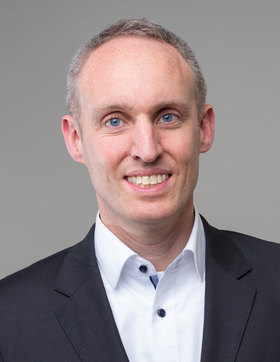
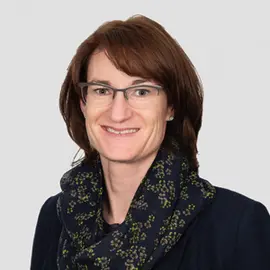
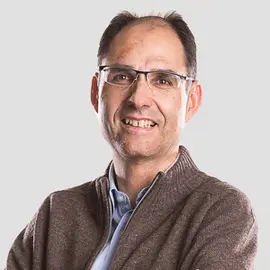
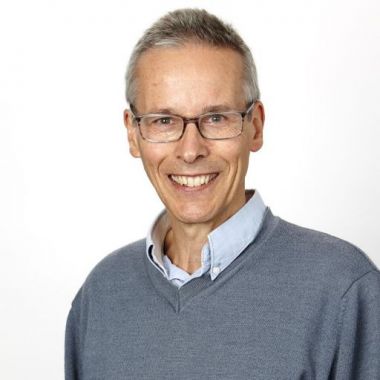
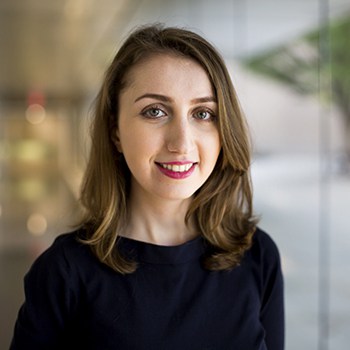
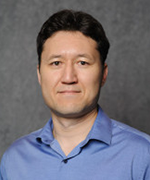
Johannes Schlaich is a Professor of Mobility and Transport at the Berlin University of Technology , with a focus on integrated transport planning, traffic modeling, and digitalization in transport. His research includes strategic demand modeling, shared mobility, and future mobility systems.
Emmanouil (Manos) Chaniotakis serves as an Associate Professor and head of MUSA-Lab at the UCL Energy Institute, University College London's Bartlett School of Environment, Energy & Resources. His academic appointments include Lecturer in Transport Modelling and Machine Learning, and Research Director of the Energy Institute since April 2025. Chaniotakis holds a diploma in Rural and Surveying Engineering from Aristotle University of Thessaloniki, an MSc in Transportation Infrastructure and Logistics from Delft University of Technology, and a PhD from Technical University of Munich. His educational background established the foundation for his interdisciplinary research career spanning transportation engineering, urban planning, and data science. His research focuses on transportation systems modeling, demand modeling, and machine learning applications in transport. Chaniotakis actively investigates sustainable urban mobility solutions including shared mobility services, autonomous vehicles, and smart transportation systems. His work addresses critical challenges in urban logistics, traffic optimization, and sustainable development goal integration within transportation planning. Analysis of his recent publications reveals a strong emphasis on emerging mobility technologies, particularly autonomous delivery systems, shared mobility services, and the integration of computing infrastructure with transportation networks. His research increasingly incorporates behavioral aspects of transportation, examining how users interact with new mobility services and technologies through innovative methods including virtual reality and physiological data capture. Chaniotakis leads multiple significant research initiatives including two European projects (SYNCHROMODE and MOVE2CCAM) and two UCL projects (GBSTRESSFREE, RELM). He actively supervises PhD and Master's students, encouraging publication of their work in scientific journals, and serves as associate or guest editor for multiple scientific journals while maintaining an active role as reviewer for numerous conferences and publications. As head of MUSA-Lab, Chaniotakis directs research on urban mobility systems and analytics. His lab serves as the hub for his European and national projects, focusing on developing innovative solutions for sustainable urban transportation challenges through interdisciplinary collaboration and cutting-edge research methodologies.
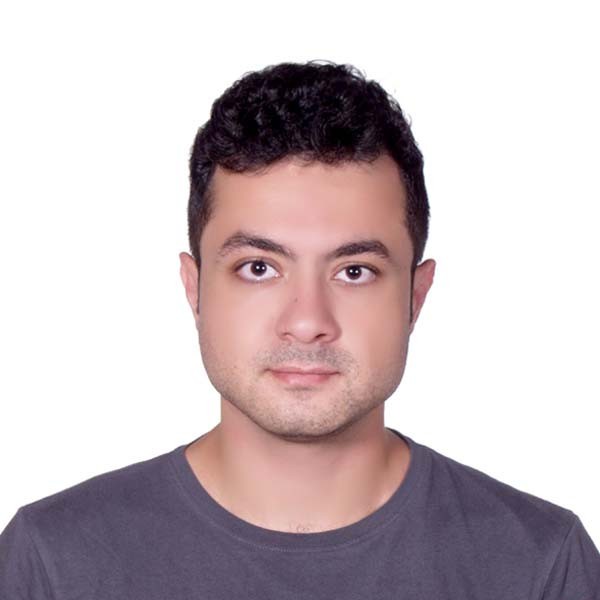
Soheil Gholami is a Postdoctoral Researcher at the Learning Algorithms and Systems Laboratory (LASA) at the École Polytechnique Fédérale de Lausanne (EPFL) since March 2022. His research bridges robotics and human motor control , focusing on human-robot interaction , task/motion planning , ergonomics , and skill assessment . Prior affiliations include the Human-Robot Interfaces and Interaction (HRII) group at the Italian Institute of Technology (IIT) and the Neuroengineering and Medical Robotics Laboratory (Nearlab) at the Polytechnic University of Milan . Ph.D. in Bioengineering (2022) from Polytechnic University of Milan (Italy) and Italian Institute of Technology (IIT, Genoa) M.Sc. in Control Engineering (2015) from K. N. Toosi University of Technology (Tehran, Iran) His work explores teleoperation interfaces , ergonomic assessment , and scalable control schemes for robots. Key areas include microrobotics for surgery , industrial human-robot collaboration , and adaptive control methods . Articles highlight applications in telerobotics , supernumerary robotic arms , and bio-inspired control systems .
Vicki Allan is an Associate Professor in the Computer Science Department at Utah State University's College of Engineering. Her work spans artificial intelligence, multi-agent systems, and transportation optimization. 2024: Publications on large language models in education and autonomous mobility 2022-2021: Research in deep learning, stochastic path planning, and smart cities 2020-2019: Studies on ridesharing algorithms and youth computer science engagement Her recent research focuses on applying reinforcement learning to urban mobility challenges and leveraging AI for scalable computer science education.
Yu Marco Nie is a Professor of Civil and Environmental Engineering at Northwestern University's College of Engineering. His research focuses on transportation networks, integrating optimization, network science, and economics to address mobility and sustainability challenges. Ph.D. in Civil Engineering from University of California, Davis M.S. in Civil Engineering from National University of Singapore B.S. in Civil Engineering from Tsinghua University His interdisciplinary work examines interactions between human travel behavior, infrastructure, and network topology. Key areas include congestion pricing, autonomous vehicle coordination, and shared mobility systems. Articles highlight dockless bike-sharing analysis, ride-hail routing games, and pandemic impacts on taxi markets. Scientific contributions span 2015-2024, with recent works addressing autonomous modular mobility paradigms and dynamic carpool systems. Collaborations with researchers like Kenan Zhang and Xiaobo Liu demonstrate his focus on real-world transportation challenges.
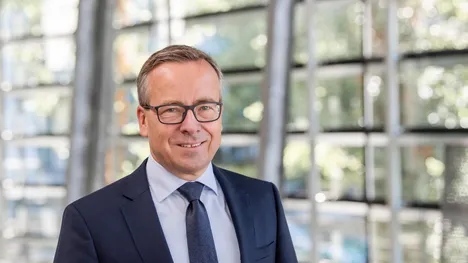
Gunther Friedl is Full Professor of Management Accounting and Chair of Controlling at the Technical University of Munich (TUM) , where he also serves as Dean of the TUM School of Management . Born in 1971, he is currently on research leave ( beurlaubt ) while continuing to supervise doctoral researchers and strategic projects. Education : Diploma in Physics, Technical University of Munich Doctorate (Dr. rer. pol.) in Business Administration, Ludwig-Maximilians-Universität München, 2000 Habilitation in Business Administration, Ludwig-Maximilians-Universität München, 2004 Visiting scholar appointments at Stanford University and Warsaw School of Economics Research Interests Professor Friedl’s work bridges controlling , corporate governance and energy economics . His early research focused on cost accounting and value-based management, leading to the widely adopted textbook Cost Accounting: A Decision-Oriented Introduction . More recently, his agenda has expanded to executive compensation, performance measurement, and the valuation of innovative technologies—especially in energy and mobility. Across more than 60 peer-reviewed articles, his publications reveal three dominant strands: Cost & Management Accounting – development of decision-oriented cost systems, hospital controlling and managerial performance metrics; Corporate Governance & Executive Pay – empirical studies on board compensation, transparency of compensation reports and stakeholder influence; Energy & Mobility Economics – application of real-options and levelized-cost methodologies to battery manufacturing, electric-vehicle adoption and grid-integration strategies. Scientific Awards Best Teaching Award, TUM School of Management (2017) Excellence in Teaching Award, Technical University of Munich (2013) Professor of the Year 2012 – UNICUM & KPMG Best Teaching Award, Executive MBA Class 2012 Best Textbook Award, German Academic Association for Business Research (VHB) 2011 Fellow of the Hanns Seidel Foundation (1993–1998) Doctoral Advising & Research Grants Professor Friedl currently leads a vibrant research group of 4 post-docs, 8 doctoral researchers and 3 research assistants funded by the German Federal Ministry of Education and Research (BMBF), the Bavarian State Ministry and industry partners such as BMW, Siemens and Allianz. Recent grants include: €1.1 million BMBF project “Controlling the Energy Transition” (2022-2026) €0.5 million Bavarian High-Tech Agenda project on “Data-Driven Controlling for Sustainable Mobility” (2021-2025) Deutsche Forschungsgemeinschaft (DFG) individual research grant on “Executive Compensation and Corporate Governance” (2019-2023) Labs & Teams He heads the Chair of Controlling at Arcisstraße 21, 80333 Munich, where the TUM Center for Energy Markets and the TUM School of Management provide interdisciplinary infrastructure. The chair’s Energy & Innovation Controlling Lab offers access to proprietary micro-data on energy consumption, mobility patterns and corporate governance structures, enabling large-scale empirical studies in collaboration with MIT, Stanford and the European Energy Exchange.
Pål Ulleberg is a Professor at the Department of Psychology, University of Oslo, specializing in quantitative research methods and safety psychology. His academic appointment focuses on methodological approaches within psychology, particularly in the areas of transport safety and organizational behavior. As a principal investigator at the Department of Psychology and a member of the National Research Ethics Committee for Social Sciences and Humanities (NESH), he plays a significant role in shaping research standards and ethics in Norwegian academia. Professor Ulleberg's research interests primarily center on quantitative research methods, with emphasis on multivariate methods, structural equation modeling, and meta-analyses. Within safety psychology, his work focuses on accident prevention, particularly in transport and industry settings. His research applies models and theories from social psychology, personality psychology, and cognitive psychology to safety-relevant behaviors, aiming to understand, explain, and ultimately influence behavior to prevent accidents. His work spans organizational psychology, work psychology, and methodological innovations in psychological research. His recent publications reveal a strong focus on transportation psychology, particularly regarding autonomous vehicles and public acceptance of new transport technologies. His work also extends to mental health interventions, peer review processes, and organizational behavior. The breadth of his research demonstrates consistent application of rigorous quantitative methods across diverse psychological domains, from traffic safety to clinical interventions and organizational effectiveness. Professor Ulleberg received the Teaching Award at the Department of Psychology, University of Oslo, in 2008, recognizing his excellence in education. His commitment to teaching is evident through his instruction of advanced quantitative methods courses including PSYC2104 – Quantitative Methods A and PSY4020 – Applied quantitative research methods. Professor Ulleberg earned his doctorate in psychology from the Norwegian University of Science and Technology (NTNU) in 2002. Before joining the University of Oslo as an associate professor in 2007 (later promoted to Professor), he worked in psychiatric health services research, accident prevention, and served as an associate professor of psychometrics at NTNU. His current research projects include CAST (Campaign and awareness-raising strategies in traffic), CyWalk (Internet survey about the means of transport of the future), and research on The use of Expert Reports as evidence in Child Protection Decision-Making.
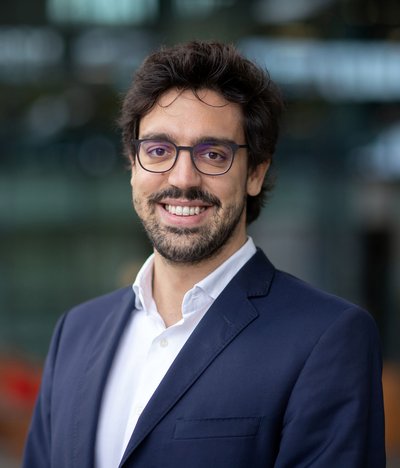
Mauro Salazar is an Assistant Professor in the Control Systems Technology section of the Department of Mechanical Engineering at Eindhoven University of Technology (TU/e), with co-affiliations at the Eindhoven AI Systems Institute (EAISI) in both Health and Mobility domains. He leads his own research group focused on optimization models and methods for systems and control. His educational background includes: B.Sc. and M.Sc. in Mechanical Engineering from ETH Zürich (2012, 2015) Master thesis conducted at EPFL's Automatic Control Lab Ph.D. in Mechanical Engineering from ETH Zürich (2019) in collaboration with Ferrari Formula 1 Postdoctoral Scholar at Stanford University's Autonomous Systems Lab (2019-2020) Salazar's research centers on optimization models for multi-scale cyber-socio-technical systems with applications spanning mobility systems, pandemic response, and material design. His work bridges theoretical optimization with practical implementation, particularly in sustainable mobility solutions where he develops methods for optimal design and operation of transportation systems from single vehicles to entire networks. He investigates mesoscopic user behavior modeling and designs incentive schemes to align individual and system-level objectives in transportation networks. His recent publications (2025) demonstrate a strong focus on sustainable mobility systems, with recurring themes in electric vehicle fleet management, battery degradation modeling, ride-pooling algorithms, and energy management for transportation electrification. His work spans multiple disciplines including automotive engineering, control systems, energy management, and public health, characterized by rigorous mathematical optimization approaches applied to real-world challenges. His scientific recognitions include: Two ETH Medals (for Master's and PhD theses) Best Student Paper awards at ITS 2018 and ECC 2022 Best Teacher Award (2021) Nomination for TU/e Young Researcher Award (2022) Salazar actively advises research projects and secured funding through the Dutch Research Council's NEON project (Crossover research program, Grant 17628). His teaching portfolio includes Optimal Control and Reinforcement Learning, Engineering Optimization, and Advanced Full-Electric and Hybrid Powertrain Design. He leads the 'Group Salazar' within the Control Systems Technology section and contributes to EAISI Health and Mobility initiatives.
Prof. Dr. Maike Scherrer is a Professor at the Zurich University of Applied Sciences (ZHAW) School of Engineering, where she leads research in sustainable mobility and supply chain management. Her work focuses on developing innovative solutions for sustainable and circular supply chains, urban logistics, and resilient transportation systems. She directs multiple research projects including Sustainable and Circular Supply Chains for the MEM-industry and the Sustainable Mobility Lab, collaborating with industry partners to address critical challenges in sustainable logistics and mobility. Prof. Scherrer's research spans several key areas in sustainable operations and supply chain management. Her work in sustainable supply chains examines how to achieve net-zero emissions through circular economy principles and systemic approaches. In urban logistics, she develops innovative concepts like Smart Urban Multihub systems to reduce freight traffic and improve city livability. Her research on supply chain resilience investigates how to design networks that can withstand disruptions while maintaining mission-critical supplies. She also explores the electrification of freight fleets and temperature-controlled supply chains to reduce environmental impacts. Her recent publications demonstrate a strong focus on applying operations research and systems thinking to sustainability challenges. Key trends include using agent-based modeling to assess circular economy supply chains, developing optimization approaches for resilient networks, and examining the spatial aspects of pharmaceutical supply chains. Her work bridges theoretical frameworks with practical applications, particularly in the Swiss context but with implications for global supply chain sustainability. Prof. Scherrer leads multiple significant research projects including Sustainable and Circular Supply Chains for the MEM-industry (ongoing), Techno-Economic Grid Connection Optimization for Electric Freight Fleets (ongoing), and Designing and simulating resilient supply chain networks (ongoing). She serves as Deputy Project Leader for the Sustainable Mobility Lab and has completed notable projects such as User-based redistribution for free-floating car sharing and Predictive replenishment of urban distribution centres. Her research group operates within the Sustainable Mobility research focus at ZHAW's School of Engineering, collaborating with industry partners across multiple sectors including manufacturing, pharmaceuticals, and urban transportation. The team applies interdisciplinary approaches combining operations research, systems analysis, and sustainability science to develop practical solutions for complex mobility and logistics challenges.
Michel Guillaume serves as Professor and Head of the Centre for Aviation at Zurich University of Applied Sciences (ZHAW) School of Engineering, concurrently leading the Centre for Aircraft System Design and Integration. His academic responsibilities include lecturing in aerodynamics, structural integrity, systems engineering, and unmanned aviation, while directing the Master's programme profile commission for MSE in Aviation and coordinating the MSE Advanced Aircraft System Design module. His research centers on sustainable aircraft development through collaborative digital engineering and establishing drone testing infrastructure (indoor/outdoor). Key interests span structural integrity, fatigue analysis, unmanned aerial systems, aerodynamics, and systems engineering, with emphasis on damage tolerance methodologies for aging aircraft and AI-driven drone technologies. Current projects include the Aviation Research Ecosystem Advanced Novel Approach and LINA (Shared Large-scale Infrastructure for Autonomous Systems). Recent publications (2023-2024) demonstrate evolving focus from traditional fatigue analysis toward AI-integrated drone systems and structural risk assessment frameworks. His work consistently bridges theoretical research with practical aviation applications, particularly evident in Swiss aeronautical fatigue reviews and drone safety validation studies. Guillaume directs multiple funded projects including the completed Engineering Documentation for Junkers Ju-52 and Safety Analysis for Structural Integrity of Ageing Airplanes. As Director of the Aviation Research Center Switzerland (ARCS), he manages contractual research efforts through ZHAW consulting projects with annual fixed budgets. He actively participates in professional networks including the International Committee on Aeronautical Fatigue (ICAF) as Swiss national delegate, American Institute of Aeronautics and Astronautics (AIAA), and Swiss Aerospace Cluster, while developing ZHAW's drone test infrastructure as critical research infrastructure for the Swiss aviation ecosystem.
Professor Mark Wallace is a renowned academic at Monash University , specializing in modelling and software platforms for planning, scheduling, and optimization problems . He has led groundbreaking projects such as the development of the ECLiPSe constraint programming platform (acquired by Cisco Systems) and the G12 hybrid optimization platform , which was commercialized through his company, Opturion . His research consistently bridges theoretical innovation with real-world applications, supported by industry funding from major companies like British Airways, Qantas, and Woodside Energy. Education: MA in Mathematics and Philosophy from Oxford University; MSc in Artificial Intelligence from Queen Mary College, London; PhD in Communicating with Databases in Natural Language from Southampton University. His work focuses on application-driven research in constraint programming, hybrid optimization systems, and decision support technologies. Recent publications highlight advancements in public transport routing , autonomous vehicle fairness constraints , and human-centred feasibility restoration . He actively collaborates with industry partners on projects involving Melbourne Water , Woodside , and the Alertness CRC , driving innovations in smart infrastructure and transport systems.
Neda Masoud is an Associate Professor in the Department of Civil and Environmental Engineering at the University of Michigan, College of Engineering, leading research at the intersection of shared mobility systems and connected vehicle technologies. Education: PhD in Civil and Environmental Engineering, University of California Irvine (2016) MS in Physics, University of Massachusetts Dartmouth (2011) BS in Industrial Engineering, Sharif University of Technology (2008) Research Interests: Her work investigates peer-to-peer ridesharing, multi-modal transportation systems, and challenges in connected/automated vehicles. Key areas include operational tools for shared mobility, policy insights for regulators, cybersecurity frameworks, and control authority transitions in semi-autonomous vehicles. She develops routing/scheduling algorithms and examines societal impacts like transportation inequality. Scientific Awards: NSF CAREER Award for “Peer-to-Peer Models and Mechanisms for the Next Generation of Transportation Systems” Advising and Grants: Dr. Masoud advises 6 current PhD students and has mentored 4 former PhD students. She leads 15+ major research projects funded by NSF, US DOT CCAT, Ford, DENSO, and MIDAS, totaling over $10M in grants. Current initiatives include military digital twins, vehicle cybersecurity, and wireless power transfer for connected vehicles. Laboratory: She directs the Next Generation Mobility Systems (NGMS) Lab, which operates from 1430 GG Brown Building and collaborates with global institutions including Tsinghua University.
Professor Shujun Li is a distinguished academic at the University of Kent , where he has served as a Professor of Cyber Security since November 2017. He is also the Director of the Institute of Cyber Security for Society (iCSS) , a UK government-recognized Academic Centre of Excellence in Cyber Security Research (ACE-CSR), and leads the Cyber Security Research Group at Kent's School of Computing. His research spans interdisciplinary cyber security , focusing on human-centric approaches, privacy, digital forensics, multimedia computing, and AI applications. He actively collaborates across disciplines such as Electronic Engineering, Psychology, Sociology, Law, and Business. Previously held roles include Deputy Director of Surrey Centre for Cyber Security (2014–2017) at the University of Surrey. Key projects include EPSRC-funded initiatives on human-centric cyber security and privacy. His recent publications highlight expertise in areas like data privacy , deepfake analysis , password security , and MaaS (Mobility-as-a-Service) vulnerabilities , with contributions to journals such as IEEE Transactions on Dependable and Secure Computing and Frontiers in Big Data . Scientific Honors: Two Best Paper Awards ISO/IEC Certificate of Appreciation (2012) Fellow of BCS Senior Member of IEEE Member of ACM As a principal/co-supervisor, he has guided students including Mohamad Imad Mahaini , Nandita Pattnaik , and Ali Raza . He also serves on editorial boards and advisory groups like the Scientific Board of RISCS and the Steering Committee of ARES .
Aibek Musaev is a Lecturer at the Georgia Institute of Technology’s College of Computing, specifically within the Division of Computing Instruction. His career bridges academia and industry, with prior experience founding and managing Akforta, a software company specializing in enterprise management solutions. He earned his Ph.D., M.S., and B.S. in Computer Science from Georgia Tech. Education : Ph.D. (2016), M.S. (2000), B.S. (1999) in Computer Science from Georgia Tech. Awards : Scholarship of the President of the Kyrgyz Republic (1997-1999), CARI Faculty Fellowship (2019). Musaev’s research focuses on Artificial Intelligence and Machine Learning , particularly in Social Media Analysis and Data Mining . He explores disaster management systems, public perception of technology, and multilingual information retrieval, often integrating physical and social sensor data for real-time event detection. His recent publications highlight trends in using AI to analyze social media for Natural Disaster Detection (e.g., landslides, hurricanes) and assess Public Perception of emerging technologies like autonomous vehicles. Collaborative work emphasizes Crisis Informatics , Healthcare Communication , and Transportation Systems . Scientific Awards : Scholarship of the President of the Kyrgyz Republic (1997-1999) CARI Faculty Fellowship (2019) He is affiliated with the College of Computing’s Division of Computing Instruction, which supports innovative teaching and research in computational methods.
Mohsen Kaboli is an Assistant Professor (Part-time) at Eindhoven University of Technology (TU/e) in the Netherlands, affiliated with the Department of Electrical Engineering and the Electronic Systems group. Since 2018, he has served as head of the AI, Robotics & Cognitive Vehicle research lab at BMW Group’s Center of Invention in Munich, Germany. Previously, he held positions at Radboud University’s Institute for Brain and Cognition (2019-2022) and Technical University of Munich (TUM) as a postdoctoral research fellow. His research focuses on Embodied Robotics, Visuo-Tactile Interactive Perception, and Machine Learning, with applications in Robotic Grasping, Human-Robot Collaboration, and Neuromorphic Computing. He leads European-funded projects like PHASTRAC (Oscillatory Neural Networks for AI Edge Computing) and INTUITIVE (Tactile User Interfaces). Keywords: Tactile Intelligence, AI, Robotics Application Domains: Mobile Robotics, Medical Instrumentation, Neuroprosthetics His recent publications (e.g., ViTract, Shared Visuo-Tactile Perception) emphasize robust object pose estimation and shape reconstruction using Bayesian filtering and Graph Neural Networks. He has authored ~40 academic works and contributed to 20 patents. Scientific Awards : IEEE Senior Member (2018) Georges Giralt Ph.D. Award (Finalist) IEEE ICRA Outstanding Paper Award (Finalist, 2023) IEEE FLEPS Outstanding Student Award (Winner, 2022) IEEE ROSE Outstanding Paper Award (Winner, 2024) Mohsen Kaboli serves as Editor/Associate Editor for IEEE ICRA, IROS, R-AL, T-RO, and IJRR. His work bridges tactile perception, AI, and robotics, with impacts in wearables, medical devices, and autonomous systems.