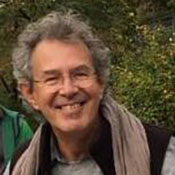
Nicholas Evans is Distinguished Professor of Linguistics and Director of the ARC Centre of Excellence for the Dynamics of Language (CoEDL) at the Australian National University’s School of Culture, History & Language. His work bridges fieldwork-based language documentation with theoretical questions in typology, cultural evolution, and social cognition. Focus on endangered Australian and Papuan languages Director of ARC Laureate Project on 'The Wellsprings of Linguistic Diversity' Co-leader of SCOPIC (Social Cognition Parallax Corpus) study Collaborator in global linguistic diversity initiatives His research explores how micro-level community multilingualism shapes macro-level linguistic diversity, with fieldwork spanning seven years in remote Indigenous communities. Recent projects include PARABANK (paradigm syncretism analysis) and Southern New Guinea language studies, particularly Nen and Yam family languages. Scientific recognition includes the Ken Hale Award (Linguistic Society of America), Anneliese Maier Forschungspreis, and fellowships in the Australian Academy of Humanities, Australian Social Sciences Academy, and the British Academy.
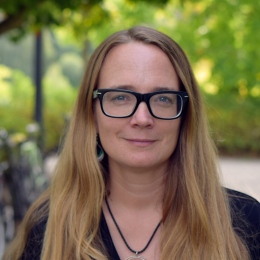
Andrea Voyer is a Professor of Sociology at Stockholm University , focusing on social norms, boundaries, and their role in shaping social inequality , particularly in the context of immigrant integration , class disparities, and ethnic inequality. She employs both qualitative and computational methods , including large-scale text analysis and cultural theory, to explore these themes. Her research has received funding from Riksbankens Jubileumsfond , the Swedish Research Council , the National Science Foundation (USA) , and the Russell Sage Foundation . Voyer serves as a program coordinator for master's programs in sociology and applied social research, and leads the department's research groups in qualitative methods , computational sociology , and cultural sociology . She is also an editorial board member for Sociological Theory and American Journal of Cultural Sociology , and contributes to public discourse on immigration, segregation, and social norms. Her recent publications highlight the use of computational techniques to analyze immigrant incorporation through shifts in mainstream discourse, the cultural processes of inequality during the COVID-19 pandemic , and the evolving role of class distinction-making in etiquette literature. These works bridge cultural theory with empirical analysis, offering actionable insights for addressing social inequality.
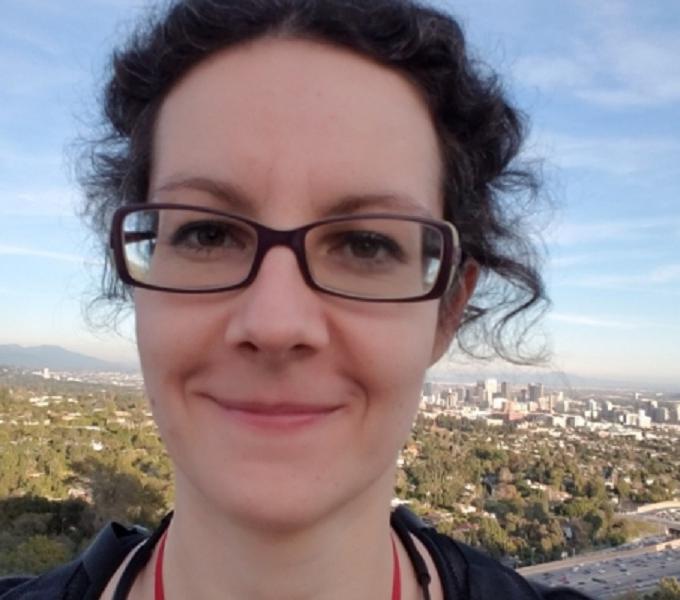
Adriana Kovashka is an Associate Professor at the University of Pittsburgh , affiliated with the School of Computing and Information and serving as Department Chair . Her academic journey began with BA degrees in Computer Science and Media Studies from Pomona College (2008) and a PhD in Computer Science from The University of Texas at Austin (2014). Joined Pitt’s faculty in January 2015 NSF CAREER awardee (2021) Google Faculty Research Award recipient Dr. Kovashka’s research spans Computer Vision , Machine Learning , and Natural Language Processing , focusing on visual rhetoric, weak multimodal supervision, and domain adaptation. She pioneered techniques for analyzing political imagery, developing robust object detection frameworks, and exploring the intersection of visual and textual persuasion through large-scale annotated datasets. Her recent work emphasizes geographic diversity in vision-language systems, audio-visual fusion for domain generalization, and shape-texture bias mitigation in CNNs. Key publications include groundbreaking studies on symbolic reasoning, multimodal dialogue systems, and ethical AI applications in education. Scientific honors include: NSF CRII Award (2016) NSF CAREER Award (2021) Pitt CRDF Award (2016, 2018) Best Paper at ECV Workshop (2021) Google Faculty Research Award (2016, 2018) Dr. Kovashka actively mentors students in multimodal learning projects and collaborates with interdisciplinary teams on NSF-funded initiatives. She co-organizes workshops like the first CVPR workshop on advertisement understanding and leads research groups exploring human-AI co-learning systems.
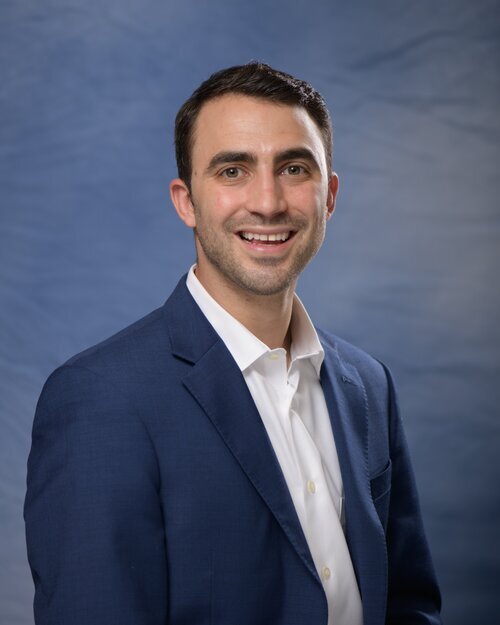
Salvatore Callesano is an Assistant Professor of Hispanic Linguistics at the University of Illinois Urbana-Champaign (UIUC), affiliated with the Department of Spanish and Portuguese and the College of Liberal Arts & Sciences. His research focuses on sociolinguistics, particularly bilingual communities in the U.S., language perception, and digital media representations of bilingualism. He employs both quantitative and qualitative methods to investigate how language variation interacts with identity, media, and social structures. Dr. Callesano collaborates on Project 16 of the Asociación de Lingüística y Filología de América Latina, addressing linguistic aspects of Latin American diaspora communities. His work bridges traditional sociolinguistic inquiry with modern digital practices, analyzing how social media shapes perceptions of language use among Latinx populations. Recent research highlights include studies on code-switching in Miami's linguistic landscape, dialect perception, and the role of media in mediating language attitudes. His publications span peer-reviewed articles and book reviews, emphasizing empirical rigor and interdisciplinary connections between language, culture, and society.
Lisbeth Aggestam is an associate professor at the Department of Political Science and an associate researcher at the Center for European Research (CERGU) at the University of Gothenburg. She serves as the editor-in-chief of the international journal Foreign Policy Analysis , published by the International Studies Association (ISA) and Oxford University Press. Aggestam's research focuses on several interconnected areas: Political leadership and foreign policy Diaspora and foreign policy Foreign policy role theory The European Union as a global actor Her scholarly work demonstrates a consistent focus on leadership dynamics within European foreign policy, particularly examining how the EU navigates its role as a global actor amid shifting geopolitical landscapes. She has developed significant theoretical contributions to role theory in foreign policy analysis, creating frameworks for understanding how states and international organizations perform specific roles on the global stage. Aggestam's publication record reveals several important trends in contemporary foreign policy studies. Her work increasingly examines the intersection of domestic politics and international relations, particularly how diaspora communities influence state foreign policies. Her recent research addresses European strategic autonomy in the context of US foreign policy shifts and the implications of Sweden's NATO membership decision, reflecting her ability to connect theoretical frameworks with pressing real-world issues. As an educator, Aggestam serves as course manager and instructor for several key programs: EU2215: Europe in the World (MA, 15 hec) SK1136: Foreign Policy Analysis (BA, 7.5 hec) EU1145: The European Union in International Affairs (BA, 7.5 hec) Through her leadership of the Swedish Research Council project 'Transnational civil society and foreign policy' (2022-2025) and her editorial role at Foreign Policy Analysis , Aggestam plays a significant role in shaping contemporary discourse on international relations and European foreign policy.
Kathleen R. McNamara is Professor of Government and Foreign Service at Georgetown University, where she also co-founded the Global Political Economy Project with Professor Abe Newman. Her work centers on the European Union, globalization, and the cultural and political foundations of market authority. Her research interests include the political economy of the European Union, monetary politics, culture and identity in global markets, institutional change, and the democratic legitimacy of supranational governance. She examines how ideas, norms, and collective identities shape economic integration and state formation, especially in Europe. Her recent publications (2020–2024) reveal a strong focus on the EU’s geopolitical turn, industrial policy transformation, the impact of crises like COVID-19 on globalization, and the interplay between democracy and populism. These works reflect a deep engagement with both theoretical and policy-relevant dimensions of contemporary European and global political economy. International Studies Association 2018 Distinguished Scholar in International Political Economy ISA 2020 SWIPE Award for Mentoring Women in International Political Economy German Marshall Fund Fellow Fulbright Fellow Simone Veil Fellow at the European University Institute (2023) McNamara has been a visiting scholar at the Russell Sage Foundation, taught at Princeton University and Sciences Po (Paris), and advised the US National Intelligence Council. She is active in public scholarship, writing for Foreign Affairs , Foreign Policy , and The Washington Post . She is a founding figure in the Global Political Economy Project, which aims to reframe the study of global markets through interdisciplinary and critical lenses.
Professor Stefan Maier holds the position of Head of School in Physics and Astronomy at Monash University. Previously, he served as the Lee Lucas Chair in Experimental Physics at Imperial College London (2007–2018) and built a new chair at Ludwig-Maximilians-Universität München (2019–2022). His research focuses on nanophotonics, plasmonics, and metasurface engineering, with emphasis on optical trapping, nonlinear optics, and novel photonic devices. Education: Bachelor’s degree in Physics, Technical University of Munich M.Sc. and Ph.D. in Applied Physics, California Institute of Technology (Caltech) Research Interests: Development of metamaterials and metasurfaces for light manipulation Applications of nanophotonics in sensing, imaging, and quantum technologies Optical trapping and plasmonic catalysis Nonlinear optical phenomena in nanostructured materials Articles Trends: Recent work emphasizes bound states in the continuum (BICs), 3D nanoprinted optical platforms, and active metasurfaces with tunable properties. Key themes include hybrid nanophotonics, ultra-high-Q resonators, and plasmonic nanomaterials for energy applications. Awards: ISI Highly Cited Researcher (2017–present) Grants/Projects: Chief Investigator in the All-on-chip twisted light modulator project (2022–2025) Leadership in Monash’s nanophotonics research team Labs/Teams: Directs a multidisciplinary lab at Monash focused on integrating 3D nanofabrication with optical physics, including collaborations in metafiber development and plasmonic biosensing.
Mary Pattillo serves as the Harold Washington Professor of Sociology and Chair of the Department of Black Studies at Northwestern University's Weinberg College of Arts and Sciences, with additional affiliation at the Institute for Policy Research. Her work centers on Chicago's urban landscape as a critical site for examining systemic racism and inequality. Her academic foundation includes a PhD in Sociology from the University of Chicago (1997) and a BA in Urban Studies from Columbia University (1991), establishing her expertise in urban analysis and racial dynamics. Pattillo's research agenda prioritizes race and ethnicity, urban sociology, and inequality through the lens of Black communities, with particular focus on housing, criminal legal systems, and the Black middle class. Her ethnographic approach reveals how spatial dynamics shape life outcomes, as demonstrated in her influential books Black Picket Fences (1999) and Black on the Block (2007), which introduced the pivotal "middlemen/middlewomen" framework for understanding professional Black roles in mediating inequality. Current work advances the "Black Advantage Vision" paradigm to reframe racial inequality research. Her publication trajectory shows deepening engagement with structural racism across multiple domains: from early neighborhood ethnographies to contemporary analyses of monetary sanctions and placemaking. This evolution reflects an interdisciplinary expansion into criminology, policy studies, and cultural sociology while maintaining core commitments to urban inequality and Black community resilience. Major recognitions include: Election to the American Academy of Arts and Sciences (2020) Robert E. Park Award for Best Book (2008) Oliver Cromwell Cox Best Book Award (2000) Fulbright Scholar designation (2019-2020) Weinberg College Community Building Award (2018) Outstanding Academic Book Award (2000) Pattillo actively mentors students through courses like Urban Ethnography and Sociology of Housing while leading significant research initiatives on school choice and criminal legal sanctions. Her community impact extends through board service at the W.T. Grant Foundation and Chicago Appleseed Center, plus founding Urban Prep Academies. Current projects examining Black safety in Chicago demonstrate her sustained commitment to community-engaged scholarship addressing urgent urban challenges.
Michael Bartlett is an Associate Professor in the Department of Mechanical Engineering at Virginia Tech , leading the Soft Materials and Structures Lab within the College of Engineering. His research focuses on bio-inspired materials , soft robotics , and multifunctional composites with applications in adaptive adhesives , stretchable electronics , and self-healing systems . Education: Ph.D., Polymer Science & Engineering, University of Massachusetts Amherst (2013) B.S.E., Materials Science & Engineering, University of Michigan (2008) His work explores the intersection of soft materials , morphing structures , and functional composites , leveraging techniques like kirigami and liquid metal integration to create innovations such as octopus-inspired underwater gloves and shape-shifting drones . His recent articles highlight advancements in programmable adhesion , liquid metal conductors , and multiscale material design . Scientific Awards: National Academy of Inventors Senior Member (2024) NSF CAREER Award (2023) Office of Naval Research Young Investigator Award (2021) Soft Matter Emerging Investigator (2021) DARPA Director’s Fellowship (2020) Adhesion Society Early Career Scientist (2020) DARPA Young Faculty Award (2018) 3M Non-Tenured Faculty Award (2017) Bartlett has mentored over 40 undergraduate students and numerous graduate researchers, resulting in 12 peer-reviewed articles with student co-authors. His lab receives funding from federal agencies like NSF , ONR , and DARPA , as well as industry partnerships. The group also engages in K-12 outreach programs and collaborates with institutions such as University of Nebraska-Lincoln and Iowa State University .
Beverly J. Silver is a Professor in the Department of Sociology at Johns Hopkins University and Director of the Arrighi Center for Global Studies. She holds a PhD in Sociology from SUNY Binghamton. Her research focuses on historical capitalism, global inequality, labor movements, and social conflict, employing comparative and world-historical methodologies. She examines how these phenomena interact across time and space, particularly in the context of globalization and geopolitical shifts. Key research interests include the dynamics of labor unrest, the evolution of social protest, and the role of hegemonic power structures in shaping global economic and political systems. Her work emphasizes long-term historical frameworks to identify recurring patterns and novel developments in contemporary globalization processes. Her publications analyze global social protest trends, the limits of US hegemony, and the interplay between economic crises and social conflict. She has contributed significantly to understanding labor movements' trajectories, especially in the automobile industry and emerging economies like China. Recent work explores the acceleration of social history and the implications of crises in global capitalism. Award-winning scholar (no explicit awards listed), her research spans over three decades, with a focus on the sociology of global systems. She advises no listed students and her grants/awards remain unspecified. She leads the Arrighi Center, fostering interdisciplinary global studies research.
Andrew Ollett is an Associate Professor and Director of Graduate Studies in the Department of South Asian Languages and Civilizations at the University of Chicago , where he has taught since 2019. His research focuses on the literary and intellectual traditions of South and Southeast Asia, particularly through works in Sanskrit, Prakrit, Apabhramsha, and Kannada from the first millennium CE. Co-founder and editor of NESAR (New Explorations in South Asia Research) Director of NEH-funded edition/translation of the Kavirājamārga (earliest Kannada literary manual) Expert in Prakrit and Kannada literary traditions His work explores the 'question of language'—examining how language choice shaped cultural production and change in premodern India. Current projects include a monograph on context-sensitivity in Indian language theories and a study of manuscript technology's impact on early South Asian knowledge communities. He has authored The Mirror of Ornaments (Naples: Unior Press, 2025) and Language of the Snakes (UC Press, 2017), and co-authored Lilavai (Harvard, 2021). Recent publications include interdisciplinary studies on: Sanskrit-Prakrit campū genre reevaluation Pragmatics in Mīmāṁsā interpretive concepts Manuscript literacy's influence on literary forms Historical linguistics of Middle Indic syllable reduction Philosophy of language in Śālikanātha and Kumārila Bhaṭṭa Awarded the NEH 'Scholarly Editions and Translations' grant , he teaches classical South Asian literature courses covering Sanskrit, Prakrit, and Tamil traditions. He maintains digital resources including a Prakrit Digital Texts Project and Mīmāṁsādigdarśinī digital text repository, and actively contributes to open-access scholarship.
Dr. Julia Costa López is an Assistant Professor (tenured) in History and Theory of International Relations at the Department of International Relations and International Organisation, Faculty of Arts, University of Groningen. Her work bridges international relations, history, and political thought, focusing on how historical frameworks shape modern disciplinary concepts. PhD from University of Oxford Lecturer at St Hilda's College Fulbright scholar at University of Denver's Josef Korbel School Graduate studies at University of Cambridge Research spans medieval political authority, sovereignty emergence, racialized medievalisms in extremism, and translation politics in global scholarship. Key projects include Routledge Handbook of Historical International Relations (2021) and the Oxford Handbook of History and International Relations (2023). Publications address Eurocentrism, conspiratorial ideology, and ritual's role in authority production. Scientific contributions appear in Cambridge Review of International Affairs , International Organization , and European Journal of International Law . Awards include the Fulbright scholarship. Recent work explores terraqueous relations and premodern world conceptualizations, challenging simplistic land-sea dichotomies in IR.
Mahzarin R. Banaji is the Richard Clarke Cabot Professor of Social Ethics at Harvard University and a Harvard College Professor. She is affiliated with the Department of Psychology and is a key figure in the Mind, Brain, and Behavior (MBB) Interfaculty Initiative. Her research is centered at the intersection of social cognition, implicit bias, and ethical behavior. Institution: Harvard University School: Harvard College Department: Psychology Email: banaji@fas.harvard.edu Dr. Banaji earned her Ph.D. from Ohio State University and has been a leading scholar in the study of unconscious bias. Her work explores how implicit attitudes shape perception, judgment, and behavior outside conscious awareness. She co-developed the Implicit Association Test (IAT) , a groundbreaking tool for measuring unconscious biases related to race, gender, age, and other social categories. Her research spans social cognition, prejudice, stereotyping, moral psychology, and the neuroscience of social behavior . More recently, she has extended her work into the domain of artificial intelligence, investigating how human-like biases emerge in large language models. The 15 most recent publications reflect a strong trend toward computational social science , combining psychological theory with natural language processing and AI. Her team analyzes bias in digital corpora, studies the transmission of stereotypes in AI systems, and develops tools to measure intersectional and implicit attitudes at scale. These works bridge psychology, ethics, and technology, highlighting the societal implications of implicit cognition. Among her notable scientific honors are: Fellow of the American Academy of Arts and Sciences William James Fellow Guggenheim Fellowship Kurt Lewin Award (SPSSI) Harvard College Professorship Dr. Banaji has advised numerous graduate students, including Tessa Charlesworth and Kerry Morehouse, many of whom are now active researchers in social and cognitive psychology. She has secured major grants through the Mind, Brain, and Behavior Initiative and has led interdisciplinary teams exploring bias in education, law, and technology. She is also the co-creator of OutsmartingHumanMinds.org , a public education platform on implicit bias. Her lab serves as a hub for collaborative research on implicit social cognition, bringing together psychologists, neuroscientists, and computer scientists to understand and mitigate unconscious bias in human and artificial systems.
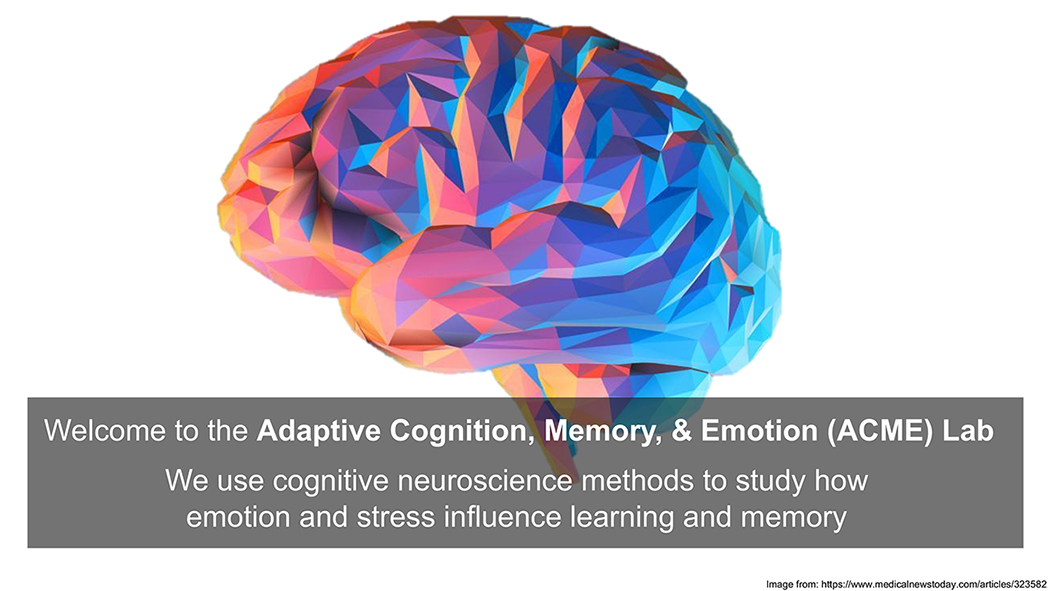
David Clewett, Ph.D. , is an Assistant Professor of Psychology at University of California, Los Angeles (UCLA) , where he leads the Dynamic Arousal and Memory Lab. His research explores how emotional arousal, stress, and neuromodulatory systems like norepinephrine and dopamine shape the way we encode, organize, and retrieve memories. He joined UCLA in July 2020 after completing his Ph.D. in Neuroscience at the University of Southern California and a postdoctoral fellowship at NYU and Columbia University. Education: Ph.D. in Neuroscience, University of Southern California (2016) B.S. in Biopsychology with minor in English, University of California, Santa Barbara Research Focus: Dr. Clewett’s lab investigates how physiological arousal influences attention and memory, using a multimodal approach that includes fMRI, pupillometry, eye-tracking, and pharmacological methods. His work spans four major themes: The role of emotion and arousal in selective memory enhancement or suppression. How contextual shifts and emotional states structure episodic memory into meaningful events. Techniques to weaken or update traumatic or unwanted memories. The dynamic effects of attention and arousal states on neural and memory representations. Publications and Impact: His work has been published in top-tier journals such as Nature Communications , Journal of Neuroscience , Hippocampus , and Trends in Cognitive Sciences . His research has contributed to understanding how neuromodulators like norepinephrine and dopamine interact with memory systems to prioritize salient information, and how these processes can be leveraged for therapeutic intervention in PTSD, depression, and aging-related memory decline. Students and Lab Team: Dr. Clewett mentors a diverse team of graduate students and research assistants. Current graduate students include Jacinda Taggett, Ringo Huang, Erin Morrow, Bailey Harris, and Brandon Katerman. Former lab members have gone on to Ph.D. programs at Harvard, UC Berkeley, and other top institutions. Lab and Facilities: The lab is located in Pritzker Hall at UCLA, and is equipped with tools for fMRI, pupillometry, eye-tracking, and behavioral testing. The lab also collaborates with researchers across UCLA and other institutions, including NYU, Columbia, and USC.
Dr. Ruzan Sokhoyan is a Nanophotonics Research Scientist specializing in plasmonics and active metasurfaces. Her work focuses on advancing optical imaging, communication, and computation through tunable photonic structures. Core research in metasurface design for beam steering and polarization control Collaborative contributions with Harry A. Atwater and other leading researchers Publications in high-impact journals like ACS Nano and Advanced Optical Materials Her research explores electro-optic modulation , high-power laser beam manipulation , and dynamic photonic devices , with applications in optical communication and imaging. Recent work emphasizes inverse design approaches and liquid crystal-based tunable metasurfaces , reflecting trends toward reconfigurable and multifunctional photonic systems.