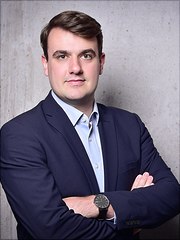
Henrik Wyschka is a doctoral researcher and scientific staff member at the University of Hamburg's Department of Mathematics, affiliated with the Faculty of Mathematics, Computer Science and Natural Sciences. His research focuses on shape optimization with fluid dynamic applications, algorithms for p-Laplace problems, and Lipschitz sequences. He is part of the DFG Research Training Group 2583, "Modeling, Simulation and Optimization with Fluid Dynamic Applications," under project O3. Education: M.Sc. (2021) and B.Sc. (2019) in Technomathematics from TU Hamburg and University of Hamburg. His work integrates theoretical analysis and numerical methods to advance computational techniques in shape optimization. Key contributions include presentations at major conferences (e.g., IFIP TC7, SIAM, GAMM) and publications on trust-region methods for p-harmonic optimization and high-order descent direction algorithms. His research emphasizes efficient numerical solutions for fluid dynamics-related challenges. Funding: Supported by the DFG through Graduiertenkolleg 2583. Office location: Geomatikum Building, Room 1517. ORCID: 0009-0000-2242-2464 .
Krishna Gummadi is a Scientific Director and Professor at the Max Planck Institute for Software Systems (MPI-SWS) in Germany, where he leads the Networked Systems Research Group. He also holds a professorship at the University of Saarland, demonstrating his dual commitment to research and academic instruction in computer science. His educational background includes: Ph.D. in Computer Science and Engineering from the University of Washington (2005) B.Tech. in Computer Science and Engineering from the Indian Institute of Technology, Madras (2000) Gummadi's research spans networked and distributed computer systems with a current focus on social computing systems. His work addresses critical challenges in algorithmic fairness, privacy in social media, trustworthiness of online identities, and information dissemination in social networks. He approaches these problems through interdisciplinary methods combining user-centric studies, data-centric analysis, and systems-centric design to create practical solutions that enhance fairness, transparency, and user control in online platforms. His methodology integrates large-scale observational studies, computational modeling, and system implementation to tackle complex human-computer interaction challenges at societal scale. His recent publications reveal a strong emphasis on fairness in algorithmic decision making, with significant contributions to quantifying and addressing discrimination in machine learning systems. His work bridges computer science, social science, and ethics, creating frameworks for fair classification, understanding media bias, and developing privacy-preserving techniques that maintain functionality while protecting user data. The research demonstrates a progression from technical system design to addressing societal implications of computing systems. Among his notable scientific achievements: ERC Advanced Grant in 2017 for 'Foundations for Fair Social Computing' Test of Time Awards at ACM SIGCOMM and AAAI ICWSM Casper Bowden Privacy Enhancing Technologies (PET) and CNIL-INRIA Privacy Runners-Up Awards IW3C2 WWW Best Paper Honorable Mention Multiple Best Paper awards across prestigious conferences Gummadi has advised numerous PhD students and postdoctoral researchers who have gone on to prominent positions in academia and industry. His ERC Advanced Grant has supported extensive research into fair social computing, while his leadership in major conferences (including serving as General Chair for ICWSM 2016 and Program Chair for WWW 2015) has shaped research directions in the field. His teaching portfolio includes courses on Distributed Systems, Human-Centered Machine Learning, and Social Media Analysis. He leads the Networked Systems Research Group at MPI-SWS, which has developed several publicly available systems including tools for fair classification, privacy risk assessment, trust evaluation in social media, and information diet management. The group's work bridges theoretical advances with practical implementations that address real-world challenges in social computing, with numerous software releases and datasets made available to the research community.
Ottmar Edenhofer serves as Director and Chief Economist of the Potsdam Institute for Climate Impact Research (PIK), Director of the Mercator Research Institute on Global Commons and Climate Change (2012-2024), Professor for The Economics and Politics of Climate Change at Technische Universität Berlin, and Chair of the European Scientific Advisory Board on Climate Change (ESABCC) since 2022. His affiliations span leading European climate research institutions and academic bodies. Edenhofer's research focuses on climate change economics, particularly the impact of technological change on mitigation costs, public finance implications of climate policy, distributional effects of carbon pricing, and governance of global commons. His work bridges theoretical economic modeling with practical policy design, emphasizing equity considerations and institutional frameworks for effective climate action. He pioneered social science research at PIK, establishing rigorous methodologies for translating scientific findings into actionable policy advice. His publication record demonstrates consistent leadership in high-impact climate economics research, with seminal contributions to IPCC assessments (serving as Co-Chair of Working Group III for the Fifth Assessment Report) and influential analyses of carbon pricing mechanisms. Recent work increasingly addresses carbon dioxide removal governance, distributional justice in climate policy, and the integration of climate action with broader sustainable development goals. His research consistently appears in top journals including Nature, Science, and Nature Climate Change. Edenhofer has received numerous scientific honors including the Romano Guardini Prize (2018), Deutsche Umweltpreis (2020), and Arthur Burkhardt-Prize (2021). He belongs to the top 1% of most cited scientists globally (2018-2022) and was ranked among Germany's top 10 economists (2019-2020). His policy influence extends to serving as Vatican consultor for the Dicastery for Promoting Integral Human Development and advising EU institutions through ESABCC. As a science-policy interface leader, Edenhofer has shaped climate negotiations leading to the Paris Agreement and continues to advise European institutions on implementing climate neutrality targets. His work emphasizes the critical role of carbon pricing with equitable revenue recycling and the strategic sequencing of climate policies to maintain political feasibility while achieving deep decarbonization.
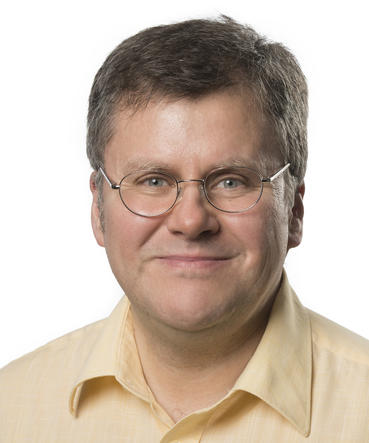
Günter Rote is a Professor in the Department of Computer Science at Freie Universität Berlin, specifically within the Theoretical Computer Science group (Arbeitsgruppe Theoretische Informatik). He holds a formal academic title of Professor Dr. and is affiliated with the Faculty of Mathematics and Computer Science. His research focuses on theoretical computer science, computational geometry, algorithms, and discrete mathematics. Key research interests include geometric algorithms, optimization problems (e.g., shortest paths, traveling salesman problems), and algorithm design for parallel computing systems. His work spans topics such as systolic arrays, convex hulls, and combinatorial optimization. Rote’s contributions include foundational studies on computational geometry problems, algorithmic complexity, and practical applications in energy equity and infrastructure design. Publications highlight contributions to solving extremal equations, polygon transformations, and the quadratic assignment problem. He has been active in academic leadership, mentoring students, and contributing to computational science communities. His email is rote@inf.fu-berlin.de, and his office is located at Takustraße 9 in Berlin.
Joachim Weickert is a Professor of Mathematics and Computer Science at Saarland University where he heads the Mathematical Image Analysis Group since 2001. He received his diploma and Ph.D. in mathematics from the University of Kaiserslautern (1991, 1996), and a habilitation degree in computer science from the University of Mannheim (2001). Prior to his current position, he worked as a research assistant at the University of Kaiserslautern, as a post-doctoral researcher at the universities of Utrecht and Copenhagen, and as an assistant professor at the University of Mannheim. His research focuses on image processing, computer vision, and scientific computing, with special emphasis on techniques based on partial differential equations, variational principles, wavelets, morphological and nonlocal methods, as well as neuroexplicit approaches. He has developed mathematical models and efficient numerical algorithms for image restoration, enhancement, segmentation, compression, optic flow computation, stereo reconstruction, shape from shading, and signal processing methods for tensor fields. These ideas have been successfully applied in industry, biomedical image analysis, and other fields. Analysis of his recent publications reveals a strong trend toward combining traditional PDE-based methods with modern deep learning approaches, particularly in the areas of image inpainting and compression. His work increasingly explores the connections between numerical algorithms for partial differential equations and neural network architectures, demonstrating how mathematical foundations can inform cutting-edge AI techniques while maintaining strong theoretical guarantees. Gottfried Wilhelm Leibniz Prize (2010), considered the most important research award in Germany ERC Advanced Grant (2017) for "Inpainting-based Compression of Visual Data" Elected member of Academia Europaea - The Academy of Europe Jan Koenderink Prize for Fundamental Contributions in Computer Vision (2014) Multiple DAGM Prizes and Best Paper Awards throughout his career AAIA Fellow (2021) and Highly Ranked Scholar (2024) distinctions Professor Weickert has supervised over 250 bachelor's and master's theses and initiated the Master Programme in Visual Computing at Saarland University, the first of its kind in Germany taught in English. He has established numerous interdisciplinary collaborations with colleagues from medicine, bioinformatics, pharmacy, physics, mechatronics, and mechanical engineering. As Principal Investigator for Visual Computing within the Multimodal Computing and Interaction Cluster of Excellence, and former dean of the Faculty of Mathematics and Computer Science (2008-2010), he has played a significant leadership role in advancing visual computing research and education. He heads the Mathematical Image Analysis Group, which has been at the forefront of developing mathematical methods for image analysis. The group maintains strong connections with both theoretical mathematics and practical applications, bridging the gap between fundamental research and real-world implementation across various domains including medical imaging, industrial inspection, and multimedia processing.
Dr. Benjamin Busam is a Senior Research Scientist at the Technical University of Munich , affiliated with the Chair for Computer Science Applications in Medicine under Prof. Nassir Navab. Starting September 2025, he will hold the Professorship for Photogrammetry and Remote Sensing at TUM. His career includes leadership roles at FRAMOS Imaging Systems and Huawei Research in London. Education: Mathematics (TUM), Mathematics and Physics (ParisTech, University of Melbourne), PhD in Mathematics (TUM, 2014) His research focuses on 3D computer vision , multi-modal sensor fusion , and their applications in collaborative robotics and augmented reality . He specializes in projective geometry , 6D pose estimation , and neural radiance fields , with a particular emphasis on photometrically challenging environments. Recent publications highlight advancements in 3D scene understanding , neural rendering , and medical imaging , often leveraging machine learning and vision-language models . His work has been recognized through awards like the EMVA Young Professional Award (2015) and Innovation Pioneer of the Year (2019) , along with multiple Outstanding Reviewer distinctions at leading conferences. Dr. Busam has supervised numerous PhD and MSc students on topics including 6D pose estimation , medical augmented reality , and robotic ultrasound , collaborating with institutions like MIT , École Polytechnique , and University of Padova .
Dorina Siebert is a Researcher at the Chair of Metal Construction within the School of Engineering at the Technical University of Munich. She has been working as a research assistant at the Chair since 2019, contributing to various research projects related to steel and aluminum construction, fracture mechanics, and additive manufacturing in construction. Education: M.Sc. in Civil Engineering from Technical University of Munich (2012-2019) Affiliation: Chair of Metal Construction, School of Engineering, Technical University of Munich Contact: dorina.siebert@tum.de, Room 0101.Z1.038, +49 (89) 289-22527 Dorina's research primarily focuses on the fatigue strength of aluminum structures, fracture mechanics in railway bridges, and the application of additive manufacturing techniques in construction. Her work on powder bed-based laser beam melting of metal has significant implications for modern construction methods. She also investigates safe operating time intervals for historic steel bridges and has contributed to the development of a mobile vehicle barrier, demonstrating the practical applications of her theoretical work. Her publication record shows a strong trend toward computational and experimental analysis of material behavior under stress, particularly in aluminum alloys and steel structures. She has published extensively on fatigue properties, fracture mechanics calculations, and additive manufacturing applications, with a clear progression toward more complex modeling techniques and practical engineering solutions. Her work bridges theoretical computational models with real-world infrastructure challenges. Dorina teaches courses including 'Constructing with aluminum' for the Summer semester 2025 and 'Fracture mechanics and fatigue' for the Winter semester 2024/25. She also leads a seminar on plate buckling and steel bridge construction, sharing her specialized knowledge with engineering students. Her teaching directly reflects her research expertise, creating a strong connection between theoretical knowledge and practical application for her students.
Jan Knippers is a Professor and Institute Director at the University of Stuttgart's Faculty of Architecture and Urban Planning , leading the Institute of Building Structures and Structural Design (ITKE) . He co-founded Knippers Helbig Advanced Engineering and established Jan Knippers Ingenieure in 2018 to focus on innovative fiber composite and timber structures. Key roles: Deputy Executive Director of Cluster of Excellence IntCDC , former Vice-Rector for Research (2019-2021), and Dean of Faculty of Architecture (2021-2023) Technical focus: Hybrid FRP-Timber systems, computational design, and biomimetic principles His projects include the 2024 Hybrid Flax Pavilion , Urbach Tower (2024), and BUGA Fiber Pavilion (2019). He contributes to European standardization committees and serves as 2024 Leverhulme Visiting Professor at University College London.
Renate Sachse is a Researcher and Responsible Investigator at the Chair of Structural Analysis, Technical University of Munich (TUM), under Prof. Kai-Uwe Bletzinger. She holds a Dr.-Ing. from the University of Stuttgart and has held postdoctoral positions at Harvard University (Bertoldi Lab) and TU Munich's Institute for Computational Mechanics. Her research focuses on biomimetic adaptive structures, biomechanics, and smart materials. Education M.Sc. in Civil Engineering (University of Stuttgart, 2014) – Thesis: "Isogeometric Contact Analysis of Thin-Walled Structures" B.Sc. in Civil Engineering (University of Stuttgart, 2011) – Thesis: "Elementary School Pavilion Structural Analysis" Study Abroad: École Spéciale des Travaux Publics (ESTP, France, 2012) Research Interests Her work integrates principles from biology and mechanics to design adaptive structures, including motion design, soft robotics, and active metamaterials. Notable projects include studying snapping mechanisms in plants (e.g., Venus flytrap) and developing bio-inspired systems like Flectofold shading devices. She also explores isogeometric analysis and structural optimization for thin-walled and slender structures. Grants & Awards Bertha Benz Prize 2022 (Daimler and Benz Foundation) Klaus Tschira Boost Fund Fellowship (€80,000 interdisciplinary grant) 3rd Place AVK-Prize for Innovations (2017, Flectofold Shading System) GAMM Juniors Fellowship (2020–2022) Teaching & Grants She teaches advanced finite element methods and nonlinear mechanics at TUM and has supervised projects in computational mechanics. Her grants include CareerDesign@TUM funding and the Klaus Tschira Fellowship for high-risk, interdisciplinary research. Labs & Teams Associated with the Chair of Structural Analysis at TUM, collaborating on projects like livMatS (Living Materials Systems) and the Harvard SEAS Bertoldi Lab. Involved in software development (e.g., Carat++, Kiwi!3d) and third-party initiatives (CoDA, FlexWing).
John Nassour is a Researcher at the Technical University of Munich's School of Computation, Information and Technology, affiliated with the Chair of Cognitive Systems. He holds engineering degrees from Tishreen University (electronics), a Master's in intelligent systems from University of Cergy-Pontoise/École Nationale Supérieure de l'Électronique, and a joint PhD from University of Versailles/TUM. His interdisciplinary research focuses on computational cognitive systems applied to robotics, including wearable devices, humanoid robots, soft robotics, and robot learning for locomotion/manipulation. Before joining TUM in 2020, he was a lecturer/researcher at Chemnitz University of Technology. He teaches courses in cognitive systems, neuro-inspired engineering, and soft robotics.
Prof. Chiara Manfletti is a Professor at the Technical University of Munich (TUM), leading the Chair of Space Propulsion and Mobility. She also serves as Director and COO of Neuraspace. Her academic journey includes a degree from Imperial College London (2001), a master's from the International Space University (2002), and a PhD from RWTH Aachen (2010). Previously, she worked at the German Aerospace Center, served as Programme Advisor to the European Space Agency Director General, and became the first President of Portugal's national space agency. Her research focuses on innovative propulsion systems, satellite autonomy, and AI-driven propulsion controls. She has received the National Defence Medal (2020) and Medal of Merit (2020) from Portugal. Research Interests: Democratization of space access via novel propulsion technologies Autonomous and sustainable satellite propulsion systems Data-driven propulsion control using AI and health monitoring Key Contributions: Her work bridges numerical/experimental expertise with space safety policy. Recent publications analyze water hammer phenomena in propulsion systems and propose frameworks for planetary protection in space activities. Awards: National Defence Medal 1st class (2020) Medal of Merit from Portuguese Ministry of Science (2020) Professional Roles: Combines academic leadership with industry roles, actively shaping space policy and innovation. No listed grants are detailed publicly in the provided text.
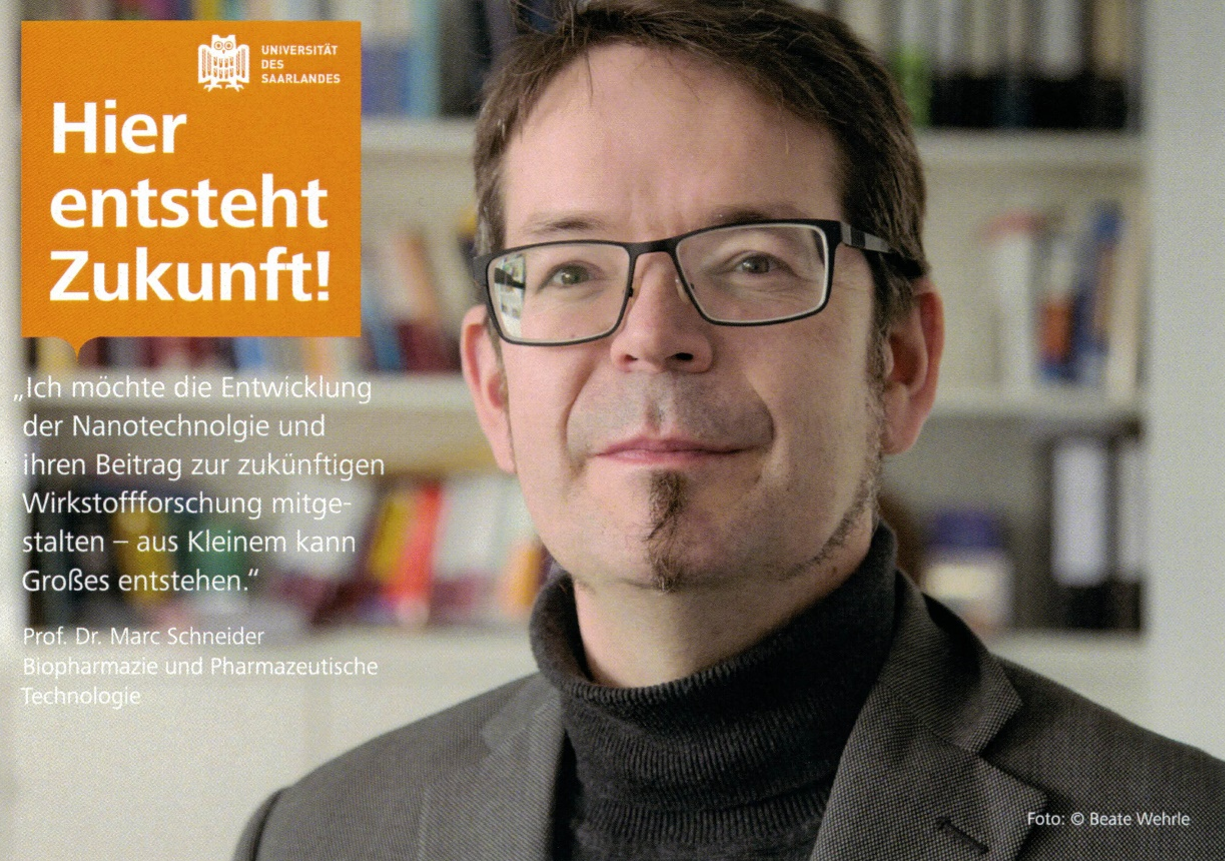
Prof. Dr. Marc Schneider holds a professorship in Biopharmaceutics and Pharmaceutical Technology at Saarland University's College of Pharmacy . His research focuses on colloidal drug delivery systems, particularly nanostructured and non-spherical particle engineering for overcoming biological barriers in pulmonary and transdermal applications. He leads an internationally recognized lab in Saarbrücken, collaborating with Helmholtz Institute for Pharmaceutical Research Saarland (HIPS) and trinational institutions. Research Highlights: Development of inhalable nano/microparticle systems Surface modification of gelatin nanoparticles Characterization of mucus-penetrating particles 3D printing for microneedle fabrication Atomic Force Microscopy (AFM) for nanoparticle analysis Selected Scientific Awards: European Journal of Pharmaceutics and Biopharmaceutics Best Paper Award (2018) for mucus-penetrating nanoparticles Recognized in 'Ausgezeichnete Orte im Land der Ideen' competition (2018) for 'Nano-Mais' drug delivery system Collaborative Networks: Co-editor for Advanced Drug Delivery Reviews special issue on biological barriers Key participant in trinational Master's program in Biomedicine with Strasbourg, Mainz, and Luxembourg Active in Controlled Release Society (CRS) conferences and local chapters
Mareike Fuhlrott is a researcher in German Studies at the University of Siegen, Faculty I, specializing in the didactics of the German language with a focus on writing instruction, subject-specific learning tasks, and the integration of artificial intelligence in educational contexts. She is actively involved in teaching, research, and interdisciplinary projects. Her research interests include language-sensitive subject teaching, educational task design, digital learning materials, and Education for Sustainable Development. She employs both qualitative and quantitative research methods and contributes to national and international academic discourse through lectures and workshops. Mareike Fuhlrott is engaged in several collaborative research projects such as KIMADU (AI in German and Mathematics), SBN (Language – Education – Sustainability), KIS (AI Writing Arrangements), DigiWiss, FiSBY, and BiSu. She has delivered numerous presentations on AI in writing instruction, textbook optimization, and linguistic complexity in ESD materials at universities across Germany and Europe. She completed her dissertation under the supervision of Prof. Dr. Torsten Steinhoff and Prof. Dr. Katrin Kleinschmidt-Schinke. She teaches courses for primary school teacher education and leads innovative teaching projects focused on open educational resources (OER), AI-supported assessment, and digital science communication. She also provides academic writing support through the Center for Academic Writing (ZefaS). Her work emphasizes interdisciplinary, reflective, and competence-based approaches to shaping education in the digital age.
Prof. Dr. Wolfgang Nejdl is a Professor at the Institute for Data Science within the Faculty of Electrical Engineering and Computer Science at Leibniz University Hannover. He serves as Executive Director of the L3S Research Centre and Leibniz Forschungszentrum Inclusive Citizenship. Web Science Information Retrieval Artificial Intelligence Deep Learning His recent research focuses on AI applications in medicine , multimodal data fusion , and ethical AI systems . Projects include CAIMed (AI in Causal Medicine) and DAISEC (AI & Cybersecurity). His publications span conferences like AAMAS, WWW, and SIGIR. Notable awards include membership in the National Academy of Science and Engineering (acatech) . Former students hold positions at institutions like Stanford, TU Dresden, and ETH Zürich. Current projects involve climate resilience AI , federated learning for healthcare , and quantum-inspired data science .
F. Ömer Ilday is a distinguished physicist and Alexander von Humboldt Professor at Ruhr University Bochum since July 2023, holding a joint appointment in the Faculty of Electrical Engineering and Information Technology and Faculty of Physics and Astronomy. His pioneering work in ultrafast laser technology has transformed non-linear laser-matter interactions, with applications spanning precision manufacturing, medical surgery, and nanofabrication. Education: PhD in Physics, Cornell University (2003) Postdoctoral Research Scientist, Massachusetts Institute of Technology (2003-2005) Ilday's research centers on ultrafast laser development and materials science, focusing on GHz-repetition-rate burst-mode systems, nonlinear laser lithography, and self-organization phenomena. His interdisciplinary approach bridges photonics, plasma physics, and materials engineering to enable breakthroughs in nanostructuring, silicon processing, and laser-based manufacturing. Current work emphasizes developing high-power laser sources and exploring fundamental laser-matter interaction mechanisms for next-generation applications. His recent publications (2023-2025) reveal dominant trends in high-repetition-rate burst-mode lasers (up to 50 GHz), ablation efficiency optimization, and nonlinear laser lithography for 3D silicon structuring. These works demonstrate strong convergence between fundamental physics and industrial applications, particularly in medical surgery, nanofabrication, and materials synthesis, with increasing emphasis on self-organization principles in laser systems. Scientific awards: Turkish Academy of Sciences Outstanding Young Scientist Award (2006) Marie Curie International Reintegration Grant (2006) ERC Consolidator Grant (2014) - Turkey's first ERC Advanced Grant (2022) Election to Academia Europaea Election to Turkish Academy of Sciences Membership in Turkish and American Physical Societies Ilday has secured major competitive grants including two ERC awards and a Marie Curie fellowship, directing research teams at Bilkent University's Ultrafast Optics & Lasers Laboratory (UFOLAB) which developed technologies adopted globally. At RUB, he is establishing the Center for Complex Laser-Matter Interactions as an interdisciplinary hub fostering collaborations between photonics, plasma research, and materials science, with explicit goals for spin-off company formation and transdisciplinary innovation in manufacturing technologies. As founding director of UFOLAB at Bilkent University, Ilday developed laser systems deployed by research institutions worldwide and established Turkey's first laser company. His RUB center integrates electrical engineering and physics expertise to advance complex laser-matter interaction research, focusing on self-organizing laser systems, nanostructuring techniques, and applications in semiconductor manufacturing and medical technology through close industry partnerships.