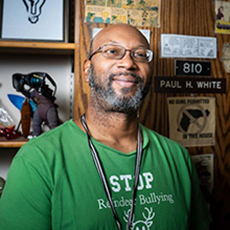
Paul H. White is an Associate Professor of Social Psychology in the Department of Psychology at the University of Utah, where his research centers on the three 'P's': persuasion, prejudice, and performance, investigating motivational drivers of human behavior. His educational background: B.A., Berea College (1989) Ph.D., Northeastern University (1993) Post-doctoral training, Ohio State University (1993-1995) Dr. White's persuasion research examines how source/target characteristics (race, gender, sexual orientation) impact message processing and attitude change, including 'stealing thunder' dynamics. His prejudice work investigates subtle bias through intergroup models incorporating stigmatized groups' perspectives, while his performance studies explore evaluation effects, social underachievement ('letting up'), and stereotype threat mitigation. Analysis of his publications reveals sustained focus on stereotype threat, intergroup relations, and environmental behavior across cross-cultural contexts, with consistent application of social psychological theory to real-world problems in education and sustainability. Dr. White currently mentors three graduate students: Logan Call (admitted 2020) Emma Franklin (2022) Brittany Clark (2022) He directs the Persuasion, Prejudice, and Performance (PPP) Lab, which serves as the primary research environment for experimental and applied investigations into his three core research areas.
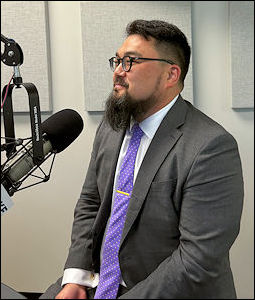
Thomas Schanding serves as Associate Professor and Department Head in the Department of Educational and Counselling Psychology, and Special Education at the University of British Columbia's Faculty of Education. He concurrently directs the Psychological Services and Counselling Training Centre. Previously, he held significant roles including core faculty in Special Education and Associate Director of Outreach and Leadership for the decade-long LoneStar LEND program at the University of Texas Health Science Center at Houston, alongside clinical supervision positions at Baylor College of Medicine/Texas Children’s Hospital. His educational foundation includes doctoral coursework at the University of Southern Mississippi (APA-accredited) and doctoral internship with Cypress-Fairbanks Independent School District (APA-accredited). Doctoral Coursework: University of Southern Mississippi Doctoral Internship: Cypress-Fairbanks Independent School District Dr. Schanding's research centers on social-emotional learning (SEL) and behavioral/mental health (B/MH) through three interconnected pillars: (1) assessment methodologies for SEL/B/MH, (2) evidence-based interventions to enhance youth well-being, and (3) cultural-linguistic considerations in school-community contexts. His clinical expertise spans Autism Spectrum Disorders and 2SLGBTQIA+ youth experiences, operating within Cognitive-Behavioral and Ecological theoretical frameworks. The SMART Lab ( https://blogs.ubc.ca/smartlab ) drives his applied research agenda focusing on inclusive practices and mental health promotion. Analysis of his recent publications reveals consistent emphasis on SEL assessment tools, helicopter parenting dynamics, and diversity-inclusive frameworks in school psychology. Key trends include validation studies of early literacy screeners, exploration of LGBTQ+ mental health predictors, and critical examinations of equity in educational literature, reflecting his commitment to evidence-based social justice. His scholarly contributions have been recognized through: President’s Distinguished Faculty Research Award, University of Houston – Clear Lake (2020) Group Teaching Excellence Award, University of Houston (2011) Early Career Scholar, Society for the Study of School Psychology (2009) As an educator, Dr. Schanding has supervised numerous practicum and intern students across settings including school districts and hospital systems. His leadership extends to directing the Psychological Services and Counselling Training Centre at UBC and previously leading outreach initiatives for neurodevelopmental disabilities through the LEND program. His teaching portfolio includes EPSE 506 (Applied Psychopathology), EPSE 555 (Academic & Social-Emotional Assessment), and specialized courses on Autism Spectrum Disorders. The SMART Lab (Social, Mental health, and Academic Research Team) operates as his primary research vehicle, conducting community-engaged projects on SEL implementation, mental health screening, and culturally responsive interventions for diverse youth populations, with particular attention to inclusive practices for 2SLGBTQIA+ students.
Will Beischel is an Assistant Professor in the Department of Psychology at Loyola University Chicago, specializing in Social Psychology. His interdisciplinary research bridges psychological science with queer and trans studies to develop inclusive frameworks for understanding gender and sexuality across diverse populations. Education: Postdoctoral Fellowship: Université de Sherbrooke Doctorate: University of Michigan Bachelors: Loyola University Chicago Dr. Beischel's research program focuses on three interconnected domains: (1) Positive experiences of gender and sexuality including gender euphoria and pleasure across identity spectra; (2) Methodological innovations like the Gender/Sex 3x3 framework for measuring beyond binaries; and (3) Developmental processes in gender identity formation, particularly during adolescence. His work employs mixed methods including surveys, interviews, and community-based approaches while centering intersectional perspectives on race, ethnicity, and social identity. He teaches PSYC 238: Sex and Gender: Similarities and Differences and actively seeks collaborators for social justice-oriented psychological research. Analysis of his 2022-2025 publications reveals a strong trajectory toward expanding psychological theory through non-binary gender frameworks, examining positive affect in gender experiences, and addressing health disparities among gender/sexual minorities. His work increasingly integrates biological markers with social identity constructs while developing practical tools for clinical and community settings. Scientific Awards: No awards were documented in the provided materials. Dr. Beischel is not recruiting Ph.D. students for Fall 2025. While specific grant details weren't provided, his research program demonstrates substantial external funding through national collaborations and community partnerships focused on LGBTQ+ health and methodology development. His work involves community-engaged research teams and interdisciplinary collaborations across psychology, gender studies, and public health. Current projects emphasize translating theoretical frameworks into practical tools for educators, clinicians, and policymakers while fostering spaces for gender and sexual diversity in academic settings.
Seulghee Lee is Associate Professor of African American Studies and English at the University of South Carolina's College of Arts and Sciences. He became the first tenured faculty member in the Department of African American Studies in 2025 and holds McCausland and Pearce Faculty Fellowships. His educational background includes a Ph.D. from UC Berkeley (2014) and a B.A. from Williams College (2007). Dr. Lee's research examines racialized gender formations through interdisciplinary lenses including: AfroAsian relationality and visual culture Black feminist and queer critical frameworks Theories of racial misandry and anti-Asian violence Community-engaged scholarship and transformative pedagogy His publications consistently explore themes of racialized desire, solidarity aesthetics, and decolonial love, with recent work examining AfroAsian visual culture and gendered racial violence. Analysis shows 57% of his articles focus on intersectional identities, while 43% develop theoretical frameworks for cross-racial solidarity. Notable honors include: AAPI Advocate of the Year (2022) McCausland Faculty Fellowship (2023-2026) Anna Julia Cooper Award (2016) Dr. Lee mentors TRIO Upward Bound students and serves on multiple community boards including the South Carolina Coalition Against Domestic Violence and Sexual Assault. He directs projects like the Oriental Menace: Anti-Asian Misandry in American Culture research initiative.
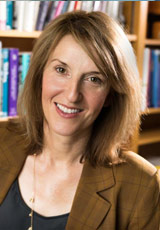
Lucia O'Sullivan is a Professor and Chair in the Department of Psychology at the University of New Brunswick. She holds a PhD in Experimental Psychology from Bowling Green State University, with postdoctoral research training in HIV at Columbia University. Her research focuses on the intersection of sexuality and intimate relationships, including digital technologies' impact on relationships and barriers to sexual health care. She has conducted international studies in South Africa, the UK, Guatemala, India, and the US. Dr. O’Sullivan has authored/co-authored over 175 peer-reviewed articles, a textbook on human sexuality, and serves on multiple journal editorial boards. She is currently not accepting graduate students. Education: B.A. (Hons.) and M.A. in Clinical Psychology from UNB; PhD in Experimental Psychology from Bowling Green State University; Postdoctoral training in HIV at Columbia University. Research interests include adolescent and young adult sexuality, sexual violence prevention, and the role of technology in relationships. Her work emphasizes global health perspectives and collaborative international research. Key contributions include co-editing a book on sexual coercion and developing measurement tools like the Short Sexual Subjectivity Inventory. Her recent studies explore sugar arrangements, bystander intervention in sexual aggression, and infidelity predictors.
Mark A. Yarhouse, Psy.D., is a clinical psychologist and the Dr. Arthur P. Rech and Mrs. Jean May Rech Professor of Psychology at Wheaton College. He directs the Sexual and Gender Identity (SGI) Institute and the Mental Health Collective, focusing on intersections of religious, sexual, and gender identities. Education: Psy.D. in Clinical Psychology (Wheaton College), M.A. in Theological Studies (Wheaton College), B.A. in Philosophy and Art (Calvin College) His research explores sexual/gender identity conflicts in Christian contexts, including transgender experiences, same-sex attraction, and faith integration. He has authored over 100 peer-reviewed works and 20+ books, with recent studies examining identity synthesis in religious environments. Scientific awards include the Gary Collins Award for Excellence in Christian Counseling and a Christianity Today 2024 Book Award finalist nod. He has served on APA consensus panels and advised the National Institute of Corrections. Labs/Teams: Sexual and Gender Identity (SGI) Institute, Mental Health Collective
Professor Helen Sauntson is affiliated with York St John University as a faculty member in the School of Education, Language and Psychology and Director of the Centre for Language and Social Justice Research . She holds a PhD from the University of Birmingham and is a Senior Fellow of the Higher Education Academy (SFHEA). Her teaching spans undergraduate and postgraduate programs in English Language and Linguistics and TESOL . Educational Background : BA – Central England PGCE – University of Birmingham PhD – University of Birmingham SFHEA (Senior Fellow of the Higher Education Academy) Research Focus : Professor Sauntson’s work centers on intersections of language, gender, and sexuality within educational contexts. Her recent publications and conference presentations highlight: Discourse analysis of anti-LGBTQ+ rhetoric Neoliberalism’s impact on academic freedom Queer theory applications in TESOL Policy analysis of Relationships and Sex Education guidelines Student resistance to heteronormativity Critical linguistic frameworks for inclusive pedagogy Professional Leadership : She serves as: Co-editor of Palgrave Studies in Language, Gender and Sexuality Co-editor of Cambridge Elements in Language, Gender and Sexuality Editorial board member for Journal of Language and Sexuality and Gender and Language Teaching & Advocacy : Her pedagogy integrates research-led approaches to sexual diversity training and LGBTQ+ inclusion, with a focus on: Curriculum reform for inclusivity Teacher training programs Policy advisory roles Global queer educational frameworks
Gerta Bardhoshi is a Professor of School Counseling at the University of Iowa’s College of Education, affiliated with the Department of Counselor Education and the Scanlan Center for School Mental Health. She holds a BS in Psychology (Northern State University), MSED in Counseling, and a PhD in Counselor Education and Supervision (George Washington University). Her research focuses on school counselor well-being, interventions addressing adolescent mental health, LGBTQ+ student experiences, and photovoice methodology. She has been honored as a Senior Research Fellow at the University of Iowa Public Policy Center (2019). Her work emphasizes burnout prevention, culturally responsive counseling practices, and evidence-based interventions. Notable grants include studies on rural Latinx students’ sense of belonging and the psychometric validation of scales like the School Counselor Self-Efficacy Scale. She is certified as a Licensed Professional Counselor (LPC) and Approved Clinical Supervisor (ACS). Awards: Senior Research Fellow (2019), University of Iowa Public Policy Center Grants: Over $200K in grants for counseling interventions, including group therapy for marginalized youth and photovoice studies. Her lab and collaborations emphasize community-based participatory research, advocating for inclusive education policies and counselor training programs to enhance student outcomes.
Jeffrey W. Lockhart is a James S. McDonnell Postdoctoral Fellow at the University of Chicago and will join the University of California, Berkeley as an Assistant Professor of Sociology in Fall 2025. He holds a PhD in Sociology from the University of Michigan, alongside Master's degrees in Gender Studies and Computer Science. His research focuses on the construction and contestation of identities—particularly sex, gender, sexuality, and race—in scientific, technological, and political contexts. Lockhart employs computational social science methodologies alongside qualitative archival analysis to explore how algorithmic systems perpetuate biases and how demographic factors influence knowledge production in social sciences. Recent work critiques the scientific quest to establish biological binaries, examines demographic disparities in algorithmic misrecognition, and analyzes right-wing LGBTQ+ movements. His scholarship bridges sociology, computer science, and science studies, emphasizing ethical implications of technological systems. Lockhart has received the James S. McDonnell Postdoctoral Fellowship and has published in venues such as Proceedings of the National Academy of Sciences and Social Currents . His research has garnered public attention through media outlets like Nature Careers and Psyche Magazine .
Dr. Misty Ginicola is a Professor in the Counseling and School Psychology (CSP) department at Southern Connecticut State University (SCSU). She holds a PhD from Yale University and has been with SCSU since 2006. Education : B.S. in Psychology (SUNY Cortland), M.A. in Psychology (SUNY New Paltz), M.S./M.Ph. (Yale University), Ph.D. in Clinical Psychology (Yale University, 2006) Her research focuses on Multicultural Counseling , LGBTQI+ Counseling , Creative Counseling Techniques (including phototherapy and yoga), and Highly Sensitive People . She integrates Indigenous and Celtic spirituality into her therapeutic practice. Dr. Ginicola's recent publications (2017) in the Affirmative Counseling with LGBTQI+ People book cover topics from identity development to religious/spiritual integration. Her earlier work (2004–2013) includes program evaluations for the Mutt-i-grees® initiative and critiques of educational policies like NCLB. She serves as President of the American Counseling Association’s Association of Lesbian, Gay, Bisexual and Transgender Issues in Counseling (ALGBTIC) and contributes to the Journal of LGBT Issues in Counseling . Her grants focus on multicultural competence and counseling research. As a Licensed Professional Counselor, she operates Walk in Balance Counseling in West Haven, CT. The practice emphasizes holistic, person-centered care and employs her training in shamanism, Breath Body Mind techniques, and yoga.
Jon Freeman is Associate Professor of Psychology at Columbia University and director of the Social Cognitive & Neural Sciences Lab. His research integrates cognitive, social, and affective processes to understand how people perceive others and make social judgments in real time. He employs functional neuroimaging, computational modeling, and behavioral techniques, notably advancing mouse-tracking methodology to capture dynamic decision-making processes. His core research interests lie in person perception , social bias , stereotyping , and the interplay between visual and social cognition . He investigates how affective and neural mechanisms shape split-second social evaluations, contributing to our understanding of implicit social cognition and its real-world implications. Freeman has received numerous prestigious early-career awards recognizing his transformative contributions, including the NSF CAREER Award and the APS Janet T. Spence Award. Other honors include early career recognitions from the Social & Affective Neuroscience Society, Society for Personality & Social Psychology, and several other leading organizations in behavioral and brain sciences. He is also actively engaged in national science policy, leading efforts since 2018 to incorporate sexual orientation and gender identity (SOGI) data into federal STEM workforce statistics. This initiative aims to improve equity, inform inclusive strategies, and ensure equal opportunity in STEM by expanding national data infrastructures while safeguarding privacy. Freeman advises graduate students and leads a multidisciplinary research team focused on social cognitive neuroscience and data equity. His lab develops and applies innovative methodologies to explore both fundamental psychological processes and systemic challenges in the scientific workforce.
Sandra Schmidt is an Associate Professor of Social Studies Education at the Graduate School of Education, Health & Psychology at Teachers College, Columbia University. Her academic work bridges geography, gender studies, and critical social theory, with a focus on civic education and postcolonial perspectives. Education: Ph.D. from Michigan State University, M.A. from University of Michigan, B.A. from Swarthmore College Her research interests include Geography Education , Critical Social Theory in Geography , Civic Education , and Gender and Queer Theory . She explores socio-spatial intersections, particularly among African migrant youth in the U.S., and investigates how spatial arrangements in schools perpetuate or challenge inequities. Recent publications analyze: Queer TikTok creators as educational agents Spatial inequality during pandemics Postcolonial narratives in national museums Queer spatial theory in classrooms Transnational socio-spatial fields These works emphasize spatial literacy and marginalized identities in educational contexts. Scientific Awards 2012-3 Provost's Investment Fund 'Merging Landscapes' 2012 Kipchoge Neftali Kirkland Social Justice Paper Award 2011 Outstanding Paper Award from AERA Queer Studies SIG 2011 AAUW American Fellow 2008 Michigan State University Excellence-In-Teaching Citation
Thomas Spijkerboer is Full Professor of Migration Law at the Faculty of Law, Vrije Universiteit Amsterdam, where he has been employed since 2000. He also holds positions at the Kooijmans Institute and established the Amsterdam Centre for Migration and Refugee Law, which has grown to become one of the largest research groups on migration worldwide. His academic career includes significant appointments as Raoul Wallenberg Visiting Professor of Human Rights and Humanitarian Law at Lund University (2017-2020) and International Franqui Professor at Ghent University (2020-2021). His educational background includes law studies at the Universiteit van Amsterdam. Before his academic career, he gained practical experience working at the Rechtswinkel Amsterdam legal clinic (1982-1986), specializing in housing law, and at Advokatenkollektief Zaanstreek (1986-1993), where he specialized in asylum cases. He completed his dissertation Gender and Refugee Status at the Catholic University Nijmegen, where he worked as a lecturer in Migration Law from 1993 to 2000. Professor Spijkerboer's research centers on the intersection of migration law, human rights, and border policies, with particular emphasis on the right to life of irregular migrants and the human costs of border control. His work critically examines European migration policies, especially their externalization and the resulting mortality among migrants attempting to reach European territory. He has pioneered research on border deaths, developing databases that document migrant fatalities along European borders, and has extensively analyzed the legal and moral implications of European border policies. His scholarship combines legal analysis with sociological and empirical approaches, addressing issues such as gender in refugee status determination, LGBTQ+ asylum claims, and the impact of migration policies on family life. His extensive publication record, including over 450 research outputs, demonstrates a consistent focus on the human rights dimensions of migration control. Recent work explores the bifurcation of migration law in Europe, asylum systems as instruments of containment, and the legal frameworks governing European border enforcement. His publications reveal a trajectory from detailed legal analysis of Dutch asylum procedures toward broader critiques of European and global migration governance. Scientific Awards and Distinctions: Praemium Erasmianum Studieprijs (2001) for his dissertation Gender and Refugee Status Elected member of the Koninklijke Hollandsche Maatschappij der Wetenschappen (2016) Elected member of the Koninklijke Nederlandse Academie van Wetenschappen (2017) Raoul Wallenberg Visiting Professorship at Lund University (2017-2020) International Franqui Professorship at Ghent University (2020-2021) Professor Spijkerboer has supervised 17 PhD theses and led multiple major research projects funded by NWO and the EU, including the significant five-year project Border Policies and Sovereignty. Human rights and the right to life of irregular migrants (2013-2018) and Fleeing Homophobia. Asylum claims related to sexual orientation and gender identity in the EU (2010-2011). His research has been instrumental in establishing the field of border death studies, influencing both academic discourse and policy debates on migration. He serves on the editorial boards of the Nederlands Juristenblad and the European Journal of Migration and Law, contributing significantly to the scholarly discourse in his field. He directs the Amsterdam Centre for Migration and Refugee Law, which functions as a hub for interdisciplinary research on migration law, bringing together legal scholars, sociologists, and political scientists. The center has become internationally recognized for its innovative approach to migration law research, particularly its focus on the human costs of border policies and the intersection of migration law with other legal domains such as family law and human rights law.
Whitney S. Rice, DrPH, MPH serves as Assistant Professor in the Department of Behavioral, Social, and Health Education Sciences at Emory University Rollins School of Public Health (RSPH), where she directs the Center for Reproductive Health Research in the Southeast (RISE). Her research program investigates social and structural determinants of sexual and reproductive health equity through participatory, justice-oriented frameworks utilizing mixed methods approaches. Her educational trajectory includes a BS from Georgia Institute of Technology, MPH from Emory University, DrPH from University of Alabama at Birmingham, and postdoctoral training at UAB. Dr. Rice teaches BSHES 540 - Research Methods and actively mentors emerging scholars through RISE's research training initiatives. Research interests center on: Structural drivers of reproductive health disparities Policy impacts on abortion and contraceptive access Intersectional stigma in HIV care for women Community-engaged health services research Reproductive justice frameworks in the U.S. South Her work consistently addresses marginalized populations with emphasis on racial equity and policy translation. Recent publications demonstrate methodological diversity spanning systematic reviews, policy evaluations, and qualitative analyses of post-Roe impacts, with strong geographic focus on Southern U.S. contexts and thematic emphasis on structural barriers to care, disinformation challenges, and community resilience strategies. Scientific recognition includes: 2019 Outstanding Young Professional Award (APHA Sexual and Reproductive Health Section) 2023 Inaugural RSPH Faculty Leadership Award 2024 BSHES Distinguished Teaching Award As RISE Director, Dr. Rice leads collaborative research initiatives examining reproductive health policy impacts while providing critical mentorship to junior investigators. Her media engagement—including the 'Health Wanted' podcast—translates research for public discourse on reproductive rights. Current work addresses evolving post-Roe landscapes through community-academic partnerships focused on actionable solutions for health equity.
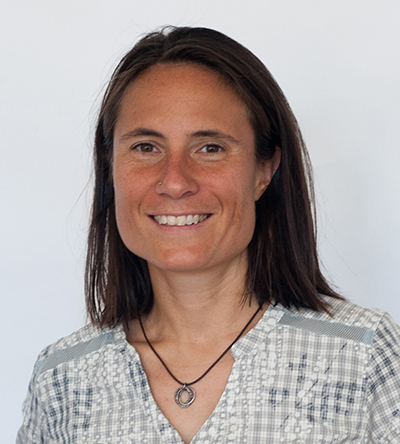
Jennifer Butler is an Instructor and Department Representative for Psychology majors & minors at Case Western Reserve University's Department of Psychology. She is located at Mather Memorial Building 1 and reachable via jennifer.butler@case.edu . Her research focuses on educational psychology, social psychology, and cognitive processes, with notable work on growth mindsets in academic achievement, performance under pressure, and motivational theories. Her studies often explore the intersection of social environments and human behavior, including audience effects on performance and gender differences in emotional responses. Her publications span from 1995 to 2018, covering topics such as the choking phenomenon under supportive audiences, sexual masochism analysis, and goal framing's impact on outcomes. While no specific awards are listed, her work reflects contributions to understanding psychological mechanisms in education and social contexts. As a department representative, she advises Psychology students and oversees program curricula. No specific grants or lab affiliations are mentioned in the provided materials.



/prod02/channel_1/media/faculty/mark-yarhouse-feb-2024-495X533.jpg)