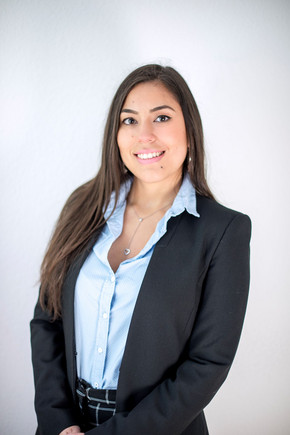
Nazmiye ARDUÇ is a Lecturer at the Department of Psychology, Faculty of Science and Letters at Doğuş Üniversitesi. She holds a PhD in Clinical Psychology from Doğuş Üniversitesi (2023) and has published extensively on forensic psychology, clinical assessment, and therapeutic approaches. Her research focuses on personality analysis in criminal populations and psychological interventions for vulnerable groups. Education: Bachelor's in Psychology, Işık Üniversitesi (2014) Master's in Clinical Psychology, Işık Üniversitesi (2016) with thesis on 'Analysis of Personality Structures of Intentional Murder Offenders in Turkey' PhD in Clinical Psychology, Doğuş Üniversitesi (2023) with thesis on 'Evaluation of MMPI-2 Profiles of Males Convicted of Sexual Assault in Turkey' Research Interests: Cognitive Behavioral Therapy applications in clinical settings Schema therapy for personality disorders Forensic psychological assessments using MMPI-2 Psychological effects of refugee trauma Professional Memberships: Member of Turkish Psychological Association (2011) Member of Cognitive and Behavioral Therapies Association (2016) Board Member at Yeşilay (2022) Teaching Activities: Currently teaches Social Psychology, Introduction to Psychology, Neuropsychology, and Forensic Psychology Also instructs courses on Projective Tests and Psychodynamic Approaches
Torbjørn Skardhamar is a Professor at the University of Oslo's Department of Sociology and Social Geography. His research focuses on criminology, criminal careers, substance use disorders, and public health. He has conducted extensive studies on desistance from crime, the impact of life-course transitions (e.g., employment, marriage, parenthood), and policy evaluations regarding nightlife violence and prison reforms. Notable collaborations include projects like PriSUD and WOMPRIS, addressing substance use among incarcerated populations and women's health post-release. Skardhamar’s work often employs register-based data and longitudinal analyses, emphasizing evidence-based policy recommendations. Recent publications include studies on vulnerable urban areas, mortality among incarcerated women, and the effects of environmental factors (e.g., weather) on crime. He has contributed to debates on open-access publishing standards, advocating for robust peer-review systems. His expertise spans criminal justice policy, socioeconomic disparities, and interdisciplinary approaches to crime reduction.
Carlos Alberto Martins da Silva Poiares is an Associate Professor at Lusófona University, affiliated with the Faculty of Social Sciences, Education and Administration and the Faculty of Law. He has served as Vice-Rector since 2013 and is a leading figure in forensic psychology and social exclusion research. Law Degree, University of Lisbon (1978) PhD in Psychology, University of Porto (1996) His research focuses on forensic psychology, psychometrics, psychopathy, delinquent behavior, and adolescence. He has published extensively in peer-reviewed journals and has contributed significantly to the validation of psychological instruments in Portuguese populations. His work often intersects law and psychology, particularly in juvenile justice and criminal behavior assessment. The recent articles reflect a strong trend in forensic and clinical psychology, with emphasis on psychometric validation, aggression assessment, and psychopathic traits in youth. His research demonstrates methodological rigor using tools like correlation and regression analyses, and addresses critical social issues such as gender-based violence and social exclusion. Grand Officer of the Order of Prince Henry (2006) Poiares has supervised 68 students and leads the Panóptico – Center for Forensic Psychology Studies, which he founded in 1997. He is the founder and board chair of PSIJUS – Association for Juspsychological Intervention, and has represented Portugal in the International Association of Psychology and Law (AIPJ), serving as Vice-President since 2016. He is currently involved in active research projects including 'Risk(s) of Violence and Loneliness in the Elderly Population' and 'HIGHRES: Helping Intangible Heritage Resilience through Storytelling'. He leads and participates in multidisciplinary research teams focusing on social vulnerability, aging, and heritage resilience, demonstrating a broad impact across psychology, law, and social policy.
Dr. Andrea Elizabeth Romo Pérez is an Assistant Professor at the Institute for Gender and Diversity in Organizations at WU Vienna. She holds a PhD in History from Freie Universität Berlin and a Master's in Public Management from Universität Potsdam. Her research focuses on gender dynamics in male-dominated professions, intersectional discrimination, masculinities, and police-minority relations. She has conducted fieldwork in Latin America and Israel, examining police deviance and gender-based violence. Current projects include studies on women in STEM leadership (aviation sector) and diversity management in Austrian hospitality industries. Education: PhD in History, Freie Universität Berlin MSc in Public Management, Universität Potsdam Research Interests: Gender dynamics in policing and security institutions Intersectionality and systemic discrimination Qualitative methodologies Women's leadership in male-dominated sectors Awards: Lady Davis Postdoctoral Fellowship (2018) WU Teaching and Learning Scholarship (2023) Research Fellowship - Tecnológico Universitario Argos (2023) Dr. Romo Pérez has co-organized major conferences such as the 2023 and 2024 WU Gender and Diversity Conferences. Her publications appear in Police Practice and Research , Feminist Criminology , and Policing and Society .
Ruşen Ayata Küçükbükücü is a Researcher in the Social Work Department of the Health Sciences Faculty. Their work focuses on intersectional social justice issues, particularly in criminal justice reform, mental health services, and disability employment. They have contributed to pandemic response strategies and juvenile justice policy analysis. Research interests include gender studies in penology, school violence prevention, restorative justice for youth offenders, and addiction counseling methodologies. Their 2022 studies explore prisoners' rights through a gender lens and sexual addiction therapy frameworks. Notable recent work includes an analysis of family attitudes toward vocational training for individuals with intellectual disabilities (2016) and a pandemic crisis evaluation from a social work perspective (2020).
Florian Walter is a Lecturer in Nursing (Adult) at the University of Manchester, affiliated with the Nursing & Midwifery department. He holds a PhD in Medicine from the University of Manchester (2019), an MSc in Epidemiology from Johannes Gutenberg University (2015), and a BSc in Nursing from the Protestant University of Applied Sciences in Berlin (2012). His work contributes to UN Sustainable Development Goals related to Good Health and Well-being (SDG 3) and Reduced Inequalities (SDG 10). Research focuses on mental health nursing, healthcare-associated harm in prisons, autism spectrum disorder, and substance abuse. Current projects include studying avoidable harm in prisoner healthcare and post-pandemic recovery in health systems. Past projects explored hate crime underreporting, radicalization risks in autism, and mental health interventions for offenders. Teaching responsibilities include BNurs/MNurs seminars on Values-Based Nursing and Evidence-Based Practice, and MRes supervision. He has contributed to 20+ research outputs and led collaborative projects like the Health and Justice Research Network. Active in professional roles such as First Aider and Postgraduate Research Committee member.
Amber L. Beckley, PhD, is a Senior Lecturer at Örebro University's School of Behavioural, Social and Legal Sciences, Department of Behavioural, Social and Legal Sciences. Her research focuses on life-course criminology, particularly how developmental factors influence criminal offending and victimization. She is a co-PI on the 4C Consortium studying criminal collaborations in Sweden and leads projects funded by Nordic and Swedish research councils. She teaches courses on evidence-based crime prevention and supervises bachelor/master theses. Education: PhD in Criminology (2015, Stockholm University), Docent (Swedish postdoc qualification). Her work integrates biosocial theories, using register data and longitudinal studies. Recent projects include analyzing immigrant population dynamics and violent crime in Swedish municipalities, and hosting Nordic biosocial criminology dialogues. She has advised over a dozen graduate students and published widely in journals like JAMA Pediatrics and Nordic Journal of Psychiatry . Research groups: Development of Criminal Behavior Across the Lifespan, Biopsychosocial Criminology & Psychology. Grants include SEK 2.875 million for childhood predictors of crime and a Forte grant studying immigration's impact on Sweden's crime trends since 1980. She collaborates with international teams from universities in Helsinki, Oslo, and the US.
Dr. Andrea Hollomotz is an Associate Professor in the School of Sociology and Social Policy at the University of Leeds, affiliated with the Faculty of Social Sciences. She serves as Deputy Director for Research and Innovation (DDoRI) in the School. Her work focuses on disability studies, sexual violence, and systemic injustices affecting marginalized groups. Key roles include: Leading ESRC-funded research on learning disabilities and sexual offending Co-authoring reports on disabled victim-survivors' needs and police reporting experiences Collaborating on the MS Domestic Violence and Abuse Research Initiative Research interests span disability and violence intersections, inclusive research methods, and upstream social change. Her PhD explored learning disabilities and sexual 'vulnerability,' challenging systemic ableism. Current projects address access to justice for disabled victims-survivors, DVA in MS populations, and disability rights advocacy. Teaching focuses on research methods for sensitive topics, including module leadership for Doing Disability Research and Sociology and Social Policy Research Methods . Recent articles analyze structural causes of reporting delays for disabled sexual violence victims, legal frameworks for mental capacity, and rehabilitation strategies for offenders with intellectual disabilities. Collaborations with Disability Rights UK and the Cabinet Office highlight policy impact. Labs/teams include the Centre for Disability Studies. Supervises students in disability studies, sexual violence, and inclusive methods. No formal awards listed but maintains high academic visibility through impactful research.
Henricus Janssen is a Professor at the Interfaculty Institute for Family and Sexuality Studies (Department of Neurosciences) at KU Leuven and a Senior Research Fellow at the Kinsey Institute, Indiana University. He holds roles as Head of the Institute, Program Director for the POC Familiale en Seksuologische Wetenschappen, and chairs the Scientific Committee of the World Association for Sexual Health (WAS). His research focuses on sexual psychophysiology, sexual aggression, hypersexuality, and relationships. Janssen has pioneered the Dual Control Model of Sexual Response and directs a psychophysiological laboratory. He collaborates internationally with researchers across Europe, North America, and beyond. Awards include the Hugo Beigel Award (twice) and IASR Best Student Manuscript Award. His teaching includes courses on sexuality research methods and clinical aspects of human sexuality. Professional memberships include leadership in the International Academy of Sex Research and European Sexual Medicine Network. Research interests span sexual dysfunction, risk behaviors, and relationship dynamics. Recent studies explore sexual desire in couples, reoffending risk modeling, and biobehavioral synchrony. His work emphasizes interdisciplinary approaches and clinical application. Janssen advises multiple PhD students and leads projects on forensic case formulation and dyadic sexual health. He actively participates in policy-making through WAS and EFSM committees. Awards: Hugo Beigel Award (2×), SSTAR Award, Reiss Theory Award Key Projects: Dual Control Model applications, sexual aggression predictors, network-based reoffending models Grants: FWO-funded projects on sexuality and relationships, international collaborations Labs: Psychophysiological laboratory at IFSS, CRIPCAS collaboration (Montréal)
Stefaan Pleysier is a Full Professor at KU Leuven's Faculty of Law and Criminological Sciences and core member of the Leuven Institute of Criminology (LINC). His institutional roles include membership on the Faculty Council, Doctoral Committee, and Evaluation Committee for Law and Criminological Sciences, alongside participation in Program Councils for Criminology, Law, and Sociology. Research Focus His work centers on youth criminology and juvenile justice systems, examining criminalization processes, sibling violence dynamics, and non-consensual sexting among adolescents. He applies rehabilitation frameworks like the Good Lives Model to youth justice contexts, with strong emphasis on Flemish policy evaluation and European comparative studies. Publication Trends Recent publications (2024-2025) reveal concentrated focus on emergent digital offenses and family violence within youth justice systems. His interdisciplinary work spans criminology, child welfare, and forensic sciences, consistently addressing practical implementation challenges in Flemish and European policy contexts through mixed-methods approaches. Research Leadership He directs major funded projects including the Flemish juvenile justice evaluation (2023-2025), non-consensual sexting research (2022-2026), and the landmark sibling violence study in Flanders (2021-2027). His European project on diversion practices for children in conflict with the law (2019-2025) demonstrates cross-border policy engagement. Collaborative Frameworks Pleysier operates through KU Leuven's Leuven Institute of Criminology (LINC), Leuven Statistics Research Center, and Youth Research Platform (JOP), facilitating multi-institutional partnerships with Flemish welfare agencies and European research networks focused on evidence-based youth justice reform.
Kimberly Bender is an Associate Professor of Sociology, Anthropology, and Criminal Justice at the Department of Behavioral Sciences, College of Arts, Sciences and Education, University of Michigan-Flint. Her scholarly work focuses on criminal justice systems, gender dynamics, and social justice. Education: Ph.D. in Criminal Justice from Michigan State University (2015) Her research explores procedural justice in correctional settings, racial disparities in policing, and gender-based differences in sexual offending patterns. Recent publications analyze incarcerated women's perceptions of prison officers, strategic responses to police encounters among Black Baltimore residents, and comparative studies of gendered criminal behavior. Key themes in her work include: Intersection of race, gender, and systemic justice Incarceration experiences and reform Behavioral responses to institutional authority Quantitative and qualitative criminological methods
Kelly Richards is a part-time academic at the Faculty of Law, Queensland University of Technology , with a focus on Criminology , Restorative Justice , and Sexual Offending . Her work spans Youth Justice , Indigenous Justice , and Online Fraud , often examining community-based interventions like Circles of Support and Accountability (CoSA) for offender reintegration and victim empowerment. Her research explores: Sexual Offending (desistance, public perceptions, CoSA efficacy) Indigenous Justice Programs (cultural competency, post-release support) Online Fraud (victim blaming, reporting barriers) Youth Justice (therapeutic jurisprudence, judicial decision-making) She has contributed to policy development through submissions to commissions and inquiries, emphasizing community safety , victim-centered approaches , and systemic reforms . Her recent publications highlight trends in LGBTQIA+ offender reintegration , child-like sex dolls in court cases , and Indigenous stakeholder perspectives on CoSA . While no scientific awards are listed, her work is widely cited and engages with interdisciplinary audiences.
Miguel Manuel Clemente Díaz is a Professor in the Department of Psychology at the University of A Coruña (UDC), specializing in Social Psychology and Legal Psychology. He leads the research group Criminology, Legal Psychology and Criminal Justice in the 21st Century and has directed over 20 graduate theses on topics like child abuse, gender violence, and forensic psychology. Research Interests: Focus on legal psychology, criminology, social psychology of gender violence, psychosocial intervention in family breakups, forensic assessment, and dark personality traits. Publications: 15 most recent articles span child abuse detection, gender-based violence analysis, forensic psychology in judicial settings, and dark triad personality studies. Teaching: Delivers Social Psychology and Psychosocial Intervention courses in Sociology and Applied Psychology programs. Students: Mentored 20+ PhD candidates including Dolores Padilla-Racero and Zara Elena Díaz Pérez. Email: miguel.clemente@udc.es
Nieke Elbers serves as Associate Professor in Liability Law at Vrije Universiteit Amsterdam's Faculty of Law and as Senior Researcher at the Netherlands Institute for the Study of Crime and Law Enforcement (NSCR). She leads the Empirical Legal Studies help desk at VU Law School, co-manages the Amsterdam Law and Behaviour Institute (A-LAB), and serves on the WO&MEN@VU network board and Ministry of Justice advisory committees for victim research. Her interdisciplinary work bridges law, psychology, and criminology with a focus on improving victims' experiences within legal systems. Her educational background includes a PhD in Empowerment of Injured Claimants from Vrije Universiteit Amsterdam (2013), a Master in (Neuro)Psychology from Maastricht University (2006), and a Traineeship in Work Disability Prevention from University of Toronto (2015). She previously completed a Postdoc at University of Sydney (2013-2016) funded by an NWO Rubicon grant. Elbers' research centers on Empirical Legal Studies, victimology, and restorative justice, with particular emphasis on procedural justice as an empowerment tool, prevention of secondary victimization, and realization of victim rights across criminal, civil, and administrative law. Her methodologically rigorous work combines qualitative and quantitative approaches to examine how legal procedures impact victims' wellbeing, with special attention to compensation systems, victim impact statements, and the roles of lawyers, insurers, and healthcare providers in victim recovery. She takes an interdisciplinary perspective on victim recovery after crime or accidents, working closely with policymakers, legal experts, and healthcare specialists. Analysis of her recent publications reveals consistent focus on victim rights implementation across European jurisdictions, with particular attention to sexual violence compensation systems, medical-legal interfaces, and restorative approaches within academic institutions. Her work demonstrates growing interdisciplinary integration between legal studies, psychology, and healthcare, with increasing emphasis on practical applications of restorative justice principles in diverse institutional settings. Her scientific recognition includes: Jan van Dijk Victimology and Victims' Rights Award (2014) NWO Aspasia Grant for talented female researchers (2023) Female Scientist Talent Gezina van der Molenfonds (2021) Elbers actively mentors the next generation of legal scholars as primary supervisor for four PhD candidates (Iris Becx, Rachel Dijkstra, Angelique Reitsma, Marleen Kragting) and has coordinated numerous research projects with significant external funding, including EU-funded initiatives on victim compensation, Ministry of Justice-commissioned evaluations of victim rights legislation, and her current leadership of the 'Building a Restorative University' project. She also volunteers as a neighborhood mediator with BeterBuren in Amsterdam, applying her expertise in conflict resolution at the community level. Her current research leadership includes the 'Victims, Citizenship, and Justice' International Research Collaborative with Griffith University, and she plays a key role in developing VU Amsterdam's restorative justice initiatives through the A-LAB institute and the Law, Markets and Behavior program.
Dr. Pascalle Spaan is a postdoctoral researcher at the Netherlands Study Centre for Crime and Law Enforcement (NSCR), specializing in forensic psychiatry and victimology. With a PhD in Forensic Psychiatry from Erasmus MC and a Master's in Health Sciences (Biostatistics), her work focuses on the interplay between violence, aggression, and lifecourse criminality patterns through rigorous quantitative analysis. Current affiliation: NSCR (2024-present) PhD research: Erasmus MC (2016-2024) Education: Research Master in Clinical and Health Psychology (cum laude, 2016) Her research examines: Homicide networks' ripple effects Biological markers for suicidal behavior Developmental pathways to delinquency Sexual offender career patterns Recent publications (2023-2024) explore: Psychiatric biomarkers Sex differences in criminality Puberty's impact on antisocial behavior Latent class modeling in offender typology spanning disciplines from neuroendocrinology to comparative criminology. Based at NSCR, Spaan contributes to fundamental research on crime and justice through state-of-the-art methodologies, addressing key societal challenges in safety and legal systems.