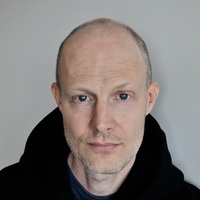
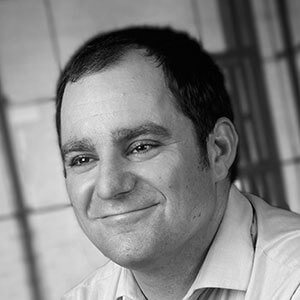
Benjamin H. Snyder is an Assistant Professor of Sociology at Williams College, Williamstown, MA, and a Faculty Member at Victoria University of Wellington's Sociology department. His research bridges sociological theory with empirical studies on surveillance, temporal structures, and labor dynamics. Current Role: Assistant Professor of Sociology at Williams College. Research Interests: Sociology of Culture, Work, Time, Emotion, and Social Theory. Key Contributions: Critical analysis of aerial surveillance in urban settings, temporal cognition in organizations, and the moral costs of flexible capitalism. Publications His recent work explores the paradoxes of clock time in regulating truck driver fatigue, the ethical implications of aerial surveillance in Baltimore, and the fragmentation of time in precarious employment. Notable publications include The Disrupted Workplace (2016) and Spy Plane: Inside Baltimore's Surveillance Experiment (2020). Contact Email: bhs2@williams.edu
Prof. SEHER ASLANCI is a Professor of Mathematics Education at ALANYA ALAADDİN KEYKUBAT UNIVERSITY, Faculty of Education. Her academic journey includes roles such as Vice Dean (2022–2023) and Department Head (2017–2018). She holds a Doctorate in Geometry from Atatürk University (2011). Research focuses on differential geometry (tensors, Riemannian structures) and mathematics education (bibliometric analyses of pedagogical methods like inquiry-based learning and realistic mathematics education). Publications span 20+ years, emphasizing geometric structures and educational methodologies. Awards include TUBITAK's UBYT grants (2009, 2011, 2014). Administrative roles include Scientific Research Commission membership (2020–2021) and Mevlana Exchange Program coordination (2016–2017). Education: Integrated PhD (Geometry), Atatürk University, 2011 Mathematics Teaching Programme, Atatürk University, 1999–2004 Awards: Encouragement of International Scientific Publications (TUBITAK UBYT-2014) Encouragement of International Scientific Publications (TUBITAK UBYT-2011) Encouragement of International Scientific Publications (TUBITAK UBYT-2009) Research themes blend pure geometry (tensor bundles, complex structures) with applied educational studies (bibliometric trends in tech-enhanced learning). Recent work explores heat flux control systems and deformations in geometric structures.
Lamia Elloumi is a Lecturer/Researcher in Digital Life with a PhD. Her work focuses on integrating social robotics, virtual communities, and health informatics to enhance educational and health outcomes. Key research areas include child-robot educational interactions, social robot design for math tutoring, and physical activity support systems. Education: PhD (specific institution not specified in text). Research Interests: Virtual communities for health behavior change Human-robot interaction in educational settings Social robotics in primary education Health informatics for elderly care Recent publications emphasize sustaining long-term child-robot interactions, designing social robot math tutors, and exploring requirements for robotics in primary education. Earlier work includes virtual communities for physical activity and medication optimization in elderly care. Received the Best Studies Paper Award (Runner-up) in 2023 for work on social robot math tutors. Active in academic outreach, including an invited talk at the ROC studiedag workshop in 2023.
Mitchelle L. Hauk is an Assistant Professor in architectural history and theory at the Sam Fox School of Design & Visual Arts, Washington University in St. Louis. She teaches in the Master of Science in Architectural Studies, Master of Architecture, and Bachelor of Science/Bachelor of Arts in Architecture programs. Her research explores the intersection of water technologies, domestic environments, and societal/cultural practices in 20th-century Japan, emphasizing how design shapes relationships and environmental sustainability. Education: Ph.D. in Japanese History, Columbia University (2023) Masters in Architecture (MArch) and Masters in Architectural Studies (MSAS), Washington University (2015) Postdoctoral Fellowship, Reischauer Institute of Japanese Studies at Harvard University (2023–2024) Her work highlights themes such as postwar housing design, environmental conservation campaigns, and the role of gender in architectural spaces. She has presented at institutions including Harvard University and the University of Tokyo, addressing topics like water management in domestic settings and the evolution of traditional Japanese architectural spaces. Awards: 2023 Junior Fellowship in East Asian Studies, Columbia University 2022 Fulbright-Hays Doctoral Dissertation Grant 2019 Fulbright Graduate Study/Research Award Advising and grants: Hauk has secured significant research funding through Fulbright and the US Department of Education, supporting her dissertation and postdoctoral work. No formal advisees are listed in the provided materials. Her affiliation with the Sam Fox School reflects her dual engagement with design education and scholarly research.
Tiina Kukkonen is an Assistant Professor of Visual Arts Education at Queen’s University, Canada, and a practicing visual artist. She holds a PhD in Education from Queen’s University, an M.A. in Child Studies, and a B.F.A. in Visual Arts Education from Concordia University. Her research focuses on arts education partnerships, rural arts education, and play-based pedagogical approaches. She actively works to make visual arts education accessible through innovative teaching methods and knowledge mobilization strategies. Dr. Kukkonen has extensive experience teaching visual arts across community and school settings in Quebec and Ontario. She collaborates with organizations like the Canadian Society for Education through Art (CSEA) and the Canadian Network for Arts and Learning (CNAL). Her research emphasizes ecological models for artist-school partnerships and intermediary organizations’ roles in supporting rural arts initiatives. Her publications (2018–2022) explore topics such as creativity in classrooms, youth mental health through arts, and arts-based knowledge translation frameworks. While no specific grants or awards are listed, her work highlights contributions to policy design and community engagement. She is affiliated with the Kingston Fibre Artists and engages in public art exhibitions and workshops.
Veronica Garcia Hansen is an Associate Professor in the School of Architecture & Built Environment at Queensland University of Technology (QUT). Her research focuses on the interplay between building design and performance, emphasizing visual/thermal comfort, human health/wellbeing, and innovative methodologies using sensors, machine learning, and VR. She is an internationally recognized expert in high-performance building envelopes, daylighting, and lighting's non-visual health effects. Her 2020 WiSTEM2D award ($250k grant) supported 'healing environments in hospitals via efficient lighting design,' one of six global awards selected from 550 applications. Education: PhD (Queensland University of Technology), BArch (Other). Professional memberships include AIA, ASA, ISES, CIE (Division 3 Editor), and multiple editorial roles. Research Leadership: HDR Training Coordinator (2019–2021), Deputy Academic Lead (Architecture), and leader of QUT's Design Lab 'Emerging Technologies' program. She chairs CIE Division 3 (Interior Environment & Lighting Design) and represents Australia in IEA Task 61. Awards & Recognition: 2020 Johnson & Johnson Scholar; 2003 Asian Innovation Award (Bronze); Division Editor roles; and leadership in global architectural science initiatives. Supervision & Grants: Advised over 100 postgraduate students and led projects like 'Designing Healthy and Efficient Luminous Environments' (LP150100179). Current supervision includes lighting design strategies for healthcare staff wellbeing. Labs/Teams: Core member of QUT's Design Lab, focusing on emerging technologies and interdisciplinary architectural science research.
Helwig Hauser is a Professor in the Department of Computer Graphics within the Faculty of Informatics at Vienna University of Technology (TU Wien). His research focuses on advancing visualization techniques across multiple scientific domains. With a career spanning over two decades, he has established himself as a leading expert in visualization research. His primary research interests encompass Computer Graphics, Visualization, Data Visualization, Visual Analytics, Scientific Visualization, Information Visualization, Set Visualization, and Molecular Visualization. Dr. Hauser's work bridges theoretical foundations with practical applications, developing innovative techniques for visual data exploration and analysis across diverse fields from medical imaging to molecular biology. Analysis of his publication record reveals a consistent research trajectory focused on developing novel visualization methodologies. His work demonstrates strong emphasis on interactive visual analytics, set visualization techniques, and domain-specific applications in medical and molecular visualization. Notably, he has made significant contributions to set visualization (Radial Sets), molecular visualization (Watergate), and medical visualization (Aortic Dissection Maps). Best paper award (one out of three) at EuroVis 2007 Heinz Zemanek Preis (2006) Best paper award at SimVis 2005 Dr. Hauser has supervised numerous doctoral and master's students, with a particular focus on visual analytics of complex data types. His research has been supported by various projects including the Punkt-basierte Volumen-Graphik project (2006-2009). He has contributed significantly to the visualization community through his editorial work and service as a journal reviewer, though specific details on current grants were not provided in the source text.
Assoc. Prof. Dr. Murat Ergün currently serves at Istanbul Technical University's Faculty of Civil Engineering, Department of Civil Engineering, specializing in transportation planning, traffic engineering, and sustainable infrastructure. He holds a PhD in Transportation Engineering and has contributed extensively to urban mobility, pavement engineering, and risk assessment in transportation systems. PhD (1993): Transportation Engineering, Istanbul Technical University MSc (1985): Transportation Engineering (Mixed), Istanbul Technical University BSc (1981): Civil Engineering, Uludağ University His research focuses on GIS integration for spatial transport analysis, centroid optimization in planning, and sustainable asphalt materials. Recent projects include risk assessment for urban roadside assets and dynamic creep analysis of polymer-modified asphalt. Collaborations with İ. Adalıoğlu dominate his 2025 publications. Key projects span from 2005 BAP initiatives to 2025 studies on autonomous vehicles in public transport. Though no specific scientific awards are listed, his Scopus h-index of 8 reflects significant scholarly impact.
Shilpa Murthy is an Assistant Professor of Surgery in the Colon and Rectal Surgery division at Yale School of Medicine. Her clinical practice operates at the West Haven Veterans Affairs Hospital, while her research bridges surgical outcomes with public health frameworks to address healthcare disparities. Education: MD from Pennsylvania State University, MPH from Harvard T.H. Chan School of Public Health, and BS in Molecular Cellular Biology from University of Michigan. Research Focus: Specializes in improving cancer care delivery for underserved populations through global oncology, health services research, and surgical equity studies. Recent publications examine colorectal surgery outcomes , global cancer disparities , and health policy innovations . Her work includes collaborations across Africa, Europe, and North America. Scientific Recognitions: Surgical Resident Humanitarian/Volunteerism Award (2015) Professional networks include partnerships with WHO Cancer Division, Lancet Oncology Commission, and Yale's multidisciplinary research teams.
Esa Saarinen is a Senior Advisor in the Department of Industrial Engineering and Management at Aalto University. His research focuses on Systems Intelligence, Applied Philosophy, and Organizational Systems. He holds a Doctoral degree in Humanities from the University of Helsinki (1978) and has been recognized with awards including the Aalto Act of the Year Award (2021) and the Eino Kaila award (1990). His work spans over 68 publications, emphasizing interdisciplinary approaches to human factors, team dynamics, and philosophical methodologies. Key research interests include positive psychology, organizational learning, and systems-based design strategies. Recent articles highlight applications of Systems Intelligence in safety management, esports, and empathic design. Dr. Saarinen has contributed to international conferences and collaborative research projects, advocating for systems thinking in education and professional settings. His lectures on philosophical practices and methodologies have gained attention in both academic and public domains.
Dr. Joi L. Moore serves as Associate Dean for Engagement & Outreach in the College of Education & Human Development and holds a Professorship in the School of Information Science & Learning Technologies at the University of Missouri. She is also affiliated with the MU Institute for Data Science & Informatics and the Black Studies Department. With a B.S. and M.S. from North Carolina State University and a Ph.D. in Instructional Technology from the University of Georgia, her expertise spans Learning Design, E-Learning, and Usability. Over 25 years of experience in instructional materials and digital media development underscores her contributions to educational technology. Her professional service includes presidential roles in the Minorities in Media Affiliate and the Association for Educational Communications and Technology (AECT). Research focuses on Electronic Performance Support Systems, Interactive Learning Environments, and Human-Computer Interaction in web application design. Notable projects include health informatics initiatives like medication timeline visualization and patient-centered clinical documentation. Educations: B.S. Computer Science, North Carolina State University M.S. Management (MIS), North Carolina State University Ph.D. Instructional Technology, University of Georgia Research Themes: Educational Technology & Usability Patient-Centered Health IT Cultural Competency in Digital Spaces Adult Learning & Professional Development Awards: Her leadership roles in national associations reflect her impact on educational technology policy and practice. Advising/Grants: Extensive mentorship and project management experience in educational technology projects, including agile methodologies for mobile applications. Labs/Teams: Active in MU’s Data Science Institute and interdisciplinary health informatics collaborations.
Tom Christian Holm Adamsen is an Associate Professor at the Department of Chemistry, University of Bergen. He is affiliated with the Center for Nuclear Medicine/PET at Haukeland University Hospital in Bergen. His research focuses on radiochemistry, PET imaging techniques for medical and industrial applications, pharmacology, and oncology tracers. Adamsen’s work spans pre-clinical imaging, novel radiotracer development, and the application of PET in drug distribution studies. He has contributed to projects like the Bergen Tracer Development Centre and instrumental methods in radiochemical synthesis. His research also explores interdisciplinary applications, such as using PET imaging in geological core analysis and hydrocyclone studies. Key areas of interest include titanium-45-based radiopharmaceuticals, single-cell tracking in high-noise conditions, and the repurposing of drugs like sulfasalazine for cancer treatment. His work bridges nuclear chemistry, biomedical engineering, and clinical diagnostics. Adamsen teaches courses such as KJEM260 (Radiochemistry and Radioactivity) and contributes to academic conferences and consortia like the 180°N Norwegian Nuclear Medicine Consortium. He has held roles as project manager and PI for multiple research initiatives, emphasizing translational research between academia and clinical practice.
Johannes Peter Wallner is an Associate Professor at Graz University of Technology (TU Graz), working in the Institute of Software Engineering and Artificial Intelligence within the Faculty of Computer Science and Biomedical Engineering. He leads the Knowledge Representation and Reasoning (KRR) research group and has previously been a researcher at TU Wien's DBAI group and the Constraint Reasoning and Optimization group at the University of Helsinki. Dr. Wallner's research focuses on knowledge representation and reasoning, artificial intelligence, argumentation, abduction, belief change, inconsistency handling and measurement, computational social choice, computational complexity, Boolean satisfiability, and answer set programming. His work bridges theoretical foundations with practical applications, particularly in developing computational models for argumentation systems. He has made significant contributions to structured argumentation frameworks, including assumption-based argumentation and ASPIC+. His recent publications demonstrate a strong trend toward advancing algorithmic approaches to probabilistic argumentation, abstraction techniques in argumentation systems, and applications of argumentation in domains like healthcare. He has been particularly active in exploring the computational complexity of various argumentation semantics and developing efficient algorithms for reasoning tasks. Dr. Wallner has received multiple prestigious awards including being selected for the IJCAI 2024 Early Career Track (only 12 researchers globally selected), being named a Top Scholar by ScholarGPS in 2024 (top 0.5% worldwide in AI), and receiving the AI 2000 Most Influential Scholar Honorable Mention in Knowledge Engineering in 2021 and 2022. As Principal Investigator, Dr. Wallner has secured significant research funding from the Austrian Science Fund (FWF), including two major projects: "A Novel Computational Workflow for Argumentation in AI" (grant P 35632, 358,848 €) and "Extending Belief Change to Advance Dynamics in Argumentation" (grant P30168-N31, 353,438 €). He is highly active in the academic community, serving on program committees for major AI conferences including AAAI, IJCAI, KR, and ECAI, and was a member of the Program Committee Board of IJCAI (2022-2024). He leads the Knowledge Representation and Reasoning (KRR) research group at TU Graz, which develops both theoretical foundations and practical implementations for computational argumentation systems. The group has contributed to several software systems including CEGARTIX (a SAT-based argumentation system), Vispartix (visualization of argumentation frameworks), ADFsys (an ASP-based argumentation system for abstract dialectical frameworks), and others that implement various argumentation frameworks.
Dr. Nicolas Pillai is an Assistant Professor (Lecturer) in the School of English, Drama and Film at University College Dublin (UCD), where he plays a key leadership role as academic lead for the €10 million Creative Futures Academy (CFA). He is actively involved in research, teaching, and creative practice, with strong collaborations across institutions including NCAD, IADT, RTÉ, and the British Film Institute. His educational background includes a BA (Hons), MRes, and PhD from the University of Warwick, and a Certificate in Creative Use of Archives from IADT. His research is highly interdisciplinary, focusing on the mediation of jazz in film and television, archival loss, creative labor, and comics as cultural criticism. Dr. Pillai’s research has been recognized as 'world-leading' in the UK’s 2018 Research Excellence Framework. He led the AHRC-funded project Jazz on BBC-TV 1960–1969 , which combined archival, ethnographic, and practice-based methods, culminating in the award-winning BBC Four documentary Jazz 625 Live: For One Night Only , winner of Best Music Programme at the 2020 Broadcast Awards. His monograph Jazz as Visual Language is a seminal contribution to the field. He is currently developing a book on Billy Wilder’s The Private Life of Sherlock Holmes and a play on Orson Welles and the Gate Theatre, and editing a volume on Miles Davis for Oxford University Press. His recent publications span journals like Jazz Research Journal , Journal of Popular Television , and Routledge Companion to Jazz Studies , with key themes including jazz television, re-enactment, music documentaries, and comics as criticism. The body of work reflects a consistent engagement with media representation, historical recovery, and creative research methodologies. Best Music Programme, 2020 Broadcast Awards Dr. Pillai has supervised no named students in the provided text, but he mentors through creative modules and research projects. His grants include a £170,000 AHRC Early Career Research Leadership Fellowship. He served as Managing Editor of Jazz Research Journal , where he advanced ethical standards and editorial diversity. He leads and coordinates major teaching modules such as Writing for Screen , Producing Music, Film & Drama , and Creative Approaches to Academic Research , often in partnership with UCD Special Collections, the National Folklore Archive, and industry bodies like RTÉ and the Dublin International Film Festival. His pedagogy emphasizes creative outputs as scholarly practice.
Professor Alexander Lex is an Associate Professor of Computer Science at the University of Utah, affiliated with the Scientific Computing and Imaging (SCI) Institute and the Kahlert School of Computing. He directs the Visualization Design Lab, focusing on interactive visual data analysis for scientific fields like biology and medicine. His work emphasizes reproducibility, accessibility for visually impaired users, and infrastructure for crowd-sourced user studies. He co-founded Datavisyn, a startup for pharmaceutical visualization solutions. Education: Lex holds a PhD, master’s, and undergraduate degrees from Graz University of Technology. He was a postdoctoral researcher at Harvard University and a visiting researcher at Harvard Medical School. Research Interests: His areas include data visualization, human-computer interaction, reproducible workflows, and accessibility. Recent work explores mitigating data misinformation through visualization guardrails and scalable evaluation frameworks like reVISit. Articles Trends: Recent publications address ethical visualization (e.g., cherry-picking mitigation), accessibility (text descriptions for UpSet), and multimodal visualization (Aardvark). His work spans journals like IEEE TVCG and conferences like CHI/IEEE VIS, often focusing on user-centric design and system integration. Awards: NSF CAREER Award, 10-year InfoVis Test of Time Award (2024), multiple best paper awards at IEEE VIS and CHI. Advising & Grants: Supervises 4 current PhD students and has graduated 15+ students. Leads grants including NSF-funded reVISit and NIH projects on cell microscopy visualization. Serves as Director of Graduate Studies for the Kahlert School. Labs & Teams: Visualization Design Lab (VizLab) develops tools like UpSet, reVISit, and MultiNet. Collaborates with industry (e.g., Datavisyn) and academic partners on visualization infrastructure.