Marten van Sinderen serves as Associate Professor at the University of Twente's Faculty of Electrical Engineering, Mathematics and Computer Science (EEMCS), where he chairs the Services & CyberSecurity (SCS) research group within the Department of Computer Science. His research specializes in semantic interoperability and context-aware service provisioning for networked information systems, with deep expertise in enterprise architecture, ontology modeling, and service-oriented design methodologies. This work bridges theoretical frameworks with practical implementations in distributed systems. He actively participates in European and Dutch research initiatives as project manager and reviewer, while leading instruction for core courses including Architecture of Information Systems (Master), Web Science (Bachelor), and Design Science Methodology . Previous teaching contributions span Business Intelligence and Service Oriented Architecture curricula. Prof. van Sinderen holds significant academic service roles: vice chair of IFIP Working Group 5.8 on Enterprise Interoperability, conference chair for ICE-B, program chair for ICSOFT, and editorial board membership for Enterprise Information Systems , Future Internet , and Journal of Industrial Information Integration .
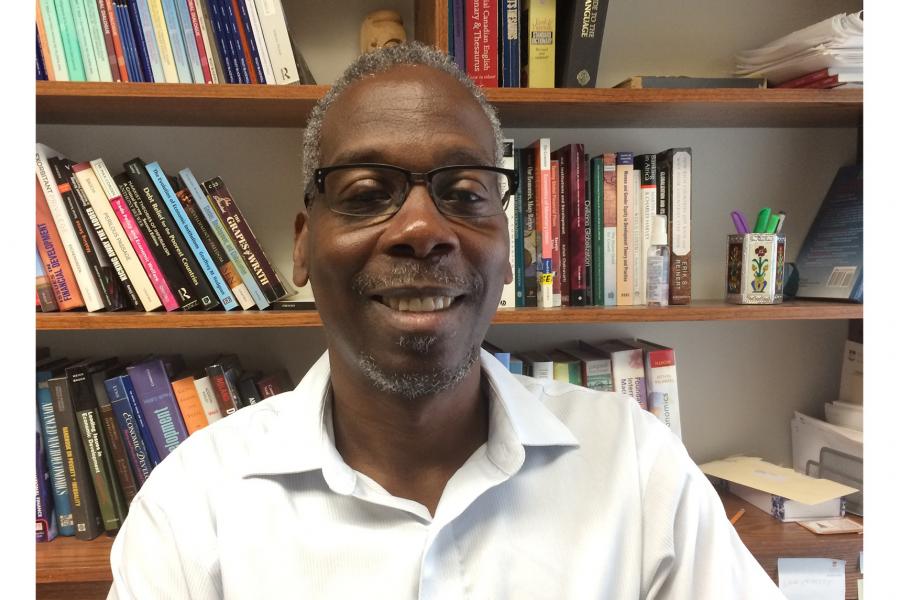
John Serieux serves as Professor in the Department of Economics within the Faculty of Arts at the University of Manitoba. His academic career spans over 25 years with significant contributions to development economics, teaching courses including Development Economics, Theories of Economic Development, and International Money and Finance at undergraduate and graduate levels. Prior to his current position, he held academic and research roles at the University of Malawi, North-South Institute, and University of North Carolina at Chapel Hill. His educational background includes a PhD in Economics (1997) and MA in Economics (1988) from the University of Toronto, complemented by an MRP in City and Regional Planning from Cornell University (1986) and a BA in Economics from the University of Toronto (1981). Professor Serieux's research centers on three interconnected domains: the socioeconomic implications of financial flows to developing countries, the evolving global influence of BRICS nations, and historical analyses linking Atlantic slave economies to British industrialization. His work consistently bridges theoretical economic frameworks with practical policy applications, particularly regarding debt sustainability, aid effectiveness, and the structural determinants of economic inequality in the Global South. His recent publications reveal a methodological sophistication combining historical analysis with contemporary policy evaluation, spanning development economics, health economics, and economic history. Key thematic clusters include foreign direct investment determinants, regional convergence patterns, refugee mental health, and the historical roots of wealth inequality—demonstrating remarkable intellectual range while maintaining focus on development challenges. No scientific awards were documented in the provided source materials. He actively supervises graduate students as indicated by his acceptance of Master's and PhD candidates, with research sustained through extensive consultancy work for the Commonwealth Secretariat and United Nations agencies. His projects have addressed critical issues including HIV/AIDS program financing during economic crises, debt relief implementation, and resource mobilization strategies in low-income countries—often involving cross-national collaboration and policy-oriented fieldwork. Professor Serieux maintains a robust collaborative network evidenced by co-authorship with researchers across North America, Africa, and Asia. His work frequently engages with governmental and international bodies, translating academic insights into practical development frameworks while maintaining rigorous scholarly standards through publications in leading economics and development journals.
Tim Talty is a Collegiate Professor and Director of Admissions for the Master of Engineering Program at Virginia Tech's Bradley Department of Electrical and Computer Engineering. He holds a Ph.D. from the University of Toledo (1996) and a B.S. from Trine University (1987). His research focuses on wireless communications, signal processing, and intra-vehicle sensor networks, with particular emphasis on physical layer security and mobile communications. Key research areas include lidar systems, vehicular antennas, and software-defined radio architectures. He has contributed to innovations in automotive communication networks, including UWB localization and transparent antenna fabrication. His work bridges theoretical advancements with practical applications in autonomous vehicles and telematics. Notable awards include the General Motors ‘Boss Kettering’ Award for Innovation (2019) and the Commander's Award for Civilian Service from the U.S. Army. He has served as an ABET program evaluator and actively participates in industry collaborations, including leadership roles in IEEE conferences and automotive R&D initiatives. Recent publications emphasize energy-efficient computing for ADAS, lidar miniaturization, and 5G vehicle connectivity. His research trends highlight interdisciplinary approaches to solving challenges in vehicular communication, sensor fusion, and autonomous systems.
Prof. Ulrike Lucke is a Professor of Complex Multimedia Application Architectures at the University of Potsdam's Department of Computer Science. She holds a Dr.-Ing. habil. and has extensive roles including Vice Dean of the Faculty of Mathematics and Natural Sciences, Chief Information Officer (2010–2018), and Vice President of the German Informatics Society (2020–2024). Her research focuses on interoperability in heterogeneous environments, mobile/pervasive applications, and e-learning infrastructures. Notable projects include the Pervasive University concept and contributions to XML-based educational tools. Awards include multiple Brandenburg Teaching Awards and a Fellowship from the Society for Media in Science. She has led numerous national and international projects, including roles in the Konrad Zuse Society and CATALPA Research Centre advisory boards.
Prof. Marian Benner-Wickner is a Professor of Computer Engineering at IU University of Applied Sciences, where he has been a faculty member since 2018. He leads the Industrial Engineering & Management and Industry 4.0 online study programs, focusing on software engineering and gender-neutral e-learning methodologies. His professional background includes roles as an IT specialist trainer at CampusLab GmbH and a software developer at the Fraunhofer Institute for Software and Systems Technology. He holds a PhD in Software Engineering (2016) from the University of Duisburg-Essen, where he managed the “Agenda-Driven Case Management” research cluster. His research interests span software engineering, case management techniques, process flexibility, smart home technologies, and digital youth protection. Notable contributions include work on adaptive case management systems, ontology-based recommendation systems, and e-learning metadata frameworks. Prof. Benner-Wickner actively contributes to organizations like the Wikimedia Foundation, CPS.HUB NRW, and the Society for Computer Science. His publications address topics such as IT integration architectures, automated grading systems, and security frameworks in mobile networks. His recent projects emphasize integrating IT applications, enhancing educational technologies, and optimizing knowledge-intensive business processes through semantic web technologies and process mining. In advising and grants, he oversees company-specific final theses in IT and technology, emphasizing practical industry collaboration. He has developed guidelines for design science research in academic works and advocates for empirical approaches to software process improvement. His leadership in Industry 4.0 programs reflects his commitment to bridging academic research with industrial applications. Leveraging his role as department head, he fosters innovation in curriculum design, particularly in leveraging digital tools for inclusive and adaptive learning environments. His interdisciplinary work intersects computer science, education, and policy, addressing societal challenges like digital youth protection and smart home security.
Anwarul Patwary is a Lecturer in the Department of Computer Science and Software Engineering at the University of Western Australia (UWA), affiliated with the School of Physics, Maths and Computing. He holds a PhD in Computer Engineering from the University of Tasmania (2015–2020). His research focuses on deep learning, graph theory, distributed systems, and cybersecurity with applications in IoT, cloud computing, and astrophysics. Education: BSc (Honors) in IT, Universiti Utara Malaysia (UUM) MSc in Computer Science, Universiti Putra Malaysia (UPM) PhD in Computer Engineering, University of Tasmania (UTAS) Research interests include scalable graph partitioning algorithms, privacy-preserving AI frameworks for IoT, and gravitational wave analysis. His work addresses challenges in dynamic systems optimization, cybersecurity in distributed environments, and agricultural automation through deep learning. Publications span interdisciplinary topics such as weed species classification, early warning systems for astrophysical events, and cloud-based matrix operations. He actively collaborates on projects funded by international research networks and participates in initiatives like the SPIIR search for gravitational wave alerts. Labs/Teams: Engaged in UWA’s research groups focused on distributed computing and graph analytics, contributing to open-source frameworks for real-time data partitioning and scalable services.
Assoc. Prof. Tosin Daniel Oyetoyan is affiliated with the Department of Computing, Mathematics, and Physics at the Western Norway University of Applied Sciences. His academic role focuses on software engineering, cybersecurity, and marine data systems. He leads research in software architecture design, IoT security, and environmental data management. His work bridges theoretical software principles with practical applications in marine technology and agile methodologies. Research Interests: Software architecture patterns for heterogeneous systems Cybersecurity in IoT and cloud environments Data observability and quality in marine sensor networks Empirical analysis of developer security practices API specification repositories and governance His recent publications (2020-2025) emphasize software systems for marine data observatories, cybersecurity in agile teams, and formal specification of environmental monitoring platforms. Noteworthy trends include cross-disciplinary approaches combining software engineering with environmental science. Scientific contributions include frameworks for threat analysis in IoT, empirical studies on developer security competencies, and modular smart ocean observatory designs. His work on data quality requirements for marine systems has informed international standards development. Current projects focus on: Formal specification of marine data platforms Executable architectures for environmental monitoring Agile security practices in distributed teams
Marius Minea is an Associate Professor at the Department of Computer and Software Engineering, Politehnica University of Timișoara. He holds a Dr. Eng. degree and specializes in formal verification, cybersecurity, and software engineering. His work focuses on model checking, security protocols, and embedded systems design. Research interests include formal verification techniques, software analysis, and security modeling. Notable projects include the EU-funded SPaCIoS and AVANTSSAR initiatives, which address automated validation of security in service-oriented architectures. He has organized major conferences like CRiSIS 2011 and contributed to workshops such as MoDeVVa. Awarded the Merit Award in 2025, Minea teaches courses on computer security, formal verification, and programming. His work bridges theoretical foundations with practical applications, emphasizing automated testing and model-driven engineering.
Mohammed Mabkhot is a Senior Research Associate in Aerospace Digitalization at the AVRRC: Centre for Virtual Engineering at Loughborough University (LBORO). His research focuses on digital-twin architectures, Model-Based Systems Engineering (MBSE), tacit knowledge management, and co-simulation environments in complex aerospace systems. He holds two PhDs: one in Cyber-Physical Production Systems Adaptation from Loughborough University and another in Knowledge-Based Management of Disruptions and Risks in Manufacturing Systems from King Saud University. He has over a decade of academic and industrial experience, including roles at King Saud University and the Intelligent Automation Centre. His work spans R&D projects like MAESTRO and IRaaS, and he has contributed to teaching modules in industrial engineering, operations management, and manufacturing processes. He is a Lean Six Sigma Black Belt and has published extensively in top-tier journals, co-chaired international conference sessions, and serves as a guest editor for Systems journal. Research interests include Industry 4.0 technologies, sustainability integration in manufacturing, and educational frameworks for engineer competency development. His articles highlight trends in digital twin applications, adaptation frameworks for production systems, and mapping Industry 4.0 technologies to UN sustainability goals. Notable awards include the Fourth-place prize in the PGR Research Competition (2019, KSU) and academic honors for top performance in his BSc and MSc programs. He has also built a strong academic-industrial network through collaborations in Europe and the UK.
Aleksandar Dimov Dimov is an Associate Professor at the Department of Software Technologies, Faculty of Mathematics and Informatics (FMI), University of Sofia. He specializes in software reliability engineering, neuro-fuzzy systems, and cloud computing architectures. His research focuses on optimizing software systems through adaptive methodologies and addressing challenges in distributed computing environments. His work spans over two decades, with contributions to neuro-fuzzy optimization for manufacturing, machine learning applications in healthcare, and architectural patterns for scalable systems. Key areas include improving software reliability models, cloud storage performance, and privacy-preserving software design. He has published extensively on topics like microservices, service-oriented architectures, and educational technology. Dr. Dimov's publications reflect a strong emphasis on practical solutions for real-world challenges in software engineering and data systems. His research bridges theoretical models with applied implementations, particularly in domains requiring high precision and adaptability.
Stephan Haarmann is a doctoral researcher at the Digital Engineering Faculty (DEF) of the University of Potsdam and the Hasso Plattner Institute. His research focuses on transparent business process management, decision support systems, and blockchain applications. He completed his Master's degree in IT Systems Engineering at DEF in 2018 and began his PhD in 2018. His work addresses challenges in knowledge-intensive processes, case management, and data-driven compliance, with contributions to frameworks like fragment-based case models and DMN integration with blockchain. Awarded the 2019 Graduate Award for his master's thesis on decision-aware compliance checking. Published extensively on topics including process modeling, blockchain for decision execution, and data-object cardinality constraints. Developed tools like fcm-js for fragment-based case management. His research emphasizes system-wide integration of IT solutions with organizational processes, leveraging blockchain for transparency and formal methods for compliance verification. Key areas include decision modeling (DMN), flexible process choreography, and knowledge worker objectives.
Ali Mefleh is an Associate Professor in the Department of Electrical Engineering at Eindhoven University of Technology. His research focuses on electro-optical communication systems, edge computing, and low-latency networking. He specializes in high-speed fiber optics, infrared light communication, and photonic integration. Key research interests include multimode fiber transmission, beam-steered optical wireless communication, and time-sensitive networks. His work emphasizes practical applications such as mobile device receivers, sub-microsecond control planes, and full-duplex systems. Mefleh has contributed to 17 peer-reviewed publications since 2020, with notable outputs in Journal of Lightwave Technology and major conferences like CLEO and ICTON. His recent studies address record-breaking data rates over multi-mode fibers and novel architectures for low-latency edge computing. He supervises graduate research projects and collaborates internationally on optical communication innovations. No specific awards are listed, but his work has been cited widely in the field.
Jos van Hillegersberg serves as Full Professor in Industrial Engineering & Business Information Systems, demonstrating extensive scholarly contributions with 201 research outputs including 62 articles and 82 conference contributions. His academic profile shows consistent productivity across two decades with significant publication volumes in peak years like 2015 (19 outputs). Research interests center on Supply Chain Management (73% fingerprint weight), Enterprise Architecture, Business Information Systems, and emerging domains like Low-Code Development and AI applications. His work bridges computer science with practical business engineering challenges, particularly in supply chain optimization and digital transformation across multiple sectors. Recent publication trends (2023-2025) reveal strong interdisciplinary focus: agricultural data privacy systems, AI-driven healthcare solutions for diabetes, public sector DevOps optimization, and construction logistics control towers. These works consistently address real-world implementation challenges while maintaining theoretical rigor in enterprise modeling and systems engineering. With an h-index of 28 and 2900+ Scopus citations, Professor van Hillegersberg actively shapes academic discourse through leadership roles including chairing the 11th International Workshop on Enterprise Applications in Finance (FinanceCom 2022). His supervision of 32 students demonstrates commitment to developing next-generation researchers in business information systems.
Polyxeni Vasilakopoulou is a Professor at the Department of Information Systems, University of Agder. She holds a PhD from the National Technical University of Athens and MSc from Columbia University. Her research focuses on ICT-enabled interventions, digital infrastructure governance, and data-driven value creation. She leads research groups including CeDiT (Centre for Digital Transformation) and Human-Centered AI (HCAI). Education: PhD, Industrial Management & Operational Research (2012), National Technical University of Athens MSc, Industrial Engineering & Operations Research (1997), Columbia University Engineering Diploma (1995), Technical University of Crete Research Themes: (1) Dynamics of digital infrastructures, (2) Digitalization of work processes, (3) Design-oriented studies with user-centric focus. Key focus on data-driven value creation and control dynamics. Recent work addresses AI ethics, human-AI collaboration in public services, and responsible AI frameworks. Teaching includes undergraduate courses on Digital Interaction Design, IS Project Management, and graduate-level IS research methods. Contributes to national PhD programs in eHealth and Information Systems theories. Her publications span leading journals like Communications of the AIS and Information and Organization , with recent emphasis on AI accountability, transparency, and societal impacts. Active in research communities through editorial roles in Scandinavian Journal of Information Systems and conference program committees. Consulting background (1997-2009) in operations optimization and decision support systems for banking sectors provides practical grounding to her academic work.
Elizabeth Friedman is an Assistant Professor of Marketing at Columbia University's Graduate School of Business. She holds a B.A. in Philosophy, Politics and Economics from the University of Pennsylvania and a Ph.D. in Marketing from Yale University. Prior to academia, she worked as a management consultant at Monitor Deloitte and New England Consulting Group. Her research examines consumer decision-making processes, including psychological barriers to consumption, goal-oriented choice behavior, and contextual influences on purchasing decisions. She teaches courses in Behavioral Economics & Decision Making at both graduate and undergraduate levels.






.jpg)