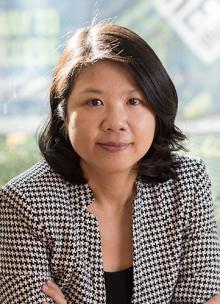
Prof Christina Lim is a Professor at the Department of Electrical and Electronic Engineering, University of Melbourne, Australia. She serves as the Associate Dean of Research for the Faculty of Engineering and Information Technology (FEIT) and manages the Tucker Lab. Previously, she held roles as Research Group Leader of the Electronics and Photonics System group and Deputy Head of Department (Teaching and Operations) Education: PhD and Bachelors from University of Melbourne Research Interests: Radio-over-Fibre, Optical Wireless Communications, Microwave Photonics, Augmented Reality Displays, Reservoir Computing, Optical Crosshaul Networks Recent publications demonstrate expertise in optical waveguide design for AR, underwater optical wireless communications, photonic switching, and network optimization. Her projects focus on next-generation wireless infrastructure, including Photonics Computing Enabled Ultra-Broadband Wireless Communications (2024-2027, $598k ARC grant) and Additive Manufacturing of Optical Elements (2025). She has secured significant funding, including ARC Discovery Projects and Future Fellowships. Scientific Honors IEEE Fellow (2022) Optica Fellow (2018) ARC Future Fellow (2009-2013) ARC Australian Research Fellow (2004-2008) Professional Service Vice-President of Conferences, IEEE Photonics Society Deputy Editor, IEEE/Optica Journal of Lightwave Technology ARC College of Experts (2014-2016)
Associate Professor Lasantha Meegahapola is a Deputy Head of Department (Teaching & Learning) at RMIT University's School of Engineering in Melbourne, Australia. He holds an IEEE Senior Membership and serves as an Associate Editor for several prestigious journals, including IEEE Transactions on Power Systems and IET Renewable Power Generation. His research focuses on Power System Stability with Renewable Integration, Microgrid Control, and Smart Grid Technologies, addressing challenges like voltage stability, inverter-based grid dynamics, and renewable energy penetration. He has supervised 16 PhD students to completion and published over 200 articles. Key contributions include identifying stability issues in microgrids and advancing grid-forming inverter control strategies. His work aligns with UN Sustainable Development Goals 7 (Clean Energy), 9 (Infrastructure), and 13 (Climate Action). He is actively involved in IEEE committees, including the PSDP Task Force on Microgrid Stability. Teaching roles include Programme Manager for the Bachelor of Electrical Engineering (HK) and Subject Coordinator for Power System Analysis and Control courses. Collaborations span industry and international research institutions, emphasizing real-world applications of his research in power systems and renewable energy integration.
Professor Janet McColl-Kennedy is a leading figure in marketing and service science at The University of Queensland's Business School. She serves as Program Lead for Innovation Pathways (FaBA) and co-founded the Service Innovation Alliance (SIA) research hub, focusing on customer experience, AI, digital transformation, and sustainability. With Fellow status in the Academy of the Social Sciences in Australia and the Australian and New Zealand Marketing Academy, she holds international recognition including Research.com's World's Best Business Scientists ranking and the Christopher Lovelock Career Contributions to the Services Discipline Award (2025). University of Queensland Business School Honorary Visiting Professor, Cambridge Service Alliance Research Collaborator, University of Cambridge Her research spans customer experience management, service ecosystems, digital transformation, and healthcare services. She has pioneered frameworks for customer value co-creation and service recovery strategies, integrating AI and behavioral science. Her 2019 paper on customer experience insights was implemented by a major B2B organization, while her work on value co-creation improved outcomes at Lutheran Community Care. Recent publications focus on AI impacts in food and beverage services, sustainable service ecosystems, and digital health interventions. She has secured over $89 million in competitive grants, including multiple ARC Linkage and Discovery Projects, and leads cross-disciplinary teams with institutions like Cambridge University and Arizona State University. 2024 - ARC College of Experts appointment 2023 - Bo Edvardsson Industry Impact in Services Award 2022 - Elected Fellow of Academy of the Social Sciences in Australia 2021 - Clarivate Highly Cited Researcher 2018 - Ranked most influential marketing academic in Australia With over 220 publications and a Google Scholar H-index of 62, she has mentored 15 PhD students and examined theses at multiple universities. Her teaching spans 30+ years across undergraduate, postgraduate, and executive programs in Australia, USA, Italy, China, and Korea, with awards for blended learning and corporate education.
Janani Thillainadesan is an NHMRC Senior Research Fellow at the Sydney Medical School/Concord Clinical School and the Centre for Education and Research on Ageing, affiliated with the Faculty of Medicine and Health at the University of Sydney. She is also a member of the Charles Perkins Centre. Her research focuses on optimizing healthcare delivery for older adults, particularly in geriatric surgery, perioperative care, and dementia interventions. Key research areas include frailty assessment, deprescribing strategies, collaborative care models, and leveraging technology (e.g., mobile health) in geriatric medicine. She has contributed to multidisciplinary studies involving clinical datasets, quality indicators, and mixed-methods analyses of patient experiences and care expectations. Awards: 2023 RACP Vincent Fairfax Research Fellowship 2021 ANZSGM Career Investigator Prize 2021 UK Age Anaesthesia Association Best Oral Presentation Prize 2019 Evidence Based Perioperative Medicine Asia Congress Runner Up Prize Her work bridges clinical practice, education, and policy through grants like the 2024 electronic frailty index project. Media engagement includes a 2019 Studio 10 segment highlighting her contributions to aging-related healthcare innovations.
Laura Robinson is a Senior Lecturer at the School of Psychology , University of Wollongong. She holds a Doctor of Philosophy in Psychology and extensive teaching experience in behavioral sciences, statistics, and applied psychology. Education : PhD in Psychology (2017), Postgraduate Diploma in Psychology (2010), Bachelor of Psychology (2009), and Bachelor of Aviation (2004) Her research focuses on vulnerable populations, particularly women and youth, with expertise in substance use disorders, eating disorders, mental health comorbidity, and health equity. She has published extensively on residential treatment outcomes, continuing care interventions, and stigma reduction in mental healthcare. Recent publications highlight longitudinal analyses of psychological distress, weight stigma, and integrated approaches to substance use and physical health. She supervises PhD students on topics like veterans' mental health, methamphetamine use, and suicide prevention. Laura has received funding from internal and external sources, including grants for stimulant use interventions and health literacy studies. She serves on committees like the Australasian Professional Society for Alcohol and Drugs and contributes to peer-reviewed journals as a reviewer.
Nick Abel is an Honorary Associate Professor at the Fenner School of Environment & Society, Australian National University. With a distinguished international career spanning Africa and Australia, he has worked in Zimbabwe, Kenya, Ethiopia, Botswana, Somalia, Swaziland, Zambia, and Australia. His academic credentials include a Ph.D., M.Sc., and B.Sc.(Hons.), reflecting a strong foundation in environmental sciences and complex systems thinking. Abel's research program centers on the critical challenge of human adaptation to climate change, with particular focus on why adaptation efforts are insufficient to prevent environmental and social tipping points. He critically examines Australia's role as the world's third largest exporter of fossil fuels while facing escalating climate impacts, investigating how fossil fuel companies have maintained influence over public policy. His work integrates social-ecological systems theory, resilience thinking, and practical governance frameworks to address climate adaptation challenges. His publication record demonstrates a clear evolution from foundational work in rangeland management and complex adaptive systems toward urgent climate policy interventions. Early research established theoretical frameworks for understanding resilience in dryland ecosystems, while recent work focuses on transformation pathways, Indigenous engagement, and community-based adaptation strategies. A consistent thread throughout his career is the integration of diverse knowledge systems and the development of practical approaches for environmental governance in rapidly changing conditions. Abel has registered to supervise research students at ANU and participates in significant collaborative projects, including the current 'Partnering with local communities in regional Australia to increase resilience to flood events' (2022-2025). His high-impact publications, including the highly cited 'Resilience management in social-ecological systems' (1,120 Scopus citations) and 'From Metaphor to Measurement: Resilience of What to What?' (2,596 Scopus citations), demonstrate his foundational contributions to the field. Through his work with various research groups and projects, Abel has helped establish frameworks for understanding social-ecological systems and climate adaptation. His contributions to the Fenner School include advancing methodologies for integrating scientific and Indigenous knowledge systems, developing practical approaches to environmental governance, and critically examining the political economy of climate policy in Australia.
Professor Philip Birch is a distinguished academic in Criminology at the University of Technology Sydney (UTS), Faculty of Design & Society, School of International Studies & Education. With over 15 years of academic experience across British, American, and Australian university systems, he has established himself as a leading expert in policing, community safety, and criminal justice. His extensive practical background in criminology, including roles as a Specialist Crime Team Manager, Community Safety Research Manager, and Through Care Worker in UK correctional facilities, informs his applied research approach. Professor Birch's educational background includes a BSocSci. (Hons) in Social Policy (Crime & Justice) from the University of Manchester, multiple postgraduate qualifications from the Open University (including an MSc. in Social & Criminological Research Methods), a Post Graduate Certificate in Higher Education Practice from the University of Huddersfield, and a PhD in Criminology from the University of New South Wales. He also holds a Fellowship with the Higher Education Academy. His research centers on six key areas: Police & Policing; Community Safety & Crime Prevention; Prisons, Probation & Parole Policy & Practice; Assessment, Treatment & Management of Offenders; Gender & sexuality inclusive Domestic and Family Violence; and Sex Work, Sex Workers and Procurement. His work emphasizes the practical application of criminological research to real-world justice issues, with strong industry engagement across law enforcement and correctional services. Recent publications reveal a clear trend toward police mental health, aging in policing, hate crime identification, trauma-informed policing approaches, and digital community safety initiatives. His research employs diverse methodologies including qualitative case studies, Delphi methods, rapid evidence assessments, and comparative analyses across multiple jurisdictions. Teaching award (2019) from Australian College of Educators for outstanding contribution to education Literati Award (2019) for published work Fellowship of the Higher Education Academy Professor Birch has supervised numerous Honours, Masters by Coursework, Masters by Research and PhD students in Criminology, Criminal Justice and Policing, with several completions to date. He has secured over $1.3 million in research funding, including an ARC Linkage grant, and has acted as an external assessor for domestic and international funding bodies. His research projects address critical issues in criminology and policing, often with direct policy implications. He established the Crime & Security Science (CaSS) Research Group at UTS in 2022, a cross-faculty initiative connecting academia with industry to advance evidence-based criminology, criminal justice, policing, and community safety research. This group serves as a hub for collaborative projects addressing contemporary security challenges through translational research.
Adrian Linacre is a Professor and Chair in Forensic DNA Technology at Flinders University, within the College of Science and Engineering, Department of Biological Sciences. He is a leading figure in forensic science, with a focus on DNA analysis, wildlife forensics, and crime scene investigation. BSc in Biological Sciences (Hons), University of Edinburgh, 1984 DPhil in Molecular Genetics, University of Sussex, 1988 His research centers on getting more from less at crime scenes , particularly through developing highly sensitive DNA typing methods and studying the transfer and persistence of biological materials. He also pioneers the use of non-human DNA in forensic investigations, notably in wildlife forensic science , aiding in species identification and combating illegal wildlife trade. His recent publications reflect a strong trend in trace DNA analysis , body fluid identification , and DNA transfer dynamics , with applications in drug cases, sexual assault investigations, and environmental DNA degradation. His work increasingly integrates molecular techniques with real-world forensic challenges. Notable scientific awards include: Medal of the Order of Australia (OAM), 2020 Inspirational Scientist of the Year, Royal Society of Edinburgh, 2005 Fellow of the Royal Society for the Encouragement of Arts and Commerce (FRSA) Finalist, South Australian Science Excellence and Innovation Awards (2023, 2024) He has successfully supervised several students, including Piyamas Kanokwongnuwut and Alicia Haines, many of whom have won international recognition. He has secured significant research funding and contributed to national and international forensic policy, including a key review for the UK Home Office on low-template DNA. His professional leadership includes presidencies of the ANZFSS and ISFG, and vice presidency of the IAFS. Linacre is actively involved in editorial roles, serving as Associate Editor for Forensic Science International: Genetics and on the boards of Forensic Science, Medicine and Pathology and the Australian Journal of Forensic Science . He is a sought-after expert witness and media commentator in forensic science.
About Vipul Jain: Associate Professor Vipul Jain leads Supply Chain and Logistics Management at RMIT University’s School of Accounting, Information and Supply Chain Management. With over 20 years of academic experience, he has held senior roles at institutions like Victoria University of Wellington (NZ) and IIT Delhi (India), contributing to curriculum development, research strategy, and academic-industry collaboration. His international collaborations span over 20 global institutions, emphasizing interdisciplinary research in supply chain resilience, sustainability, and Industry 4.0. Education & Academic Leadership: Previously served as Programme Director for Master of Technology (Industrial Engineering) at IIT Delhi, leading the establishment of the Modelling and Analysis of Supply Chain (MASC) Lab. Holds editorial roles for journals like International Journal of Intelligent Enterprise and Computers & Industrial Engineering . Research Focus: Specializes in supply chain design, sustainability, circular economy, and business analytics. His work integrates ICT and big data to address complex supply chain challenges, with notable contributions to vaccine distribution, blockchain adoption, and post-pandemic resilience. Over 145 peer-reviewed publications, including high-impact journals like OMEGA and International Journal of Production Economics , reflect his prolific output. Industry Impact: Conducted management training for organizations like JCB and IBM. Served as an expert assessor for New Zealand’s Ministry of Business and Industry and advised the Indian Railways. His research has been funded by the Department of Science and Technology (India) and EU initiatives like FP6 I*PROMS. Awards & Recognition: Ranked #7 in India’s top logistics academics (2018), recipient of Literati Awards (2024, 2020), and multiple editorial leadership roles. Active in global conferences, including co-chairing ANZAM 2023. Labs & Collaborations: Founded MASC Lab at IIT Delhi. Collaborates with Coventry University, Monash University, Hong Kong Polytechnic, and institutions in Switzerland, Spain, Canada, and the U.S. Focus areas include sustainable supply chains, digital transformation, and crisis resilience.
Dr. Tan Kim Lim is a Senior Lecturer at the James Cook University (Singapore Campus), specializing in organizational psychology and consumer behavior. He holds a PhD from Curtin University (2016–2019), an MBA from the University of Melbourne (2004–2006), and a Bachelor of Business from Monash University (1999–2002). His research focuses on the future of work, employee attitudes, technology adoption in hospitality/tourism, and consumer behavior analysis. He employs advanced methodologies like PLS-SEM and has published over 47 articles in top journals like the European Business Review and Asia Pacific Journal of Marketing and Logistics . Dr. Lim has held roles including Assistant Professor at BNU-HKBU United International College (2020–2022) and Post-doctoral researcher at the Human Capital Leadership Institute (2019–2021). He currently serves on editorial boards of the Journal of Responsible Tourism Management and Journal of Global Responsibilities , and is a member of the Singapore Human Resource Institute and Society of Industrial-Organizational Psychology. His applied research spans commissioned projects for governments and private entities, including studies on waste classification behavior, country music festivals, and AI adoption in social services. Awards include the JCUS Early Career Researcher Award (2023) and Emerald Literati Reviewer Award (2022). Dr. Lim also actively speaks at regional conferences on topics like AI in networking and post-pandemic workplace trends. His current research interests include STARA (Smart Technologies, AI, Robotics, Algorithms) impacts on work, meaningful work dynamics, and tourism behavior analysis. He supervises PhD students exploring AI in social services, indigenous tourism, and workplace technology adoption.
Dr. Abby Haynes is a Research Fellow at the Sydney School of Public Health, University of Sydney, affiliated with the Institute for Musculoskeletal Health and Faculty of Medicine and Health. Her work focuses on physical activity for healthy ageing and people with disability, employing qualitative research, systems thinking, and realist evaluation. Key research themes include: Healthy Ageing Disability and Physical Activity Implementation Science Knowledge Mobilisation Her recent publications analyze: Inclusive sports programs for children with disability Fall prevention in acute hospitals Telehealth physiotherapy for aged care Realist evaluations of yoga and dance interventions Systems thinking in public health policy These emphasize public health, gerontology, and health equity approaches. Grants include MRFF-funded projects on traumatic brain injury rehabilitation (2024), fall prevention (2023), and aged care mobility (2022).
Ying-Yi Chih is a Professor of Project Management at the Research School of Management, Australian National University (ANU) , and serves as the Associate Dean (Students and Industry Experience) for the College of Business and Economics. Her research focuses on project management, public-private partnerships (PPPs), value co-creation in projects, and employee well-being in project-based environments like the construction industry. She has published extensively in journals such as International Journal of Project Management and Journal of Construction Engineering and Management , with funding from government and industry sources. Education: PhD in Project Management Research Interests include: Infrastructure Project Planning and Management Public-Private Partnerships (PPPs) Value Co-Creation in Professional Services Employee Psychological Well-being and Performance Management Recent Publications highlight trends in green innovation, crisis resilience, leadership dynamics, and technology adoption in construction and project management. Her work bridges theoretical frameworks with practical applications in the AEC (Architecture, Engineering, Construction) industry and public sector projects. Editorial Roles: Associate Editor for Journal of Management in Engineering and Editorial Board member for Journal of Vocational Behavior . Research Projects have explored value co-creation, international development projects, and performance management in multi-project environments, with collaborations across Australia, Taiwan, Vietnam, and the Philippines.
Dr. Richard Culas is an Associate Professor in Agricultural Economics/Agribusiness at Charles Sturt University's School of Agricultural, Environmental and Veterinary Sciences. He holds degrees from the University of Peradeniya (BScAgr), Norwegian University of Life Sciences (MScAgEcon), Norwegian School of Economics (MEcon), and the University of Sydney (PhD). His expertise spans teaching, research, and advisory roles, including external PhD examining and peer-reviewing for 20+ journals. Dr. Culas' research focuses on agricultural economics, environmental economics, development economics, and agribusiness management. He has led and contributed to projects funded by ACIAR, Hort Innovation Australia, and the Soil CRC, totaling ~A$7.5m. Key projects include assessing organic fertilizer benefits and regenerative agriculture's socioeconomic impacts. His work addresses global challenges such as water resource management, climate-smart agriculture, and sustainable farming practices. He has published extensively in journals like Agricultural Systems , Australian Journal of Agricultural and Resource Economics , and Sustainability . Notable achievements include the Emerald Literati Award for Outstanding Reviewer (2018) and a team award for Research Excellence (2016). He has also contributed to curriculum development for Charles Sturt's Master of Agriculture program. His research and advisory roles include leadership in soil health projects, groundwater management in Pakistan, and value chain analyses in Bangladesh and Nepal. Dr. Culas collaborates internationally on climate adaptation strategies, trade policies, and food security initiatives, reflecting his commitment to bridging academic research with real-world agricultural challenges.
Professor Dieter Hochuli leads the Integrative Ecology research group in the School of Life and Environmental Sciences at the University of Sydney. His research focuses on biodiversity conservation in urban environments, with particular emphasis on arthropod ecology, habitat management, and the ecological dynamics of human-dominated landscapes. His work bridges community ecology and landscape-scale conservation strategies. Research interests center on urban biodiversity conservation, insect-plant interactions, ecosystem function in modified environments, and the ecological impacts of invasive species. Current projects examine how urban planning decisions affect biodiversity, the role of green infrastructure in supporting ecosystem services, and human-wildlife interactions in urban fringes. Analysis of recent publications reveals consistent themes: urban pollinator ecology, wildlife disease ecology at the urban interface, experimental approaches to urban green space management, and biodiversity responses to urbanization. His work integrates ecological theory with practical conservation applications. Professor Hochuli leads field-based ecology projects across Sydney's urban environments and collaborates with local councils on biodiversity mapping initiatives. He currently supervises graduate students researching urban arthropod communities, wildlife conservation, and ecosystem restoration.
Dr Bhishna Bajracharya is an Associate Professor of Urban Planning at Bond University's Faculty of Society & Design. He previously taught at Queensland University of Technology (QUT) for over 12 years and worked as a post-doctoral fellow at the Australian National University. His research focuses on urban sustainability, disaster resilience, and master-planned communities. Education: PhD in Urban Planning, University of Hawaii (200?) MURP in Urban Planning, University of Hawaii BArch in Architecture, Delhi University Research Interests: Smart cities and infrastructure Disaster management and community resilience Transit-oriented development Climate change adaptation Sustainable campus design Knowledge-based regional economies Recent Research Trends: His recent work emphasizes cross-border planning (e.g., Gold Coast Airport integration), megaproject governance, and innovative disaster management frameworks. He frequently collaborates with governments and NGOs to bridge research and policy gaps. Awards & Grants: Australian Research Council (ARC) Linkage Grant for community narratives in urban planning Emergency Queensland grant for disaster governance research Advising & Partnerships: Supervising PhD students in urban planning Collaborations with QUT's Creative Industries faculty Member of Bond University's Sustainability Committee Labs & Teams: Affiliated with the Centre for Comparative Construction Research at Bond University, focusing on global urban challenges.