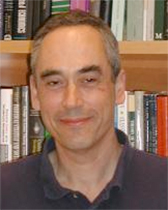
Martin Pesendorfer is a Professor of Economics at the Department of Economics, London School of Economics and Political Science (LSE). He specializes in Industrial Organization, Auctions, and Information Economics, with significant contributions to applied microeconomics. His research focuses on dynamic games, auction mechanisms, and strategic interactions in markets. He holds a PhD in Economics from Northwestern University and teaches advanced courses such as EC313 Industrial Economics and EC536 Economics of Industry for Research Students. Key research areas include the design of auctions, consumer demand modeling, and equilibrium analysis in dynamic settings. His work has been published in top journals like the American Economic Journal: Microeconomics, Econometrica, and the Review of Economic Studies. He has also contributed to practical applications such as analyzing mergers, procurement auctions, and retail pricing strategies. Pesendorfer’s teaching covers topics from industrial economics fundamentals to advanced microeconomic theory. His research spans theoretical and empirical methods, with recent emphasis on equilibrium multiplicity in dynamic games and omitted variable biases in demand models. He maintains an active presence in academic circles, contributing to research centers like STICERD's Economics of Industry Programme.
Stefan Schaltegger is Professor for Sustainability Management at the Centre for Sustainability Management (CSM) at Leuphana University Lüneburg. With over two decades of research experience, he is a globally recognized scholar in sustainability management, corporate sustainability, and environmental accounting. His work bridges academic research with practical business applications, influencing sustainability practices across multiple industries. Professor for Sustainability Management at Leuphana University Lüneburg Director of the Centre for Sustainability Management (CSM) Extensive publication record in top sustainability journals Regular contributor to policy discussions on sustainability Professor Schaltegger's research focuses on sustainability management systems, corporate sustainability strategy, environmental accounting, sustainable business models, and sustainability transitions. His work examines how organizations can effectively integrate sustainability into core operations, emphasizing stakeholder engagement, sustainability performance measurement, and the development of compelling business cases for sustainability. He has pioneered research on sustainability management accounting, rebound effects in sustainability initiatives, and the role of change agents in corporate sustainability transformations. His research spans both theoretical development and practical application, making significant contributions to how businesses understand and implement sustainability. His recent publications reveal an evolving research trajectory with increasing focus on systemic sustainability challenges. Schaltegger has shifted from foundational work on sustainability management accounting toward more complex issues like environmental rebound effects, sustainability transformations, and regenerative business practices. His 2023-2025 publications show growing attention to climate change responses, biodiversity conservation, and the role of service innovation in sustainability transformations. The interdisciplinary nature of his work is evident in publications spanning business strategy, environmental science, accounting, and policy journals. Ranked among the world's top 2% scientists in the Stanford study (2020) Best Young Researcher of the Year at Leuphana University Lüneburg (2010) IFAC PAIB Committee Research award for "article of merit" (2003) Professor Schaltegger actively mentors doctoral students and early-career researchers, though specific student names aren't listed in the provided materials. His research is supported by numerous projects including "TrICo Subproject: Community Sustainable Production," "Account4GreenEco," and "Hochschulen in Gesellschaft – Realexperimente transformativer Lern- und Forschungsprozesse für eine Kultur der Nachhaltigkeit an Hochschulen." His work demonstrates strong industry engagement through collaborations with businesses implementing sustainability practices. The Centre for Sustainability Management (CSM), which Schaltegger leads, serves as a hub for interdisciplinary sustainability research, education, and practice. The CSM coordinates multiple research projects including the Innovation Network aiming at Sustainable Smartphones (INaS) and works closely with industry partners to develop practical sustainability solutions. The center's activities span research, education, and transfer, reflecting Schaltegger's commitment to bridging the gap between academic theory and business practice in sustainability.
Alok Gupta holds the Curtis L. Carlson Chair in Information Management at the Carlson School of Management, University of Minnesota . He is a Professor in the Department of Information and Decision Sciences , with a career spanning over 25 years. From 2006–2014, he served as Department Chair, and as Senior Associate Dean of Faculty, Research and Administration until 2024. Education: BS, Mining Engineering (1988), Institute of Technology, Banaras Hindu University MS, Mine Electrical Systems (1991), Pennsylvania State University PhD, Management Science and Information Systems (1996), University of Texas-Austin His research focuses on Economic Engineering of systems , emphasizing participant incentives in transactional systems such as the Internet, real-time databases, B2B systems, e-commerce, and Human-AI collaboration. He has published over 90 journal articles, including 50+ in premier journals like Management Science , Information Systems Research , and MIS Quarterly . Recent publications highlight trends in experimental economics , online auctions , information feedback mechanisms , and smart market design . His work bridges information systems , economic modeling , and artificial intelligence . Scientific Awards: NSF CAREER Award (2001) INFORMS ISS Design Science Award (2012, 2011) INFORMS ISS President’s Service Award (2021) INFORMS ISS Practical Impacts Award (2021) AIS Impact Award (2020) AIS Fellow (2016) INFORMS ISS Distinguished Fellow (2014) AIS LEO Award (2021) INFORMS Fellow (2024) He has served as Publisher of MIS Quarterly (2005–present), Editor-in-Chief of Information Systems Research (2017–2022), and in editorial roles for Management Science , ISR , and Journal of MIS . His teaching spans Human-AI collaboration , computer networking, electronic commerce, and decision support at all academic levels.
Professor Alistair Brandon-Jones (PhD, PGDip, BSc Hons) is a Full Chaired Professor of Operations and Supply Chain Management at the University of Bath's School of Management since 2014. He serves as Head of the Information, Decisions and Operations Division (2020–present) and holds Visiting Professor roles at Hult International Business School and Danish Technical University. His career spans academic leadership positions at Manchester Business School, Bath, and Warwick Business School, where he completed his PhD. Research Interests : Digitalisation of operations and supply chains, professional service operations, healthcare operations, and cybersecurity in AI systems. His work combines empirical methods with cross-sector collaborations, supported by UKRI, ESRC, EPSRC, and the Welsh Assembly Government. Key themes include telehealth integration , responsible AI deployment , and value-based procurement . Teaching & Consulting : He teaches Operations Management, Supply Chain, and Project Management across executive, MBA, and undergraduate levels, with consulting experience for Maersk, NHS, and Qatar Leadership Centre. His textbooks like Operations Management (10th ed., 2022) are globally cited. Scientific Awards : Times Higher Education Teaching Excellence Prize Association of MBAs (AMBA) Award Production Operations Management Society (POMS) Recognition Hult International Business School Teaching Prize Supervision & Projects : Currently supervising doctoral students in digital transformation, he leads two major projects: ESRC Digital Security by Design Social Science Hub (2020–2025) and Welsh Government Healthcare Integration (2009–2009). His research aligns with UN SDG 12 (Sustainable Consumption and Production) through supply chain innovations.
Professor Philip Birch is a distinguished academic in Criminology at the University of Technology Sydney (UTS), Faculty of Design & Society, School of International Studies & Education. With over 15 years of academic experience across British, American, and Australian university systems, he has established himself as a leading expert in policing, community safety, and criminal justice. His extensive practical background in criminology, including roles as a Specialist Crime Team Manager, Community Safety Research Manager, and Through Care Worker in UK correctional facilities, informs his applied research approach. Professor Birch's educational background includes a BSocSci. (Hons) in Social Policy (Crime & Justice) from the University of Manchester, multiple postgraduate qualifications from the Open University (including an MSc. in Social & Criminological Research Methods), a Post Graduate Certificate in Higher Education Practice from the University of Huddersfield, and a PhD in Criminology from the University of New South Wales. He also holds a Fellowship with the Higher Education Academy. His research centers on six key areas: Police & Policing; Community Safety & Crime Prevention; Prisons, Probation & Parole Policy & Practice; Assessment, Treatment & Management of Offenders; Gender & sexuality inclusive Domestic and Family Violence; and Sex Work, Sex Workers and Procurement. His work emphasizes the practical application of criminological research to real-world justice issues, with strong industry engagement across law enforcement and correctional services. Recent publications reveal a clear trend toward police mental health, aging in policing, hate crime identification, trauma-informed policing approaches, and digital community safety initiatives. His research employs diverse methodologies including qualitative case studies, Delphi methods, rapid evidence assessments, and comparative analyses across multiple jurisdictions. Teaching award (2019) from Australian College of Educators for outstanding contribution to education Literati Award (2019) for published work Fellowship of the Higher Education Academy Professor Birch has supervised numerous Honours, Masters by Coursework, Masters by Research and PhD students in Criminology, Criminal Justice and Policing, with several completions to date. He has secured over $1.3 million in research funding, including an ARC Linkage grant, and has acted as an external assessor for domestic and international funding bodies. His research projects address critical issues in criminology and policing, often with direct policy implications. He established the Crime & Security Science (CaSS) Research Group at UTS in 2022, a cross-faculty initiative connecting academia with industry to advance evidence-based criminology, criminal justice, policing, and community safety research. This group serves as a hub for collaborative projects addressing contemporary security challenges through translational research.
Sunder Kekre is the Vasantrao Dempo Professor of Operations Management at Carnegie Mellon University’s Tepper School of Business , where he has held academic appointments since 1984. His research focuses on manufacturing systems, global supply chains, and healthcare operations management. Research Expertise : New product development structures, strategic costing, lean innovation, knowledge sharing in enterprise networks, and business analytics for coordinated supply chains. Key Publications : Contributions to journals like Management Science , Operations Research , and Production and Operations Management , with work on LNG storage valuation, RFID logistics, and healthcare disparities. Scientific Recognition : Dempo Chair Professorship Bosch Chair Professorship Best Paper Award (1995) Teaching : Courses in Operations Management, Strategic Management of the Enterprise, and Information Systems Project. Non-Academic Experience : Prior engineering roles at Tata Steel (1974-1980) and consulting engagements with Fortune 500 firms like Bosch, Caterpillar, and IBM.
Mustafa Akan is an Associate Professor of Operations Management at the Tepper School of Business, Carnegie Mellon University . He holds a Ph.D. in Managerial Economics and Strategy from Northwestern University (2008) and a B.Sc. in Industrial Engineering from Carnegie Mellon University (2004). Research Interests : His work focuses on healthcare operations management , queueing theory , and dynamic pricing strategies . He investigates efficient resource allocation in service systems, equity in organ transplantation, and optimization of remanufacturing processes under uncertainty. His research bridges applied mathematics , computation theory , and business strategy . Article Trends : Recent publications address liver allocation equity (2025), two-sided market pricing (2025), and task allocation in tandem queueing systems (2024). Earlier works explore transplant health disparities (2024), remanufacturing procurement (2023), and fashion product pricing (2021). Common themes include service science , healthcare operations , and policy-driven optimization . Scientific Awards : Best Dissertation Award (INFORMS Aviation Applications Section, 2008) Xerox Faculty Chair (2009) INFORMS Best Paper in Service Science (2009) POMS Healthcare Best Paper Award (2012) Lave-Weil Prize (2013) Gerald L. Thompson Teaching Award (2014) NSF CAREER Award (2014) Mehrotra Research Excellence Award (2024) DEIJ Best Paper Award (2023) Teaching & Grants : He teaches courses like Healthcare Operations , Risk Analytics , and Demand Management & Price Optimization . His NSF CAREER Award (2014) supports research in operational systems. He has served on committees for INFORMS , POMS , and Naval Research Logistics .
Elena Katok is a Professor of Supply Chain Management at the University of Texas at Dallas, Naveen Jindal School of Management. She serves as Co-Director of the Center and Laboratory for Behavioral Operations and Economics (LBOE) and holds editorial positions as Department Editor for Management Science (Operations Department) and Associate Editor for Manufacturing and Service Operations Management. Her research focuses on Behavioral Operations Management (BOM), Behavioral Market Design, and Auctions, with particular emphasis on using laboratory experiments to understand human behavior in operational contexts. Her work bridges the gap between traditional analytical operations models and actual human decision-making in supply chain and procurement settings. The analysis of her recent publications reveals a consistent research trajectory examining how psychological and behavioral factors influence operational decisions. Her work spans auction design, contract theory, trust mechanisms, and behavioral aspects of supply chain coordination. A notable pattern is her focus on the intersection of behavioral economics and traditional operations management problems, particularly how fairness concerns, risk perception, and trust impact procurement and supply chain decisions. Professor Katok has developed and implemented numerous classroom games to teach supply chain management concepts, demonstrating her commitment to translating research into practical pedagogy. She has created simulation tools through the SoPHIE platform to enhance experiential learning in operations management courses. Her teaching portfolio includes OPRE 6371: Purchasing, Sourcing and Contract Management for SCM MS and MBA students, OPRE 7309: Behavioral Operations Management at the PhD level, and OPRE/MECO 6355: Deal Making Strategies. She has also authored several case studies including eBay sniping, Winter Gear, Sears Logistics, Spectrum, and General Hospital to facilitate hands-on learning. As co-editor of The Handbook of Behavioral Operations published by Wiley, she has helped establish Behavioral Operations Management as a significant subfield that incorporates insights from psychology and behavioral economics to study how individuals make decisions in operational contexts.
Dr. Mary Lacity is a Distinguished Professor of Information Systems at the Sam M. Walton College of Business, University of Arkansas, and holds the David D. Glass Endowed Chair. She is also a Visiting Professor at the London School of Economics for Spring 2025. Director of Walton College’s Blockchain Center of Excellence (2014-2019) Former Curators’ Distinguished Professor at University of Missouri Holds visiting positions at MIT, Washington University, and Oxford University Senior Editor for MIS Quarterly Executive Contributing Editor for Journal of the British Blockchain Association Her research focuses on enterprise adoption of emerging technologies, particularly blockchain, metaverse, service automation, and ethical technology use. She has conducted extensive case studies and surveys on automation and Web3 implementation across hundreds of organizations globally. Recent publications include books like Human Privacy in Virtual and Physical Worlds (2024) and Blockchain Fundamentals for the Web 3.0 (2022). She has over 30 books and 26,300 Google Scholar citations (h-index: 68). 2014: Inducted into IAOP’s Outsourcing Hall of Fame 2024: Recognized as top 2% scholar in Business and Management (Stanford) 2024: Top 1% scholar in Business and Management (ScholarGPS) Fellow of the Association of Information Systems She actively contributes to blockchain standards via the Global Standards Mapping Initiative (GSMI) of the Global Blockchain Business Council and the Linux Foundation’s Trust over IP (ToIP). Her work bridges academic research and practical applications in enterprise technology adoption.
Asher Wolinsky is the Gordon Fulcher Professor of Economics at Northwestern University's Weinberg College of Arts & Sciences. His research focuses on microeconomic theory and industrial organization, with emphasis on markets under imperfect competition and information asymmetry. He holds a PhD from Stanford University (1980). He is a Fellow of the Econometric Society and the American Academy of Arts and Sciences. His work has explored auction design, strategic market behavior, and institutional mechanisms. Recent research includes studies on auctions with frictions, bidder solicitation dynamics, and search theory under adverse selection. Educational background: PhD in Economics, Stanford University, 1980. His academic service includes editorial roles with the Econometric Society Annual Reports. His research portfolio spans over 50 years, addressing foundational questions in game theory and market design.
Lawton R. Burns is the James Joo-Jin Kim Professor of Health Care Management and Professor of Management at the Wharton School, University of Pennsylvania. He serves as Co-Director of the Roy and Diana Vagelos Program in Life Sciences and Management and Chairperson of the Health Care Systems Department since 2008. Dr. Burns holds a PhD in sociology and an MBA in health administration from the University of Chicago, along with a BA from Haverford College. PhD, University of Chicago (1981) MBA, University of Chicago (1984) MA, University of Chicago (1976) BA, Haverford College (1973) His research focuses on healthcare supply chains, organizational innovation, and strategic management in health systems. He has authored or co-authored 15+ books, including analyses of integrated healthcare, pharmaceutical and medical device sectors, and global health systems in India and China. Recent works examine evidence-based healthcare innovation and the role of GPOs/PBMs in drug pricing. Dr. Burns advises on healthcare policy, including Senate testimony on pharmacy benefit managers and antitrust implications of physician-hospital organizations. His teaching covers healthcare strategy, managed care, integrated delivery networks, and the U.S. healthcare ecosystem, with courses requiring competitive analysis of producer, purchaser, and provider organizations. Board of Institute of Medicine, Health Services Research Section (2003) Arthur Anderson Distinguished Visitor, University of Cambridge (2001) Teacher of the Year, Administrative Medicine Program (1999) Edwin Crosby Memorial Fellowship (1992-93) Udall Fellowship (1990-91) Invited Lecture Series, Catholic University of Rome (1997)
Klaus Schmidt is a Professor of Economics at Ludwig Maximilian University of Munich, holding the chair in the Department of Economics within the Faculty of Economics. His research focuses on theoretical and applied aspects of contract theory, game theory, and industrial organization, with significant contributions to understanding venture capital finance, privatization, and fairness in economic behavior. His educational background includes a Ph.D. in Economics from the University of Bonn (1991) with the dissertation "Commitment in Games with Asymmetric Information" and Habilitation (1994) with "Contracts, Competition, and the Theory of Reputation". Early academic support included scholarships from Studienstiftung des Deutschen Volkes (1982-87) and a German Academic Exchange Service grant (1988/89). Professor Schmidt's research centers on contract theory applications across diverse domains. His work on fairness and reciprocity (notably with Ernst Fehr) revolutionized behavioral contract theory, while contributions to venture capital finance and privatization established foundational frameworks for analyzing incomplete contracts in real-world settings. He employs rigorous game-theoretic modeling to address incentive problems in procurement, privatization, and organizational design. His publication record since 1991 reveals consistent focus on contract-theoretic problems, with increasing emphasis on behavioral aspects after 1999. Key thematic clusters include venture capital finance (2002-2003), fairness/reciprocity (1999-2000), and privatization/incomplete contracts (1995-1996), demonstrating evolution from pure theory to policy-relevant applications. Gossen Prize of the German Economic Association (2001) Commerzbank Prize of the Berlin-Brandenburg Academy of Sciences (2001) Teaching Prize of the Bavarian ministry of science (2000) Walter-Adolf-Jörn Prize (1993) German Academic Exchange Service Grant (1988/89) Studienstiftung des Deutschen Volkes Scholarship (1982-87) Professor Schmidt has secured major research funding including German Science Foundation grants for "Incomplete Contracts" (1999-present) and "Venture Capital Finance" (1998-present). His teaching excellence was recognized with Bavaria's highest teaching award (2000), and he maintains active collaboration with leading economists including Ernst Fehr and Monika Schnitzer. While specific student mentorship details aren't documented, his extensive publication record and seminar leadership indicate significant academic supervision.
Thomas Jaeger is a Professor of European Law at the University of Vienna’s Faculty of Law, specializing in the Internal Market and Competition within European Commercial Law. He leads the Institute for European, International and Comparative Law and serves as President of the Austrian Society for European Law (ÖGER), a member of FIDE, advocating for Austrian perspectives in EU legal developments. His research spans European Commercial Law, State Aid Law, Media Regulation , and Intellectual Property , with notable publications addressing EU legal frameworks for transport, digital markets, and gambling concessions. Recent lectures focus on state aid challenges, constitutional identity conflicts , and merger control . Jaeger supervises dissertations requiring significant scientific contribution and has organized events like the European Law Roundtable with CJEU and State Aid Law Day . He has held visiting roles at Hannover and Munich universities and previously worked at the Max Planck Institute and UNHCHR .
Pamela Ferguson is a Professor at Dundee Law School, University of Dundee, United Kingdom. She holds the Chair in Scots Law since 2000, with prior roles as Senior Lecturer (1995-1999) and Lecturer (1989-1995). Her career began in the Crown Office and Procurator Fiscal Service (1986-1989), followed by roles as an examiner and committee member for the Law Society of Scotland. Education: Doctor of Laws (PhD) from University of Dundee (1994), LLB with First Class Honours from University of Glasgow (1985). Her research focuses on Criminal Law , Criminal Procedure , and Healthcare Law , with notable work on medical liability, clinical trials ethics, and Scots criminal justice reforms. She authored the Draft Criminal Code for Scotland with Commentary (2003) and co-authored Scots Criminal Law: A Critical Analysis (2014). Recent publications highlight trends in Scottish criminal procedure , eyewitness identification , and medical injury compensation . Her scientific awards include the 2023 Chancellor’s Award for Teaching and the 1985 Dr John MacCormick Prize. Scientific Awards: Chancellor’s Award for Outstanding Contributions to Teaching (2023) Joint winner of the Dr John MacCormick Prize (1985) Professor Ferguson supervises PhD and Masters students in criminal justice , healthcare law , and comparative criminal law. She has served as an external examiner at multiple UK universities and contributed to law reform committees.
Gavin Schwarz is a Professor and Head of School at the School of Management and Governance within the UNSW Business School . He specializes in organizational change , organizational failure and inertia , and the dynamics of virtual teams , with a focus on how organizations fail during change processes and how to develop applied strategies for change management . His work spans diverse sectors including healthcare, technology, and education, with publications in leading journals such as Academy of Management Learning and Education and Administrative Science Quarterly . Education : PhD in Management (University of Queensland), MPhil (Hons) in Management (University of Auckland), BA in Management and English (University of Auckland). Grants : 2020 Brock University grant for "University communication in times of COVID-19" , 2020 UNSW Medicine grant for "Translation and change: Embedding effective change management in health" , and earlier Australian Research Council and Gordon J. Samuels Fellowship awards. His research explores the development of knowledge in organizational theories , with an emphasis on collective responses to change , HR management during crises , and technology strategy . He has contributed to understanding organizational communication , team innovation , and structural inertia . His 15 most recent publications cover topics from AI’s role in organizational change to pandemic-driven research adaptation, with keywords spanning management science , behavioral economics , and digital transformation . Scientific Awards 2021-2023 : Outstanding Reviewer Awards (Academy of Management Review) 2017-2020 : Best Reviewer Awards (Journal of Organizational Behavior) 2019, 2013, 2011 : Best Paper Finalist/Awardee (Academy of Management divisions) 2007, 2006 : Editorial Board Excellence (Academy of Management Journal) and Gordon J. Samuels Fellowship As an active supervisor in organizational change and HR development , his work supports healthcare innovation and digital transformation. He serves as Editor-in-Chief for the Journal of Applied Behavioral Science and is on the editorial boards of Academy of Management Review , Journal of Management , and Journal of Organizational Behavior . Contact: g.schwarz@unsw.edu.au