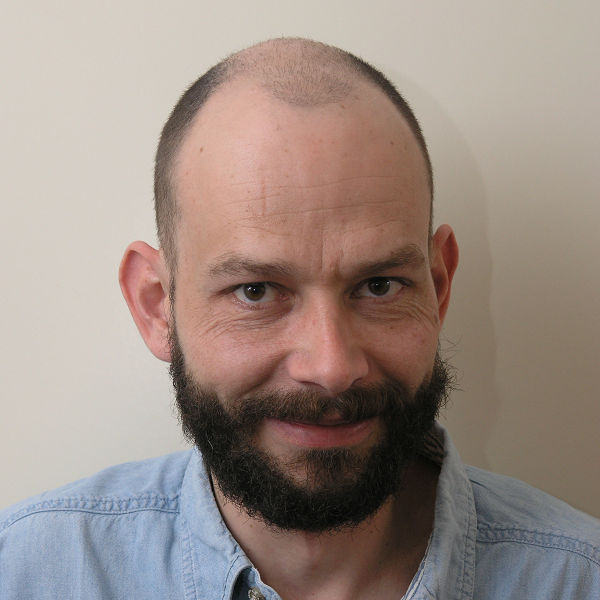
Jakub Klímek is an Associate Professor at the Department of Software Engineering, Charles University. He is a leading researcher in Linked Data and Open Data technologies, with a focus on semantic interoperability, XML schema evolution, and data integration frameworks. Education: Habilitation Thesis: Improving data accessibility and interoperability using linked data Doctoral Thesis: XML Formats Evolution and Integration Master Thesis: XML Schema Evolution Bachelor Thesis: Linear Algebra His research spans semantic web technologies, dataset discovery, knowledge graph applications, and model-driven data engineering. Recent publications address technical and legal interoperability of European open data, context-enhanced similarity search, and data specification tools. Scientific Awards: BEST DEMO PAPER AWARD (ISWC 2024) BEST PAPER AWARD (iiWAS 2017) BEST STUDENT PAPER AWARD (APCCM 2013) BEST PAPER AWARD (EGOV 2013) Klímek contributes to practical applications through tools like UnifiedViews, LinkedPipes, and DataSpecer, collaborating with researchers including Petr Škoda, Martin Nečaský, and Jan Helmich. His work emphasizes real-world implementation of semantic data standards in public administration and enterprise systems.
Jarmila Robová is an Associate Professor at the Department of Mathematics Didactics , affiliated with the Faculty of Mathematics and Physics at Charles University in Prague. Her work focuses on enhancing mathematics education through digital technologies and geometric conceptual understanding. Role: Associate Professor University: Charles University School: Faculty of Mathematics and Physics Department: Department of Mathematics Didactics Email: Jarmila.Robova@mff.cuni.cz Office: Karlín Campus, Room K456 Her research interests include: Geometry Education Digital Technologies in Mathematics Education Professional Development of Mathematics Teachers Recent publications highlight the integration of GeoGebra, analysis of geometric misconceptions, and technology-driven pedagogical strategies. She has supervised numerous theses on topics like digital tools in geometry, financial literacy, and innovative teaching methods. Current supervised works explore areas such as: ICT integration in secondary education Web applications for calculus and algebra Student conceptual knowledge in geometry
Michal Kulich is an Associate Professor at the Department of Probability and Mathematical Statistics, Faculty of Mathematics and Physics, Charles University in Prague. He currently serves as Vice-Dean for Academic Affairs, demonstrating his leadership role within the faculty. His academic career spans over two decades with significant contributions to biostatistics and medical statistics. Dr. Kulich's educational background includes: Charles University, Prague, Czech Republic: M.S. in Statistics (1991) Limburgs Universitair Centrum, Diepenbeek, Belgium: M.S. in Biostatistics (1992) University of Washington, Seattle: M.S. in Biostatistics (1995) University of Washington, Seattle: Ph.D. in Biostatistics (1997) Dr. Kulich's research focuses on statistical methodology with particular emphasis on case-cohort and case-control study designs, clinical trials, and survival analysis. His work bridges theoretical statistics with practical applications in medical research, especially in occupational epidemiology, oncology, cardiology, pediatrics, and HIV/AIDS prevention. He has made significant contributions to the development of statistical methods for analyzing complex medical data, with numerous publications in top statistical and medical journals. His recent scholarly output shows a strong trend toward collaborative research at the intersection of statistics and clinical medicine, particularly in diabetes research, HIV/AIDS prevention, cystic fibrosis, and inflammatory bowel disease. Kulich's work consistently demonstrates methodological rigor while addressing real-world medical challenges through innovative statistical approaches. Among his notable recognitions: Bolzano Award for best paper in mathematics, Bernard Bolzano Foundation, Prague (2001) Best written paper, IBS-WNAR Student Paper Competition, Salt Lake City (1997) Donovan J. Thompson Award, Department of Biostatistics, University of Washington, Seattle (1995) Dr. Kulich has supervised 26 bachelor's theses (23 defended), 27 diploma theses (25 defended), and 2 dissertations (both defended). His collaborative research projects include significant work with the HIV Prevention Trial Network, Cystic Fibrosis Foundation Therapeutic Development Network, and European Cystic Fibrosis Society Clinical Trials Network. He has served as lead statistician for major studies including the HPTN-043 Project ACCEPT, a large-scale community-randomized trial of HIV Voluntary Counselling and Testing programs in Subsaharan Africa and Southeast Asia. He is actively involved in multiple research teams focusing on medical statistics applications, particularly in the areas of cystic fibrosis, diabetes, HIV/AIDS, and cancer epidemiology. His work with the Collaborative Health Studies Coordinating Center and the European Cystic Fibrosis Society demonstrates his commitment to translating statistical methodology into practical healthcare solutions.
Marián Halás is a Professor and Deputy Head of the Department of Geography at Palacký University Olomouc's Faculty of Science. He has been affiliated with the university since 2006, progressing from lecturer to full professor. His academic career began at Comenius University in Bratislava where he earned his PhD and worked as a lecturer from 1997-2006 before moving to Olomouc. Halás completed his academic qualifications through a clear progression: MSc (1997) from Comenius University in Bratislava in Mathematics and Geography, PhD (2003) in Human Geography from the same institution, Associate Professor (2008) in Regional Geography, and finally Full Professor (2019) from University of Ostrava in Political and Cultural Geography. His habilitation focused on 'Possibilities of geography in identification, approximation and planning of organisation of spatial elements' and his professorial lecture addressed 'Gerrymandering and nationalism in administrative geography – lessons from Slovakia'. Professor Halás specializes in spatial analysis and regional geography , with particular expertise in functional regions, spatial interactions, and settlement systems. His research combines theoretical frameworks with empirical analysis of spatial patterns using innovative data sources, especially mobile phone location data. He has developed methodologies for analyzing spatial uncertainty in regional systems and temporal dimensions of urban dynamics. His work bridges human geography with practical applications in urban planning and regional development policy. The analysis of Halás's recent publications (2017-2025) reveals a clear research trajectory focused on spatial interactions, with increasing sophistication in methodology and data sources. Early work (2017-2019) established foundations in functional region analysis and spatial uncertainty, while more recent publications (2020-2025) leverage mobile phone data and big data approaches to examine temporal dimensions of spatial interactions. His research shows strong continuity in core themes while progressively incorporating more advanced analytical techniques and contemporary data sources. Halás has successfully led multiple research projects, primarily funded by the Czech Science Foundation and internal university grants. His current research (2024-2026) focuses on 'Structures of spatial interactions: role of distance and spatial patterns,' continuing his long-standing investigation into spatial organization principles. He has supervised numerous student theses and contributed to academic community service through editorial board memberships for journals like Moravian Geographical Reports and Geographia Cassoviensis. As an active educator, Halás teaches courses including Fundamentals of Human Geography, Municipal Economy and Policy, Population and Settlement Geography, Regions and Regional Taxonomy, and Spatial Analysis and Spatial Interactions. His teaching reflects his research expertise, connecting theoretical concepts with practical applications in spatial analysis and regional planning. He maintains regular consultation hours for students on Monday mornings and is deeply integrated into the academic community through his departmental leadership role and participation in scholarly societies.
Ing. arch. Jaroslav Sedlák, Ph.D., serves as an Assistant Lecturer at the Department of Urban Design within the Faculty of Architecture at Brno University of Technology. His teaching portfolio includes foundational courses like Basics of Architecture (ZAR-A), Master's Thesis Concept Elaboration (MA1-A), and advanced studio work (AT5-A) for the 2025/2026 academic year. Sedlák holds a Ph.D. and maintains active engagement in both academic instruction and professional architectural practice. His research centers on the intersection of urban design, architectural history, and visual culture with specific focus on Brno's urban landscape. Key interests include socialist-era architecture, post-WWII public space development, exhibition design, and the cultural dimensions of built environments. Sedlák's work consistently examines how political regimes shape urban forms and how communities interact with designed spaces, particularly through the lens of Czechoslovak architectural heritage. Sedlák's publication trajectory (2014-2022) reveals deep specialization in Czech architectural history and urban transformation. His collaborative works with colleagues like J. Kristek and Š. Svobodová demonstrate recurring themes: the social life of panel housing estates, visual propaganda in socialist cities, and contemporary interventions in public space. The publications form a cohesive body exploring how architecture mediates between political systems and everyday life. No scientific awards, prizes, or fellowships are documented in available sources. Sedlák's academic contributions manifest primarily through teaching supervision and collaborative projects rather than formal grant funding. He guides master's students in thesis development and studio work, emphasizing design research and practical implementation. Sedlák operates within a dynamic creative network centered around the Faculty of Architecture. His frequent collaborations with J. Kristek (exhibition design), Š. Svobodová (urban research), and D. Helešic (architectural competitions) form the core of his professional ecosystem. These partnerships produce tangible outputs including architectural competitions, public installations, and exhibitions that bridge academic research with urban practice.
Milan Pol is a Professor at the Institute of Educational Sciences, Faculty of Arts, Masaryk University in Brno, Czech Republic. He holds the academic titles PhDr. and CSc., with office C/C.411 at Arna Nováka 1 and contact email pol@phil.muni.cz. He actively serves on the Scientific Council Commission of the Faculty of Arts and the Industry Council for Educational Sciences, Pedagogy, School Pedagogy, and Social Education. His research focuses on educational leadership, school management, and pedagogy, examining collegiality in schools, teacher wellbeing, and leadership impacts on school culture. He investigates inclusive education, trust/control dynamics in educational processes, and systemic school transformations. With over 390 publications, his work bridges theoretical frameworks and practical applications in educational settings across Europe. Recent publications (2021-2025) demonstrate consistent emphasis on collegial support systems, educational policy responsiveness to global challenges, and inclusion implementation barriers. His international projects like the European Education Area interim evaluation and ENIRDELM network outputs reveal growing attention to pandemic impacts on educational inequality, digitalization risks, and trust erosion in school systems. No scientific awards, fellowships, or medals were documented in the source materials. As a thesis supervisor, Pol guided research on Russian parents' relationships with Czech schools (2020), entrepreneurship education (2016), high school diploma transformations (2009), teacher identity construction (2009), principal case studies (2008), and school culture (2007). He consulted on institutional-social environment relationships (2012). Specific grant funding details were not disclosed in available records. He collaborates extensively through the ENIRDELM network with researchers including Bohumíra Lazarová, Eoghan Gallagher, and international partners across 15+ European nations. His current work centers on developing practical frameworks for school leadership collegiality and wellbeing-focused management approaches.
Jan Trna serves as an Assistant Professor at the Department of German, Nordic and Dutch Studies within the Faculty of Arts at Masaryk University in Brno, Czech Republic. His academic profile demonstrates a strong commitment to both research and teaching in German studies, with particular expertise in contemporary German-language literature and German as a Foreign Language (DaF) pedagogy. Dr. Trna's research program centers on Swiss author Lukas Bärfuss, whose dramatic and essayistic works he has analyzed through multiple lenses including societal criticism, treatment of taboo subjects, and the relationship between civilization and religion. His scholarship bridges literary analysis with practical language teaching applications, as evidenced by his exploration of Reiner Kunze's works for DaF instruction. Recent publications demonstrate his growing interest in intercultural dimensions of language teaching, particularly how Czech cultural memory sites can be incorporated into German language curricula. Analysis of Dr. Trna's publication trends (2021-2024) reveals an evolving research trajectory from literary criticism toward applied language teaching methodologies. His work increasingly connects theoretical literary scholarship with classroom practice, focusing on how contemporary literary works can enhance language acquisition. The consistent international collaboration evident in his publications—particularly with Johannes Köck and Vera Janikova—demonstrates his engagement with broader academic networks beyond the Czech context. As a member of the Program Board for Translation of Modern European Languages (Master's degree), Dr. Trna contributes to academic leadership within his department. His supervisory role confirms active mentorship of graduate students, though specific student names aren't publicly documented. His extensive publication record across multiple formats—academic articles, conference presentations, book reviews, and teaching materials—indicates a well-rounded academic profile that successfully integrates research, teaching, and service responsibilities at Masaryk University.
Pavel Pospěch serves as Associate Professor in the Department of Sociology at the Faculty of Social Studies, Masaryk University, Brno, Czech Republic, with additional part-time cooperation at the RE:CENT Center for Medieval Visual Cultures and Research Communication (Faculty of Arts). His research spans urban-rural dynamics, cultural sociology, and public space theory. Academic background: Habilitation (2019), Faculty of Social Studies, Masaryk University PhD (2012), Faculty of Social Studies, Masaryk University Mgr (2007), Faculty of Social Studies, Masaryk University His research examines incivility in urban environments, post-communist rural transformation, and gendered spatial experiences. Key interests include shopping mall sociology, privatization of public spaces, and cultural approaches to rural studies. His work bridges Erving Goffman's interaction order theory with contemporary spatial conflicts, particularly in Central European contexts where historical legacies shape modern public behavior. Analysis of his 15 most recent publications reveals persistent focus on commercialized public spaces (especially shopping malls), incivility discourses, and rural-urban polarization. His work demonstrates interdisciplinary reach across sociology, geography, and cultural studies, with strong empirical grounding in Czech contexts while engaging global theoretical frameworks. The publications show evolution from early rural sociology toward nuanced urban space analysis with growing attention to gender and historical memory. Scientific recognition: Fulbright Commission Scholarship (2017, Yale University) Austrian Government Scholarship (2013-2014, Vienna) As active doctoral supervisor, he currently guides research on digital finance cultural imaginaries and ADHD neurodiversity. His project leadership includes Czech Science Foundation grants on urban incivility (2014-2017) and cultural sociology of social polarization (2022-2024), plus Masaryk University crisis-society projects. He maintains significant institutional service on sociology doctoral boards and cultural studies committees. His research network spans Yale University, University of Vienna, and Sarajevo University collaborations, with current integration into Masaryk University's crisis-society research cluster examining digital reorganization of social practices and anthropocene violence.
Prof. Róbert Marušák is a faculty member at the Czech University of Life Sciences Prague (CZU), serving as Dean of the Faculty of Forestry and Wood Technology and Chairman of its Scientific Council. He leads the Forest Risk Research Department and contributes to academic governance via the Rector's Board. His research focuses on forest management optimization , climate change impacts (e.g., bark beetle outbreaks, fire risks), and decision support systems using GIS and remote sensing. Key interests include sustainable harvest scheduling, disturbance resilience, and ecosystem service valuation. Recent publications emphasize climate-forest interactions, fire modeling, pest prediction, and geospatial tools. Trends show strong integration of computational methods (fuzzy-AHP, Bayesian networks) with ecological fieldwork, advancing adaptive forest management in Central Europe. He coordinates projects like the Excellent Research EVA 4.0 and oversees labs specializing in forest inventory technologies (e.g., terrestrial LiDAR) and risk assessment frameworks.
Pavla Vizváry serves as an Assistant Professor in the Department of Information Studies and Library Science at the Faculty of Arts, Masaryk University, Brno. Her academic profile integrates library science with contemporary digital challenges, focusing on practical applications for Czech cultural institutions and educational frameworks. Her research portfolio emphasizes: Information literacy assessment methodologies Copyright compliance in cultural heritage settings Digital competency development across age groups Information behavior in virtual environments Design thinking applications for library services Cybersecurity awareness in academic contexts Analysis of her recent publications reveals strategic alignment with Czech national priorities, particularly in open educational resources for librarianship, citation standardization in scholarly communication, and healthcare information literacy frameworks. Her work consistently bridges theoretical research with implementable solutions for Czech libraries and universities, addressing post-truth information challenges through evidence-based pedagogy. Dr. Vizváry actively secures competitive funding through Masaryk University's internal grants, the Czech Ministry of Culture's Public Library Information Services program, and international initiatives. Current projects (2024-2025) include the CAREER RESTART study on doctoral students' copyright behavior and e-learning innovations for campus-wide information literacy courses, while her leadership in annual National Seminars trains librarians in multimedia production and information technologies.
Associate Professor Martin Pospíšilík is affiliated with the Department of Electronics and Measurement at the Faculty of Applied Informatics, Tomas Bata University in Zlín. His contact details include email pospisilik@utb.cz, phone +420 576 035 273, and office U51/810, with consultation hours on Tuesdays from 9:00–11:00. His academic background features: Docent (2023–2024) in Machine and Process Control at Tomas Bata University Ph.D. in Engineering Informatics (2008–2013) from Tomas Bata University Ing. degree in Microelectronics (2002–2008) from Czech Technical University in Prague Research focuses on electromagnetic phenomena in computer science, electromagnetic compatibility, and electronic circuit design, with significant international engagement including internships at Portugal’s UbiNET laboratory (Computer Security and Cybercrime), Universität Innsbruck, University of York, and teaching roles at Middle East Technical University under Erasmus programs. Professional trajectory: Associate Professor (2024–present) and Assistant Professor (2018–2024) at Department of Electronics and Measurement Assistant Professor/Assistant (2011–2018) at Institute of Computer and Communication Systems External lecturer (2008–2010) and industry experience at Sitronics Telecom Solutions (2006–2007) Service roles include Czech Science Foundation P102 panel membership (2019–2022) and Academic Senate representation for the Faculty of Applied Informatics (2022–2024). No scientific awards or student advising details are documented.
Radim Löwe is an Educator and Deputy Manager at the Department of Forestry Technologies and Constructions within the Faculty of Forestry and Wood Technology at the Czech University of Life Sciences Prague. Additionally, he serves as Vice-Dean for External Relations, overseeing institutional partnerships and outreach initiatives. His academic roles integrate teaching, research leadership, and administrative responsibilities in forest resource management. Löwe's research centers on optimizing forestry operations and ecological sustainability. Key interests include: Timber harvesting efficiency and volume estimation algorithms Bark beetle outbreak mitigation using pheromone traps and anti-attractants Mechanical properties of beetle-affected wood Forwarder performance standardization in Czech forestry Climate-resilient forest management strategies His recent publications (2022-2024) demonstrate a strong focus on solving pressing forestry challenges through technological innovation. Predominant themes include bark beetle management (7 papers), timber measurement methodologies (5 papers), and sustainable forest bioeconomy (3 papers), reflecting applied research with direct industry relevance. Löwe secured research funding for the project Rozklad přesnosti metodik používaných v harvestorech pro stanovení objemu vyrobených sortimentů (GA FLD 2018-2019), advancing precision in harvester-based timber volume calculations. As Vice-Dean, he coordinates faculty-level external partnerships and industry engagement initiatives.
Zdeněk Vejpustek serves as Assistant Professor in the Department of Engineering at Brno University of Technology's Faculty of Architecture (FA VUT). His academic profile combines teaching responsibilities in structural engineering with specialized research in sustainable construction methodologies. Active in both Czech and international academic circles, he maintains consistent scholarly output through 2025. His research interests focus on sustainable architectural systems , particularly earthen construction techniques and timber structural rehabilitation. He investigates historical building methods while developing contemporary applications for modern urban challenges, with recent work examining funeral architecture and future city models. His publications reveal strong collaboration patterns, especially with researcher R. Bolcek across multiple projects. Analysis of his 15 most recent publications (2023-2025) shows thematic concentration in three areas: (1) earthen construction science and conservation, (2) sustainable urban development models, and (3) structural analysis of historical timber systems. His work bridges practical engineering concerns with broader architectural theory, particularly in BIOM project research exploring bio-inspired urban futures. Vejpustek actively contributes to academic governance as Member of the Faculty of Architecture Academic Senate. His teaching portfolio includes core engineering courses such as Statics of Building Constructions and specialized topics in building reconstructions, delivered in both Czech and English to support international students. Current research projects include Hlína pro lidi (focusing on community earthen buildings) and studies of endangered historical earth construction techniques, demonstrating commitment to preserving traditional knowledge while advancing sustainable building practices. His laboratory work examines acoustic properties of historical timber systems and thermal behavior of structural joints.
Martin Flašar serves as Associate Professor at the Department of Musicology, Faculty of Arts, Masaryk University in Brno, Czech Republic. His office is located in building N/N.605 at Janáčkovo náměstí 654/2a with contact details: phone 549 49 3790 and email flasar@phil.muni.cz. His research spans Czech Music History, Digital Music, and Computer-Assisted Composition, focusing on composers like Jan Novák, Sláva Vorlová, and Jan Klusák. He examines exile experiences of Czech musicians, film music, and technology's impact on musical creation from the 20th to 21st centuries. As Program Board member for Digital Culture and Creative Industries, he bridges academic research with digital media applications. Flašar's 2024 publications reveal intense scholarly output across historical analysis (pre-war salons, totalitarian resistance) and contemporary themes (AI in music, sound design). His work consistently centers on Czech cultural identity through musical lenses while engaging with technological innovation in composition and archival practices. He supervises ongoing theses including 'Music as a formal language using machine learning' and 'Jan Novák's film work since the 1960s', plus completed 2020 research on computer-assisted composition precedents. His academic service includes the Council for Culture and Arts and Industry Council at Masaryk University. No scientific awards were documented in available sources. His recent grant activities remain unspecified though he organized 2023's 'Incursus barbarorum' exhibition on Jan Novák's exile and 2022's MIDI violin workshop.
Petr Škyřík serves as Assistant Professor and Head of the Department of Information Studies and Library Science at Masaryk University's Faculty of Arts in Brno, Czech Republic. He holds a Ph.D. and maintains an active role in academic leadership and teaching within the department. His research centers on technology-infused information services, with key focus areas: Artificial Intelligence applications in library systems and information retrieval Community curation and resilient community development through library spaces Cybersecurity as a design framework for information interventions Cultural/creative industries supporting digital competences in libraries Societal impacts of AI and technology in cultural contexts Digital transformation of information institutions As an educator, he supervises bachelor's and master's theses while developing innovative curricula including AI implementation labs, decarbonization strategies, and leadership training. He organizes specialized programs like the Summer School Masterclass on Information Institution Management and Winter School 'Crossing Borders', emphasizing practical skills for future information professionals.