Mercè Oliva is an Associate Professor at the Department of Communication, Pompeu Fabra University (UPF), Barcelona. She serves as Director of the B.A. Programme in Audiovisual Communication and Coordinator of the MEDIUM Research Group. Her academic background includes a PhD in Social Communication (2010) and a Bachelor's in Audiovisual Communication (2002) from UPF. Research Focus: Television and Reality TV Celebrity and Media Culture Neoliberalism and Political Communication Video Games as Cultural Artifacts Her recent publications analyze: Visual motifs in political coverage (handshakes, hugs, kisses) Citizens' responses to neoliberal resilience narratives Celebrity tax evasion cases (e.g., Cristiano Ronaldo) Video game cover art as neoliberal propaganda Working-class stereotypes in Spanish media ('chonis', 'canis') Key collaborations include co-PI roles in projects like 'Heroes of the Crisis' (2015-2019) and 'Redistributive Imaginaries' (2022-2025), funded by Spain's Ministry of Economy and AEI/NextGenerationEU.
Dr. Fatemeh Masdari is a Junior Research Fellow at the University of Münster’s Centre for Advanced Study “Access to Cultural Goods in Digital Change.” She holds a Master’s in Economics and Management of Art, Culture, and Entertainment from Università Cattolica del Sacro Cuore (Milan, 2012) and a PhD in Art Research from Al-Zahra University (Tehran, 2018). Her research focuses on Philosophy of Art, Aesthetics, and Digital Media, with expertise in 4E Cognition Theory and Cyberspace Studies. She taught undergraduate and graduate courses in Islamic Art, New Media, and Philosophy at Iranian universities post-2012. Key collaborations include work with the Iran National Science Foundation (2016) and UNESCO Chair in Tehran (2019, 2021). Her multilingual skills (Persian, Italian, English, Spanish, French) enhance cross-cultural research. Her publications analyze Instagram aesthetics, new media ontology, and cultural impacts of digital technologies. Research emphasizes interdisciplinary approaches to digital transformation in cultural goods and media representation.
Dr. Ahmet Atay is a Professor of Global Media and Communication at the College of Wooster. He holds a Ph.D. from Southern Illinois University-Carbondale. His research focuses on diasporic experiences, queer and immigrant identities, new media technologies, and critical communication pedagogy. He is the author of Globalization’s Impact on Identity Formation: Queer Diasporic Males in Cyberspace and co-editor of numerous volumes on digital media, intercultural communication, and postcolonial studies. His work bridges media studies, cultural analysis, and queer theory. Education : Ph.D., Southern Illinois University-Carbondale Research Interests : Atay explores transnational queer digital networks, postcolonial communication, autoethnographic methodologies, and the intersection of technology with diasporic identity. He critiques globalization’s impact on cultural and gendered identities, particularly through media representation. Recent work examines pandemic-era pedagogical shifts and service-learning in higher education. Publications Trends : His 2022 articles emphasize critical pedagogy and media narrative evolution, while 2021 works focus on queer digital spaces and decolonial frameworks. Earlier studies (2020–2019) analyze Italian cinema, autoethnography, and international faculty experiences. His writing consistently links digital media to identity politics across transnational contexts. Awards : 2021 Top Three Finalist, ASHE CIHE Award for Research on International Higher Education Advising & Grants : No listed advisees, but his collaborative edited volumes suggest extensive mentorship in academic publishing. No grants explicitly mentioned. Lab/Teams : No dedicated lab mentioned, but his work involves global academic networks through co-edited books and interdisciplinary research partnerships.
Guillaume Soulez is a Professor of Cinema, Audiovisual Studies, and Communication at the Sorbonne Nouvelle - Paris 3 University, specializing in the Department of Cinema and Audiovisual. He holds an HDR (2009) and a PhD in Rhetorical Mediation (1998). His research focuses on the 'deliberation of images,' analyzing how audiences interpret cinematic and audiovisual works through formal and pragmatic frameworks. He leads the 'Renaissance of Television' research group at IRCAV and co-directs the international 'Cinema and Visual Culture Colloquium Series' with institutions like NYU and Duke University. Recent projects include Innov'zone (Labex ICCA) exploring experimental zones in cinema and the Pierre Schaeffer Archive Project. His work bridges media morphology, reception studies, and intermediality, with publications in Théorème , CiNéMAS , and Communication & Langages . Key research themes include: the fragmented cinema, media formats, TV series seriality, and the legacy of the ORTF Research Service (1960-74). He has directed the Cinema and Audiovisual Department (2014-2016) and IRCAV (2016-2021), fostering collaborations with institutions like the Ministry of Defense and La Poste. His publications emphasize theoretical models like 'format analysis,' 'pragmatic interpretation,' and 'intermedial dialogue.' Recent works include Uses of Interpretation, Interpretations of Use (2023) and Le Cinéma Éclaté (2018). He actively engages in public scholarship through radio interviews and educational outreach.
Sara Tanderup Linkis serves as Senior Lecturer in Publishing Studies and Associate Professor in Digital Cultures at Lund University's Department of Arts and Cultural Sciences, Faculty of Humanities and Theology. Her academic work bridges literary scholarship with contemporary digital media analysis, focusing on how technological transformations reshape literary production, distribution, and consumption. Her research program centers on several interconnected domains: Audio literature and audiobook culture in the digital age Intermediality and transmedia storytelling practices Serial narrative forms across media platforms Social media literary communities, particularly BookTok Publishing economics in the streaming era Memory representation in contemporary literature Dr. Linkis's recent publications reveal a methodological commitment to interdisciplinary approaches, combining publishing studies, literary theory, sound studies, and digital culture analysis. Her work demonstrates how literary experiences are being fundamentally reshaped by audio formats and social media platforms, with particular attention to the material and economic dimensions of these transformations. Her scholarly contributions have been recognized through: Inga och John Hains Stiftelse för Vetenskaplig Humanistisk Forskning stipend (2024) International postdoctoral funding from the Independent Research Fund Denmark (2018-2020) As a research leader, Dr. Linkis currently directs the Swedish Research Council-funded project "Between Sound and Text: Production, Content and Experiences of Multimodal Audio Literature" (2024-2026) and contributes to the multi-year project "Lyssningsnjutningar: Sexuell hälsa och ljudfiktion i den digitala intimitetens tid" (2024-2028). She actively supervises doctoral research, including M. Uhlmann Lindberg's work on Swedish self-publishing history. Dr. Linkis maintains an active presence in both academic and public discourse, regularly contributing to media discussions about literary trends and participating in international research networks focused on digital literary cultures and publishing studies.
Paolo Noto is an Associate Professor at the Department of the Arts, Università di Bologna. He specializes in film studies, focusing on post-war Italian cinema, genre transformations, and intertextuality. He holds a PhD in Theatre and Film Studies from the University of Bologna. His research explores the interplay between national and foreign cinematic models, particularly in 1950s Italian cinema. He has presented at conferences such as the NECS Conference 2012 (Lisbon) and contributed to journals like The Italianist and Bianco e nero . His publications include works on Italian neorealism, digital media, and television history. Noto has collaborated with institutions like the University of Bristol and Harvard University through academic exchanges and research projects. His work bridges historical analysis with contemporary media practices, emphasizing cultural and technological intersections.
Rich Shivener is an Associate Professor in the Writing Department at York University's Faculty of Liberal Arts & Professional Studies (LA&PS). He holds a PhD from the University of Cincinnati and an MA from Northern Kentucky University. His research focuses on digital media composing practices, emotions in rhetoric, and the intersections of technology and communication. He has served as a section editor for Kairos: A Journal of Rhetoric, Technology, and Pedagogy from 2016 to 2024. Before academia, he worked in journalism and technical writing, contributing to local newspapers, national magazines, and software documentation. Shivener's recent work explores virtual reality (VR) writing, remote collaboration in game development, and environmental rhetoric in digital infrastructure. His articles analyze topics such as affective labor in online spaces, infrastructural storytelling for environmental justice, and pandemic-era remote work adaptations. He teaches in the digital authoring stream, emphasizing multimodal and hybrid approaches to writing. His research trends highlight a focus on emerging technologies’ impact on communication practices, with particular attention to equity, emotion, and sustainability. He has contributed to discussions about digital authorship, technical communication ethics, and the rhetorical dimensions of webcomics and gaming communities. Shivener’s career reflects a commitment to bridging academic and applied contexts, leveraging his industry experience to inform teaching and research. He remains active in methodological innovations, such as discourse-based interviews and infrastructural narrative analysis, to explore tacit knowledge and systemic inequities in technical fields.
Jaimey Fisher is Professor and Chair of Cinema and Digital Media and Professor of German at UC Davis. He holds a PhD from Cornell University with emphases in German intellectual history and film studies. His research explores German cinema, postwar reconstruction, and genre theory. Fisher authored four books: German Ways of War (2022), Treme (2019), Christian Petzold (2013), and Disciplining Germany (2007). He edited seven volumes including The Berlin School and Its Global Contexts (2018) and publishes widely on war films, transnational cinema, and critical theory. His articles analyze affective geographies in war cinema, transnational art film movements, and ethics in speculative media. Recent work examines New German Cinema's global resonances and AI ethics in Black Mirror . Fisher developed a summer-abroad course at the Locarno Film Festival and received grants from the Mellon Foundation and NEH. He directs graduate studies and mentors students in critical media analysis.
Vance Byrd is an Associate Professor of Germanic Languages and Literatures at the University of Pennsylvania , with a secondary appointment in History of Art. He serves as Special Advisor in the Office of the Vice Provost for Faculty (2024–2025) and is completing an Ivy+ Mellon Leadership Fellowship. Education: Ph.D., M.A. University of Pennsylvania B.A., University of Georgia Research Interests: Byrd’s work focuses on late-eighteenth- and nineteenth-century German literature , visual and print culture , media history , and commemoration . He engages with race, gender, and sexuality studies , environmental humanities , and the history of books and periodicals . His scholarship examines how panoramic media, illustrated journals, and printed materials shaped cultural memory and identity. Scientific Awards: New Directions Fellowship, Andrew W. Mellon Foundation (2019) Residential Fellow, National Humanities Center (2021–2022) Getty Scholar, Getty Research Institute (2021–2022) Ivy+ Mellon Leadership Fellow (2024–2025) Grants and Affiliations: His research has been supported by grants from the National Endowment for the Humanities, Fulbright Commission, and the Quadrangle Historical Research Foundation. He serves on editorial boards for Monatshefte , The German Quarterly , and the Signale book series, and participates in international academic networks like the Berlin Program for Advanced German and European Studies.
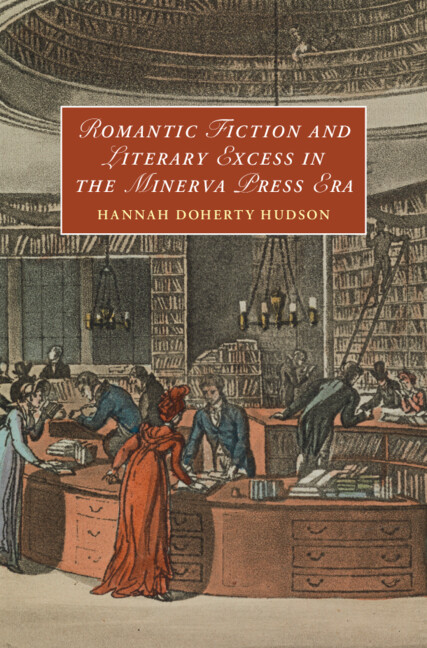
Hannah Hudson, PhD, is Associate Professor of English at Suffolk University in Boston, where she researches and teaches eighteenth- and nineteenth-century British literature with a focus on Romantic-era fiction, Gothic studies, women writers, and the history of print and periodical culture. Education PhD, Stanford University MA, Stanford University MPhil, University of Cambridge AB, Princeton University Research Interests Professor Hudson’s scholarship centers on the intersections of literature, commerce, and gender during the Romantic period. Her work interrogates how popular fiction—especially the vast output of the Minerva Press—shaped, and was shaped by, the burgeoning print marketplace. She examines gothic and sentimental genres, intertextual networks, and the role of magazines in constructing imperial knowledge. Recent Publications & Trends Across her recent articles and her 2023 monograph Romantic Fiction and Literary Excess in the Minerva Press Era , Hudson traces how excess—of production, of emotion, of genre—became a defining feature of Romantic fiction. Her studies reveal how authors, reviewers, and readers negotiated the explosion of print and the contested hierarchies of literary value. Awards & Honors Winner, Marilyn Gaull Book Award, Wordsworth-Coleridge Society (for Romantic Fiction and Literary Excess in the Minerva Press Era ) Current & Future Projects Hudson is presently writing Romantic Magazines and Imperial Knowledge , a study of miscellaneous magazines and their role in forming imperial knowledge around 1800. She continues to publish articles on periodical portrayals of revolution and on Eliza Haywood’s legacy while supervising courses ranging from British Literature surveys to honors seminars on Jane Austen and fantasy fiction. Contact & Office 73 Tremont St., Room 8042, Boston, MA 02108 Phone: 617-573-8277 Email: hhudson@suffolk.edu
Juan Llamas-Rodriguez is an Assistant Professor of Communication and Associate Director at the Center for Advanced Research in Global Communication at the University of Pennsylvania's Annenberg School of Communication. His research focuses on transnational media, border studies, and Latin American cultural production. He holds a Ph.D. from the University of California, Santa Barbara (2017), an M.A. from Concordia University (2013), and a B.A. from the University of Toronto (2011). His book Border Tunnels (2023) examines media's role in shaping borderland perceptions. He co-edits [in]Transition , a peer-reviewed videographic journal, and engages in public humanities projects like The Migrant Steps Project. His work appears in journals such as Feminist Media Histories , Journal of Cinema and Media Studies , and Television & New Media . Key research interests include digital culture, global communication, and the intersection of technology with society. He teaches courses on media and migration, multimodal scholarship, and Latin American television history.
Giancarlo Lombardi is a Professor in the Department of Modern Languages and Literatures at the College of Staten Island (CSI), part of the City University of New York (CUNY) system. Since 2002, he has also been a faculty member in the PhD/MA Program in Comparative Literature at the CUNY Graduate Center, where he has served as Executive Officer (Chair) since 2014. His academic career spans teaching and research in Italian, French, English, and American literature, film studies, cultural studies, and television drama. Education: Laurea, Università di Roma "La Sapienza" MA, Cornell University PhD, Cornell University (Romance Studies) His research interests include Comparative Literature, Italian and American Television Seriality, Film Studies, Gender Studies, and Feminist Fiction . He has published extensively on contemporary European women writers, Italian cinema, and political violence in film. In recent years, his scholarship has focused on television drama, particularly Italian and American serials such as Lost and The Sopranos , with a growing emphasis on global and comparative frameworks. The most recent publications reflect a trajectory from feminist literary studies to media and television analysis, culminating in two ongoing book projects: Belfagor e dintorni on classic Italian television and Television without Borders on transnational serial narratives. These works highlight his interdisciplinary approach and evolving focus on media globalization. Scientific Contributions: Rooms With a View: Feminist Diary Fiction (2002) Co-editor, Terrorism Italian Style (2011) Co-editor, Remembering Aldo Moro (2012) Co-editor, Nuovo cinema politico (2016) Lombardi has played a significant role in academic leadership, directing the Italian program at CSI and currently leading the Comparative Literature program at the Graduate Center. He has not received any explicitly mentioned scientific awards, but his editorial and book projects indicate recognition in his field. He teaches courses on Italian cinema, women writers, the Decadent Movement, and gender studies, contributing to interdisciplinary programs including American Studies, Women’s Studies, and Science, Letters and Society. He is actively engaged in research and has no indication of affiliation with labs or research teams, though his work is deeply embedded in cultural and media studies scholarship. His current projects suggest a continued scholarly trajectory toward comparative media analysis and global television studies.
Claudio Bisoni is a Full Professor at the University of Bologna, based in the Department of Arts. His academic career spans over 17 years, starting as a University Researcher in 2006, progressing to Associate Professor in 2014, and achieving Full Professor status in 2022. He holds a PhD in Theatre and Cinema Studies from the University of Bologna (2005) and a Bachelor’s Degree in Film Studies (1997–98). His research focuses on film criticism, Italian cinema history, and the intersection of gender studies with media. Notable works include Cinema, sorrisi e canzoni: Il film musicale italiano degli anni Sessanta (2020), which won the Premio Limina 2021, and Gli anni affollati: La cultura cinematografica italiana (1970–1979) (2009). He has contributed to international journals like Bianco e Nero , Cinergie , and The Italianist . Bisoni’s articles explore topics such as Italian horror cinema’s global reception, gender representation in media, and transnational circulation of cultural products. His recent work analyzes the My Brilliant Friend TV adaptation and the evolution of Italian musical films. He has organized numerous academic events, including conferences on media mutations, celebrity studies, and cultural circulation. Bisoni serves on editorial boards of journals like Storicamente and Bianco e Nero , and is a member of the Consulta Universitaria del Cinema (CUC). His academic leadership roles include directing the Cinema Section at the University of Bologna’s Department of Music and Spectacle (2010–2012), coordinating the Cinema, Television, and Multimedia Production program (2014–2017), and serving on various research and administrative committees.
Bettina Kümmerling-Meibauer is a Full Professor of German Literature and Literary Didactics at the Eberhard Karls University of Tübingen, specializing in children's literature, picturebook research, and intermedial studies. With a habilitation from Tübingen (2001) and a PhD from Cologne (1990), she has held guest professorships in Sweden and Austria, declined a chair at the Free University of Bolzano (2014), and led EU-funded projects like Canon Constitution and Canon Change in Children's Literature (2017) and The Digital Literacy and Multimodal Practices of Young Children (2015–2019). Her research spans avant-garde children's literature, Jewish children's books, and early literacy. Education : PhD in German Philology (University of Cologne, 1990); Habilitation in Children's Literature (Tübingen, 2001). Her research interests focus on intersections between children's and adult literature, avant-garde aesthetics in picturebooks, and the political dimensions of children's media. She has co-edited The Routledge Companion to Picturebooks (2018) and Canon Constitution and Canon Change in Children's Literature (2017). Recent publication trends highlight her work on cognitive challenges in picturebooks, the impact of digital media on young adult literature, and the legacy of classical myths in contemporary children's works. She has also explored topics like propaganda in GDR photographic books and multilingual children's literature. Scientific awards include the 2017 ChLA Edited Book Award for Children’s Literature and the Avant-Garde (co-edited with Elina Druker). She serves on editorial boards for journals like International Research in Children’s Literature and Libri & Liberi . Advising includes completed doctorates on topics like Swedish fantasy reception in Germany, initiation novels in 20th-century children's literature, and gender discourse in Erich Kästner adaptations. She has advised on international doctoral projects in the UK, Belgium, South Africa, Portugal, Sweden, and Spain.
Jared Gardner is the Joseph V Denney Designated Professor of English at The Ohio State University, where he is affiliated with the College of Arts and Sciences and the Department of English. Alongside his academic role, he serves as Secretary of the University Senate, balancing teaching and administrative responsibilities. His primary affiliations include the Department of English and the Billy Ireland Cartoon Library & Museum, where he contributes as a curator. Prof. Gardner holds a PhD from Johns Hopkins University (1994) and a BA from Amherst College (1987). His educational background is rooted in literature and cultural studies, which inform his interdisciplinary research and teaching. Gardner's research interests span comics studies , periodical studies , and the history of American film and popular culture . He explores how media forms like print, comics, and film shape cultural narratives, with a focus on early American magazine culture and transmedial storytelling. His work often intersects with medical humanities and environmental humanities , examining themes such as race, identity, and the role of media in societal change. Key areas include: Comics as a narrative medium and its historical evolution Pre- and post-Civil War serial culture Medical narratives in graphic novels Environmental representations in literature and film Interdisciplinary approaches to media studies In his recent publications, Gardner has emphasized the historical and cultural dimensions of comics and graphic narratives , including works on Will Eisner, Charles Schulz, and the transmedia adaptations of stories. He also engages with the intersections of literature, film, and medical humanities , reflecting his commitment to understanding media as a dynamic cultural force. Recent works highlight his exploration of early American periodical culture and the evolving role of narrative forms in the digital age. Gardner has directed the Popular Culture Studies minor at Ohio State for over 15 years, overseeing its curricular development and student engagement. While specific grant details are not provided, his collaborations with institutions like the Billy Ireland Cartoon Library & Museum suggest involvement in funded projects. He advises students in various capacities, though no formal advisee list is included in the provided texts. He actively collaborates with the Ohio State Billy Ireland Cartoon Library & Museum , curating exhibitions such as "Drawing Blood: Comic & Medicine" . This partnership underscores his dedication to bridging academic research with public cultural engagement.