Barbara Caputo is a Full Professor at Politecnico di Torino, leading the VANDAL Laboratory and directing the AI@PoliTo Interdepartmental Lab. She holds a double affiliation with the Italian Institute of Technology (IIT) and has held roles at Idiap-EPFL and Sapienza University. Her research focuses on AI, computer vision, domain adaptation, and federated learning. She contributes to national AI policy, including the Italian Strategy on AI and the National PhD on AI for Industry 4.0. She is an ERC Laureate and ELLIS Fellow, co-founding ELLIS society. Her work spans visual place recognition, action recognition, and cross-domain learning. Education: PhD in Computer Science from KTH Royal Institute of Technology (2005). Major roles include Rector’s Advisor on AI at PoliTo, Board Member of ELLIS, and coordinator of the AI & Industry 4.0 vertical in the National PhD program. Awards include ERC Laureate (2017), ELLIS Fellow (2019), and Inspiring Fifty Italy (2018). Her research emphasizes federated learning, domain adaptation, and AI ethics. Recent articles explore domain generalization, resource-efficient federated models, and AI-environment interactions. She collaborates with institutions like MUR, CNR, and the European Commission on AI policy and tech initiatives.
Professor Dorit Abusch is a faculty member in the Department of Linguistics and Philosophy at Cornell University's College of Arts & Sciences. Her research focuses on semantics, pragmatics, and their applications to visual narratives. She explores topics like tense semantics, presupposition triggering, modal logic, and the interplay between language and visual media. Current work extends linguistic methodologies to analyze art forms such as comics, cave paintings, and temple sculptures. Her research interests include formal semantics applied to visual narratives, dynamic semantics, possible world theory, and multimodal discourse representation. She investigates how visual elements like sequential art and pictorial sequences convey temporal progression, aspectual distinctions, and free perception constructions through semiotic frameworks. Recent presentations include talks on applying semantics to film and picturebooks at institutions like MIT and the University of Padua. Her publications emphasize cross-media analysis, with key works published in Linguistics & Philosophy and Sinn und Bedeutung . Abusch has received grants for projects studying visual narratives in Indian art and wall paintings of Rajasthan. These include a 2012-2013 Humanities Research Grant and a Cornell Institute for Social Sciences award. Her work bridges linguistics with philosophy and visual studies, offering innovative frameworks for understanding non-linguistic communication through formal semantic tools.
Dr. Anthony Filippi is an Associate Professor and Director of Graduate Programs at Texas A&M University. His research focuses on remote sensing, geographic information systems (GIS), and machine learning applied to aquatic and terrestrial environments. He leads the Fluvial-GEOS Lab, studying riverine/floodplain systems using remote sensing and GIS technologies. Educational Background: Ph.D. in Geography, University of South Carolina (2003) M.S. in Geography, University of South Carolina B.A. in Geography, Kansas State University Research Interests: Imaging spectroscopy, hyperspectral remote sensing of rivers and coastal oceans, GIS-based modeling, data fusion, aquatic optics, and machine learning. His work addresses coastal ocean bathymetry estimation, floodplain dynamics, and applications in environmental monitoring, including hazardous waste site tracking and agricultural studies. Recent Research Trends: Recent publications highlight advancements in UAS-based image analysis, LSTM networks for floodplain classification, and environmental policy impacts on forest resources. His work integrates machine learning with remote sensing to improve ecological and geomorphological understanding. Labs/Teams: Director of the Fluvial-GEOS Lab, focusing on remote sensing and GIS applications in riverine environments.
Jennifer Smith is a faculty researcher at the Scripps Institution of Oceanography, University of California, San Diego, where she leads the Smith Lab within the Center for Marine Biodiversity and Conservation. Her work focuses on coral reef ecosystems, integrating ecology with conservation, restoration, and sustainability. Her research explores how human activities such as nutrient pollution, invasive species, and climate change affect benthic marine communities. She has pioneered the use of large-area imaging and structure-from-motion technology to monitor long-term changes in Maui's coral reefs, including responses to sequential bleaching events and wildfire impacts. Her lab investigates microbial interactions with corals and the role of algae in reef degradation and resilience. Dr. Smith’s publication record reveals a strong focus on coral-algal interactions, nutrient dynamics, invasive seaweeds, and ecosystem-scale analyses. Her work spans tropical regions including Hawaii and the Great Barrier Reef, contributing to global understanding of reef resilience. She mentors graduate students and collaborates widely across marine science disciplines. Scientific Awards: No awards mentioned in the provided text. Advising and Grants: Dr. Smith advises graduate students such as Orion McCarthy and Morgan Winston. Her lab conducts long-term monitoring supported by institutional and likely federal funding, though specific grants are not listed. She leads field campaigns in Hawaii and publishes in high-impact journals. Labs and Teams: The Smith Lab is actively engaged in coral reef research, focusing on resilience, restoration, and human impacts. The team includes researchers and volunteers who conduct field surveys, analyze imagery, and produce outreach materials such as the 'Underwater Gardens' film.
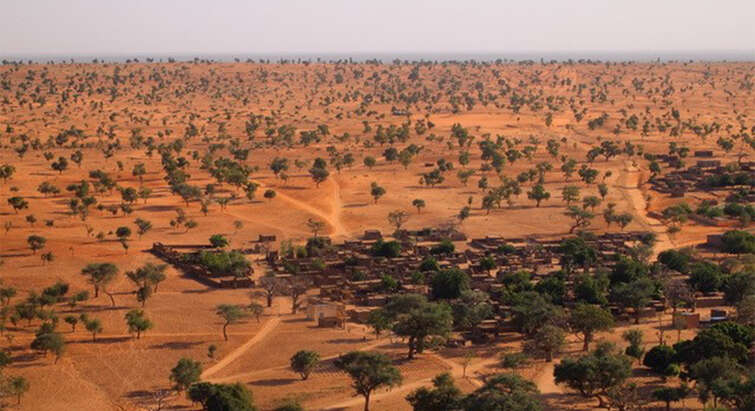
Ankit Kariryaa is a Tenure Track Assistant Professor at the Department of Computer Science and Department of Geosciences and Natural Resource Management , University of Copenhagen. His work bridges Machine Learning and Environmental Informatics , focusing on remote sensing, geospatial analysis, and ecological modeling. University of Copenhagen, Denmark Machine Learning Section, Department of Computer Science Geography, Land, Environment and Society, Department of Geosciences Kariryaa specializes in applying deep learning and computer vision to environmental challenges. His research includes: Automated tree detection and biomass estimation via satellite imagery Multi-modal geospatial representation learning Monitoring farmland tree decline and carbon sequestration potential Agroforestry system mapping using AI Developing AI tools for climate policy and sustainability Recent work trends show a focus on quantum-inspired machine learning , environmental monitoring , and cross-cultural AI applications . His 15 most recent publications span topics in remote sensing , ecological modeling , and AI ethics , with methods ranging from neural networks to tensor-based learning. He collaborates across disciplines, notably with researchers in ecology , climate science , and quantum computing . His outreach includes seminars on AI in agroforestry and ecosystem management , while his team contributes to global tree resource databases like TreeSense.
Naren Ramakrishnan is the Thomas L. Phillips Professor of Engineering in the Department of Computer Science at Virginia Tech, where he directs the Sanghani Center for AI and Data Analytics. He also serves as AI and Machine Learning Lead for the Virginia Tech Innovation Campus. His research spans data science, machine learning, urban analytics, forecasting, and computational epidemiology. Recent publications (2024-2025) focus on language model optimization, AI applications in government and environmental conservation, and spatiotemporal data analysis. Work demonstrates strong emphasis on real-world AI deployments in regulatory compliance, supply chain verification, and network optimization. Methodological innovations include prompt engineering techniques, world models for reinforcement learning, and specialized embedding methods. Dr. Ramakrishnan has received prestigious fellowships from ACM, AAAS, and IEEE. His research has been supported by numerous agencies including DARPA, NSF, NIH, and industry partners like Amazon and Boeing, with 36 PhD students mentored to completion.
Prof. Dr. Anna Pawlak is a Full Professor of Modern Art History at the University of Zurich since September 2025. She previously held a W3 Professorship in Early Modern Art at the Institute of Art History, Eberhard Karls University of Tübingen (2020–2025) and was First Deputy Spokesperson of the Collaborative Research Center 1391 "Other Aesthetics" (2022–2025). Her research focuses on intermediality, visual rhetoric, and cultural hybridity in early modern Dutch art, canon formation, and the epistemic potential of printed works. University of Zurich (2025–present) Eberhard Karls University of Tübingen (2014–2025) Her projects, such as SFB 1391 Subproject C4 "Intermedialität und Repräsentation," explore Latin epigrams and Dutch prints as sites of aesthetic and political negotiation. She has published extensively on topics like Hendrick Goltzius' engravings, Juan de Valdés Leal's hieroglyphs, and the cultural dynamics of Antwerp's festivals. Recent awards include the 2012 Offermann-Hergarten Prize for her dissertation on Pieter Bruegel the Elder. Co-editor of "Plurale Autorschaft" (2023) Co-editor of "Andere Ästhetik meets Andere Ästhetik" (2024) Her articles analyze the intersection of Latin texts and visual art, emphasizing how intermediality shaped European cultural memory. She collaborates with institutions like the University of Zurich, Tübingen's Graphische Sammlung, and the Bibliotheca Hertziana, Rome. Active in organizing workshops and exhibitions, including "Heemskerck & Co. Welt/Bewegend" (2022), she continues to bridge art history with interdisciplinary aesthetics.
Michael Webster is a Professor of Psychology at the University of Nevada, Reno, serving as Co-Director of the Graduate MS/PhD Neuroscience Program and Undergraduate BS Neuroscience Program, and Director of the NIH-funded COBRE for Integrative Neuroscience. His research focuses on visual perception, particularly how perception adapts to environmental and physiological changes. He leads major initiatives like the $10 million COBRE grant establishing an fMRI facility and neuroscience programs. Education: Ph.D., Psychology, University of California, Berkeley (1988); B.A., Psychology, University of California, San Diego (1981). Research Interests: Cognitive neuroscience of vision, visual adaptation mechanisms, color and face perception, and cultural/environmental influences on perception. Notable contributions include discoveries about face adaptation, color constancy, and blur correction. His work is funded by NIH grants and recognized through awards like the Outstanding Researcher Award. Grants/Awards: NIH COBRE Directorship, foundation professorship, grants for radiology adaptation studies. His lab (Visual Perception Lab) explores neural and cognitive bases of visual processing.
Xuming He is an Associate Professor at the School of Information Science and Technology (SIST), ShanghaiTech University, where he leads the PLUS Lab. His research spans computer vision and machine learning with a focus on developing algorithms that operate effectively under limited supervision and evolving data conditions. His core research interests include weakly-supervised and few-shot learning for scenarios with sparse annotations, continual learning frameworks for knowledge retention during sequential task acquisition, semantic segmentation techniques for scene understanding, and multimodal vision-language representations. He emphasizes interpretable machine learning to build transparent AI systems capable of human-understandable reasoning, addressing critical challenges in model trustworthiness and deployment reliability. Recent publications reveal strong trends toward novel class discovery in long-tailed recognition scenarios, physics-informed generative modeling for scientific applications, and robust segmentation under distribution shifts. His work increasingly integrates large language models for multimodal reasoning while maintaining focus on efficiency in resource-constrained environments like robotic grasping and medical imaging analysis. He actively mentors students, having supervised Qian He to PhD completion and Chuanyang Hu to Master's degree in 2023. He welcomes prospective graduate students through ShanghaiTech's Computer Science & Technology program and offers undergraduate research projects requiring minimum six-month commitments. The PLUS Lab under his direction drives innovation in learning under supervision constraints, with recent work spanning medical tumor analysis, cross-view geolocation, photonic computing, and semiconductor design verification. The lab's research bridges theoretical advances with practical applications across healthcare, robotics, and scientific discovery domains.
CARMEN PADILLA RASCÓN is a Researcher at the Department of Chemical, Environmental and Materials Engineering at the University of Jaén. She obtained her Doctorate in 2022 with the thesis "Production of furfural and bioethanol from olive stones." Education: PhD in Chemical Engineering, University of Jaén (2022) Her research focuses on lignocellulosic biomass valorization through biorefinery systems, particularly using agricultural residues like olive stones and vine shoots for producing biofuels and high-value chemicals. Key techniques include steam explosion, acid/alkaline pretreatments, and microwave-assisted processing. Recent publications highlight integrated biorefinery strategies, furfural production optimization, and recovery of bioactive phenolic compounds. The work often involves process engineering, catalytic transformations, and circular economy principles.
Ioannis Stamos is a Professor of Computer Science at Hunter College, City University of New York (CUNY), within the School of Arts and Sciences. His research focuses on Computer Vision, Robotics, Computer Graphics, and 3D Visualization, with emphasis on 3D modeling using range and image data. He earned his Ph.D. in Computer Science from Columbia University (2001), followed by an M.S. and M.Phil. from Columbia's Computer Science Department, and a Diploma of Engineering from the University of Patras, Greece. Dr. Stamos has received prestigious awards including the NSF CAREER Award (2003) and Google Research Awards (2014, 2017). His work integrates 2D images and 3D range data for urban scene modeling, sensor fusion, and real-time object detection. Notable contributions include advancements in 6DoF pose estimation, LiDAR-based curb detection, and Kronecker product models for repeated patterns in urban imagery. He leads the Computer Vision & Robotics Lab and teaches graduate courses in 3D Computer Vision and Photorealistic Modeling. His research is supported by NSF grants, including MRI awards for mobile robotics and large-scale 3D modeling. He serves as Area Editor for the Journal of Computer Vision and Image Understanding and has co-chaired conferences like 3DV 2013. His lab collaborates on projects involving procedural modeling of urban environments and online classification of 3D point clouds.
Professor Melissa MacAlpin is an Assistant Professor of Graphic Design at Felician University's Art Department, part of the School of Arts & Sciences. She has held this position since Fall 2004. Her academic background includes a Master of Fine Arts in Book Arts/Printmaking from the University of the Arts (2001) and a Bachelor of Fine Arts in Sculpture from Rutgers University (1998). Her research focuses on metaphorical content in objects and shared human experiences through narratives. She explores how stories and objects interconnect, emphasizing their transformation over time. Her creative works are featured in notable collections such as the Newark Public Library, Penn State University's Special Collections, and Duke University's Sallie Bingham Center. MacAlpin teaches a wide range of courses, including introductory graphic design, printmaking, book arts, and women in art. Her publications span from 1997 to 2011, showcasing experimental techniques like inkjet printing, screen-printing, and Heidelberg press work, often blending personal anecdotes with broader cultural themes. Her artistic practice bridges fine art and design, with a focus on zines, comics, and narrative-driven projects that interrogate societal norms and personal identity. While no formal awards are listed, her works reflect a commitment to interdisciplinary storytelling and material experimentation.
Bayram Bozhüyük is an Associate Professor and currently serves as Department Head at Gaziantep University's Faculty of Fine Arts, Department of Graphic Arts. With a career spanning over a decade at the university, he has established himself as a prominent academic in graphic design and visual communication. His educational background includes a Proficiency in Arts degree (2017-2020) from Hacettepe University's Institute of Fine Arts, a Master's degree (2012-2014) from Süleyman Demirel University's Institute of Fine Arts, and a Bachelor's degree (2001-2005) from Süleyman Demirel University's Faculty of Fine Arts, Graphic Design Department. Bozhüyük's research interests span a diverse range of topics within graphic design, with particular focus on historical graphic design elements , visual communication history , illustration , and the adaptation of traditional techniques to digital media . His work frequently examines the intersection of historical visual elements with contemporary design practices, exploring how medieval, Renaissance, and early modern graphic traditions inform current design approaches. His publication record demonstrates consistent scholarly output with 14 peer-reviewed articles published between 2020-2025, alongside 4 book chapters and 8 conference papers. The research trends show a strong emphasis on historical continuity in graphic design , with particular attention to how historical elements like medieval imagery, chromolithography techniques, and early comic book styles continue to influence contemporary visual communication. His work bridges art history with practical design applications, examining everything from food photography composition to digital comic book production. Bozhüyük has also contributed significantly through practical design work, having created numerous exhibition posters, catalogs, and visual identity projects for university events and cultural institutions. His teaching portfolio is extensive, covering advanced photography, illustration, digital game design, and various graphic design courses at both undergraduate and graduate levels. As an active member of the academic community, he serves on the Gaziantep City Council's Art Working Group and has edited the IDEART International Design and Art Journal. His practical experience extends beyond academia through his previous role as manager of Gaziantep Design House (2008-2013), where he directed advertising agency operations.
Eileen Little is a Senior Lecturer in Photography/Documentary Photography within the Faculty of Business and Creative Industries. She is affiliated with the Creative Industries Research and Innovation Group (CIRI) and the eCPR research centre, and holds the status of Senior Fellow of the Higher Education Academy (UK). Her academic work bridges artistic practice and theoretical inquiry, particularly in the domains of photographic narrative, trauma, memory, and digital culture. Education: Ph.D. (Practice-Led), University of Leeds (Awarded: 8 Jul 2014) MFA, University of Colorado, Boulder (Awarded: 19 Apr 2023) BA (Hons) in English & History (Awarded: 19 Oct 2022) Her research interests focus on the philosophical and emotional dimensions of photography, particularly the interplay between image and text, the audio-visual, and the photographic bookwork. She explores identity politics, representation, and the affective impact of trauma in visual art. A current focus is the relationship between the maternal and the photographic punctum in post-traumatic cultures, as well as the transformation of mourning and privacy in the age of social media. Her work critically examines how human dignity is visually constructed and publicly negotiated on platforms like Facebook through likes, comments, and shared images. Her recent publications and presentations—including multiple iterations of “Mourning on Facebook” and works like “fireflies*” and “Archive Fever”—demonstrate a sustained engagement with trauma, memory, digital mediation, and feminist theory. These outputs span illustrated academic essays, conference papers, and book chapters, often blending artistic practice with scholarly analysis. Scientific Awards and Recognitions: Senior Fellow, Higher Education Academy (UK) Eileen Little has contributed significantly to academic service, including editorial work for Media and Communication journal (2016–2017), chairing HEA Fellow Review Panels (2017), and serving as an external examiner for Manchester Metropolitan University (2021–2026), Teesside University (2015–2019), and Southbank University (2003–2008). She has presented her work internationally at institutions such as Tate Modern, University of Westminster, and Aalto University, Finland. Her activities reflect deep engagement with both academic and public audiences through exhibitions, symposia, and conferences. She is actively involved in research communities, including the Association of Photography in Higher Education (APHE), College Art Association (USA), and Society for Photographic Education (USA). Her work contributes to broader societal goals, particularly in the area of education and cultural understanding, aligning with relevant UN Sustainable Development Goals.
Dr. Daniela Wentz is a researcher at Leuphana University of Lüneburg, where she serves as Scientific Project Manager for the ongoing research initiative 'Making Sense(s). The Mediality of the Near Senses' (active since June 2019). Her academic work bridges media theory, digital cultures, and sensory studies, with particular emphasis on television seriality and postdigital criticism. Wentz's research explores: The transformation of criticism in digital environments Narrative structures in television series (e.g., Stranger Things , Lost ) Diagrammatic reasoning in visual media Sensory mediation and perceptual technologies Post-9/11 cultural representations Media archaeology and historical transitions in broadcasting Her scholarly output demonstrates strong engagement with media theory and visual semiotics, particularly through analyses of television seriality and cinematic epistemology. Recent work (2019-2023) shows increased focus on postdigital critique and sensory media. Wentz frequently collaborates on edited volumes and special journal issues, notably co-editing Kritik postdigital (2023) and Filmische Moderne: 60 Fragmente (2019). She maintains active research partnerships with scholars including Lorenz Engell, Jens Schröter, and Katharina Niemeyer.