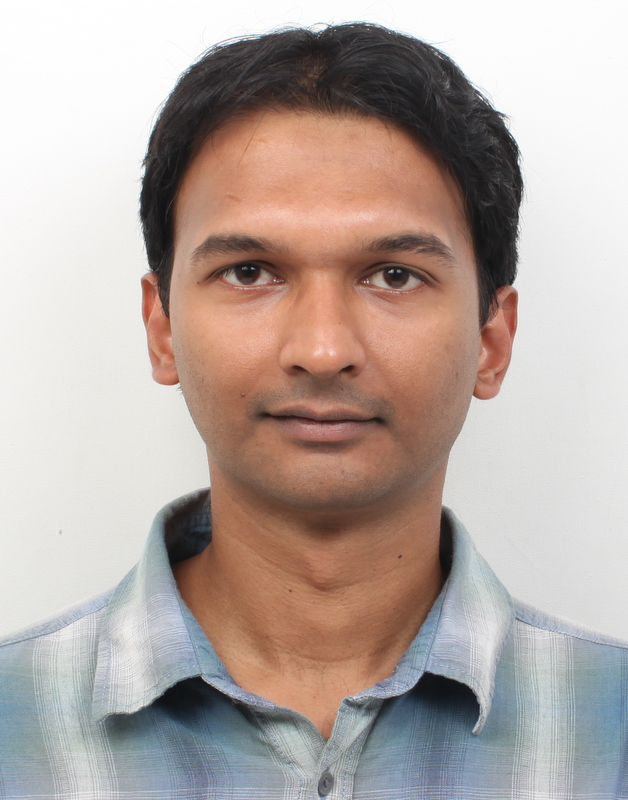
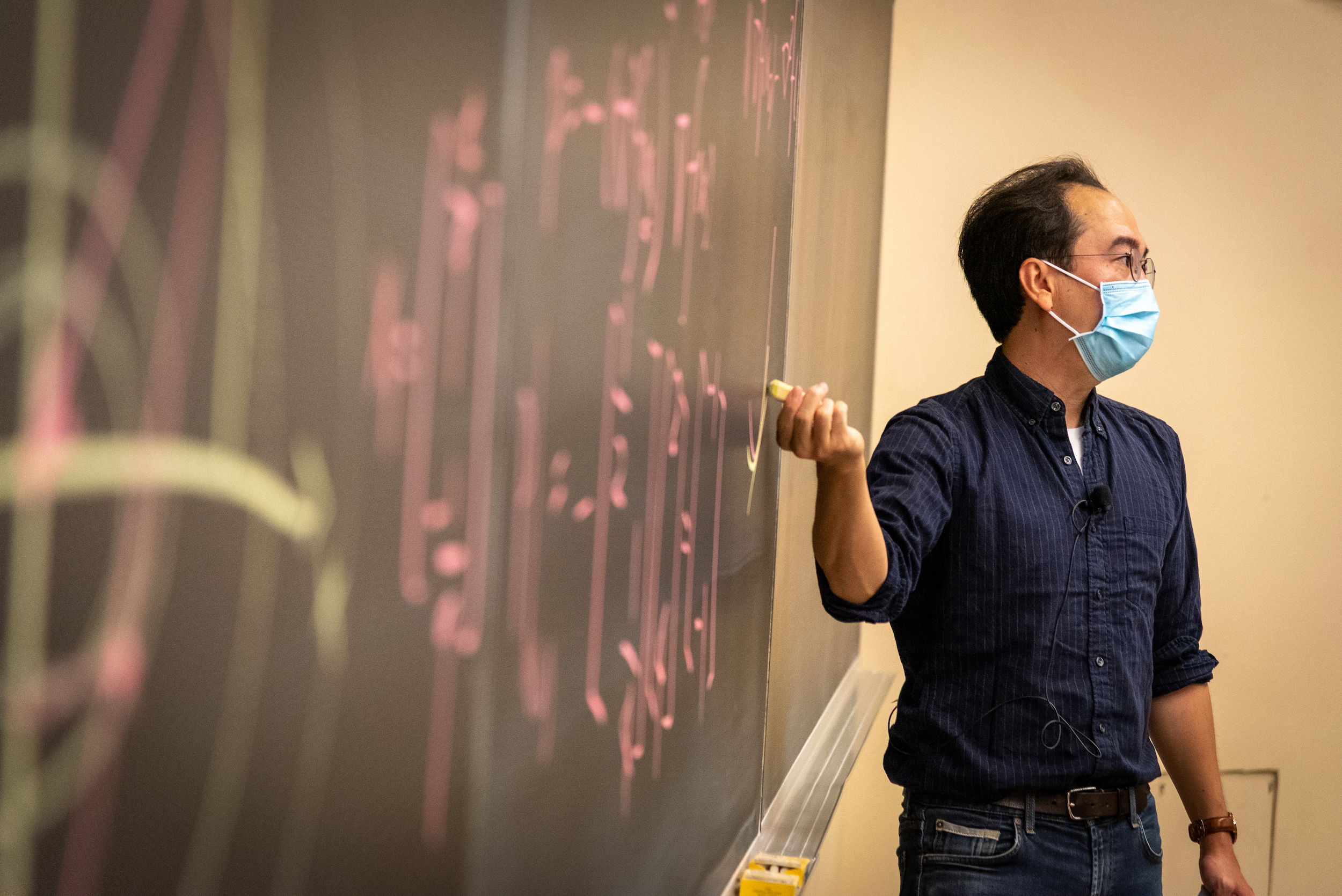
Shivaram Kalyanakrishnan is an Associate Professor at the Department of Computer Science and Engineering , Indian Institute of Technology Bombay , specialising in Artificial Intelligence and Machine Learning . His research spans sequential decision making , multiagent learning , multi-armed bandits , and humanoid robotics , with applications in robot soccer , computer games , and online advertising . He teaches advanced courses like CS 747: Foundations of Intelligent and Learning Agents and CS 748: Advances in Intelligent and Learning Agents , focusing on end-to-end system design and theoretical analysis. His scientific awards include the Best Student Paper Award at RoboCup International Symposium 2006 and nomination for Best Student Paper Award at AAMAS 2007 . His work on reinforcement learning and policy iteration has been published in leading venues such as IJCAI , ICML , and COLT , with recent contributions to railway scheduling and bandit algorithms. While no explicit list of advisees is provided, his research projects and publications suggest mentorship of students in collaborative efforts. Contact : shivaram@cse.iitb.ac.in .
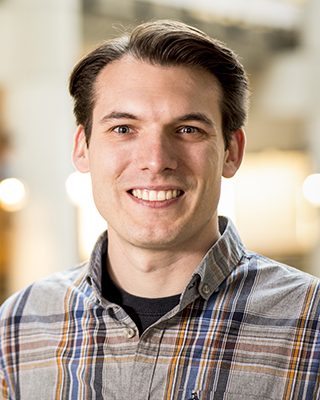
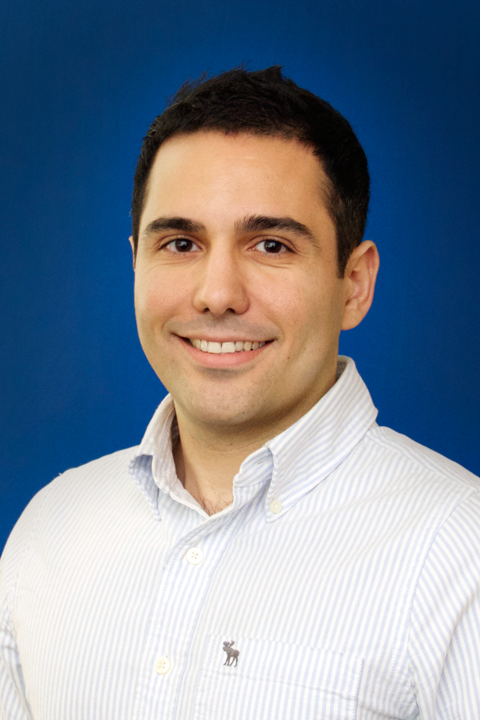
Kevin Jamieson is an Associate Professor at the Paul G. Allen School of Computer Science & Engineering and an Adjunct Professor in the Department of Statistics at the University of Washington . His academic journey includes a B.S. (2009) , M.S. (2010) , and Ph.D. (2015) in electrical engineering from the University of Washington, Columbia University, and University of Wisconsin–Madison respectively. He completed a postdoc at UC Berkeley's AMP Lab before joining UW in 2017. Ph.D., Electrical Engineering, University of Wisconsin–Madison (2015) M.S., Electrical Engineering, Columbia University (2010) B.S., Electrical Engineering, University of Washington (2009) Jamieson's research lies at the intersection of interactive machine learning , active learning , and sequential decision making . His work focuses on: Adaptive sampling strategies in multi-armed bandits and reinforcement learning (RL) Developing instance-dependent optimal algorithms that adapt to problem difficulty Applications in robotics , human perception studies , and hyperparameter optimization Representation learning for large models and experimental design frameworks His 15 most recent publications (2025-2022) demonstrate expertise in bandit theory , contextual RL , and game-theoretic learning . Notable trends include sample-efficient optimization , adaptive A/B testing , and sim-to-real transfer in robotics. Jamieson has received: NSF CAREER award for foundational contributions Amazon Faculty Research award for innovation in learning systems He actively recruits graduate students and postdocs , emphasizing collaboration in areas like: Multi-agent RL and strategic actor learning Empirical process suprema and adaptive sampling theory Applications in robotics , large language model finetuning , and biomedical data analysis Jamieson leads the Washington AI Lab (WAIL) and develops open-source learning systems like the NEXT framework for real-world adaptive data collection. He serves as co-PI for the Institute for the Foundations of Data Science (IFDS) and co-organizes the Distinguished Seminar in Optimization & Data .
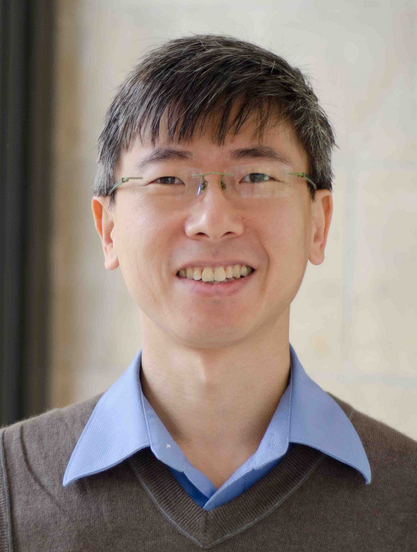
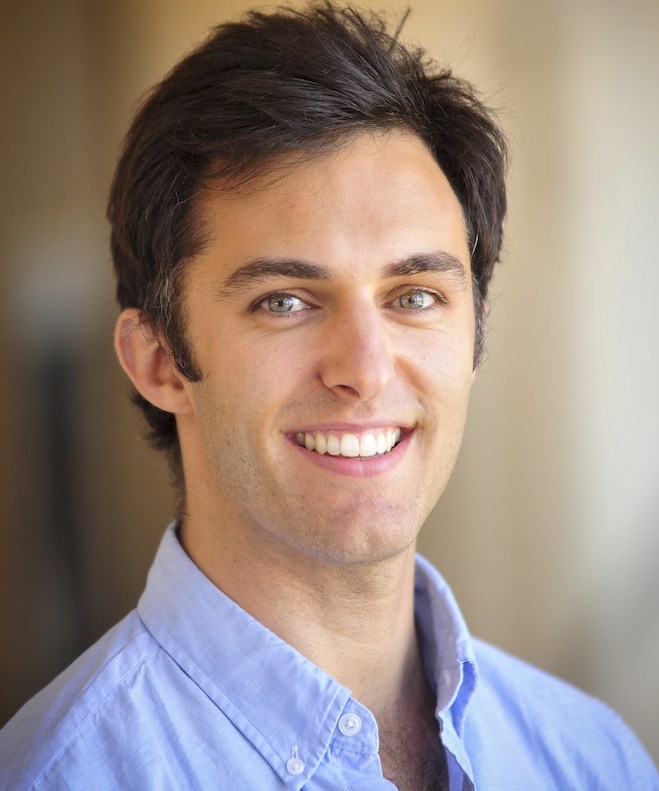
Yee Whye Teh is a Professor at the Department of Statistics, University of Oxford, and a research scientist at DeepMind. His work focuses on statistical machine learning, including probabilistic learning, Bayesian nonparametrics, deep learning, and Monte Carlo methods. He co-directs the ELLIS programme on Robust Machine Learning and has held roles such as Programme Co-chair for ICML 2017. Teh has delivered keynotes at UAI 2019, an IMS Medallion Lecture at JSM 2019, and the Breiman Lecture in 2017. His research emphasizes scalable inference algorithms, hierarchical models, and applications in genetics and natural language processing. Teh's educational background includes a PhD from the University of Toronto (2003) and a Master's from the same institution (2000). He has contributed to widely used software tools like the Sequence Memoizer and has been recognized for his work through prestigious lectureships. Research interests span Bayesian nonparametric models, MCMC methods, and their applications in genetics and data compression. His lab collaborates on projects like fragmentation-coagulation processes for genetic variation modeling and Mondrian forests for online learning. Teh advises students through Oxford's graduate programs, though he notes high demand for mentorship. His work often bridges theory and practice, addressing challenges in big data learning and small data problems.
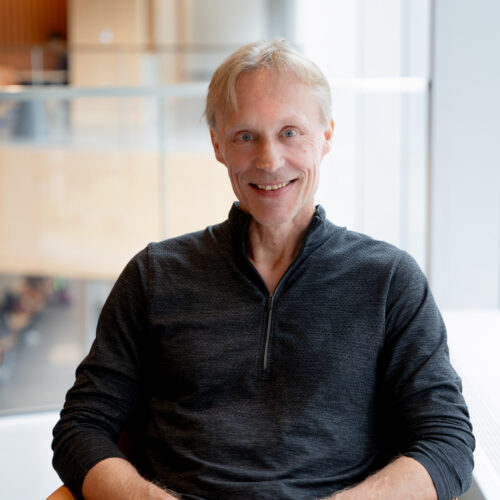
Furong Huang is an Associate Professor at the University of Maryland's Department of Computer Science, with affiliations at the Institute for Advanced Computer Studies, Center for Machine Learning, Maryland Robotics Center, and Applied Mathematics, Statistics, and Scientific Computation Program. Her research bridges trustworthy machine learning, sequential decision-making, and foundation models for robotics, emphasizing reliability, interpretability, and ethical standards. Research Interests: Trustworthy AI Generative AI Reinforcement Learning AI Security Algorithmic Fairness Foundation Models for Robotics Recent Publications span leading conferences (NeurIPS, ICML, ICLR, CVPR) and journals, focusing on: Robustness in Vision-Language Systems Trustworthy Generative AI Foundation Models for Sequential Decision-Making AI Security and Watermarking Scientific Awards MIT TR35 Innovator Under 35 (Asia Pacific 2022) Best Paper Award, AdvML Frontier Workshop, NeurIPS 2024 NSF NAIRR Pilot Awardee Microsoft Accelerate Foundation Models Research Award (2023) JP Morgan Faculty Research Awards (2019–2022) Advising and Grants : Her lab has graduated students to roles at OpenAI, Google, Meta, and Netflix. Research funded by DARPA, NSF, ONR, AFOSR, and industry partners like Microsoft, Adobe, and Capital One. Labs & Teams : Leads research groups focused on Trustworthy AI and Robotics at the University of Maryland, collaborating with the Maryland Robotics Center and Applied Mathematics Program.
Massachusetts Institute of TechnologyUnited States
Tommi Jaakkola is the Thomas Siebel Professor of Electrical Engineering and Computer Science and the Institute for Data, Systems, and Society at the Massachusetts Institute of Technology. He received his MSc in theoretical physics from Helsinki University of Technology in 1992 and his PhD from MIT in computational neuroscience in 1997. After completing a postdoctoral position in computational molecular biology as a DOE/Sloan fellow at UCSC, he joined the MIT EECS faculty in 1998. His research advances how machines can learn, predict or control, and do so at scale in an efficient, principled, and interpretable manner. His work in machine learning extends from foundational theory to modern applications, focusing especially on statistical inference and estimation tasks that lie at the heart of complex learning problems. He designs new methods, theory and algorithms to automate the use and generation of semi-structured data such as natural language text, images, molecules, or strategies. Jaakkola applies and develops algorithms to solve multi-faceted recommender, retrieval, or inferential tasks (particularly in biomedical contexts), design and optimize molecules or reactions for drug design, and model strategic, game theoretic interactions. His recent work heavily focuses on diffusion models, protein structure prediction, molecular design, and generative AI, with significant publications in top conferences including ICML, NeurIPS, and ICLR. His scientific contributions span multiple disciplines with significant impact in both theoretical machine learning and practical applications in computational biology and chemistry, including notable work on antibiotic discovery published in Cell. Current advisees: Julia Balla, Bowen Jing, Hannes Stärk, Peter Holderrieth, Chenyu Wang Recent graduates: Gabriele Corso (Boltz PBC), Ezra Erives (DE Shaw), Jason Yim (Xaira) Jaakkola maintains an active research program through MIT's Computer Science and Artificial Intelligence Laboratory (CSAIL) and the Institute for Data, Systems, and Society (IDSS), with his office located in the Stata Center (32-G470). His work bridges theoretical machine learning with practical applications, making significant contributions to both the academic field and potential real-world impact in healthcare and drug discovery.
Sicun Gao is an Associate Professor in the Computer Science and Engineering department at the University of California, San Diego. His research focuses on practical algorithms for NP-hard search and optimization problems in computational systems, emphasizing combinatorial perspectives in numerical and statistical contexts to achieve reliable autonomy. Research Interests: Automated reasoning, Hamilton-Jacobi reachability, safe reinforcement learning, control barrier functions, and optimization in cyber-physical systems. Teaching: Courses on AI search, optimization, and graduate research seminars. The 15 most recent publications highlight advancements in safe AI control, motion planning, and policy optimization, often integrating neural networks with formal verification. Awards include the IEEE Power & Energy Society Technical Committee Prize Paper Award and the IROS RoboCup Best Paper Award. He advises PhD students working on AI-driven control and robotics, with alumni placed at institutions like Seoul National University, Amazon, and Apple. Grants include NSF Career, Air Force Young Investigator, and DARPA Assured Autonomy funding. His lab develops tools like dReal for automated reasoning in nonlinear theories over the reals.
Trevor Campbell is an Associate Professor in the Department of Statistics at the University of British Columbia (UBC), Vancouver. He holds a Ph.D. in Machine Learning and Statistics from MIT and a B.A.Sc. in Aerospace Engineering from the University of Toronto. His research focuses on automated, scalable Bayesian inference algorithms, Bayesian nonparametrics, and streaming data analysis. Campbell is a core contributor to probabilistic programming tools like Pigeons.jl and has developed influential methods for coreset-based Bayesian inference. Education : Ph.D. in Machine Learning and Statistics (2016), MIT M.S. in Aeronautics and Astronautics (2013), MIT B.A.Sc. in Aerospace Engineering (2011), University of Toronto Research Interests : His work emphasizes scalable Bayesian computation, including variational inference, MCMC optimization, and coresets. He develops algorithms that balance statistical accuracy with computational efficiency, particularly for large-scale datasets. His recent work explores adaptive samplers (e.g., AutoStep, autoMALA) and theoretical guarantees for coreset methods. Applications span astrophysics, materials science, and network analysis. Awards & Grants : NSERC Discovery Grant (2025) Blackwell-Rosenbluth Award (2021) PIMS Early Career Award (2023) Google Perception Academic Funding (2020) Advising & Labs : He supervises a team of PhD and M.Sc. students at UBC, focusing on Bayesian methodology and computational tools. His lab collaborates with institutions like SFU and MIT on projects involving distributed sampling and probabilistic modeling. He co-organizes workshops on Bayesian computation and serves on editorial boards for Bayesian Analysis and TMLR.
Osman Yağan is a Research Professor in the Department of Electrical and Computer Engineering at Carnegie Mellon University (CMU), with affiliate faculty status in the School of Computer Science. He is also a core member of CyLab Security and Privacy Institute. Prior to joining CMU in 2013, he was a Postdoctoral Research Fellow at CyLab. He holds a Ph.D. in Electrical and Computer Engineering from the University of Maryland (2011) and a B.S. from Middle East Technical University (2007). His research focuses on modeling, analysis, and optimization of computing systems, leveraging applied probability, network science, data science, and machine learning. Key areas include multi-armed bandits, resilient machine learning, contagion processes in networks, and cybersecurity. Research Interests include Machine Learning, Data Science, Network Science, Cybersecurity, and Robustness in Cyber-Physical Systems. He has advised numerous students, including current PhD candidates Yurun Tian, Orkun İrsoy, and Ishank Juneja, as well as notable alumni such as Mansi Sood (now at MIT) and Jun Zhao (Assistant Professor at Nanyang Technological University). Key Awards include the CIT Dean's Early Career Fellowship, IBM Academic Award, and Best Paper Awards at ICC 2021, IPSN 2022, and ASONAM 2023. His work spans theoretical contributions (e.g., contagion models in multi-layer networks) and applied research (e.g., mitigating cascading failures in power systems). He leads or co-leads grants from ONR, NSF, and ARO, focusing on resilient machine learning, network robustness, and pandemic modeling.
J. Andrew Bagnell is a Professor at the Robotics Institute of Carnegie Mellon University (CMU). His research bridges planning, control theory, and computational learning, focusing on systems that can self-optimize under partial models. Key projects include the LAIRLab (Learning Applied to Intelligent Robotics) and initiatives in the ARM-S and BIRD MURI programs. Research domains: Machine Learning, Robotics, Control Theory, Optimization, Probabilistic Modeling Key applications: Mobile Robotics, Intelligent Transportation Systems, Multi-Robot Decision Making Recent work emphasizes imitation learning, trajectory optimization, and game-theoretic algorithms for decision-making. His publications highlight collaborations with students and researchers on topics like online learning, planning under uncertainty, and autonomous systems. Notable affiliations include advising Gokul Swamy and past students such as Wen Sun and Anirudh Vemula. Labs: LAIRLab, ARM-S, BIRD MURI team.
Daniel M. Roy is a Full Professor at the University of Toronto, with cross-appointments in the Department of Computer Science, Department of Statistical Sciences, and Department of Electrical and Computer Engineering. He serves as Research Director at the Vector Institute and holds the CIFAR Canada AI Chair. Research Focus: Foundational principles of prediction, inference, and decision-making under uncertainty across machine learning, statistics, mathematical logic, applied probability, and computer science. Scientific Contributions: Key work in learning theory, statistical network analysis, probabilistic programming, and information-theoretic frameworks for generalization. Awards: ICML 2024 Best Paper Award for "Information Complexity of Stochastic Convex Optimization" and promotion to Full Professor in 2024. Student Advising: Actively mentors Ph.D. candidates and postdoctoral researchers with strong quantitative backgrounds, particularly at the intersection of machine learning, statistics, and computer science. Email: daniel.roy@utoronto.ca
Peter Henderson is an Assistant Professor at Princeton University with joint appointments in the Department of Computer Science and the School of Public and International Affairs. He is affiliated with the Center for Information Technology Policy (CITP), Princeton Language and Intelligence Initiative (PLI), Center for Statistics and Machine Learning (CSML), and Program in Law & Public Policy (PLAW). J.D./Ph.D., Stanford University, 2023 M.Sc., McGill University and Montréal Institute for Learning Algorithms Henderson's research focuses on the critical intersection of artificial intelligence and law, with particular emphasis on AI safety, methods to improve reasoning in foundation models, interdisciplinary approaches to law and AI, and AI governance. His work spans language-grounded reinforcement learning, alignment techniques, strategic decision-making in legal contexts, and public interest artificial intelligence. He investigates how legal frameworks can guide the development of AI systems that benefit society while addressing potential harms. Henderson's recent publications reveal a strong trajectory toward addressing the safety, governance, and legal implications of foundation models. His work combines rigorous technical AI research with deep legal analysis, particularly examining how intellectual property law interacts with AI development, regulatory pathways that balance innovation with harm prevention, and the role of law in shaping responsible AI deployment. A significant thread throughout his research is the development of better evaluation methodologies for AI systems, especially in critical domains like law. SEAS Excellence in Teaching Award (2025) Henderson leads the Princeton Law+Language, AI, & Society (POLARIS) Lab, where he advises students and researchers working at the intersection of AI and legal studies. His research has been supported through collaborations with government agencies, including work with the IRS on audit selection algorithms. His findings have informed practical applications in government efficiency and equity, as well as legal system improvements. Henderson runs the POLARIS Lab at Princeton, which focuses on developing AI systems that work for the public interest, particularly in legal contexts. His team develops sequential decision-making systems for government efficiency, foundation models capable of reasoning about law, and improved safety evaluation frameworks for AI systems. The lab maintains strong connections with legal practitioners and policymakers to ensure research has real-world impact.
Barbara Caputo is a Full Professor at Politecnico di Torino, leading the VANDAL Laboratory and directing the AI@PoliTo Interdepartmental Lab. She holds a double affiliation with the Italian Institute of Technology (IIT) and has held roles at Idiap-EPFL and Sapienza University. Her research focuses on AI, computer vision, domain adaptation, and federated learning. She contributes to national AI policy, including the Italian Strategy on AI and the National PhD on AI for Industry 4.0. She is an ERC Laureate and ELLIS Fellow, co-founding ELLIS society. Her work spans visual place recognition, action recognition, and cross-domain learning. Education: PhD in Computer Science from KTH Royal Institute of Technology (2005). Major roles include Rector’s Advisor on AI at PoliTo, Board Member of ELLIS, and coordinator of the AI & Industry 4.0 vertical in the National PhD program. Awards include ERC Laureate (2017), ELLIS Fellow (2019), and Inspiring Fifty Italy (2018). Her research emphasizes federated learning, domain adaptation, and AI ethics. Recent articles explore domain generalization, resource-efficient federated models, and AI-environment interactions. She collaborates with institutions like MUR, CNR, and the European Commission on AI policy and tech initiatives.
Robert Jenssen is a Professor in the Machine Learning Research Group at UiT The Arctic University of Norway and serves as the Director of Visual Intelligence , an 8-year Research Council of Norway-funded SFI center. His research focuses on solving societal challenges in healthcare, marine mapping, energy, and Earth observation through collaborations with industry and public stakeholders. Director, Visual Intelligence (SFI) Center Professor, UiT Adjunct Professor, Pioneer Centre for AI (University of Copenhagen) and Norwegian Computing Center His methodological expertise spans neural networks, information-theoretic learning, self-learning, and explainable AI (XAI). Recent work emphasizes multimodal learning, uncertainty estimation, and medical image analysis. Scientific awards include: Best Paper, Pattern Recognition Letters (2024) Dissertation Award, Norwegian AI Society (2023) Best Paper, Color and Visual Computing Symposium (2022) IEEE GRS Society Letters Prize (2013) Prize for Young Researchers, University of Tromsø (2007) He contributes to international leadership as a member of the Scientific Advisory Board (SAB) for the Max Planck Institute for Intelligent Systems, France's SequoIA AI Excellence Cluster, and Denmark's DIREC center.
Michael Jong Kim is an Associate Professor at the Sauder School of Business, University of British Columbia, specializing in the Division of Operations and Logistics. His research focuses on dynamic programming, statistical learning, robust optimization, and the exploration vs exploitation trade-offs in sequential decision-making processes. BASc, M.Math, and PhD from the University of Toronto His work spans topics in stochastic optimization, supply chain dynamics, and information dissemination in uncertain environments. Publications highlight contributions to Bayesian inventory control, semi-Markovian system control, and variance regularization in optimization models. Dr. Kim teaches advanced business analytics courses, including Descriptive and Predictive Business Analytics and Advanced Predictive Business Analytics (MBAN) during the 2024-2025 academic year. He can be reached at mike.kim@sauder.ubc.ca or by phone at +1 604.822.8682.
Sam Staton is a Professor of Computer Science at the University of Oxford and Senior Research Fellow at Jesus College. He holds a Royal Society University Research Fellowship and leads the ERC-funded BLaSt project on probabilistic programming. His research focuses on programming language theory, particularly probabilistic and quantum programming, and category theory. Staton earned his PhD from the University of Cambridge in 2007, with prior roles as a lecturer and researcher at Cambridge, Paris, and Nijmegen. Research Interests: His work explores foundational aspects of programming languages, including semantics, algebraic effects, and applications to quantum computing and statistical modeling. Recent grants include the ARIA Safeguarded AI initiative and an AFOSR award. Education: PhD in Computer Science (2007), BA from Cambridge (2002). Students & Collaborators: Supervises multiple PhD students and postdocs, including those funded through his grants. Notable advisees include Swaraj Dash (now at Heriot-Watt) and Mathieu Huot (postdoc at MIT). Awards & Grants: Royal Society Fellowship, ERC Consolidator Grant (BLaSt), EATCS Best Paper Award, and Facebook Research Award. Labs & Teams: Leads the BLaSt project and collaborates on quantum programming via algebraic effects. Engaged in editorial roles for ACM Transactions on Quantum Computing and program committees for major conferences like POPL and LICS.