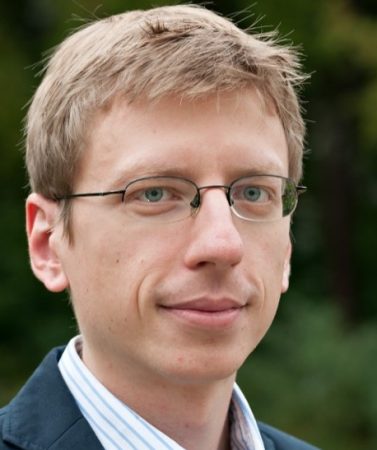
Yuxin Chen is an Assistant Professor in the Department of Computer Science and a faculty member of the Committee on Computational and Applied Mathematics (CCAM) at the University of Chicago. His research focuses on interactive learning systems, machine learning, and machine teaching with applications in optimization, reinforcement learning, and multi-fidelity modeling. PhD in Computer Science from ETH Zurich (2017) MS in Computer Science from the University of Kansas (2011) His work spans Bayesian optimization, active learning, and policy improvement algorithms, addressing challenges in data-efficient decision-making and robustness. Recent publications highlight advancements in constrained optimization, neuromorphic computing, and sustainability applications. Scientific awards include the Best Paper Award at ICML Workshop on Constructive Machine Learning (CML), 2015 and the MSDE Recent HOT Article, 2025 . He actively seeks PhD students for his research group.
John Tsitsiklis is the Clarence J. Lebel Professor of Electrical Engineering at MIT's Department of Electrical Engineering and Computer Science (EECS), within the School of Engineering. He has held significant administrative roles, including director of the Institute for Data, Systems, and Society (IDSS) and co-director of the Operations Research Center. Born in Thessaloniki, Greece, he earned his BS in mathematics and electrical engineering, followed by MS and PhD in electrical engineering from MIT (1980-1984). His research focuses on control theory, optimization, network dynamics, and queueing systems. He is a National Academy of Engineering member and holds an honorary doctorate from Université catholique de Louvain. Research interests span distributed systems, stochastic networks, and algorithmic approaches to complex systems. His work emphasizes theoretical foundations and practical applications in scheduling, resource allocation, and multi-agent coordination. Notable contributions include studies on max-weight scheduling policies, consensus algorithms, and robust control strategies. He has also contributed to academic governance, serving in Greek institutions like the National Council on Research and Technology and Harokopio University. His scientific awards include the prestigious Clarence J. Lebel Professorship and honorary doctorate. His research outputs address challenges in communication networks, distributed computing, and optimization under uncertainty. Tsitsiklis is affiliated with MIT's Laboratory for Information and Decision Systems (LIDS) and has authored foundational texts in parallel and distributed computation.
Michal Szkup is an Associate Professor at the Vancouver School of Economics, University of British Columbia, specializing in international macroeconomics, financial economics, and information economics. His work explores coordination failures and financial frictions in economic dynamics. Education: PhD in Economics, New York University (2014) BSc in Economics, London School of Economics and Political Science Research Interests: International Macroeconomics Financial Frictions Coordination Failures Global Games Information Economics Publication Trends: His recent work examines financial frictions in international trade, coordination game theory, debt crises, and strategic uncertainty, with applications to policy analysis and economic modeling.
Sheena Iyengar is the S.T. Lee Professor of Business and Chair of the Management Division at Columbia Business School, where she serves as Academic Director of the Innovation Hub. Recognized globally as a leading expert on choice and innovation, her research has transformed understanding of decision-making processes across multiple domains. Dr. Iyengar earned her dual degree from the University of Pennsylvania (BA in Psychology and BS in Economics from Wharton, 1992) and PhD from Stanford University (1997), joining Columbia Business School in 1998. Her groundbreaking "Jam Study" demonstrated that excessive choice options can reduce consumer purchasing behavior, leading to the widespread adoption of the 80/20 rule in business strategy. Her research spans decision-making, innovation, behavioral economics, and authenticity, with recent work examining AI art perception, political debate misperceptions, social media behavior, and cross-cultural decision-making. She has developed the Think Bigger method, a six-step innovation framework applying neuro- and cognitive science principles that differs from traditional approaches like Design Thinking by focusing on how creative ideas form in the mind. Dr. Iyengar's publications reveal consistent themes around choice architecture's impact on human behavior. Her work shows how cultural contexts shape decision-making preferences, how simplicity-seeking affects complex choices, and how authenticity influences well-being across diverse settings from social media to professional networking. Thinkers50 2023 Innovation Award recipient Ranked among Top 10 Management Thinkers by Thinkers50 (2023) Author of award-winning books "The Art of Choosing" (2010 FT Business Book of the Year) and "Think Bigger" (2023 Axiom Gold Medal) Recipient of Presidential Early Career Award for Scientists and Engineers (2002) 50 Outstanding Asian Americans in Business (2022) Outstanding Faculty Award from CBS EMBA Class of 2021 As a blind woman, Dr. Iyengar has leveraged her unique perspective to develop innovative approaches to problem-solving. She advises hundreds of companies across business, technology, consumer retail, media, and STEM fields, helping transform decision-making criteria and elevate stakeholder experiences. Her TED Talks have collectively received over 7 million views, and she regularly appears in major media outlets including The Wall Street Journal, Financial Times, The New Yorker, and NPR.
Claire Cardie is a Professor in the Departments of Computer Science and Information Science at Cornell University, and the inaugural Associate Dean for Education in the Ann S. Bowers College of Computing and Information Science. She holds the John C. Ford Professorship of Engineering. Her research focuses on natural language processing (NLP), including information extraction, opinion analysis, and machine learning methods. Cardie has pioneered Cornell’s Information Science programs and served as Department Chair. She is a Fellow of ACL (2015), ACM (2019), and AAAS (2021), reflecting her seminal contributions to NLP. Her teaching includes courses like CS4740/5740 (Intro to NLP) and CS6740/INFO6300 (Advanced Language Technologies). She has led major conference roles (e.g., ACL 2018 General Chair) and contributed to datasets like Fashionpedia and GRIT. Education: B.S. in Computer Science (Yale), M.S. and Ph.D. in Computer Science (University of Massachusetts) Research Interests: Cardie’s group develops NLP systems and machine learning techniques for large-scale text analysis, balancing theoretical advances with real-world applications. Current work emphasizes reasoning, robustness in retrieval-augmented generation, and ethical AI evaluation. Publications: Over 100+ articles since 2016, with recent focus on multi-hop reasoning, adversarial attacks on NLP systems, and AI ethics. Notable contributions include the FAIRY dataset for commonsense reasoning and GRIT for event extraction. Awards: AAAI Fellow (2021), ACL Fellow (2015), ACM Fellow (2019) Advising & Service: Mentor for numerous students and researchers. Currently oversees educational initiatives as Associate Dean, emphasizing interdisciplinary computing education and student success.
Xu Yunbei is an Assistant Professor in the Department of Industrial Systems Engineering and Management at the National University of Singapore. He holds a PhD in Decision, Risk and Operations from Columbia University, a postdoctoral fellowship at MIT's Laboratory for Information and Decision Systems (LIDS), and a BSc in Pure Mathematics from Peking University. Education: Postdoc (MIT), PhD (Columbia), BSc (Peking University) Research Interests: Interdisciplinary work bridging Artificial Intelligence, Decision Science, and Statistical Physics. His research focuses on sequential learning algorithms, optimization theory, and robust decision-making frameworks. Recent work explores problem-dependent generalization bounds in machine learning, bandit learnability, and accelerated primal-dual methods for computational efficiency. His publications at top conferences (NeurIPS, ICML) and journals (Journal of the ACM, Mathematics of Operations Research) demonstrate expertise in algorithmic design, statistical inference, and theoretical foundations of AI. ICML Outstanding Paper Award (2023) INFORMS George Nicholson Student Paper Competition First Place Applied Probability Society Best Student Paper Award Finalist Xu actively mentors PhD students and postdocs, including Shaojie Li, Yujie Liu, Yuzhe Yuan, Zhiyi Li, and Chung Nguyen. He teaches courses in stochastic modeling and decision analysis at NUS.
Daphney-Stavroula Zois is an Associate Professor in the Department of Electrical & Computer Engineering at the University at Albany, SUNY, with affiliate appointments in Computer Science. She directs the IMAgINE Lab focusing on decision-making in intelligent environments and holds a Ph.D. in Electrical Engineering from the University of Southern California (2014). Her research integrates machine learning with statistical signal processing to address decision-making under uncertainty. Key applications include dynamic feature selection, cyberbullying detection, brain-computer interfaces, and intelligent transportation systems. Zois has secured over $2 million in research funding including an NSF CAREER Award. Recent publications demonstrate advancement in sequential decision-making algorithms, with applications spanning social systems modeling, real-time classification, and adaptive learning. Her work shows consistent innovation in cost-sensitive machine learning methodologies. Honors include Google AI for Social Good Impact Scholars Award, President's Award for Exemplary Public Engagement, and NeurIPS Top Reviewer recognition. She currently advises 4 PhD students and has graduated multiple doctoral candidates now at Microsoft, Amazon, and GE. Zois leads the $1.3M NSF COMPASS project developing technology to connect service seekers with providers. Her lab focuses on human-centered AI applications addressing social challenges including homelessness, cyberbullying, and healthcare access.
William F. Rosenberger is a Distinguished University Professor in the Department of Statistics at George Mason University's Volgenau School of Engineering. He holds a PhD in Mathematical Statistics from George Washington University (1992). His expertise centers on statistical methodology for clinical trials, particularly response-adaptive randomization, and he has authored two influential books in the field. Rosenberger has been recognized with prestigious awards, including ASA and IMS Fellowships, and a Fulbright Scholarship (2014). He served as Chairman of GMU's Department of Statistics for 13 years, overseeing significant growth in academic programs. His research spans biostatistics, clinical trial design, and health disparities, with over 100 refereed publications. Education: PhD in Mathematical Statistics (George Washington University, 1992). Research interests emphasize methodological innovations in clinical trial design, including randomization techniques, sequential analysis, and response-adaptive approaches. Recent work explores optimal allocation proportions, subgroup analysis, and biomarker threshold design. His studies also address sociodemographic disparities in health outcomes, leveraging statistical tools to investigate brain aging and cerebrovascular disease. Publications reflect a focus on advancing clinical trial rigor through adaptive designs, with implications for drug development and medical decision-making. His articles often critique and refine existing methodologies to enhance trial efficiency and validity. Rosenberger has advised 20 doctoral students and co-led major grants, including NIH-funded projects on myofascial pain, imaging biomarkers, and brain aging. He currently serves as North American Editor of Biometrics (2021–2024).
Dr. Xia Jin is a Professor and Graduate Program Director in the Department of Civil and Environmental Engineering at Florida International University (FIU). She specializes in transportation planning, with over 15 years of academic and professional experience. Her research focuses on human and freight mobility behavior, travel demand forecasting, and emerging technologies like autonomous and connected vehicles. Dr. Jin leads the Travel Behavior and System Modeling Lab at FIU, emphasizing data-driven approaches to urban mobility challenges. She holds a Ph.D. in Civil Engineering from the University of Wisconsin-Milwaukee and is a certified planner with the American Institute of Certified Planners (AICP). Her work bridges transportation engineering and urban planning, addressing topics such as telecommuting impacts, e-commerce effects on travel, and freight safety analysis. She serves on committees for the Transportation Research Board (TRB), including the Travel Survey Methods and Travel Behavior and Values committees. Dr. Jin’s research themes include micromobility adoption, pandemic-induced travel behavior changes, and the integration of machine learning in transportation modeling. Her recent studies explore the nexus between urban planning, boredom, and mobility, as well as the socio-economic implications of autonomous vehicles. Despite her extensive publication record (over 60 journal articles and 70+ conference papers), she has no listed awards but actively contributes to transportation policy and decision-making through applied research. Her lab and advisory roles highlight a commitment to advancing sustainable urban mobility solutions. Current and future work includes scenario analyses for autonomous vehicles in suburban areas and enhancing travel time reliability predictions using advanced algorithms.
Dr. Tanya Singh is an Assistant Professor of Information Systems at Rensselaer Polytechnic Institute's Lally School of Management. Her research examines ethical decision-making in computational contexts and consumer decision processes. Research interests focus on: Moral implications of programming and autonomous systems Algorithmic bias in decision frameworks Behavioral patterns in consumer choice deferral Awards include the Howard R Webster Award for Academic Excellence and Best Research Presentation recognition.
Radovan Vadovič is an Associate Professor and Undergraduate Supervisor in the Department of Economics at Carleton University. He serves as Director of the Centre for Experimental and Behavioral Research (CELBER). His academic background includes a B.A. from Lewis & Clark College, and an M.A. and Ph.D. from Arizona. Vadovič specializes in behavioral and experimental economics, with expertise in experimental methods, behavioral theory, and economic psychology. His research explores topics such as honesty, equilibrium dynamics, information sharing, trust mechanisms, and institutional design through controlled experiments. His notable publications investigate themes like honesty in economic contexts, equilibrium attainment, and the legitimacy of control mechanisms. Vadovič directs CELBER, a research center focused on experimental and behavioral research. He has contributed significantly to understanding fairness in economic games, labor market policies, and decision-making under institutional frameworks. His work combines theoretical rigor with empirical validation, addressing real-world applications of economic behavior through experimental methodologies. Vadovič’s research has been published in top-tier journals such as Games & Economic Behavior and Experimental Economics , reflecting his commitment to advancing behavioral and experimental economic theory.
Justin Goodson, Ph.D., is the Father Davis Professor in the Department of Operations and IT Management at Saint Louis University's Richard A. Chaifetz School of Business. He also serves as Program Director for the M.S. in Supply Chain Management program. His research focuses on developing methods for sequential decision-making under uncertainty, particularly in transportation and logistics contexts. Dr. Goodson holds a Ph.D. in Business Analytics (University of Iowa), an MBA, and three degrees from the University of Missouri (M.S. and B.S. in Industrial and Systems Engineering, and an MBA). His research interests include dynamic programming, stochastic optimization, and vehicle routing problems. Notable publications address electric vehicle routing, pandemic resource allocation, and gamification in logistics. He has received numerous awards, including the Transportation Science Paper of the Year (2023), Emerson Excellence in Teaching Award (2022), and multiple Chaifetz School Research Awards. Dr. Goodson is actively involved in professional organizations such as INFORMS Transportation Science and Logistics Society and INFORMS Computing Society. His work bridges theoretical advancements with practical applications in transportation systems and business analytics.
Mike Shor is an Associate Professor of Economics at the University of Connecticut's College of Liberal Arts and Sciences. His expertise spans experimental economics, game theory, industrial organization, and behavioral decision-making. Shor holds a Ph.D. from Rutgers University and a B.A. from the University of Virginia. He has received multiple teaching and research awards, including the Grillo Award for Teaching Excellence (2022, 2015) and Grillo Award for Research Excellence (2012). His research focuses on choice architecture optimization, decision-making under complexity, and antitrust economics. Notable contributions include studies on reducing choice overload through sequential presentation and analyzing age-related decision strategies. Shor has secured grants such as the NIH-funded project on 'Decision-making with too Many Options' (2008–2011). Teaching responsibilities include Game Theory (undergraduate), Experimental Economics (graduate seminar), and Microeconomic Theory II (PhD core). His work bridges theoretical frameworks with practical applications in marketing, operations, and policy.
Tuan Dam is an Assistant Professor at the School of Information and Communication Technology (SoICT), Hanoi University of Science and Technology (HUST), focusing on the theory of Reinforcement Learning. Previously, he held a postdoctoral position at INRIA Lille, France, and completed his Ph.D. in Robotics at TU Darmstadt, Germany. His research emphasizes developing principled methods for robots in unstructured environments, with notable contributions to Monte Carlo Tree Search (MCTS) and POMDP applications. Education: Ph.D. in Robotics, TU Darmstadt (Germany), 2024 Master's in Electronics and Computer Engineering, Hanyang University (South Korea) Bachelor's in Computer Science, Vietnam Research Interests: Reinforcement Learning under uncertainty, Monte Carlo Tree Search (MCTS), POMDPs, robotics applications, and theoretical foundations of sequential decision-making. His recent work includes integrating POMDP frameworks into MCTS for robot planning tasks like Disentangling and Mikado Problems. Advising & Supervision: Co-supervised MS theses on topics like memory representations in partially observable RL and Laplacian representations for continuous MCTS Guided multiple integrated projects on MCTS benchmarking and policy search techniques Labs & Collaborations: Former affiliations include ESOS Lab (Korea), HMI Lab (Vietnam), DFKI Berlin (Germany), and Auburn University (USA). Current work focuses on advancing RL theory and its industrial applications.
Martin Dufwenberg is the Karl & Stevie Eller Professor of Economics and Director of the Institute for Behavioral Economics at the University of Arizona's Eller College of Management. He holds a PhD in Economics from Uppsala University (1995) and an honorary doctorate from the University of Gothenburg. His research focuses on behavioral economics, game theory, and experimental methods, particularly incorporating emotions and belief-dependent motivations into economic analysis through psychological game theory. He has held academic positions at Uppsala University, Stockholm University, and Bocconi University before joining the Eller College in 2003. He became Department Head of the Department of Economics at the University of Arizona in 2020. His research explores topics such as moral commitments, tax evasion, social norms, and experimental validation of theoretical models. Notable contributions include work on sequential reciprocity, guilt aversion, and the design of experiments to study human behavior in economic contexts. He has published extensively in top journals like American Economic Review , Econometrica , and Games and Economic Behavior . Professor Dufwenberg’s awards include the 2003 Royal Economic Society Prize for his work on deductive reasoning in extensive games. He serves on editorial boards for journals such as Games & Economic Behavior and Experimental Economics . His current projects include studies on corruption, pandemic-related decision-making, and peer evaluation tournaments. In addition to his research, he teaches courses on behavioral game theory and experimental economics. He collaborates with institutions like the Organizational Behavior Laboratory and the Economic Science Laboratory, advancing interdisciplinary approaches to understanding economic behavior.