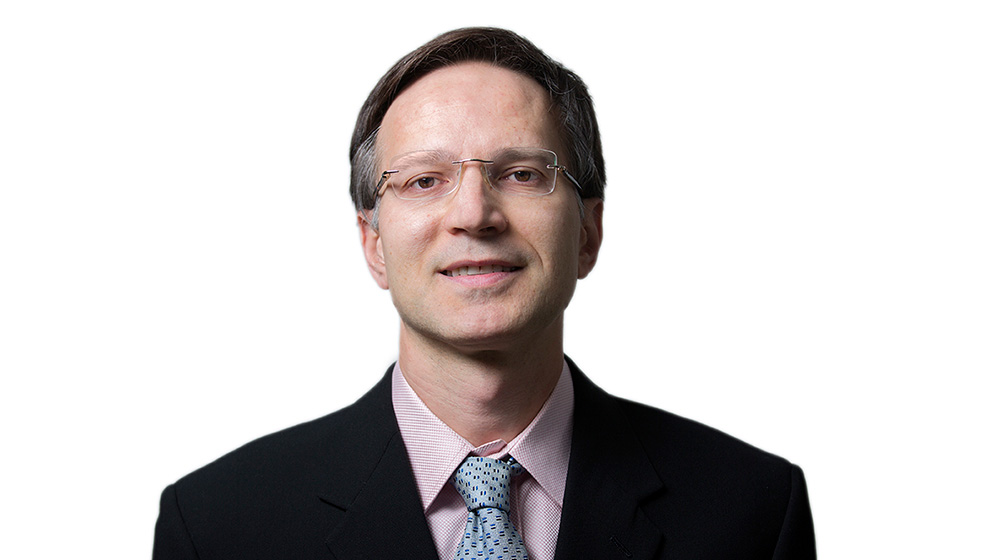
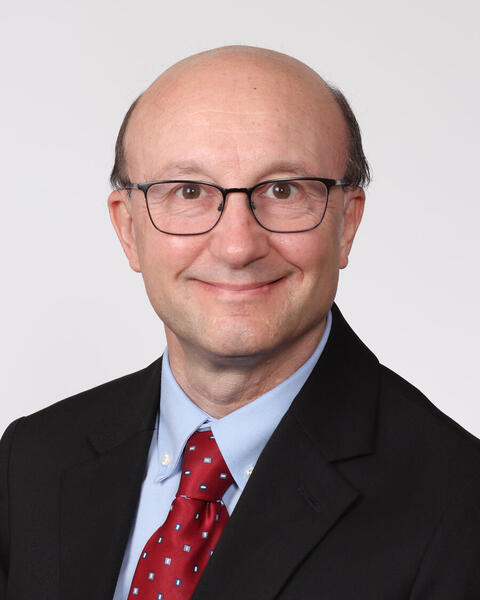
Neil Brigden is an Assistant Professor in the Bissett School of Business at Mount Royal University, specializing in consumer decision-making and evidence-based marketing. He holds a PhD from the University of Alberta, a BCom, and a BA from the University of Calgary. Education: PhD, University of Alberta Bachelor of Commerce, University of Calgary Bachelor of Arts, University of Calgary Research Focus: Dr. Brigden examines repeated consumer decisions, decision-making ruts, and how inaction impacts outcomes. Key areas include consumer inaction, financial decision-making, AI applications, and search behaviors. His work has been published in top journals like the Journal of Marketing Research and featured in The Globe and Mail . Grants & Awards: SSHRC Insight Grant (2021–2024) Marketing Science Institute Research Grant (2016) Alumni Teaching Scholar (2014–2015) He also received recognition for tall-bike riding, showcasing his eclectic interests. Teaching & Expertise: Teaches courses in marketing analytics, evidence-based decision-making, and consumer behavior. Previously served as an Adjunct Professor at the University of Alberta in experimental design. Labs & Impact: His research bridges academic and practical domains, addressing real-world issues like algorithmic transparency and retail strategy. Ongoing work explores ethical AI and consumer trust in automated systems.
Wentao Li is a Lecturer in Statistics at the University of Manchester (2021–present). Previously, he held positions as Assistant Professor at the University of Hong Kong (2019–2021), Lecturer at Newcastle University (2017–2018), and Senior Research Associate at Lancaster University (2013–2017). He earned a PhD in Statistics from Rutgers University (2013), an M.S. from Colorado State University (2008), and a B.S. from the University of Science and Technology of China (2006). His research focuses on Bayesian asymptotic theory, computational methods, Monte Carlo techniques, and simulation-based inference, with applications to financial time series and state-space models. Recent work emphasizes developing algorithms like approximate Bayesian computation (ABC) and sequential Monte Carlo for intractable likelihood models. He supervises a 2025 PhD studentship on Bayesian computation. Key contributions include studies on ABC convergence, asymptotic efficiency, and scalable methods for big data. His work bridges theoretical foundations and practical applications in econometrics, population genetics, and other fields.
Ambuj Tewari is a Professor in the Department of Statistics and holds a courtesy appointment in the Department of Electrical Engineering and Computer Science at the University of Michigan, Ann Arbor. His research focuses on theoretical foundations of machine learning, reinforcement learning, and optimization, with applications in chemistry, psychiatry, and healthcare. He has received prestigious awards including the IISA Early Career Award (2023), Sloan Research Fellowship (2017), and NSF CAREER Award (2015). Education: PhD in Computer Science (2007) from UC Berkeley, M.A. in Statistics (2005), and B.Tech. in Computer Science from IIT Kanpur (2002). Prior roles include postdoctoral fellowships at UT Austin and research positions at TTIC. Research interests emphasize rigorous analysis of AI/ML models, including reinforcement learning algorithms, high-dimensional statistics, and applications in chemistry (e.g., reaction prediction) and mental health (precision medicine interventions). Notable contributions include work on contextual bandits, conformal prediction, and federated learning in healthcare. His 150+ publications span top venues like NeurIPS, ICML, COLT, and journals such as Journal of Machine Learning Research . Current projects include AI-driven drug discovery, privacy-aware mHealth systems, and operator learning for PDEs. Key awards: Outstanding Paper Award (ALT 2025), First Place in DREAM Challenge (2024), IMS Fellowship (2022), Adobe/Facebook Research Awards (2020–2021). Teaching and service include leadership in the Michigan Institute for Data Science (MIDAS) and editorial roles at Journal of Machine Learning Research . Active in promoting AI ethics and privacy-by-design principles in healthcare technologies.
Dr. Cheng Cheng is a Senior Research Officer at the Australian National University's School of Engineering. He holds a Bachelor of Engineering (Honours) and PhD from ANU. His research focuses on renewable energy integration, decarbonization pathways, energy system modeling, and GIS analysis. He specializes in optimizing off-river pumped hydro energy storage systems. Cheng leads multiple renewable energy projects funded by government and industry grants, and has developed methodologies for energy demand forecasting and least-cost optimization. His work bridges theoretical energy modeling with practical implementation through collaborative outreach activities. Education: B.Eng(Hons) & PhD (Australian National University) Research interests emphasize sustainable energy transitions, with particular attention to geospatial analysis for energy infrastructure planning. His recent projects include developing frameworks for integrating renewable generation with storage solutions. Over 150 publications span machine learning applications in energy systems, astrophysics, and bioinformatics. Awards include academic fellowships supporting his interdisciplinary work. Cheng collaborates with industry partners to translate research into policy and technology. He directs the ANU's Renewable Energy Integration Lab (RE100), advancing grid stability solutions through innovative storage technologies. His work has been recognized in special issues of journals focusing on robust machine learning applications.
Professor Valentin Zelenyuk is a Professor at the University of Queensland's School of Economics and holds an ARC Future Fellowship. He is affiliated with the Centre for Efficiency and Productivity Analysis. His research focuses on applied economics, econometrics, productivity analysis, and health economics. He leads major projects like 'Improving Productivity: Theory and Application to Australian Hospitals' (2017–2025) and 'Improving Likelihood Estimators: Theory and Applications to Analyzing Productivity' (2013–2018). Education: Masters (Coursework) and PhD from Oregon State University. Research interests include applied health economics, econometric modeling, and efficiency measurement. He has published extensively on topics such as data envelopment analysis (DEA), stochastic frontiers, and productivity indices. His work explores methodologies for assessing hospital performance, bank efficiency, and economic productivity, with a focus on statistical inference and aggregation techniques. Supervised multiple PhD students on efficiency analysis and productivity dynamics. Active in policy-relevant research, such as funding reforms in healthcare systems.
Dr George Stamatescu is a Research Fellow at the School of Economics and Public Policy, University of Adelaide. His research focuses on operations research, sequential decision making, and complex systems analysis. He is currently working on workforce planning for large-scale projects. Dr Stamatescu has experience in mathematical techniques for analytical system studies and has contributed to multi-camera tracking systems and neural network optimization research. Education details are not explicitly listed, but his professional roles include tutoring in Mathematics and Control Systems. He has supervised a Master's thesis titled 'Analysis of New Methods for Inference in Markov Decision Processes' (2021-2024). No scientific awards are mentioned in the provided texts. His work intersects with optimization theory and practical applications in health systems and project management. Dr Stamatescu's publications span operations research methodologies, machine learning, and surveillance technologies. His recent focus on workforce planning reflects his expertise in applying theoretical models to real-world logistical challenges.
Guanfeng Liu is the Vice Dean at the NNU-MQ Joint Institute, Macquarie University, within the Faculty of Science and Engineering. His research focuses on Recommender Systems, Privacy-Preserving Technologies, Graph Neural Networks, and Data Analytics. He leads projects like the 'Intelligent Health Data Analytics Platform' and 'Data-intensive Scheduling Optimisation in Database Systems.' His work emphasizes ethical AI, with contributions to trust prediction, spatio-temporal data analysis, and privacy-aware algorithms. In 2023, he won the Faculty of Science and Engineering Award for Inter-School Collaboration. Liu has published extensively in top journals like IEEE Transactions and ACM Conferences, with over 200 publications and a h-index of 34. Key projects include scalable document intelligence platforms and confidentiality preservation in graph learning. His research bridges theoretical advancements with practical applications in smart cities and healthcare, leveraging collaborative filtering and contrastive learning techniques.
Mitchell O’Sullivan is a PhD student at Queensland University of Technology (QUT), affiliated with the School of Mathematical Sciences. His research focuses on novel sequential Monte Carlo methods for approximate Bayesian computation (ABC) and dimensionality reduction techniques. Prior to this, he worked as an analyst modeling payments data to detect financial crime before returning to QUT in 2019 to complete his honours in Mathematics. Education: Bachelor of Mathematics (Honours) – Queensland University of Technology (2019) Research interests include Bayesian statistics, likelihood-free inference, machine learning, and high-performance computing. He is particularly enthusiastic about advancing computational methods for complex implicit models and leveraging modern computer hardware. Advising and Grants: No advising or grants listed. Labs/Teams: Affiliated with the QUT Centre for Data Science.
Dr. Matt Sutton is a Lecturer in Statistical Inference for Complex Models at the School of Mathematical Sciences. He earned his PhD in 2019, focusing on developing statistical methods for high-dimensional data in clinical health and biological contexts. Previously, he worked as a postdoc at Lancaster University under the Bayes4Health grant. His research emphasizes Monte Carlo methods, Bayesian methodology, and high-dimensional statistics, with a current focus on continuous-time Monte Carlo techniques to accelerate Bayesian inference. Sutton actively contributes to the Models and Algorithms research program at the Centre for Data Science. His research interests include computational statistics, specifically advancements in PDMP samplers, control variates, and scalable Bayesian methods. Notable work spans applications in genomics, geophysics, and healthcare data analysis. Sutton’s methodologies aim to enhance computational efficiency in complex statistical inference tasks. His articles reflect a trend toward optimizing sampling algorithms and addressing challenges in high-dimensional Bayesian problems. Key areas include PDMP-based sampling, debiasing techniques, and federated learning applications. Sutton has not yet reported formal scientific awards or listed advisees in the provided text. His involvement in collaborative initiatives like the Centre for Data Science underscores his commitment to interdisciplinary research.
Erman Ayday is an Associate Professor at the Department of Computer and Data Sciences within the Case School of Engineering at Case Western Reserve University. His research focuses on privacy-enhancing technologies, data security, and applied cryptography, with a particular emphasis on genomic privacy, cybersecurity in smart grids, and trust management in ad-hoc networks. He holds a PhD, MS, and BS in Electrical and Computer Engineering from Georgia Institute of Technology (2011) and Middle East Technical University (2005). Education: PhD in Electrical and Computer Engineering, Georgia Institute of Technology (2011) MS in Electrical and Computer Engineering, Georgia Institute of Technology (2007) BS in Electrical and Electronics Engineering, Middle East Technical University (2005) Research Interests: Dr. Ayday’s work addresses privacy challenges in genomic data sharing, secure collaborative learning, and trust management in wireless networks. He explores cryptographic solutions for genomic data protection, inference attack mitigation, and privacy-preserving frameworks for location-based services. His contributions span publications in top-tier journals and conferences, including IEEE Transactions on Dependable and Secure Computing and Bioinformatics. Key Research Trends: His articles highlight advancements in differential privacy for genomic data, secure watermarking techniques, and re-identification attack mitigation. Recent work emphasizes the intersection of machine learning, cryptography, and ethical genomic data use. Grants & Advising: While specific grants are not listed, his publications indicate sustained engagement with funding bodies in cybersecurity and genomics. He advises on projects related to privacy-preserving technologies and has collaborated with institutions like ETH Zurich and IBM Research. Labs & Teams: He leads research initiatives at the Case School of Engineering focused on privacy in big data and cybersecurity for emerging technologies like smart grids and M2M networks.
Prof. Maryam Kamgarpour is a faculty member at ETH Zurich's Automatic Control Laboratory within the Department of Information Technology and Electrical Engineering. Her research focuses on control systems, optimization, and machine learning, with applications in robotics, power systems, and multi-agent systems. She has contributed significantly to safe reinforcement learning, stochastic control, and distributed optimization frameworks. Her work bridges theoretical foundations and practical implementations in areas like safe trajectory planning, market mechanisms for energy systems, and algorithmic guarantees for greedy methods. Key technical areas include model-based multi-agent reinforcement learning, robust control policies under uncertainty, and parameterization techniques in control theory. Collaborations with institutions like ETH Zurich's Automatic Control Lab and researchers such as Andreas Krause highlight her interdisciplinary approach. Her research has been supported by grants from the Swiss National Science Foundation (NCCR Automation) and the European Union (Reliable Data-Driven Decision Making in Cyber-Physical Systems). Publications span top journals and conferences in control systems, machine learning, and robotics, emphasizing rigorous analysis and practical scalability. Recent work addresses challenges in safe black-box optimization, stochastic hazard management in robotics, and market-based resource allocation in power grids.
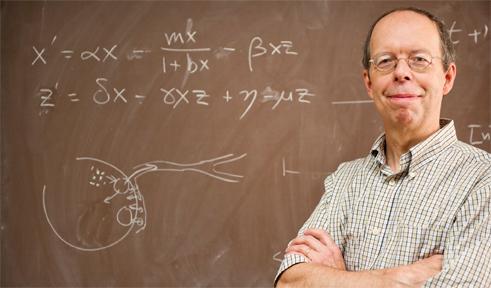
Todd Young is a Professor and Chair in the Department of Mathematics at Ohio University , part of the College of Arts and Sciences . He is also a member of the Quantitative Biology Institute and the Infectious and Tropical Disease Institute . His research integrates dynamical systems theory with biological modeling, particularly in cell cycle regulation, clustering phenomena in yeast, and biomedical informatics. Education: Ph.D. in Mathematics, Georgia Institute of Technology, 1995 M.S. in Mathematics, University of California at Riverside, 1991 M.S. in Engineering Mechanics, University of Kentucky, 1987 B.S. in Mathematics, University of Kentucky, 1985 Research Interests: Todd Young's work centers on the qualitative theory of ordinary and random differential equations , with applications in cell cycle dynamics , biological feedback systems , clustering in populations , and binary classification in biomedical informatics . He develops mathematical models to understand how feedback mechanisms lead to synchronization in yeast and how dynamical systems principles apply to neural and immune responses. His research spans pure theory, such as bifurcation and ergodic theory, to applied problems in public health, like ventilator-associated pneumonia detection. Research Trends: His recent publications reveal a strong focus on mathematical biology , particularly in modeling the cell cycle with feedback and clustering behavior . He increasingly integrates numerical methods and tensor approximation dynamics into his work, collaborating across disciplines in physics, engineering, and medicine. His articles frequently appear in journals like SIAM Journal on Applied Dynamical Systems , Journal of Mathematical Biology , and Nonlinearity , reflecting a blend of rigorous analysis and biological relevance. Scientific Awards and Roles: Joint Editor-in-Chief, Dynamical Systems journal Recipient of the College of Arts and Sciences “Dean's Outstanding Teacher Award” Editorial Board memberships in Discontinuity, Nonlinearity and Complexity and Annual Review Chaos Theory, Bifurcations & Dynamical Systems Founding member of the Quantitative Biology Institute Active member of SIAM, AMS, and MAA Advising and Grants: Todd Young has advised numerous Ph.D., M.S., and undergraduate students, many of whom have pursued academic or data science careers. His research has been funded by the National Institutes of Health (NIH) and the National Science Foundation (NSF) , notably through the NIH-NIGMS R01GM090207 grant on mathematical biology. He emphasizes student training through structured research participation, including exploratory and paid assistantships. Labs and Teams: He leads the Dynamics in Biology Research Group , which includes students and collaborators working on projects ranging from theoretical dynamics to computational biology. The group fosters interdisciplinary collaboration, particularly with biologists and medical researchers at Ohio University and beyond.
Svetlozar Nestorov is an Associate Professor of Information Systems at the Quinlan School of Business, Loyola University Chicago. His research focuses on data analytics, database systems, and innovative educational frameworks within information systems curriculum design. He is affiliated with research centers including the Behavioral Lab and the Lab for Applied Artificial Intelligence. Dr. Nestorov's work spans technical advancements in data modeling, big data integration, and the societal impacts of technology on gig economy workers. His pedagogical contributions include developing business analytics certification programs and integrating real-world data visualization projects into undergraduate courses. He has published extensively on topics ranging from automated grading systems to entity extraction frameworks. His current research trends emphasize practical applications of data science in education, leveraging cloud technologies for data modeling, and analyzing organizational control mechanisms in platform-driven labor markets. Dr. Nestorov's work bridges academic research with industry needs through frameworks that enhance data preparation, visualization, and analysis methodologies. Professional activities include steering committees for applied AI initiatives and contributions to interdisciplinary research platforms like the Computational Materials Repository. He maintains active participation in academic discourse through publications on metadata extraction, query optimization, and database security mechanisms.
David Dingli, M.D., Ph.D. , is a Professor of Medicine at Mayo Clinic in Rochester, Minnesota, with primary appointments in the Division of Hematology, Department of Internal Medicine and a joint appointment in the Department of Molecular Medicine . His interdisciplinary research bridges mathematical modeling and clinical hematology to advance cancer and blood disorder therapies. Education: M.D. from University of Malta; Ph.D. in Molecular Biology from Mayo Clinic Graduate School of Biomedical Sciences; completed residency and fellowship at Mayo Clinic; visiting scientist at Harvard University, University of Lisbon, and Max Planck Institute. Board Certifications: American Board of Internal Medicine (Hematology); Fellow of multiple prestigious colleges including Royal College of Physicians (Edinburgh, London, Glasgow) and American College of Physicians. Dr. Dingli's research focuses on tumor virotherapy and mathematical modeling of hematopoiesis and clonal evolution . His lab develops computational models to simulate tumor-immune-virus interactions, guiding the design of oncolytic viruses and optimizing clinical outcomes. He investigates disorders like multiple myeloma, PNH, AL amyloidosis, and POEMS syndrome , with emphasis on stem cell transplantation and novel therapeutics like complement inhibitors and CAR-T cells. His recent publications (2023–2025) reveal a strong focus on clinical outcomes in plasma cell disorders , especially response prediction, transplant strategies, and real-world effectiveness of new therapies (e.g., pegcetacoplan, daratumumab). Key themes include clonal dynamics, risk stratification, treatment sequencing, and biomarker discovery , often leveraging large datasets and collaborative multi-center studies. Scientific Awards and Honors: Donald C. Balfour Award for Meritorious Research Bellman Prize (Mathematical Bioscience) J. W. Forrester Award (Systems Dynamics Society) Early Career Development Award, Mayo Clinic Merit Award, American Society of Clinical Oncology Winner, National Medical Jeopardy Fellow, Royal College of Physicians (all three UK branches) Chartered Biologist, Society of Biology, UK Dr. Dingli is deeply involved in clinical and academic leadership, including directing the Bone Marrow Transplant Fellowship Training Program , serving as Education Director for the transplant program, and mentoring numerous trainees. He has been a grant reviewer for national foundations and an active member of professional societies such as the American Society of Hematology, American Society for Blood and Marrow Transplantation, and International Myeloma Society. He also leads educational initiatives like the Tutorial in Gene Therapy course. Laboratory and Research Teams: His research group, operating at the interface of theory and experiment, collaborates closely with clinicians, computational biologists, and translational scientists within Mayo Clinic’s Comprehensive Cancer Center and William J. von Liebig Center for Transplantation . The team integrates systems biology, clinical data analytics, and experimental validation to drive innovation in hematologic malignancies.
Philip Garner is a Lecturer at the Laboratory for Intelligent Data Analysis and Processing (LIDIAP), part of the School of Engineering (STI) at École Polytechnique Fédérale de Lausanne (EPFL). He is affiliated with the Institute of Electrical Engineering (IEM) and conducts research in intelligent data analysis, with a focus on biologically inspired neural models for speech and cognitive processing. Despite holding a 'Guest' status, he actively supervises PhD students and co-directs doctoral research, indicating a significant academic role. His research interests lie at the intersection of neuroscience and machine learning, particularly in spiking neural networks , speech recognition , neuromorphic computing , and deep learning architectures . He investigates how biologically plausible models can replicate brain-like computation for efficient information processing. His work often explores temporal dynamics, recurrence, memory mechanisms, and neural oscillations in artificial systems. The publications associated with his advisees and research group reflect a strong trend in developing energy-efficient, brain-inspired computing models for sequential data processing. These works frequently involve surrogate gradient learning, Bayesian recurrent units, and analysis of cross-frequency coupling in neural networks, contributing to both cognitive science and practical applications in speech technology. Scientific Awards: No awards mentioned in the provided text. Advising and Grants: Philip Garner supervises multiple doctoral students, including Abdennadher Yesmine, Chen Haolin, Coppieters De Gibson Louise Clothilde, He Mutian, and has co-supervised several completed theses such as those of Bittar Alexandre, Honnet Pierre-Edouard, Schnell Bastian, Taghizadeh Mohammadjavad, and Tong Sibo. His advising role is central to the LIDIAP lab’s research output in neural computation. While specific grants are not listed, his involvement in cutting-edge AI and neuroscience research suggests active participation in funded projects. Labs and Teams: He is based at the IDIAP Research Institute, closely affiliated with EPFL’s LIDIAP laboratory, which specializes in intelligent data analysis and processing. The lab fosters interdisciplinary research in machine learning, signal processing, and cognitive modeling, often in collaboration with neuroscience and engineering groups.