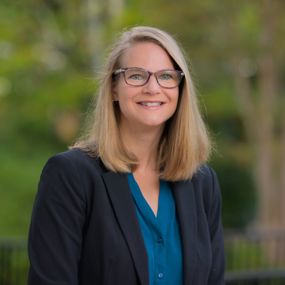
Professor Marilyn A. Walker is a leading academic in Natural Language Processing and Dialogue Systems at the University of California Santa Cruz , with significant contributions to conversational agents, personality modeling, and narrative analysis. She has held visiting roles at Google Research and leadership positions at University of Sheffield and AT&T Labs. Education : Ph.D. in Computer and Information Science (University of Pennsylvania, 1993), M.A. in Linguistics (University of Pennsylvania, 1993), M.S. in Computer Science (Stanford, 1988), B.A. in Computer and Information Science (UC Santa Cruz, 1984). Research Interests include Natural Language Processing , Conversational Agents , Dialogue Systems , and Personality Modeling . Her work bridges machine learning with linguistic theory to enhance dialogue adaptivity and expressive language generation. Scientific Awards include ACL Fellow (2016) Best Paper Awards at SIGDIAL 2016 and 2014 Royal Society Wolfson Research Merit Award (2003-2009) Grants exceed $2.5M, including NSF awards for projects like Interactive Dialog Agents for Social Language Development (2017) and Processing Opinion Sharing Dialog in Social Media (2011). She has also received corporate funding from Amazon , Fujitsu , and Hitachi .
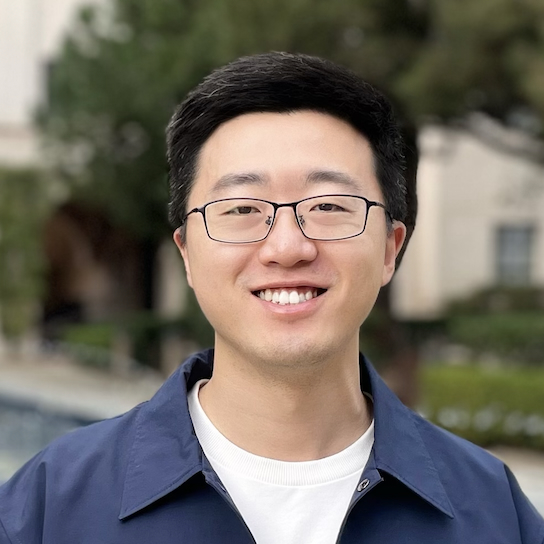
Jiaxuan Li is an Assistant Professor of Geophysics in the Department of Earth and Atmospheric Sciences at the University of Houston's College of Natural Sciences and Mathematics. His research focuses on developing fiber-optic sensing technologies for seismic monitoring across diverse geological environments including volcanic, crustal, and glacial settings. Dr. Li's educational background includes a Ph.D. in Geophysics from the University of Houston (2015-2020) and a B.S. in Geophysics from Peking University (2011-2015). He previously held a postdoctoral position at Caltech Seismolab under Prof. Zhongwen Zhan. His research program centers on distributed acoustic sensing (DAS) applications, with major contributions in volcanic eruption forecasting through minute-scale magma migration imaging, earthquake rupture dynamics via high-frequency fault asperity analysis, and subsurface characterization for carbon sequestration and geothermal energy. Recent work demonstrates DAS capabilities as dense geodetic arrays for real-time volcanic monitoring systems deployed in Iceland through collaborations with the Icelandic Met Office and Reykjavik University. Analysis of Dr. Li's publication record reveals a strong emphasis on operationalizing fiber-optic networks for geophysical monitoring, with significant advancements in eruption early warning systems, earthquake source characterization, and subsurface imaging techniques. His work bridges fundamental seismological research with practical hazard mitigation applications. Dr. Li actively mentors graduate students and recently welcomed postdoc Dr. Tianfan Yan to his research team. His lab operates real-time DAS streaming systems for volcanic eruption monitoring in Iceland, developed through international collaborations involving the University of Houston, Caltech, Ljósleiðarann, and Reykjavik University. Current research directions include expanding DAS applications for carbon sequestration verification and deep geothermal reservoir characterization.
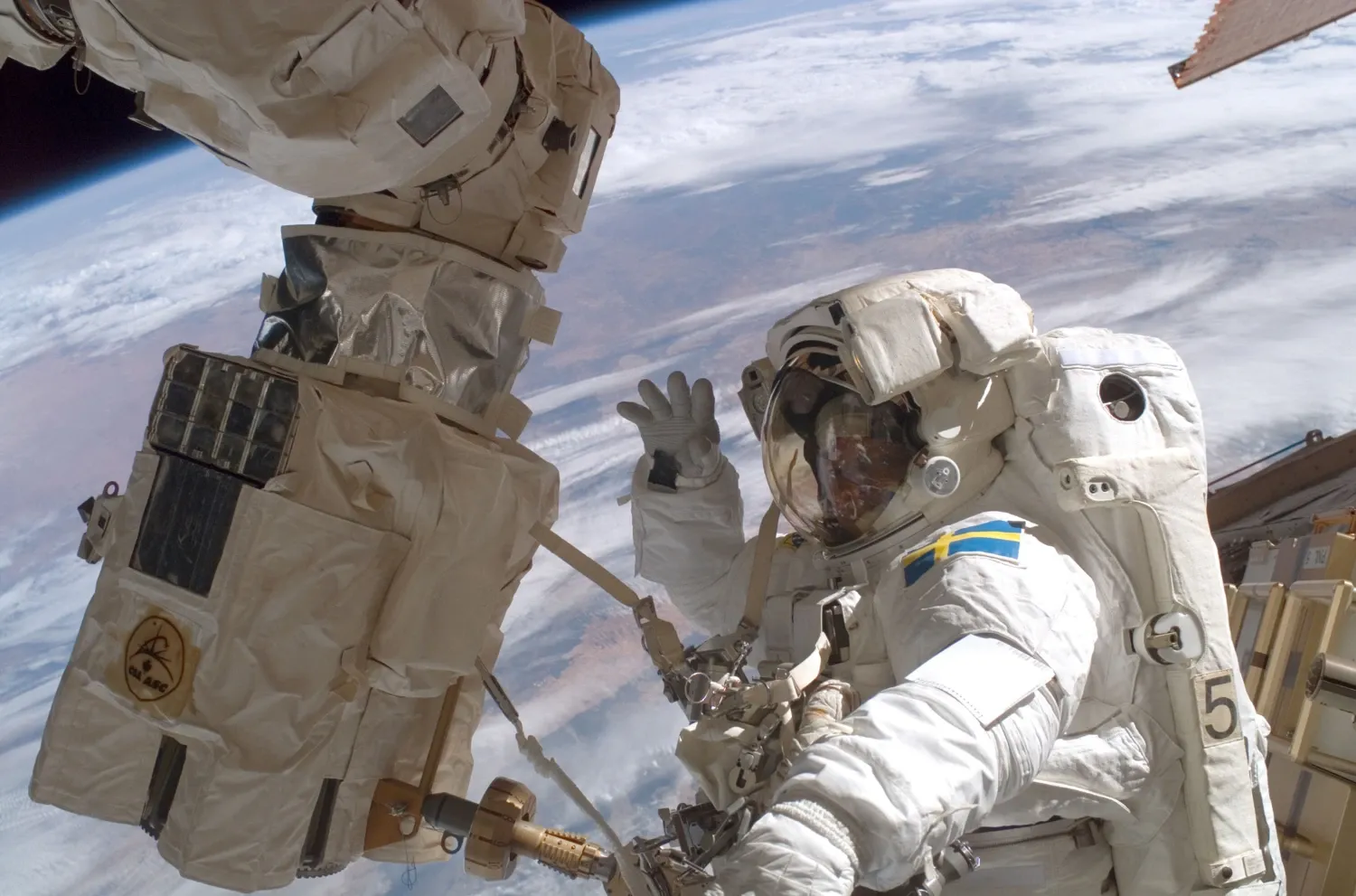
Rodrigo Fernandez Gonzalo is a Docent (Associate Professor) in Physiology and Principal Researcher at the Division of Clinical Physiology, Department of Laboratory Medicine, Karolinska Institutet. He leads the Space and Environmental Physiology research group focusing on skeletal muscle adaptation under various conditions including microgravity, aging, disease, and exercise. His research interests span skeletal muscle physiology, space physiology, and environmental physiology, with particular expertise in how skeletal muscle interacts with other physiological systems. His work employs diverse methodologies including human clinical studies, animal models, and cellular models to investigate functional, metabolic, morphological, molecular, and neural adaptations. Analysis of his recent publications reveals a strong focus on space physiology applications, particularly how microgravity affects skeletal muscle and immune systems, along with translational applications for clinical populations like those with cerebral palsy. His research integrates molecular analysis, imaging techniques, and physical performance outcomes to develop countermeasures for spaceflight effects. 4.5 MSEK funding from the Swedish National Space Agency (2020) Member of European Space Agency's Life Science Working Group (2022-2026) Member of Space Researchers Sweden (2021-) Dr. Fernandez Gonzalo serves as course responsible for Anatomy and Physiology in the nursing program (since 2018) and Advanced Human Physiology Research in the Master's programme in Translational Physiology and Pharmacology (since 2023). He also teaches Human Spaceflight at KTH and participates in the Erasmus Mundus Joint Master in Physiology and Medicine of Humans in Space and Extreme Environments. His laboratory utilizes facilities at Karolinska University Hospital and ANA Futura for human, animal, and cellular studies investigating space exposome effects.
Andrew O. Arnold is a Principal Applied Machine Learning Engineer at Shopify and an Adjunct Professor at New York University's Tandon School of Engineering, Department of Finance and Risk Engineering. He earned his Ph.D. in Machine Learning from Carnegie Mellon University and a BA in Computer Science and Artificial Intelligence from Columbia University. Education Ph.D., Machine Learning, Carnegie Mellon University BA, Computer Science and Artificial Intelligence, Columbia University His research focuses on robust machine learning , developing models that perform well in low signal-to-noise regimes, handle distributional shifts (transfer learning), and extract features from unstructured data. Key applications include time series analysis and natural language processing in financial and other domains. Recent publications highlight work on large language models (LLMs) for code generation, including multitask pretraining, contrastive learning, and quantization techniques for efficiency. He has contributed to understanding model robustness and adapting NLP methods to dynamic market conditions. Arnold teaches NYU FRE GY 7871: News Analytics and Machine Learning , covering NLP and ML techniques for quantitative trading strategies. The course emphasizes practical applications of sentiment analysis, text relevance, and novelty detection in financial contexts. He has led teams at Amazon Web Services (AI Labs), served as Chief Scientist at Oracle Alpha, and worked at Microsoft Research, IBM Research, and other institutions. His technical expertise spans code generation , anomaly detection , and NLP for commerce , with patents in these areas.
Panagiotis Papapetrou is a Professor of Data Science and Deputy Head of Department at the Department of Computer and Systems Science , Stockholm University (since 2017). He also serves as Head of the Data Science Research Group and holds an Adjunct Professor position at Aalto University (Finland). As a Board Member of the Swedish Association for Artificial Intelligence (SAIS) , he contributes to shaping AI research directions in Sweden. Research Pillars: Algorithmic data mining, interpretable machine learning, time series classification, and health informatics Key Projects: AI for societal fairness, digital twins for smart buildings, EXTREMUM for explainable medical AI, and e-learning personalization Teaching Legacy: Developed courses in Data Mining (HT2013-2022), Machine Learning (VT2022-2024), and Health Informatics (VT2018-2021) His work focuses on interpretable AI for healthcare applications, particularly through counterfactual explanations for time series classification and forecasting. This includes developing methods like Glacier for constrained counterfactuals and Ijuice for k-justified explanations. His research also explores multimodal clustering of sepsis patient records and federated learning approaches for ICU mortality prediction. Recent scientific contributions include: CounterFair (2024): Group fairness analysis via counterfactual burden metrics M-ClustEHR (2024): Multimodal clustering for electronic health records COMET (2024): Constraint-based glucose forecasting explanations Temporal pattern mining (2024-2025): Enhanced forecasting models through decomposition Z-Time (2024): Interpretable multivariate time series classification His editorial leadership includes: Action Editor at Machine Learning Journal (since 2024) Action Editor at Data Mining and Knowledge Discovery (since 2018) Guest Editorial Board for ECML/PKDD Journal Track (2014-2019)
Heidi Johansen-Berg is Pro-Vice Chancellor (Strategic Initiatives) at the University of Oxford and Associate Head (Research and Innovation) in the Medical Sciences Division. She holds a Professorship in Cognitive Neuroscience and a Wellcome Principal Research Fellowship at the Nuffield Department of Clinical Neurosciences, where she leads the Plasticity Group at the Oxford Centre for Functional MRI of the Brain (FMRIB). Her research centers on neuroplasticity mechanisms in the sensorimotor system, with emphasis on white matter plasticity, activity-dependent myelination, and implications for stroke rehabilitation and age-related brain decline. She integrates multimodal neuroimaging with behavioral studies to investigate how the brain adapts to learning, experience, and damage, translating findings into therapeutic interventions for neurological conditions. Recent publications reveal strong thematic trends in sleep-motor interactions post-stroke, exercise-induced neuroprotection in aging and adolescence, and experience-dependent white matter remodeling. Her work demonstrates how physical activity modulates brain structure-function relationships across the lifespan, with direct applications for neurorehabilitation protocols. Scientific recognition includes: Fellow of the Royal Society (FRS) Fellow of the Academy of Medical Sciences (FMedSci) Wellcome Principal Research Fellowship Professor Johansen-Berg directs the WIN Plasticity Group and co-leads the WIN Neuroplastics Network and Oxford University Centre for Integrative Neuroimaging (OxCIN). Her research program drives translational initiatives in stroke recovery and brain health maintenance, with ongoing projects examining digital sleep therapies, myelin dynamics, and exercise neuroscience through large-scale clinical trials and advanced imaging methodologies.
Sadam Issa serves as Associate Professor of Arabic Studies within Michigan State University's Department of Linguistics, Languages, and Cultures (College of Arts & Letters). He teaches comprehensive Arabic language sequences from first-year through fourth-year levels, alongside specialized courses in Arabic society, literature, media, and Levantine dialects, while directing MSU's Arabic Study Abroad Program in Amman, Jordan. As a certified Oral Proficiency Interviewer (ACTFL), he actively advances language assessment standards. His research integrates discourse analysis, sociolinguistics, and visual rhetoric with language pedagogy, prominently featuring Arabic political cartoons—currently the subject of a book project—and comics-based instructional methods. Investigations span classroom anxiety, technology-enhanced learning, politeness strategies in Jordanian advertisements, and revolutionary folk music, revealing consistent focus on sociocultural dimensions of Arabic communication. Recent publications demonstrate interdisciplinary convergence: visual media (political cartoons/comics) increasingly informs language education research, while sociolinguistic analyses of Arabic media evolve toward comparative cultural studies, particularly regarding conflict representation and religious discourse. Scientific recognition includes: Open Educational Resources (OER) Leadership Awards (Michigan State University, 2021) Honor Instruction Award (Michigan State University, 2021) Fulbright Foreign Language Teaching Assistant (U.S. Department of State, 2006-2007) Issa pioneers curriculum innovation through OER textbooks for first/second-semester Arabic and hybrid learning models, receiving institutional awards for educational leadership. His study abroad program and OPI certification underscore commitment to experiential learning and proficiency-based assessment.
Scott Staniewicz is a researcher at the University of Texas at Austin in the Department of Aerospace Engineering and Engineering Mechanics. His work focuses on geophysical applications of computer vision and remote sensing, particularly using Interferometric Synthetic Aperture Radar (InSAR) to detect surface deformation and tropospheric noise features. Academic Affiliation: University of Texas at Austin Research Focus: Surface deformation analysis, InSAR data processing, tropospheric noise mitigation Email: scott.stanie@utexas.edu Staniewicz's research employs computer vision techniques like Laplacian of Gaussian (LoG) filtering to identify spatially coherent deformation features (e.g., subsidence/uplift in oil-producing regions). His methods integrate noise spectrum estimation from real data and simulations to distinguish true deformation signals from atmospheric artifacts. Recent work includes software development for automated InSAR analysis and large-scale studies of anthropogenic deformation in the Permian Basin. He has contributed to open-source tools such as Blobsar (2025a) and Troposim (2025b) for deformation detection, and collaborated on studies analyzing seismic sequences (Skoumal et al., 2020), tropospheric delay corrections (Li et al., 2019; Yang et al., 2024), and statewide seismic networks (Savvaidis et al., 2019). His publications demonstrate expertise in combining computer vision with geophysical data analysis.
Jennifer Kosmin serves as an Associate Professor in the History Department within Auburn University's College of Liberal Arts. She joined Auburn University in fall 2022 after previously holding an Assistant Professor position at Bucknell University from 2015-2022. Her academic career includes a postdoctoral fellowship at Rutgers University's Center for Historical Analysis (2019-2020) and a Fulbright scholarship in Italy (2011-2012). Dr. Kosmin specializes in the history of medicine and science with a focus on early modern Italy. Her research explores the intersections of gender, the body, sexuality, and knowledge production, particularly regarding women's roles in medical and scientific knowledge formation. She engages with topics including anatomical modeling, reproductive technologies, midwifery education, and the history of the fetus. Her scholarly output reveals a consistent focus on the social and political contexts of medical practices in early modern Europe, particularly examining how institutions regulated reproduction and gendered medical knowledge. Her work demonstrates expertise in both textual analysis of historical medical treatises and material culture approaches to medical history. Dr. Kosmin teaches courses including the Technology and Civilization sequence, History of Sexuality, History of Madness, and Special Topics in Gender & Medicine. She actively mentors graduate students interested in the history of medicine, reproduction, and sexuality.
Stephen T. Wong holds the John S. Dunn Presidential Distinguished Chair in Biomedical Engineering and serves as Professor of Radiology and Medicine with Tenure and Chief of Medical Physics at Houston Methodist. He maintains professorships across multiple prestigious institutions including Weill Cornell Medicine (Radiology, Neurosciences, Pathology and Laboratory Medicine), Texas A&M University, Baylor College of Medicine, University of Texas MD Anderson Cancer Center, Rice University, University of Texas Health Houston, and University of Houston. Weill Cornell Medicine: Professor of Computer Science and Bioengineering in Radiology (since 2008), Pathology and Laboratory Medicine (since 2010), and Neuroscience (since 2012) Houston Methodist: John S. Dunn Presidential Distinguished Chair in Biomedical Engineering Academic leadership: Director of multiple research centers including Ting Tsung and Wei Fong Chao Center for BRAIN and AI in Innovative Medicine lab Dr. Wong's research employs a systems-based approach integrating engineering with biology and medicine to elucidate disease mechanisms. His laboratory focuses on discovering novel drugs and biomarkers while developing advanced diagnostic and therapeutic devices, with particular emphasis on cancer, neurological disorders, and metabolic diseases. Current projects target micro- and macroenvironments of cancer and Alzheimer's disease, apply spatial and systems biology methods for drug discovery, create label-free point-of-care molecular diagnostics, and develop AI applications for stroke triage and treatment. His publication portfolio demonstrates consistent growth over three decades, with over 500 peer-reviewed papers and five books. Recent work shows strong emphasis on artificial intelligence applications in medical imaging, cancer therapeutics, and neurological diagnostics, with multiple 2025 publications featuring multimodal AI approaches for hepatocellular carcinoma, lung cancer interventions, tumor evolution, brain imaging, and thyroid nodule characterization. Fellowships: IEEE, AIMBE, IAMBE, ACMI, AMIA, Optica, and AAIA Honors: AIIA Fellow (2024), American College of Medical Informatics Fellow (2023), AAIA-Fellow (2021), AIMBE Fellow (2021) Professional: Registered Professional Engineer (PE), Executive education from Stanford, MIT, and Columbia Business Schools Dr. Wong has trained over 170 PhD, MD/PhD, and postdoctoral scholars, with four now holding endowed chairs. His research has received continuous NIH funding for three decades, supporting 35 active and completed projects including DeepStroke+ for AI stroke detection, Alzheimer's disease research, and cancer diagnostics. He has founded multiple research centers including the Division of Shared Resources at Houston Methodist Neal Cancer Center, Translational Biophotonics Lab, and Center for Modeling Cancer Development.
Andrew Godwin is a Professor at the University of Kansas Medical Center , where he serves as the Chancellor’s Distinguished Chair in Biomedical Sciences and Director of Molecular Oncology in the Department of Pathology and Laboratory Medicine. He is also the Deputy Director of the NCI-designated University of Kansas Cancer Center and the Founding Director of the Kansas Institute for Precision Medicine and Biospecimen Shared Resource . Dr. Godwin is a leader in translational research and precision medicine , with a focus on molecular oncology , biomarker discovery , and genomic diagnostics . His work bridges basic and clinical science to improve cancer patient care, particularly in ovarian cancer , Ewing sarcoma , and breast cancer . He has contributed over 230 ovarian cancer-related publications and pioneered studies linking the PI3K/AKT pathway to cancer treatment targets. His research program encompasses liquid biopsies using extracellular vesicles , molecular therapeutics , companion diagnostics , and clinical trial validation . He leads the Biomarker Discovery Laboratory and has secured over $250M in extramural funding , including a $11.4M NIH grant for precision medicine initiatives. His team has developed CELLSEARCH® , the first FDA-cleared test for circulating tumor cells. Notable awards include the Dolph C. Simons, Sr. Higuchi Award (2020), Outstanding Mentorship in Pathology Award (2024), and multiple mentoring accolades from KU. He has mentored over 150 trainees across career stages and leads a multidisciplinary lab with expertise in genomics , proteomics , and bioengineering . Academic Roles: Chancellor’s Distinguished Chair in Biomedical Sciences Director, Molecular Oncology, Pathology and Laboratory Medicine Deputy Director, KU Cancer Center Founding Director, Kansas Institute for Precision Medicine Adjunct Professor, Bioengineering Program, University of Kansas Scientific Awards: KUMC Achievement Award for mentoring postdocs (2014) Chancellor’s Club Award for Research (2018) Dolph C. Simons, Sr. Higuchi Award (2020) KU Excellence in Mentoring Award (2021) Outstanding Mentorship in Pathology (2024) Key Research Themes: Extracellular vesicles as liquid biopsy tools Molecular mechanisms of sarcoma and breast cancer Genomic diagnostics and precision oncology Clinical trial biomarker validation Biospecimen repository leadership
Prof. Dr. Kirsten Jung is a faculty member at the Department of Microbiology , Faculty of Biology , Ludwig Maximilian University of Munich . Her research focuses on bacterial signal transduction, stress response mechanisms, and systems biology approaches to understand microbial regulatory networks. Key research areas include stress-dependent gene expression in bacterial populations Structural and functional analysis of membrane-integrated receptors Metabolism-based chemical communication in bacteria Integration of experimental and computational systems biology Recent publications highlight her lab's work on Escherichia coli epitranscriptomic modifications under heat stress, m 5 C rRNA dynamics, and the role of RNA methylation in host-pathogen interactions. Collaborative studies address bacterial acid stress responses and their implications for antibiotic tolerance. Her interdisciplinary work bridges microbiology with ecological studies, as evidenced by research on biodiversity conservation in forest and urban ecosystems. Publications also demonstrate expertise in advanced imaging techniques (e.g., arterial spin labeling for glioma analysis) and bioinformatics approaches. Current advisees include Gloria Gessinger and Tania P. Gonzalez-Terrazas . She can be contacted at jung@lmu.de .
Minh Hoai Nguyen is an Assistant Professor in the Department of Computer Science at Stony Brook University. He received his PhD in Robotics from Carnegie Mellon University and a Bachelor of Engineering from the University of New South Wales. Prior to Stony Brook, he was a post-doctoral research fellow at Oxford University and a Kurti Junior Research Fellow at Brasenose College. Education: PhD in Robotics, Carnegie Mellon University Bachelor of Engineering, University of New South Wales His research focuses on computer vision , machine learning , and time series analysis , particularly in developing algorithms for human action recognition , gesture detection , and expression analysis in video data. Applications include video surveillance , human-computer interaction , and medical diagnosis of behavioral disorders . His work integrates computer vision for video processing, time series analysis for modeling human behavior, and machine learning for training complex algorithms. Notable awards include: CVPR 2012 best student paper award Winner of PASCAL VOC 2012 Challenge for Human Action Recognition He teaches courses such as Video Analysis (CSE 594) and Introduction to Robotics (CSE 525) .
Dr. Madhushi Bandara is a Lecturer at the School of Computer Science, University of Technology Sydney (UTS), specializing in knowledge representation, complex system modeling, and data analytics. She leads the data management research stream at the UTS DigiSAS lab and is a core member of the Biomedical Data Science Laboratory within the UTS Australian Artificial Intelligence Institute. Her industry collaborations include Telstra, Cancer Australia, and Capsifi, focusing on AI integration in healthcare and finance. She coordinates the Business Information Systems major in UTS's Master of Information Technology program and convenes the Future Generation Enterprise Architecture Community of Practice. Education PhD in AI Systems Engineering, University of New South Wales (2020) BSc (Hons) in Engineering, University of Moratuwa, Sri Lanka (2015) Research Interests Madhushi's work bridges machine learning, knowledge graphs, and enterprise architecture to address challenges in data governance for SMEs, ESG metric management, and healthcare pathway analysis. Her research emphasizes translating cutting-edge AI into industry solutions through contextual domain knowledge integration. Scientific Awards UNSW-UTS Trustworthy Digital Society Scholarship Teaching & Leadership She teaches enterprise information systems, digital strategy, and AI for enterprises in UTS's online postgraduate programs. Her service roles include co-chairing tracks at the Australasian Conference on Information Systems and reviewing for Expert Systems with Applications.
Vicki H. Wysocki is Professor and Chair at Georgia Institute of Technology, leading pioneering research in mass spectrometry and structural biology. Her work focuses on developing advanced techniques to study protein complexes, proteomics, and metabolomics, with her research group maintaining an active presence at major conferences including ASMS 2024 and preparations for ASMS 2025. Her educational background includes: B.S. in Chemistry from Western Kentucky University (1982) Ph.D. in Chemistry from Purdue University (1987) Postdoctoral research at Purdue University (1987) and National Research Council/Naval Research Lab (1988-1989) Dr. Wysocki's research spans four interconnected areas: (1) development of surface-induced dissociation (SID) on commercial mass spectrometry platforms; (2) native mass spectrometry-guided structural biology for studying large protein-protein complexes; (3) multi-omics approaches integrating proteomics and metabolomics with genomics for biomarker discovery; and (4) determination of peptide structures using IR action spectroscopy. Her work bridges analytical chemistry, biochemistry, and structural biology to address fundamental protein science questions. Analysis of her recent publications reveals a strong focus on advancing native mass spectrometry techniques, particularly surface-induced dissociation, for structural characterization of protein complexes. Her work increasingly integrates multi-omics approaches to study bacterial pathogenesis, with emphasis on Salmonella infection mechanisms, while also exploring innovative instrumentation development for structural biology applications. Dr. Wysocki has received numerous prestigious awards: 2022 Thomson Medal from the International Mass Spectrometry Foundation 2022 ACS Division of Analytical Chemistry Award 2017 ACS Field and Franklin Award for Outstanding Achievement in Mass Spectrometry 2016 OSU Excellence in Biochemistry Award 2009 Distinguished Contribution to Mass Spectrometry Award from ASMS She actively mentors numerous graduate students and postdoctoral researchers, with current lab members including Kristie Baker, Yuan Gao, and Philip Lacey. Her research is supported by multiple NIH grants, enabling cutting-edge instrumentation development and biological applications. The Wysocki Group maintains strong collaborations across disciplines, particularly in microbiology and structural biology. The Wysocki Research Group operates state-of-the-art mass spectrometry facilities at Georgia Tech, including specialized instrumentation for native mass spectrometry and surface-induced dissociation. The group actively develops new methodologies and maintains the website nativems.gatech.edu as a resource for the mass spectrometry community, demonstrating continued leadership at the intersection of technology development and biological discovery.