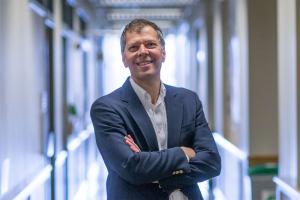
Dr. Daniel Nettels is a Senior Scientist at the University of Zurich's Department of Biochemistry within the Faculty of Science. His research focuses on biophysical methods, including single-molecule spectroscopy and fluorescence techniques, to study protein folding, misfolding, and the dynamics of biomolecular condensates. He joined Prof. Ben Schuler's group in 2004 after completing a Ph.D. in physics at the University of Fribourg and prior studies in physics at the University of Bonn. Nettels teaches the module BCH 306: Biochemical and Biophysical Methods. His work integrates experimental and computational approaches to understand disordered proteins and their roles in biological systems. Education: Ph.D. in Physics, University of Fribourg (2003) M.Sc./Diploma in Physics, University of Bonn (1998) Research Interests: Single-molecule FRET and spectroscopy Biomolecular condensates and their dynamics Intrinsically disordered proteins Teaching: BCH 306 module in the Faculty of Science
Luca Barra is Full Professor of Television and Digital Media at the Department of Arts, University of Bologna. His research focuses on media studies, particularly television history and contemporary evolution, transnational circulation of content, serialization, and comic/humorous genres. He has coordinated the Master's Degree in Information, Cultures and Media Organization since 2021 and serves as editor-in-chief of VIEW. Journal of European TV History and Culture. University of Bologna, Department of Arts Research areas: Television History, Transnational Media, Digital Transformation, Italian TV Production Barra's work examines the international mediation of ready-made TV formats, Italian streaming partnerships, and the cultural implications of digital television. His recent articles analyze dystopian narratives, sitcom reception in Italy, and the redefinition of celebrity during the pandemic. He contributes to academic discourse through editorial roles in journals like SERIES and Comunicazioni Sociali. His publications include monographs on Italian television programming, sitcoms, and co-edited volumes exploring European premium TV fiction and digital media frameworks. Barra has led research projects such as ATLas and F-ACTOR, and collaborates with international institutions including Brown University and NECS.
Dr. Xiangchun (Schwann) Xuan is a Professor in the Department of Mechanical Engineering at Clemson University. He joined in December 2006 and specializes in thermal/fluid sciences with a focus on microfluidic devices and Lab-on-a-chip technology. His research explores electrokinetic phenomena, viscoelastic fluid dynamics, and particle manipulation in micro/nano-scale systems. Education: Ph.D., University of Toronto, 2006 DENG, Shanghai Institute of Technical Physics, 2000 B.S., University of Science and Technology of China, 1995 Research Interests: Dr. Xuan's work centers on micro- and nano-fluidics, including electroosmotic flow, dielectrophoresis, and the effects of viscoelasticity on particle behavior. He investigates applications in lab-on-a-chip devices, separation techniques, and fluid rheology in confined geometries. Publications: His recent work emphasizes nonlinear electrokinetic flows, shear-thinning fluid dynamics, and particle focusing in non-Newtonian systems. Key topics include electroosmotic instabilities, dielectrophoretic separation, and the interplay between fluid elasticity and microscale transport. Awards & Grants: No specific awards are listed, but his contributions are reflected in his extensive publication record and academic roles. He is a member of ASME, APS, and AES. Labs/Teams: His research is conducted within Clemson’s Mechanical Engineering facilities, focusing on experimental and analytical studies of microfluidic systems and electrokinetic phenomena.
Jane Wang is a Professor in the Department of Food Science at the University of Arkansas , where she has served since 1999, progressing from Assistant to Full Professor. She also holds the title of Director of the Experiment Station in the Department of Food Science. Her research focuses on starch structure-functionality relationships , rice quality , and biomaterial utilization , with over 120 refereed publications and 5 patents. Education: B.S. in Agricultural Chemistry (1986) from National Taiwan University , M.S. in Food Science (1989) from the University of Minnesota , and Ph.D. in Food Science (1992) from Iowa State University . Postdoctoral research in starch chemistry at Iowa State University (1993-1994). Research Interests: Jane Wang's work explores starch chemistry, rice processing optimization, and value-added applications of agricultural byproducts. She investigates how starch modifications affect food and pharmaceutical properties, with a particular focus on parboiling, germination, and enzymatic treatments. Her research also examines the impact of environmental factors on rice starch development and quality. Scientific Awards: Outstanding Departmental Research Award (2008) Outstanding Volunteer, IFT Carbohydrate Division (2007) Outstanding Mentor, University of Arkansas (2005) Grants & Professional Service: She has secured over $3M in research funding, including USDA-NIFA grants and industry contracts with more than 50 food companies. Jane has served on numerous academic committees (Patent, Promotion & Tenure, Curriculum) and held leadership roles in professional organizations like IFT and AACC. She has also acted as associate editor for Cereal Chemistry and Carbohydrate Polymers , and reviewed for multiple journals and agencies. Labs & Teams: Dr. Wang leads the Carbohydrate Research Program at the University of Arkansas, focusing on starch structure-functionality, rice fortification, and biomaterial development. Her lab collaborates with industry partners and academic institutions to advance food science applications.
Dr. Hope Michelsen is an Associate Professor in the Department of Mechanical Engineering at the University of Colorado Boulder, specializing in Thermo Fluid Sciences and Air Quality. Her research focuses on carbonaceous particle formation mechanisms, combustion diagnostics, and their environmental impacts. She leads efforts in developing laser/X-ray-based diagnostic tools for studying soot evolution in flames and atmospheric systems. Research Interests include soot inception/growth, black carbon climate effects, and particle synthesis control. She has pioneered studies on resonance-stabilized radicals' role in soot formation and developed novel sampling techniques like jet-entrainment methods. Her work bridges fundamental combustion science with practical applications in air quality and climate mitigation. Awards: Fellow, American Physical Society Fellow, The Optical Society Alameda County Women’s Hall of Fame Inductee Lab facilities include advanced diagnostics at ECME 1B68/ECNW 180. Research collaborations involve multi-scale modeling of emissions and atmospheric transport. Current projects address wildfire soot dynamics and Arctic methane monitoring through inverse modeling techniques.
Oliver Deussen is a Professor of Visual Computing at the University of Konstanz, recognized by the German Informatics Society (GSI) as a Fellow for his contributions to computer science. His research focuses on visualization, robotics, and environmental modeling, particularly in plant and landscape representation. He has pioneered methods in image manipulation and robotic painting, emphasizing digitalization's societal impacts. His work spans computational biology (e.g., schooling fish behavior) and AI-driven creative technologies. Research Interests: Visualization techniques, swarm behavior analysis, robotic creativity, and interdisciplinary applications of computer science. He explores how computational methods can model natural systems and enhance human-machine interaction. Awards: Fellow of the German Informatics Society (GSI) His research often bridges theory and practice, with contributions to SLAM frameworks, style transfer algorithms, and uncertainty visualization tools. Collaborations in robotics and biology reflect his commitment to applied computational research.
Professor David Dyzenhaus (born 1957 in Johannesburg) is a leading academic in legal philosophy and constitutional law, currently serving as Professor of Law at the Department of Law, University of Toronto (1998–present). He completed his D.Phil at Oxford (1988) and held visiting roles at institutions including Cambridge (2014–15). His work bridges Weimar-era legal theory, emergency law, and the rule of law in post-apartheid and transitional contexts. University of the Witwatersrand (BA, LLB) D.Phil, Oxford (1984–1988) Research interests include legal philosophy, rule of law, transitional justice, and constitutionalism. His scholarship interrogates the interplay between legality, legitimacy, and political theory, particularly in states of emergency. Recent articles explore Hobbesian constitutionalism, the decline of legal positivism, and the judicial role in constitutional democracies. Publications span edited collections on the rule of law, legal philosophy of Carl Schmitt, and transitional justice. He has contributed to journals like University of Toronto Law Journal and European Journal of International Law , focusing on emergency law, judicial review, and democratic theory. SSHRC Grant, German legal philosophy during Weimar (1991) Humboldt Research Fellowship (1992) Fellow of the Royal Society of Canada (1999) Law Foundation Fellow, University of Auckland (2002) Arthur Goodhart Visiting Professor, Cambridge (2014–15)
Prof. Dr. Gabriele Abels is a Full Professor of Comparative Politics and European Integration at the Institute of Political Science, University of Tübingen, within the Faculty of Economics and Social Sciences. She has held a Jean Monnet Chair since 2011 and served as Director of the Jean Monnet Center of Excellence PRRIDE (2015–2018) and President of the German Political Science Association (DVPW) from 2012 to 2015. Since 2021, she has been a member of the Constitutional Court of Baden-Württemberg, underscoring her significant role in public and academic life. Research Interests: Her research spans Comparative Politics , European Integration , Gender Studies , Federalism , and EU Governance . She investigates the role of regional parliaments, gender equality policy, democratization, and the legitimacy of EU institutions, with a focus on the Conference on the Future of Europe and the von der Leyen Commission. Her work integrates feminist theory into European integration studies, analyzing gendered dimensions of leadership, representation, and policy-making. Recent Publications: Her most recent scholarly contributions examine masculinities in post-conflict settings, gender and intersectionality in the 2021 German election, and the EU's gender equality strategy. She has also published extensively on regional governance, parliamentary scrutiny, and historical perspectives on women's political representation. Her work appears in journals like Peacebuilding , Journal of Common Market Studies , and The Journal of Legislative Studies , and in edited volumes on gender and EU politics. Scientific Awards and Honors: Jean Monnet Chair 'ad personam' (since 2011) President, German Political Science Association (2012–2015) Director, Jean Monnet Center of Excellence PRRIDE (2015–2018) Member, Constitutional Court of Baden-Württemberg (since 2021) Advising and Grants: She has supervised numerous Master's theses in the 'Democracy and Governance in Europe' (MADRE) program and led funded research projects, including the Jean Monnet Center of Excellence. She has participated in EU-funded initiatives such as Erasmus+ and organized student excursions to Brussels, facilitating direct engagement with EU institutions and practitioners. Her leadership roles in research centers and academic associations reflect sustained grant and institutional support. Labs and Teams: She leads research within the Institute of Political Science and collaborates with the European Center for Research on Federalism. She has coordinated the PRRIDE research center and works with a team including Dr. Martin Große Hüttmann, Dr. Lisa Damaschke-Deitrick, and other scholars. Her work involves close collaboration with international partners and visiting scholars, fostering a dynamic research environment focused on European integration and governance.
Prof. Eric Loth is the Rolls-Royce Commonwealth Professor of Engineering and Director of the Fluids Research Innovation Lab (FRIL) at the University of Virginia. His research focuses on extreme-scale wind turbines, energy storage systems, multiphase flow, and aerospace propulsion. He has authored over 200 journal papers, holds 10 patents, and led $16M in research funding. His work has been covered by major media outlets and he has given invited talks at prestigious institutions like Harvard, MIT, and Cambridge University. Education: B.S. in Aerospace Engineering, West Virginia University M.S. in Aerospace Engineering, Pennsylvania State University Ph.D. in Aerospace Engineering, University of Michigan Research Interests: Loth’s work spans wind energy systems, aerodynamics of propulsion, turbulence mechanics, and fluid-solid interactions. He pioneered designs for 25–50 MW offshore turbines and co-developed energy storage frameworks integrating wind systems. His recent projects include icephobic coatings for turbine protection and novel particle separation technologies. Awards & Recognition: Fellow of ASME and AIAA Yip Visiting Fellow, Magdalene College, Cambridge Panel Chair for NAE Energy Research (IMECE) and NAE Aerospace Research (AIAA Sci Tech) Advising & Grants: Loth has advised numerous students and secured major grants from agencies like ARPA-E, NREL, and the Department of Energy. His lab (FRIL) collaborates with industry leaders like Rolls-Royce and the U.S. Navy. Labs & Teams: Director of the Fluids Research Innovation Lab (FRIL), co-leads the SUMR (Sustainable, Ultra-Mega-Rotor) initiative, and oversees the SpiderFLOAT offshore wind platform project. His team focuses on interdisciplinary challenges in renewable energy and fluid dynamics.
Joseph Cotruvo is a Professor of Chemistry at the Department of Chemistry, Pennsylvania State University. His research focuses on understanding metal selectivity in biological systems, particularly lanthanides and transition metals, with applications in biotechnology, environmental science, and disease mechanisms. He leads the Cotruvo Lab, which develops biochemical and chemical biology tools to study metal ion acquisition, trafficking, and utilization in bacteria and human pathogens. Education: Ph.D., Chemistry, Massachusetts Institute of Technology (2012); A.B., Chemistry, Princeton University (2006). Research interests include lanthanide-dependent enzymology, protein engineering for rare earth element separations, and transition metal roles in neurodegenerative diseases. The lab designs fluorescent sensors, genetically encodable tools, and protein-based systems for metal detection and recovery. Recent work emphasizes actinide/lanthanide speciation, biohydrometallurgy, and biomolecular mechanisms of metal ion transport. Notable achievements include the discovery of lanmodulin—a highly selective lanthanide-binding protein—and its application in rare earth element recovery. His lab pioneered protein-based approaches for high-purity rare earth separations and developed manganese(II) fluorescent sensors. Research also explores iron-responsive riboswitches and copper-regulated lipid metabolism. Awards: Faculty Scholar Medal (2025), Blavatnik Finalist (2024), Eli Lilly Award (2024), Sloan Fellowship (2021), DOE Early Career Award (2020). Grants: NSF CAREER Award, Charles E. Kaufman Foundation, Jane Coffin Childs Memorial Fund. Labs/Teams: Cotruvo Lab (Penn State); collaborations with National Synchrotron Light Source, Lawrence Livermore National Laboratory. Future work targets scalable rare earth recovery systems, actinide-biomolecule interactions, and transition metal roles in infectious diseases.
Dr. Norbert Jux is an Adjunct Professor at the Department of Chemistry and Pharmacy, Friedrich-Alexander-University Erlangen-Nürnberg (FAU), associated with Prof. Dr. Hirsch's Chair of Organic Chemistry II. His research focuses on advanced molecular architectures involving nanographenes, porphyrins, and their conjugates for applications in materials science and photophysics. Research Highlights: Specializes in π-extended conjugates, supramolecular complexation, and regiocontrolled synthesis of polycyclic aromatic systems. Recent Work: Explores helical nanographenes, panchromatic absorption materials, and electron transfer mechanisms in hybrid systems. Collaborations: Works with teams in synthetic chemistry, photophysical characterization, and surface science. Email: norbert.jux@fau.de | Lab Website
Fredrik Rask Dalby is a Tenure Track Assistant Professor at the Department of Biological and Chemical Engineering, Aarhus University, affiliated with AU Engineering. His research focuses on mitigating greenhouse gas emissions from livestock farming, particularly methane and ammonia from manure management. Dalby leads multiple interdisciplinary projects including N-LIFE (2025-2028), STOREMIS (2024-2027), and PIGMET (2023-2026), addressing methane emission modeling in pig facilities and manure storage systems. His expertise spans environmental engineering, agricultural sustainability, and biogas technologies. Current projects explore surfactant treatments for methane reduction, ventilation control in manure tanks, and GHG emission quantification frameworks. Dalby collaborates with institutions like DCA - National Food & Agriculture Center, contributing to policy-relevant studies under EU directives. He holds a PhD (likely in environmental engineering) and has published extensively on manure management, ammonia mitigation, and climate-smart agriculture. His work combines computational modeling with field experiments to develop practical solutions for reducing livestock sector emissions.
Dr. Ng Wen Cai is a Postdoctoral Research Fellow in the School of Engineering at Monash University Malaysia. She holds a PhD in Chemical Engineering from Monash University, conferred in 2022, following a Bachelor of Engineering (Hons) in the same field in 2017. Her research is centered on advancing sustainable energy technologies, particularly solar-driven green hydrogen production. Her research interests focus on renewable energy systems, with an emphasis on solar hydrogen and nanotechnology. Specifically, she investigates the rational design of nanostructured semiconductor-based photoelectrodes for efficient photoelectrochemical water splitting. Her work aims to develop high-performance materials and device architectures that enhance solar-to-hydrogen conversion efficiency, contributing to a low-carbon economy. The recent publications highlight a strong trend in engineering advanced photoelectrode materials—such as perovskite-MOF hybrids, organic-inorganic heterostructures, and plasmonic semiconductor composites—for solar fuel generation. The research spans materials synthesis, interfacial charge dynamics, and scalable device integration, reflecting a multidisciplinary approach bridging chemical engineering, materials science, and sustainable energy technology. Scientific Awards: Young Scientists Network–Academy of Sciences Malaysia Chrysalis Award (2022) Dr. Ng is the primary chief investigator on an active research project titled Advancing Malaysia’s Green Hydrogen: Data-Driven Strategies for Circular Economy Integration and Sustainable Implementation , indicating her leadership in emerging energy research. She has no listed advisees or students. Her work contributes to UN Sustainable Development Goals related to affordable and clean energy. She is actively involved in cutting-edge research within the School of Engineering at Monash University Malaysia, focusing on photoelectrochemical systems and working closely with collaborators such as Prof. Chong Meng Nan. Her lab efforts are directed toward constructing scalable and efficient solar-driven hydrogen production devices.
Caglar Oskay is an Associate Professor in the Department of Civil and Environmental Engineering at Vanderbilt University, where he has held academic positions since 2006. He specializes in multiscale computational mechanics, materials modeling, and failure analysis of heterogeneous materials. His research integrates advanced numerical methods such as the Extended Finite Element Method (XFEM), reduced-order homogenization, and variational multiscale enrichment to study composite materials, viscoelastic systems, and polycrystalline structures under extreme conditions. Dr. Oskay has been recognized with awards including the Chancellor Faculty Fellow (2016–2018) and ASCE ExCEEd Fellow (2011). Education: PhD (Civil Engineering, Rensselaer Polytechnic Institute, 2003), M.S. (Civil Engineering, Rensselaer Polytechnic Institute, 2000), M.S. (Applied Mathematics, Rensselaer Polytechnic Institute, 2000), B.S. (Civil Engineering, Middle East Technical University, 1998). Research focuses on predictive computational models for material behavior under mechanical, thermal, and chemical loading. Key areas include fatigue life prediction, damage accumulation in composites, and coupled transport-deformation phenomena. Recent work addresses multiscale modeling of nickel-based superalloys, polyurea-coated composites, and energetic materials under dynamic loading. His contributions span 100+ peer-reviewed publications, including seminal studies in International Journal for Multiscale Computational Engineering and Acta Materialia . His articles emphasize multiscale frameworks for heterogeneous materials, with trends in reduced-order methods, uncertainty quantification, and interdisciplinary applications (e.g., biology, energy systems). Awards highlight his educational and technical leadership. Advising and grants include collaborative projects on composite durability and energetic material simulation. Dr. Oskay leads the Multiscale Computational Mechanics Lab (MCML), advancing computational tools for engineering materials research.
Lt Col Darrell S. Crowe, PhD, is an Assistant Professor of Aerospace Engineering in the Department of Aeronautics and Astronautics at the Air Force Institute of Technology (AFIT), part of the Graduate School of Engineering and Management at Air University. He is an active military officer and educator contributing to advanced aerospace research and graduate education within the U.S. Air Force. Education: PhD in Aeronautical Engineering, Air Force Institute of Technology, 2014 MS in Aeronautical Engineering, Air Force Institute of Technology, 2008 BS in Aerospace Engineering, Texas A&M University, 2003 Dr. Crowe's research focuses on propulsion aerodynamics, computational fluid dynamics (CFD), supersonic and hypersonic flows, jet interaction effects, and store separation dynamics. His work involves high-fidelity simulations of exhaust nozzles, thermal distortion modeling, and active flow control, often in collaboration with military and aerospace applications. He investigates complex phenomena such as hot streaks in serpentine nozzles, film cooling, and cavity acoustics, contributing to improved aircraft and propulsion system design. His recent publications demonstrate a strong trend in advancing CFD methodologies for defense-related aerospace problems, particularly in propulsion-airframe integration, weapon bay aerodynamics, and supersonic/hypersonic flow control. The articles span both experimental validation and numerical modeling, emphasizing accuracy, turbulence modeling, and multi-physics coupling in extreme environments. Scientific Awards and Honors: AFIT Dean's Distinguished Teaching Professor, 2023 AIAA Associate Fellow, 2020 Air Force Meritorious Service Medal (2018, 2021) Joint Service Commendation Medal, 2017 Southwestern Ohio Council for Higher Education Faculty Excellence Award, 2015 Field Grade Officer of the Quarter, Air University, 2015 Air Force Commendation Medal, 2011 Company Grade Officer of the Quarter (2005, 2009) Air Force Achievement Medal, 2006 Dr. Crowe advises MS thesis students in aerospace engineering and teaches graduate-level courses in his domain. He has been involved in flight testing and simulation projects, often funded through U.S. Air Force research programs. His work supports critical defense capabilities in aircraft performance, propulsion efficiency, and weapon system integration. He is actively involved in professional organizations such as the American Institute of Aeronautics and Astronautics (AIAA) and contributes to major conferences and workshops, including the Propulsion Aerodynamics Workshops. His research is conducted within AFIT’s advanced simulation and modeling environment, leveraging tools like Kestrel and BCFD for high-fidelity analysis.