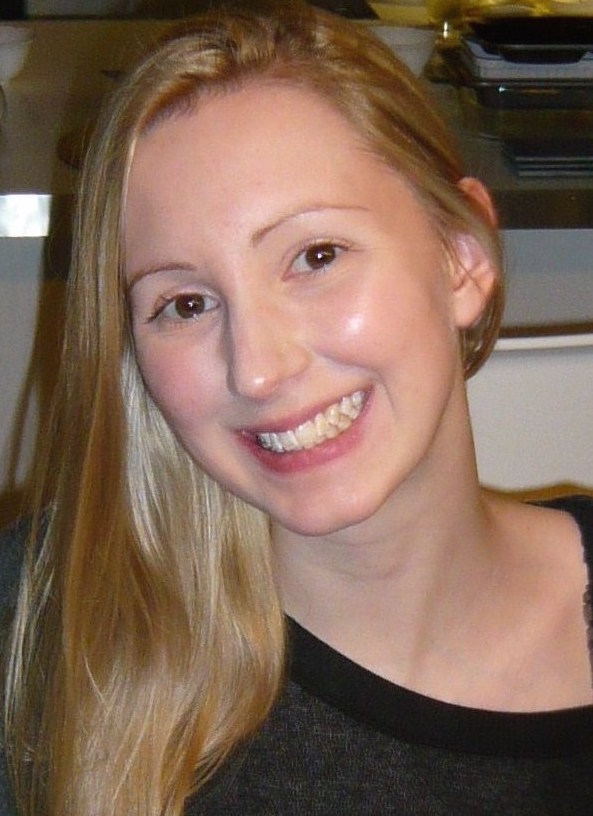
Thamani Freedom Gondo is affiliated with the Lund University Centre for Analysis and Synthesis , focusing on Food Science and Bioactive Compounds . Their work emphasizes analytical techniques for plant-based and marine food resources, particularly using supercritical fluid extraction . Key affiliations: Lund University, FORMAS-funded projects Research themes: Bioactive compound analysis, polyphenol characterization, sustainable food processing Recent publications highlight advancements in phlorotannin analysis from brown seaweeds and Lactiplantibacillus plantarum applications in non-dairy fermentation. Their 2023 work on ternary solvent systems demonstrated high selectivity in seaweed extraction.
Shasha Chong is an Assistant Professor of Chemistry at the California Institute of Technology and a Ronald and JoAnne Willens Scholar. She earned her B.S. from the University of Science & Technology of China (2008) and Ph.D. from Harvard University (2014). Her research bridges chemistry, physics, and biology to investigate the molecular mechanisms of cellular processes, focusing on intrinsically disordered regions (IDRs) in transcription proteins. Research Focus: IDRs in transcriptional regulation, cancer biology, liquid-liquid phase separation, and single-molecule imaging techniques. Grants & Awards: CCE Innovation Award (2024), ALSF Innovation Grant, Mallinckrodt Research Grant, Margaret E. Early Medical Research Trust Grant. Collaborations: Caltech-City of Hope Biomedical Research Initiative Grant (2025). Teaching: Co-instructor for courses like Biochemistry Laboratory (Ch 11) and Advanced Topics in Biochemistry (BMB/Bi/Ch 174). Labs & Teams: Leads the Chong Laboratory at Caltech, focusing on interdisciplinary approaches combining single-molecule imaging, genome editing, and bioinformatics.
John Evans is an Associate Professor and Jack Rominger Faculty Fellow in the Department of Aerospace Engineering Sciences at the University of Colorado Boulder, affiliated with the Applied Mathematics program. He serves as Associate Chair for Undergraduate Curriculum and is part of the Aerospace Mechanics Research Center (AMREC). His research focuses on computational mechanics, particularly fluid dynamics, fluid-structure interaction, and turbulence modeling using high-order and structure-preserving methods. Evans holds a PhD (2011) and MS (2008) in Computational and Applied Mathematics from the University of Texas at Austin, and dual BS/MS degrees in Mathematics and Applied Mathematics from Rensselaer Polytechnic Institute (2006). Before joining CU Boulder, he was a postdoctoral fellow at the Institute for Computational Engineering and Sciences (ICES). His research interests include isogeometric analysis, immersed methods, and data-driven turbulence modeling. Notable contributions include development of divergence-conforming discretizations for incompressible flows, stabilized collocation methods, and invariant subgrid stress models. He leads the AMREC lab and collaborates on plasma-fueled propulsion systems and geometrically sensitive simulations. Key Awards: 2021: Rocky Mountain AIAA Educator of the Year 2021: Gallagher Young Investigator Medal 2019-2021: Clarivate Highly Cited Researcher Professional Activities: Editor of Engineering Computations, Senior AIAA Member, Simons Visiting Professor (2019) Evans' work bridges advanced numerical methods with real-world engineering challenges. His lab develops open-source tools like XIGA for multi-material problems and focuses on immersive simulation environments. Current projects explore turbulence closure models, plasma propulsion, and topology optimization with B-spline-based approaches.
Amit Kumar is the Jaswinder and Tarwinder Chadha Chair Professor in the Department of Computer Science and Engineering at IIT Delhi. His research focuses on combinatorial optimization, online algorithms, and algorithmic fairness. He has taught courses such as Approximation Algorithms (COL 754), Design and Analysis of Algorithms (COL 351), and Numerical Analysis (COL 726). His work spans theoretical computer science with applications to clustering, scheduling, and fairness in evaluation processes. Research Interests Kumar's research emphasizes developing efficient algorithms for online and dynamic settings, particularly in constrained optimization and biased evaluation systems. He explores theoretical foundations of clustering, load balancing, and resource allocation, with recent contributions to fair food delivery systems and coreset constructions. Publications His recent work includes advancements in online convex paging (STOC 2025), consensus clustering (SODA 2025), and fairness-aware algorithms (AAAI 2024). Over 70 papers across top venues like STOC, SODA, and ICML reflect his expertise in algorithm design and analysis. Awards Best Paper Award at ISAAC 2023 for 'Clustering What Matters in Constrained Settings' Teaching & Mentorship Kumar instructs graduate and undergraduate courses in algorithms, data structures, and numerical methods. He advises students through these courses and collaborates with researchers on NSF-funded projects related to approximation algorithms and streaming systems.
Nima Mesgarani is an Associate Professor of Electrical Engineering at Columbia Engineering, Columbia University, affiliated with the Sense, Collect and Move Data Committee. His research bridges engineering and neuroscience through reverse-engineering neural signal processing mechanisms, leading to advancements in brain-machine interfaces, neural prosthetics, and speech processing algorithms. He received his PhD in Electrical Engineering from the University of Maryland and completed postdoctoral training at Johns Hopkins University's Center for Language and Speech Processing and UC San Francisco's Neurosurgery Department. Research Focus Professor Mesgarani's lab integrates computational neuroscience and engineering to study acoustic signal processing. Key areas include: Neural decoding of speech and auditory attention in multi-talker environments Development of brain-controlled hearing technologies Novel speech separation and synthesis algorithms inspired by cortical processing Cross-modal learning between auditory and visual systems Applications of large language models in neural signal interpretation Publication Trends Analysis of his 15 most recent articles (2025) reveals dominant themes: neural decoding techniques using intracranial EEG, brain-inspired speech separation models (e.g., Mamba architectures), applications of large language models in auditory neuroscience, cross-modal distillation methods, and clinical translation of audio processing algorithms. A strong emphasis emerges on real-time brain-computer interfaces and noise-robust speech processing. Laboratory and Collaborations Mesgarani directs an interdisciplinary lab developing neurotechnology for hearing restoration. His team collaborates with neurosurgery departments and speech processing centers, focusing on translating theoretical models into clinical brain-machine interfaces. The lab's work has yielded patents for brain-informed speech separation systems and attention-decoding frameworks.
Steven Rogak is a Professor in the Department of Mechanical Engineering at the University of British Columbia's Faculty of Applied Science. He holds a P.Eng. license and degrees including a B.A.Sc. in Mechanical Engineering from UBC, and M.Sc. and Ph.D. from Caltech. P.Eng., University of British Columbia B.A.Sc., University of British Columbia M.Sc., Ph.D., California Institute of Technology His research focuses on aerosol science, particularly solid nanoparticles from combustion processes, their climate and health impacts, and mitigation strategies. Key areas include: Soot morphology and transport properties Engine emission reduction via fuel injectors Indoor air filtration systems Membrane-based energy exchangers Atmospheric particulate analysis The 15 most recent articles span experimental and theoretical studies on soot characterization, membrane technologies, and aerosol dynamics, with applications in climate modeling, healthcare ventilation, and sustainable materials. Collaborations include Westport Innovations and interdisciplinary teams. Rogak leads the Aerosol Laboratory at UBC, where he applies fluid mechanics and heat transfer fundamentals to address environmental and health challenges. He emphasizes experimental rigor and welcomes graduate students with expertise in these areas.
Dr. Ng How Yong is an Assistant Professor at the Department of Civil and Environmental Engineering, National University of Singapore (NUS). He specializes in membrane science and wastewater treatment technologies, with a focus on membrane fouling mitigation and bioelectrochemical systems. His research integrates membrane bioreactors, anaerobic/aerobic processes, and microbial sensors for sustainable water reclamation and industrial wastewater management. Education: BEng/MEng (Civil Engineering, NUS, 1997/2000), Ph.D. (Environmental Engineering, UC Berkeley, 2002) Research interests include membrane separation processes, microbial fuel cell-based sensors for heavy metal detection, and energy recovery from wastewater. He has pioneered advancements in anaerobic ceramic membrane bioreactors and forward osmosis technologies. Key contributions span over 50 peer-reviewed publications, focusing on optimizing biological treatment systems, understanding fouling mechanisms, and developing novel desalination processes. His work bridges fundamental science and engineering applications, addressing global water scarcity challenges. Awards: IWA Fellow (2012), NUS Young Researcher Award (2009), Singapore Youth Award (2008) Dr. Ng has led multiple international conferences, including the 8th IWA Specialist Conference on Membrane Technology (2017) and the 3rd Asia-Pacific Young Water Professional Conference (2010). He serves on editorial boards of Water Research , Journal of Water Reuse and Desalination , and the International Water Association committees.
Martin Z. Bazant is the E. G. Roos (1944) Professor of Chemical Engineering and Professor of Mathematics at the Massachusetts Institute of Technology (MIT), holding the Digital Learning Officer role in the Department of Chemical Engineering. His research focuses on mathematical modeling of electrochemical systems, transport phenomena, and applied mathematics, with significant contributions to battery technology and electrochemical energy storage. He is affiliated with MIT’s Department of Mathematics and the MIT Energy Initiative (MITEI), leading initiatives like the Center for Battery Sustainability and D3BATT. Education: Ph.D. from Harvard University (1997), M.S. and B.S. from the University of Arizona (1993, 1992). His work bridges theory and application, addressing challenges in lithium-ion batteries, solid-state systems, and electrolyte dynamics. Notable achievements include pioneering studies on coupled ion-electron transfer mechanisms and phase separation in battery materials. He is an elected member of the National Academy of Engineering (2025) and a Fellow of the Electrochemical Society (2023). As an educator, he develops MOOCs on transport phenomena and contributes to digital learning initiatives. His research group explores advanced battery diagnostics, machine learning for materials science, and environmental applications of electrochemical processes. Key collaborations include startups like Lithios, Inc., and leadership roles in professional societies such as the International Electrokinetics Society.
Nadia Polikarpova is an Associate Professor in the Department of Computer Science and Engineering at the University of California, San Diego . She earned her PhD from ETH Zurich in 2014 under Bertrand Meyer , followed by postdoctoral research at MIT CSAIL with Armando Solar-Lezama . Her academic contributions have been recognized with prestigious awards including the 2020 Sloan Fellowship , 2020 Intel Rising Stars Award , and 2020 NSF CAREER Award . Polikarpova's research focuses on program synthesis , program verification , and type systems . She leads the Programming Systems group at UCSD and contributes to the IFIP Working Group 2.8 on Functional Programming since 2022. Her work spans foundational research and practical tools, including projects like Synquid , SuSLik , and Laurel that combine formal methods with machine learning for code generation. Her recent publications in venues like OOPSLA , NeurIPS , and ICFP reveal trends in AI-assisted programming , live programming environments , and formal verification . She has advised numerous PhD and Master’s students including Shraddha Barke , Zheng Guo , and Tristan Knoth , many of whom have moved to prominent academic and industry positions. Notable artifacts from her lab include tools like ColDeco for spreadsheet inspection and Superfusion for eliminating intermediate data structures. 2020 : Sloan Fellow 2020 : Intel Rising Stars Award 2020 : NSF CAREER Award 2021 : Distinguished Paper at POPL 2023 : Distinguished Artifact at PLDI 2023 : Distinguished Paper at OOPSLA Polikarpova actively contributes to academic service, serving on program committees for PLDI , POPL , and OOPSLA , and co-chairing the OOPSLA Review Committee in 2023. She has delivered keynotes at APLAS'20 and PLDI'24 , emphasizing the integration of large language models with formal methods.
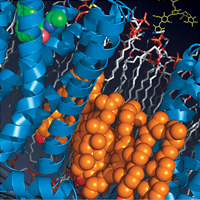
Vadim Cherezov, the Ester Dornsife Chair in Biological Sciences and Professor at the University of Southern California (USC), leads groundbreaking research in membrane protein structure and function. Affiliated with the Bridge Institute, Department of Chemistry, and Michelson Center for Convergent Bioscience, his work focuses on GPCRs, ion channels, and transporters—critical targets for drug discovery. His team leverages advanced techniques like Lipidic Cubic Phase (LCP) and Serial Femtosecond Crystallography (SFX) at XFEL facilities to solve high-resolution structures under physiological conditions. Institutional Affiliations: Bridge Institute, USC Michelson Center, Department of Chemistry, Department of Pharmacology and Pharmaceutical Sciences. Key Collaborations: Katritch Lab, Kuhn Lab, NIH, European XFEL. His research explores the role of lipids in modulating GPCR function, addressing diseases like Alzheimer’s, diabetes, and cancer. By solving the structure of the A 2A adenosine receptor via sulfur SAD phasing at XFEL, Cherezov’s lab demonstrated de novo phasing without heavy atoms. This breakthrough enables structural studies of previously intractable membrane proteins. Scientific Awards & Grants: NIH R01 GM108635, U54 GM094618, U54 GM094599, R01 GM095583 Science Signaling Breakthroughs of the Year (2014) Cherezov mentors a dynamic team, including postdocs (e.g., Dong-Gyun Kim), graduate students (e.g., Behnaz Davoudinasab), and alumni (e.g., Benjamin Stauch at Eli Lilly, Nairie Michaelian at Genentech). His lab’s publications span Nature , Science , and Cell , with recent work on Science Advances (2025) addressing ABEL-FRET for GPCR dynamics.
Katherine T. Faber is the Simon Ramo Professor of Materials Science at the California Institute of Technology, part of the Division of Engineering and Applied Science. She leads the Faber Research Group, focusing on mechanical behavior of brittle materials, ceramics for extreme environments, porous solids, and cultural heritage science. Her work bridges engineering, art conservation, and space technology. Education: B.S., Alfred University, 1975; M.S., Penn State, 1978; Ph.D., UC Berkeley, 1982. Academic roles include Ramo Professor since 2014 and leadership in the American Ceramic Society. She collaborates with NASA, JPL, and institutions like the Art Institute of Chicago for cultural heritage projects. Research interests span energy materials (thermal barrier coatings, lunar regolith electrolysis), functional porous ceramics (battery separators, biomedical filters), and art conservation (nanoparticle analysis in historical artifacts). Recent projects include shape-memory ceramics and fracture mechanics studied via synchrotron X-rays. Publications highlight innovations in freeze-casting, environmental barrier coatings, and interdisciplinary studies. Awards include the W. David Kingery Award (2024) and American Academy of Arts and Sciences membership. Her group emphasizes sustainability, with a Platinum Green Lab certification. Advises numerous graduate and undergraduate students, including those in SURF and WAVE programs. Grants and collaborations span NASA, NSF, and industry partnerships. Labs focus on ceramic processing, advanced characterization, and additive manufacturing.
Heather Battey is a Professor in the Department of Mathematics at Imperial College London's Faculty of Natural Sciences. Her work bridges foundational statistical theory with practical scientific applications, focusing on parametrization effects, sparsity, and high-dimensional inference. Education PhD, University of Cambridge (2008-2011) Research Interests Battey's research examines how model structure and parametrization influence inferential procedures, particularly in high-dimensional settings. She investigates the equivalence between sparsity and reparametrization, and challenges traditional Fisherian statistical abstractions through modern practices. Her publications reveal a pattern of innovation in high-dimensional regression, covariance matrix analysis, and statistical methodology for complex data. Collaborations span disciplines including machine learning, economics, and biomedical research. Scientific Awards Fellow of the Institute of Mathematical Statistics (2023) EPSRC Early Career Research Fellowship (2020-2026) EPSRC Postdoctoral Research Fellowship (2017-2020) Advising and Grants Battey supervises PhD students Charlotte Edgar, Jakub Rybak, and Rebecca Lewis, with informal guidance to Henrique Hoeltgebaum. Over 15 pre-doctoral researchers have been mentored in topics ranging from support vector machines to spatial point processes. Current funding includes an EPSRC grant for theoretical foundations of inference with nuisance parameters and prior support for covariance matrix inference.
Associate Professor Ng Bing Feng leads research in Additive Manufacturing, Aerospace Engineering, and Thermofluids at Nanyang Technological University's School of Mechanical & Aerospace Engineering. As Cluster Director for Smart & Sustainable Building Technologies at NTU's Energy Research Institute, he oversees projects spanning energy-efficient cooling technologies, advanced filtration systems, and bio-inspired materials. His interdisciplinary work integrates advanced manufacturing with environmental engineering, focusing on sustainable solutions for air quality management and thermal regulation. Current research explores radiative cooling technologies, acoustic agglomeration for emissions control, and crashworthy structures via biomimetic design. Professor Ng's publications demonstrate consistent innovation in multi-scale manufacturing and fluid dynamics, with growing emphasis on sustainable urban technologies. Methodologies combine experimental fluid dynamics with computational modeling and AI-driven design. Leadership Roles: Cluster Director, Energy Research Institute @ NTU Principal Investigator for multiple industry collaborations in sustainable materials Research Output: 42+ publications in high-impact journals Multiple patents in filtration technologies and cooling systems
André DeHon is the Oliver C. Boileau Jr. and Nan Eleze Boileau Professor of Electrical Engineering at the University of Pennsylvania, with affiliations in the Electrical and Systems Engineering (ESE) and Computer and Information Science (CIS) departments. He founded the Penn Computer Engineering (CMPE) program and directs the DARPA-sponsored CyberSavvy Security Center. His research spans reconfigurable computing, FPGA architecture, interconnect design, hardware security, and energy efficiency, with a focus on adapting to fabrication imperfections and runtime variability. His work explores programmable substrates (e.g., CMOS VLSI, molecular electronics) and algorithmic mappings to create resilient, efficient systems. Current projects include runtime feedback mechanisms (REFINE), partial reconfiguration (ExHiPR), and security frameworks like SCALPEL and μSCOPE. Recent publications highlight advancements in FPGA compilation (PLD, HiPR), security (SCALPEL, μSCOPE), and interconnect optimization (Asymmetry in NoC). These studies intersect computer architecture, security, and embedded systems. Scientific awards and recognitions: 2023 IEEE Fellow 2020 IEEE Mary Kenneth Keller Teaching Award 2018 ACM Fellow TCFPGA Hall of Fame (2019) Best Paper at ICFPT 2015 Academic leadership: He chairs the ACM/SIGDA Technical Committee on FPGAs and Reconfigurable Computing, previously held faculty roles at Caltech (1999–2006), and was a postdoc at UC Berkeley (1996–1999). Education includes MIT SB (1990), SM (1993), and PhD (1996) in Electrical Engineering and Computer Science.
Dr. Xinwei Ye serves as a Researcher in the Inorganic Chemistry and Catalysis division at Utrecht University's Faculty of Science. His primary affiliation is with the Department of Chemistry, where he conducts cutting-edge research on heterogeneous catalysis for environmental applications, particularly focusing on selective catalytic reduction (SCR) systems for automotive emissions control. With a strong background in inorganic materials and advanced characterization techniques, Dr. Ye contributes significantly to understanding catalyst structure-performance relationships. Educational Background: Master of Science (MSc) - Institution not specified in source Doctor of Philosophy (PhD) in Chemistry, Utrecht University (2022) Dr. Ye's research program centers on the development and mechanistic investigation of copper-exchanged zeolite catalysts for NH 3 -SCR processes. His work integrates multiple advanced characterization methodologies including operando spectroscopy, scanning transmission X-ray microscopy (STXM), and atom probe tomography to probe catalyst behavior under working conditions at nanometer resolution. This multi-technique approach enables unprecedented insights into active site speciation, reaction mechanisms, and deactivation pathways in emission control catalysts. Analysis of Dr. Ye's publication record from 2018-2022 reveals a cohesive research trajectory focused on copper-zeolite SCR catalysts. His work consistently addresses critical challenges in catalyst durability and performance optimization through fundamental understanding of structure-activity relationships. The publications demonstrate increasing sophistication in experimental approaches, moving from membrane synthesis (2018) to nanoscale deactivation studies (2020) and ultimately to comprehensive structure-performance correlations in his doctoral thesis (2022). As a core member of Utrecht University's catalysis research community, Dr. Ye collaborates extensively with the renowned Weckhuysen group. His research is conducted within well-equipped laboratories featuring state-of-the-art instrumentation for catalyst synthesis, testing, and characterization, including access to synchrotron radiation facilities for advanced X-ray techniques.