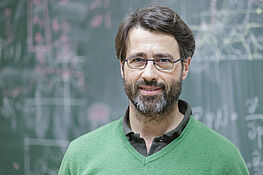
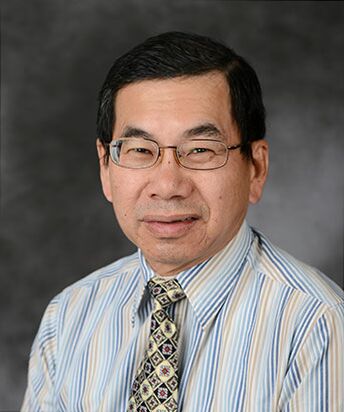
Paul Dauenhauer is a Distinguished McKnight University Professor at the University of Minnesota, affiliated with the College of Science and Engineering. His research focuses on catalysis, reaction engineering, and sustainable energy technology, particularly in converting renewable carbonaceous feedstocks like biomass and shale into fuels and chemicals. Research Group : Catalysis, Separations & Reaction Engineering Contact : hauer@umn.edu | 484 Amundson Hall, Minneapolis, MN His work emphasizes dynamic heterogeneous catalysis , where catalysts are programmed to change over time to enhance reaction rates and selectivity beyond traditional limits. Techniques like Quantitative Carbon Detection (QCD) and Reactive Gas Chromatography (RGC) enable advanced analysis of complex chemical mixtures and zeolite acid sites. Recent publications explore catalytic resonance theory , programmable catalysts , and micro-mesoporous materials , with applications in energy sustainability and chemical manufacturing. Collaborations with industry and commercialization of QCD through Activated Research Company highlight practical impacts. Scientific Awards : Distinguished McKnight University Professor His lab, located in Amundson Hall, develops cutting-edge methods for energy research, supported by tax-deductible donations to the Dauenhauer Energy Research Gift Fund. The group trains students in renewable energy challenges and advanced catalytic techniques.
Prof. Dr. Aleksandra Perić-Grujić is a Full Professor at the Department of Analytical Chemistry and Quality Control within the Faculty of Technology and Metallurgy at the University of Belgrade . She has been active in academia since 2013, with a focus on quality control systems and environmental chemistry. Her work spans pharmaceutical industry standards, instrumental analytical methods, and laboratory accreditation. Email: alexp@tmf.bg.ac.rs Office: TMF building, room 252b Research Interests include: Environmental Chemistry: Monitoring heavy metals in water, soil, and sediments Analytical Chemistry: Development of instrumental methods and chemometric models Quality Control: Pharmaceutical industry standards, accreditation of laboratories Adsorption Materials: Chitosan-based hydrogels for pollutant removal Chemometrics: Data analysis techniques for metal alloys and environmental studies Food Industry Applications: Quality management in food production and distribution Recent Publications address topics like metal alloy similarity modeling, heavy metal adsorption by hydrogels, and chemometrics in environmental analysis. Her work demonstrates interdisciplinary applications of analytical chemistry in pollution control and industrial quality assurance. Mentoring involves guiding students in doctoral and master's theses on themes such as: Heavy metal removal using waste materials Quality management in pharmaceutical and polymer industries Chemical analysis of consumer products and environmental samples Standardization of laboratory practices and industrial processes
Alan Wassyng is a Professor in the Department of Computing and Software at McMaster University's Faculty of Engineering. With over four decades of academic contributions, he specializes in formal methods, safety-critical systems, and software assurance cases. Key research intersections: Automotive software safety Medical device software certification Cyber-physical systems engineering Model-driven development with domain experts His scholarly work emphasizes rigorous methodologies for software verification, particularly through tabular expressions and Workflow+ models. Recent projects include a $2M GM Canada partnership to advance automotive safety systems. Teaching leadership spans interdisciplinary capstone projects in biomedical engineering, covering software design, safety-critical development, and mechatronics applications.
Fang Liu is an Assistant Professor at Chalmers University of Technology, Department of Materials and Manufacturing. Her research focuses on uncovering the physical and chemical mechanisms in material systems such as high-temperature alloys, polymer composites, and semiconductors, using advanced microscopy and spectroscopy techniques. Specializes in structural battery composites, creep behavior, and high-temperature corrosion Collaborates with industry partners and theoretical researchers Develops reliable prediction tools for material performance Research Trends (2023–2025): Structural battery composites with carbon fibers and hybrid electrolytes Microstructural analysis via atom probe tomography and focused ion beam High-temperature oxidation and corrosion resistance Mechanical-electrochemical coupling in multifunctional materials Key Collaborations : Leif Asp (Chalmers), Johanna Xu (Chalmers), Marcus Johansen (Chalmers) Industry partners: Office of Naval Research, VINNOVA, Wallenberg AI Program
Professor Nicholas Warren is a Chair in Sustainable Materials at the School of Chemical, Materials and Biological Engineering at the University of Sheffield. With a PhD from Sheffield and academic experience at Leeds University (2016-2024), his research integrates polymer chemistry with automation technologies. Education: University of Bristol (2005), University of Sheffield (PhD) Academic Positions: Postdoc at Sheffield (2005-2016), University Academic Fellow at Leeds (2016-2024), Associate Professor (2021-2024) Current Role: Chair in Sustainable Materials (2024-present) Research focuses on polymer science with flow chemistry , online monitoring , and artificial intelligence to advance sustainable materials. Key article trends include self-driving laboratories , multi-objective optimization , and nanostructured polymer systems . Scientific recognitions include: 2022 Macro Group UK Young Researchers Medal 2023 RSC Reaction Chemistry & Engineering Outstanding Early Career Paper Award Advisees span current and alumni PhD students like Dr Stephen Knox , Anna Morrell , and Dr Charlotte Pugsley . His team employs self-driving lab platforms that combine robotics, AI, and online analytics for accelerated materials discovery.
Dr Smitha Gopinath is a Lecturer in the School of Chemical, Materials and Biological Engineering at the University of Sheffield , where she leads research in sustainable engineering systems within the Sustainable Design Laboratory (SDL) . Education & Career Path PhD in Chemical Engineering, Imperial College London Post-doctoral researcher, Applied Mathematics and Plasma Physics Group, Los Alamos National Laboratory Research Focus Dr Gopinath’s interdisciplinary work centres on the design, calibration and operation of sustainable engineering systems . She develops high-fidelity models and large-scale optimisation algorithms tailored to energy and materials challenges. Core interests include: Thermo-mechanical energy conversion devices (heat pumps, organic Rankine cycles) Carbon-capture utilisation and storage (CCUS) via novel solvents and separation systems Power-grid expansion and operation for renewable integration and decarbonisation Methodologically, she integrates Integrated Molecular and Process Synthesis (IMPS) with Optimisation Accelerated by domain Knowledge (OAK) to co-design molecules, materials and flowsheets that meet stringent energy and environmental targets. Publication Landscape Across 2015–2025 her publications reveal a clear trajectory from fundamental thermodynamic measurements and molecular design toward rigorous optimisation of large-scale energy systems. Early work concentrated on CO₂ solubility and carbonation kinetics of steel slag, providing essential data for carbon-sequestration schemes. Subsequent papers introduced advanced optimisation frameworks—outer-approximation algorithms, exact reformulations and feasibility-based methods—applied to solvent-based CO₂ capture, organic Rankine cycle working-fluid selection and AC optimal power flow (ACOPF). Recent contributions benchmark global optimality certificates for ACOPF problems, underscoring her drive to bridge chemical process systems engineering with electrical power systems optimisation. Teaching & Mentoring Dr Gopinath teaches undergraduate modules: CPE440 (Particle Technology) CPE170 (Particle Technology) She actively invites prospective PhD students to join the Sustainable Design Laboratory, offering supervision on projects spanning sustainable process design, renewable energy systems and algorithmic optimisation. Laboratory & Collaborative Networks She directs the Sustainable Design Laboratory (SDL), a multidisciplinary team leveraging systems engineering, multi-scale modelling, process simulation and optimisation to re-imagine a sustainable chemical and energy industry. The SDL collaborates with international partners, including Los Alamos National Laboratory and leading researchers in applied mathematics and power systems engineering.
Kate White serves as an Assistant Professor in the Department of Chemistry at the University of Southern California's Dornsife College of Letters, Arts and Sciences, with cross-appointment in Quantitative and Computational Biology. Affiliated with the Bridge Institute, she pioneers experimental and computational tools to bridge structural biology and physiology through multi-scale approaches spanning atomic to cellular resolutions. Education: Ph.D. in Pharmacology, University of North Carolina – Chapel Hill (2014) Research Focus: Her laboratory investigates insulin hormone processing and maturation mechanisms in pancreatic β-cells, employing chemical biology, multi-modal imaging, biophysics, and computational modeling to study peptide hormone secretion. Defects in these processes underlie mental disorders (depression, bipolar) and metabolic diseases (diabetes). Current work defines signaling pathways for hormone maturation, examines inter-organelle communication, characterizes cellular subtypes, and develops community-based modeling tools. Publication Trends: Recent work (2022-2024) demonstrates heavy reliance on soft X-ray tomography and cryo-electron tomography for cellular mapping, combined with dielectrophoresis separation techniques and computational modeling. Key themes include insulin vesicle maturation, beta cell structural heterogeneity during pregnancy, and organelle interaction quantification. Laboratory Structure: The Kate White Lab operates through four integrated research thrusts: (1) signaling pathway characterization for peptide maturation, (2) inter-organelle communication biochemistry, (3) cellular/organelle subtype analysis in secretory cells, and (4) development of next-generation cellular modeling infrastructure for scientific communities.
Sarbajit Banerjee is a Senior Professor in the Department of Materials Science & Engineering at Texas A&M University. His research spans solid-state and materials chemistry, focusing on nanoscale materials, electronic structure, x-ray spectroscopy, thin films, light metals, and nanocomposites. 2022: Distinguished Achievement Award in Graduate Mentoring 2021: Edith and Peter O’Donnell Award in Science 2017: Fellow, Institute of Physics His recent work explores neuromorphic computing , Li-ion diffusion , and redox photocatalysis , with over 15 publications (2022–2025) addressing battery cathode design, corrosion protection, and advanced material synthesis. Awards highlight his contributions to graduate mentoring and early-career research excellence. 2010: Cottrell Scholar Award 2009: NSF CAREER Award
Rossana Bellopede is an Associate Professor at the Politecnico di Torino, affiliated with the Department of Environmental, Land and Infrastructure Engineering (DIATI) . She leads the Raw Materials (DIATI) laboratory and contributes to projects like CITERIA (critical raw material recovery) and SHOWCAVE (tourist cave impact mitigation). Her roles include coordinating PhD programs in Civil and Environmental Engineering and teaching courses on Circular Economy , Natural Stone Characterization , and Occupational Safety . Research focuses on solid waste recovery (tunnel muck, mining tailings) natural stone durability (weathering, bowing phenomena) microplastic pollution (karst systems, groundwater, caves) asbestos testing (industrial safety) Recent publications examine textile wastewater microfibers (2025), microplastic transport in karst environments (2025), and critical raw material recovery techniques (2025). Her work aligns with SDG 12 (Responsible Consumption) and SDG 11 (Sustainable Cities). Scientific participations include Advisor for ANIM (National Mining Engineers Association) Organizing committee of Heritage Stones Workshop (2021) Research network PROMETIA (2018-2025) She manages commercial projects like CE marking for Piasentina Stone , develops FAST4C circular textiles protocols (2024-2028), and supervises PhD candidates studying microplastic pollution in karst systems stone durability mechanisms sustainable construction materials
Yuliya Snihur is an Associate Professor of Entrepreneurship at IESE Business School, University of Navarra . She holds a PhD in Management from IESE Business School and bachelor's degrees in International Business from Northeastern University and European Management from NEOMA Business School. Prior to her academic career, she gained industry experience in corporate finance at multinational corporations including Johnson & Johnson and Coca-Cola, as well as startup environments. Her research focuses on entrepreneurial framing , business model innovation , and strategic adaptation in digital transformation contexts. She examines how CEOs use linguistic tools to shape organizational responses to disruptive innovations, particularly through opportunity framing that influences business model blending versus separation strategies. Her work combines cognitive theory, organizational behavior, and strategic management principles. Current research explores the temporal dimensions of opportunity framing in prolonged adaptation processes, analyzing how intensity, concreteness, future orientation , and inclusiveness of executive communication affect organizational response to technological disruption. Her 2025 publications examine innovation legitimacy and ethical framing in entrepreneurial contexts.
Christoph Dellago is a full Professor of Computational Physics at the Faculty of Physics of the University of Vienna, where he has been a faculty member since 2003. He currently serves as Director of the Erwin Schrödinger Institute for Mathematics and Physics, Head of the Computational and Soft Matter Physics Group, and Project lead of EuroCC Austria - National Competence Centre for Supercomputing. Previously, he served as Dean of the Faculty of Physics (2009-2012) and Coordinator of the Doctoral College Advanced Functional Materials (DCAFM). Full Professor, Faculty of Physics, University of Vienna (2003-present) Director, Erwin Schrödinger Institute for Mathematics and Physics (2017-present) Head, Computational Physics and Soft Matter Group (2024-present) Coordinator, Doctoral College Advanced Functional Materials (DCAFM) Austrian Representative, Council of CECAM Dellago received his PhD in Physics from the University of Vienna in 1996, followed by postdoctoral research at UC Berkeley as a Schrödinger Fellow of the Austrian Science Foundation. His research focuses on developing computational methods to study rare events in condensed matter systems, particularly transition path sampling methodology for simulating nucleation, chemical reactions, and biomolecular reorganizations. He has pioneered the application of machine learning to molecular structure recognition and potential energy surfaces. Recent work examines self-assembly of nanocrystals, biopolymer folding, aqueous interfaces, phase separation in alloys, thermo-polarization, cavitation, and freezing phenomena. Analysis of Dellago's recent publications (2023-2025) reveals a strong emphasis on machine learning applications in computational physics, particularly neural network potentials for simulating water interfaces, crystal defects, and phase transitions. His work bridges traditional statistical mechanics with modern computational techniques, creating powerful tools for studying complex dynamical processes that occur on timescales far beyond conventional molecular dynamics simulations. The publications demonstrate increasing integration of machine learning with rare event sampling methods, reflecting the cutting-edge direction of computational statistical mechanics. Förderpreis der Stiftung Futura zur Förderung junger Südtiroler im Ausland (1997) The Raymond and Beverly Sackler Prize in the Physical Sciences (2005) UNIVIE Teaching Award of the University of Vienna (2014) Dellago leads an active research group with multiple PhD students and postdocs, focusing on computational statistical mechanics. His group develops trajectory-based sampling methods and machine learning approaches for molecular simulation. He has secured significant funding through EuroCC Austria and various research platforms including the Research Platform Accelerating Photoreaction Discovery and the Research Platform Erwin Schrödinger International Institute for Mathematics and Physics. His research has been supported by numerous grants enabling advanced computational infrastructure for high-performance simulations. The Dellago Group operates within the Computational and Soft Matter Physics division at the University of Vienna, with strong connections to the Research Network Data Science. The group collaborates extensively with international research institutions and maintains close ties with the Erwin Schrödinger Institute, which Dellago directs. Their research environment combines theoretical physics, computational chemistry, and machine learning expertise to tackle fundamental questions in condensed matter physics and soft matter systems.
Dr. Yeo Howe Lim is a Professor and Department Chair of Civil Engineering at the University of North Dakota, with a focus on water resources engineering. He serves as Graduate Program Director for Civil and Environmental Engineering, teaching courses in fluid mechanics, hydrology, and applied hydraulics. Education: BEng & MEng from University of Canterbury, PhD from Memorial University of Newfoundland Research Areas: Open channel hydraulics, flood frequency analysis, streambank stabilization, urban stream revitalization, cold region hydrodynamics His research explores climate change impacts on flood patterns, hydrodynamic modeling of wetlands, and innovative use of Unmanned Surface Vehicles for aquatic studies. Recent publications emphasize lithium extraction technologies in oilfields, distributed Muskingum flood routing models, and optimization algorithms for cold climate water systems. Scientific awards include the Dean’s Outstanding Faculty Award (2013), ASCE Outstanding Reviewer recognition (2009), and the Institution of Civil Engineers (UK) Overseas Prize (2001). He has supervised numerous graduate students in hydrological modeling, including Mohammed Almousa and Vahid Atashi. Current projects involve HYCAT technology for bridge scour assessment, LiDAR bathymetry modeling, and climate change adaptation tools for cold region water management. His work bridges computational hydrology, hydraulic structure design, and sustainable water resource solutions.
Dr. Mehdi Jafarian is a Senior Lecturer in the School of Chemical Engineering at the University of Adelaide . His work focuses on hydrogen production , CO2 capture , solar thermal energy , and chemical looping combustion . Key research areas include: Solar thermal integration in industrial processes Hydrogen generation via methane pyrolysis CO2 sequestration technologies Advanced water treatment systems Thermochemical energy storage Research Trends : Recent publications emphasize hydrogen production optimization , PFAS removal , and molten metal reactor systems . Sub-fields span flash reactor modeling , hydrodynamic cavitation , and membrane-free electrolysis . Contact : mehdi.jafarian@adelaide.edu.au
William Phillip is a Professor and Director of Graduate Studies in the Department of Chemical and Biomolecular Engineering at the University of Notre Dame, holding the Rooney Family Collegiate Chair of Engineering. His research focuses on membrane science and engineering for sustainable separations at the water-energy nexus, developing energy-efficient alternatives to traditional thermal separation processes. His educational background: Ph.D. in Chemical Engineering, University of Minnesota—Twin Cities, 2009 B.S. in Chemical Engineering, University of Notre Dame, 2004 Phillip's research interests span battery separators, desalination, diffusion and mass transfer, energy efficient separations, nanoporous materials, osmotically driven membrane processes, polymers, self-assembly, ultrafiltration, water purification, water treatment, and energy conversion and efficiency. His work leverages nanoscale characterization to correlate membrane structure and chemistry with transport properties, enabling precise control over chemical species transport for next-generation separation systems. Analysis of his 2019-2020 publications reveals a multidisciplinary focus on nanofiltration membrane development, antifouling strategies, and fundamental electrolyte transport mechanisms. His work bridges materials science, chemical engineering, and environmental applications to advance membrane technologies for water purification and energy systems. His scientific awards include: 2024 Notre Dame Graduate School award As Director of Graduate Studies, Phillip oversees the graduate program and mentors students in Chemical and Biomolecular Engineering. His research is supported by WATER Laboratory activities in membrane science and engineering. Phillip directs the Water purification and Advanced Transport Engineering Research (WATER) Laboratory, which investigates membrane structure-chemistry relationships to design systems for enhanced chemical separations at the water-energy nexus, with applications in water treatment and energy-efficient processes.
E. Bryan Coughlin serves as a Professor in the Department of Polymer Science and Engineering at the University of Massachusetts Amherst, where his research program focuses on tailoring chemical functionality to develop advanced polymeric materials for demanding applications. His work bridges fundamental synthesis with practical material characterization to address critical challenges in energy, sustainability, and safety. His academic foundation includes: B.A. in Chemistry from Grinnell College (1988) Ph.D. in Chemistry from the California Institute of Technology (1993) Professor Coughlin's research spans five interconnected domains: ion transport mechanisms in organic media for next-generation fuel cells and batteries; polymer upcycling strategies to overcome the durability-recyclability paradox of modern plastics; precision synthesis of architecturally complex block copolymers via controlled polymerization and single-molecule insertion; development of fire-resistant polymers for transportation safety; and creation of nanoscale inorganic-organic hybrid materials using silsesquioxanes and boron clusters. This multidisciplinary approach emphasizes iterative design cycles where characterization directly informs synthetic refinements. Analysis of his recent publication record reveals a dominant focus on block copolymer architectures for energy applications, particularly anion exchange membranes with tunable chemical stability. His group demonstrates exceptional expertise in polymer upcycling—especially chemical valorization of waste polyolefins—and employs advanced techniques like thiol-ene click chemistry to functionalize backbone polymers. The consistent themes across his work include manipulating nanoscale morphology through molecular design, optimizing ion transport pathways, and balancing material performance with environmental sustainability.