معرفی
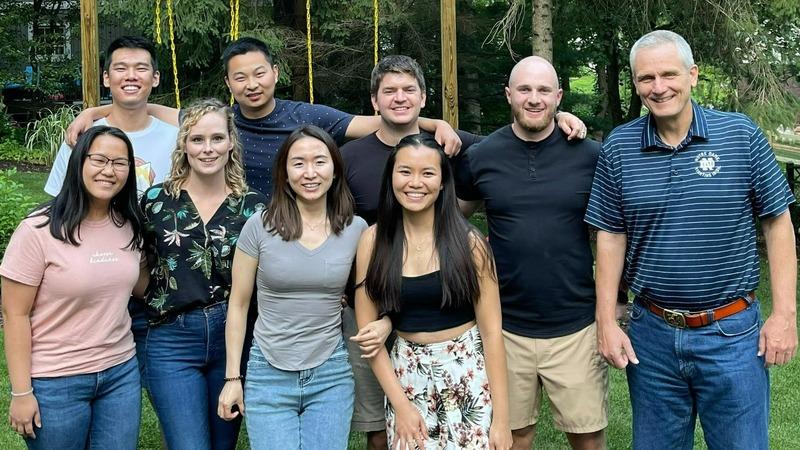
William Phillip is a Professor and Director of Graduate Studies in the Department of Chemical and Biomolecular Engineering at the University of Notre Dame, holding the Rooney Family Collegiate Chair of Engineering. His research focuses on membrane science and engineering for sustainable separations at the water-energy nexus, developing energy-efficient alternatives to traditional thermal separation processes.
His educational background:
- Ph.D. in Chemical Engineering, University of Minnesota—Twin Cities, 2009
- B.S. in Chemical Engineering, University of Notre Dame, 2004
Phillip's research interests span battery separators, desalination, diffusion and mass transfer, energy efficient separations, nanoporous materials, osmotically driven membrane processes, polymers, self-assembly, ultrafiltration, water purification, water treatment, and energy conversion and efficiency. His work leverages nanoscale characterization to correlate membrane structure and chemistry with transport properties, enabling precise control over chemical species transport for next-generation separation systems.
Analysis of his 2019-2020 publications reveals a multidisciplinary focus on nanofiltration membrane development, antifouling strategies, and fundamental electrolyte transport mechanisms. His work bridges materials science, chemical engineering, and environmental applications to advance membrane technologies for water purification and energy systems.
His scientific awards include:
- 2024 Notre Dame Graduate School award
As Director of Graduate Studies, Phillip oversees the graduate program and mentors students in Chemical and Biomolecular Engineering. His research is supported by WATER Laboratory activities in membrane science and engineering.
Phillip directs the Water purification and Advanced Transport Engineering Research (WATER) Laboratory, which investigates membrane structure-chemistry relationships to design systems for enhanced chemical separations at the water-energy nexus, with applications in water treatment and energy-efficient processes.