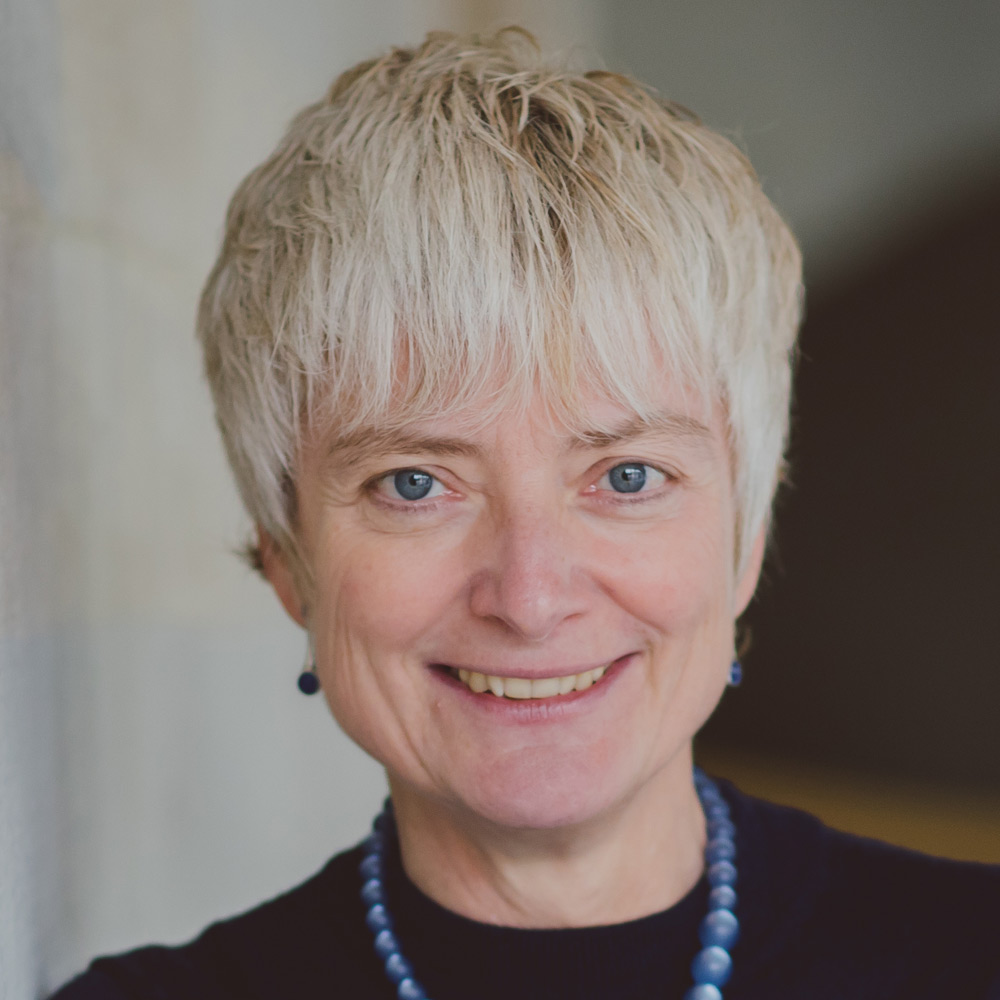
Marta Kutas is a Distinguished Professor in the Department of Cognitive Science at the University of California, San Diego (UCSD), where she has held roles including Department Chair (2007–2019), Director of the Center for Research in Language (2007–2022), and Chancellor's Associates Endowed Chair (2017–2022). Her research focuses on language processing, neuropsychology, and electrophysiological methods, with a particular emphasis on event-related potentials (ERPs). She has contributed significantly to understanding semantic integration, memory, and neural mechanisms underlying language comprehension. Education includes a B.A. from Oberlin College (1971) and a Ph.D. in Psychology from the University of Illinois (1977). She has held adjunct roles at San Diego State University and the UCSD Department of Neurosciences. Her awards include the Revelle Medal (2023), membership in the American Academy of Arts and Sciences (2018), and the Cognitive Neuroscience Society's Distinguished Career Award (2015). Her research interests span language comprehension/production, neuropsychology, and ERP methodologies. Key publications analyze semantic processing, memory-related brain potentials, and the impact of individual knowledge on word processing. She has collaborated on studies involving Alzheimer's, Parkinson's, and schizophrenia, using ERPs to explore cognitive deficits.
Pierre-Henri Paris is an Associate Professor (Maître de Conférences) at Paris-Saclay University since September 2024. Previously, he worked as a Postdoctoral Researcher at Telecom Paris (Institut Polytechnique de Paris) from September 2020 to August 2024. His academic journey includes a PhD in Artificial Intelligence from Sorbonne University and CNAM (Conservatoire National des Arts et Métiers) completed in 2020. Education: PhD in Artificial Intelligence, 2020, Sorbonne University and CNAM M.Sc. in Artificial Intelligence, 2016, CNAM M.Sc. in Mathematics, 2008, CY Cergy Paris University (incomplete) Pierre-Henri Paris's research focuses on the intersection of artificial intelligence, knowledge representation, and natural language processing. His work particularly emphasizes knowledge graphs, entity linking, and data quality. He has made significant contributions to projects like YAGO 4.5, which enhances knowledge bases with cleaner, logically consistent structures, and MAFALDA, a benchmark for fallacy classification. His research often bridges theoretical foundations with practical applications, particularly in how knowledge can be effectively represented, extracted, and utilized in complex systems. His recent publications reveal a strong focus on knowledge graph enhancement, semantic representation, and natural language understanding. The work on YAGO 4.5 demonstrates his commitment to creating more robust knowledge bases, while MAFALDA shows his interest in the intersection of language understanding and logical reasoning. His research trajectory indicates a consistent exploration of how structured knowledge can be integrated with linguistic analysis to create more intelligent systems. Advising: PhD students: Simon Coumes (2022-), Chadi Helwe (2022-2024), François Amat (2022-) Master's students: Syrine El Aoud (2021), Ayoub Mountassir (2013-2015) Bachelor's students: Khalil Halloul (2013-2014) Pierre-Henri Paris is actively involved in teaching at Paris-Saclay University, where he instructs courses including Introduction to Machine Learning, Introduction to Neural Networks, Algorithms for Data Science, Databases, and Data Warehousing. His teaching reflects his research expertise, providing students with both theoretical foundations and practical applications in artificial intelligence and data science.
Murat Kantarcioglu is a Professor of Computer Science at Virginia Tech, affiliated with the College of Engineering. He is also a Faculty Fellow at the Commonwealth Cyber Initiative (CCI) and directs the Data Security and Privacy Lab. Previously, he held the Ashbel Smith Professorship at the University of Texas at Dallas. His research focuses on data and AI security, privacy, blockchain, and cybersecurity. He has received notable awards, including the NSF CAREER Award and IEEE Technical Achievement Award, and is a Fellow of AAAS and IEEE. Education: Ph.D. in Computer Science (Purdue University), B.S. in Computer Engineering (Middle East Technical University). Research Interests: Privacy-preserving machine learning and data analytics Adversarial machine learning and cybersecurity Blockchain technology and applications Healthcare data security and genomics privacy Risk and incentive models for assured data sharing Awards and Recognition: NSF CAREER Award AMIA Homer R. Warner Award IEEE ISI Technical Achievement Award Fellow of AAAS and IEEE Distinguished Member of ACM Advising and Labs: Directed over 20 PhD/Master’s students, many in cybersecurity and privacy domains. Founder and director of Virginia Tech’s Data Security and Privacy Lab. Associate at Harvard’s University Data Privacy Lab. Service and Leadership: Extensive program committee roles in top conferences (KDD, AAAI, IEEE ICDE). Former CCI co-chair for IEEE TrustCom. Co-authored influential textbooks on adversarial machine learning.
Rita Finkbeiner is a Professor of German Linguistics at Johannes Gutenberg-Universität Mainz, where she has held a W3 professorship since April 2020 and served as managing director of the German Institute from 2022-2023. Previously, she was a W2 Professor at Heinrich-Heine-Universität Düsseldorf (2018-2020) and has been affiliated with Johannes Gutenberg-Universität Mainz since 2010. Her research focuses on the critical interface between grammatical structures and pragmatic functions in language use. Her academic background includes: Magistra Artium in German Linguistics and European Ethnology from Humboldt-Universität zu Berlin (2000) Ph.D. in German Linguistics from Stockholm University (2009) Habilitation at Johannes Gutenberg-Universität Mainz (2016) Professor Finkbeiner's research examines how linguistic constructions operate at the grammar-pragmatics interface, with particular attention to speech acts, implicit meaning, and expressivity in German. She investigates phenomena such as wh-headlines in newspapers, reduplicative constructions, expressive morphology, and the pragmatics of social media commenting. Her work bridges theoretical linguistics with practical applications in language teaching and media discourse, demonstrating how linguistic form and communicative function interact systematically. Analysis of her recent publications reveals a consistent focus on construction grammar and pragmatics, with increasing attention to digital communication patterns while maintaining strong theoretical foundations. Key trends include exploration of wh-headlines across discourse types, expressive morphology in German word formation, and the pragmatics of social media commenting, demonstrating both theoretical depth and practical relevance to contemporary communication contexts. Professor Finkbeiner actively supervises doctoral and master's students, with numerous successful completions including Julian Stawecki (2024) and Robert Külpmann (2019). She has led significant research projects including the DFG-funded "W-Überschriften im Deutschen" (2018-2022) on German wh-headlines, and is coordinating the development of a German linguistics textbook. She collaborates closely with researchers including Dr. Robert Külpmann, Dr. Paul Reszke, and Charlotte Eisenrauch. She leads a research team at Johannes Gutenberg-Universität Mainz that investigates construction grammar and pragmatics across various discourse contexts, with particular attention to digital communication and educational applications. Her work environment provides a strong interdisciplinary context connecting theoretical linguistics with language education and media studies.
Keir Moulton is an Associate Professor and Graduate Chair in the Department of Linguistics at the University of Toronto. He holds a PhD from the University of Massachusetts, Amherst, and a BA (Honors) from the University of Toronto. His research focuses on the syntax-semantics interface, experimental linguistics, and formal approaches to clause structure and anaphora. He has conducted extensive experimental work on pronoun resolution, ellipsis, and binding theory, with a particular interest in exploring how structural constraints influence language processing. His academic career includes roles as co-editor of NELS 34 and contributions to major linguistics conferences such as SALT and WCCFL. Moulton's recent work examines topics like underspecified pronoun interpretation, Korean VP anaphora, and the cognitive processing of syntactic structures. His methodologies blend formal theoretical analysis with experimental techniques, including eye-tracking studies and acceptability judgments. Key research areas include: experimental syntax-semantics interaction, binding theory, ellipsis resolution, and the typology of clausal complementation. He has published over 50 articles in journals like Language , Linguistic Inquiry , and Journal of Cognitive Science , as well as book chapters and edited volumes. Moulton’s work has been supported by grants from the Social Sciences and Humanities Research Council (SSHRC) of Canada. His teaching focuses on graduate courses in syntax, semantics, and experimental methods.
Ben Green is an Assistant Professor in the University of Michigan School of Information and a courtesy Assistant Professor in the Gerald R. Ford School of Public Policy. He holds a PhD in Applied Mathematics from Harvard University with a secondary focus on Science, Technology, and Society. His research examines algorithmic ethics, fairness, and governance, aiming to reduce harms and advance social justice. Notable works include The Smart Enough City (2019) and his forthcoming Algorithmic Realism . He is affiliated with the Berkman Klein Center for Internet & Society at Harvard and the Center for Democracy & Technology. Education: PhD in Applied Mathematics, Harvard University (with secondary field in Science, Technology & Society) BS in Mathematics & Physics, Yale University Research Interests: Algorithmic fairness in public policy Human-algorithm interaction dynamics Regulatory frameworks for AI Equity-centered data science practices Urban technology policy His recent publications explore themes like the limitations of human oversight in algorithmic systems, the sociotechnical challenges of implementing ethical AI, and the intersection of legal reasoning with computational systems. His writing emphasizes actionable solutions to systemic biases in algorithmic governance. Ben’s current projects include advancing algorithmic realism – a framework for grounding data science in socially just practices – and analyzing how counterfactual explanations influence judicial decisions. He serves on multiple interdisciplinary advisory boards and frequently collaborates with policymakers to translate research into actionable strategies.
Jean Galbraith is a Professor at the University of Pennsylvania Carey Law School . Her scholarship focuses on the intersection of international law , foreign relations law , constitutional law , and human rights . Key areas include treaty design, separation of powers, administrative law, and domestic implementation of international obligations.
Professor Ioannis Katakis is a Faculty Member at the University of Nicosia, where he is affiliated with the School of Sciences and Engineering and the Department of Computer Science. He has held various academic positions across multiple institutions including Aristotle University of Thessaloniki, University of Cyprus, Cyprus University of Technology, Open University of Cyprus, Hellenic Open University, Athens University of Economics and Business, and National and Kapodistrian University of Athens. His educational background includes a PhD in Machine Learning for Automated Text Classification (2005-2009), a Master's in Information Systems (2005-2007), and a Bachelor's in Computer Science (2000-2004), all from Aristotle University of Thessaloniki. Professor Katakis specializes in several cutting-edge areas of computer science and data analysis. His primary research interests include Mining Social, Web and Urban Data , Sentiment Analysis and Opinion Mining , Data Streams , and Multi-label Learning . His work bridges theoretical machine learning approaches with practical applications in social media analysis, healthcare informatics, privacy protection, and smart city technologies. He has published extensively in top venues including CIKM, ECML/PKDD, IEEE TKDE, and ECAI. His recent publications demonstrate a clear trend toward applying machine learning techniques to real-world problems with societal impact. He has focused on areas such as GDPR compliance in smart devices, sentiment analysis in crowd-sourced content, healthcare applications including drug reaction classification and brain disease monitoring, and privacy protection in wearable technologies. His work often involves multi-modal data analysis and addresses challenges in data streams and multi-label classification. Professor Katakis has made significant contributions to his field, with his research cited over 4,200 times. He serves as an Editor for the journal Information Systems and has edited four special issues in journals such as DAMI and InfSys. He regularly contributes to the academic community by serving on program committees for major conferences including ECML/PKDD, WSDM, DEBS, and IJCAI, and by reviewing for prestigious journals like TPAMI, DMKD, TKDE, TKDD, JMLR, TWEB, and ML. He has been actively involved in European research projects, notably serving as Quality Assurance Coordinator and Senior Researcher for projects such as VAVEL (www.vavel-project.eu) and INSIGHT (www.insight-ict.eu). His grant activities demonstrate a strong focus on collaborative, interdisciplinary research with practical applications in urban data management, social media analysis, and healthcare informatics. He has organized three workshops at major conferences (ICML, ECML/PKDD, EDBT/ICDT) and has extensive experience translating research into practical applications through his involvement in European projects.
Sabine Michalowski is a Professor at the University of Essex's Essex Law School, specializing in transitional justice, corporate complicity, and medical law. She co-directs the Essex Transitional Justice Network (ETJN) and chairs its research area on the economic dimensions of transitional justice. She is also a member of the Human Rights Centre. Her work focuses on holding economic actors accountable in Colombia's peace process, collaborating with Dejusticia and providing legal briefs to Colombian judicial bodies. She is involved in projects such as the Wellcome Trust-funded Mental Health and Justice initiative and AHRC-funded research on the Mental Capacity Act's compliance with the UNCRPD. Education: PhD from the University of Sheffield Diploma in Comparative Law from University of Paris II Law degree from Hamburg Qualified as a lawyer in Berlin Research Interests: Transitional justice mechanisms, corporate liability in conflict zones, end-of-life decision-making, and mental capacity law. She explores human rights implications of assisted dying and legal frameworks for capacity assessment in healthcare settings. Awards & Funding: Involved in grants including the Wellcome Trust and AHRC projects. Her work includes policy roundtables with the Ministry of Justice and public conferences on legal and ethical issues. Advising & Labs: Supervises PhD students in transitional justice, corporate complicity, and medical law. Collaborates with the Essex Autonomy Project and ETJN, focusing on interdisciplinary research and policy impact.
Sarah Ebling is a Full Professor of Language, Technology and Accessibility at the University of Zurich's Faculty of Arts and Social Sciences. She leads the Language, Technology and Accessibility research group within the Institute for Computational Linguistics. Her work focuses on computational linguistics applications for assistive technologies targeting disabilities such as hearing impairments, visual impairments, and cognitive disorders. Key areas include sign language technologies, automatic text simplification, and audio description systems. She directs the large-scale Swiss innovation project 'Inclusive Information and Communication Technologies' (2022-2026, CHF12 million budget) and collaborates on EU H2020 and SNSF Sinergia projects. Education: Holds a doctoral degree (summa cum laude, 2016) from the University of Zurich with research on automatic translation to Swiss German Sign Language. Completed studies in German Linguistics, Computational Linguistics, and English Linguistics at Universities of Zurich and Heidelberg, with research stays in Dublin, Chicago, and Rochester. Research emphasizes multimodal accessibility solutions, including sign language fluency assessment, gesture-based interaction, and AI-driven text adaptation. Current projects explore audio description translation systems (SwissADT), sign language corpus development (SwissSLi), and digital tools for comprehensibility assessment in simplified texts. Her work bridges computational linguistics with ethical considerations in assistive technology deployment. Grants and Leadership: Principal Investigator on major accessibility-focused grants, including the CHF12M Swiss innovation project. Supervises PhD candidates in areas like sign language assessment tools and text simplification algorithms. Active in international collaborations, publishing extensively in computational linguistics and accessibility journals/conferences. Technology Development: Created the 'DigiSpon' benchmark for language sample analysis and developed open-source tools for sign language translation baselines. Her team's innovations include the SignCLIP model connecting text and sign language via contrastive learning, and pose estimation frameworks for sign language recognition.
Paola Dussias is a Professor of Spanish, Linguistics, and Psychology at Pennsylvania State University, with affiliate appointments in the Department of Psychology and Linguistics. She holds a Ph.D. from the University of Arizona and has held positions at the University of Illinois and the University of Mississippi. Her research focuses on bilingual language processing, psycholinguistics, and code-switching, utilizing eye-tracking, EEG, and neuroimaging techniques. She leads the Dussias Brain Tracking Lab, equipped with advanced tools for language processing studies. Notable awards include the 2019 Faculty Scholar Medal and the 2012 Outstanding Faculty Adviser Award. She has mentored numerous graduate and undergraduate students, overseeing over 100 international research collaborations through NSF-funded PIRE grants. Her work bridges theoretical and applied language science, emphasizing linguistic diversity and cognitive consequences of bilingualism. Education: Ph.D. in Second Language Acquisition and Teaching, University of Arizona Affiliations: Center for Language Science, Bilingualism Matters Her research examines how bilinguals negotiate two languages in their minds, with a focus on sentence processing, code-switching, and cognitive effects. Collaborative projects include the NSF-funded PIRE grants, promoting international research on bilingualism. She has published over 80 peer-reviewed articles and mentored students in grants totaling millions of dollars. Grants: Includes $5M NSF PIRE grants and multiple Dissertation Improvement Awards Labs/Teams: Dussias Brain Tracking Lab, Center for Language Science
Jeffrey Kennedy is an Assistant Professor at the Faculty of Law, McGill University. His research focuses on criminal law and theory, emphasizing democratic ideals in criminal justice, judicial ethics, punishment, and victim participation. He also explores democracy in legal education and academic governance, supported by grants and recognized with awards like the 2021 Stan Marsh Award and 2024 John W. Durnford Excellence in Teaching Award. Education: D.C.L. (McGill, 2020), LL.M. (McGill, 2014), LL.B. (Leicester, 2012), B.A. (Queen’s, 2010). Former roles include Senior Lecturer at Queen Mary University of London (2018–2023) and Director of the Criminal Justice Centre. Research spans criminal sentencing, democratic legitimacy, and institutional reform. Key works include Deliberative Sentencing (under contract) and articles in Criminal Justice Ethics and Studies in Higher Education . Teaching excellence awards highlight his impactful pedagogy. Awards include national recognition for teaching and contributions to democratic innovations in universities. His work bridges theory and practice, influencing criminal justice reform and academic governance policies.
Lauren Ouziel is a Professor at Temple University Beasley School of Law, specializing in Criminal Law, Criminal Procedure, and Federal Criminal Law. She previously served as a Visiting Assistant Professor at Villanova University School of Law and spent eight years as a federal prosecutor in the U.S. Attorney’s Office. Her research examines institutional dynamics within the criminal justice system, focusing on how interactions between prosecutors, law enforcement, courts, and defense attorneys shape case outcomes, sentencing, and legitimacy. Education: J.D., Columbia Law School (James Kent Scholar, Harlan Fiske Stone Scholar) B.A. in History, Harvard University (cum laude) Clerkship for Judge Lewis Kaplan, U.S. District Court, Southern District of New York Research Interests: Professor Ouziel’s work addresses systemic issues in criminal justice, including federal enforcement strategies, white-collar crime prosecution, and the impact of bureaucratic processes on criminal outcomes. Her scholarship frequently explores how institutional relationships affect perceptions of fairness and legitimacy within the legal system. Publications: Her recent articles analyze topics such as federal corruption prosecutions, felony court procedures, and the role of bureaucracy in criminal justice reform. Her work has appeared in top-tier law journals like the Yale Law Journal and Virginia Law Review. Media Engagement: Ouziel is frequently cited in national and regional media, including the New York Times , Washington Post , and Philadelphia Inquirer , for her insights on criminal justice issues.
Dr. Tyll Robin Lemke is a researcher at Saarland University in the Department of Modern German Linguistics (Neuere deutsche Sprachwissenschaft). He serves as a scientific staff member in Project B3 of the Collaborative Research Center SFB 1102. His academic focus includes experimental linguistics, syntax, and psycholinguistics, with specialized expertise in ellipsis phenomena and fragment analysis. Lemke's research explores the cognitive underpinnings of language production and comprehension, particularly investigating how predictability, context, and information theory shape linguistic structures. His work employs diverse methodologies including corpus analysis, psycholinguistic experiments, computational modeling, and gamified experimental paradigms to examine ellipsis, fragments, and syntactic phenomena in German. Analysis of Lemke's recent publications reveals consistent themes: the role of predictability in language production, constraints on ellipsis resolution, information-theoretic approaches to language efficiency, and experimental validation of syntactic theories. His research bridges theoretical linguistics with cognitive science through innovative experimental designs. In the upcoming 2025/26 winter semester, Lemke is teaching courses on Experimental Linguistics and Ellipsis in Theory and Experiment. He maintains an active research program within the SFB 1102 collaborative framework and regularly presents at international linguistics conferences.
Magnus Westerlund is a Senior Lecturer in Information Technology and Director of the Laboratory for Trustworthy AI at Arcada University of Applied Sciences in Helsinki, Finland. His industry background spans telecom and information management, and he holds a doctoral degree in Information Systems from Åbo Akademi University. He actively contributes to the Z-Inspection® network, focusing on ethical AI implementation and governance. Westerlund’s research emphasizes trustworthy AI, cybersecurity, and distributed systems. Key areas include AI regulatory compliance (e.g., EU AI Act), healthcare AI applications, blockchain security, and IoT edge solutions. His work bridges academia and industry, such as the Valohai-CSC collaboration for machine learning infrastructure in Finnish academia. His publications highlight practical AI assessment methods, ethical AI integration, and decentralized technologies. Notable contributions include frameworks for sustainable AI development, privacy-preserving autonomous systems, and smart contract-based IoT security protocols. Westerlund also explores educational innovations, such as integrating large language models (LLMs) into coding education. His research consistently addresses real-world challenges like pandemic-era healthcare AI, edge computing for IoT, and cybersecurity in autonomous systems.