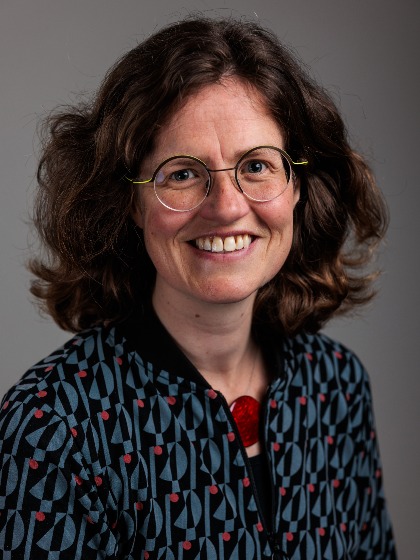
Lesya Ganushchak is Assistant Professor in Educational Sciences at Erasmus School of Social and Behavioural Sciences, Erasmus University Rotterdam. Her research employs cognitive neuroscience methods to examine language processing, reading development, and educational interventions. Using EEG/ERP and eye-tracking methodologies, she investigates cognitive mechanisms underlying self-monitoring, lexical access, and sentence production. Recent publications demonstrate her focus on evidence-based educational interventions: Meta-analyses of reading proficiency interventions (2024) Inference-making development in early readers (2023) Behavioral nudges improving online learning engagement (2022) Her ORCID profile documents extensive research output with collaborative networks spanning cognitive psychology and education research.
G.J. Greg Poarch, PhD is an Associate Professor of English Linguistics and English as a Second Language (ESL) at the University of Groningen's Faculty of Arts. He holds positions on the Cluster Board 2 as Secretary and serves as President of the International Association of Multilingualism (IAM). His research focuses on bilingualism, multilingualism, psycholinguistics, and the cognitive impacts of language learning. He is affiliated with the Neurolinguistics and Language Development (NLD) research group. Research interests include cross-linguistic activation in multilingual speakers, executive function development in multilingual children, and the relationship between multilingualism and neurocognitive health in aging populations. His work addresses topics like translanguaging theory, structural priming in language acquisition, and the role of genetic factors in Alzheimer's risk mitigation among multilinguals. Poarch collaborates internationally, organizing conferences such as the 13th International Conference on Third Language Acquisition and Multilingualism (2024). His research has been published in journals like Linguistic Approaches to Bilingualism , Language Learning , and Journal of Experimental Child Psychology .
Dr. Angeliek van Hout is a faculty member at the University of Groningen's Faculty of Arts, where she leads the Acquisition Lab within the Center for Language and Cognition Groningen (CLCG). Her academic profile centers on experimental research into first language acquisition in typically developing monolingual children, employing a crosslinguistic perspective to investigate fundamental aspects of language development. Her research expertise spans multiple interconnected domains of linguistic development: Temporal reference (tense and aspect, telicity, event culmination) Nominal reference (definiteness, quantification) Syntactic structures (questions, passives, pronouns) Pragmatic reasoning (scalar implicatures, theory of mind) Dr. van Hout's methodological approach integrates formal linguistic theory with empirical experimentation, examining how children acquire complex linguistic structures across different languages. Her recent work demonstrates particular focus on logical operators and their interpretation in child language, with extensive crosslinguistic comparisons examining how children process disjunction under negation in Dutch, French, Hungarian, and Italian. She investigates the cognitive mechanisms underlying these linguistic phenomena, bridging theoretical linguistics with cognitive science. Her publication record shows consistent productivity with 89 research outputs including 25 articles, 23 conference contributions, and 20 book chapters. Notable recent publications include work on prosodic disambiguation in Dutch, free choice interpretation in French children, and crosslinguistic patterns in quantifier acquisition. Dr. van Hout actively contributes to the academic community through: Supervision of PhD students (4 supervised works documented) Editorial work including the TABU Festschrift for Jack Hoeksema Organizing academic events such as "Novel Semantic Research in Theory, Processing and L1 Acquisition" Presenting research at international conferences including the Boston University Conference on Language Development Her research has practical applications in understanding typical language development trajectories, which she communicates to broader audiences through public engagement activities. She has presented on language development in twins at multiple public events and participated in the NEMO Science Live initiative from 2016-2018, demonstrating commitment to knowledge transfer beyond academic circles. As leader of the Acquisition Lab, Dr. van Hout directs research examining how children develop linguistic competence across various domains, with particular attention to the interface between syntax, semantics, and pragmatics in early language development.
Dr. Jana Klaus is an Assistant Professor in the Department of Experimental Psychology at Utrecht University's Faculty of Social and Behavioural Sciences. Her office is located in the Martinus J. Langeveld Building (Room H048) at Heidelberglaan 1, Utrecht. She specializes in cognitive neuroscience with a focus on cerebellar functions and non-invasive brain stimulation techniques. Her primary research interests include: Cerebellar involvement in emotional processing and aggression Neurostimulation techniques (TMS, tDCS) for cognitive modulation Language production mechanisms and neural networks Neurodevelopmental aspects of verbal abilities in ASD Cerebello-cortical connectivity in motivation and behavior Dr. Klaus's publications demonstrate consistent focus on cerebellar functions, with recent work (2023-2025) examining aggression mechanisms, reversal learning under threat, and neurodevelopmental disorders. Her 2017-2022 research centered on language production, neurostimulation efficacy, and cerebellar mapping. Methodologically, her work combines fMRI, EEG, and brain stimulation techniques across healthy and clinical populations. She maintains active research collaborations through the Chair Schutter Helmholtz Institute Experimental Psychology. Dr. Klaus has presented her work internationally, including an invited 2020 talk on cognitive enhancement via neurostimulation.
Peter Hagoort is a renowned cognitive neuroscientist and Professor of Cognitive Neuroscience at Radboud University Nijmegen. He serves as Director Emeritus of the Max Planck Institute for Psycholinguistics and Founding Director of the Donders Institute for Brain, Cognition and Behaviour. His research focuses on the neural basis of language, employing techniques like ERP, MEG, PET, and fMRI to study language processing in health and disorders such as aphasia, dyslexia, and autism. He holds multiple prestigious awards, including the NWO-Spinoza Prize (2005), the Yuen Ren Chao Prize (2024), and the Silver University Medal from Radboud University (2023/2024). He is a member of the Royal Netherlands Academy of Arts and Sciences (KNAW) and the National Academy of Sciences (USA). Current research interests include the neurobiological mechanisms of language comprehension and production, inter-brain synchrony in communication, and the cognitive neuroscience of spoken language using animal models like bats. He supervises PhD students exploring topics such as vocal learning in bats and neural dynamics of communication in autism spectrum conditions. Awards: Over 10 major prizes, including the Spinoza Prize and Yuen Ren Chao Prize. Grants & Leadership: Programme director of the Gravitation program Language in Interaction; steering roles in national and international initiatives. Labs/Teams: Donders Institute Neurobiology of Language group; Max Planck Psycholinguistics Institute.
Antje Meyer is a Professor at Radboud University and Director of the Department of Psychology of Language at the Max Planck Institute for Psycholinguistics. Her work bridges experimental psychology and psycholinguistics, focusing on the cognitive mechanisms underlying language production. Her research interests include: Word and sentence production Visual-conceptual and linguistic processing interactions Relationships between language comprehension and production Origins of individual differences in linguistic skills among adults Meyer emphasizes inclusive research methodologies by engaging participants from diverse sociodemographic backgrounds, moving beyond the traditional use of student populations in psycholinguistic experiments. This approach enhances the generalizability of findings and promotes public understanding of science. She holds a leadership role in one of the world’s premier research institutes in language sciences and continues to advance empirical research in adult language processing. Scientific Awards: No awards listed in the provided text. Advising and Grants: As a department director and full professor, Antje Meyer likely supervises PhD and postdoctoral researchers and leads major research initiatives, although specific advisees and grants are not mentioned in the current text. Labs and Teams: She leads the Department of Psychology of Language at the Max Planck Institute for Psycholinguistics, overseeing a team of researchers dedicated to experimental studies on language production and cognitive processing.
Prof. Sergey Avrutin is a Professor of Comparative Psycholinguistics at Utrecht University's Department of Languages, Literature and Communication, within the College of Humanities. His research integrates information theory into language processing studies, focusing on typically and atypically developing children, adults, and individuals with aphasia. He previously led the NWO-sponsored PIONEER research program (2000-2005) and current projects explore rule induction from partially ordered input and entropy-driven models. Prof. Avrutin has held academic roles such as Research Leader, Promoter, and Executor across multiple NWO and EU-funded projects. His research spans syntax-discourse interface, language acquisition disorders, bilingualism diagnostics, and special registers like headlines and TV commentary. He collaborates with international institutions including Berlin's Zentrum für Allgemeine Sprachwissenschaft and Russia's Herzen State Pedagogical University. His teaching includes courses on Cognitive Science, Language and Law, and the Syntax-Discourse Interface. Recent work highlights contributions to understanding lexical access in aphasia, the role of prosody in anaphora resolution, and statistical learning mechanisms. His articles and projects reflect a focus on interdisciplinary methods, combining experimental and theoretical approaches to linguistic phenomena.
Christina Fuller is a researcher at the University of Groningen, active in interdisciplinary research bridging auditory neuroscience, medical data mining, and cancer therapy analysis. Her work primarily focuses on cochlear implants, music perception, and quality of life assessments for hearing-impaired individuals, while also contributing to symptom analysis in oncology through machine learning techniques. Key Research Areas: Cochlear implants, music perception, human-machine collaboration in clinical contexts, and cancer symptom management. Academic Collaborations: Works with institutions like Advanced Bionics and Mandema Foundation, with international partnerships in data science and oncology. Awards: Recognized with the Mandema Stipendium (2016) for auditory perception research and Advanced Bionics Industry Support (2013) for music therapy development in cochlear implant users. Public Engagement: Frequently contributes to public discourse on hearing rehabilitation through media appearances and community-focused presentations. Dataset Contributions: Created open-access datasets on music perception in implant users, hosted at University of Groningen and DataverseNL.
Tamara L. F. De Beuf, PhD is a postdoctoral researcher at the Netherlands Institute for the Study of Crime and Law Enforcement (NSCR) in Amsterdam and a research fellow at the Leuven Institute of Criminology at KU Leuven and the Amsterdam Laboratory for Legal Psychology at VU Amsterdam. Her work focuses on enhancing fairness and accuracy in the criminal justice system through examining human judgment and decision-making processes, with particular attention to forensic risk assessment and wrongful convictions. Dr. De Beuf completed her PhD in Forensic Psychology at Universiteit Maastricht in 2022 with a dissertation titled "Risk assessment with the START:AV in Dutch secure youth care. From implementation to field evaluation." Her doctoral research examined the reliability and validity of youth risk assessment instruments in practice, establishing her expertise in implementation science within forensic contexts. Her research interests center on forensic risk assessment, wrongful convictions, cognitive biases, and community-based sanctions. She investigates how vulnerable individuals can be disproportionately affected by the legal system, particularly in cases of wrongful convictions, and how human factors such as stereotyping, confirmation bias, and irrelevant contextual information shape decisions throughout the criminal justice process. Her work extends beyond judicial reasoning to examine how cognitive biases affect expert conclusions by forensic psychologists and technical experts. Through her extensive publication record spanning from 2018-2025, Dr. De Beuf has contributed significantly to understanding the implementation and quality of forensic psychological evaluations. Her research demonstrates consistent focus on how professional judgments in the justice system shape legal outcomes, with particular attention to risk assessment tools like the START:AV in youth care settings. Her work bridges forensic psychology, criminology, and legal decision-making with strong emphasis on practical application. Dr. De Beuf values the applicability of research findings for practitioners and emphasizes accessible science communication. She serves as editor-in-chief of the online peer-reviewed magazine In-Mind, which aims to make psychological science accessible to a broad audience. She actively participates in educational initiatives like the "Voordeel van de Twijfel" project where students analyze dubious convictions, demonstrating her commitment to translating research into educational practice. As an active researcher, Dr. De Beuf is involved with several research teams including the Criminological and Experimental Legal Psychology Lab (CELL) at KU Leuven and the Amsterdam Laboratory for Legal Psychology at VU Amsterdam. She participates in large-scale longitudinal research programs evaluating the implementation and effectiveness of alternative sentencing in the Netherlands, contributing to evidence-based criminal justice reform.
Prof. Jean Vroomen is a Full Professor in Cognitive Neuropsychology at Tilburg University, Netherlands. His research focuses on multisensory perception, audiovisual speech processing, and clinical populations like autism and schizophrenia. He holds a PhD from Tilburg University (1992) and has authored over 160 peer-reviewed publications. His work spans neuroimaging, behavioral studies, and computational modeling. Key appointments include Head of the Department of Cognitive Neuropsychology (2013-2022) and Director of the Bachelor Psychology program (2006-2012). He has supervised 14 PhD students and serves on editorial boards of journals like Frontiers in Human Neuroscience . Awards include NWO Vidi Grant (2002-2007) and KNAW fellowship (1992-1997). Research interests include: multisensory integration, predictive coding, speech adaptation, and developmental disorders. Recent studies explore neural mechanisms of trust perception and maternal-infant interactions using EEG hyperscanning. Grants include leadership in the NWO-Gravity 'Language in Interaction' program (€27.6M). His lab investigates auditory processing deficits in autism and schizophrenia, with a focus on electrophysiological markers.
Dr. Hanneke Loerts is an Assistant Professor at the University of Groningen's Faculty of Arts, specializing in Neurolinguistics and Language Development. She holds a position in the Department of Neurolinguistics and Language Development (NLD) and focuses on research areas including psycholinguistics, applied linguistics, cognitive aging, and neurolinguistics. Her work often explores the cognitive and neural mechanisms underlying language processing, particularly in multilingual contexts. Dr. Loerts has contributed to studies on the impact of language learning on cognitive functioning in older adults, the role of musical abilities in second language prosody perception, and the effects of bilingualism on cognitive reserve. Her research employs methodologies such as ERP studies, eye-tracking, and meta-analyses, addressing topics like grammatical gender processing, relative clause comprehension, and social aspects of minority language use. She is involved in projects funded by the University of Groningen, including a study on language of instruction and language-learning aptitude in higher education. Dr. Loerts teaches courses on applied linguistics, psycholinguistics, and research methodology, emphasizing statistical methods and multilingual language processing. She has been recognized with a PhD scholarship co-promotor award for her work on music perception and second language prosody. Her collaborative research extends to interdisciplinary teams, investigating topics ranging from cognitive flexibility in depression to the sociocultural dimensions of language use in multilingual societies. Key contributions include systematic reviews on ERP responses to gender stereotypes, meta-analyses on musical abilities and prosody perception, and randomized controlled trials assessing language learning interventions. Her work bridges neuroscience, psychology, and education, with implications for healthy aging, language policy, and cognitive health.
Dr. Monique Flecken is an Assistant Professor in the Department of Linguistics at the University of Amsterdam, specializing in neurolinguistics and multilingualism. Her research investigates how language shapes event perception, focusing on dynamic situations like motion events and cross-linguistic cognitive differences. Current affiliation: University of Amsterdam, Faculty of Humanities Prior role: Senior Researcher at Max Planck Institute for Psycholinguistics Her work explores the interplay between linguistic structures (e.g., grammatical aspect, verb semantics) and cognitive processes such as perception, memory, and attention. Methodologies include ERP studies, eye-tracking, and virtual reality experiments. Notably, she examines how languages with varying grammatical systems (e.g., Dutch, Turkish, Persian) influence event conceptualization. Recent publications highlight her research trends, including language-specific effects on motion perception, the role of syntax in telicity judgments, and neural mechanisms underlying linguistic influence on cognition. She actively engages with interdisciplinary approaches, bridging linguistics and cognitive science.
Dr. Thomas Koelewijn is a Researcher at the University of Groningen’s Faculty of Medical Sciences, affiliated with both the Cognition, Ageing and Disease (CAD) and Perceptual and Cognitive Neuroscience (PCN) departments. His work bridges psychology, neuroscience, and audiology, focusing on speech processing, listening effort, and auditory perception mechanisms. Research interests include: Speech-on-speech masking effects using visual world paradigms and pupillometry Voice cue perception under vocoding and noise degradation Impact of attention, reward, and training on listening effort Development and validation of remote testing protocols for auditory research Recent studies (2023–2025) highlight innovations in measuring cognitive load through pupil dilation, classification of hearing status via pupil responses, and training effects on voice sensitivity. Over 37 peer-reviewed publications demonstrate contributions to auditory neuroscience and clinical audiology. Recipient of the 2021 Turkish Ministry of National Education PhD Funding as a Promotor. Active in collaborative networks including ASA P&P Task Force on Remote Testing. Research outputs include datasets on voice cue perception (PICKA-XL series) and methodologies for pupillometry in hearing science.
Dr. Veerle Baaijen is an Assistant Professor in the Department of Speech Communication and Discourse Analysis at the University of Groningen's Faculty of Arts. She holds a PhD from the University of Groningen (2012) and has expertise in cognitive processes related to writing, keystroke logging, and text production. Her research focuses on understanding how writing aids cognitive development and the interplay between thought and textual expression. Education: MA in Speech Communication and Discourse Analysis (Groningen, 2007) Research Master in Applied Linguistics (Groningen, 2008, cum laude) PhD in Language and Cognition (Groningen, 2012) Research interests include writing models, cognitive processes during writing, and the application of keystroke logging to study textual production. Her work bridges cognitive psychology and linguistic theory, often collaborating with institutions like Staffordshire University (UK). Teaching includes academic skills, creative writing, and methodology courses for bachelor/master programs in Dutch Language and Literature and Communication Sciences. She supervises master’s theses and actively participates in academic conferences.
Professor Berend Keulen is a Professor of Criminal Law and Criminal Procedure at the University of Groningen’s Faculty of Law. He has held this position since 2005, alongside his role as Advocate General at the Supreme Court of the Netherlands since 2017. His research focuses on substantive criminal law, criminal procedure, economic crime, and sentencing frameworks. He has authored influential works like Strafprocesrecht (2021) and contributed to studies on traffic offenses and European legal policy. Education: Keulen earned his PhD in 1990 at Groningen University under Prof. Th.W. van Veen with a thesis on bankruptcy law and criminal law. He previously worked as a legal advisor at the Dutch Ministry of Justice (1997–2005), shaping legislation on terrorism and out-of-court settlements. Research Interests: His work spans criminal procedure reform, corporate criminal liability, and the application of European criminal policy. He co-authored books on punitive environmental law enforcement and sentencing guidelines for serious traffic offenses. Labs/Teams: Active in the Expert Group on EU Criminal Policy and regularly contributes to judicial training programs through lectures and advisory roles.