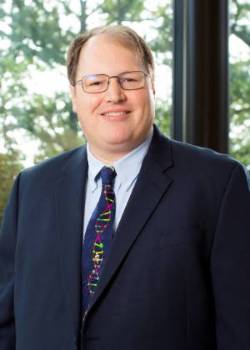
Shane Crandallمشاهده پروفایل
استادیار
Shane Crandall serves as Assistant Professor in the Department of Physiology and BioMolecular Science Gateway at Michigan State University, where he directs research in the Neuroscience Program. His laboratory operates from the Biomedical Physical Sciences Building (Room 2100) in East Lansing, Michigan. His academic training includes: B.A. in Neuroscience, Boston University (2005) Ph.D. in Neuroscience, University of Illinois Urbana-Champaign (2012) Postdoctoral Fellowship, Brown University (2012-2017) Dr. Crandall's research program investigates neural circuit mechanisms underlying sensory perception, with primary focus on dynamic neocortex-thalamus interactions. His laboratory examines how these circuits process signals essential for sensation, movement, and cognition, and how their dysfunction contributes to neurological disorders including epilepsy and Tuberous Sclerosis Complex (TSC). Key methodologies include: Electrophysiological and optical recording in awake behaving mice Multi-scale circuit analysis from single neurons to network dynamics Studies of corticothalamic and intracortical pathway modulation TSC-related circuit abnormality characterization Analysis of recent publications (2022-2024) reveals intensifying focus on layer 6 corticothalamic feedback circuits and motor-sensory integration. His team employs selective optical stimulation to dissect parallel pathways, demonstrating how specific interneuron subtypes (particularly somatostatin-expressing) mediate top-down modulation of somatosensory processing. This work establishes critical links between circuit dynamics and neurological disease mechanisms. Dr. Crandall actively mentors postdoctoral researchers, Ph.D. students, and undergraduates, with current recruitment ongoing for all levels. His laboratory maintains strong collaborative ties within MSU's Neuroscience Program and Department of Physiology. The research facility in Biomedical Physical Sciences Building integrates advanced electrophysiology with optical techniques for comprehensive neural circuit analysis in both in vitro and awake behaving preparations, supporting investigations into fundamental sensory processing mechanisms and disease models.