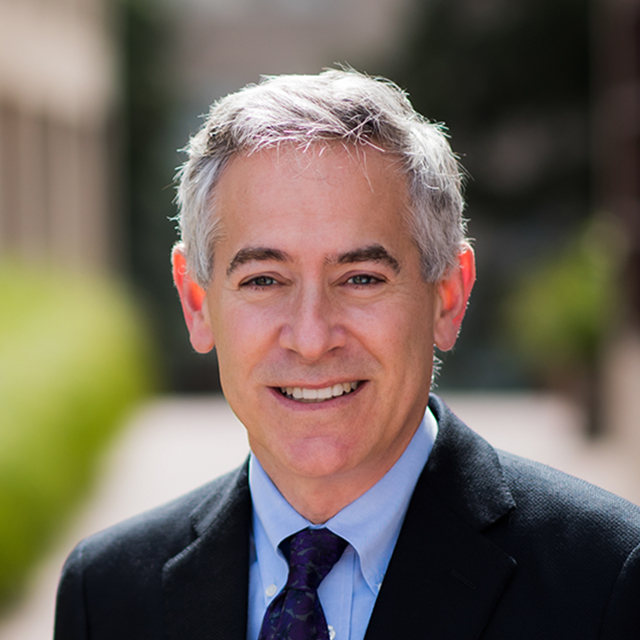
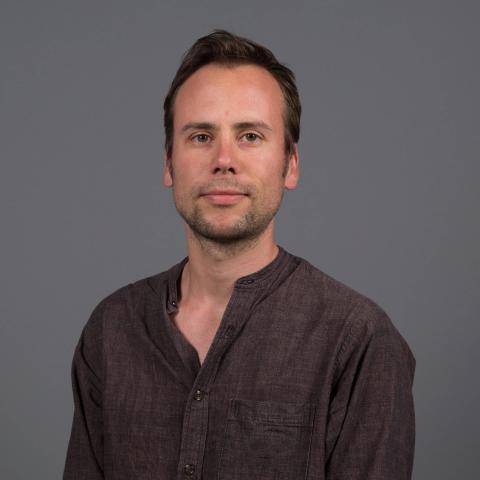
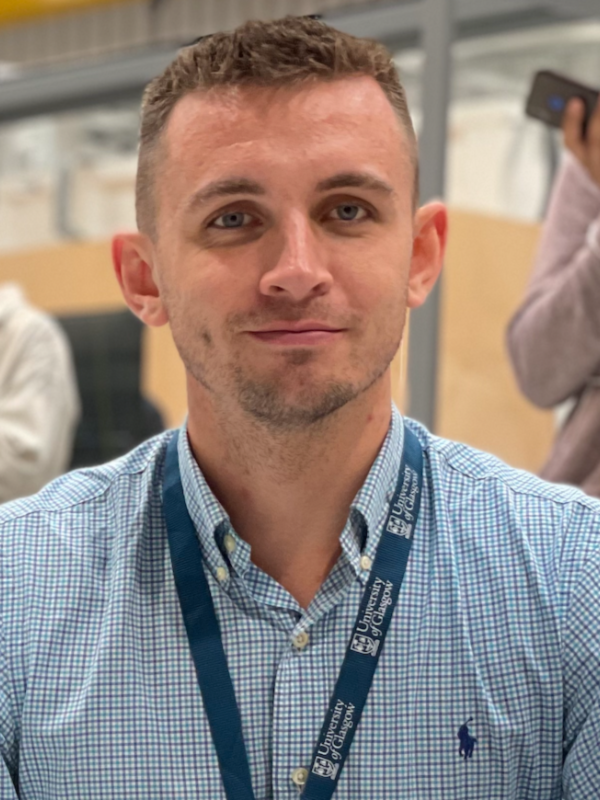
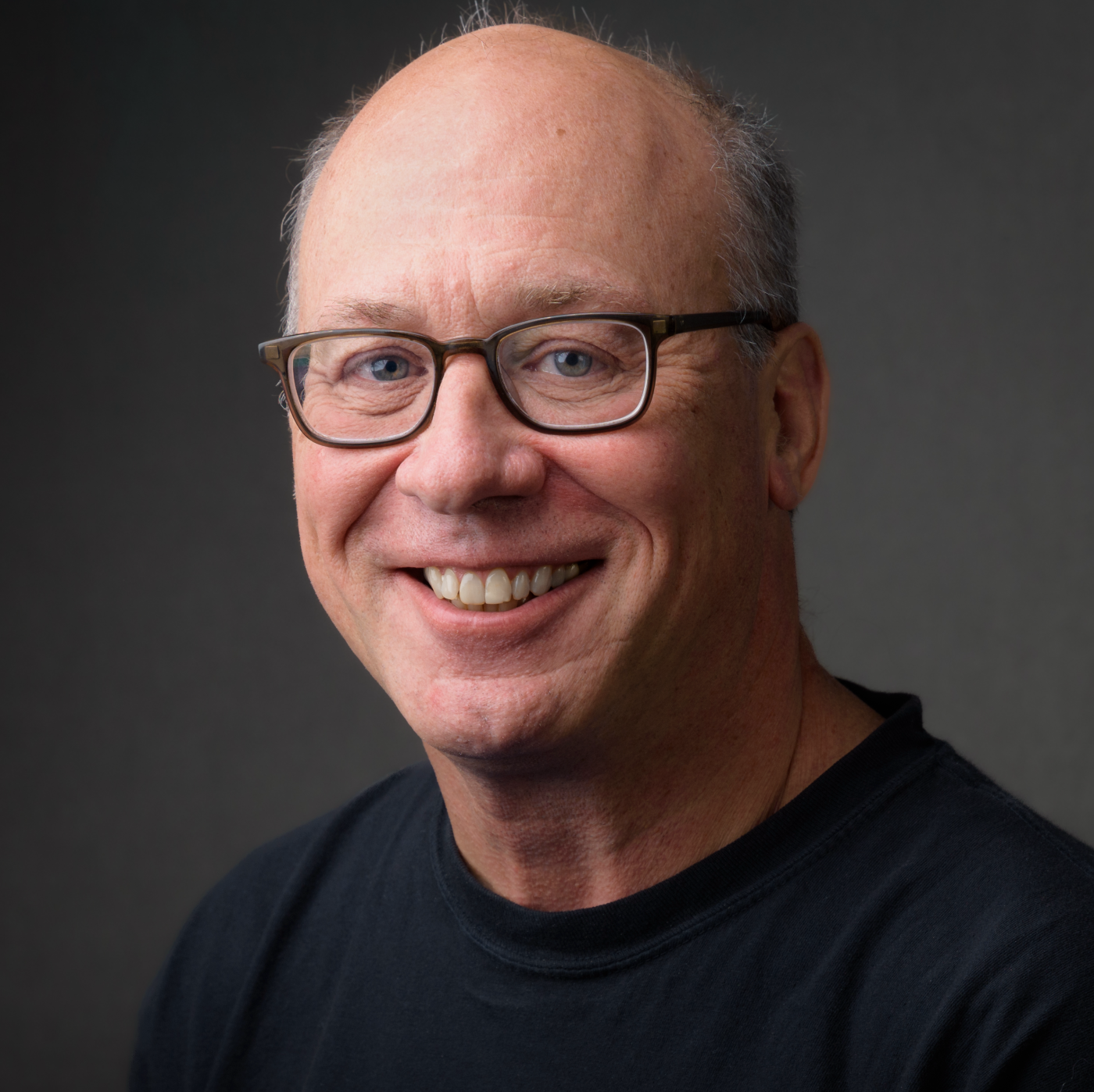
Philip A. Starr, MD, PhD, is a Professor of Neurological Surgery at the University of California, San Francisco (UCSF) and Co-Director of the UCSF Surgical Movement Disorders Clinic . He is a leading expert in functional neurosurgery , particularly in deep brain stimulation (DBS) for movement disorders like Parkinson's disease and dystonia. Harvard Medical School, MD (1989) Brigham and Women's Hospital, Neurosurgery Residency (1997) Emory University Hospital, Movement Disorders Fellowship (1997) His research focuses on basal ganglia physiology , electrocorticography , and neurotechnology development , including bidirectional neural interfaces. He pioneered chronic multisite brain recording in Parkinson's patients and developed the Clearpoint MRI-guided DBS delivery system . Recent publications emphasize adaptive DBS , gamma/theta oscillations in Parkinson's, and neural biomarkers for mood and motor symptoms. Key themes include closed-loop neuromodulation , sleep-brain interaction , and precision neurosurgical tools . Scientific honors include the Dolores Cakebread Endowed Chair (2005) and Israeli B.R.A.I.N. prize finalist (2013). He leads NIH-funded projects on neuroprosthetics and adaptive stimulation algorithms .
Benjamin Straube is a Professor at the Department of Psychiatry and Psychotherapy at Philipps University Marburg , where he leads translational imaging research. He completed his psychology degree at Saarland University (2005) and his doctorate at RWTH Aachen University (2008), followed by postdoctoral work at the University of Pennsylvania (2008-2009). He was promoted to Heisenberg Professor for Translational Imaging in 2016 after leading the Experimental Neuroscience Group at Marburg (2014-2016). Research Interests: Straube investigates neural correlates of predictive perception processes in multisensory contexts action-monitoring deficits in schizophrenia gesture-speech integration mechanisms temporal recalibration during active/passive movements neural dynamics of self-other distinction His work combines EEG, fMRI, and tDCS to study basic perception-action loops and their clinical implications in psychiatric disorders. Scientific Awards: Von Behring-Röntgen Young Talent Award (2014) DGPPN Prize for Mental Illness Research (2014) Multiple best poster awards (2006-2016) Grants & Collaborations: Funded by DFG (Heisenberg Professorship), RHÖN-KLINIKUM AG, and the Else Kröner-Fresenius Foundation. Leads subproject A3 in the SFB/TRR 135 collaborative research center on perceptual prediction mechanisms.
Samuel S. Wang is a Professor at the Princeton Neuroscience Institute (PNI), where he directs the M.D./Ph.D. Program. His research bridges neuroscience , computational methods , and democracy reform . Key projects include investigating the cerebellum’s role in sensorimotor processing, autism development, and evidence-accumulation decision-making. Neuroscience Focus : Cerebellar microcircuitry, autism-related neural mechanisms, and calcium imaging techniques Computational Methods : Latent-state analysis, machine vision, and neural activity modeling Democracy Research : Redistricting, gerrymandering, and election fairness via the Princeton Gerrymandering Project His lab employs two-photon microscopy , optogenetics , and light-sheet imaging to study brainwide networks. Publications span journals like Nature Neuroscience , Cell Reports , and Elife , with recent work exploring cerebellar influence on cortical development in autism. Collaborative grants include the NJ ACTS grant for studying dendritic plasticity in neuropsychiatric disorders. Students and co-authors such as Caroline Jung, Thomas Pisano, and Aleksandra Badura reflect interdisciplinary training in neuroscience and data science. Lab tools like BrainPipe and BlinkLab exemplify technological innovation. Current experiments focus on predictive coding , synaptic plasticity , and democracy analytics , with applications in both basic science and policy reform.
Dr. Quanying Liu serves as Associate Professor in the Department of Biomedical Engineering at Southern University of Science and Technology (SUSTech), where she leads the Neural Computing and Control Laboratory (NCC lab) as Principal Investigator and Doctoral Supervisor. Her academic journey includes a PhD from ETH Zurich in Biomedical Engineering, postdoctoral training at Caltech, and research positions at Huntington Medical Research Institute, KU Leuven, and Oxford University. PhD in Biomedical Engineering, ETH Zurich (2013-2017) Master in Computer Science, Lanzhou University (2010-2013) Bachelor in Electrical Engineering, Lanzhou University (2006-2010) Dr. Liu's research bridges neuroscience, machine learning, and control theory with focus on multi-modal neural signal processing (EEG, sEEG, fMRI, DTI), explainable AI for brain interpretation, and optimization frameworks for neuromodulation (tES, TMS). Her work develops high-density EEG source imaging algorithms, data-driven brain network modeling, and control-theoretic approaches for neural stimulation. The NCC lab specializes in machine learning algorithms, neural computation, multimodal data fusion, network control theory, and bidirectional brain-computer interfaces. Analysis of her recent publications reveals strong trends in EEG-based visual decoding, multimodal neural embeddings, and AI-driven brain network modeling. Her work increasingly integrates generative models for neural data synthesis, control theory for precise neuromodulation, and cross-modal approaches connecting neural signals with cognitive functions. The New Brain 30 (2023) AAIC travel award (2019) Estes Stars Award (2018) Shenzhen Peacock Talent Plan C Dr. Liu actively mentors students through SUSTech's doctoral program and leads multiple significant research initiatives including a National Natural Science Foundation Youth Project, a National Key R&D Program in Bio-Information Fusion, and several Shenzhen municipal projects. Her lab receives funding from Guangdong Provincial Basic Research Fund, Shenzhen Science and Technology Innovation Commission, and international fellowships including Boswell Postdoctoral Fellowship and Swiss National Science Foundation grants. The NCC lab maintains strong international collaborations with Caltech, ETH Zurich, and Oxford University while developing novel platforms like WheelCon for sensorimotor control studies. The Neural Computing and Control Laboratory operates as an interdisciplinary hub integrating computational neuroscience, machine learning, and control engineering. The lab develops specialized hardware-software systems for closed-loop neurostimulation, maintains the EEGdenoiseNET benchmark dataset, and pioneers methods like MOVEA for transcranial electrical stimulation optimization. Current research directions include generative models for neural decoding, network control theory applications, and AI-human cognitive interaction frameworks.
Giuseppe Gangarossa serves as Professor of Neurobiology at the University of Paris, France, and holds membership in the prestigious Institut Universitaire de France. He is currently conducting research as a Humboldt Fellow at the Max Planck Institute for Biological Cybernetics in Tübingen, Germany, where he leads the Body-Brain Cybernetics research team. His work focuses on the dynamic interplay between neural systems and bodily functions, exploring how cybernetic principles govern brain-body communication. This interdisciplinary research bridges experimental neurobiology with computational modeling to decode sensorimotor integration mechanisms and their pathological disruptions. Key scientific recognitions include: Institut Universitaire de France Fellowship Humboldt Research Fellowship Professor Gangarossa directs the Body-Brain Cybernetics team at the Max Planck Institute, coordinating experimental and theoretical projects that examine closed-loop neural control systems. His laboratory investigates neural coding in motor circuits and develops bio-inspired control algorithms through collaborative neuroscience-engineering initiatives.
Nathan Faivre is a Research Director at CNRS working at the Laboratory of Psychology and NeuroCognition (LPNC) at the University of Grenoble Alpes, where he co-directs the Consciousness, Memory and MetaCognition (CoMMet) research team. His work is centered at the intersection of cognitive neuroscience and consciousness studies, with a particular focus on the neural mechanisms underlying perceptual consciousness and metacognition. He maintains an office in the Michel Dubois Building (C103) and leads an active research group studying the electrophysiological and electrochemical correlates of consciousness. Dr. Faivre obtained his PhD at the École normale supérieure under the supervision of Sid Kouider. He completed postdoctoral work at the California Institute of Technology with Christof Koch and at the École Polytechnique Fédérale de Lausanne with Olaf Blanke. Before joining LPNC, he spent two years at the Centre d'Economie de la Sorbonne in Paris. His research primarily investigates the neural correlates of consciousness, with particular emphasis on evidence accumulation processes, metacognition, and multisensory integration. Dr. Faivre employs advanced neuroimaging techniques including stereotactic-electroencephalography (sEEG) and functional MRI to study how the brain generates conscious experiences. His work bridges theoretical models with empirical neuroscience to understand the mechanisms underlying perceptual awareness and confidence judgments. Analysis of his recent publications reveals a consistent focus on consciousness research with increasing sophistication in methodology. His work spans from theoretical frameworks of consciousness to detailed neural mechanisms, with particular attention to the insular cortex, evidence accumulation processes, and multisensory integration. The research demonstrates a progression from basic consciousness mechanisms to clinical applications, particularly in schizophrenia research. ERC Consolidator Grant for 'volta' project (2025-2030) ERC Starting Grant for 'Metaction' project (completed in 2025) Dr. Faivre has successfully mentored multiple PhD students including François Stockart, who recently defended his thesis on electrophysiological and computational studies of evidence accumulation in perceptual consciousness. His research is supported by substantial European Research Council funding, with the 'volta' project currently ongoing until 2030. He maintains active collaborations with institutions including Grenoble Hospital, École Polytechnique Fédérale de Lausanne, and West Virginia University. As co-director of the CoMMet team at LPNC, Dr. Faivre leads a dynamic research group that recently expanded with new postdocs and PhD students focusing on electrochemical correlates of consciousness, auditory consciousness during sleep, and metacognition during sleep. The team utilizes cutting-edge methodologies including stereotactic-electroencephalography to document the neural correlates of consciousness.
Ian Horswill is an Associate Professor of Computer Science at Northwestern University , with joint appointments in the Departments of Electrical Engineering/Computer Science and Radio/Television/Film. He directs the Division of Graphics and Interactive Media and the Animate Arts Program, blending AI research with interactive art and entertainment. Research Focus: Autonomous agents, emotion/personality modeling for virtual characters, procedural animation via the Twig system, and interdisciplinary education in the Animate Arts Program. Key Projects: Twig (procedural animation), Meta (Scheme-like programming language), and role-passing architectures for efficient inference in robotics. Publications span AI, robotics, and games, with a focus on real-time decision-making, believable character behaviors, and cognitive architecture. His work has been recognized with the 2001 Nils Nilsson Prize . Students: Robin Hunicke, Magy Seif El-Nasr, and Rob Zubek, all of whom contributed to systems for game difficulty adjustment, dynamic lighting design, and natural-language dialog with NPCs. Affiliations: Chair of the Doctorial Consortium for the 2009 Foundations of Digital Games conference, member of the IGDA Education Committee.
Khalil Iskarous is a Professor of Linguistics at the Dornsife College of Letters, Arts and Sciences , University of Southern California. His research bridges Laboratory Phonology , Motor Control , and Computational Linguistics , with a focus on articulatory dynamics and endangered languages. Ph.D. in Linguistics, University of Illinois at Urbana-Champaign (2001) His work explores the dynamical systems underlying speech gestures, including studies on hydrostatic skeletons in cephalopods. Key projects include NSF-funded research on CompCog and Dynamical Principles of Animal Movement . Recent publications examine intonation modeling , octopus arm kinematics , and phonetic variability . Awards include a Fulbright Distinguished Chair at McGill University’s Center for Research on Language, Mind, and Brain. Editorial Board, Computer Speech and Language (2017-2024) Associate Editor, Language (2018-2021)
Dr. Daniel Mitchell is a Research Associate at the University of Glasgow , affiliated with the Autonomous Systems & Connectivity group. His work bridges Robotics and Autonomous Systems , Digital Twinning , and Non-Destructive Sensing , with a focus on human-in-the-loop robotic teams and microwave sensing for asset integrity. Education : PhD (2024) and MSc (2020) in Electrical and Electronic Engineering from University of Glasgow and Heriot-Watt University Collaborations : California Institute of Technology (2024), MicroSense Technologies Ltd (since 2019), ORCA Hub His research explores: Cyber-physical architectures for multi-robot fleet management Brain-computer interfaces for robotic teleoperation Digital twins in nuclear and offshore wind environments Microwave sensing for ground risk detection and material characterization Recent publications emphasize resilient autonomy , symbiotic robotic systems , and AI-driven anomaly detection . Awards include the 2024 Virginia Engineering Link Lab Rising Star in Cyber Physical Systems and 2023 IET Recognition. Teaching involvement includes supporting ENG2083 Introduction to Programming at Glasgow, and supervision of MSc/MEng projects like Wind Turbine Defect Detection and Landmine Detection Robotics .
Sergiy Yakovenko is an Associate Professor at West Virginia University School of Medicine with joint appointments in the Department of Human Performance - Exercise Physiology, Department of Neuroscience, and Rockefeller Neuroscience Institute. He holds a BS from Kharkiv National University (1997) and PhD from University of Alberta (2004). His research integrates neurophysiology , computational neuroscience , and biomechanics to study motor control systems. Key focus areas include: Neuro-musculo-skeletal integration in movement Evolutionary constraints of neuromechanical organization Motor skill acquisition mechanisms Rehabilitation engineering for stroke/spinal cord injury Advanced prosthetic control systems Recent publications (2016-2023) demonstrate strong emphasis on computational modeling of locomotion , biomechanical simulations , and machine learning applications in motor control. Patent innovations include treadmill control systems and rodent gait analysis apparatus. Research Funding DOD CDMRP (2021-2024): Closed-loop systems for musculoskeletal injury recovery NIH R03 (2020-2022): Biomimetic leg control models DARPA HAPTIX (2015-2019): Sensory feedback for prosthetic limbs He directs the Neural Engineering Laboratory which specializes in chronic neural recordings, computational neuromechanics, and rehabilitation technology development.
Dr Claire Witham is a Research Fellow at Newcastle University specializing in primate neuroscience and animal welfare research. Her work focuses on rhesus macaques ( Macaca mulatta ), addressing critical challenges in laboratory animal management through innovative approaches including machine learning and behavioral analysis. Active since 2007, she maintains a prolific publication record with recent contributions in 2024. Her research spans Neuroscience , Primate Behavior , and Machine Learning Applications , with emphasis on enrichment evaluation, pain assessment, and sensorimotor control mechanisms. Key contributions include developing automated face recognition systems for primates, establishing positive reinforcement training protocols, and investigating neural oscillations in motor control. Her work bridges basic neuroscience with practical welfare refinements. Publication trends reveal an evolution from foundational neurophysiological studies (2007-2012) examining corticospinal pathways and neural oscillations toward applied welfare science (2017-2024). Recent work integrates computational methods for enrichment assessment and behavioral monitoring, reflecting a strategic shift toward technology-driven solutions for laboratory animal welfare. Her 2024 machine learning approach for enrichment evaluation exemplifies this trajectory.
Mackenzie Mathis is a Tenure Track Assistant Professor and Bertarelli Foundation Chair of Integrative Neuroscience at the Brain Mind Institute (BMI) of EPFL. She leads the UPMWMATHIS Lab, focusing on understanding neural circuits underlying adaptive behavior and developing AI tools like DeepLabCut and CEBRA. Her work bridges machine learning and neuroscience, with expertise in systems neuroscience, animal behavior, and computer vision. Education: PhD in Neuroscience, Harvard University (2017) Research Interests: Her lab explores motor learning, sensorimotor control, and neural dynamics. Key tools include markerless pose estimation (DeepLabCut), latent embedding analysis (CEBRA), and generative AI for behavioral studies. Projects span from mouse behavior assays to ethical AI applications in conservation. Publications: Recent work includes advancements in robust ML systems, pre-trained pose models (SuperAnimal), and neural-latent dynamics analysis. Her lab’s tools are widely adopted in neuroscience and robotics. Awards: Swiss Science Latsis Prize (2024) Eric Kandel Young Neuroscientist Prize (2023) FENS EJN Young Investigator Prize (2022) Vallee Scholar & ELLIS Scholar Advising & Grants: Current PhD students include Célia Benquet, Hossein Mirzaei, and others. Grants include SNSF Starting Grant (1.5M CHF) and CZI funding for open-source tools. Collaborates with robotics and conservation initiatives. Labs & Teams: The UPMWMATHIS Lab at EPFL Biotech Campus integrates computational and experimental neuroscience. Tools like AmadeusGPT and CEBRA are developed here, supported by interdisciplinary teams.
Sara Schroer is a cognitive scientist and postdoctoral fellow at the University of Texas at Austin 's Center for Perceptual Systems , where she studies infant learning through embodiment. Her research utilizes head-mounted eye trackers to analyze perceptual experiences from the child's perspective during natural behavior. Education : PhD in Psychology (2023), University of Texas at Austin; MA in Psychological and Brain Sciences (2019), Indiana University Research interests focus on sensorimotor development , multimodal attention , and environmental influences on early learning. Her work emphasizes the integration of visual, auditory, and motor data to understand how children learn new words in real-time contexts. Scientific awards include the NSF Graduate Research Fellowship Her methodological approach combines NIH-funded training with computational models and wearable technology to quantify naturalistic learning environments. Her recent publications (2025–2021) analyze developmental trajectories in gaze behavior, multimodal parent–child interactions, and the role of egocentric vision in language acquisition, with a focus on sensorimotor dynamics, attentional coordination, and ecological validity. Collaborations include work with Mary Hayhoe (UT Austin) and Chen Yu (Indiana University).
Michael Mauk is a Professor in the Department of Neuroscience at the University of Texas at Austin and a member of the Center for Learning and Memory. He holds a Ph.D. from Stanford University (1985) and has held academic positions at the University of Texas Medical School (1988–2007) and UT Austin since 2007. His research focuses on cerebellar mechanisms of learning and computation, using experimental and computational approaches to study eyelid conditioning and neural circuit dynamics. Key interests include synaptic plasticity, temporal processing, and large-scale neural simulations. Research highlights include pioneering work on cerebellar simulations to model motor learning and exploring interactions between prefrontal cortex and cerebellum in trace conditioning. Awards include the McKnight Endowment Fund for Neuroscience Scholar (1989–92) and NSF Graduate Fellowship (1981–1984). His lab emphasizes collaborative, idea-driven environments for students and researchers, fostering critical debate and innovation. Education: Ph.D., Stanford University (1985) Awards: Chancellor's Award (1978), McKnight Scholar (1989–92), NSF Fellowships Lab Members: Carter Moore (Ph.D. student), research assistants, and undergraduates in neuroscience
Dr. Dinu Florin Albeanu is a Professor at Cold Spring Harbor Laboratory (CSHL), leading the Albeanu Laboratory. His academic roles include Director of the Neuroimaging and Behavior Center and Director of the Machine Shop at CSHL. He has held positions from CSHL Fellow (2008–2010) to Assistant Professor (2010–2015), Associate Professor (2016–2023), and Professor (2023–present). Education: Ph.D., Neuroscience, Harvard University (2001–2008) B.S., Biology, Massachusetts Institute of Technology (1998–2001) Freshman Year, Biochemistry, University of Bucharest (1997–1998) Research Interests: Focuses on understanding brain algorithms linking actions to perception, specifically sensorimotor predictions and olfactory perception. Investigates odor space logic, neural representations, and circuit-level mechanisms. Leverages closed-loop rodent behaviors, optogenetics, and electrophysiology to study olfactory circuits and prediction systems across sensory modalities. Articles Overview: Recent work emphasizes functional connectivity mapping (ADePT technique), cortical-bulbar feedback dynamics, and olfactory receptor-glomerulus mapping. Highlights include studies on odor concentration coding and reward-driven neural signaling. Awards & Grants: Pew Scholar in Biomedical Sciences NIH Director’s Transformative Research Award (2018–2023) CSHL Stone Faculty Award Advising & Teams: Mentored over 20 students/postdocs, including Zarmeena Dawood (PhD candidate) and Diego Hernandez Trejo (postdoc). Collaborates across CSHL groups on systems neuroscience and behavior. Labs & Teams: Leads the Albeanu Lab, integrating imaging, optogenetics, and computational tools. Active in CSHL’s Neuroscience and Swartz Foundation programs.