معرفی
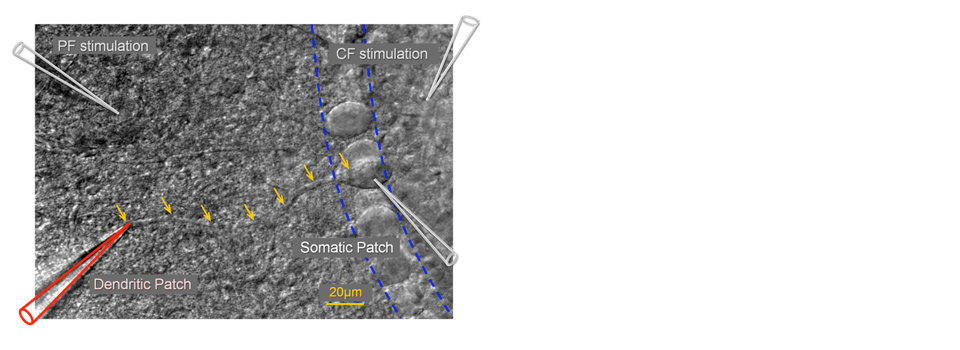
Samuel S. Wang is a Professor at the Princeton Neuroscience Institute (PNI), where he directs the M.D./Ph.D. Program. His research bridges neuroscience, computational methods, and democracy reform. Key projects include investigating the cerebellum’s role in sensorimotor processing, autism development, and evidence-accumulation decision-making.
- Neuroscience Focus: Cerebellar microcircuitry, autism-related neural mechanisms, and calcium imaging techniques
- Computational Methods: Latent-state analysis, machine vision, and neural activity modeling
- Democracy Research: Redistricting, gerrymandering, and election fairness via the Princeton Gerrymandering Project
His lab employs two-photon microscopy, optogenetics, and light-sheet imaging to study brainwide networks. Publications span journals like Nature Neuroscience, Cell Reports, and Elife, with recent work exploring cerebellar influence on cortical development in autism.
Collaborative grants include the NJ ACTS grant for studying dendritic plasticity in neuropsychiatric disorders. Students and co-authors such as Caroline Jung, Thomas Pisano, and Aleksandra Badura reflect interdisciplinary training in neuroscience and data science. Lab tools like BrainPipe and BlinkLab exemplify technological innovation.
Current experiments focus on predictive coding, synaptic plasticity, and democracy analytics, with applications in both basic science and policy reform.