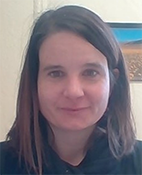
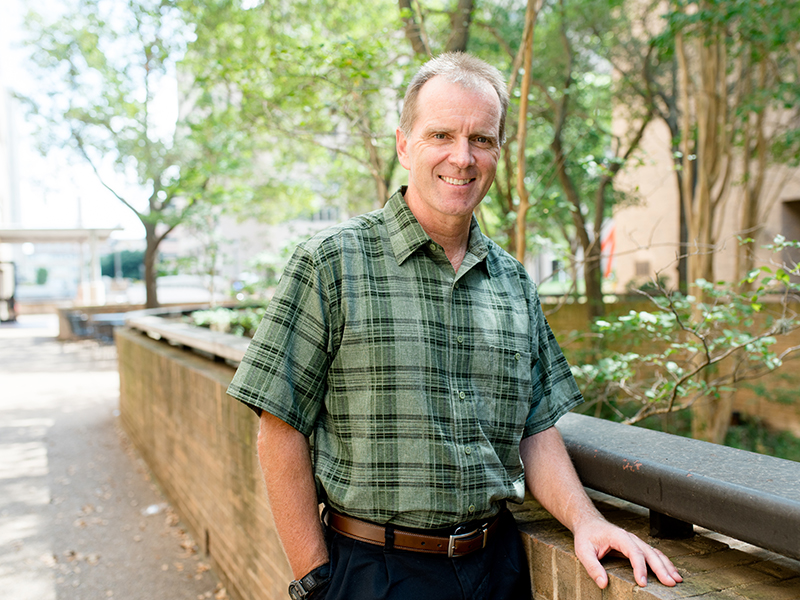
Greg Field is an Associate Professor in the David Geffen School of Medicine at University of California, Los Angeles , specializing in Neuroscience with a focus on retinal circuitry and visual signal processing. His research explores how populations of retinal ganglion cells encode visual information through coordinated receptive fields and nonlinear signal transmission, utilizing advanced computational models and multielectrode recordings. Key Research Areas Retinal ganglion cell receptive field coordination Neural coding of visual stimuli at single-cone resolution Computational neuroscience and efficient coding theory Role of inhibition in visual processing Recent Trends 2024 studies on encoding manifolds and visual cortical organization 2023 work on retinal degeneration and cone pathway functionality 2022-2023 publications on neural adaptation and artificial networks Field's work bridges experimental neuroscience (e.g., in Journal of Neuroscience , Nature Neuroscience ) and computational modeling (e.g., Neural Computation ). He has contributed to understanding retinal mosaics, correlated firing patterns, and the biophysical mechanisms underlying visual sensitivity. His affiliations include collaborations with institutions like University of Washington and University of California, San Francisco , and his research has been supported by NIH grants such as R01 EY017992 and F31 NS054519 .
Ana P. Pinheiro is an Associate Professor and Group Leader at the Voice, Emotion, & Speech Lab (VoicES Lab) at the Faculty of Psychology, University of Lisbon. Her research focuses on the neural mechanisms of vocal communication, emotional processing, and auditory hallucinations. She explores how self-monitoring and sensory prediction relate to schizophrenia symptoms like auditory verbal hallucinations (AVH) through interdisciplinary collaborations and longitudinal EEG studies. Academic Affiliation: Faculty of Psychology, University of Lisbon Key Research: Self-voice prioritization, emotional authenticity detection, sensorimotor processing in hallucination proneness Editorial Roles: Associate Editor for Psychiatry Research: Neuroimaging , Consulting Editor for Cognitive, Affective, & Behavioral Neuroscience Her work spans cognitive neuroscience, affective science, and clinical psychology, with funded projects from FCT and the BIAL Foundation. She has contributed extensively to understanding auditory hallucinations and neuroplasticity in voice perception. Recent publications emphasize hallucination proneness, sensory feedback processing, and cross-modal influences on vocal emotion detection. She mentors students and collaborates with global labs, integrating behavioral, electrophysiological, and computational approaches. Pinheiro also serves on scientific advisory boards, including the Schizophrenia International Research Society (SIRS) Awards Committee and the International Journal of Clinical and Health Psychology.
Caroline Teulier is a Senior Lecturer at the Faculty of Sports Sciences, University of Paris-Saclay, based in Building 335, Room 121/1 on Pierre de Coubertin Street in Bures sur Yvette, France. Her research centers on sensorimotor coordination development across the lifespan, with emphasis on: Emergence of walking patterns in infants during first-year development through tactile/visual sensory stimulation Neural-muscular-segmental subsystem interactions in coordinated movement formation Therapeutic applications for sensorimotor disorders (spina bifida, cerebral palsy) Longitudinal analysis of motor repertoire evolution, physical activity, and pediatric health indicators Her work bridges experimental motor control research with clinical pediatric rehabilitation, utilizing cohort studies to establish health outcome correlations.
Dr. Bartosz Majchrowicz serves as a Lecturer in the Department of Social Psychology within the Faculty of Philosophy at Jagiellonian University, Krakow. Based at the Institute of Psychology (Ingardena 6), he maintains active research and teaching roles with contact details publicly listed including email bartosz.majchrowicz@uj.edu.pl and phone 12 663 24 69. His research spans Social Psychology and Cognitive Neuroscience with specialized focus on action processing mechanisms, sense of agency phenomena, decision-making under uncertainty, and neurophysiological correlates of volition. Key investigations examine how uncontrollability influences effort allocation, interoception-action interactions, sensory attenuation effects, and temporal aspects of agency perception through experimental paradigms including probabilistic reversal learning and Libet-style tasks. Analysis of his 15 publications (2016-2025) reveals consistent exploration of agency phenomenology using neuroscientific methods. His work demonstrates how factors like action spontaneity, outcome valence, cardiac feedback, and learning from losses modulate agency experiences, with recurring themes in temporal binding, error processing, and embodied cognition. This research bridges psychological theory with neural mechanisms underlying human volition. As part of Jagiellonian University's Institute of Psychology, Dr. Majchrowicz contributes to academic initiatives including Scientific Thursdays and Clinical Tuesdays, operating within a research ecosystem featuring specialized laboratories and interdisciplinary teams advancing psychological science through the Excellence Initiative and international collaborations.
Pierre-Michel Bernier is a Full Professor and currently serves as Vice-Dean of Research and Graduate Studies at the Faculty of Physical Activity Sciences, Université de Sherbrooke. His research focuses on the neurophysiological mechanisms involved in human movement control and learning in healthy individuals. Dr. Bernier's research interests include: Sensorimotor integration Motor system physiology Somatosensory system Visual system Motor learning and memory Neuroplasticity His work primarily investigates how the brain processes sensory information to control movement and how these processes adapt during learning. Using techniques like EEG, neuroimaging, and behavioral paradigms, his research has made significant contributions to understanding the cortical mechanisms underlying sensorimotor adaptation, particularly in relation to error processing, reward, and memory consolidation. Analysis of Dr. Bernier's recent publications reveals a strong focus on the neural oscillatory manifestations of sensorimotor learning, with particular attention to beta-band activity during movement preparation and execution. His work demonstrates how action costs, rewards, and punishments influence motor decision-making and memory retention, revealing intricate relationships between cognitive processes and motor control. Dr. Bernier has received numerous prestigious awards and distinctions: Junior-2 Researcher Fellowship from Fonds de recherche du Québec - Santé (2021) Invited Professor Campaign from Aix-Marseille Université (2019) Junior-1 Researcher Fellowship from Fonds de recherche du Québec - Santé (2017) Postdoctoral Fellowship from Fondation Fyssen (2011) Postdoctoral Fellowship from Fonds de recherche du Québec - Nature et technologies (2011) As an advisor, Dr. Bernier has mentored numerous graduate students who have gone on to publish significant research in the field of motor control and neuroscience. His laboratory receives substantial funding from major Canadian research agencies including the Natural Sciences and Engineering Research Council of Canada (NSERC), the Canadian Foundation for Innovation (CFI), and the Fonds de recherche du Québec. Dr. Bernier's research laboratory focuses on understanding the neural basis of human motor control and learning using multimodal approaches including electroencephalography (EEG), transcranial magnetic stimulation (TMS), and behavioral paradigms. His team investigates how the brain processes sensory information to guide movement and how these processes adapt during learning and rehabilitation.
Andreas Wulff-Abramsson serves as a Special Consultant in the Department of Nutrition, Exercise and Sports at the University of Copenhagen, affiliated with the Movement and Neuroscience research group. His interdisciplinary work bridges neuroscience, virtual reality, and motor control, focusing on embodied learning applications and neural mechanisms of cognition and movement. His primary research interests include Neuroscience , Motor Control , Virtual Reality , Cognitive Science , EEG , and Embodied Learning . He investigates how virtual environments influence educational outcomes in children, neural correlates of motor function across age groups, and sensory processing mechanisms using EEG and VR methodologies. His experimental approach integrates cognitive psychology with advanced neuroimaging techniques to explore embodied cognition. Recent publications reveal a strong trend toward applied neuroscience, particularly VR-enhanced educational interventions for early literacy and detailed EEG analyses of motor control and sensory processing. His work consistently combines experimental rigor with innovative technology applications, spanning educational psychology, film cognition, and human-computer interaction domains. Wulff-Abramsson operates within the Movement and Neuroscience team at NEXS, which examines the intersection of physical activity, nutrition, and brain health. This group employs virtual reality systems, EEG recording, and motion analysis to investigate fundamental neural processes underlying movement and cognitive function across diverse populations.
Gionata Salvietti is an Associate Professor in the Department of Information Engineering and Mathematical Sciences at the University of Siena, specializing in collaborative robotics, assistive devices, and haptics. He serves as Associate Editor for IEEE Transactions on Robotics (since 2022) and IEEE Transactions on Haptics (since 2020), and leads major European research initiatives including the Erasmus+ project 'Immersive Surgical Edu' and PRIN project 'ARTIS'. Education: PhD in Information Engineering, University of Siena, 2012 Master's degree in Computer Engineering, University of Siena, 2009 Research Focus: Salvietti pioneers human-robot collaboration through haptic interfaces, developing wearable systems for surgical training and industrial applications. His work integrates virtual reality, augmented reality, and neurophysiological principles to enhance human performance in healthcare and manufacturing environments, with emphasis on quantifying user experience and sensorimotor control. Publication Trends: Recent work demonstrates convergence of haptics, immersive technologies, and soft robotics—evident in surgical training systems, warehouse automation tools, and neurorehabilitation techniques. Key themes include hand reflex analysis in human-robot interaction, stochastic resonance for motor control, and pneumatic soft grippers enabling new sensing modalities. Projects: Principal Investigator, Erasmus+ 'Immersive Surgical Edu' (2024-present) Principal Investigator, PRIN 'ARTIS' (2023-present) Teaching & Operations: Teaches Automatic Controls (Bachelor's level) and Industrial Robotics (Master's level) across academic years 2020-2026. Maintains active research laboratory (Lab. 237) with Tuesday office hours 2:00-5:00 PM, requiring email pre-appointment.
Thomas Habekost is a Full Professor in Cognitive Neuropsychology at the Department of Psychology, University of Copenhagen, where he also serves as Head of the Research Cluster in Cognition & Neuropsychology since 2021. His academic journey at the University of Copenhagen began with his Cand.Psych. degree in 2000, followed by a Ph.D. in 2005, and has progressed through positions from Research Assistant to Full Professor. His educational background includes: Cand.Psych. (University of Copenhagen, 2000) Ph.D. (University of Copenhagen, 2005) Habekost's research primarily focuses on visual and attentional processes, using experimental and technical methods such as MRI, EEG, and eye tracking. He is particularly known for his work with the Theory of Visual Attention (TVA) model, which provides a mathematical framework for understanding attentional mechanisms. His research spans multiple areas including attention assessment in clinical populations, cognitive deficits after brain damage, and interactions between arousal and selective attention. A significant portion of his work examines ADHD, particularly how medication affects attentional processes in both children and adults. Habekost's publications reveal a strong focus on attentional mechanisms across various populations. His work frequently applies the TVA model to assess attentional deficits in neurological, neuropsychiatric, and developmental disorders. Recent research has increasingly focused on ADHD, examining both cognitive profiles and the effects of medication on attentional processes. His work also extends to pure alexia, visual processing in aging, and the relationship between attention and other cognitive functions. Among his notable research funding are: Grant from the Danish Council for Independent Research's Sapere Aude program (2012-2016): "The attentive mind: towards a unified theory of visual selectivity and arousal" (8.637.068 Dkr, as PI) Share of grant from KU's crossdisciplinary 2016-program (2013-2017): "Attention to Dopamine" (5.756.000 Dkr, as vice-PI) Share of grant from KU's Centre of Excellence program (2008-2013): "Integrated visual attention research" (as co-investigator) Habekost actively supervises students at all levels (BA, MA, and Ph.D.) and teaches courses in Cognitive Psychology, Neuropsychology, Research Methods in Cognitive Neuroscience, and Clinical Psychology with cognitive or neural aspects. He has served in various administrative roles including Deputy Head of Department (2015-2021) and currently as Head of Research Cluster (2021-present). He is also the Research Coordinator for the International TVA network since 2010. His laboratory work centers around the Virtual Learning Lab and the Center for Visual Cognition, where he and his team investigate attentional mechanisms using both behavioral and neuroimaging approaches. Current research projects include interactions between arousal and selective attention, and cognitive profiling of ADHD including medication effects.
Numa Dancause is a Professor in the Department of Neuroscience at the Université de Montréal, affiliated with the Faculty of Medicine. His research focuses on understanding post-stroke motor recovery, cortical plasticity, and the development of neuroprosthetic technologies. He leads multiple research initiatives, including the CIRCA (Interdisciplinary Research Center on the Brain and Learning) and collaborates on projects funded by agencies such as the Canadian Institutes of Health Research (CIHR) and the Natural Sciences and Engineering Research Council (NSERC). Education details are not explicitly provided, but his academic trajectory is evident through his extensive publication record and leadership in neuroscience. His research emphasizes the role of cortical reorganization in motor recovery, particularly the contribution of contralesional and ipsilesional hemispheres following ischemic lesions. He has supervised numerous graduate students, including Ian Moreau-Debord and Boris Touvykine, whose theses address topics like cortical interactions and neuroprosthetic interventions. Key research themes include the use of transcranial magnetic stimulation (TMS), functional ultrasound imaging, and Bayesian optimization for personalized neurostimulation protocols. His work bridges basic neuroscience with clinical applications, aiming to improve stroke rehabilitation through advanced technologies. Notable grants include leadership roles in the UNIQUE initiative (Neurosciences and Artificial Intelligence Québec consortium), CanStim (Canadian Neurostimulation Platform), and infrastructure projects for neurophysiological research facilities. Collaborations span institutions like the CRIR (Rehabilitation Research Institute) and involve interdisciplinary teams in both academia and industry. Labs and teams include the CIRCA and the Dancause Lab, focused on motor system recovery post-stroke. Future work emphasizes adaptive neuroprosthetics, AI-driven stimulation protocols, and translational research to accelerate clinical applications.
Simone DALLA BELLA is a Professor at the Université de Montréal, affiliated with the Faculty of Arts and Sciences and the Department of Psychology. He holds the Canada Research Chair in Music Auditory-Motor Skill Learning and New Technologies. His primary research focuses on cognitive and neural mechanisms underlying musical perception and performance, with a particular emphasis on rhythmic abilities in healthy individuals and clinical populations (e.g., Parkinson’s disease, ADHD). He co-directs the BRAMS laboratory (International Laboratory for Brain, Music and Sound Research) and explores applications of rhythmic and auditory-motor interventions for neurological and movement disorders. Research Interests: Dr. Dalla Bella investigates how rhythmic and temporal predictions influence language processing, motor coordination, and rehabilitation. His work integrates behavioral methods, EEG, motion capture, and wearable technologies to assess and train rhythmic skills. Key areas include: 1) rhythmic deficits in clinical populations, 2) music-based rehabilitation for Parkinson’s disease, 3) neural correlates of auditory-motor synchronization, and 4) cross-modal temporal processing. Key Projects: Recent grants include studies on rhythmic learning in immersive environments, neurostimulation and music effects on mood, and the role of rhythm in speech production. Collaborations involve interdisciplinary teams addressing intersectorial challenges in neuroscience and health. Labs/Teams: Co-director of BRAMS and member of CRBLM (Centre for Research on Brain, Language and Music). His work bridges cognitive neuroscience, audiology, and physical medicine, with applications in neurorehabilitation and motor training.
Dr. Alice Perez is an Assistant Professor in the Department of Neurology at Yale School of Medicine. She is a licensed bilingual neuropsychologist conducting clinical assessments in both English and Spanish for patients with neurodegenerative diseases, epilepsy, and autoimmune disorders. Her academic journey includes a Ph.D. in Clinical Psychology with Neuropsychology specialization from CUNY Graduate Center at Queens College (2019), internship at Massachusetts General Hospital-Harvard Medical School (2019), and postdoctoral fellowship at UConn Health (2021). Current Faculty Appointment: Assistant Professor of Neurology Primary Clinical Focus: Cognitive assessment for neurological conditions Research Emphasis: Cognitive impairment in incarcerated populations Dr. Perez's research portfolio demonstrates interdisciplinary expertise across: Clinical neuropsychology applications Neuro-oncology outcomes Forensic neuropsychology studies Comparative neuroscience models Health equity in vulnerable populations Geriatric cognitive assessment The three 2021 publications highlight her work in developing novel cognitive assessment tools (Neuro-oncology Practice), avian neurogenesis research (PLOS ONE), and geriatric cognitive impairment studies in correctional settings (Am J Geriatric Psychiatry). Her clinical expertise extends to Memory Disorders & Cognitive Neurology as part of Yale Medicine's neuropsychology services.
Prof. Richard Hahnloser is a Full Professor at ETH Zürich's Department of Information Technology and Electrical Engineering, affiliated with the Institute for Neuroinformatics. He holds a PhD in Physics from ETH Zurich (1999, awarded the ETH Medal) and conducted postdoctoral research at MIT, Howard Hughes Medical Institute, and Bell Labs. His research focuses on neural mechanisms underlying vocal learning in songbirds, particularly auditory-motor signal processing and synaptic plasticity in neural networks. Education: Physics studies at ETH Lausanne and Zurich (Diploma 1996, PhD 1999). Career highlights include roles as a Swiss National Science Foundation Professor (2004–2007) before becoming a Full Professor at ETH Zurich in 2007. He explores interdisciplinary approaches combining experimental neuroscience, theoretical modeling, and bioimaging. Research interests include decoding neural networks of song systems, studying motor control via X-ray CT and Neuropixels recordings, and applying machine learning to vocal behavior analysis. Recent work highlights vocal plasticity, sleep-related neural dynamics, and neurotechnology for chronic neural recording. Notable achievements include the ETH Medal for his PhD and contributions to understanding syrinx anatomy and sensorimotor adaptation. His lab develops tools like MODOC for scientific text analysis and employs correlative microscopy techniques to study neural circuits.
Dr. Richard R. Neptune is a Professor and holder of the William and Bettye Nowlin Chair in Engineering at the University of Texas at Austin's Department of Mechanical Engineering. He has been on faculty since 2001 and focuses on biomechanical research addressing movement disabilities through musculoskeletal modeling, experimental analyses, and advanced prosthetic/orthotic design. His work intersects rehabilitation engineering, sports biomechanics, and neuromotor control. Education: PhD in Mechanical Engineering from UC Davis. Research emphasizes locomotor impairments, prosthetic optimization, and additive manufacturing applications. Awards include NSF CAREER, Van C. Mow Medal (ASME), and Founders Award (ASB), alongside fellowships in both societies. Key collaborations: Medical University of South Carolina, VA Center for Limb Loss, Brooks Rehabilitation Lab leadership: Neuromuscular Biomechanics Lab with 20+ current/past students/postdocs Recent publications (2018-2021) focus on wheelchair biomechanics, post-stroke gait recovery, and amputee locomotion dynamics. Active in NIH/DoD-funded projects addressing orthotic design and clinical applications.
Marjorie Brickley is a Lecturer and Supervised Fieldwork Advisor at Bank Street College of Education, where she teaches courses in child development and assessment. She coordinates the Infancy Institute and specializes in reflective supervision for fieldwork students. Her academic background includes an MSEd from Bank Street's Infant and Family Development program, complemented by an Infant Mental Health Endorsement (Level IV Research/Faculty). Her research focuses on three primary areas: 1) applying the developmental interaction approach across diverse settings; 2) analyzing Adverse Childhood Experiences (ACEs) and teacher resiliency; and 3) integrating contemporary gender research into early childhood practice. She has presented nationally on topics ranging from infant mental health co-regulation to STEM education for toddlers. Key professional activities include keynote addresses (e.g., Westchester Child Care Council), Zero to Three clinical roundtables, and workshops for the NJ Coalition of Infant Toddler Educators. Her work emphasizes practitioner well-being as foundational to effective early childhood intervention. Brickley's teaching portfolio includes courses on developmental assessment, reflective supervision, and curriculum design for infants/toddlers. She actively links theoretical frameworks to practical applications in early intervention programs and family support systems.
Justin R. Burwinkel, AuD, serves as an Adjunct Professor at Salus University's Osborne College of Audiology, specializing in Hearing Aid Research & Development. He holds a Doctor of Audiology (AuD) and Bachelor of Science from the University of Cincinnati. His academic role focuses on advancing assistive listening technologies and audiological innovations. Dr. Burwinkel's research interests span hearing aid technology optimization, telecoil efficacy, assistive listening systems, and the integration of wearable devices to address fall risk assessment in hearing-impaired populations. His work bridges clinical practice and engineering, with notable contributions to AI-driven hearing solutions and sensor-based postural stability monitoring. His recent publications (2022-2023) highlight advancements in hearing loop implementation, AI-enhanced hearing aids, and fall detection systems embedded in ear-wearable devices. These studies emphasize real-world applications of audiological technology in improving accessibility and patient outcomes. Honors: Fellow of the American Academy of Audiology, Director at Loop Minnesota, 60 U.S. Patents Filed Certifications: Animal Audiology Professional Activities: Consultant for University of Cincinnati's FETCHLAB (Facility for the Education and Teaching of Canine Hearing and Laboratory for Animal Bioacoustics) Dr. Burwinkel actively collaborates with industry partners like Starkey Hearing Technologies, advancing evidence-based practices in telecoil utilization and hearing aid design. His interdisciplinary approach integrates audiological research with biomedical engineering and telehealth solutions.