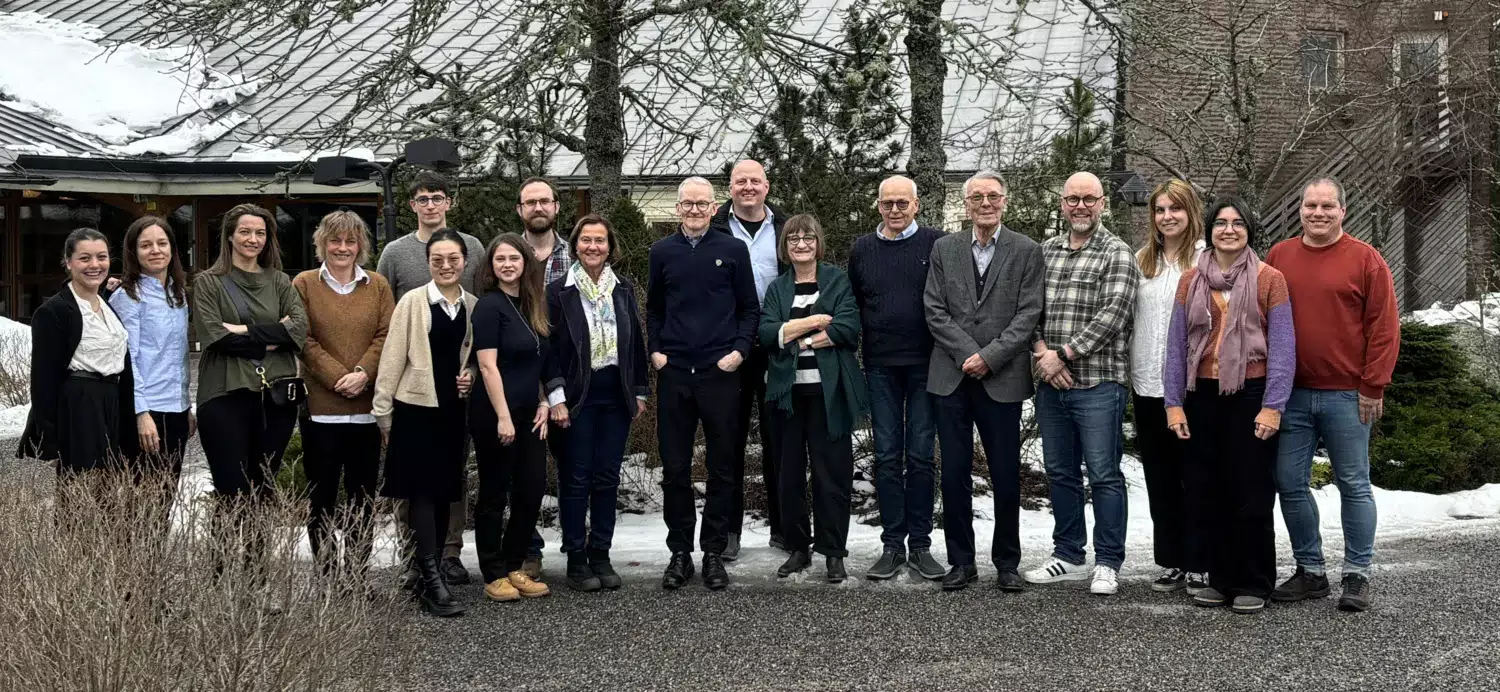
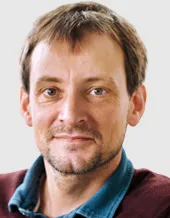
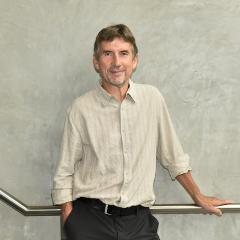
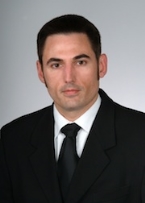
Professor Tony Pansell researches visual processing and eye-motor control at Karolinska Institutet's Eye Center of Excellence. His work bridges basic neurophysiology and clinical applications for brain injury rehabilitation. Research Focus: Studies vestibular-ocular interactions in concussion, Parkinson's disease biomarkers, and pediatric vision assessment. Leads projects on optokinetic therapy and color-filter interventions for perceptual disorders. Methodology: Combines eye-tracking, OCT imaging, and fMRI to quantify visual pathway dysfunction.
Reza Hoseinabadi is a Lecturer in the Division of Psychology Communication and Human Neuroscience at the University of Manchester. His research focuses on vestibular disorders, neurotology, and neurological rehabilitation, with a particular emphasis on conditions such as tinnitus, vestibular schwannoma, Ménière’s disease, and Parkinson’s-related balance impairments. He leads the Manchester Centre for Audiology and Deafness (ManCAD), a multidisciplinary research hub addressing hearing impairment and sensory aid innovations. His work integrates clinical trials, diagnostic testing advancements, and cross-cultural validation studies. Key research contributions include pioneering studies on vestibular rehabilitation efficacy, post-surgical tinnitus management, and the application of galvanic stimulation in cognitive impairment. He has authored over 25 peer-reviewed articles, with notable work on Parkinson’s disease ocular motor function and neonatal hearing screening satisfaction in Iran. His research aligns with UN Sustainable Development Goals targeting health equity and disability inclusion. Research Themes: Vestibular pathophysiology, audiological device validation, neurorehabilitation strategies Collaborations: Global projects on Meniere’s disease monitoring and pediatric hearing screening Grants: Principal Investigator for ManCAD’s Hearing Impairment Research Program Labs/Teams: Core member of the Manchester Centre for Audiology and Deafness (ManCAD), collaborating with interdisciplinary teams in audiology, neurology, and biomedical engineering.
Ruben Portugues is a Professor at the Technical University of Munich (TUM) within the Institute of Neuroscience, part of the TUM School of Medicine. His academic journey includes a PhD in theoretical physics from the University of Cambridge, followed by postdoctoral research in neurobiology at Harvard University and the Max Planck Institute of Neurobiology. He leads the Focus Group on 'Brain Circuit Function and Dysfunction.' His research focuses on understanding how the brain encodes sensory information and translates it into motor actions. Using zebrafish as a model organism, he employs advanced techniques like whole-brain calcium imaging, electrophysiology, and computational modeling to study sensorimotor integration and neural circuit dynamics. Key projects involve mapping neural activity during behaviors, analyzing cerebellar circuits, and investigating mechanisms of learning and adaptation. Portugues has contributed to breakthroughs in understanding rheotaxis, optomotor responses, and the neural basis of decision-making. His lab develops tools like the stytra software for behavioral experiments and collaborates on anatomical atlases using brainrender . His work bridges theoretical physics and experimental neuroscience, emphasizing interdisciplinary approaches. He holds the Rudolf Mößbauer Tenure Track Fellowship and has mentored numerous researchers. His lab is affiliated with the TUM Institute for Advanced Study (TUM-IAS), contributing to initiatives in advanced computation and neuroscience.
Liana E. Brown is an Associate Professor in the Department of Psychology at Trent University, specializing in motor-sensory integration. Her research explores how sensation, perception, and movement interact during everyday tasks. Education: B.Sc., M.Sc. in Psychology from the University of Waterloo M.S., Ph.D. in Psychology from Pennsylvania State University Research Areas: She investigates four core questions: (1) How hands enhance vision/attention, (2) Limb spatial tracking, (3) Motor capabilities’ impact on cognition, and (4) Observational motor skill learning. Her work focuses on neural mechanisms underlying sensory-motor exchange. Research Trends: Publications from 2015–2025 reveal a progression from fundamental studies on limb positioning and sensory integration to applied research in concussion assessment, Parkinson’s disease, and sports physiology. Key themes include motor learning, neurorehabilitation, visuomotor coordination, and biomechanics. Teaching & Supervision: During 2025–26, she will supervise 1 graduate student, up to 2 honours thesis students, and 2 practicum students.
Adam Spiers is an Assistant Professor in Robotics and Machine Learning at the Department of Electrical and Electronic Engineering, Imperial College London. He leads the Manipulation and Touch Lab, focusing on bio-inspired robotic manipulation, prosthetics, and haptic interfaces for navigation assistance. Focuses on robot manipulation inspired by biological systems Develops robotic hand hardware, sensing, and control frameworks Researches upper-limb prosthetics and shape-changing haptic interfaces His work spans hardware design, sensor development, and machine learning techniques applied to robotic manipulation and human-robot interaction. Current projects include tactile sensing systems and prosthetic limb analysis. Recent publications emphasize tactile perception, object recognition, and haptic navigation systems. Key trends include barometric sensor applications, diffusion-based imitation learning, and proprioceptive feedback mechanisms. His career includes previous positions at Max Planck Institute for Intelligent Systems, Yale University, Bristol Robotics Laboratory, JET, and University of Reading.
Steven Chase is a Courtesy Professor in the Department of Electrical and Computer Engineering at Carnegie Mellon University, part of the College of Engineering. His research focuses on understanding neural mechanisms underlying learning, motor control, and the development of brain-computer interfaces (BCIs). He investigates how neural activity adapts during skill acquisition and explores the interplay between sensory input, motor output, and cognitive processes. His work emphasizes the neural basis of learning and adaptation, with a particular focus on motor cortex dynamics and the design of BCI systems. Recent studies explore how reward influences movement vigor, the role of limb posture in motor adaptation, and the neural substrates of choking under pressure. Chase's research also addresses the stability and plasticity of cortical representations during skill learning and sensory deprivation. Key trends in his publications include advancing BCI technology through low-dimensional control frameworks, analyzing neural memory traces during learning, and dissecting the multidimensional constraints shaping neural activity patterns. His work bridges computational neuroscience, neurophysiology, and engineering to develop translational solutions for neural prosthetics and rehabilitation. Chase collaborates widely on projects involving neural decoding algorithms, closed-loop systems, and the optimization of BCI usability. His research has implications for understanding fundamental neural processes and developing assistive technologies for motor impairments.
Dr. Steffen A. Herff is a cognitive neuroscientist and Sydney Horizon Fellow at the Sydney Conservatorium of Music, University of Sydney (since 2024). He concurrently holds an ARC DECRA Fellowship and leads the Sydney Music, Mind, and Body Lab. His research focuses on the intersection of music perception, imagination, biofeedback, and neuroscience, with applications to well-being and musician health. Previously, he held roles including Principal Investigator at the École polytechnique fédérale de Lausanne (EPFL) and Research Scientist at A*STAR, Singapore. Education: PhD in Psychology from MARCS Institute, Western Sydney University (2017). BA in Psychology from Heinrich-Heine University, Germany. Research interests include music-induced imagination, auditory memory, statistical learning, and biofeedback systems to prevent musicians' musculoskeletal disorders. His work combines empirical studies with computational models, leveraging tools like EEG and ECoG. Key projects explore music's role in loneliness alleviation among older adults, modulation of memory encoding via brain stimulation, and development of biofeedback tools for musicians. He has secured grants such as the Sydney Horizon Fellowship (2024) and ARC DECRA (2021). Advising and grants: Supervised over 30 students across PhD, master's, and bachelor's levels. Current projects include 'Sustainable Health Practise – Music for Health & Health for Musicians' and 'Music-induced mind wandering.' Labs: Leads the Sydney Music, Mind, and Body Lab, collaborating with institutions like EPFL and A*STAR. Active in international networks such as the Society for Education, Music, and Psychology Research.
Professor Barry Dickson is a Professorial Research Fellow at the Queensland Brain Institute, University of Queensland. He was recently elected as a Fellow of the Royal Society in May 2024 in recognition of his 30+ years of contribution to neuroscience. His research primarily focuses on understanding neural circuits in Drosophila melanogaster (fruit flies), particularly those controlling behavior, locomotion, and courtship. Professor Dickson's research interests span several key areas in neuroscience: Neural circuit organization and function Behavioral neuroscience, particularly courtship and mating behaviors Decision-making processes in simple nervous systems Motor control and locomotion circuits Sensory processing and integration Drosophila neurogenetics and behavior Analysis of Professor Dickson's recent publications reveals a strong focus on mapping and understanding the neural circuits underlying complex behaviors in Drosophila. His work combines advanced genetic tools, high-resolution imaging, and behavioral analysis to dissect how specific neural circuits control behaviors ranging from courtship songs to walking patterns. A notable trend is the increasing use of connectomics approaches to map complete neural wiring diagrams and understand how information flows through these circuits to produce behavior. Professor Dickson's major scientific achievement is his election as a Fellow of the Royal Society in 2024, recognizing his decades of groundbreaking work in neuroscience. Professor Dickson leads an active research laboratory that investigates the neural circuits controlling walking in fruit flies. His lab aims to understand how local circuits in the nerve cord produce rhythmic motor patterns, how these patterns are coordinated across leg joints, and how brain signals modulate these operations to alter direction, speed, and gait. His work has been particularly noted for studies of fruit fly mating behavior, which have helped uncover how the brain processes information and makes decisions.
Jed Shumsky, PhD, is a Professor in the Department of Neurobiology & Anatomy at Drexel University College of Medicine and holds administrative roles as Senior Associate Dean of Educational and Academic Affairs in the Graduate School of Biomedical Sciences and Professional Studies. He chairs the Academic Affairs Committee and oversees curriculum integrity and graduate program evaluations. His educational background includes a BA in Biochemistry from Swarthmore College (1986), Harvard University (1987), and a PhD in Pharmacological Sciences/Neuropsychopharmacology from the University of Pennsylvania (1993). While no longer conducting active research, Dr. Shumsky provides consultancy in behavioral testing, animal modeling of neurological conditions, and statistical analysis. His teaching excellence has earned him numerous awards, including the Lindback Award for Distinguished Teaching (2023), multiple Golden Apple Awards, and the Angelo Pinto Award for Basic Science Education. He has contributed to neurobehavioral assessment methodologies and spinal cord injury research through collaborative publications. In academic leadership, he directs the Medical Neuroscience course and advocates for student success, exemplified by his keynote address at the 2024 Graduate School awards ceremony. His administrative focus includes advancing interdisciplinary programs and fostering a rigorous academic environment across Drexel’s biomedical and professional studies divisions.
Dr. Arne M. Weber served as a Research Fellow at the Université Libre de Bruxelles within the Department of Philosophy , specifically in the Philosophy of Mind VI Professorship under Prof. Dr. Gottfried Vosgerau. His research focuses on interdisciplinary areas including Philosophy of Mind , Neuroscience , Cognitive Science , and Epistemology , with a particular emphasis on embodied cognition theories and the grounding of cognitive processes in action. Research Contributions : His work critically examines the theoretical and empirical foundations of embodied cognition, addressing topics like motor representation systems, brain-body-environment couplings, and the extended mind thesis. Key contributions include analyzing the integration of motor control, perception, and cognition within unified frameworks, and evaluating empirical evidence supporting action-based cognitive models. Publications span 2007-2020 , emphasizing topics such as grounded action cognition, neurophilosophical analysis, and interdisciplinary debates in cognitive science. No scientific awards or student advisees explicitly listed in available texts. Academic Context : His affiliation with the Philosophy of Mind program reflects engagement with analytical philosophy traditions, including critiques of substance dualism and analyses of John Searle's biological naturalism. Collaborations with neuroscientists and psychologists underscore his interdisciplinary approach.
Chiara Della Libera is an Associate Professor of Physiology at the University of Verona, affiliated with the Department of Neurosciences, Biomedicine and Movement Sciences. Her research focuses on cognitive neuroscience, particularly the neurocognitive mechanisms underlying visual selective attention and learning. She leads studies on how attentional priority maps are shaped by learning and reward-based processes, with contributions to understanding neural basis of perception and cognition. Roles: Member of the Teachers' Committee for Neuroscience Research Master, Council for Physiotherapy and Biomedical Laboratory Techniques programs. Teaching: Over 60 courses across Physiology, Neurophysiology, and Medical Humanities for undergraduate and postgraduate programs in Medicine, Dentistry, Nursing, and Physiotherapy. Research Interests: Cognitive Neuroscience, neurophysiological mechanisms of attention, learning's impact on visual attention, and reward-based attentional plasticity. Active in projects like 'Learning to ignore – New adaptive features of selective attention' (2016–present) and 'Role of motivation in behavioral control' (2008–present). Publications span studies on distractor suppression, spatial attention, and rehabilitation biomarkers, emphasizing experimental psychology and neurophysiological techniques. Labs: Neurophysiology of Attention Lab, part of the Neurocognitive Sciences group. Affiliations: WHO Collaborating Centre for Mental Health, CeRiSM (Sport and Health Research Centre).
Michele Tinazzi is a Full Professor of Neurology (MED/26) at the Department of Neuroscience, Biomedicine and Movement Science , University of Verona, Italy. He serves as Chief of the Parkinson’s Center and Movement Disorders , a regionally approved clinical unit within the Azienda Ospedaliera-Universitaria Verona. With over 215 publications and an H-index of 41, his work bridges clinical neurology and fundamental research.
Callum Osler is a Senior Lecturer in Sport, Outdoor, and Exercise Science at the University of Derby within the College of Science and Engineering's Department of Life Sciences. He holds affiliations with multiple institutions including the University of Birmingham and Manchester Metropolitan University. His research focuses on biomechanics, exercise physiology, and their applications in mental health, aging populations, and clinical conditions. His work explores the interplay between biomechanical factors and psychological states, such as depression and fear of falling. Osler's research has investigated topics like gait dynamics in depression, postural stability under mental fatigue, and sodium bicarbonate's effects on recovery. He has contributed to understanding vestibular system mechanics, interpersonal movement dynamics, and clinical outcomes of foot surgeries. His work spans peer-reviewed journals and conferences, with notable outputs in The Journal of Physiology and Gait & Posture . Recent studies highlight trends in biomechanical interventions for mental health (e.g., gait-based depression treatments) and aging-related balance issues. His research often involves interdisciplinary collaborations, combining neuroscience, orthopedics, and sports science. No specific awards or grants are listed, though his work demonstrates significant academic engagement through over 900 views and 100+ downloads of his outputs.
Mathew J Gregoski is a Research Assistant Professor at the Medical University of South Carolina (MUSC), affiliated with the College of Medicine’s Department of Public Health Sciences. His research focuses on public health, biostatistics, and behavioral sciences with applications in clinical research and preventive medicine. Dr. Gregoski’s work spans diverse areas including gastroenterology, dermatology, neurology, and maternal health, as evidenced by his publications in journals like JAMA Dermatol and Gastrointest Endosc. Recent studies highlight his contributions to clinical trial methodologies, olfactory phenotype analysis, and health disparities research. His work often integrates biostatistical approaches to address real-world medical challenges such as cirrhosis identification via electronic health records and optimizing treatments for skin conditions like porokeratosis. While no formal awards are listed, his active publication record reflects sustained academic engagement since 2015. Though specific grants or lab affiliations are not detailed in the provided text, his collaborative projects (e.g., with institutions like the NIH and local healthcare networks) suggest involvement in multidisciplinary teams addressing complex health issues. No student advisees are explicitly mentioned, but his research likely involves trainees through MUSC’s academic programs.
Chris M Gregory, PhD, PT, is a Clinical Professor in the Department of Health Sciences and Research at the Medical University of South Carolina (MUSC) within the College of Health Professions. His research focuses on neurologic rehabilitation, particularly stroke recovery, depression treatment post-stroke, and the integration of exercise and neurostimulation therapies. He leads clinical trials exploring interventions like repetitive transcranial magnetic stimulation (rTMS) combined with aerobic exercise for post-stroke depression and investigates mechanisms underlying motor control recovery. Key research projects include understanding neural adaptations to resistance and gait training, and assessing diet quality and mobility outcomes in stroke survivors. Dr. Gregory’s work spans from lab-based biomechanics studies to community-based interventions, emphasizing translational research. His articles highlight synergies between exercise, neuroplasticity, and mental health, with a focus on optimizing recovery trajectories for chronic stroke and spinal cord injury patients. Dr. Gregory collaborates internationally through initiatives like the ENIGMA Stroke Recovery Working Group, leveraging large neuroimaging datasets to improve outcome predictions. Despite no explicitly listed awards, his extensive peer-reviewed publications and clinical trial leadership reflect significant contributions to the field of neurorehabilitation. Advising and grant activities are integral to his role, though specific details are not detailed here. His lab’s work extends to developing novel therapeutic approaches, including VR-based upper extremity rehabilitation and closed-loop FES cycling systems for stroke survivors.