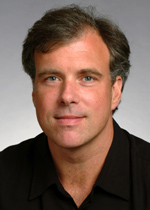
Professor Trevor Darrell is a faculty member in the Department of Electrical Engineering and Computer Sciences at UC Berkeley. He leads research in computer vision, machine learning, and robotics, focusing on algorithms for visual recognition and perception-based interfaces. His affiliations include the Berkeley Artificial Intelligence Research Lab (BAIR), Berkeley Center for Responsible, Decentralized Intelligence (RDI), and the International Computer Science Institute (ICSI). Education: PhD, MIT (1996) BSE in Computer Science, University of Pennsylvania (1988) Research Interests: Professor Darrell’s work spans Artificial Intelligence , Computer Vision , Robotics , and Multimodal Learning . His recent efforts emphasize vision-language models, embodied AI, and ethical AI frameworks for healthcare and robotics. Notable Contributions: His articles in 2025 highlight advancements in multimodal generation, humanoid control, and model alignment. Trends include leveraging vision-language integration for robotics tasks and addressing AI bias and hallucination. Awards: ICML Test of Time Award (2024) ACM SIGMM Test of Time Paper Award (2024) CVPR Longuet-Higgins Prize (2024) Labs & Collaborations: Leads BAIR and RDI, advancing responsible AI and geospatial analysis through initiatives like Berkeley Deep Drive and the CITRIS People and Robots (CPAR) program.
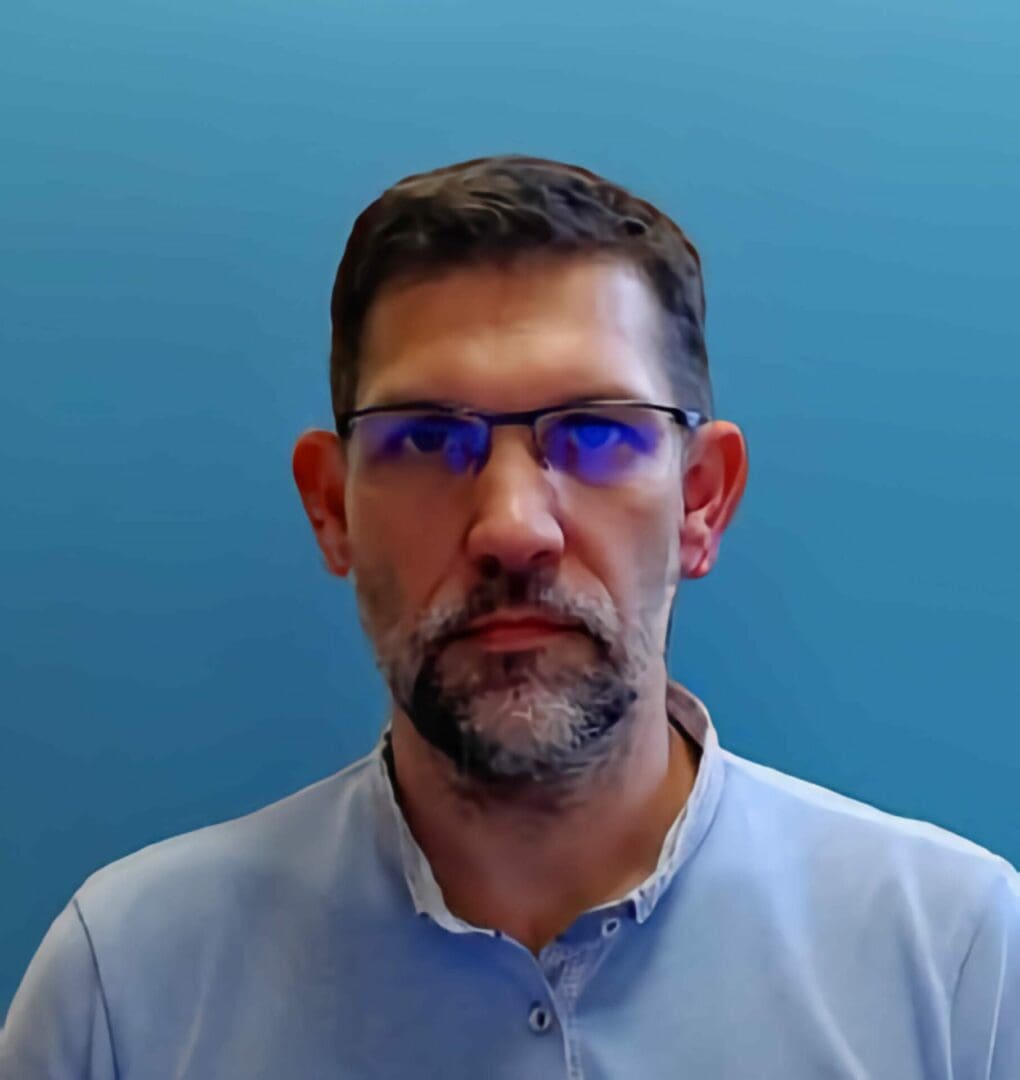
Maria MAKAROV is an Associate Professor at CentraleSupélec, affiliated with the Control Department at L2S (Laboratoire des signaux et systèmes), part of Université Paris-Saclay. Her research focuses on robust control methods for interactive robotic systems, human motor control modeling, and bio-inspired control strategies. She holds a PhD in Automatic Control from SUPELEC and a Master's in Electrical Engineering from KTH Royal Institute of Technology. Research Interests: Robust control of uncertain robotic systems Human-robot interaction and safety Dynamic stability and impedance estimation in human motion Bio-inspired control for humanoid robotics Key Projects: Ongoing work includes the ANR HERMIN project and contributions to the SYCOMORE research team. Her recent publications explore human arm impedance dynamics, octorotor state estimation, and collaborative robotics evaluation.
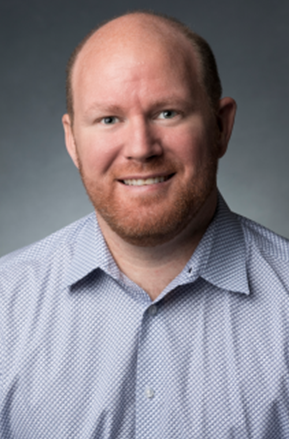
Davy Laroche is a Full Professor of Rehabilitation Science at the University of Burgundy, France. He serves as Director of the Department of Rehabilitation Professions within the Health Sciences Faculty (UFR Sciences de Santé). His expertise lies in developing innovative neuromuscular and biomechanical protocols to optimize motor function recovery in patients undergoing rehabilitation. Key roles include Vice-President of the STARTER research network focused on AI-driven motor rehabilitation strategies. Education: Masters in Biomechanics (2003), PhD in Neuroscience (2006), and HDR (Habilitation) in Rehabilitation Science (2019) from the University of Burgundy's INSERM CAPS lab. Research focuses on: Physiology of Movement, Biomechanical Optimization, Neurorehabilitation Technologies, and Sensorimotor Deficiencies. Over 80 peer-reviewed publications since 2003, with recent emphasis on eccentric cycling protocols in cardiac patients, gait analysis post-surgery, and post-stroke vibration therapy. Notable contributions include developing the Frail’BESTest balance assessment tool and pioneering IMU insole technology for gait analysis. Active in collaborative projects involving 3D motion datasets and clinical trial protocols for functional recovery metrics.
Veit Stuphorn is an Associate Professor of Neuroscience at The Johns Hopkins University, affiliated with the Zanvyl Krieger Mind/Brain Institute and the Department of Psychological and Brain Sciences. His research bridges systems, cognitive, and computational neuroscience, focusing on the neural basis of decision-making and self-control. His research interests lie in understanding the neurophysiological mechanisms of higher executive functions, particularly decision-making and self-control. Using neurophysiological recordings in awake primates during cognitive tasks such as the countermanding paradigm, he investigates how neurons in the frontal cortex—specifically the frontal eye field (FEF), supplementary eye field (SEF), and anterior cingulate cortex (ACC)—encode signals related to action initiation, suppression, error detection, and reward evaluation. He also extends these studies to human subjects using fMRI, enabling cross-species comparisons. His work suggests that medial frontal areas like ACC and SEF form a secondary executive control system that monitors performance and adjusts behavior based on outcomes. The 15 most recent publications reflect a consistent focus on executive control, inhibitory processing, and neural correlates of decision-making. These works span primate neurophysiology, human behavioral neuroscience, and theoretical neuroeconomics, with recurring themes in performance monitoring, error signaling, and the role of frontal-basal ganglia networks in cognitive control. Key techniques include single-neuron recording, local field potential analysis, and fMRI, applied across species to validate findings. Dr. Stuphorn has not been mentioned with any scientific awards in the provided text. He advises graduate students through the Neuroscience Training Program and Psychological and Brain Sciences at Johns Hopkins. While specific grants are not listed, his research is supported by long-term investigations into executive function, suggesting sustained funding. His lab conducts parallel animal and human studies, indicating interdisciplinary collaboration and resource investment. His lab is based at the Zanvyl Krieger Mind/Brain Institute at Johns Hopkins, where he leads a research team focused on neural circuits underlying decision-making and self-control. The lab combines electrophysiological recordings in primates with human neuroimaging to explore executive functions across species.
Cynthia Moss is a Professor of Psychological and Brain Sciences at The Johns Hopkins University, where she leads a research laboratory focused on systems, cognitive, and computational neuroscience. Her work is affiliated with the Neuroscience Training Program and the Psychological & Brain Sciences graduate program. She conducts pioneering research on echolocating bats to understand spatial perception, attention, and memory in natural behaviors. Research Interests: Dr. Moss investigates how the brain integrates sensory input with motor output during complex behaviors such as flight and navigation. Her primary model system is the echolocating big brown bat, which uses biological sonar to navigate and hunt. She studies neural mechanisms in key brain regions including the hippocampus, midbrain superior colliculus, and somatosensory cortex. Her research spans spatial perception , attention , memory formation , sensorimotor integration , and tactile feedback in flight control . She employs wireless neural recordings from free-flying bats to study brain activity during natural behaviors, offering insights into 3D spatial representation and adaptive sensing. Publication Trends: Her recent publications (2021–2024) reflect a strong focus on neural coding of 3D space, multisensory integration (especially tactile and visual cues in echolocation), adaptive vocal behavior, and social communication in bats. Her work increasingly bridges neuroscience with bio-inspired engineering, as seen in studies on wing mechanoreception and computational models of auditory processing. Collaborations with institutions like Columbia University expand the scope of her tactile sensing research. Scientific Contributions: Although specific awards are not listed in the provided text, her consistent publication record in high-impact journals such as Nature Neuroscience , PNAS , Current Biology , and eLife underscores her leadership in neuroethology and systems neuroscience. Advising and Grants: Dr. Moss mentors graduate students through the Neuroscience and Psychological & Brain Sciences programs at Johns Hopkins. While specific grant details are not mentioned, her extensive research output and long-term program suggest sustained funding from federal and private sources. She has trained numerous researchers and published over two decades of influential work on bat biosonar and brain function. Labs and Teams: The Moss Lab at Johns Hopkins uses advanced techniques including multi-channel wireless neural recording, high-speed motion tracking, and acoustic monitoring to study freely behaving bats. The lab collaborates with experts in biophysics, engineering, and sensory neuroscience, forming interdisciplinary teams to explore active sensing and neural dynamics in natural contexts.
Jimmy Dooley is an Assistant Professor in Biological Sciences at Purdue University, associated with the College of Science. He leads the Sensorimotor Development Lab focusing on how sleep-related movements drive neural activity critical for sensorimotor development. His research combines multichannel neurophysiology, optogenetics, and computational methods to study infant rats. Education: A.B. in Biology/Psychology from University of Chicago (2009); Ph.D. in Neuroscience from UC Davis (2015); Postdoc at University of Iowa (2016-2022). Research interests center on REM sleep twitches' role in motor cortex development and sensorimotor integration. His work challenges assumptions that awake-state movements are solely responsible for development, instead highlighting sleep's critical role. Recent studies explore how REM sleep twitches synchronize neural activity across brain regions during early development. Publications span sleep physiology, motor neuron activity, and developmental neuroscience. Current projects investigate REM sleep's role in cortical motor control emergence and lifelong motor learning through twitches. His lab employs advanced techniques like computer vision and machine learning for behavioral analysis. No scientific awards are listed but focuses on grants related to NIH developmental neuroscience funding. Lab location: Lilly 2-234, West Lafayette, IN.
Scott Pluta is an Assistant Professor in the Department of Biological Sciences at Purdue University, affiliated with the College of Science. His research focuses on understanding the neural mechanisms underlying sensory perception, sensory-guided behavior, and sensorimotor loops. He employs advanced techniques such as optogenetics, viral tracing, and behavioral analysis to study neural circuits in rodents, particularly focusing on the midbrain superior colliculus (SC) and cortical networks. Education and Experience: Pluta earned his Ph.D. from the University of Virginia in 2009. He completed postdoctoral research at the University of California, Berkeley (2012–2017) and Wake Forest Medical Center (2009–2012). His lab, the Laboratory for Sensorimotor Integration, investigates how descending cortical inputs influence the SC's activity and behavior, aiming to reveal principles of neural circuit function with implications for neurological disorders like ADHD and Parkinson's disease. Research Interests: Central to his work is the study of how the SC integrates sensory, motor, and motivational signals to form a 'priority map' for spatial attention. Projects include dissecting cortico-collicular circuits using genetic labeling and optogenetic manipulation, and analyzing ascending SC-thalamic-cortical pathways to understand sensorimotor loop dynamics. His lab uses rodent whisker systems as a model for active touch and spatial navigation. Lab and Collaborations: The lab combines optogenetics, neurophysiology, and behavioral tracking to study dynamic interactions between cortical and midbrain networks. Research outcomes aim to provide foundational insights for developing treatments for neurological conditions.
Mitra Hartmann is a **Professor of Biomedical Engineering**, **Mechanical Engineering**, and holds a **courtesy appointment in Computer Science** at Northwestern University's McCormick School of Engineering. She leads the **Hartmann Lab** and the **Center for Robotics and Biosystems**, focusing on sensorimotor integration, robotics, and neuroethology. Her research bridges biomechanics, neuroscience, and robotics, with applications in tactile sensing and neuroprosthetics. **Education**: PhD in Integrative Neuroscience (Caltech, 1996–2000), BS in Applied and Engineering Physics (Cornell, 1990–1994). Postdoctoral training at Caltech (Computational Neurobiology) and JPL (Bio-Computing). **Research**: Her lab studies how animals (e.g., rats) use whiskers to actively sense their environment. Key areas include vibrissal mechanics, neural coding of tactile stimuli, and developing whisker-inspired robots for harsh environments. She emphasizes interdisciplinary approaches, combining experiments, modeling, and robotics. **Awards**: Multiple McCormick Teaching Awards (2009–2011), NSF CAREER (2008), NAE Frontiers of Engineering (2008), and Searle Junior Fellowship (2006–2007). **Teaching**: Undergraduate courses in fluid mechanics (ME 241/BME 270) and a graduate course on neural engineering and sensory acquisition (BME 462). Known for integrating hands-on robotics projects. **Lab Activities**: The lab collaborates on open-source tool development for neuroscience and robotics. Current projects include tactile scene reconstruction, whisker-based flow sensing, and prosthetic devices inspired by biological systems.
Dr. Daniel Ferris is a Robert W. Adenbaum Professor of Engineering Innovation in the J. Crayton Pruitt Family Department of Biomedical Engineering at the University of Florida , within the Herbert Wertheim College of Engineering. His research focuses on biomechanics, neural control of locomotion, and human-machine interactions through robotics and prosthetics. Education: Ph.D., University of California, Berkeley (1998) M.S., University of Miami (1994) B.S., University of Central Florida (1992) Research Interests: Dr. Ferris pioneers mobile brain imaging (EEG) during movement, develops robotic exoskeletons/prosthetics to enhance walking efficiency, and investigates how humans adapt to mechanical and neural perturbations. His lab has created robotic ankle/knee/hip exoskeletons and bionic prostheses under myoelectric control. Recent work includes studying gait adaptations in older adults and analyzing cortical dynamics during locomotion. Awards: 2024 UF BME Faculty Research Excellence Award 2024 AAAS Fellow 2023 ASB Fellow 2018 Founders’ Award (ASB) Lab: Human Neuromechanics Laboratory focuses on translating neurotechnology into clinical applications. Key projects include artifact-free mobile EEG during walking and optimizing prosthetic control systems.
Prof. Olivier Lambercy is a Lecturer at the Department of Health Sciences and Technology at ETH Zurich. He leads the Rehabilitation Engineering Laboratory, focusing on advancing technologies for neurorehabilitation, including robotics, wearable sensors, and AI-driven solutions. His work bridges engineering and clinical practice to improve sensorimotor recovery. He serves as a tutor for the MSc in Health Sciences and Technology, specializing in Medical Technology, Human Movement Science, Neurosciences, and Rehabilitation. Research interests include rehabilitation engineering, motor learning, and assistive technologies. His lab develops devices like exoskeletons and biofeedback systems, emphasizing interdisciplinary collaboration with clinicians and industry. Courses he supports include Rehabilitation Engineering, Biomechanics, and Digital Health. No scientific awards are explicitly listed, but his contributions to peer-reviewed articles and lab initiatives highlight his impact. He advises on student projects and collaborates on grants related to stroke rehabilitation, robotics, and wearable tech. The Rehabilitation Engineering Lab hosts ongoing projects and student collaborations, emphasizing translational research.
Hagar Goldberg is a Sessional Instructor at the Department of Psychology , Faculty of Arts , University of British Columbia . Her work bridges Behavioural Neuroscience and Educational Neuroscience , focusing on social-emotional processes and their impact on brain development, wellbeing, and learning. Education: Ph.D. in Social Affective Neuroscience, Weizmann Institute of Science (2016) Master's of Science, Weizmann Institute of Science (2011) Bachelor of Science, Hebrew University of Jerusalem (2007) Her research explores how social-emotional neuroscience can enhance neuroplasticity and educational outcomes. She translates neuroscience findings into practical teaching methods, emphasizing empathy , creativity , and human social-emotional perception . Recent publications highlight interdisciplinary collaborations on empathy assessment , adolescent brain development , and neural correlates of creative processes . Goldberg has taught courses such as PSYC 101 (Introduction to Biological Psychology) and PSYC 207 (Contemporary Topics in Biological Psychology), often integrating educational neuroscience frameworks. While no scientific awards or student advising details are listed, her work reflects a commitment to cross-disciplinary collaboration with scientists, artists, and educators.
Dr. Nadia Dominici is an Associate Professor at the Department of Human Movement Sciences in the Faculty of Behavioural and Movement Sciences at Vrije Universiteit Amsterdam. She has additional affiliations with IBBA and AMS - Rehabilitation & Development. Her research focuses on neural control mechanisms of human and animal locomotion, motor development, and neurorehabilitation. She holds a Ph.D. in Neuroscience from the University of Rome 'Tor Vergata' (2006) and a Physics degree from the University of Rome 'La Sapienza' (2001). Dominici has received prestigious grants including the ERC Starting Grant (2016), NWO Aspasia Grant (2015), and NWO Vidi Grant (2015). She was awarded the Suzanne Klein-Vogelbach Prize (2013) and the IgNobel Prize in Physics (2013) for her work on lunar running feasibility. She also serves as an Associate Editor for Frontiers in Human Neuroscience since 2014. Her research interests encompass advanced statistical analysis of motor patterns, neural control of human locomotion, motor development in children and adults, proprioceptive control mechanisms, gravitational physiology, and experimental neurorehabilitation in animal models. She investigates biomechanical adaptations during walking and running, particularly in populations with cerebral palsy, spinal cord injury, and aging. Dominici's work bridges neuroscience, biomechanics, and robotics to understand how neural systems coordinate complex movements and adapt to environmental challenges. She has pioneered markerless gait analysis techniques and explored the neural origins of locomotor primitives in toddlers and adults. Her research projects include the ERC-funded Learn2Walk (2017–2022), which examines neural-spinal interactions in toddler gait development, and the NWO-backed FirSteps (2015–2021), investigating walking emergence in children. She also leads the Transformative Appropriation for a Meaningful Understanding of Cultural Heritage project (2024–2027). Dominici's work contributes to UN Sustainable Development Goals related to good health and well-being through innovations in neurorehabilitation and motor control understanding.
Gerome Manson is an Assistant Professor in the School of Kinesiology and Health Studies at Queen’s University. His research focuses on understanding how sensory information influences motor control and multisensory integration during goal-directed actions. He holds a PhD from the University of Toronto and l’Université d’Aix Marseille, alongside degrees in MSc and BPHE from the University of Toronto. Research Themes: 1) Sensory influence on somatosensory target mapping, 2) Neural networks in rapid motor control, 3) Multisensory perception during movement execution. His work combines motion tracking, neuroimaging, and sensory manipulation to explore sensorimotor processes. Teaching: Undergraduate courses include KNPE 237 (Child & Adolescent Motor Development) and KNPE 254 (Biomechanical Analysis of Human Movement). He mentors students through his Sensorimotor Exploration Lab, offering volunteer and graduate research opportunities in motor learning and neuromechanics. Publications span topics like spinal stimulation effects, age-related sensorimotor differences, and motor strategy adaptations. His lab emphasizes interdisciplinary approaches to advancing understanding of human movement control.
Dr. Jonathan Robinson is a Senior Lecturer in Research Methods at Teesside University's School of Health and Life Sciences, affiliated with the Centre for Rehabilitation. He holds a PhD in Rehabilitation from Teesside University (2015), following an MSc in Physiotherapy (2009) and BSc in Sports Therapy (2006). His research focuses on exergaming technology for rehabilitation, particularly in multiple sclerosis (MS), balance training, and virtual rehabilitation. He teaches research methods across clinical programs and leads modules on systematic reviews. Robinson has been Postgraduate Tutor since 2018, supporting PhD students and serving on the Postgraduate Research Assessment Board. Education: Bachelor of Science (BSc), Sports Therapy, Teesside University (2006) Master of Science (MSc), Physiotherapy, Teesside University (2009) Doctor of Philosophy (PhD), Rehabilitation, Teesside University (2015) Research Interests: Exergaming and virtual rehabilitation for MS patients Balance and gait training interventions Systematic review methodology Clinician burnout and sleep patterns Recent Research Themes: His work spans VR-based exercise trials, infection control for preterm infants, and food insecurity in mental health populations. Collaborative projects include the NIHR Research Design Service and interdisciplinary studies on neonatal care. Awards: 2023 Outstanding Teaching Award (Teesside University). Advisory Roles: Advisor for NIHR Research Design Service (NENC), Postgraduate Research Assessment Board member, and reviewer for Gait & Posture and Frontiers in Aging Neuroscience . Labs/Teams: Involved in the Research Centre for Rehabilitation and SHLS Research & Innovation Sub-Committee.
Val Andrade is an Assistant Professor in the Department of Psychology at the University of Cincinnati. She holds a Ph.D. in Experimental Psychology from the University of Cincinnati (2024), an M.Sc. in Rehabilitation Science from Universidade Federal de Minas Gerais (2019), and a Physical Therapy degree from the same institution (2017). Her research examines motor control, rehabilitation, and disability through ecological psychology frameworks. Andrade has received numerous awards including the Wearable Robotics Innovation Challenge finalist designation (2022) and University of Cincinnati's Outstanding International Student Award (2022). She teaches courses including Introduction to Psychology, Research Methods, and Sensation & Perception. Her publications focus on motor coordination across diverse populations, with recent work exploring postural dynamics, force production, and disability models. Research employs biomechanical analysis and ecological approaches to understand movement challenges.