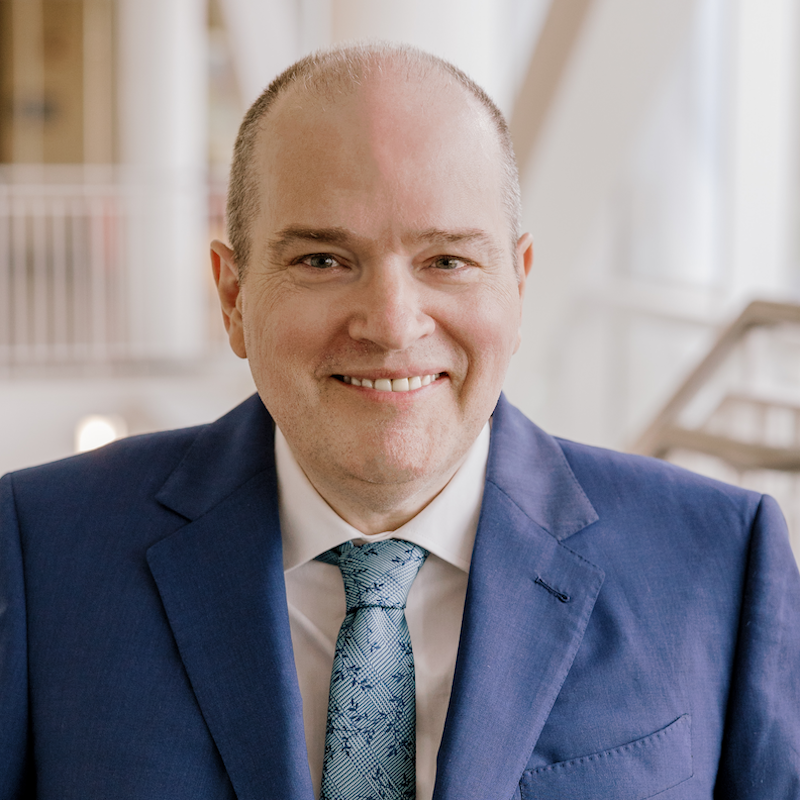
Professor Ulrik Lund Andersen heads the quantum information group at DTU Physics, Technical University of Denmark. His research develops quantum technologies including quantum computation, secure communication, and quantum-enhanced measurement systems. His group generates entangled optical states and investigates diamond-photon interactions for quantum nonlinearities. Key research areas: Quantum computing architectures Continuous-variable quantum information Quantum key distribution Quantum-enhanced sensing Solid-state quantum systems Recent work advances error correction, quantum state engineering, and quantum sensing algorithms. Publications demonstrate consistent focus on practical quantum technology implementation. Awards include multiple Sapere Aude research grants and the Eliteforsk Award from the Danish Ministry of Science.
Ram Vasudevan is an Associate Professor and Associate Chair of Graduate Studies in the Department of Robotics at the University of Michigan. His research focuses on developing tools for safe and robust deployment of robotic systems, emphasizing optimization, nonlinear control, and real-world applications. Key areas include legged robot locomotion, shared control systems, and safety-critical autonomous systems. Research Interests: Optimization and control of nonlinear systems, locomotion of legged robots, shared control active safety systems, and automation of diagnostic/rehabilitative tasks. His ROAHM Lab prioritizes mathematical guarantees for robotic performance, with applications in medical robotics, autonomous vehicles, and soft robotics. Recent work emphasizes trajectory optimization, sensor fusion, and safety-aware control strategies. He has contributed to benchmarks for autonomous vehicle perception and novel methods in thermal image restoration using neural radiance fields. Awards: None explicitly listed in provided text. Labs/Teams: Directs the ROAHM Lab, collaborating on projects like robotic tail mechanics, real-time motion planning, and sensor data analysis. Active in academic conferences including RSS and ICRA.
Moe Z. Win is the Robert R. Taylor Professor at the Massachusetts Institute of Technology (MIT), specializing in wireless communications, optical communications, and space communications systems. His research bridges theoretical and applied domains, including quantum sensing, network localization, and signal processing. B.S.E.E., Texas A&M (1987) M.S.E.E. & Ph.D., University of Southern California (1989, 1998) Recent work focuses on quantum-enhanced positioning, machine learning for localization, and next-generation (xG) non-terrestrial networks. He leads research at the Quantum neXus Laboratory (QX Lab), Wireless Information & Network Sciences Lab, and Laboratory for Information and Decision Systems. His career spans the Jet Propulsion Laboratory (1987-1995) and AT&T Research Laboratories (1998-2002). Key methodologies include soft information fusion, variational quantum sensing, and robust beam tracking for terahertz communications.
Brendan Russo serves as an Associate Professor in the Department of Civil Engineering, Construction Management, and Environmental Engineering at Northern Arizona University, where he conducts influential research in transportation safety and traffic engineering. His work focuses on improving safety outcomes for vulnerable road users through rigorous analysis of crash data, traffic operations, and emerging mobility technologies, with significant contributions to Arizona-specific transportation challenges and national safety practices. Russo's research program centers on bicycle and pedestrian safety, crash severity analysis, and the integration of autonomous systems into transportation networks. He employs advanced methodologies including spatial analysis, statistical modeling (e.g., random parameters bivariate probit models), and observational studies to investigate traffic stress levels, intersection safety, and the impacts of infrastructure treatments. His work consistently bridges theoretical transportation engineering with practical applications for safer community design. Analysis of Russo's recent publications reveals a strong emphasis on emerging transportation technologies and their safety implications, particularly regarding autonomous delivery robots and vehicle-pedestrian interactions, while maintaining core focus on traditional safety concerns like bicycle crash frequency and severity. His research demonstrates increasing integration of spatiotemporal analysis and scenario-based testing methodologies, with a clear geographic concentration on Arizona metropolitan regions that provides valuable localized insights applicable to broader transportation contexts. No scientific awards were mentioned in the provided text. No specific information about advising responsibilities or grant funding was provided in the text, though his extensive publication record and dataset contributions indicate active research leadership. Russo collaborates within a robust research network centered on transportation safety, frequently partnering with colleagues including Gehrke, Smaglik, and Holliday on projects involving field data collection, bicycle infrastructure evaluation, and safety performance metrics. His work leverages both observational studies and simulation approaches to develop data-driven guidance for transportation practitioners, with particular attention to Arizona's unique transportation environment and metropolitan planning challenges.
Dr. Yamin Zhang (张亚敏) holds a Presidential Young Professorship as an Assistant Professor in the Department of Chemical & Biomolecular Engineering at the National University of Singapore (NUS), College of Engineering. She leads the Zhang Group which focuses on interdisciplinary research at the intersection of electrochemistry, materials science, and biomedical engineering. 07/2023 – 01/2024: Research Associate, Northwestern University 02/2021 – 06/2023: Postdoctoral Fellow, Northwestern University 08/2016 – 12/2020: Ph.D., Chemical Engineering, Georgia Institute of Technology 09/2012 – 07/2016: B.S., Chemical Engineering, Tianjin University; B.S., Finance (Double Major), Nankai University Dr. Zhang's research centers on developing advanced electrochemical strategies for next-generation medical devices (implantable, bioresorbable, and wearable) and sustainable energy solutions. Her work bridges bioelectronics , battery technology , and medical therapeutics , with particular emphasis on creating devices that can safely dissolve in the body after serving their purpose. Key areas include bioresorbable optoelectronic systems for electrotherapy, self-powered drug delivery platforms, and eco-safe battery technologies that can harmlessly resorb in biological environments. Analysis of Dr. Zhang's publication record reveals a clear trajectory from fundamental battery chemistry (2021-2022) toward increasingly sophisticated medical applications (2023-2025). Her recent work demonstrates mastery in integrating multiple functionalities into single bioresorbable platforms, as evidenced by her Nature (2025) paper on millimeter-scale optoelectronic systems for electrotherapy and Cell Biomaterials (2025) paper on wireless bioelectronic devices. The research shows strong interdisciplinary collaboration with leading institutions including Northwestern University and Georgia Tech. AHA Early Faculty Independence Award (2023) MIT ChemE Rising Stars (2022) Sigma Xi Best PhD Thesis Award (2021) Chinese Government Award for Outstanding Students Abroad (2021) A*STAR MTC Young Individual Research Grants (YIRG) (2025) Early Career Board Member for ACS Applied Materials & Interfaces (2025) Dr. Zhang has secured significant research funding including the AHA's Second Century Early Faculty Independence Award as Principal Investigator (2023) and the A*STAR MTC Young Individual Research Grant (2025). Her group serves on advisory boards for Cell Biomaterials and ACS Applied Materials & Interfaces. The Zhang Group at NUS maintains active collaborations with Northwestern University researchers including the Rogers group, with whom she has co-authored multiple high-impact publications in Nature, Science, and PNAS. Current research focuses on advancing battery technology and developing sophisticated electrochemical strategies for medical devices with an overarching focus on healthcare innovation and environmental sustainability.
Prof. Dr. Thomas Brinkhoff is Chair of the Institute Board and Chair of Geoinformatics at Oldenburg University of Applied Sciences. He leads the Institute for Applied Photogrammetry and Geoinformatics (IAPG) and contributes to institutions like the Association for the Promotion of Geoinformatics in Northern Germany (GiN e.V.) and the Oldenburg Research and Development Institute for Computer Science (OFFIS e.V.). Education: Diploma in Computer Science (Informatik), Universität Bremen (1990) Doctorate in Computer Science (Dr. rer. nat.), Ludwig Maximilian University of Munich (1994) Brinkhoff's research spans geodatabase systems, spatiotemporal data processing, geosensor analytics, and location-based services. His work addresses Volunteered Geographic Information (VGI), web-based geospatial visualization, and mobile data integration, with applications in traffic management and forensic science. Recent projects include ProSaDi (Digital Provenance and Collection Research) and contributions to the Laboratory for optical 3D metrology . He has served on program committees for ACM SIGSPATIAL (2002-2019), AGILE conferences (2010-2025), and editorial boards of journals like GeoInformatica and TGIS. Notable Lectures: 2024: Forensic applications of tachograph data 2023: Geoinformatics in homicide investigations 2022: Spatiotemporal analysis for sustainability projects 2015: Open geodata standards at FOSSGIS 2014: Mobile sensor data processing
Karen I. Winey serves as the Harold Pender Professor in the Department of Chemical and Biomolecular Engineering and Materials Science and Engineering at the University of Pennsylvania's School of Engineering and Applied Science. Her research group employs experimental and computational tools to investigate advanced polymers for energy applications, particularly focusing on proton and ion conductivity for fuel cells and batteries within the Laboratory for Research on the Structure of Matter (LRSM). Dr. Winey's research encompasses: Designing functional polymers to improve proton, hydroxide, and ion conductivity Studying polymer nanocomposites and nanoparticle dynamics in electrochemical devices Developing polymer-to-polymer upcycling methods to convert waste polyolefins to higher value polymers Revolutionizing understanding of ionomer morphologies beyond traditional spherical aggregate models Her recent publications reveal significant advances in sustainable energy materials, particularly fluorine-free alternatives to conventional polymer electrolytes. The research spans fundamental studies of ion transport mechanisms in precisely engineered polymers to practical applications in energy devices. A critical focus is understanding how nanoscale morphology affects macroscopic properties, with particular attention to structure-property relationships in ion-conducting polymers for fuel cells and batteries. Scientific recognition includes: 2025 Turner J. Alfrey Visiting Professor Harold Pender Professorship (endowed chair) NSF DMR Polymers grant awarded July 2025 Dr. Winey actively mentors a diverse research group including PhD students, postdoctoral researchers, and undergraduates. Her lab recently welcomed six summer undergraduates and has celebrated numerous student achievements including qualifying exam successes and award-winning presentations. Current major projects include the Port5 collaboration and the PolyUp project focused on polymer upcycling through dehydrogenation and functionalization strategies. The Winey Group operates within Penn's state-of-the-art Vagelos Laboratory for Energy Science and Technology (VLEST), maintaining active collaborations with institutions including the University of Konstanz in Germany, Florida State University, and Michigan State University. The group regularly hosts international visitors and participates in major conferences including the APS Global Physics Summit.
Dr. Jiamin Li is an Associate Professor at the School of Microelectronics, Southern University of Science and Technology (SUSTech), Shenzhen, China. She holds a Ph.D. and B.Eng. in Electrical and Computer Engineering from the National University of Singapore (NUS). Her research focuses on biomedical integrated circuits, energy harvesting, and wireless body-area networks. Education: Ph.D. and B.Eng. in Electrical and Computer Engineering from NUS Employment: Associate Professor (2024–Present), Assistant Professor (2022–2024) at SUSTech; Research Fellow at NUS Dr. Li's research addresses wireless body area powering , low-power biosignal interfaces , and intelligent biosignal processors . Her work leverages microsystem design for applications in biomedical engineering , particularly in energy-autonomous medical devices and human body-coupled communication . Her recent publications highlight advancements in concurrent power/data transmission , subharmonic pulse injection , and triboelectric energy harvesting for biomedical systems. Key venues include IEEE JSSC , Nature Electronics , and conferences like ISSCC and BioCAS. Awards: IEEE SSCS Predoctoral Achievement Award, ISSCC Best Demo Award, ASSCC SDC Best Design Award Committees: IEEE SSCS Women-in-Circuit (WiC) Committee, ISSCC Student Research Preview Committee Opportunities: Positions available for Ph.D., Master's, Postdoctoral Fellows, and Visiting Scholars
Jon Simon is the Joan Reinhart Professor and Professor of Applied Physics at Stanford University . He leads the Simon Lab , which explores the convergence of condensed matter physics , quantum optics , and quantum information science , focusing on creating synthetic materials from light and investigating topological and strongly correlated quantum systems. His research spans constructing photonic materials in quantum circuits, studying small quantum systems with strong correlations, and applying Hamiltonian engineering to realize exotic states of matter. The lab has achieved milestones like the first Mott insulator of photons and topologically insulating circuits . Collaborative projects with the Schuster Lab leverage superconducting quantum circuits for synthetic matter studies. Jon's students include Adam Shaw (PhD, now at Stony Brook) Lavanya Taneja (PhD, now at Atom Computing) Ruichao Ma (Postdoc, now faculty at Purdue) among others. The lab's recent publications focus on cavity arrays, hybrid quantum systems, and topological photonics. Research is supported by grants and affiliations with Stanford's Department of Applied Physics and interdisciplinary institutes.
Kaiyuan Yang is an Associate Professor in the Department of Electrical and Computer Engineering at Rice University, leading the Secure and Intelligent Micro-Systems (SIMS) Lab. His research focuses on low-power integrated circuits and bioelectronic implants for applications like the Internet of Everything and medical devices. He holds a B.S. from Tsinghua University (2012) and M.S./Ph.D. degrees from the University of Michigan (2017). Research Interests: Low-power digital/analog/mixed-signal systems Bioelectronics and implantable devices Hardware security and PUF design Mixed-signal computing and emerging materials Recent work emphasizes magnetoelectric-powered implants, secure backscatter communication, and in-memory computing architectures. His publications span top venues like IEEE ISSCC, IEDM, and ACM MobiCom. Awards: 2022 NSF CAREER Award 2022 IEEE Top Picks in Hardware Security 2016 IEEE SSCS Predoctoral Achievement Award Dr. Yang serves on editorial boards for IEEE TVLSI and program committees for ISSCC/CICC. His lab develops miniature, secure, and energy-efficient systems for healthcare and IoT applications.
Jeff Huang is an Associate Professor and Associate Chair of Computer Science at Brown University. His research focuses on Human-Computer Interaction (HCI), with emphases on personalized systems using behavioral data, health informatics, and user interfaces. Huang holds a PhD from the University of Washington and degrees from the University of Illinois at Urbana-Champaign. His work is funded by NSF, NIH, and ARO, and he has received awards including the NSF CAREER Award and ARO Young Investigator Award. Education: PhD in Information Science, University of Washington (2013) MS in Computer Science, University of Washington (2013) BS and MS in Computer Science, University of Illinois at Urbana-Champaign (2007) Research Interests: His work spans health informatics (e.g., sleep tracking systems like Self-E and SleepCoacher), user interface design, and leveraging behavioral data for personalized systems. Notable projects include WebGazer (webcam eye tracking), filtered.ink (creative illustration tools), and Sochiatrist (mental health analytics). Teaching: He teaches courses on user interfaces, HCI, and research methods, including CSCI 0130/1300 (User Interfaces), CSCI 2300 (HCI Seminar), and CSCI 2000 (Research Methods). Awards: NSF CAREER Award Facebook Fellowship ARO Young Investigator Award Grants & Advising: Huang leads a research group advising over 50 students, many of whom have pursued academic and industry roles. His grants support projects in HCI, health tech, and collaborative systems.
Benjamin Carrison-Schafer is an Associate Professor and Assistant Dean for Graduate Student Success at the Department of Electrical and Computer Engineering, Erik Jonsson School of Engineering and Computer Science, University of Texas at Dallas. He leads the Design Automation and Reconfigurable Computing Laboratory (DARClab), focusing on systems, high-level design, and programming methodologies for VLSI computing systems and FPGAs. Education: MBA from McGill University, Canada (2012) PhD in Electrical and Electronic Engineering from University of Birmingham, UK (2003) Research Interests: His work spans modeling, analysis, synthesis, optimization, and implementation of VLSI systems. Current projects include: Approximate Computing, High-Level Synthesis Design Space Exploration, Hardware Security, Behavioral MPSoC Optimization, and Automatic Fault-Tolerant System Generation. His research blends theory and practice, using analytical and experimental techniques to solve real-world problems. Publication Trends: Recent publications demonstrate strong focus on hardware security, FPGA optimization, and automated design methodologies. Key themes include High-Level Synthesis innovations, hardware acceleration techniques, and cross-disciplinary applications of reconfigurable computing. His work frequently addresses challenges in hardware trustworthiness, energy efficiency, and design automation scalability. Professional Activities: Associate Editor: IEEE Transactions on Sustainable Computing (2022-present) Conference Chair: ICCD 2024, DCAS 2024 Program Committee: ASP-DAC, DATE, FCCM, GLSVLSI Advising & Labs: Supervises multiple PhD and Master's students at DARClab. Current research includes domain-specific architecture design, hardware security, sustainable computing, and ML for VLSI design. The lab collaborates with industry partners like Renesas Electronics and develops commercial tools through spin-off company highX Technologies.
Wojciech Matusik is a Professor of Electrical Engineering and Computer Science at MIT's Computer Science and Artificial Intelligence Laboratory (CSAIL). He leads the Computational Design and Fabrication Group and is a member of the Computer Graphics Group. His research spans computer graphics, robotics, and AI-driven manufacturing, with a focus on computational design, tactile sensing, and material science. Matusik holds a PhD in Computer Science from MIT (2003), an MS from MIT (2001), and a BS from UC Berkeley (1997). His work includes groundbreaking projects like differentiable cloth simulation (DiffCloth), AI-enhanced molecular design, and tactile sensing gloves. He has received prestigious awards such as the MIT TR35 (2004), DARPA Young Faculty Award (2012), and Ruth and Joel Spira Teaching Award (2014). Matusik teaches courses on computer graphics, machine learning, and computational fabrication at MIT. Key research themes include: Robotics: Robotic assembly, tactile interaction, and soft robotics Graphics: 3D holography, procedural material generation Manufacturing: Additive fabrication, topology optimization His recent articles explore AI-driven molecular synthesis, holographic displays, and tactile-enabled VR systems. Matusik collaborates on open-source tools like the WiReSens tactile platform and Simit language for sparse systems.
Sarita V Adve is the Richard T. Cheng Professor of Computer Science at the University of Illinois at Urbana-Champaign, where she conducts research spanning hardware, programming languages, operating systems, and applications with a focus on domain-specific systems. Her work bridges theoretical foundations and practical implementations, particularly in extended reality and heterogeneous computing. Her educational background includes a Ph.D. and M.S. in Computer Science from the University of Wisconsin-Madison (1993, 1989) and a B.Tech in Electrical Engineering from the Indian Institute of Technology Bombay (1987). Prior to joining Illinois, she served on the faculty at Rice University from 1993 to 1999. Adve's research centers on generalizable and scalable specialization for domain-specific systems, with current emphasis on extended reality (XR) systems including virtual, augmented, and mixed reality. She chairs the ILLIXR consortium to democratize XR research and developed the first fully open-source XR system (ILLIXR). Her foundational contributions include memory consistency models for C++ and Java programming languages, the Spandex coherence framework for heterogeneous systems, and software-driven approaches for hardware reliability. Her work spans hardware reliability (SWAT and RAMP projects), power management (GRACE system), and instruction-level parallelism. Recent publications reveal a strong focus on energy-efficient XR systems, hardware-software co-design for AI workloads, and resilience analysis. Her team explores rendering offload, visual-inertial odometry optimization, and compositional error injection frameworks, often targeting tradeoffs between energy, latency, and accuracy in mobile and edge environments. Fellow of the American Academy of Arts and Sciences Fellow of the ACM and IEEE ACM/IEEE-CS Ken Kennedy Award Anita Borg Institute Woman of Vision in Innovation Award ACM SIGARCH Maurice Wilkes Award Alfred P. Sloan Research Fellowship UIUC University Scholar University of Illinois Campus Award for Excellence in Graduate Student Mentoring Adve actively mentors students and has received multiple teaching awards. She co-founded the CARES movement to address discrimination in CS research events and chairs CS@Illinois CARES. Her service includes leadership roles in ACM SIGARCH (2015-2019), DARPA/ISAT study group, ACM Council, and Computing Research Association. She has secured significant funding including DARPA initiatives and Google Faculty Research Awards. She leads the ILLIXR consortium and has established collaborative research programs such as the $8.3M DARPA Joint University Microelectronics Program. Her lab focuses on open-source XR development, heterogeneous system architectures, and reliability-aware designs, with strong industry and government partnerships.
Larry Pileggi is the Coraluppi Head and Tanoto Professor of Electrical and Computer Engineering at Carnegie Mellon University (CMU). He is also the Department Head of CMU’s ECE Department and has held prior roles at Westinghouse Research and Development and the University of Texas at Austin. His work bridges academic research and industry innovation, with co-founding ventures like Fabbrix Inc., Extreme DA, and Pearl Street Technologies. Dr. Pileggi earned his Ph.D. in Electrical and Computer Engineering from CMU (1989), following an M.S. (1984) and B.S. (1983) in Electrical Engineering from the University of Pittsburgh. His research focuses on three core areas: secure integrated circuit hardware (mitigating supply-chain threats), integrated circuits design methodologies (supporting sub-20nm CMOS and heterogeneous technologies), and power systems simulation (developing robust grid analysis tools like SUGAR). He has been recognized with numerous awards, including the prestigious 2023 Phil Kaufman Award for contributions to electronic system design, and is an IEEE Fellow. His academic leadership includes fostering maker initiatives and interdisciplinary research programs to address future challenges in energy and computing systems. Pileggi’s advising record includes over 47 Ph.D. students, many of whom collaborate with him in industry ventures. Current and past grants support his work on resilient power grids and novel memory technologies, reflecting a commitment to both theoretical and applied research. His lab, the Pileggi Lab, develops cutting-edge solutions for energy and integrated systems, emphasizing scalable simulation, secure hardware design, and next-generation memory architectures. Collaborations span institutions like ETH Zurich and industry partners in EDA and semiconductor sectors.