Anh Tuan Le is an Associate Professor at the Department of Electrical Engineering, Chalmers University of Technology. He holds a PhD in Power Systems from Chalmers (2004) and a Master's in Energy Economics from the Asian Institute of Technology (1997). Specializes in power grid planning, electricity market modeling, and renewable energy integration Active in electric vehicle-grid interaction and battery storage systems Develops voltage stability solutions and decentralized control strategies His recent research focuses on: Flexibility markets for congestion management Machine learning applications in load forecasting Real-time security margin control using AI Key projects include: DigiRES (2024-2027): Digital integration of multi-energy flexibility POTENT-X (2024-2027): Port energy transition hubs FLEXIGRID (2019-2023): Distribution grid flexibility solutions
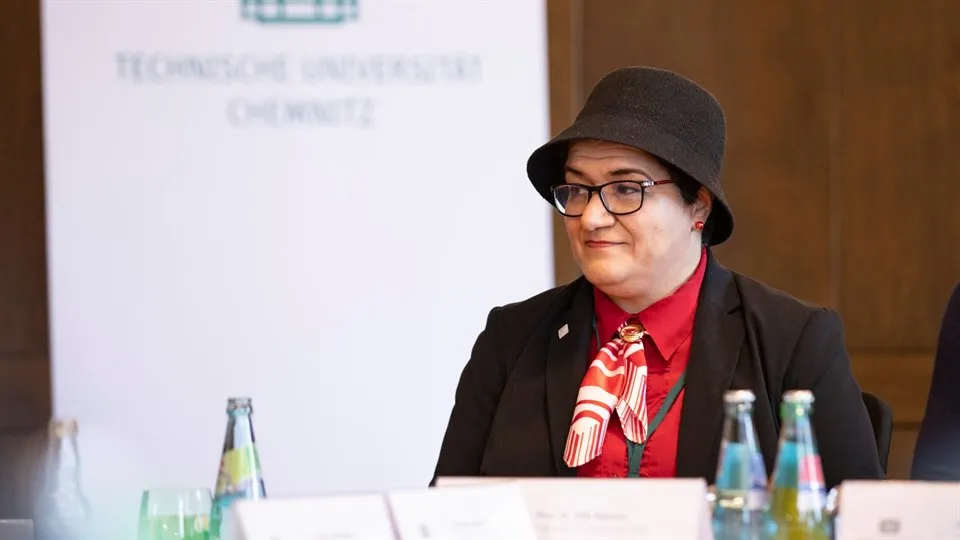
Prof. Olfa Kanoun is a Visiting Professor at Mid Sweden University's Department of Electronics, affiliated with the STC Research Centre. She specializes in embedded measurement systems, focusing on sensor technologies, energy harvesting, and impedance spectroscopy. Her research spans battery diagnosis, bio-impedance applications, and flexible nanocomposite sensors for force, temperature, and humidity measurements. She holds a PhD from the University of the Bundeswehr Munich (2001) and has been a professor at TU Chemnitz since 2007. A senior IEEE member, she co-founded the International Multi-Conference on Systems, Signals, and Devices (SSD) and initiated the International Workshop on Impedance Spectroscopy (IWIS). She leads the Autonomous Sensor Systems research group, advancing energy-efficient embedded sensor systems. Her honors include a 2015 award from Tunisia’s Ministry of Social Affairs. She actively contributes to IEEE’s Instrumentation and Measurement Society and chairs the Technical Committee on Nanotechnology in Instrumentation and Measurement (TC 34).
Anders Karlström is a Professor at KTH Royal Institute of Technology, specializing in Transport Modelling and Economics. His research focuses on sustainable transportation systems, emissions reduction, and energy efficiency. Key interests include activity-based modelling, dynamic discrete choice frameworks, and policy analysis for urban mobility. He has contributed to studies on travel behavior, infrastructure planning, and environmental impacts of transport systems across multiple international cities. His work integrates advanced methodologies such as recursive logit models, spatial regression, and machine learning for predictive analytics. Notable research areas involve evaluating weather variability effects on travel patterns, optimizing traffic state estimation with sensor data, and developing scenario-based models for future employment growth. Karlström collaborates with industries to enhance the competitiveness of sustainable transport solutions globally.
Magnus Boman is a Professor of AI and Health at the Department of Medicine, Solna, Karolinska Institutet (KI), where he leads the AI@KI initiative to support researchers in AI integration. He is affiliated with the Chronic Inflammatory Disease Epidemiology research group under Johan Askling. His research focuses on AI applications in precision medicine, multimodal prediction, ethical norms in AI systems, energy-efficient computing, and quantum sensor data interpretation. Research Interests: Artificial Intelligence in healthcare and precision medicine Multimodal data analysis for disease prediction and treatment Machine learning for clinical decision support systems Ethical and societal implications of AI Grants: Swedish Research Council: Improving breast cancer histology image classification (2024-2026) Scalable Federated Learning (2022-2025) Ai in sustainable cities (VINNOVA, 2019) Advising & Students: Supervised over 50 PhD and Master's students across KI, KTH, and Stockholm University, focusing on AI applications in healthcare, machine learning, and computational epidemiology. Notable projects include predictive modeling for mental health outcomes and variant filtering in genetic data. Labs & Teams: Leads AI@KI, fostering AI adoption in medical research. Collaborates with the Johan Askling group on epidemiology and chronic disease studies.
Marianna Ivashina is a Professor and Head of the Antenna Systems Research Group at Chalmers University of Technology's Department of Electrical Engineering . Her work focuses on array antennas , antenna integration with electronics , optimal beamforming , and over-the-air measurement methods . The group has achieved international recognition for innovations in ultra-wideband (UWB) feeds , Gap waveguide antennas , and Doherty-power-amplifier-integrated antennas for 5G/6G and radio telescope applications. Key projects include the SSF Sweden-Taiwan collaboration , EU Horizon 2020 MyWave , and VINNOVA ENERGETIC initiatives. Her recent publications emphasize millimeter-wave (mmWave) communication and reconfigurable intelligent surfaces (RIS) , with applications in 5G/6G networks , satellite communication (SatCom) , and advanced antenna testing chambers . She explores beamforming optimization , self-interference mitigation , and hybrid OTA environments to enhance wireless system performance. The group's work bridges theoretical advancements with practical implementations, including RFSoC testbeds and high-efficiency antenna arrays . Marianna leads major research programs funded by Ericsson , VINNOVA , and EUREKA EURIPIDES2 , addressing challenges in beamforming , antenna-IC integration , and automated design for 5G/6G . These projects highlight her role in advancing millimeter-wave communication and sensor integration technologies.
Dag Hanstorp is a Professor at the Department of Physics, University of Gothenburg. His office is located at Fysikgränd 3, Göteborg (Room F8032), and he can be contacted via email or telephone. His research focuses on experimental atomic/molecular physics and laser applications, including: Quantum phenomena in levitated droplets Ultraprecise spectroscopy of radioactive molecules (e.g., radium monofluoride) Laser-induced dynamics in fuels and aerosols Electron affinity measurements of alkali metals Vacuum laser particle acceleration techniques Spin Hall nano-oscillator characterization Recent publications (2023-2025) demonstrate interdisciplinary work combining atomic physics, fluid dynamics, quantum optics, and nanotechnology. Common themes include advanced laser spectroscopy, quantum system control, and novel imaging techniques applied to fundamental physical processes.
Yu Xia is a Post Doc at the Department of Chemistry, Stockholm University, Sweden. He is affiliated with the Tom Willhammar Research Group, focusing on advanced electron microscopy and diffraction techniques for structural characterization of materials. PhD (2019–2023) from a joint program between the University of Birmingham (UK) and the Southern University of Science and Technology (China). Research emphasizes fabrication of metallic nanoparticles with non-equilibrium structures and shapes using gas-phase condensation and thermal shock methods. Specializes in scanning transmission electron microscopy (STEM), in-situ heating experiments, and electron energy loss spectroscopy (EELS) for nanoparticle analysis. Current work prioritizes 4DSTEM imaging for electron beam-sensitive materials and Python-based post-processing of electron microscopy datasets. Yu Xia's research spans Materials Science , Nanotechnology , and Electrocatalysis , with applications in photocatalytic hydrogen evolution , graphene composites , and advanced electron microscopy techniques . His work often integrates computational image processing with structural characterization to optimize material properties. Publications highlight innovations in heterostructure engineering , metallic alloy catalysts , and electron beam-sensitive material imaging . No scientific awards are explicitly mentioned in the provided text. Yu Xia's technical expertise includes Python scripting for image analysis, in-situ electron microscopy , and multifunctional graphene-based materials .
Jim Dowling is a distributed systems researcher at KTH Royal Institute of Technology, focusing on large-scale distributed systems, machine learning, and big data. His work emphasizes improving system dependability, performance, security, and scalability through middleware, peer-to-peer systems, and cloud-native solutions. He leads courses such as Advanced Course in Large Scale Machine Learning and Deep Learning and Scalable Machine Learning and Deep Learning , demonstrating his commitment to education in AI and distributed computing. His research spans topics like feature stores, Kubernetes integration, and AI-driven environmental analytics (e.g., ANIARA project for edge infrastructure automation and ExtremeEarth for Copernicus data analysis). He has contributed to scalable ML pipelines, cloud storage systems (HopsFS-S3), and hyperparameter optimization tools like Maggy. Key projects include the Hopsworks platform for machine learning operations and the development of cloud-native tools for big data analytics. His work bridges theoretical distributed systems research with practical applications in AI, healthcare, and environmental science. He has advised on numerous collaborative initiatives but no formal students are listed. His grants and lab activities are centered around Hopsworks and the ANIARA project, reflecting his focus on scalable, self-managing systems.
Pierre Flener is a Professor at the Department of Information Technology, Division of Computing Science at Uppsala University. He leads the Optimisation Group and is a member of the Centre for Interdisciplinary Mathematics. His work focuses on constraint programming and discrete optimization, addressing complex scheduling, routing, and resource allocation challenges. Flener is an Officer of the Order of Merit of Luxembourg and co-founder of NordConsNet, the Nordic Network for Constraint Programming researchers. Research Interests: Flener’s research spans constraint programming, combinatorial optimization, and algorithm design. He develops models and tools for automated decision-making in domains like air traffic management, sensor networks, and industrial robotics. His work emphasizes practical applications, leveraging constraint satisfaction techniques to solve real-world puzzles such as vehicle routing and personnel allocation. Key Contributions: Flener has authored over 100 publications on constraint solving, symmetry breaking, and CP-based approaches to industrial problems. Notable projects include airspace sectorization optimization, energy-efficient sensor networks, and financial portfolio design. He has led initiatives like Auto-Tabling for MiniZinc and collaborated on CP applications in bioinformatics and image processing. Labs & Teams: He heads the Optimisation Group at Uppsala, fostering research in CP and its applications. NordConsNet, co-founded by Flener, connects Nordic researchers and practitioners in constraint technology.
Klas Hjort is a Professor of Materials Science at Uppsala University's Ångström Laboratory , specializing in Microsystems Technology . He leads the microsystems technology program and has pioneered research in heterogeneous microsystems on stainless steel, flexible foils, and elastic substrates for biomedical applications and wireless sensor/actuator systems . Key projects: SSF robotic textiles , PERSIMMON smart patches Research themes: Microfluidic actuation , Liquid metal patterning , Stretchable electronics His recent publications focus on soft robotics , smart patches , and high-pressure microfluidic systems , with keywords spanning Microfluidics , Biomedical Engineering , and Stretchable Electronics . He collaborates extensively in robotic textiles , microvalve design , and liquid metal composites . Contact: klas.hjort@angstrom.uu.se
Libo Chen is an Assistant Professor at Uppsala University's Department of Electrical Engineering; Solid State Electronics. His work focuses on neuromorphic tactile systems, bioinspired e-skin, and self-powered transducers. Research Interests : Neuromorphic engineering for tactile feedback Stretchable and self-healing electronics Energy harvesting for bioinspired systems Triboelectric transducers and sensors Surface chemistry of mesoporous materials Publication Trends : Over the past five years, Chen has published in interdisciplinary areas spanning Materials Science , Neuroengineering , and Chemical Physics , with a focus on tactile systems, self-healing materials, and hybrid energy applications. Labs & Teams : He is affiliated with Uppsala University's Ångström Laboratory, a hub for advanced materials and electronics research.
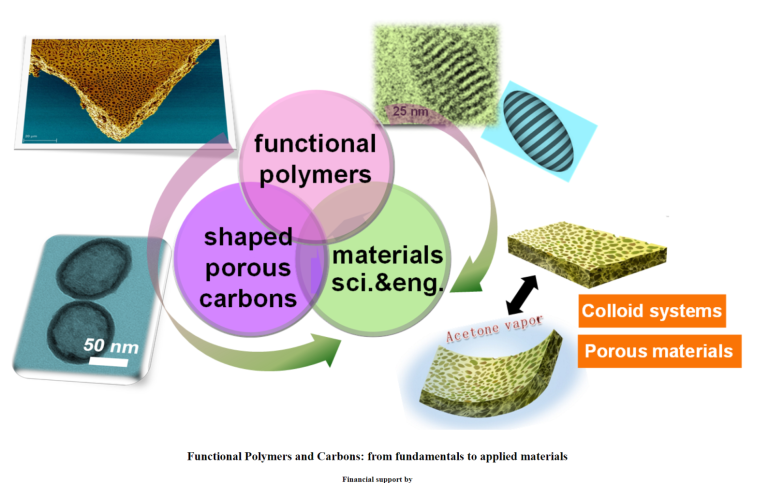
Jiayin Yuan is a Professor of Materials Chemistry at Stockholm University, Department of Chemistry. He leads the Jiayin Yuan Research Group, focusing on functional polymers and carbons for environmental and energy applications. His work emphasizes sustainable materials, including porous polymers, carbon membranes, and energy storage systems. He holds an ERC Consolidator Grant (2022) and previously an ERC Starting Grant (2014), and directs the Stockholm Material Hub. His research spans CO2 capture, catalysis, and nanomaterials for renewable energy. He has held academic positions at Clarkson University (USA) and the Max Planck Institute (Germany), with a PhD from Germany (2009). Education: Bachelor's in Chemistry, Shanghai Jiao Tong University (2002) Master's in Chemistry, Germany (2004) PhD in Chemistry, Germany (2009) Research Interests: Synthesis of functional polymers, carbon materials, and their applications in environmental sustainability and energy. Current projects include CO2 capture via porous liquids, biomass-derived fertilizers, and bijel membranes for energy storage. Grants & Awards: ERC Consolidator Grant (2022) ERC Starting Grant (2014) Wallenberg Academy Fellow (2018) Advising & Labs: Supervises multiple PhD students and postdocs. His group collaborates on advanced materials for energy and environmental challenges. The Stockholm Material Hub (stockholmmaterial.com) fosters interdisciplinary research in materials science.
Joachim Oberhammer is a Professor in Microwave and THz Microsystems at KTH Royal Institute of Technology in Stockholm, Sweden. He leads research in radio-frequency/microwave/terahertz micro-electromechanical systems (MEMS) and has held academic roles since 2005. His work includes pioneering advancements in THz communication, sub-THz radar concepts, and MEMS-based components. Oberhammer has been awarded the 2023 Young Engineer Award by the European Microwave Association and holds multiple grants, including an ERC Consolidator Grant (2013) and SSF framework grants (2014–2025). He has authored over 200 peer-reviewed publications and holds four patents in MEMS and THz technology. Education: M.Sc. in Electrical Engineering (Graz University of Technology, 2000), Ph.D. in Microwave Engineering (KTH, 2004). Postdoctoral research at Nanyang Technological University (2004) and Kyoto University (2008). Guest professorships at Universidad Carlos III de Madrid (2019–2020) and NASA-JPL (2014). Research focuses on MEMS fabrication, THz systems integration, and radar technologies. Key projects include the EU-funded M3TERA and Car2TERA projects, and leadership in SSF framework grants for electronics research. He coordinates the EU RIA projects TeraMeasure and TESLA, advancing terahertz applications. Teaching responsibilities include MSc and PhD courses in MEMS engineering, radar systems, and integrated circuits. His lab develops high-performance THz components, including waveguide switches, antennas, and filters, with applications in communication, sensing, and aerospace.
Ulla Mörtberg is a Professor and Docent at KTH Royal Institute of Technology's Digital Futures Faculty, specializing in Sustainable Development, Environmental Science and Engineering. She holds academic roles in the Department of Sustainable Development, Environmental Science and Engineering and is actively involved in interdisciplinary projects such as the EO-AI4GlobalChange initiative and the Embedding AI in geospatial policy tools for clean cooking adoption. Her work bridges geospatial technologies, environmental policy, and sustainable urban planning. Key research focuses include renewable energy planning (wind farms, bioenergy), urban ecosystem services, biodiversity conservation, and geodesign applications. She leads projects addressing climate solutions in Stockholm, such as integrating nature-based solutions into urban compaction strategies and evaluating green infrastructure impacts on urban heat. Her methods emphasize GIS-based decision support systems and multi-criteria analysis for balancing environmental, social, and economic objectives. Recent publications highlight advancements in ecosystem services assessment frameworks, wind energy sustainability, and urban biodiversity dynamics. Notable contributions include spatial optimization models for forest management and policy assessments of Brazil's Forest Code. Her work often involves global case studies but emphasizes regional applications in Sweden and the Stockholm region. Mörtberg collaborates extensively with municipal planners and policymakers, contributing to sustainable development goals through actionable research. Her projects often involve international partnerships and address global challenges such as deforestation in the Amazon and energy transition pathways in Europe.
Mikael Gidlund is a Full Professor of Computer Engineering at Mid Sweden University in Sundsvall and holds an adjunct professorship at Beijing Jiaotong University, China. He serves as head of the Computer Engineering subject and program manager for the international MSc program in Computer Engineering. His academic journey includes a Ph.D. in Electrical Engineering from Mid Sweden University (2005), followed by roles at ABB Corporate Research (2008-2014) where he led wireless technologies research. Dr. Gidlund's research spans Wireless Communication, Industrial IoT, 5G/6G Networks, and Network Security . His group focuses on AI/ML for beyond-5G wireless communication, time-critical industrial applications, and IoT security. Current research themes include Future Wireless Networks (5G/6G) using AI/ML, Time-and mission-critical wireless communication, Industrial IoT, and IoT Security. His work demonstrates strong interdisciplinary connections between wireless systems, industrial automation, and security. His publication portfolio includes over 200 scientific articles and 20+ patents. Recent publications show a clear trend toward AI/ML integration in wireless systems, NOMA techniques, RIS technologies, and security solutions for industrial applications. The research output demonstrates strong international collaboration across six continents. Best Paper Award at IEEE International Conference on Industrial IT (2014) Co-author of IEEE Sweden VT-COM-IT Joint Chapter Best Student Journal Paper Award (2022) Dr. Gidlund actively mentors 6 current PhD students and has supervised 16 former PhD students who now hold positions at institutions including Ericsson, Lund University, Aalborg University, and Mid Sweden University. His research is supported by multiple active projects including IRS TransTech, NIIT, ENSURE 6G, and TRUST. He collaborates with institutions worldwide including City University of Hong Kong, Iowa State University, Kyung Hee University, and KTH Royal Institute of Technology. His research group maintains strong industry connections through projects with ABB, Ericsson, and other industrial partners, focusing on practical implementations of wireless technologies for industrial automation and critical infrastructure.