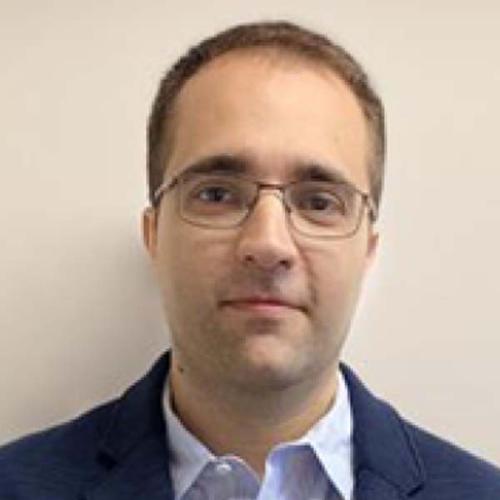
Jorge Camba is an Associate Professor at the School of Engineering Technology and holds a courtesy appointment in the Department of Computer Graphics Technology at Purdue University . He also serves as a Senior Research Scientist (by courtesy) in the Department of Industrial Engineering at the University of Naples Federico II , Italy. PhD in Systems and Engineering Management (Universidad Politécnica de Valencia, Spain) MSc in Digital Media (East Tennessee State University) MSc in Computer Science (Universidad de Vigo, Spain) His research explores intelligent CAD systems , digital manufacturing , and mixed reality environments , focusing on model quality assurance , design intent communication , and collaborative design tools . Recent work investigates spatial cognition in CAD education , geometric variability analysis , and annotation-driven knowledge management . Key trends in his publications include parametric modeling strategies , 3D annotation systems , and XR applications in design evaluation. Awards include the Purdue Faculty Scholar (2021) and I3B Fellow (2021). He has presented at conferences on topics like Industry 4.0 , space habitat design , and digital product quality .
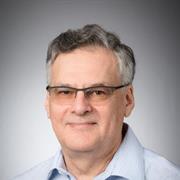
John Copp is an Adjunct Assistant Professor in the Department of Computing and Software at McMaster University , specializing in wastewater treatment modeling and process control. His work bridges environmental engineering with computational methods, focusing on simulation benchmarks, digital twin applications, and real-time monitoring systems. Adjunct Assistant Professor, Computing and Software, McMaster University Research Interests include: Wastewater treatment process modeling Respirometry-based control strategies Digital twin development for water resource recovery Automation and fault detection systems Biological nutrient removal optimization His scholarly output spans over 25 years with notable trends in: Development of benchmark simulation models (BSM1, BSM2) Integration of anaerobic digestion with activated sludge processes Multi-biomass modeling for enhanced nutrient removal Machine learning applications in water quality monitoring
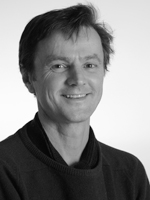
Alan Wassyng is a Professor in the Department of Computing and Software at McMaster University's Faculty of Engineering. With over four decades of academic contributions, he specializes in formal methods, safety-critical systems, and software assurance cases. Key research intersections: Automotive software safety Medical device software certification Cyber-physical systems engineering Model-driven development with domain experts His scholarly work emphasizes rigorous methodologies for software verification, particularly through tabular expressions and Workflow+ models. Recent projects include a $2M GM Canada partnership to advance automotive safety systems. Teaching leadership spans interdisciplinary capstone projects in biomedical engineering, covering software design, safety-critical development, and mechatronics applications.
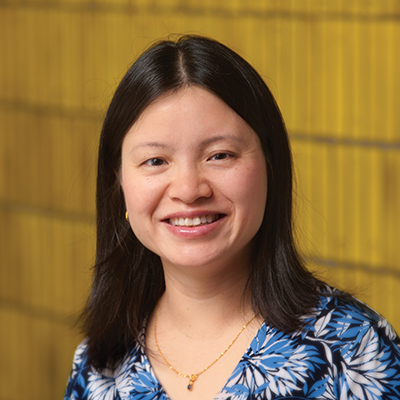
Dr. Mathis Richter is a Postdoctoral Researcher at the Institute of Neuroinformatics (INI), part of the Faculty of Computer Science at Ruhr University Bochum, Germany. He has been affiliated with the INI since 2008, progressing from Research Assistant to Research Associate, and currently serves as a Postdoctoral Researcher since July 2018. At the INI, he contributes to both the Embodied Cognition group and the Autonomous Robotics group, led by Prof. Dr. Gregor Schöner. Dr. Richter earned his Dr.-Ing. (Ph.D. equivalent) in Engineering from Ruhr-Universität Bochum between 2011 and 2018, following an M.Sc. and B.Sc. in Applied Computer Science from the same institution. His academic journey includes an exchange year at the University of Birmingham, UK. His research centers on higher cognition, specifically concept representation, how concepts combine to form complex mental scenes, and the neural mechanisms organizing cognitive operations in time. Using Dynamic Field Theory as his primary framework, he develops mathematical models explaining how neural populations represent objects and concepts. His work demonstrates how these cognitive models connect to sensory-motor systems, often implemented on robotic platforms to validate their autonomy and functionality. Analysis of Dr. Richter's publications reveals a consistent focus on neural dynamic modeling of cognitive processes, with particular emphasis on spatial relations, language grounding, and embodied cognition. His research trajectory shows increasing sophistication in modeling complex cognitive phenomena while maintaining strong connections to robotic implementations. As an educator, Dr. Richter has taught Lab courses in Autonomous Robotics across multiple terms since Winter 2015/2016 and has delivered Lectures in Computational Neuroscience: Neural Dynamics since Winter 2018/2019. His teaching directly reflects his research expertise in neural dynamics and cognitive systems. Dr. Richter actively participates in interdisciplinary research that bridges cognitive science, neuroscience, computer science, and robotics, contributing to the INI's mission of understanding how organisms generate behavior and cognition through interaction with their environments.
Jo Herstad is an Associate Professor in the Department of Information Systems Design at the University of Oslo , where she has worked since 2002. With a background in industry at Ericsson (1990-2003), Herstad bridges technical expertise with academic rigor. She teaches courses including: IN1030 - Introduction to Design, Use, Interaction (since 2017) IN2000 - Software Engineering with Project Work IN5480 - Interaction with AI and Autonomous Systems Research Focus: Her work explores Human-Computer Interaction through: Universal Design principles in digital environments Human-Robot Interaction for domestic applications Inclusive Technology across diverse populations Participatory Design methodologies Privacy Dynamics in smart homes Multimodal Systems for elderly care Key Publications (2017-2024) examine motion profiling in robotics, equitable digital feedback, and socio-technical systems. Her supervision includes 15+ master's theses on topics ranging from chatbot ethics to universal design in education. Current projects focus on: Artificial Intelligence and Sensor Technology Multimodal Elderly Care Systems (MECS) Podcast Accessibility (PUD) RHYME: Music Technology for All
Shu Yang is the Joseph Bordogna Professor and Department Chair of Materials Science and Engineering at the University of Pennsylvania's School of Engineering and Applied Science. Her research spans multiple departments, with primary appointments in both Materials Science and Engineering and Chemical and Biomolecular Engineering. She directs the Yang Lab, which operates at the intersection of multi-materials synthesis, nano-/microfabrication, and device processing, backed by deep understanding of physical, mechanical and biological principles. Director, Center for Analyzing Evolved Structures as Optimized Products (AESOP) Principal Investigator, NSF NRT: Climate Action and Resilience for Extreme Urban Heat (CLIMATE-CARE) Member of the Engineering Research Visioning Alliance (ERVA) Professor Yang's research focuses on developing novel materials synthesis, assembly and eco-manufacturing of complex, multi-functional, nano- to macrostructured soft, sustainable materials and composites. Her lab addresses fundamental questions centered around surface/interface, actuation mechanisms, and structure-property relationships. Through directed assembly of oligomers, polymers, gels, colloids, liquid crystals, amphiphiles, and their composites with inorganic materials and biomolecules across nano- to macroscales, her team creates complex, multi-functional nano- and microstructures with unique surface, optical, and mechanical properties. Analysis of Professor Yang's recent publications reveals a strong trend toward environmentally responsive materials with applications in sustainability, water harvesting, carbon capture, and climate resilience. Her work increasingly integrates kirigami engineering principles with liquid crystal elastomers to create programmable, shape-morphing materials. The research shows a clear trajectory from fundamental materials science toward real-world applications addressing global challenges, particularly in climate action and sustainable infrastructure. Inaugural Nat Geo 33 Extraordinary Changemaker List 2022 Cozzarelli Prize from PNAS for Class III: Engineering and Applied Sciences Advanced Materials Hall of Fame collection recognition Multiple highly cited papers according to Web of Science Professor Yang's research group has secured significant funding for projects addressing climate change, sustainable materials, and advanced manufacturing. Her lab has developed numerous technologies with potential applications in coatings, adhesives, smart windows, displays, sensors, soft robotics, biomedical devices, dehumidifiers, and carbon-absorbing concrete. The Yang Lab maintains a strong mentoring record with numerous students and postdocs who have gone on to successful careers in academia and industry. Her group actively collaborates across disciplines, working with biologists, physicists, environmental scientists, and engineers to tackle complex challenges. The Yang Lab operates state-of-the-art facilities for materials synthesis, characterization, and fabrication. The lab is particularly known for its expertise in liquid crystal elastomers, kirigami engineering, and biomimetic materials. The group maintains strong industry partnerships and has filed multiple patents based on their research. Their facilities enable everything from molecular-scale synthesis to macro-scale manufacturing of functional materials, with particular strength in bridging these scales through innovative design principles.
Arthur Trembanis is a Professor at the School of Marine Science & Policy at the University of Delaware , where he conducts interdisciplinary research in coastal and marine geoscience. His work bridges oceanography, sediment dynamics, and autonomous systems, with a focus on understanding coastal morphodynamics, hydrodynamics, and seafloor mapping. Coastal & Estuarine Morphodynamics Sediment Transport Modeling Autonomous Underwater Vehicles (AUVs) Seafloor Mapping & Geoacoustics Trembanis leads the Coastal Sediments, Hydrodynamics, and Engineering Lab (CSHEL) , which explores the intersection of marine technology and environmental science. His recent publications highlight advancements in AI-driven seafloor mapping, autonomous survey platforms, and coastal response to extreme weather. He is also active in open-source tools for geological feature detection and educational outreach. The 15 most recent papers reflect trends in machine learning for coastal geology (e.g., AI for Carolina Bay detection), autonomous robotics in marine surveys, and storm impact analysis on coastal systems. Key subfields include LiDAR processing, bedform dynamics, and multi-platform data integration for environmental monitoring. Fulbright Fellowship (University of Sydney) SERDP Project MR20-1480 (Munition mobility in estuarine environments) Follow his work via the CSHEL website , Instagram , or YouTube for fieldwork and lab updates.
Yuta Sugiura is an Associate Professor in the Department of Information and Computer Science at Keio University's Faculty of Science and Technology. His research focuses on innovative human-computer interaction techniques, particularly in wearable computing, tangible interfaces, and novel input methods. Previously, he worked as a postdoctoral researcher at the National Institute of Advanced Industrial Science. Dr. Sugiura's research interests span Human-Computer Interaction, Wearable Computing, Augmented Reality, Tangible User Interfaces, Gesture Recognition, Ubiquitous Computing, Haptics, and Virtual Reality. His work often explores how everyday objects and environments can become interactive surfaces, with notable projects including the iRing (intelligent ring), SenSkin (skin as interface), and EarHover (mid-air gesture recognition for hearables). He has developed numerous novel interaction techniques that leverage physical properties of materials and human physiology for input and output. His recent publications indicate a strong focus on hearable computing, medical applications of HCI, edible interfaces, and novel authentication methods. The research shows a consistent pattern of exploring unconventional interaction surfaces and leveraging subtle physical phenomena for input sensing. His work has significant implications for healthcare applications, particularly in neurological disorder screening and rehabilitation. Best Paper Award Dr. Sugiura has advised numerous students who have gone on to publish significant work in top-tier HCI venues. His research has been supported by various grants enabling the development of novel interaction techniques and systems. He maintains strong collaborations with researchers across Japan and internationally, particularly in the fields of wearable computing and medical applications of HCI. His laboratory appears to focus on lifestyle computing, developing interfaces that integrate seamlessly into daily activities. Current projects include exploring edible displays, adaptive ear interfaces, and novel authentication methods using wearable devices. Future work seems to be heading toward more medical applications of HCI, particularly in neurological assessment and rehabilitation.
Dr. Ashley Ross is an Associate Professor in the Department of Chemistry at the University of Cincinnati, where she leads research in bioanalytical chemistry. She holds a Ph.D. in Analytical Chemistry from the University of Virginia (2014) and a B.S. in Chemistry from Christopher Newport University (2009). Her research group focuses on developing electrochemical methods and microfluidic platforms to study neuro-immune communication. Research interests include: (1) Developing electrochemical sensors for neurotransmitter detection in brain and immune systems; (2) Designing novel carbon nanomaterials for enhanced electrochemical sensing; (3) Creating microfluidic organ-on-chip platforms for studying neuro-immune interactions. Her work bridges analytical chemistry, neuroscience, and immunology. Her recent publications demonstrate a strong focus on advanced electrochemical sensing techniques, novel carbon nanomaterial development, and microfluidic platforms for neurochemical analysis. Research consistently addresses real-time monitoring of neurotransmitters and neuroimmune interactions. Major Awards: Alfred P. Sloan Fellowship (2022) NSF CAREER Award (2022) RCSA Microbiome, Neurobiology, and Disease Fellow (2021) American Association of Immunologists Careers in Immunology Fellowship Top 40 under 40 in Analytical Chemistry Active Grants: NIH R01AI151552: Monitoring neurochemical signaling dynamics in lymph node ($1.9M) NIH R01NS121426: Monitoring rapid guanosine signaling during ischemia ($1.9M) NSF CAREER: Tunable graphene microelectrodes for sensing ($300K) RCSA Award: Unraveling microbiota-neuron communication in aging ($55K) Dr. Ross directs the Ross Lab (www.rosslabuc.com), which develops analytical tools for neuroimmune communication research. The lab utilizes electrochemistry, microfluidics, and materials science to advance understanding of brain-immune interactions.
Sally Pusede is an Associate Professor in the Department of Environmental Sciences at the University of Virginia's College of Arts & Sciences, where she directs atmospheric chemistry research and co-leads the Repair Lab. Her work bridges atmospheric science and environmental justice through measurements from ground, aircraft, and satellite platforms in urban and agricultural environments. Dr. Pusede earned her Ph.D. from the University of California Berkeley in 2014. Her educational background established the foundation for her interdisciplinary approach combining chemical measurements with community engagement. As an atmospheric chemist, Pusede investigates reactive nitrogen cycles, greenhouse gas emissions (particularly nitrous oxide), and neighborhood-level air pollution disparities. Her research employs spatial and temporal variability analysis to derive mechanistic insights into urban atmospheric processes, with emphasis on how pollution adversely affects human health and ecosystems. She is co-director of UVA's Repair Lab, which develops community-based solutions to environmental justice issues like coal dust pollution in Hampton Roads and industrial swine facility impacts in North Carolina. Analysis of her 15 most recent publications (2022-2025) reveals three dominant research thrusts: 1) Quantifying air pollution inequality using satellite remote sensing (especially nitrogen dioxide and ammonia), 2) Investigating reactive nitrogen chemistry in urban-agricultural interfaces, and 3) Developing community-driven repair frameworks for environmental justice. Her work consistently demonstrates how neighborhood-level pollution disparities contribute to health outcomes and ozone formation, particularly in communities of color. Dr. Pusede's scientific contributions have been recognized with prestigious awards including: Presidential Early Career Award for Scientists and Engineers (PECASE), Biden Administration, 2024 Future Horizons in Climate Science Turco Lectureship, American Geophysical Union, 2022 National Science Foundation (NSF) CAREER Award, 2021 NASA New Investigator Program Award, 2021 Environmental Sciences Organization Faculty Teaching Award, University of Virginia, 2016 She mentors graduate students through the Pusede Lab while securing major grants from NSF, NASA, and the White House Office of Science and Technology Policy. Her teaching portfolio includes EVSC 4380 (Air Pollution and Environmental Justice), EVSC 4490/7490 (Air Pollution), EVSC 5350 (Atmospheric Chemistry), and EVSC 3300 (Atmosphere and Weather). The Repair Lab operates as an interdisciplinary environmental justice hub where Pusede collaborates with community practitioners, embedding researchers in Virginia communities through its practitioner-in-residence program. This lab focuses on coal dust pollution in Hampton Roads and industrial swine facility impacts in Eastern North Carolina, using satellite data to document environmental injustices while co-developing solutions with affected residents.
Felix Deku is the Betsy and Greg Hatton Assistant Professor in Neuroengineering at the University of Oregon's Phil and Penny Knight Campus. He leads the Deku Lab, which focuses on developing chronically reliable neural interfaces and studying neuromodulation effects. His academic journey includes a B.S. in Molecular Biology and Biotechnology from the University of Cape Coast (Ghana), followed by M.S. and Ph.D. in Biomedical Engineering from the University of Texas at Dallas. Before academia, Deku held roles as Head of Electrode Engineering at Braingrade and Director of Microfabrication at Neuralink, contributing to neural interface technologies for clinical applications like Alzheimer’s therapy and cognitive enhancement. His lab emphasizes microfabrication of thin-film materials (e.g., amorphous silicon carbide), in vivo testing of neural implants, and collaborations with industry partners. Research interests span neural interface design, chronic implant reliability, and neuromodulation’s physiological impacts. The Deku Lab supports DEI initiatives, advocating for diverse backgrounds in science.
Zachary Doerzaph is an Associate Professor in Virginia Tech’s Department of Biomedical Engineering and Mechanics, and serves as Executive Director of the Virginia Tech Transportation Institute (VTTI) and President of the Global Center for Automotive Performance and Simulation (GCAPS). His research focuses on automotive safety, connected/automated vehicles, driver behavior, and infrastructure design. He leads a multidisciplinary team addressing next-gen transportation challenges through advanced technologies like big data analytics and AI. Education : Ph.D. Industrial and Systems Engineering (2007), Virginia Tech M.S. Industrial and Systems Engineering (2004), Virginia Tech B.S. Mechanical Engineering (2001), University of Idaho Research Interests : Connected/automated vehicle systems Driver-vehicle interaction Risk prediction and mitigation Infrastructure safety design Human factors in transportation Key Contributions : Developed PREPARES rear-end collision mitigation system Advanced LiDAR/radar fusion for vehicle sensing Guided automated vehicle handover studies Testified on autonomous tech impacts to U.S. Senate (2018) Awards : Virginia Business 100 (2022) Virginia Tech Distinguished Leader in Research (2021, 2023) Labs/Initiatives : Virginia Tech Transportation Institute Global Center for Automotive Performance and Simulation
Marion K. Matters-Kammerer is a Full Professor of Electrical Engineering at Eindhoven University of Technology, leading research in terahertz (THz) and millimeter-wave systems. She holds positions in the Center for Wireless Technology, THz Electronics and Integration Lab, and RF Sensing & Communication Lab. Her expertise includes integrated circuits, antenna design, and power amplifier systems. She has led EU projects like 3DmicroTune and ULTRA, and co-authored over 70 journal/conference papers with 13 US patents. Education: MSc in Physics from École Normale Supérieure (Paris) and TU Berlin (1999), PhD in Physics from RWTH Aachen (2007). Past roles include Senior Scientist at Philips Research (1999–2011) and Guest Professor at RWTH Aachen (2009–2010). Research focuses on THz spectroscopy, mm-wave integrated circuits, and energy-efficient wireless systems. Key projects involve THz biosensing, 60 GHz sensor networks, and co-integration of photonics and electronics. Her work addresses UN SDGs like affordable and clean energy, and industry-academia collaboration via NXP Smart Mobility projects. Recent articles highlight advancements in mm-wave power amplifiers, waveguide integration, and radar signal processing. Grants include €2.5M for TeraIBs (2025–2028) and €1.8M for Future Wireless Interfaces (2024–2029). Labs include THz Electronics Lab and RF Sensing Team, advancing sensor and communication technologies.
Crispin Reverant is a Professor and Head of the Organic Energy Materials research unit at Linköping University's Department of Science and Technology (ITN), part of the Laboratory of Organic Electronics (LOE). His work focuses on organic energy materials, with applications in energy harvesting, storage, and electrochemical flow devices. Reverant earned his PhD in 2000 from the University of Mons and has held postdoctoral positions at Linköping University. He co-founded Ligna Energy AB and Cellfion AB, and serves on several scientific advisory boards. His research has been recognized with awards like the Tage Erlander Prize (2012) and the Göran Gustafsson Prize (2016). Key areas include sustainable batteries using lignin and cellulose, thermoelectric polymers, and wearable energy devices. Education: PhD in 2000 from University of Mons, Belgium; postdoctoral training at Linköping University with Prof. W.R. Salaneck. Research interests span organic electronics, thermoelectric materials, and biodegradable energy storage systems. His lab develops materials for batteries, supercapacitors, and flexible electronics. Recent projects include lignin-based redox centers and stretchable batteries. Over 200 publications highlight his contributions to energy materials science. Awards: ERC Starting Grant (2011), Tage Erlander Prize (2012), Göran Gustafsson Prize (2016). Advising and grants: Leads the Organic Energy Materials group and has secured significant EU funding, including the ERC grant. Collaborates on industry partnerships like Ligna Energy. Labs/Teams: Head of the Organic Energy Materials unit in LOE, focusing on interdisciplinary materials research for sustainable energy solutions.
Servaas Kokkelmans is a Full Professor and leader of the Coherence and Quantum Technology group in the Department of Applied Physics at Eindhoven University of Technology (TU/e). He is also the scientific director of the Center for Quantum Materials and Technology Eindhoven (QT/e) and co-founder of the Eindhoven Hendrik Casimir Institute. His research focuses on strongly-interacting quantum gases, neutral atom quantum computing, and ultracold atomic systems. He holds a PhD from TU/e (2000) after postdoctoral work at JILA (USA) and Laboratoire Kastler Brossel (France). Notable roles include coordinating action line 1 (Research & Innovation) at Quantum Delta NL and leading the KAT-1 project on Rydberg atom quantum computing. Awards include the NWO Vici (2015) and Vidi (2003) grants. Education: MSc (1996) and PhD (2000) in Physics from TU/e. Career progression: Assistant Professor (2004–2017), Associate Professor (2017–2023), Full Professor (2023–present). Key research areas include quantum computing architectures, ultracold collisions, Feshbach resonances, and Efimov physics. Active in teaching courses like Quantum Optics and Quantum Information, and Hybrid Quantum Computing. Research highlights include foundational work on quantum control via electric/magnetic fields and contributions to quantum simulation platforms. His work spans experimental and theoretical studies, with over 249 publications and 51 supervised works. Collaborations involve institutions globally. Media engagements include interviews on quantum technology advancements and leadership roles in national quantum initiatives.