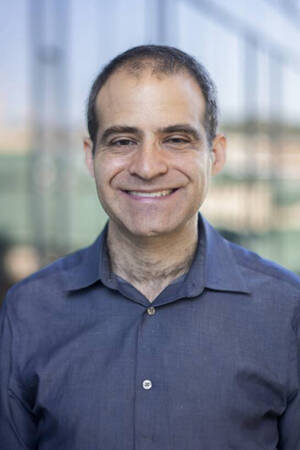
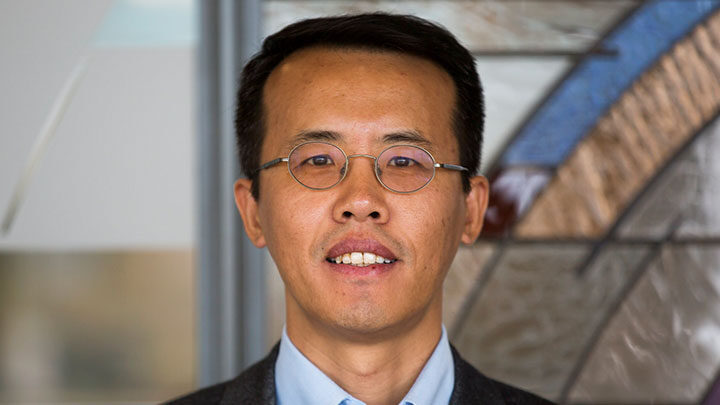
David Held is an Associate Professor at Carnegie Mellon University's Robotics Institute, leading the Robots Perceiving And Doing (RPAD) lab. His work focuses on perceptual robot learning, integrating robotics, machine learning, and computer vision to enable robots to interact with complex environments. He holds a Ph.D. in Computer Science from Stanford University, an M.S. and B.S. in Mechanical Engineering from MIT, and conducted postdoctoral research at UC Berkeley. His research spans object manipulation, autonomous driving, and reinforcement learning, with a focus on robust perception and control in dynamic settings. Research Interests: Developing methods for robots to manipulate novel objects, handle deformable materials, and operate in unstructured environments through deep learning and simulation-to-real transfer. He explores autonomous driving via self-supervised learning and semi-supervised techniques. Notable Articles (2024–2025): Focus on articulated object manipulation, sim2real transfer, safety-aware policies, and perception in robotics. Recent work includes ArticuBot for universal manipulation policies and SplatSim for zero-shot transfer using Gaussian splatting. Awards: Google Faculty Research Award (2017), NSF CAREER Award (2021). Labs: RPAD Lab, CMU Center for Autonomous Vehicle Research. Teaching: Courses include Statistical Techniques in Robotics and Advanced Computer Vision.
Alexandra Dobrea is a Researcher in the Department of Biomedical Engineering at the University of Strathclyde, United Kingdom, actively contributing to cutting-edge developments in electrochemical biosensing technology. Her research centers on creating accessible, low-cost electrochemical biosensors for clinical environments, with strong emphasis on multiplexing capabilities, mobile phone integration, and innovative manufacturing techniques. She focuses on translating laboratory innovations into practical diagnostic tools that address real-world healthcare challenges, particularly in point-of-care settings where rapid, affordable testing is critical. Her work bridges engineering principles with clinical applications to develop robust biosensing platforms for target analyte detection. Her 2025 publication in Chemical Communications demonstrates her focus on overcoming translational barriers in biosensor development, analyzing limitations in current methodologies while proposing pathways for clinical implementation. This work reflects broader trends in her research toward democratizing diagnostic technology through consumer-grade fabrication methods and mobile health integration, aiming to make advanced biosensing accessible in resource-limited settings.
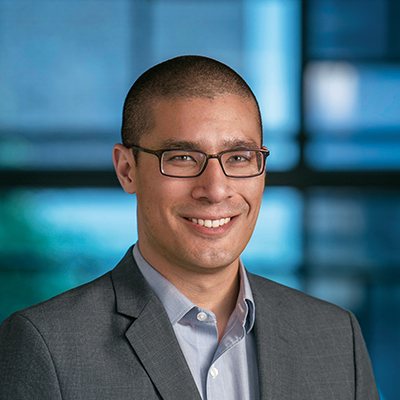
Richard Alexander is an Associate Research Fellow in Lab On A Chip Design And Manufacture at Deakin University's School of Engineering within the Faculty of Science Engineering and Built Environment. He is affiliated with the Centre for Regional and Rural Futures research center and maintains an active research program in microfluidics, Lab-on-a-Chip technology, and point-of-care diagnostics. His work bridges engineering, chemistry, and biomedical applications with a focus on practical, manufacturable solutions. Master of Engineering, University of Hull Dr. Alexander's research spans multiple interdisciplinary fields with a strong emphasis on microfluidic device development. His work particularly focuses on 3D printing for microfluidic applications, electrochemiluminescence biosensors, and nanoporous membrane integration. His research has significant implications for point-of-care diagnostics, environmental monitoring, and biomedical applications. He has developed innovative approaches for DNA extraction, microRNA detection, and cell analysis that simplify complex laboratory procedures into portable, accessible formats. His publication record demonstrates consistent high-impact research across microfluidics, materials science, and biomedical engineering. The trend shows increasing focus on practical applications of microfluidic technology for point-of-care diagnostics, with recent work emphasizing mobile phone integration, simplified manufacturing processes, and environmental/biological monitoring applications. His articles span interdisciplinary fields connecting engineering, chemistry, and biomedical sciences with strong emphasis on practical implementation. Richard Alexander has made significant contributions to the field of microfluidics and Lab-on-a-Chip technology through his extensive publication record in high-impact journals. His work appears in prestigious publications including Lab on a Chip, ACS Applied Materials & Interfaces, and Journal of the American Chemical Society, demonstrating the breadth and significance of his research contributions across multiple disciplines. His research program focuses on developing practical, manufacturable microfluidic systems with applications in biomedical diagnostics, environmental monitoring, and materials science. Through collaborations across multiple institutions, he has established a robust research trajectory with emphasis on translating laboratory innovations into real-world applications. His work with the Centre for Regional and Rural Futures suggests application of his technologies to address challenges in regional and rural healthcare settings. Based at Deakin University's Geelong Waurn Ponds Campus, Alexander works within the Centre for Regional and Rural Futures, which suggests his research has practical applications for regional communities. His work on portable diagnostic devices, environmental monitoring tools, and simplified manufacturing processes aligns with addressing healthcare and technical challenges in less resourced settings.
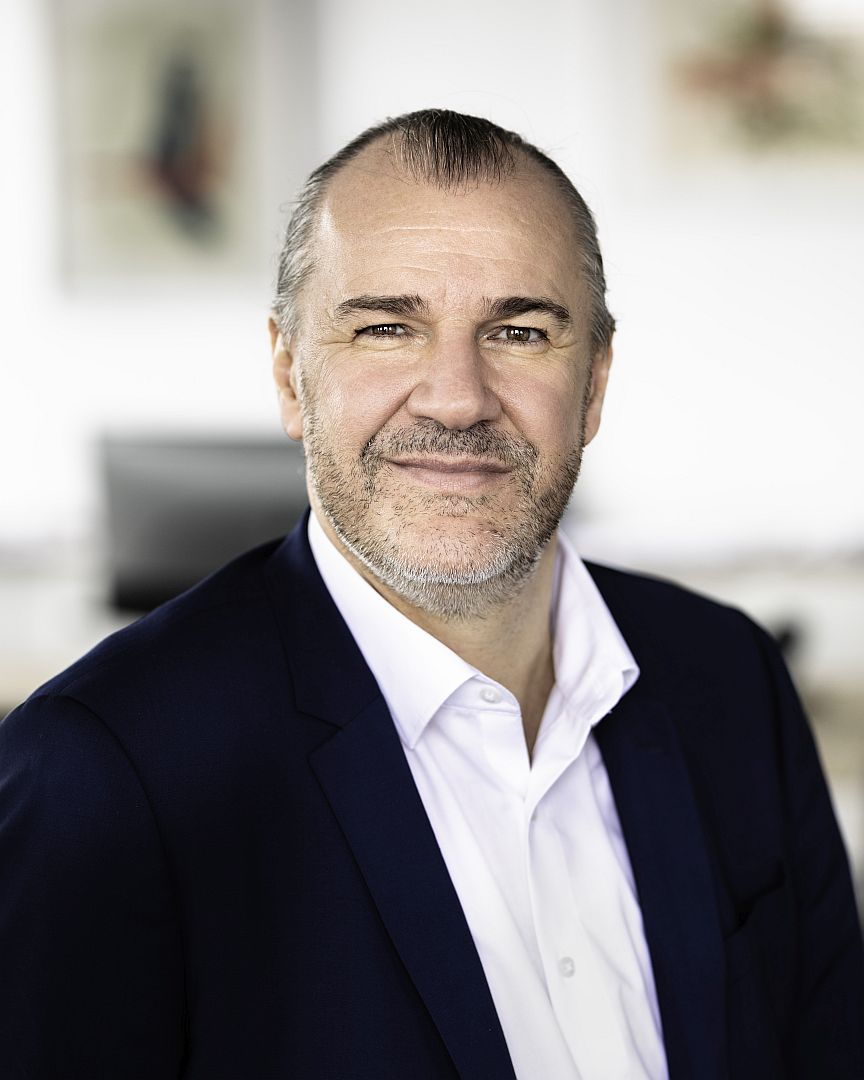
Henry Duwe is an Affiliate Assistant Professor at Iowa State University, specializing in energy-efficient computing systems and embedded systems design. His research focuses on batteryless intermittent systems, energy harvesting, and low-power hardware architectures. He has contributed to the development of frameworks for dependable computing in resource-constrained environments and explores intersections between design thinking and engineering education. His work includes pioneering studies on lifecycle management protocols for batteryless networks, RF energy harvesting systems, and neuromorphic accelerators. Notably, he received the NSF CAREER Award (2022) for advancing intelligent computing on batteryless devices. Duwe also investigates pedagogical methods such as design thinking to enhance course design in computer engineering, addressing challenges in interdisciplinary education and student skill development. Key areas of exploration include: batteryless networks, neural architecture search for energy-constrained devices, hardware-software co-design, and debugging methodologies in engineering curricula. His publications span both technical innovations in embedded systems and educational strategies for effective learning. Recent projects include the PAIL protocol for robust coordination in batteryless systems (2025) and the Lure simulator for intermittent networks (2024). His research bridges theoretical advancements with practical applications in low-power computing and sustainable energy solutions. Awards and grants include the NSF CAREER Award (2022), which supports his work on dependable intelligent computing systems. His contributions also extend to educational innovations like persona-based course design and reflective learning activities in engineering education.
Shai Revzen is a Professor in the Department of Electrical and Computer Engineering at the University of Michigan, specializing in robotics, biomechanics, and control systems. His research focuses on geometric mechanics, multi-legged locomotion, and data-driven modeling of biological and robotic systems. He emphasizes independent thinking in students and requires weekly structured updates, including progress tracking and problem-solving. Revzen’s lab maintains rigorous communication protocols, with public calendars and mandatory weekly meetings. His work integrates experimental validation, sensor calibration, and theoretical frameworks such as Koopman operator theory to model complex systems. Recent studies explore phase response dynamics in biological systems and modular robot design with wireless power solutions. Revzen advocates for professional development, requiring students to mentor undergraduates and gain teaching experience through GSI roles. Conference attendance is fully funded, with a focus on IEEE robotics events and interdisciplinary meetings like Dynamic Walking. Revzen’s advising style prioritizes autonomy, expecting students to evolve into junior colleagues by graduation. Authorship policies are transparent, with contributions tracked across ideas, data, analysis, writing, and supervision. The lab environment emphasizes results over hours worked, with a culture valuing health and work-life balance.
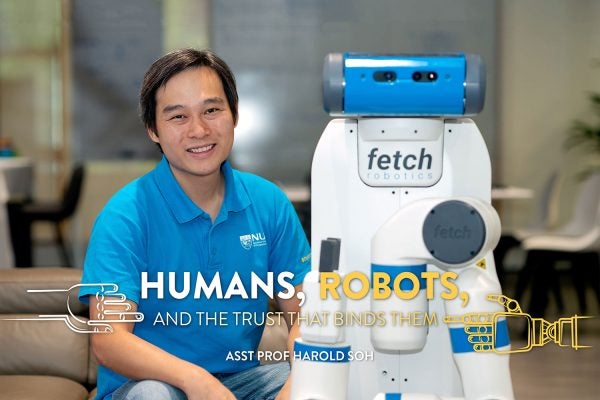
Harold SOH Soon Hong is an Associate Professor in the Department of Computer Science at the National University of Singapore (NUS), School of Computing. He serves as Associate Director of the NUS AI Lab and directs the Collaborative, Learning, and Adaptive Robots (CLeAR) Lab. His research focuses on developing trustworthy collaborative robots through advances in machine learning and human-robot interaction. Education: Ph.D. in Artificial Intelligence & Robotics, Imperial College London, UK (2014) M.S. in Software Engineering, University of Melbourne, Australia (2005) B.ASc. in Computer Science and Economics, University of California, Davis (2004) Professor Soh's research centers on machine learning and decision-making for trustworthy collaborative robots. His work spans cognitive modeling (particularly human trust) to physical systems (including novel e-skins for tactile perception). He has made significant contributions to human-robot interaction, especially in developing robots that can learn from and collaborate effectively with humans. His research integrates theoretical foundations with practical implementations in real-world robotic systems. His recent publications demonstrate a strong trend toward diffusion models, tactile sensing technologies, and trustworthy AI systems. The research spans fundamental machine learning advances to practical robotic applications, with particular emphasis on social navigation, human-robot handovers, and out-of-distribution detection. His work increasingly integrates large language models with physical robotic systems, creating new pathways for embodied AI. Scientific Awards: Best Paper Award at IROS 2021 for Extended Tactile Perception Best of IEEE Transactions on Affective Computing Award (2021) RSS Best Paper Award Finalist (2018) HRI Best Paper Award Finalist (2018) RSS Early Career Spotlight Award (2023) Multiple NUS Annual Teaching Excellence Awards Professor Soh actively supervises PhD students and mentors undergraduate research projects through FYP and UROP programs. He has developed and taught courses including CS3264 Foundations of Machine Learning and CS5340 Uncertainty Modelling in AI. His teaching philosophy emphasizes developing independent thinkers with strong analytical skills, fundamental computer science knowledge, and clear communication abilities. His students have won multiple Research Achievement Awards and the NUS Outstanding Undergraduate Researcher Prize. The CLeAR Lab, which he directs, focuses on developing physical and social intelligence for trustworthy robots. Current projects include Octopi (tactile-language models), Arena platform for social navigation, and GRaCE for robotic grasping. The lab has consistently produced high-impact publications at top venues including RSS, ICRA, and NeurIPS.
Michael Posa is an Assistant Professor in Mechanical Engineering and Applied Mechanics at the University of Pennsylvania's School of Engineering and Applied Science. He also holds affiliations with the Departments of Computer and Information Science, and Electrical and Systems Engineering. As the head of the Dynamic Autonomy and Intelligent Robotics (DAIR) Lab, part of the GRASP Lab, his research focuses on control, learning, and planning for robots interacting dynamically and safely with complex environments. Key interests include non-smooth dynamics of contact, machine learning, and numerical optimization, with applications in legged robots and robotic manipulation. His work emphasizes computationally efficient algorithms for real-time control and decision-making. Recent achievements include the 2024 Best Paper Award for contributions to multi-contact model predictive control. He actively mentors students like Brian Acosta and William Yang, whose theses address bipedal walking and dynamic manipulation. The DAIR Lab collaborates on interdisciplinary projects and participates in robotics conferences like ICRA. Michael’s lab emphasizes diversity and innovation, recruiting students across MEAM, ESE, and CIS departments. His research bridges theory and practice, with publications spanning model reduction for legged systems, vision-based contact localization, and impact-aware control strategies. Ongoing efforts explore contact-implicit MPC frameworks and integrating physics-driven perception (e.g., Vysics) for robust autonomy.
Stephany Berrio Perez is a Research Fellow at the Australian Centre for Robotics, University of Sydney. Her research focuses on perception and mapping for autonomous vehicles, with expertise in sensor fusion, SLAM, and V2X cooperative perception. She holds a PhD from the University of Sydney (2021) and a Master's from Universidad del Valle (Colombia). Her work addresses challenges in real-time data alignment, bandwidth-efficient V2X communication, and domain adaptation for autonomous systems. Research Interests: Stephany's research spans autonomous vehicle perception, multi-sensor fusion (LiDAR, cameras), and cooperative V2X systems. She has developed frameworks for robust map maintenance, edge case testing, and safety protocols for autonomous navigation. Her international collaborations include projects with France's LS2N laboratory and Cornell University's Co-Sense initiative. Key Research Themes: 3D object detection and domain adaptation Latency-resilient V2X data fusion Human-robot interaction in urban environments Autonomous vehicle safety validation Student Supervision: Stephany advises research students on topics including human-machine interfaces, 3D occupancy prediction, and rural autonomous navigation. Lab Affiliation: Australian Centre for Robotics (ACFR), where her team focuses on real-world deployment of perception systems in complex urban scenarios.
Dr. Robert Baines holds the Professorship for Robotic Systems at ETH Zürich, leading research in adaptive morphogenetic robots, soft robotics, and amphibious robotic systems. His work emphasizes material science integration, reconfigurable mechanisms, and environmental adaptability. Key research areas include morphing limb design, tensegrity robots, and reproducible soft robotics methodologies. His research focuses on developing robots capable of evolving on demand through modular architecture and self-reconfiguration, with applications in multi-environment navigation. He has pioneered studies on inflatable actuators, tensile jamming fibers, and bio-inspired designs for amphibious locomotion. Baines also advocates for standardized testing protocols in soft robotics to ensure reproducibility and cross-laboratory collaboration. Notable contributions include the RoboWrangler rope-based grasping system and the amphibious robotic turtle demonstrating aquatic-to-terrestrial transitions. His work bridges mechanical engineering, materials science, and artificial intelligence to create robust, context-aware robotic systems. Current projects explore variable stiffness mechanisms, multi-modal sensing, and energy-efficient morphing systems. Baines collaborates with industry partners to translate theoretical advancements into deployable robotic solutions for challenging environments.
Prof. Manfred Hauswirth is the Managing Director of Fraunhofer Institute for Open Communication Systems (FOKUS) and holds the Chair for Open Distributed Systems at Technical University of Berlin. His research focuses on distributed systems, IoT, stream processing, quantum computing, and blockchain. He has held roles including Vice Director at Digital Enterprise Research Institute (DERI) and professor at National University of Ireland, Galway. He leads multiple strategic initiatives, including the Fraunhofer Quantum Technologies Research Field and the Weizenbaum Institute. His work bridges academia and industry, emphasizing digitalization, quantum computing, and IoT. Education: Dipl.-Ing. (1993), Dr. techn. (1999) in Computer Science from Vienna University of Technology. Postdoctoral work at École Polytechnique Fédérale de Lausanne (EPFL). Research Interests: Prof. Hauswirth’s work spans distributed systems, semantic web technologies, quantum algorithms, and IoT edge computing. He emphasizes real-world applications like smart cities, autonomous driving, and secure data management. Recent trends in his publications include quantum programming frameworks (e.g., Qrisp), scalable graph distillation, and edge-based AI systems. Awards: Not explicitly listed, but his work has been recognized through leadership roles in IEEE, ACM, and Fraunhofer committees. Advising & Grants: Active in funding initiatives like the Berlin Institute for Learning and Data (BIFOLD) and Einstein Center Digital Future (ECDF). Leads projects on quantum benchmarking, energy flexibility markets, and semantic stream processing. Labs/Teams: Directs the Fraunhofer High Performance Center for Digital Networking and chairs the Quantum Computing Competence Network, integrating interdisciplinary teams across quantum computing, IoT, and AI domains.
Carlos Ribeiro is an Associate Professor at the University of Lisbon (Instituto Superior Técnico), affiliated with the Distributed Systems Group. His work focuses on computer security, trusted computing, e-voting systems, sensor networks, and operating systems architecture. He teaches courses such as Concurrent Programming, Information Security Research Seminars, and Communications Security. Key research interests include intrusion detection systems (e.g., ARGAN-IDS), privacy-preserving identity management (e.g., STORK), and secure voting protocols (EVIV). His work also addresses challenges in wireless networks, such as mitigating Evil Twin attacks via WiFiHop and enforcing location privacy through the Jano framework. Collaborations span topics like robust address assignment in sensor networks and worm containment in peer-to-peer overlays. Recent publications (2024) explore industrial video systems for remote operations and adversarial-resistant cybersecurity solutions. Earlier work includes frameworks for eID federations, mobile payment systems (MobiPag), and policy-based security specifications. Education: PhD in Computer Science (unspecified), with extensive academic contributions since 1990. Labs/Teams: Distributed Systems Group, Jano Privacy Project, EVIV Voting System Team. Grants/Funding: Not explicitly listed in provided materials.
Lisimachos P. Kondi is a Professor at the University of Ioannina in the Department of Computer Science and Engineering, where he has established himself as a leading researcher in signal processing and communications. His academic career spans over two decades with significant contributions to video compression, wireless transmission, and image processing. Education: Diploma in Electrical Engineering, Aristotle University of Thessaloniki, Greece (1994) M.S. in Electrical and Computer Engineering, Northwestern University, USA (1996) Ph.D. in Electrical and Computer Engineering, Northwestern University, USA (1999) Professor Kondi's research focuses on signal processing and communications, with particular emphasis on image/video compression , video transmission over wireless channels , video quality assessment , sparse representations , compressive sensing , super-resolution of video sequences , image watermarking , and shape coding . His work bridges theoretical foundations with practical applications in wireless communications and medical imaging. His recent publications demonstrate a strong trend toward medical image processing and super-resolution techniques, with increasing integration of machine learning approaches. The research spans from theoretical frame construction for compressed sensing to practical applications in wireless visual sensor networks and medical imaging. Teaching: Current Courses (2022-2023): Communication Systems, Multimedia, Video Processing and Compression Previous Courses: Introduction to Programming, Signals and Systems, Topics in Digital Signal Processing, Statistical Signal Processing, Topics in Networking, Topics in Digital Image Processing Professor Kondi has authored the book 4G Wireless Video Communications (Wiley, 2009) and contributed chapters on Color Image Super-Resolution and Video Telephony to major reference works. His research has been published extensively in top-tier journals including IEEE Transactions on Image Processing, IEEE Transactions on Signal Processing, and SPIE Journal of Electronic Imaging.
Henry Liu is a Joint Professor in Mechanical Engineering and Civil & Environmental Engineering at the University of Michigan's College of Engineering. His research focuses on the intersection of Transportation Engineering, Automotive Engineering, and Artificial Intelligence, with emphasis on cyber-physical transportation systems, autonomous vehicles, and traffic flow control. Key areas include connected and automated vehicle (CAV) testing, safety validation, and cooperative driving frameworks. He leads projects involving Mcity, a dedicated CAV testbed, and develops edge-cloud infrastructure for roadside perception systems. Education: Ph.D. in Civil and Environmental Engineering, University of Wisconsin – Madison, 2000 B.S. in Automotive Engineering, Tsinghua University, P.R.China, 1993 Research Interests: Prof. Liu's work spans traffic flow monitoring , CAV safety assessment , generative simulation for edge cases , and data-driven traffic control algorithms . He pioneers methods for anomaly detection in vehicle platoons, cybersecurity in traffic systems, and low-penetration-rate scenario optimization. His team creates tools like TeraSim (for unsafe event discovery) and LightEMMA (lightweight autonomous driving models). Publications Trends (2023–2025): Recent work emphasizes safety validation (e.g., behavioral safety assessments), roadside perception systems , and low-adoption CAV scenarios . Over 30+ articles address cybersecurity, cooperative control, and simulation-driven testing methodologies. His lab has developed frameworks like DeepScenario for city-scale scenario generation and MSight for edge-cloud perception. Awards & Grants: While no specific awards are listed, his research has been supported through initiatives like Mcity 2.0 development and federal grants for CAV infrastructure. He collaborates with the American Center for Mobility on testing environments. Labs & Teams: Leads the Mcity Augmented Reality Testing Environment and co-develops the Mcity testbed. His group works on cybersecurity for traffic systems and participatory traffic control strategies involving connected vehicles.
Yan Yao is a Professor at Hefei University of Technology, School of Computer Science and Information Engineering, with a distinguished research career spanning over two decades. Her work bridges theoretical foundations with practical implementations across wireless communications, cloud computing, and medical informatics, demonstrating both technical depth and interdisciplinary versatility. Her primary research domains include: Wireless Communications - Pioneering work on distributed wireless communication systems, MIMO technologies, and physical layer security Cloud and Edge Computing - Innovative resource allocation mechanisms using game theory and auction models Medical Informatics - Applying machine learning to critical healthcare challenges including sepsis prediction and diabetic retinopathy analysis Blockchain and Security - Developing secure data sharing frameworks for industrial IoT applications Analysis of Yan Yao's publication trajectory (2002-2025) reveals a strategic evolution from foundational wireless communications research to interdisciplinary applications. Her early work (2002-2008) established her expertise in distributed wireless systems architecture and MIMO technologies, frequently collaborating with Tsinghua University researchers. More recently (2018-2025), she has expanded into cloud-edge computing, blockchain applications, and healthcare analytics, demonstrating remarkable adaptability while maintaining technical rigor. Her most impactful recent contributions integrate multiple domains to solve complex real-world problems, such as applying game theory to cloud-edge resource allocation and developing machine learning solutions for clinical prediction. Yan Yao's research impact is reflected in her consistent publication record in high-impact venues including IEEE Transactions, BMC Medical Informatics and Decision Making, and top-tier conferences. Her work shows a clear progression from technical contributor to research leader, with increasing emphasis on interdisciplinary applications that address significant societal challenges.
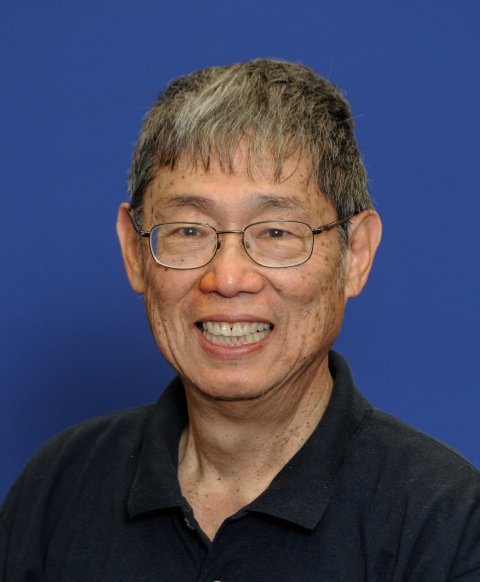
Gene Hou is a Professor in the Department of Mechanical & Aerospace Engineering at Old Dominion University (ODU), Batten College of Engineering and Technology. He joined ODU in 1983 and was promoted to full Professor in 1996. His research focuses on computational mechanics, multibody dynamics, and design under uncertainty, with applications in structural optimization, aeroelasticity, and CFD. He has led numerous grants totaling over $5.5 million in funding, including scholarships for marine engineering students and studies on fluid-structure interaction. Education: Ph.D. (Mechanical Engineering, University of Iowa, 1982), M.S. (Mechanical Engineering, National Taiwan University, 1976), B.S. (Mechanical Engineering, National Cheng Kung University, 1974). Research Highlights: Dr. Hou’s work spans design optimization, sensitivity analysis, and multidisciplinary applications. Recent projects include robust design of MEMS resonators, dynamic environment simulation laboratories, and AHP-based decision methodologies. Key technologies include discontinuous Galerkin methods, partitioned FSI algorithms, and reliability-based design frameworks. Articles Overview: Recent works emphasize fluid-structure interaction (FSI), reliability analysis, and educational innovations. Notable trends include partitioned computational approaches, stochastic modeling for structural systems, and pedagogical methods for technical disciplines. Awards: Includes the 1995 Ralph R. Teetor Educational Award, 1987 ASME Outstanding Faculty Award, and 1986 NSF Presidential Young Investigator Award. Grants & Labs: Over 50 grants funded projects on topics like friction stir welding, naval craft dynamics, and orthotic systems. Active involvement in capstone design projects for autonomous surface vehicles and marine engineering education.