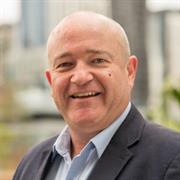
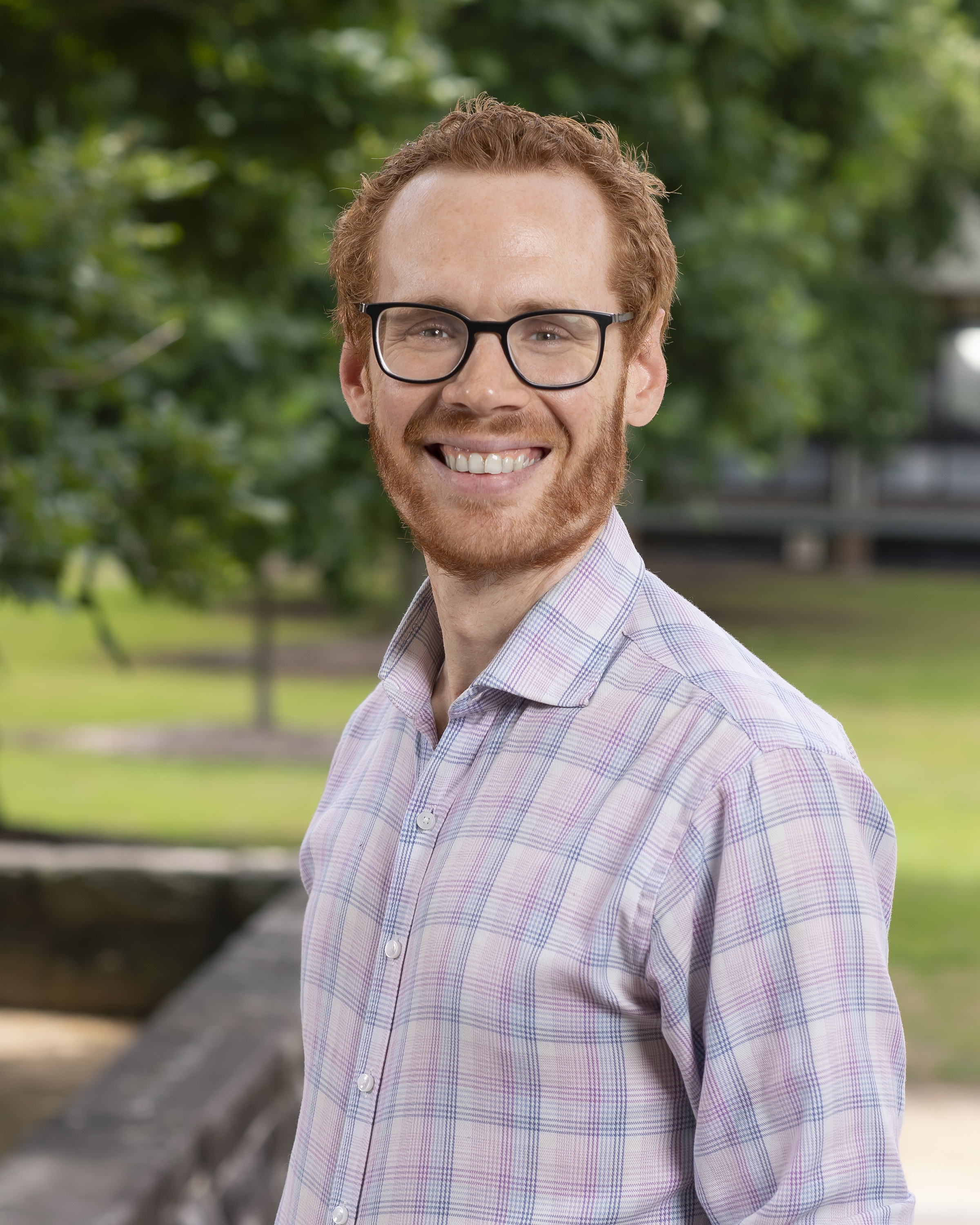
Dr. Sam Ferguson is a Senior Lecturer at the School of Computer Science, University of Technology Sydney (UTS), with a multidisciplinary background in music performance, cognitive science, and psycho-acoustics. His research explores the intersection of sound, music, and human experience through creative coding, machine learning, and interactive systems. Key Research Areas: Sound and Music Computing, Human-Computer Interaction, Creative Coding, Cognitive Science, Installation Art, and Acoustics. Current Projects: ARC Linkage project on creative coding and multiplicitous media; industry collaborations on IoT-based audiovisual systems. Recent Publications: Focus on spatial audio complexity, gestural interaction with networked sound, music emotion recognition frameworks, and robotic performance through genre-based cultural platforms. Leadership Roles: Director of Teaching & Learning Engagement; former Deputy Head of School (Teaching and Learning); active in ACM Creativity and Cognition Steering Committee. Teaching: Courses like Digital Media Studio , Prototyping Physical Interaction , and Data Processing using R within UTS's interdisciplinary Software Development Studio.
Kwan-Wu Chin is a Professor in the School of Electrical, Computer and Telecommunications Engineering at the University of Wollongong, where he also serves as Head of Postgraduate Studies (HPS) and co-directs the Wireless Technologies Lab (WTL). His research focuses on resource allocation problems in Internet of Things (IoT) systems, maritime networks, edge computing platforms, and integrated sensing-communication systems. Chin leads an active research group currently supervising five PhD students working on UAV networks, edge computing, maritime systems, and metaverse resource allocation. He has graduated over 20 PhD students who now hold positions in academia and industry. Chin serves as editor for Elsevier Computer Communications and IEEE Internet of Things Journal. His work develops optimization techniques using graph theory, stochastic processes, and machine learning for next-generation wireless systems.
Professor Kathryn Fairfull-Smith is a Professor in the School of Chemistry & Physics at Queensland University of Technology (QUT). Her research focuses on organic synthesis for applications in materials science and medicinal chemistry, with a particular emphasis on developing strategies to combat bacterial biofilms through nitroxide-functionalized compounds and surface coatings. She leads projects funded by grants such as the QLD-Bavaria collaborative seed grant (2024) and an ARC Linkage Grant (2024). Her work spans organic radical batteries, profluorescent sensors, and antimicrobial hybrids, addressing challenges in biomedical and environmental materials. Education: PhD from Griffith University. Professional memberships include MRACI CChem and MRSC. Awards include the QUT Vice-Chancellor's Award for Excellence in Research (2017) and an ARC Future Fellowship (2014). She actively supervises postgraduate students in topics like nitroxide therapeutics and polymer materials. Her research group is part of the Centre for Materials Science at QUT. Research Grants: QLD-Bavaria collaborative seed grant (2024), ARC Linkage Grant (2024), DP210101317 (2021), FT140100746 (2015) Key Projects: Biofilm eradication via nitroxide-antimicrobial hybrids, light-triggered surface coatings, and polymer degradation monitoring Publications include over 30 peer-reviewed articles in journals such as Advanced Materials Technologies and Antimicrobial Agents and Chemotherapy . Her work bridges fundamental chemistry with real-world applications in healthcare and sustainability.
Dr. Chathura Bandutunga is a Research Fellow at the Centre for Gravitational Astrophysics within the Research School of Physics at the Australian National University (ANU). His research focuses on advanced optical techniques for precision measurement, with significant contributions to gravitational wave detection technology, molecular spectroscopy, and space exploration instrumentation. Dr. Bandutunga's research expertise spans digital interferometry, fiber optic sensors, and precision optical measurement systems. His work has pioneered digitally enhanced interferometric techniques that have enabled new capabilities in molecular dispersion spectroscopy, gravitational wave detection, and optical frequency referencing. He has developed innovative methods for phase noise suppression, common-mode noise rejection, and thermal-noise-limited optical measurements that operate at the boundaries of physical possibility. His publication record demonstrates consistent innovation in optical measurement technology, with recent work advancing fiber optic gyroscopes, frequency comb technology, and applications for interstellar propulsion systems like the Breakthrough Starshot program. His research bridges fundamental optical physics with practical applications in both terrestrial scientific instrumentation and space-based technologies. Dr. Bandutunga is actively involved in the Centre for Gravitational Astrophysics at ANU, contributing to Australia's participation in international gravitational wave research collaborations. His technical leadership in precision optical measurement systems directly supports next-generation gravitational wave detectors and related technologies requiring unprecedented measurement stability.
Professor Brant Gibson is a Deputy Dean of Research and Innovation and holds the rank of Professor in the School of Science at RMIT University. His research focuses on quantum technologies, particularly diamond-based systems including nitrogen-vacancy (NV) centers, fluorescent nanoprobes, and hybrid materials for sensing applications. He leads projects in quantum magnetometry, photonics, and biomedical imaging, with an emphasis on translating lab-based innovations into practical devices for fields like medical diagnostics and environmental monitoring. Brant’s work spans condensed matter physics, nanotechnology, and optical engineering, with notable contributions to diamond-doped optical fibers, quantum sensor development, and the application of nanodiamonds in biophotonics. His research integrates experimental physics with computational modeling to optimize material properties and sensor performance. He is actively involved in student supervision, offering guidance for Masters and PhD candidates in quantum engineering, materials science, and interdisciplinary applications. Current projects include quantum tensor gradiometry for navigation, bioimaging with near-infrared emitters, and silk-diamond composites for wound monitoring. Brant’s academic contributions are further reflected in over 150 peer-reviewed publications and collaborations across academia and industry. His work bridges fundamental research with real-world applications, emphasizing Australia’s role in global quantum technology advancements.
Dr. Michael Stevens is a Senior Lecturer at University of New South Wales (UNSW) Canberra , where he focuses on advanced manufacturing and biomedical device control systems . His work bridges digital manufacturing for SMEs with smart artificial heart technologies , emphasizing industry collaboration and translational research. Specializes in physiological control systems for rotary blood pumps Develops unobtrusive fall detection systems for dementia patients Leads international projects on total artificial heart development Education : B.Eng (Medical - First Class Honours), Queensland University of Technology (2010) PhD in Physiological Control for Biventricular Assist Devices, University of Queensland (2014) Research Trends show consistent focus on: Machine learning for biomedical diagnostics (2018–2025) mmWave radar and thermal sensors in patient monitoring (2021–2024) Computational fluid dynamics in artificial heart modeling (2016–2024) Physiological control algorithms for rotary blood pumps (2011–2025) Scientific Awards : UNSW Scientia Education Award (2021) for contextual teaching Heart Foundation Runner-up for "Smart Artificial Hearts" pitch (2021) ARC PGC Supervisor Award (2017) for mentoring Grants & Supervision : Holds over $6 million in competitive funding including MRFF and ARC grants. Currently supervises 4 PhD students while maintaining industry partnerships with VitalCare and BiVACOR. Labs & Facilities : Works across UNSW Engineering labs and Graduate School of Biomedical Engineering platforms, including mock circulation loops and high-performance computing clusters for CFD simulations.
Dr. Daniel Preston is an ARC DECRA Fellow and leader of the Preston Group at the Research School of Chemistry , Australian National University. His research focuses on supramolecular chemistry, designing structurally and functionally complex architectures from metal ions and organic ligands in solution. Education : PhD in Chemistry from the University of Otago, Rutherford Postdoctoral Fellowship at the University of Canterbury (NZ). Key research themes include: Supramolecular self-assembly of metallosupramolecular systems Development of stimuli-responsive foldamers and sensors Photophysical applications in FRET, donor-acceptor systems Anion recognition and gas adsorption studies His recent publications highlight work on: Low-symmetry metal cages (Fe 2+ , Pd 2+ , Pt 2+ ) Dynamic covalent approaches to lantern-shaped architectures Excited state control in bichromophoric photosensitizers Heterometallic and heteroleptic systems with positional/orientational control Scientific Awards : ARC DECRA Fellow ARC Future Fellow Rutherford Postdoctoral Fellowship Dr. Preston supervises PhD candidates Jessica Algar and Zack Avery, with active projects in mixed-metal clusters, self-assembled systems, and molecular machine development.
Prof. Andrew Zhang is a Professor at the School of Electrical and Data Engineering, University of Technology Sydney (UTS). He leads the UTS Radio Sensing and Pattern Analysis (RaSPA) Lab and serves as Technical Director of the UTS-TPG Network Sensing Lab. His research focuses on integrated sensing and communications (ISAC), wireless signal processing, and autonomous vehicular networks. He holds a PhD from the Australian National University and has over 15 years of industry experience, including roles at CSIRO and ZTE Corp. Education: B.S. (Xi’an Jiaotong University), M.Sc. (Nanjing University of Posts and Telecommunications), Ph.D. (Australian National University). Research Interests: ISAC, radio sensing, machine learning for communications, and 6G waveform design. Key projects include developing perceptive mobile networks and flood/storm sensing via ISAC. Publications: Over 290 papers, 5 patents, and notable works on ISAC frameworks, joint communication-sensing systems, and mmWave technologies. Recent trends emphasize ISAC, 6G waveforms, and IoT integration with federated learning. Awards: CSIRO Chairman’s Medal, Australian Engineering Innovation Award, and multiple best paper awards. Active in IEEE leadership roles, including Editor-in-Chief of ISAC-Focus. Grants: ~$8M in research funding. Advises on ISAC-ETI initiatives and collaborates with industry partners like TPG Telecom. Labs: RaSPA Lab (radio sensing analytics) and UTS-TPG Lab (ISAC industrial solutions).
Dr. Maxime Cordeil is a Senior Lecturer in Human Centred Computing at the School of Electrical Engineering and Computer Science, The University of Queensland. His research focuses on Virtual and Augmented Reality technologies for data interaction, interactive visualization systems, and AR interfaces for industry applications. He has authored over 60 publications in top-tier venues such as ACM CHI and IEEE VR, and was nominated as Australia's Field Leader in Computer Graphics in 2021 and 2022. Research Interests: Data visualization, immersive analytics, medical imaging, collaborative systems, and human-computer interaction. Current Projects: Includes embedded visualizations for sports performance, interactive machine learning in 3D environments, and mixed-reality applications in forensic science. PhD Supervision: Actively guiding students in topics like immersive gesture exploration, AR for digital health, and collaborative VR systems. His work bridges theory and practice, with tools like IATK (Immersive Analytics Toolkit) and the MADE-Axes hardware system. He collaborates with industry partners like Raytracer and CSIRO, focusing on applications in space exploration, underwater training, and remote operations. Awards: Multiple best paper recognitions at ISS and CHI, plus industry-driven research grants. Labs: Leads the Immersive Analytics research group at UQ, specializing in embodied interaction and spatial computing.
Professor Craig Priest is a faculty member at the University of South Australia within UniSA STEM , focusing on microfluidics , optofluidics , and interfacial science applications. He serves as a Research Degree Supervisor and has contributed to advancements in sensor technology, biomedical engineering, and materials science. Key Research Themes : Development of micropillar array-integrated sensors for rapid vapor detection 3D-printed microstructures to mitigate matrix effects in electrochemical sensing Wettability engineering for passive fluid control in lab-on-a-chip devices PDMS-PS bonding protocols enabling robust cell culture platforms like Heart-Dyno Collaborations & Grants : Collaborated with Queensland University of Technology and QIMR Berghofer on biomedical devices Involved in ARC grants: ARC IH150100028 and ARC DP1094337 Industry partnerships with BHP Billiton and ULVAC Inc. Academic Contributions : Published in IEEE Sensors , APL Materials , and ACS Applied Materials & Interfaces Active in microfluidic device design for biomedical and environmental applications Developed evaporation-driven fluid transport systems for portable biosensing platforms
Dr. Shelley Wickham is an Associate Professor and ARC DECRA Fellow at the University of Sydney, holding joint appointments in the Schools of Chemistry and Physics. She serves as a Westpac Research Fellow and leads the DNA Nanotechnology Group at the Sydney Nano Institute. Dr. Wickham is also co-Champion of the Sydney Nano Institute Grand Challenge project in Molecular Nanorobotics for Health, co-lead of the School of Physics Grand Challenge on Nanoscale brain navigation for targeted drug delivery, and faculty mentor of the University of Sydney BIOMOD team. Bachelor of Science and Master of Science in Physics from University of Sydney PhD in Condensed Matter Physics from University of Oxford Postdoctoral Fellow at Harvard Medical School, Dana-Farber Cancer Institute, and Wyss Institute Dr. Wickham's research focuses on self-assembling nanotechnology and molecular robotics, particularly in the design and assembly of programmable nanostructures out of DNA. Her work spans applications in cell biology, materials science, and nanomedicine. Current research projects include design and synthesis of self-assembling DNA nanostructures, proto-cells made of DNA gels that move under flow, new plasma fabrication methods for biomolecule micropatterning, and DNA computation circuits for navigating the brain using machine learning. Her research aligns with the Faculty of Science Research Strengths in Molecules to Materials, Preventing and Treating Disease & Disorder, and Next Generation Materials. Analysis of Dr. Wickham's recent publications reveals a consistent focus on DNA nanotechnology with increasing sophistication in structural complexity and biological applications. Her work has evolved from fundamental DNA origami structures to increasingly complex multi-component systems with practical applications in nanomedicine and biomimetic engineering. Recent publications show strong interdisciplinary collaboration across chemistry, physics, biology, and engineering disciplines, with emphasis on real-world applications including drug delivery systems and biomolecular sensors. ARC DECRA Fellow Westpac Research Fellow BIOMOD World Champions (2019) Dr. Wickham actively mentors PhD students and postdoctoral researchers in her DNA nanotechnology group. She has secured significant research funding including ARC Discovery Projects, Westpac Scholarships, and NSW Health grants. Her current grants support projects such as '3D Bio-Nanomaterial Displays with Designer Architectures and Functions' and 'RNA aptamer sensing devices for rapid detection of blood clotting.' Dr. Wickham encourages applications from diverse backgrounds and maintains active collaborations with researchers at Harvard, Oxford, and other international institutions. Dr. Wickham leads the DNA Nanotechnology Group at the University of Sydney, which is part of the Sydney Nano Institute. Her lab focuses on building tools from DNA origami - including tweezers, spanners, wrenches and springs - to better understand biological processes at the nanoscale. The group has achieved notable success with the BIOMOD team winning world championships in 2019, and continues to develop innovative approaches to molecular robotics for healthcare applications.
Professor Nunzio Motta is a physicist at Queensland University of Technology (QUT), Faculty of Science, School of Chemistry and Physics. He pioneered atomic resolution in Ultra High Vacuum by Scanning Tunneling Microscopy in Italy (1991) and continues to innovate in nanotechnology, focusing on 2D materials, graphene, and quantum dots for electronics, energy storage, and environmental applications. PhD, Scuola Normale Superiore di Pisa (1986) Bachelor of Engineering (Hons I) in Physics, University of Rome La Sapienza (1981) His research spans Surface Science , Materials Science , and Nanotechnology , with key projects on epitaxial graphene growth, hybrid 2D heterostructures, and supercapacitors. Recent work includes designing diamond nanothread bundles and developing gas sensors for smart cities. His 15 most recent publications (2022–2025) focus on energy storage (Li-ion batteries, supercapacitors), 2D heterostructures, and gas sensors, leveraging nanotechnology for environmental and electronics challenges. Order of the Star of Italy (2017) Queensland International Fellowship (2013) He supervises PhD/MSc students in 2D materials for quantum technologies and energy applications, collaborating with institutions like Australian National University and CSIRO. His professional roles include Associate Editor for Beilstein Journal of Nanotechnology and organizing committees for international workshops like NanoS-E3.
Professor Dian Tjondronegoro is a leading academic at Griffith University's Department of Management within the Griffith Business School. He holds roles such as Acting Head of Department and Deputy Head (Research), and is affiliated with the Centre for Work, Organisation and Wellbeing, Griffith Asia Institute, and the Griffith Inclusive Future Beacon. His research focuses on AI ethics, eHealth systems, and digital governance, with over $9M in grants from bodies like the ARC and NHMRC. He has published 145+ peer-reviewed papers and leads initiatives like the 'Governing in the Digital Age' program. A Fellow of the Australian Computer Society and Senior Member of IEEE/ACM, he has won the Gold Disrupters Award (2019) and multiple teaching accolades. Education: PhD in Information Systems (Deakin University, 2005), BIS (QUT, 2001). Research Interests: AI, machine learning, healthcare innovation, responsible AI, workplace design, and digital economy strategies. His articles emphasize AI applications in healthcare monitoring, workplace productivity, and ethical surveillance. Recent work explores post-COVID workplace trends and AI-driven public health solutions. He advises on government policy and innovation through roles like Gold Coast Health's Digital Innovation Advisory Committee. His teaching includes courses on digital strategy and innovation management.
Professor Stuart Phinn is a distinguished academic at the University of Queensland, serving as Professor in the School of the Environment and Centre Director of the Remote Sensing Research Centre (Earth Observation Research Centre). He also maintains affiliations with the Centre for Marine Science. With a career spanning over two decades, Professor Phinn has established himself as a leading expert in earth observation and environmental monitoring, with over 559 publications including 295 journal articles. His educational background includes a Bachelor (Honours) of Science (Advanced) from The University of Queensland and a Doctor of Philosophy from San Diego State University. Professor Phinn's leadership extends to founding directorships of Australia's national earth observation coordination body (www.eoa.org.au) and collaborative research infrastructure (www.tern.org.au), as well as a world-leading research-to-operational program supporting government environmental monitoring (www.jrsrp.org.au). He also leads the Earth Observation for Government Network. Professor Phinn's research focuses on monitoring environmental change using earth observation and field data. His work primarily involves using images collected from satellites and aircraft, combined with field measurements, to map and monitor Earth's environments and how they change over time. This research is conducted in collaboration with environmental scientists, government agencies, NGOs, and private companies. A growing aspect of his work focuses on national coordination of earth observation activities and the collection, publishing, and sharing of ecosystem data. His work provides solutions to support sustainable development and resource use for governments, industries, and communities. His recent publications demonstrate a consistent focus on applying earth observation technologies to solve environmental challenges across multiple domains. The 15 most recent articles reveal strong themes in coral reef mapping and monitoring, land cover change detection, fire resilience analysis, and advanced remote sensing techniques including multi-sensor fusion and machine learning applications. His work spans terrestrial, coastal, and marine environments, with significant contributions to understanding environmental change in Australia and internationally, particularly in Indonesia. Professor Phinn has secured substantial research funding from diverse sources including government agencies (Queensland Government, Great Barrier Reef Marine Park Authority), industry partners (SmartSat CRC, Blue Economy CRC), and international organizations (Google Inc, Vulcan Inc). Current projects include evaluating impacts of threats to endangered reptiles, automating tree-scale vegetation structure monitoring, and continuing the Joint Remote Sensing Research Program. As an academic supervisor, Professor Phinn has mentored numerous PhD and Master's students, with current supervision spanning topics from forest disturbance analysis to kelp forest mapping and fire resilience of mine site rehabilitation. His extensive supervision history demonstrates his commitment to training the next generation of earth observation scientists. The Earth Observation Research Centre he directs fosters a collaborative research environment focused on transforming satellite and airborne images with field survey data into meaningful environmental information for decision-making.
Wei Deng is an Associate Professor and Deputy Head of School (Research) in the School of Biomedical Engineering at the University of Technology Sydney (UTS). Her research focuses on cancer nanotechnology, nanobiotechnology, and gene engineering, with significant contributions to radiation-activated chemotherapy (RAC) via liposomes and CRISPR-based therapies. She has pioneered treatments for rectal and breast cancers, including the development of patented RAC systems that reduce chemotherapy toxicity. Her work has led to the founding of biotech startup EosGene Pty Ltd for diabetic retinopathy therapies. Deng holds a PhD from Macquarie University and has attracted over $3.7M in grants from ARC, NHMRC, and Cancer Institute NSW. She leads interdisciplinary teams and contributes to global collaborations, including partnerships with UNSW and HK Winhealth Pharma Group. Her research spans drug/gene delivery systems, CRISPR biosensors, and nanoparticle engineering, emphasizing translational medicine and industrial challenges. Education: PhD in Biomedical Engineering, Macquarie University (Sydney) Leadership Roles: Deputy Head of School, Research; Co-founder of EosGene Pty Ltd Awards: DECRA Fellowship (ARC), Cancer Institute NSW Career Development Fellowship Key Projects: RAC liposomes (Patents US 12036282, Europe 3720422), CRISPR-based pathogen sensors, X-ray triggered PDT platforms Her research bridges nanotechnology and clinical applications, with 62 refereed publications (h-index 26) and 87% in top-tier journals. She actively supervises postgraduate research in CRISPR therapies, CAR T cell engineering, and targeted drug delivery.