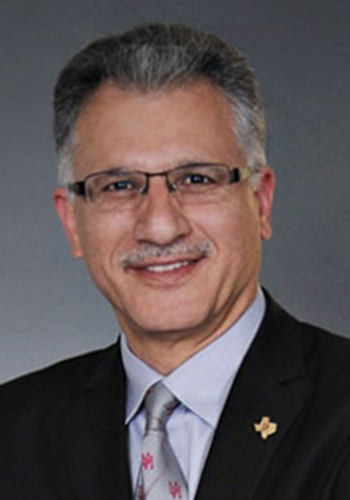
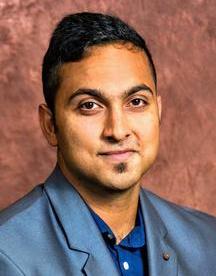
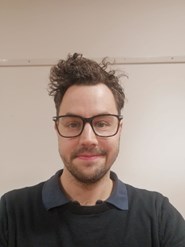
R. Effing is an Assistant Professor in Business Information Systems at the University of Twente, affiliated with the Faculty of Behavioural, Management and Social Sciences (BMS) and the Industrial Engineering & Business Information Systems (BMS-HBE-IEBIS) group. Their research focuses on digital intelligence, social media, and smart cities, exploring how technology reshapes societies and organizations. They utilize methodologies like process mining and social media analytics to address challenges in privacy, digital transformation, and participatory governance. Digital Intelligence Big Data Social Media Smart Cities Digital Transformation Political Participation R. Effing's recent publications examine ethical dilemmas in virtual societies (e.g., metaverse risks), IoT applications for urban planning, and the role of social media in customer engagement and political systems. Their work spans interdisciplinary domains, combining technical and sociological perspectives.
Krystal Pollitt is an Associate Professor of Epidemiology (Environmental Health) at the Yale School of Public Health , with secondary appointments in Chemical and Environmental Engineering. She actively contributes to the Yale Institute for Global Health and Yale Superfund Research Center . Education: PhD in Chemical Engineering (2014), MSc in Environmental Toxicology (2012), BSc in Chemical Engineering (2005) from University of Toronto and King's College London Her research focuses on the human exposome , utilizing advanced mass spectrometry (ICP-MS, LC-MS, GC-MS) to characterize environmental and biological exposures. She pioneered a wearable wristband air sampler for high-throughput profiling of organic contaminants, deployed in international studies involving vulnerable populations like children and the elderly. Recent publications emphasize PFAS detection through novel software (FluoroMatch IM, PolyMatch), PM2.5 oxidative potential analysis, and exposome-wide associations with metabolic disorders. These works integrate chemical space expansion , nontargeted analysis , and environmental justice frameworks. Scientific Awards Joan M. Daisey Outstanding Young Scientist Award (2022) Early Career Research Award (2021) Dr. Pollitt leads the Pollitt Lab (pollittlab.weebly.com), which develops tools for environmental health monitoring and participates in initiatives like the Healthy Air Network and GEOHealth-MENA program. Her work bridges data science , chemical engineering , and global public health .
Xin Qi is an Assistant Professor (non-tenure-track) at the School of International Liberal Studies, Faculty of International Research and Education, Waseda University. He holds a Doctor of Engineering degree from Waseda University (2019) and previously studied at Hangzhou Dianzi University (2009-2013). His educational background includes: Doctor of Engineering, Waseda University (2014.09-2019.09) Bachelor's degree, Hangzhou Dianzi University (2009-2013) Dr. Qi's research focuses on the intersection of artificial intelligence and network technologies. His primary research areas include Intelligent Informatics, with specific interests in Artificial Intelligence applications for security systems, IoT infrastructure, and Information-Centric Networking. His work bridges theoretical computer science with practical applications in public safety, disaster management, and secure communications. His research demonstrates strong interdisciplinary connections between computer science, electrical engineering, and practical security applications. Analysis of Dr. Qi's publication record (44 papers with 557 Scopus citations and h-index of 12, or 757 Google Scholar citations with h-index of 15) reveals a strong focus on practical applications of AI and blockchain technologies. His most recent work (2023-2024) centers on latency compensation in remote monitoring systems, GNSS spoofing detection using machine learning, and AI-based security screening systems. Earlier work (2021-2022) shows significant contributions to ledger-based point transfer systems for LPWAN networks and image processing techniques for secure data transmission. His research demonstrates a consistent trajectory toward solving real-world problems in security, networking, and IoT applications. Dr. Qi is an active member of professional organizations including the Institute of Electronics, Information and Communication Engineers and IEEE. His research is supported by multiple projects including "Low latency interactive zero latency video/Somatic integrated network" (2022-2024), "Dynamic Secure Network for Traffic and Logistics" (2021-2023), and "Lightweight distributed ledger technology authentication system for LPWA" (2020-2022). These projects reflect his focus on practical applications of his research in real-world scenarios, particularly in disaster management and secure communications infrastructure. He has received consistent research funding that supports both theoretical development and practical implementation of his work. Dr. Qi also contributes to educational initiatives at Waseda University, teaching courses including Data Structure and Algorithms, Human-Technology Interface, and Computerized Society, where he bridges theoretical computer science with practical applications for undergraduate students.
Naja Holten Møller, an Associate Professor in the Promotion Programme at the Department of Computer Science, University of Copenhagen, specializes in Human-Centred Computing . Her research focuses on Computer-Supported Cooperative Work (CSCW) , exploring ethics in data-driven technologies, algorithmic decision-making, and the digitalization of public sectors. She investigates how adaptive technologies transform work processes and emphasizes balancing human values with automation through long-term collaborations with public organizations. Research Areas: Ethics in Data Work Algorithmic Accountability Public Sector Digitalization Future Workplace Optimization Scientific Awards: Member of ACM's Future of Computing (2017) Collaborations: Public Sector Organizations Refugee Law Institutions Healthcare Systems Her recent publications highlight trends in asylum data governance , AI labor pipelines , and participatory design in public systems, reflecting her focus on technological ethics and stakeholder inclusion.
Dr. Chris Wilson is an Assistant Professor in Agronomy at the University of Florida, specializing as a Global Change Agroecologist. His research focuses on agroecosystem monitoring using remote sensing, hyperspectral sensors, and ecosystem models; pasture management impacts on soil carbon; and crop physiology responses to abiotic stressors. Education: PhD in Interdisciplinary Ecology, University of Florida (2017) BA in Ecology, New College of Florida (2009) Research examines three core areas: Agroecosystem productivity assessment using multi-source data integration Pasture management effects on carbon sequestration Crop stress physiology for resilient production systems Publications show consistent focus on carbon dynamics, with recent work emphasizing climate resilience in agricultural systems through improved monitoring techniques and management strategies. Awards: Graduate Research Fellowship, University of Florida (2012-2017) Advisees include Hannah Rusch (PhD student), with funded research totaling $1.92M from NSF, USDA, and industry partners. Leads the Plant Root Science Consortium and co-directs research initiatives at the Center for Stress Resilient Agriculture.
Thomas Mays serves as a current manager of law enforcement and intelligence professionals at George Mason University's Department of Criminology, Law and Society. With over 30 years of experience spanning federal government roles at DHS agencies (CBP, HSI-ICE, USCIS) and a 27-year U.S. Army Reserve career, he specializes in counterterrorism, counterintelligence, and intelligence cycle optimization. His expertise includes HUMINT, SIGINT, CyberINT, and GEOINT operations across government-military interfaces. Holding a MS in Strategic Intelligence from National Intelligence University and degrees in Aeronautical Engineering and Applied Physics from Embry-Riddle, he advises graduate theses and sits on NIU's curriculum review board. His career combines federal leadership roles with field deployments in Iraq and Afghanistan, emphasizing intelligence fusion and tactical operations. Research focuses on national security threats, transnational organized crime, and intelligence sensor systems. He mentors students on domestic/international law enforcement coordination and emerging threat detection methodologies.
R. A. Borrelli is Associate Professor of Nuclear Engineering at University of Idaho's College of Engineering, based at the Center for Advanced Energy Studies in Idaho Falls. His research spans advanced fuel cycles, nuclear safeguards, space nuclear power systems, and cybersecurity for nuclear facilities. Current projects include radioisotope thermoelectric generators for deep space exploration and cyber hardening of nuclear power plants. Research combines computational modeling and experimental validation, with focus areas in reactor physics, radiation transport, and energy system integration. Recent work examines molten salt microreactor restart protocols and radiation interactions in planetary atmospheres. Publications demonstrate consistent focus on nuclear safety (60% of recent papers) and space nuclear applications (25%). Professional activities include organizing nuclear cybersecurity research initiatives and serving on technical committees for nonproliferation conferences. Leads research on DOE/NASA-funded projects and advises students through the Center for Advanced Energy Studies. Collaborates with Idaho National Laboratory on safeguards-by-design methodologies.
Cláudia Batista Lopes is an Assistant Researcher in the Department of Chemistry at the University of Aveiro (UA), affiliated with CICECO – Aveiro Institute of Materials. She holds a PhD in Chemistry from UA (2009) and has extensive postdoctoral experience at CESAM-UA, CICECO-UA, and CIIMAR-University of Porto. Her research focuses on nanomaterial development for environmental remediation, particularly mercury and toxic metal removal using biowastes and magnetic nanomaterials. She has authored over 80 publications, including peer-reviewed articles in top-tier journals, with significant citations (h-index 20–23 across platforms). Her work emphasizes sustainability, digitization, and critical element recovery from water and industrial waste. Dr. Lopes has secured over €2 million in research funding, led/coordinated multiple projects (e.g., MixIng Tox), and collaborates with international institutions and industry partners. She actively participates in conferences, serves as a journal referee, and supervises PhD and MSc students. Education: PhD in Chemistry, University of Aveiro (2009) Postdoctoral Research at CESAM-UA, CICECO-UA, and CIIMAR-UP Research Interests: Porous materials, nanosystems, magnetic graphene-based composites, bioremediation of metal-contaminated waters, recovery of technology-critical elements (e.g., lanthanides, platinum-group elements). She also explores synergies between nanotechnology and environmental sustainability. Scientific Achievements: Over 80 publications, including 48 peer-reviewed papers (81% in top-tier journals) Highly cited papers with over 200 citations (e.g., Scopus: 229, Google Scholar: 289) Principal Investigator/Co-ordinator of 18 projects (€2M+ funding) Grants & Awards: Monetary Prize from IAEA (2007) Leadership in international projects (e.g., MixIng Tox) Advising & Collaboration: Supervised 1 PhD, 13 MSc, and 7 undergraduate students. Active in multi-disciplinary teams with CERN-ISOLDE, Corticeira Amorim, and other industry partners. Labs/Teams: CICECO, CIIMAR, and collaborations with institutions like the University of León and Utrecht University.
C. Kyle Renshaw is a Professor of Optics and Photonics at the University of Central Florida (UCF), affiliated with the Department of Electrical Engineering (ECE) within the College of Engineering and Computer Science (CECS). He holds a PhD and MS from the University of Michigan and an undergraduate degree from Cornell University. His research focuses on organic optoelectronics, thin-film semiconductors, sensor arrays, photovoltaics, and imaging systems, particularly in applications like flexible electronics and optoelectronic devices. Dr. Renshaw leads the Thin-Film Optoelectronics (TFO) Group, which develops materials and fabrication techniques for large-area devices such as solar cells, displays, and sensors. His work spans hybrid metasurface-refractive optics, drone-based imaging systems, and multispectral imaging technologies. Notable contributions include advancements in infrared imaging, free-space optical communications, and sensor optimization for geolocation. His recent research highlights include experimental comparisons of active imaging modes, Gaussian decomposition modeling for hybrid lenses, and evaluation of Doppler wind lidar for aviation safety. Dr. Renshaw has been recognized with the 2018 AFRL Summer Faculty Fellowship. His work bridges fundamental optics research with practical applications in defense, environmental monitoring, and aerospace systems.
Heidar A. Malki is a Professor of Engineering Technology and Senior Associate Dean of the Technology Division at the Cullen College of Engineering, University of Houston (UH). He holds a joint appointment in the Electrical and Computer Engineering Department and has over three decades of academic and research experience. He earned his Ph.D. in Electrical Engineering from the University of Wisconsin-Milwaukee (1990). His roles include Department Chair (2009–present) and Associate Dean for Research (2004–2009). He is a Senior Member of IEEE and serves as an Associate Editor for the IEEE Transactions on Fuzzy Systems. Education: Ph.D. in Electrical Engineering, University of Wisconsin-Milwaukee (1990) M.S. in Electrical Engineering, University of Wisconsin-Milwaukee (1985) B.S. in Electrical Engineering, University of Wisconsin-Milwaukee (1983) Research Interests: Dr. Malki specializes in control systems, neural networks, fuzzy logic, and smart grid optimization. His work bridges academic research with industrial applications, particularly in the energy and telecommunications sectors. Notable areas include neuro-fuzzy controllers, power system dynamics, and cyber-security for critical infrastructure. He has collaborated with organizations like Southwestern Bell and the oil/gas industry on neural network applications. Publications & Awards: With over 100 publications, Dr. Malki’s work spans journals like IEEE Transactions on Fuzzy Systems and International Journal of Bifurcation and Chaos . His awards include the Fluor Daniel Outstanding Faculty Award (2001, 2003) and recognition in Who's Who in America . He has authored textbooks on control systems and contributed to academic volumes on fuzzy logic applications. Grants & Leadership: He secured funding for initiatives like the Houston Information Technology Workforce Certification Center and led conferences such as the 1997 IEEE International Conference on Neural Networks. His educational contributions include pioneering web-based control systems laboratories and interdisciplinary graduate programs in technology. Labs & Teams: His research teams focus on advanced wireless sensor networks, mechatronics, and energy system optimization. Collaborations extend to NASA and the U.S. Department of Energy, emphasizing applied engineering solutions for real-world challenges.
Arpan Guha is an Assistant Professor in the Department of Civil Engineering at the University of Cincinnati's College of Engineering & Applied Science. His research focuses on light's impact on human health and performance, advanced lighting metrology, and occupant-centric design strategies. He holds a Ph.D. in Architectural Engineering from the University of Nebraska-Lincoln (2020). Education: Ph.D. in Architectural Engineering, University of Nebraska-Lincoln, 2020 His research interests include high-dynamic-range imaging, low-resolution occupancy sensing, and 'occupant-first' design frameworks. He has received prestigious awards including the Edison-Price Fellowship (2022-2023) and the Robert J. Besal Scholarship (2018). Dr. Guha leads projects funded by the Nuckolls Fund for Lighting Education, focusing on human factors in lighting through mentorship and hands-on research at the Mt. Sinai Light and Health Research Center. His work spans interdisciplinary topics such as energy-efficient UVC systems in HVAC, smart grid communication protocols, and electric vehicle lifecycle analysis. He has developed novel AI-based frameworks for predicting thermal and visual comfort using infrared sensors and CNN algorithms. Awards: Edison-Price Fellow (2022-2023) Robert J. Besal Fund Scholarship (2018) Dr. Guha teaches undergraduate and graduate courses in architectural engineering and actively participates in professional organizations like the IALD International Association of Lighting Designers.
Kevin Stanley is a Professor and Chair of the Department of Computer Science at the University of Victoria, affiliated with the Faculty of Engineering & Computer Science. His research focuses on applying data analytics to environmental remediation and human mobility in real and virtual environments. He collaborates with organizations such as EMS (soil remediation) and INTERACT (human mobility). Education: PhD in Computer Science from Simon Fraser University Research Interests: Dr. Stanley’s work spans data analytics, sensors, geomatics, and environmental remediation through advanced analytic pipelines and data assimilation. His human mobility research aims to develop synthetic mobility models for urban planning via algorithmic and machine learning techniques. Current projects include soil sensor optimization with EMS and policy-informed mobility models with INTERACT. Advising & Grants: He recruits MSc students (applications reviewed in late January) and a postdoctoral researcher (applications due October 15, 2024). Graduate applications must be submitted via UVic’s official portal. Labs/Teams: Research is conducted within the UVic Department of Computer Science, with partnerships extending to industry and interdisciplinary teams.
Matthias Siewert is an Associate Professor at the Department of Ecology and Environmental Science, Umeå University. His research focuses on Arctic and permafrost environments, employing GIS, remote sensing, and drone technologies to study soil organic carbon dynamics, vegetation distribution/productivity, and plant-herbivore interactions (e.g., voles, reindeer). He teaches geosciences, physical geography, geomorphology, and advanced GIS/remote sensing courses. Key research interests include: Permafrost degradation and its environmental impacts Arctic vegetation mapping at high spatial resolution Carbon cycle dynamics in peatlands and tundra Applications of UAVs and machine learning in ecological monitoring He leads or participates in research projects such as the EU-funded ILLUQ project (2024–2025) and the 'Greening of the Arctic' initiative. His work bridges science and society through outreach projects like the 'Frozen-Ground Cartoons' collaboration with artists to communicate permafrost science. Recent publications emphasize innovative methods like deep learning for ant mound mapping and high-resolution biomass assessments. He actively engages in international collaborations, contributing to pan-Arctic datasets and policy-oriented educational frameworks.
Mahdi Fahmideh is an Associate Professor in Cyber Security at the School of Business, University of Southern Queensland. He holds a PhD in Information Systems from UNSW Australia and has extensive industry experience as an analyst programmer. His research focuses on cybersecurity, information systems development, and the application of emerging technologies including AI, blockchain, cloud computing, and big data in business contexts. Fahmideh leads research in two primary areas: 1) Development methods for digital transformation in IT-based organizations, particularly systems using ABCD technologies (AI, Blockchain, Cloud, Big Data), and 2) Design science research methodologies. His current projects investigate Generative AI applications in business organizations and software development. His significant awards include research excellence awards from UniSQ, publication awards from UOW, best paper awards, and visiting research fellowships in Finland and Sweden. He serves as associate editor for ACM Computing Surveys and has secured research funding from ARC and international agencies.
Eric Achterberg holds a W3 Professorship in Marine Chemistry at GEOMAR Helmholtz Centre for Ocean Research Kiel and the University of Kiel. His research examines global ocean biogeochemical cycles, with particular expertise in trace element distributions, nutrient cycling, and carbon system dynamics. Achterberg develops and deploys advanced in-situ sensors for oceanographic measurements, enabling high-resolution studies of chemical variability across marine environments. His fieldwork spans tropical oxygen minimum zones, polar regions, and hydrothermal vent systems, with recent projects investigating contamination from historical munitions in the Baltic Sea and trace metal distributions in the Southern Ocean. Honored as a Royal Society Wolfson Merit Award Professor, he leads multiple collaborative projects including AMMOTRACe (trace element cycling) and EMS FORE (estuarine systems). Achterberg serves on editorial boards and scientific committees for international oceanographic research programs.