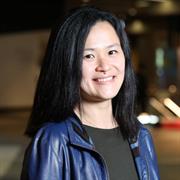
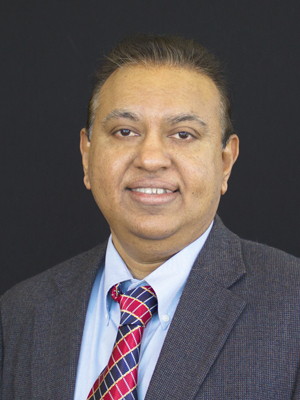
Jin Lu is an Assistant Professor at the University of Georgia's School of Computing, part of the Franklin College of Arts & Sciences. He earned his Ph.D. (2019) and M.S. (2019) in Computer Science and Engineering from the University of Connecticut. Prior to his current role, he served as an Assistant Professor at the University of Michigan–Dearborn (2019–2023). Educational Background: Ph.D. in Computer Science and Engineering, University of Connecticut, 2019 M.S. in Computer Science and Engineering, University of Connecticut, 2019 Research Interests: Dr. Lu focuses on machine learning, optimization, bio-informatics, and smart mobility. His work spans federated learning, healthcare applications (e.g., depression and BMI monitoring), IoT systems, and computer vision. Recent projects explore AGI's potential in medical and educational contexts, leveraging models like CycleGAN and reinforcement learning. Grants & Funding: Develop digital brains to advance portable diagnosis of neurological conditions (Google, 2025) Lab/Teams: While specific lab affiliations are not explicitly stated, his research involves collaborations in interdisciplinary areas such as health informatics and smart mobility.
Ping Ma is a Professor of Statistics with a courtesy appointment in Computer Science at the University of Georgia. His research focuses on developing innovative statistical and machine learning methodologies for complex high-dimensional data, with applications spanning bioinformatics, computational biology, social network analysis, and anomaly detection in power systems. Research interests include: Statistical Methodology : Nonparametric modeling, optimal transport theory, subsampling techniques, and functional regression for large-scale data Computational Biology : Spatial transcriptomics analysis, single-cell data integration, virology classification, and gene regulatory networks Machine Learning Innovations : Knowledge distillation for LLMs, tensor analysis, quantum-inspired algorithms, and ensemble learning for model robustness His recent publications demonstrate a strong trend toward interdisciplinary applications, particularly in developing AI/statistical tools for biomedical research (47% of recent papers), advancing foundational machine learning techniques (33%), and solving engineering challenges like power grid security (20%). Methodologically, 67% focus on novel algorithm development while 33% refine existing techniques for scalability.
Dongheui Lee is an Assistant Professor at the Institute of Automatic Control Engineering (LSR) within the Faculty of Electrical Engineering and Information Technology at Technische Universität München (TUM). She leads the Dynamic Human Robot Interaction for Automation System Lab. Her research focuses on human motion understanding, physical human-robot interaction, and machine learning in robotics. Education: B.S. and M.S. in Mechanical Engineering from Kyunghee University (2001-2003), PhD in Mechano-Informatics from the University of Tokyo (2007). Prior roles include research scientist at KIST Korea (2001-2004) and project assistant professor at the University of Tokyo (2007-2009). Research Interests: Human-robot collaboration, probabilistic robotics, motion recognition, and incremental lifelong learning mechanisms. She has contributed to advancements in motion primitives, compliant physical interaction, and real-time object tracking. Selected Awards: Finalist for KUKA Service Robotics Best Paper Award (2009), Hirose Scholarship (2006-2007), and multiple grants from KRF, KOSEF, and international robotics competitions. Key Publications: Focus on prioritized inverse kinematics, motion imitation, and adaptive control systems. Her work bridges robotics theory and practical applications in humanoid robots and human-robot interaction.
Jennifer Tang is a Postdoctoral Associate at the Massachusetts Institute of Technology (MIT), holding dual appointments in the Institute for Data, Systems, and Society (IDSS) and the Laboratory for Information and Decision Systems (LIDS). She conducts her research under Professor Ali Jadbabaie, focusing on interdisciplinary problems at the intersection of information theory, network science, and social dynamics. Her position is temporary as she actively seeks a permanent academic role through the 2025 job market. Her academic credentials include: Ph.D. in Electrical Engineering and Computer Science from MIT, advised by Professor Yury Polyanskiy Bachelor of Science in Engineering (B.S.E.) in Electrical Engineering from Princeton University, with independent work supervised by Paul Cuff Dr. Tang's research program centers on theoretical and applied aspects of information theory, including channel capacity, quantization, and data compression. She investigates prediction and estimation in high-dimensional settings, data analytics for complex systems, and mathematical modeling of social dynamics and inference in multi-agent networks. Her work employs tools from statistics, optimization, and network theory to address challenges in communication, decision-making, and societal systems, with particular emphasis on opinion dynamics under social pressure and efficient representation of probability distributions. Analysis of her publication record reveals consistent contributions to information-theoretic limits, social network modeling, and compression techniques. Her works frequently appear in top venues like IEEE Transactions on Information Theory and major conferences (ISIT, CDC, ACC), demonstrating expertise in bridging theoretical foundations with real-world applications in networked systems and societal challenges. Her scientific achievements have been recognized with: Best Student Paper Award at IEEE International Symposium on Information Theory (ISIT) 2022 Best Student Paper Award at IEEE Machine Learning for Signal Processing (MLSP) 2022 Student Competition Winner at the Shannon Centennial Celebration Dr. Tang maintains an active teaching portfolio, having served as instructor for MIT 1.022: Introduction to Network Models (Spring 2025) and teaching assistant for multiple core courses including 6.008 (Introduction to Inference), 6.041/6.431 (Probabilistic Systems Analysis), 6.437 (Inference and Information), and 6.439 (Statistics, Computation and Applications). She also contributed to the MIT Women's Technology Program as a Mathematics Instructor during summer 2017. Her research is embedded within MIT's Laboratory for Information and Decision Systems (LIDS) and Institute for Data, Systems, and Society (IDSS), two premier interdisciplinary laboratories fostering collaboration on data-driven decision-making, societal challenges, and foundational theory in information and systems.
Montserrat Ros is an Associate Professor and Associate Dean (Education) at the School of Electrical, Computer and Telecommunications Engineering within the Faculty of Engineering and Information Sciences at the University of Wollongong, Australia. She has been with the university since 2006, initially joining as a Lecturer in Computer Engineering and progressing to her current senior academic and leadership roles. Her educational background includes: B.E.(Hons1)/B.Sc. double degree majoring in Computer Systems Engineering and Mathematics from the University of Queensland (2000) Ph.D. degree in Computer Engineering from the University of Queensland (2007) Professor Ros's research focuses on the intersection of embedded computing systems and practical engineering applications. Her work spans several key areas including embedded systems design, sensor network data fusion, cyber-physical systems development, and innovative approaches to engineering education. She has particular expertise in sensor-based localization techniques, computer architecture optimization, and code compression methodologies for resource-constrained environments. More recently, her research has expanded into machine learning applications for constrained systems and Internet of Things implementations. Analysis of her recent publication record reveals a strong emphasis on Internet of Things networks, UAV-based systems, and applications of artificial intelligence in both engineering education and manufacturing processes. Her work demonstrates a consistent pattern of bridging theoretical computer engineering concepts with practical real-world applications across diverse domains including healthcare, environmental monitoring, and industrial automation. Her significant contributions to academia have been recognized through numerous prestigious awards: 2019: AAUT Citation for Outstanding Contribution to Student Learning 2018: IEEE TALE 2018 Meritorious Service Award 2018: Featured in UOW Leadership in Education Booklet 2017: UOW Vice Chancellor's Award for Outstanding Contribution to Teaching and Learning 2016: UOW Women of Impact for inspiring young women in STEM 2015: UOW Vice Chancellor's Interdisciplinary Research Excellence Award 2012 & 2007: UOW Vice Chancellor's Awards for Teaching Excellence 2011: UOW Vice Chancellor's Award for Community Engagement Senior Fellow of WATTLE (Wollongong Academy for Tertiary Teaching & Learning Excellence) Professor Ros has secured substantial research funding across multiple projects spanning from 2006 to the present. Her grant portfolio demonstrates a consistent focus on engineering education innovation, sensor network development, and practical applications of embedded systems. Notable projects include "The AI Tutor: Enabling 24x7 student support across engineering" (2024), "AI/IoT-powered Airborne System for Monitoring Water Level and Tidal Floods" (2023), and "Smart Eye: Airborne and AI-Driven Assessment Solution of Sugarcane" (2022). She actively supervises HDR students and has completed multiple successful candidatures. Her leadership extends beyond research and teaching, as evidenced by her role as Associate Dean (Education) for the Faculty of Engineering and Information Sciences. She is also actively involved in community engagement through volunteering with the State Emergency Service (Wollongong SES) and Athletics Wollongong Club.
Yue Hu is an Assistant Professor at the University of Waterloo, affiliated with the Faculty of Engineering. His research focuses on Human-Robot Interaction (HRI), assistive robotics, and control systems with a particular emphasis on safety, adaptability, and user experience. Key areas include robot emotional expressions, physical interaction safety, and real-time systems for social robots. He leads the Active and Interactive Robotics Lab , developing solutions for mobility assistance, teleoperation systems, and cybersecurity in robotics. His work integrates biomechanical modeling, computer vision, and machine learning to create robots that better understand and adapt to human needs. Notable projects include real-time pose estimation for mobility support, encrypted network traffic analysis for robot security, and personality shaping in social robots. He emphasizes ethical design and human factors in robotics, conducting studies on refugee education and unanticipated robot actions. Yue Hu holds a full-time faculty position and collaborates with industry and academic partners to advance assistive technologies and interactive systems. His research bridges theoretical foundations with practical applications, aiming to improve quality of life through innovative robotic solutions.
Dr. Harshala Gammulle is a Research Fellow at Queensland University of Technology (QUT), School of Electrical Engineering & Robotics. She holds a PhD in Computer Vision from QUT (2019), receiving the QUT Executive Dean's Commendation for Outstanding Doctoral Thesis. Her expertise spans machine learning, computer vision, and spatio-temporal modeling for human behavior understanding. She leads interdisciplinary projects with funding from DST Group, SmartSat CRC, QLD DESI, and others. Research focuses include: human action recognition, medical anomaly detection, satellite image analysis, and AI for environmental monitoring. Key projects involve quantum-classical hybrid ML for biomedical signal analysis, disaster forecasting via hyperspectral data, and autonomous combat vision systems. She has supervised PhD/MPhil candidates in ML and quantum hybrid ML. Education: PhD (Computer Vision, QUT 2019), BSc (University of Peradeniya, Sri Lanka). Awards: WiT Emerging Achiever Technology Award finalist (2021), University Award for Academic Excellence (2015). Teaching includes units like Digital Signals and Image Processing (EGH444), and Computing & Data for Engineers (EGB103). Current grants involve QLD DESI, SmartSat CRC, and Rheinmetall Defence Australia collaborations. Active in labs like SAIVT and QUT's Early Career Research schemes.
Dr. Lokesh Das is an Assistant Professor in the School of Computing at Wichita State University’s College of Engineering. His research focuses on developing advanced algorithms for autonomous vehicle traffic control systems using deep learning and V2X communication technologies. Key interests include reinforcement learning applications in real-world traffic scenarios, IoT security frameworks, and smart infrastructure integration. Research Interests: Autonomous Vehicle Coordination Reinforcement Learning for Traffic Systems IoT Security and Edge Computing Dynamic Wireless Charging Solutions Pedestrian Safety Prediction His recent work emphasizes multi-agent systems for traffic optimization and safety-aware adaptive control mechanisms. No specific awards are listed, but his publications reflect impactful contributions to intelligent transportation systems and machine learning applications. Advising and grants information is not explicitly provided in the text. Dr. Das’s research lab likely focuses on real-world implementation of AI-driven traffic solutions.
Jamey Jacob, Ph.D., P.E., is a Professor and John Hendrix Chair in Mechanical and Aerospace Engineering at Oklahoma State University, leading the Oklahoma Applied Research Institute (OAIRE). He holds a Ph.D. from UC Berkeley (1995), with earlier degrees from the same institution and the University of Oklahoma. His research focuses on aerodynamics, UAV design, vortex dynamics, geophysical flows, and autonomous systems. Notable projects include solar balloon flight dynamics, eclipse observations, and advanced air mobility (AAM) weather systems. Jacob has pioneered UAV-based weather sensing and developed innovative aerostructures, including inflatable systems. He has received over 15 prestigious awards, including the Regents Distinguished Teacher (2011) and Oklahoma Innovator of the Year (2010). His recent work emphasizes urban wind field mapping and stratospheric balloon applications for planetary science. Jacob’s lab, OAIRE, integrates aerospace engineering with environmental and operational challenges, advancing both academic and applied frontiers.
Zeina ELRAWASHDEH is a Researcher Lecturer at the Institut Catholique d'Arts et Métiers (ICAM), based at the Grand Paris Sud campus. Her research focuses on Measurements and Controls, with a particular emphasis on fiber-optic sensors, multi-agent systems, and IoT integration for smart infrastructure. She collaborates with prestigious research laboratories globally to develop innovative solutions in energy optimization, smart cities, and precision engineering. Her expertise spans applied research in fiber-optic displacement sensors, algorithm optimization for sensor performance, and user-centric building automation systems. Zeina’s work bridges theoretical advancements with practical applications in manufacturing, energy, and urban systems. She actively contributes to international academic discourse through peer-reviewed publications and participates in ICAM’s strong industry partnerships for applied research outcomes. Zeina’s research portfolio demonstrates a trajectory toward integrating AI and IoT with traditional engineering challenges, addressing technical gaps in sensor networks, multi-agent coordination, and precision machining. Her recent work highlights advancements in smart city infrastructure and energy-efficient building systems. While no awards are explicitly mentioned, her involvement in ICAM’s research initiatives underscores her commitment to impactful, industry-relevant science. Collaborations with global companies and academic institutions position her at the forefront of applied engineering research.
William (Bill) Eisele serves as a Senior Research Engineer and Program Manager at Texas A&M University's Department of Landscape Architecture & Urban Planning. His work focuses on transportation systems, freight mobility, and urban development impacts. Eisele holds a Ph.D. (Civil Engineering, Texas A&M, 2001), M.S. (Civil Engineering, Michigan State, 1994), and B.S. (Civil Engineering, Michigan State, 1993). Research Interests: Dr. Eisele’s expertise spans Transportation planning and access management, Freight mobility optimization, Congestion monitoring, Transportation system performance measurement, Urban land development impacts, Sustainable infrastructure design. Recent Work Trends: His publications emphasize data-driven solutions for freight challenges, including truck parking behavior, cargo consolidation, and port fluidity. Recent studies apply machine learning to predict driver route choices and evaluate real-time mobility tools. He also explores historical trends in urban freight logistics to guide future innovations. Grants & Advising: While no specific grants or advisees are listed, his extensive publications reflect collaborative work with institutions like the Texas A&M Transportation Institute. He has contributed to statewide programs like Oregon’s operations performance measures and Maryland’s freight fluidity initiatives. Labs/Teams: His affiliations suggest involvement with interdisciplinary teams focusing on transportation systems, though specific lab names are not mentioned in the source text.
Steve DiMarco is a Professor of Oceanography and courtesy Professor of Ocean Engineering at Texas A&M University, serving as Director of the Geochemical and Environmental Research Group (GERG). He holds a Ph.D. in Physics from the University of Texas at Dallas (1991), with prior academic roles including Associate Professor (2004-2013) and Research Scientist positions at Texas A&M. His research focuses on Physical Oceanography, Observing Systems (e.g., buoys, gliders, HF radar), and Marginal Sea dynamics, particularly in the Gulf of Mexico. He leads projects addressing coastal hypoxia, hurricane impacts, and ocean circulation patterns. Key research areas include the Loop Current system, oceanographic responses to tropical cyclones, and the mechanisms controlling Gulf hypoxia. His work integrates observational data from autonomous vehicles and radar networks with numerical modeling. Notable awards include the 2020 Marine Technology Society Fellowship and the 2009 Texas A&M Teaching Award. DiMarco has advised over 30 graduate students and postdoctoral researchers, focusing on topics like glider-based observations, ocean mixing, and biogeochemical processes. His research teams collaborate with industry and government agencies, contributing to projects like the Gulf of Mexico Coastal Ocean Observing System (GCOOS) and the Texas Automated Buoy System (TABS). The THEMO Observatory, a transnational partnership, monitors the Eastern Mediterranean Sea's currents and ecosystems. Recent publications emphasize Gulf of Mexico dynamics, including Loop Current eddy interactions with hurricanes and the role of stratification in hypoxia. His work bridges fundamental science with applied challenges like oil spill response and coastal management.
Flora Salim is a Professor in the School of Computing Technologies at RMIT University. She serves as co-Deputy Director of the RMIT Centre for Information Discovery and Data Analytics (CIDDA) and an Associate Investigator of the ARC Centre of Excellence in Automated Decision Making and Society. Her research focuses on human behavior modeling, machine learning with time-series and spatio-temporal data, and edge AI applications in IoT and wearables. Flora has secured over $10M in research funding from ARC, industry partners, and government bodies. Notable awards include the 2021 PACM IMWUT Distinguished Paper Award, 2019 Humboldt-Bayer Fellowship, and RMIT's 2018 Research Impact Award. She leads the CRUISE research group and has held visiting professorships at the University of Kassel and University of Cambridge. Editorial roles: Associate Editor of PACM on IMWUT, Area Editor of Pervasive and Mobile Computing Steering Committee member of ACM UbiComp Her work bridges ubiquitous computing and machine learning, with applications in urban analytics, mobility, and health monitoring. Recent projects include self-supervised learning for multimodal data and forecasting with heterogeneous time-series. Supervision areas: Deep learning for sensor data, explainable AI, and wearable-based emotion sensing Teaching programs: Master of Artificial Intelligence and Master of Data Science
Madhav Erraguntla is a Teaching Professor of Industrial & Systems Engineering at Texas A&M University , affiliated with the TEES Center for Remote Health Technologies and Systems . He holds the Mike and Sugar Barnes APT Faculty Fellow title. His research focuses on applying machine learning and AI to healthcare and supply chain management, particularly in diabetes, wearable sensor technologies, and predictive modeling. With over 25 years of industry experience, Dr. Erraguntla has contributed to analytics at AT&T (smart home technologies) and i2 Technologies (retail CRM systems). He leads projects funded by DoD, HHS, and NASA, including national blood inventory surveillance systems. He is a Professional Engineer in Texas and a member of the Institute of Industrial and Systems Engineers (IISE). Education : Ph.D., Industrial Engineering, Texas A&M University (1996); M.Tech., Industrial Engineering, NITIE, India (1989) Key Projects : SBIR grants, mosquito population modeling, diabetes management algorithms, and wearable sensor development His work bridges healthcare innovation and engineering, emphasizing real-world applications in diabetes, emergency hospital management, and public health surveillance. Recent research highlights include AI-driven glucose forecasting, hypoglycemia detection systems, and environmental impacts on disease vectors like Zika virus transmission.
Paul Siebert is a Reader in Computing Science at the University of Glasgow, specializing in computer vision and robotics. He leads the Computer Vision and Graphics research group and teaches Digital Image Processing and Computer Systems. His research focuses on 3D vision systems, biologically inspired vision, and cognitive robot vision, with applications in clinical and media domains. He has pioneered commercial 3D surface scanning technology and collaborated with clinical groups such as Glasgow Dental School. Affiliations: University of Glasgow (Computing Science Department) Roles: Reader, Group Leader (Computer Vision and Graphics) Research interests include active binocular robot vision, 2D/3D sensing, and visual perception for robotics. Notable projects include work on driver attention monitoring, virtual character creation, and clinical anatomical imaging. Siebert previously directed the 3D-MATIC Faraday Partnership and served as Chief Executive of the Turing Institute, developing commercial vision systems. Publications span over 140 works, emphasizing applications like rain removal algorithms, continual learning in robotics, and foveated imaging. His work integrates deep learning, biological vision models, and real-world robotics challenges. Awards and recognitions are not explicitly listed, but his contributions to 3D vision commercialization and robotics research highlight significant impact in the field.