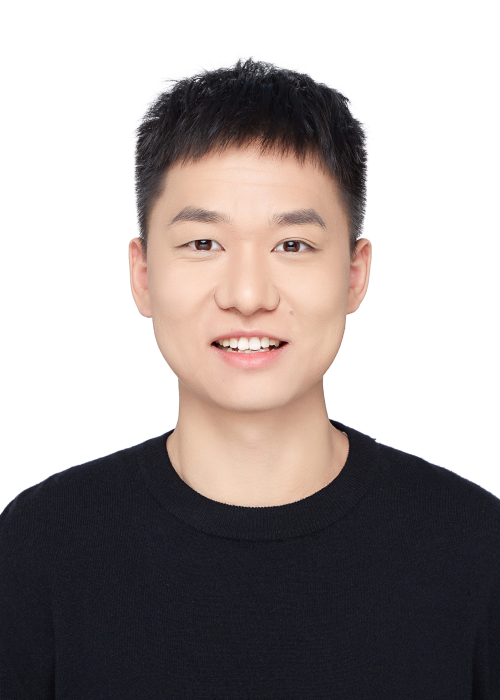
Xieyuanli Chen is an Associate Professor at the National University of Defense Technology (NUDT), China. He holds a Dr.-Ing. (summa cum laude) from the University of Bonn (2022), a Master's in Robotics from NUDT (2017), and a Bachelor's in Electrical Engineering from Hunan University (2015). His research focuses on robot learning, perception, and navigation, with an emphasis on LiDAR-based SLAM, autonomous systems, and semantic perception. Education: PhD: University of Bonn, 2018-2022 (supervised by Prof. Cyrill Stachniss) Master's: NUDT, 2015-2017 Bachelor's: Hunan University, 2011-2015 Research interests include robotics, autonomous systems, computer vision, and LiDAR perception. He has authored over 90 papers in top venues like TRO, RSS, ICRA, and CVPR. He serves as an Associate Editor for IEEE RA-L, ICRA, and IROS, and is a member of the RoboCup Rescue Robot League Technical Committee. Awards include the RSS Pioneer Award (2021), Best-in-Class RoboCup awards, and recognition as a World’s Top 2% Scientist (2024). His work spans LiDAR localization, moving object segmentation, and efficient semantic mapping. He advises students in robotics and autonomous systems. Labs/Teams: Active in the PRBonn group (University of Bonn) and leads research at NUDT on LiDAR-based perception systems.
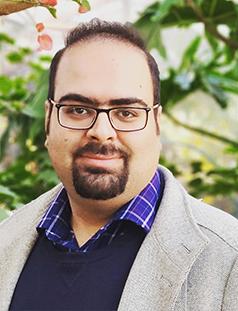
Paul Wilson serves as the Grainger Professor of Nuclear Engineering and Chair of the Department of Nuclear Engineering & Engineering Physics at the University of Wisconsin-Madison. His research develops computational tools for modeling nuclear energy systems with applications in radiation shielding, waste management, non-proliferation, and energy policy. Education: PhD in Nuclear Engineering, University of Wisconsin-Madison (1999) Dr.-Ing in Mechanical Engineering, Technical University of Karlsruhe (1998) MS in Nuclear Engineering, University of Wisconsin-Madison (1995) B.A.Sc. in Engineering Science (Nuclear Power option), University of Toronto (1992) Wilson's research spans computational nuclear engineering with emphasis on Monte Carlo methods, nuclear fuel cycles, and proliferation analysis. His Computational Nuclear Engineering Research Group (CNERG) develops simulation tools for radiation transport, waste transmutation, and fusion systems. Key projects include the Infinity Two fusion pilot plant design and Cyclus nuclear fuel cycle simulator. Recent publications reveal strong focus on fusion energy systems (particularly stellarator-based designs like Infinity Two), machine learning applications in nuclear security, and advanced neutronics modeling. His work bridges computational methods with real-world nuclear challenges including waste management and non-proliferation. Scientific awards: Fellow of the American Nuclear Society (2023) American Nuclear Society Young Member Advancement Award (2019) American Nuclear Society Arthur Holly Compton Award (2018) Grainger Professor of Nuclear Engineering (2016) American Nuclear Society Presidential Citation (1996) Wilson advises graduate students through thesis research courses (N E 790/890/990) and has secured significant funding from the U.S. Department of Energy. His consultancy roles include work with CEA Saclay, Karlsruhe Institute of Technology, and the Blue Ribbon Commission on America’s Nuclear Energy Future. He previously served on the Generation IV Technology Roadmap Committee (2001-2003). He leads the Computational Nuclear Engineering Research Group (CNERG), which develops open-source tools including PyNE and Cyclus. The group's work spans fusion pilot plant design, nuclear security applications, and fuel cycle simulation for next-generation nuclear systems.
Dr. Mohsen Yoosefzadeh Najafabadi is an Assistant Professor in the Department of Plant Agriculture at the University of Guelph, Ontario Agricultural College. He holds a PhD in Plant Breeding from the University of Guelph (2022), following M.Sc. and B.Sc. degrees from the University of Tehran. His research focuses on dry bean breeding, computational biology, and integrating omics technologies to enhance crop resilience and productivity. Key areas include developing stress-tolerant dry bean varieties, leveraging remote sensing for trait prediction, and optimizing genomic selection methods. He leads the Dry Bean Breeding & Computational Biology Program and has contributed to over 30 peer-reviewed publications since 2017. Education : PhD, Plant Breeding, University of Guelph (2022) M.Sc., University of Tehran B.Sc., University of Tehran Research interests emphasize computational tools development (e.g., AllInOne preprocessing framework), omics-based selection strategies, and non-Mendelian heredity mechanisms. His lab combines machine learning with field phenotyping to address agricultural challenges such as disease resistance and climate adaptation. Collaborative projects include soybean cold stress analysis and cannabinoid profile prediction in cannabis. Publications span genomic approaches to crop improvement, remote sensing applications, and transcriptomic studies. He teaches courses in plant breeding methodologies and actively engages in technology transfer initiatives. Lab activities include developing high-yielding dry bean cultivars resistant to biotic/abiotic stresses and advancing data-driven pipelines for crop breeding. Future work aims to synergize AI with multi-omics data to enhance crop resilience in diverse environments.
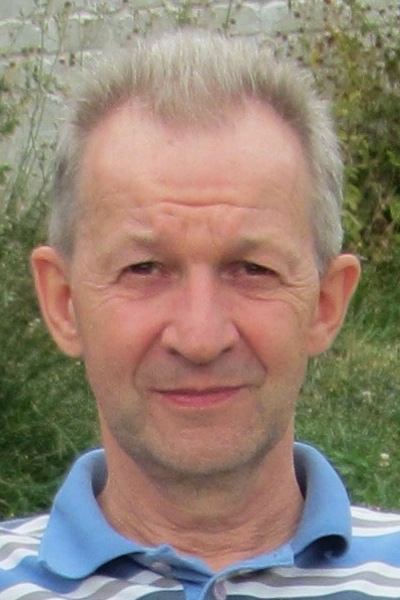
Vincent John Mooney III is an Associate Professor at the School of Electrical and Computer Engineering and an Adjunct Associate Professor at the School of Computer Science, Georgia Institute of Technology. His research focuses on Hardware-Software Co-Design , Cyber Physical Systems Security , and Low-Power Architectures . He has authored numerous publications on topics such as probabilistic computing, hardware security, and embedded systems design. Dr. Mooney has received prestigious awards including the NSF Career Award , National Semiconductor Fellowship , and ARCS Best Paper Award . Education: Ph.D. in Electrical Engineering (1998), Stanford University MA in Philosophy (1997), Stanford University MS in Electrical Engineering (1994), Stanford University Certificate of Graduate Study (1992), University of Navarra BS in Electrical Engineering and Computer Science (1991), Yale University Research interests span hardware/software codesign, cybersecurity in embedded systems, and synthesis of reconfigurable architectures. His recent work includes Gridtrust for decentralized supply chain cybersecurity and COPPER for computation obfuscation. Dr. Mooney has supervised numerous Ph.D. students and held leadership roles in conferences such as HOST and CASES . Scientific awards include NSF Career Award (2000) National Semiconductor Fellowship (1997-1998) AT&T Engineering Scholarship Program (1987-1991) NCAA Postgraduate Scholar (1991) Senior Member, IEEE (2003) ARCS 2012 Best Paper Award Advising and grants highlight his mentorship of students like Jun Cheol Park and Yudong Tan , along with grants such as the U.S. Air Force Summer Faculty Fellowship (2007). He leads the Hardware/Software Codesign for Security Group at Georgia Tech and has contributed to advancements in real-time operating systems and deadlock detection algorithms.
Nathan van de Wouw is a Full Professor at the Mechanical Engineering Department of Eindhoven University of Technology (TU/e), affiliated with ICMS, EAISI Mobility, EAISI High Tech Systems, EAISI Foundational, and EIRES. He also holds an adjunct Full Professor position at the University of Minnesota and a part-time Full Professorship at Delft University of Technology. His research focuses on dynamics and control of mechanical systems, including mechatronics, robotics, smart manufacturing, energy systems, and networked control. He has supervised over 150 students and led numerous projects funded by industry partners like ASML, Philips, and Shell. Education: M.Sc. (with Honors) in Mechanical Engineering, TU/e (1994) Ph.D. in Mechanical Engineering, TU/e (1999) Research Interests: Nonlinear systems and control Model reduction and complexity analysis Data-driven and networked control strategies Applications in high-tech systems, autonomous vehicles, and energy systems Awards: IEEE Control Systems Technology Award (2015) for variable-gain control in motion systems Grants & Projects: Lead projects on mechatronic design, lithography systems, and thermodynamic optimization Collaborations with TNO, ASML, and industrial partners Labs & Teams: Member of TU/e’s Dynamics and Control group Affiliated with EAISI (Eindhoven AI Systems Institute)
Leila Deravi is an Associate Professor of Chemistry and Chemical Biology at Northeastern University's College of Science, affiliated with the Barnett Institute of Chemical and Biological Analysis and the Institute for Chemical Imaging of Living Systems. Her research focuses on biomaterials design, particularly protein-based systems inspired by biological mechanisms in cephalopods and extracellular matrices. She leads the Biomaterials Design Group, which explores applications ranging from tissue engineering to wearable electronics. Her work integrates bioanalytical chemistry, materials science, and design, with projects including cephalopod pigment studies for sunscreen development and bionic material fabrication using additive manufacturing. She has secured significant grants, including an NSF award and U.S. Army funding, and co-founded Seaspire Skincare, leveraging marine biotechnology. Key Research Themes: Bio-inspired materials, cephalopod pigmentation, biomedical textiles, and sustainable cosmetics Notable Collaborations: Cross-disciplinary projects with engineering, biology, and entrepreneurship Innovation: Development of UV-sensing devices and eco-friendly skincare products Deravi's educational contributions include innovative chemistry courses where students design cosmetics, bridging theory and practical application. Her lab's work frequently appears in media discussions on skincare trends and environmental chemistry advancements.
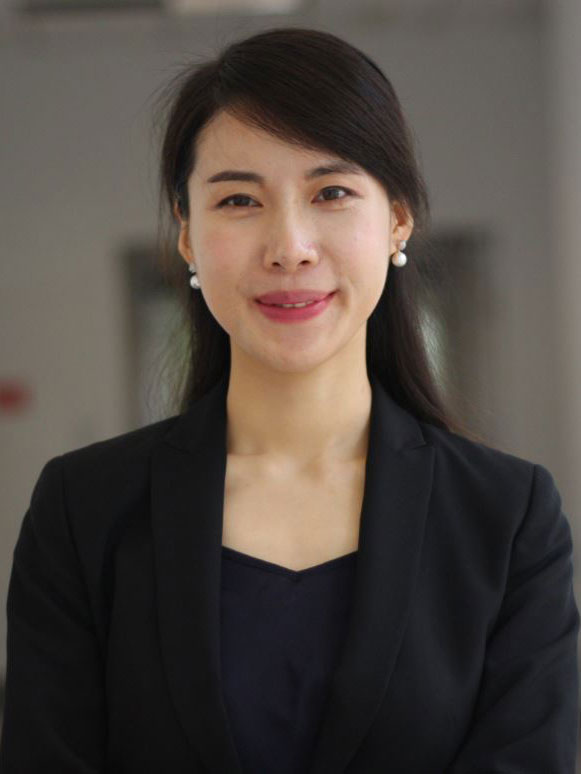
Dr. Hongli (Julie) Zhu is an Associate Professor in the Department of Mechanical and Industrial Engineering at Northeastern University's College of Engineering. Her research focuses on sustainable energy storage, multifunctional materials, and advanced manufacturing, with emphasis on developing environmentally friendly biomass-derived materials, all solid-state batteries, and flow batteries. She leads the ZHU Lab at Northeastern University, which is dedicated to creating safer, cheaper, and higher performance energy storage solutions while exploring multifunctional materials derived from nature. Dr. Zhu received her PhD from South China University of Technology and Western Michigan University (2004-2009). She conducted postdoctoral research at KTH Royal Institute of Technology in Sweden (2009-2011), focusing on biodegradable and renewable biomaterials from natural wood, followed by additional postdoctoral work at the University of Maryland (2012-2015), where she researched nanocellulose and energy storage. Dr. Zhu's research spans multiple disciplines at the intersection of materials science, energy storage, and sustainable manufacturing. Her work addresses critical challenges in energy storage technology, including developing all solid-state batteries, flow batteries, and high energy density battery systems. She has pioneered research in sustainable biomass-derived materials, particularly investigating cellulose, hemicellulose, and lignin for applications in bendable, implantable, and biocompatible electronics. Her lab also focuses on advanced manufacturing techniques, including high-speed roll-to-roll processing for emerging advanced materials and devices. Analysis of Dr. Zhu's publication record reveals a strong focus on next-generation battery technologies, particularly solid-state systems. Her research demonstrates significant contributions to understanding and improving lithium dendrite suppression, electrode architecture optimization, and interface stabilization in solid-state batteries. She has also made substantial advances in sustainable materials derived from natural resources, developing applications for cellulose nanostructured fibers, paper, and aerogel/hydrogel systems. MRS Communications Early Career Distinguished Presenters and JMR Distinguished Invited Speakers (2024) Selected in Stanford University List of Top 2% Scientists Worldwide (2021-2024) College of Engineering Faculty Fellow (2023) Soren Buus Outstanding Research Award (2022) Women in Materials Science, Advanced Materials (2021 and 2022) Women Scientists at the Forefront of Energy Research, ACS Energy Letters (2020) Innovator of the Year 2013, Maryland Jakob Wallenberg Scholarship, Sweden Dr. Zhu has secured significant research funding from various sources, including the National Science Foundation and Department of Energy. Her current projects include "Uncovering the mechano-electro-chemo mechanism of fresh Li in sulfide based all solid-state batteries through operando studies" (NSF), "Enabling Advanced Electrode Architecture through Printing Technique" (DOE), and "Engineering the Metal Sulfide Interface in All Solid State Batteries through Operando Study" (NSF). She collaborates with industry partners including Rogers Corporation and has developed patented technologies related to sustainable materials and energy storage. Dr. Zhu serves as Codirector of Advanced & Intelligent Manufacturing, Editor of Progress in Materials Science, and on the Editorial Advisory Board of Chemical Society Reviews. The ZHU Lab at Northeastern University is a highly interdisciplinary research group that bridges scales from the nanoscopic to macroscopic and system level. The lab's work has led to numerous patents, including "Natural fiber composites as a low-cost plastic alternative" and "Fire-retardant Nanocellulose Aerogel, and Methods of Preparation and Uses Thereof." The group focuses on making energy storage safer, cheaper, and higher performing while exploring multifunctional materials derived from nature, with particular emphasis on applying high-speed roll-to-roll manufacturing to emerging advanced materials and devices.
Taskin Padir is a Professor in the Department of Electrical and Computer Engineering at Northeastern University and concurrently serves as an Amazon Scholar. He holds a PhD and MS from Purdue University and a BS from Middle East Technical University. His research focuses on experiential robotics, human-robot teaming, and embodied AI, with leadership roles in the Robotics and Intelligent Vehicles Research Laboratory (RIVeR Lab) and the Institute for Experiential Robotics. Padir has led projects for DARPA, NASA, and industry partners, advancing autonomous systems for extreme environments and human-robot collaboration. Education: PhD, Electrical and Computer Engineering, Purdue University (2004) MS, Electrical and Computer Engineering, Purdue University (1997) BS, Electrical and Electronic Engineering, Middle East Technical University (1993) Research Interests: Shared autonomy and human-in-the-loop robotics Embodied artificial intelligence Human-robot teaming in extreme environments (e.g., space, disaster zones) Collaborative robotics for industrial applications His work bridges robotics, AI, and real-world challenges, with recent projects addressing seafood processing automation, robotic navigation in unstructured terrains, and spectroscopy-based environmental monitoring. Awards: Recipient of the 2024 Faculty Research Team Award, 2023 Impact Award, and 2022 Amazon Scholar distinction. His research has been funded by NSF, DARPA, NASA, and industry collaborators like Amazon Robotics and Intel. Labs: Director of the RIVeR Lab and Institute for Experiential Robotics, fostering interdisciplinary research in autonomous systems and intelligent vehicles. Current projects include CRISP (Co-worker Robots for Seafood Processing) and PROSPECT (robotic spectroscopy tools).
Niels Quack is an Associate Professor in Micro- and Nanosystems at The University of Sydney's School of Aerospace, Mechanical and Mechatronic Engineering. He joined the university in 2022 after serving as an SNSF Assistant Professor at EPFL (Switzerland). His roles include Academic Director of the Research and Prototype Foundry and membership in the University of Sydney Nano Institute. He holds a Dr.Sc. from ETH Zurich and an M.Sc. from EPFL. His research focuses on micro- and nanosystems engineering, integrating mechanics and photonics at the microscale. Key applications include fiber-optical communication, quantum sensing, and integrated photonics using diamond and silicon materials. Quack has pioneered silicon photonic MEMS and diamond micro-optics, with over 100 publications in journals like ACS Photonics , Optics Letters , and Nanoscale . He leads international collaborations with institutions like Ghent University (Belgium) and EPFL (Switzerland), and serves on editorial boards for IEEE Journal of Microelectromechanical Systems and SPIE Journal of Optical Microsystems . His awards include the Optica Senior Member distinction (2023) and Sydney Research Accelerator Prize (2023). Quack supervises PhD and Master's students in advanced micro- and nanosystems design, offering projects in programmable photonics and diamond-based biosensors. He actively recruits postdoctoral researchers and advises on funded projects like 'Nurturing Commercialization Opportunities for Multipoint Fiber-Optical Pressure Sensors.' His lab develops cutting-edge technologies such as vacuum-sealed silicon photonic MEMS and diamond nanopillar arrays, advancing applications in quantum sensing and optical communication systems.
Steven Devleminck is an Associate Professor in the Department of Computer Science at KU Leuven's Faculty of Engineering Technology, concurrently serving as coordinator of the School of Arts (Associated Faculty) in Brussels. His dual appointment bridges engineering and arts through the Human-Computer Interaction (HCI) group at Group T Leuven Campus and Unit Art & Technology in Brussels, with active membership in DigiSoc – KU Leuven Digital Society Institute. His research centers on human-centered computing and speculative design methodologies , with core expertise in tangible interaction for emotion regulation and multispecies futures. Key themes include biofuturing as co-creative response to climate crises, squeeze-based interfaces for workplace stress, and artistic AI collaborations. His work uniquely integrates computer science with choreography, film studies, and anthropology through projects like “Youth TikTok production as public pedagogy” and “Imagining the Post-Anthropocene in BioFutures Living Lab”. Analysis of recent publications reveals three dominant trajectories: (1) Advancement of squeeze interaction techniques for affective computing, (2) Development of biofuturing frameworks for multispecies speculation, and (3) Critical examinations of AI's role in artistic mediumship. Cross-cutting themes include post-anthropocentric design, climate-responsive technologies, and decolonial approaches to digital pedagogy. Devleminck actively mentors doctoral candidates including Ula Sickle (choreographic exhibitions) and J. Verbesselt (cinema studies), while leading major funded projects such as: Living Corpora (2025-2029): Pioneering human-AI collaboration in digital humanities as Co-promotor Experiential Futuring (2022-2026): Co-creative methodology for social media outage response as Co-promotor Deradicalizing the City (2021-2025): Urban intervention research as Promotor He serves on the Computer Science Department Council and Doctoral Committee for the Associated Faculty of Arts. His laboratory ecosystem spans the HCI Group T Leuven Campus for technical development, Brussels-based Unit Art & Technology for artistic integration, and BioFutures Living Lab for participatory multispecies experimentation. This tripartite structure enables transdisciplinary work connecting squeeze sensor engineering with climate futures speculation and museum interface design.
Pierre Flener is a Professor at the Department of Information Technology, Division of Computing Science at Uppsala University. He leads the Optimisation Group and is a member of the Centre for Interdisciplinary Mathematics. His work focuses on constraint programming and discrete optimization, addressing complex scheduling, routing, and resource allocation challenges. Flener is an Officer of the Order of Merit of Luxembourg and co-founder of NordConsNet, the Nordic Network for Constraint Programming researchers. Research Interests: Flener’s research spans constraint programming, combinatorial optimization, and algorithm design. He develops models and tools for automated decision-making in domains like air traffic management, sensor networks, and industrial robotics. His work emphasizes practical applications, leveraging constraint satisfaction techniques to solve real-world puzzles such as vehicle routing and personnel allocation. Key Contributions: Flener has authored over 100 publications on constraint solving, symmetry breaking, and CP-based approaches to industrial problems. Notable projects include airspace sectorization optimization, energy-efficient sensor networks, and financial portfolio design. He has led initiatives like Auto-Tabling for MiniZinc and collaborated on CP applications in bioinformatics and image processing. Labs & Teams: He heads the Optimisation Group at Uppsala, fostering research in CP and its applications. NordConsNet, co-founded by Flener, connects Nordic researchers and practitioners in constraint technology.
Dr. Oscar Meruvia-Pastor is a faculty member in the Department of Computer Science at Memorial University of Newfoundland, within the Faculty of Science. He holds a B.Sc. from ITESM-Monterrey, Mexico, an M.Sc. from the University of Alberta, and a Ph.D. from Otto-von-Guericke Universität Magdeburg, Germany. His research focuses on interactive 3D graphics, non-photorealistic rendering, and biomedical visualization, with applications in telepresence systems, augmented reality (AR), and virtual reality (VR). He has developed tools like OMARC for respiratory condition training and GeNET for gene co-expression network analysis. Dr. Meruvia-Pastor has supervised numerous graduate students and contributed to over 50 publications. His work includes evaluating stereo correspondence methods in AR, robot arm manipulation via depth sensors, and smartphone integration in immersive VR. He has been recognized with awards such as the Best HCI Poster at Graphics Interface 2014 and a semi-finalist poster at SIGGRAPH 2015. He teaches courses in computer science, including computer graphics, multimedia development, and introductory science modules. His research lab focuses on 3D telepresence, medical visualization, and human-centered VR/AR solutions. His academic contributions span software tools for medical imaging analysis, interactive visualization systems, and educational technologies. He actively collaborates with health professionals to advance telemedicine and remote procedural training through AR platforms. His work bridges computer graphics with real-world applications in healthcare, education, and environmental advocacy.
Dr. Edoardo Bertone is a Senior Lecturer at Griffith University's School of Engineering and Built Environment - Architecture and Design. He holds a PhD in Water Resources Engineering from Griffith University and Bachelor/Master degrees in Civil Engineering from the Polytechnic University of Turin. His research focuses on data-driven modeling, Bayesian Networks, and System Dynamics applied to water resources management, climate change adaptation, and the water-energy nexus. He is affiliated with Griffith's Cities Research Institute and Australian Rivers Institute, collaborating on projects with water utilities, governments, and private entities. Dr. Bertone has received awards such as the 2024 PVC Science Excellence in Teaching and the JSPS Fellowship (2022). He supervises doctoral and master's students in areas like water quality management and climate change impacts. Education: PhD in Engineering (Griffith University, 2015); MEng and BEng in Civil Engineering (Polytechnic University of Turin, 2009-2011). Research Interests: Water quality modeling, drinking water optimization, data-driven prediction, climate change adaptation, and sustainable development goals. He leads over 25 funded research projects, including initiatives on reservoir water quality management in Thailand, real-time nutrient monitoring, and cyanobacteria bloom modeling. Dr. Bertone’s work integrates advanced sensors, machine learning, and Bayesian networks to address environmental challenges. Awards: Listing includes PVC Excellence Awards (2024, 2017), JSPS Fellowship, and recognition as a Rising Star in Queensland Science (2015). Grants & Supervision: Principal supervisor for 10+ doctoral candidates and collaborator on projects funded by Seqwater, CSIRO, and the Ian Potter Foundation. Key grants include $745k for biofertilizer combatting eutrophication and $269k for coagulation optimization models. Dr. Bertone’s contributions extend to urban sustainability, co-editing the book *SeaCities: Urban Tactics for Sea-Level Rise* and developing frameworks for integrating SDGs into architectural education.
Theodora Varvarigou is a Professor in the Department of Electrical and Computer Engineering at the National Technical University of Athens (NTUA). She holds a B.Eng. from NTUA and M.Eng. and Ph.D. degrees from Stanford University. Her career includes research at AT&T Bell Labs and roles at the Technical University of Crete. From 2008-2012, she served as director of NTUA's 'Technoeconomic Systems' postgraduate program. Her research focuses on Cloud Computing, Multimedia Content Processing, Social Networking Technologies, and emerging areas like blockchain, edge computing, and cybersecurity. She has published over 200 papers and led numerous European research projects, emphasizing scalable systems, data management, and smart infrastructure applications. Her work spans technical innovations such as intrusion detection systems, edge resource optimization, and blockchain-based solutions for IoT, healthcare, and smart cities. Recent publications highlight advancements in AI-driven resource allocation, privacy-preserving blockchain designs, and predictive analytics for edge computing environments. Professor Varvarigou has contributed to interdisciplinary initiatives, including cohort data harmonization in biomedical research and social media analytics for urban planning. Her teaching includes courses on digital systems, network programming, and fault-tolerant systems.
Amir Asif is a Professor at the Lassonde School of Engineering, York University, and concurrently serves as Vice President, Research and Innovation. His academic leadership roles include Dean of the Gina Cody School of Engineering and Computer Science at Concordia University (2014-2020). He specializes in signal processing, communications, and their applications in healthcare, power grids, and distributed systems. Asif holds a PhD from Carnegie Mellon University and a Harvard certification in executive leadership. Education: PhD, Electrical and Computer Engineering, Carnegie Mellon University (1996) MS, Electrical and Computer Engineering, Carnegie Mellon University (1993) BSc, University of Engineering and Technology Lahore (1990) Harvard Certificate in Leadership for Senior Executives (2018) Research Interests: Asif’s work spans signal processing for medical imaging (e.g., ultrasound elastography), smart grid optimization, and cybersecurity in power systems. His recent publications address hydrogen energy systems, EMG-based gesture recognition, and resilient control frameworks against cyberattacks. Grants & Leadership: He leads NSERC-funded projects on federated learning and resilient algorithms. He chairs the Ontario Council of University Research and serves on TRIUMF Innovations and the Richmond Hill Board of Trade. His grants include SSHRC funding for equity initiatives and NSERC support for distributed signal processing. Teaching & Mentorship: Asif has supervised over a dozen graduate students and taught courses like Digital Communications and Statistical Signal Processing Theory. Notable advisees include Arash Mohammadi (PhD, 2014) and Nick Sajadi (PhD, 2017).