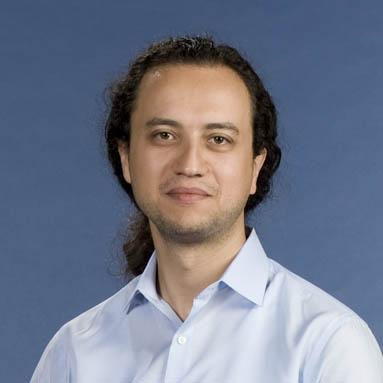
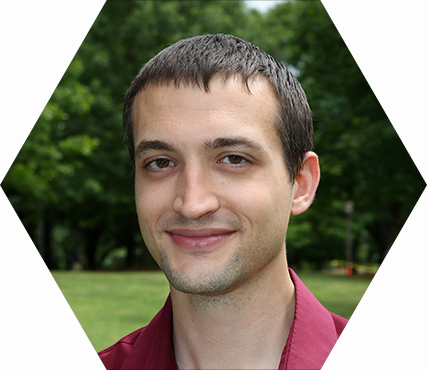
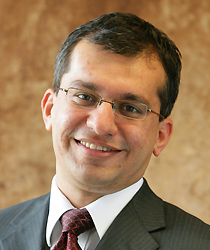
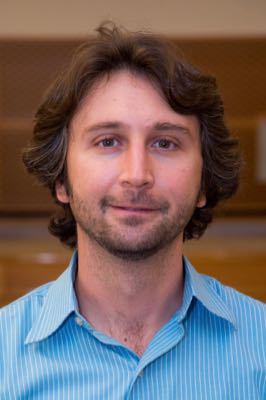
Eileen Martin is an Associate Professor in the Department of Geophysics and Applied Math and Statistics at the Colorado School of Mines. Her research focuses on near-surface geophysics, environmental monitoring, and the application of distributed acoustic sensing (DAS) technology. She leads projects involving fiber-optic sensing for permafrost degradation, urban seismic monitoring, and mining safety. Martin has developed open-source tools like DASCore and contributes to scalable computational methods for geophysical data analysis. Education: PhD (2018) in Computational and Mathematical Engineering from Stanford University; MS (2017) in Geophysics from Stanford; BS (2012) in Mathematics and Physics from UT Austin. Research interests include fiber-optic sensing systems, seismic imaging, data-intensive computing, and applications in environmental science. Her work bridges geophysics with computational methods, emphasizing real-world deployment in challenging environments like arctic permafrost sites and underground mines. Her recent work explores DAS for glacier monitoring, mine seismicity detection, and urban infrastructure assessment. Collaborative projects include Arctic permafrost monitoring and developing public datasets for geoscience research (PubDAS repository). Grants and lab activities include NSF CAREER funding for scalable computational seismology and partnerships with industry on fiber-optic monitoring solutions.
Spyridon Pavlidis is an Associate Professor in the Department of Electrical and Computer Engineering at North Carolina State University, leading the Laboratory for Electronics in Advanced Devices and Systems (NCSU LEADS). He is affiliated with the ME Commons Hub (CLAWS), PowerAmerica, FREEDM, and ASSIST Research Centers. His research focuses on semiconductor devices, wide bandgap materials (GaN/AlN), and their applications in power electronics, sensing, and bioelectronics. Pavlidis holds a PhD from Georgia Tech (2016) and a Master's from Imperial College London (2010). Education: Ph.D. in Electrical and Computer Engineering, Georgia Institute of Technology (2016) M.Eng in Electrical and Electronic Engineering, Imperial College London (2010) His expertise spans power electronics packaging, microwave technologies, and biosensing. Recent work includes developing GaN and AlN-based devices for high-power and high-frequency applications. Pavlidis has received prestigious awards, including the 2022 NSF CAREER Award and the 2022 Bennett Faculty Fellowship. He actively contributes to IEEE committees and technical program reviews. His funded research includes defect-state analysis in GaN diodes and bioelectronic sensors for medical applications. Pavlidis collaborates across interdisciplinary teams, advancing next-generation semiconductor technologies and wearable biosensors.
Cagdas Onal is an Associate Professor of Robotics Engineering at Worcester Polytechnic Institute (WPI). He holds a BS and MS from Sabanci University (2003, 2005) and a PhD in Robotics from Carnegie Mellon University (2009). His research focuses on soft robotics, bio-inspired systems, and control theory , emphasizing the development of flexible robotic components for healthcare, industry, and sustainable applications. He leads the Soft Robotics Lab and the Future of Robots in the Workplace (FORW-RD) initiative, advancing human-centric robotics solutions. Research interests include designing bio-inspired soft robots (e.g., origami-inspired snake robots), developing modular actuation systems with embedded sensors, and exploring applications in medical devices and assistive technology. His work aligns with UN Sustainable Development Goals, particularly in healthcare access (SDG 3), quality education (SDG 4), and innovation (SDG 9). Recent projects include origami-based robotic arms for wheelchair users , self-contained underwater robots, and haptic interfaces for teleoperation. His lab collaborates on国家级 grants like the NSF-funded NRT Program and has secured patents for actuator designs (e.g., Hydro Muscle). Labs/Teams: Soft Robotics Lab, FORW-RD, NRT Program. Notable media coverage includes Worcester Telegram & Gazette and Spectrum News for innovations in human-friendly robotics.
Nelson Sepulveda Alancastro is a Professor and Interim Chairperson of Electrical and Computer Engineering (ECE) at Michigan State University's College of Engineering, with a joint appointment in Mechanical Engineering (ME). He holds a Ph.D. (2005) and M.S. (2002) from Michigan State University, and a B.S. (2001) from the University of Puerto Rico-Mayaguez. His research integrates micro/nano sensors, smart materials, and energy harvesting, with applications in biomedical devices, environmental monitoring, and MEMS. Research Focus: Dr. Sepulveda's work centers on ferroelectret nanogenerators, vanadium dioxide-based reconfigurable devices, flexible sensors, and machine learning for sensor data analysis. His lab develops self-powered systems for biomechanical monitoring, invasive species detection, and concussion prediction. Awards and Honors: MSU Withrow Teaching Excellence Award (2018) MSU Withrow Diversity Excellence Award (2018) Michigan State University Teacher-Scholar Award (2015) NSF Career Award (2010-2015) IEEE Senior Member (2011) Students and Team: He advises Ph.D. candidates including Ian González-Afanador, Gerardo Morales-Torres, and Henry Dsouza. His Advanced Microsystems Group (AMG) focuses on interdisciplinary projects spanning materials science, MEMS, and embedded systems.
Cihan Tepedelenlioglu is an Associate Professor at Arizona State University's School of Electrical, Computer and Energy Engineering. His work bridges wireless communications, statistical signal processing, and renewable energy systems, with a focus on photovoltaic array monitoring, fault detection, and optimization. PhD, MS, and BS in Electrical Engineering from University of Minnesota, University of Virginia, and Florida Institute of Technology 2001 NSF CAREER Award recipient Research interests span wireless communications , graph signal processing , stochastic optimization , and machine learning applications to solar energy systems . Key projects include quantum machine learning for PV topology optimization, consensus algorithms for distributed networks, and real-time fault detection using neural networks. Recent articles emphasize machine learning in energy systems (2023-2025), with 12 publications on photovoltaic monitoring and 3 on consensus algorithms. Earlier work focused on channel estimation in OFDM systems and fading models in wireless communications. Scientific awards : NSF CAREER Award (2001) Major grants include NSF funding for networked solar array management (2013-2016), nonlinear distributed consensus (2013-2016), and statistical processing of solar data (2009-2012). Teaching roles include EEE 350 Random Signal Analysis and graduate research supervision in signal processing and wireless communications. Collaborates extensively with Andreas Spanias, Mahesh Banavar, and other researchers on cyber-physical systems for energy applications.
Aaron Young is an Associate Professor in the Woodruff School of Mechanical Engineering at Georgia Institute of Technology and a program faculty member in the Biomedical Engineering School. He serves as Director of the Exoskeleton and Prosthetic Intelligent Controls (EPIC) Lab, focusing on robotic human augmentation through advanced control systems for prosthetics and exoskeletons. Education: Postdoctoral Fellow, University of Michigan (2014-2016) Ph.D., Northwestern University (2014) M.S., Northwestern University (2011) B.S., Purdue University (2009) Dr. Young's research addresses clinically viable control systems for wearable robotic devices, emphasizing intent recognition , EMG signal processing , and machine learning integration. His work targets mobility impairments from stroke, amputation, cerebral palsy, and neurological injuries, aiming to reduce metabolic costs, restore natural biomechanics, and enhance community ambulation. Key innovations include data-driven control frameworks , biomechanical terrain adaptation , and anthropometry-based personalization . His recent publications highlight advancements in deep learning for real-time biomechanics , EMG-informed joint estimation , and adaptive assistance systems . The EPIC Lab's facilities feature a terrain park with force plates , motion capture systems , and HumoTech simulation platforms for device testing. Scientific Awards: New Faces of Engineering (IEEE USA, 2017) Military Health System Team Award (2015) NSF Graduate Fellowship (2010) NDSEG Fellowship (2010) IEEE EMBC 3rd Place (2013) Projects include NSF-funded hip exoskeletons for stroke survivors, DoD-powered prostheses for amputees, and Pediatric knee exoskeletons for cerebral palsy. The lab cultivates interdisciplinary expertise in robotics , biomedical engineering , and human-machine interaction .
Vincent Rotello is a University Distinguished Professor of Chemistry at the University of Massachusetts Amherst. He holds multiple affiliations including Faculty in the Graduate Program in Molecular & Cellular Biology, the Center for Bioactive Delivery, the Models to Medicine program, the Center for Personalized Health Monitoring, and the Materials Science and Engineering Interdisciplinary Graduate Program at the Institute for Applied Life Sciences. Dr. Rotello received his B.S. in Chemistry (Honors) from Illinois Institute of Technology in 1985, followed by an M. Phil and Ph.D. in Chemistry from Yale University in 1987 and 1990, respectively. He completed an NSF Postdoctoral Fellowship at the Massachusetts Institute of Technology from 1990-1993 before joining the faculty at UMass Amherst. Professor Rotello's research focuses on supramolecular chemistry, particularly the study and application of non-covalent interactions including hydrogen bonding and aromatic stacking. His work spans nanotechnology, bionanotechnology, bioorthogonal chemistry, drug delivery, and antimicrobial development. His laboratory explores how these molecular recognition concepts can address essential questions in biology, biomedicine, and material chemistry, with particular emphasis on using synthetic organic chemistry to engineer interfaces between synthetic and biological worlds. The group has published over 650 peer-reviewed papers to date. His recent publications reveal a strong trend toward bioorthogonal catalysis, particularly 'nanozymes' and 'polyzymes' - nanomaterial scaffolds incorporating transition metal catalysts for localized drug and imaging agent generation. His research increasingly addresses biomedical applications including cancer treatment, bacterial infection control, and diagnostic development, with significant focus on antimicrobial applications and biofilm eradication. Arthur C. Cope Scholar Award (2023) Highly Cited Researcher by Clarivate (2014, 2015, 2018-2023) Fellow of the American Association for the Advancement of Science Fellow of the Royal Society of Chemistry (UK) NSF CAREER award Cottrell Scholar award Camille Dreyfus Teacher-Scholar Sloan Fellowship Professor Rotello has mentored numerous graduate students and postdoctoral fellows, with recent PhD graduates including Dr. Aarohi Gupta and Dr. Aritra Nath Chattopadhyay. His research group maintains active collaborations across multiple disciplines and has secured significant funding for their work in nanotechnology and bionanotechnology. The group has published over 650 peer-reviewed papers, demonstrating consistent productivity and impact in their field. The Rotello Lab operates within the Lederle Graduate Research Tower at UMass Amherst, with office in room 379 and laboratory space in room 320. The group consists of graduate students, postdoctoral fellows, and visiting scholars from around the world, working collaboratively on projects spanning antimicrobials, bioorthogonal chemistry, drug delivery, and sensing technologies. The lab has documented numerous visiting scholars from institutions across Europe, Asia, and North America, indicating strong international collaborations.
Ian Sellers is Professor in Electrical Engineering at University at Buffalo's School of Engineering and Applied Sciences. He specializes in next-generation solar cells and materials for space photovoltaics, with appointments including Marie Curie Fellow (2004-2006) and Visiting Academic Fellow at Oxford (2009-2012). His research examines: Novel photovoltaic materials and architectures Ultra-low power electronic systems MEMS-based sensors and energy harvesters Beyond-CMOS computing technologies Recent publications demonstrate advances in ultra-low power sensor design (MEMS accelerometers), energy-efficient computing (MESO technology), and miniaturized imaging systems. The work shows consistent focus on optimizing power efficiency through innovations in circuit design, materials integration, and system architecture. Before joining UB, Sellers held positions as Presidential Professor at University of Oklahoma and Senior Research Scientist at Sharp Labs of Europe. His international collaborations include extended research stays in France and the UK.
Shimeng Yu is a full professor at the Georgia Institute of Technology's School of Electrical and Computer Engineering, holding the Dean’s Professorship. He earned his B.S. from Peking University (2009) and M.S./Ph.D. from Stanford University (2011/2013). His research focuses on semiconductor devices, non-volatile memories, 3D integration, and AI hardware accelerators. Yu leads SRC/DARPA JUMP 2.0 centers on memory/storage and 3D integration, with over 400 publications and 30,000+ citations (H-index 82). He serves on flagship conference committees (e.g., IEDM, VLSI) and editorial boards (IEEE EDL, JETCAS). Education: B.S., Microelectronics, Peking University (2009) M.S./Ph.D., Electrical Engineering, Stanford University (2011/2013) Research Themes: Emerging non-volatile memories for AI Monolithic 3D integration Energy-efficient computing systems His work spans device fabrication, circuit design, and system-level co-optimization. Recent projects are funded by NSF, DARPA, DOE, and industry partners (TSMC, Intel, Samsung), totaling >$17M. His lab, located at the Pettit Microelectronics Research Center, develops prototypes with cleanroom access. Awards: IEEE Fellow (2024) ACM/IEEE DAC Under-40 Innovators Award (2020) NSF CAREER Award (2016) Multiple editorship roles and distinguished lecturer appointments (IEEE EDS/CASS) Grants & Funding: Lead of two SRC/DARPA JUMP 2.0 centers Total research funding exceeds $17M
Hjalti H. Sigmarsson is an Assistant Professor at the University of Oklahoma's School of Electrical and Computer Engineering within the Gallogly College of Engineering. His research focuses on reconfigurable RF/microwave hardware, spectral management for cognitive radios, heterogeneous integration packaging, and nanomaterial-based device development. Education : B.S.E.C.E., University of Iceland (2003) M.S.E.C.E., Purdue University (2005) Ph.D., Electrical and Computer Engineering, Purdue University (2010) Research Interests : His work advances agile communication systems through tunable microwave components and explores novel packaging techniques for heterogeneous material integration. His nanomaterial research targets next-generation RF devices, while his radar systems development contributes to meteorological observations and mobile phased arrays. Scientific Contributions : He has pioneered liquid metal-tuned filters, substrate integrated waveguide technologies, and evanescent-mode cavity resonators. His publications demonstrate expertise in hybrid acoustic-electromagnetic filters, SAR imaging, and filter shape optimization. Awards : DARPA ASP program recognition (2008) Best paper awards at IMAPS (2008, 2009) Outstanding student paper, IMAPS (2009) Best paper, Microwave/Radio Applications session at IMAPS (2008, 2009) Labs & Centers : He leads research at the University of Oklahoma's Radar Innovations Lab and contributes to the Advanced Radar Research Center. His work includes the Horus All-Digital Phased Array Weather Radar project.
Dr. Nikhil Chopra is a Professor in the Department of Mechanical Engineering at the University of Maryland, College Park, with affiliate appointments in Electrical and Computer Engineering. He earned his Bachelor of Technology from IIT Kharagpur (2001) and his M.S. and Ph.D. from University of Illinois at Urbana-Champaign (2003, 2006). As Director of Undergraduate Studies, he leads academic programs while advancing research in systems, control, and robotics. His work focuses on robotic system control, soft robotics, teleoperation, and machine learning integration. Research highlights include co-authoring the book *Passivity-Based Control and Estimation in Networked Robotics* (2015), co-chairing the IEEE Technical Committee on Telerobotics, and serving as Associate Editor for *Automatica* and related journals. His lab, the Semi-Autonomous Systems Lab, explores control-theoretic frameworks for robotics and optimization, collaborating with institutions like Sintef and IEEE RAS Technical Committees. Key projects involve underwater robotics navigation, cyber-physical system privacy, and distributed optimization algorithms. His team has exhibited strong presence at ICRA and IROS conferences, including awards for work on 3D water quality mapping and control frameworks. Current initiatives include robotic parasitic arrays for communication enhancement and secure bilateral teleoperation systems. Lab: Semi-Autonomous Systems Lab (SAS Lab) Affiliations: Institute for Systems Research, Maryland Robotics Center Recent Funding: NSF grants, industry partnerships
Ramses Martinez is an Assistant Professor in the Department of Industrial Engineering and Biomedical Engineering at Purdue University . He holds a B.A. in Applied Physics from Universidad Autonoma de Madrid (2004) and a Ph.D. in Physics and Materials Science from the Spanish National Research Council (CSIC) in 2009. Prior to joining Purdue, he conducted postdoctoral research in the lab of Prof. George M. Whitesides at Harvard University, focusing on nanofabrication, microfluidics, and soft robotics. Education B.A. in Applied Physics, Universidad Autonoma de Madrid (2004) Ph.D. in Physics and Materials Science, Spanish National Research Council (CSIC) (2009) His research bridges soft robotics , flexible electronics , and nanofabrication , with a focus on creating self-powered e-textiles , omniphobic paper-based devices , and programmable mechanical metamaterials . His work has led to over 25 publications and 9 patents, emphasizing practical applications in health monitoring and industrial automation . Notable projects include waterproof electronic decals for biofluid monitoring, smart bandages for chronic wound detection, and laser nanoforming methods for scalable metallic structures. His research has been recognized through the Fulbright Fellowship and the Marie Curie IOF Grant .
Emre Salman is a Professor in the Department of Electrical and Computer Engineering at Stony Brook University (SUNY), where he directs the Nanoscale Circuits and Systems (NanoCAS) Lab. His research focuses on nanoscale IC design, energy-efficient computing, and biomedical electronics, with notable contributions to 3D integrated circuits and wireless energy harvesting for IoT and healthcare applications. Education : PhD in Electrical Engineering, University of Rochester (2009) MSc in Electrical and Computer Engineering, University of Rochester (2006) BSc in Microelectronics Engineering, Sabanci University, Turkey (2004) Research Interests : Salman’s work spans energy-efficient integrated circuits, secure IoT systems, and implantable medical devices. He pioneers techniques like charge-recycling logic and thermal-aware design for post-Moore computing. His group develops monolithic 3D ICs to address power/thermal challenges in AI accelerators and biomedical implants. Articles Trends : Recent publications highlight advancements in triboelectric energy harvesters for knee implants, thermal covert channel mitigation in 3D processors, and energy-efficient DNN accelerators. He emphasizes sustainability and security in emerging technologies like ReRAM-based computing and AC circuits for wireless IoT. Awards : 2023-2024 IEEE Distinguished Lecturer 2018 IEEE Region 1 Technological Innovation Award 2013 NSF CAREER Award Advising & Grants : Salman has directed multiple NSF, NIH, and industry-funded projects. He advises students on topics like hardware security and biomedical electronics, with a focus on translating research into commercializable technologies. Labs & Teams : The NanoCAS Lab collaborates with Brookhaven National Lab and industry partners (e.g., AMD, Samsung) to bridge academic research with real-world applications in energy-efficient computing and secure 3D ICs.
Matthew Johnston is an Associate Professor in the School of Electrical Engineering and Computer Science at Oregon State University. His research focuses on integrating sensors with CMOS circuits, stretchable electronics, and bio-energy harvesting. He holds a B.S. from Caltech and a Ph.D. from Columbia University. Prior to academia, he co-founded Helixis, a biotech instrumentation startup, and worked in venture capital. His awards include the 2020 SRC Young Faculty Award and 2021 Teaching Excellence Award. Education : B.S., Electrical Engineering, California Institute of Technology, 2005 M.S., Electrical Engineering, Columbia University, 2006 Ph.D., Electrical Engineering, Columbia University, 2012 Research Interests : Johnston explores lab-on-CMOS platforms, stretchable sensor systems, and energy harvesting for low-power applications. His work bridges electronics engineering with biomedical and environmental fields, emphasizing practical applications through interdisciplinary collaboration. Awards : 2020 Semiconductor Research Corporation Young Faculty Award 2021 Oregon State University Teaching Excellence Award 2021 Provost Fellowship Advising & Grants : Johnston’s research is supported by grants from industry and federal agencies. His lab, the SIM Lab, develops innovative electronic systems for healthcare and environmental monitoring. Labs & Teams : He leads the SIM Lab , focusing on interdisciplinary projects in integrated circuits and biomedical applications.
David Horsley is a Professor in the Department of Electrical and Computer Engineering at Northeastern University, based at the Oakland, CA campus. He serves as Deputy Director of the Institute for NanoSystems Innovation, a bicoastal research institute focused on semiconductor and nanotechnology advancements. Horsley earned his PhD in Mechanical Engineering from the University of California, Berkeley in 1998. His research focuses on Micro-Electromechanical Systems (MEMS), including the design and manufacturing of microfabricated sensors/actuators, mechatronics, and control systems. Notable projects include DARPA-funded work on gyroscopes and ultrasonic transducers, as well as NSF and industry collaborations in deep tech innovation. He has received prestigious awards such as the IEEE Fellowship and NSF CAREER Award. His work spans academic-industry partnerships, with contributions to ultrasonic imaging, MEMS-based sensors, and inertial systems. Education: PhD, Mechanical Engineering (UC Berkeley, 1998) Research interests emphasize MEMS applications in biomedical imaging, navigation systems, and consumer electronics. Recent publications highlight advancements in piezoelectric micromachined ultrasonic transducers (PMUTs), including designs for long-range detection, fingerprint sensing, and array-based imaging systems. Horsley leads interdisciplinary teams in developing miniaturized sensors and resonators with enhanced performance metrics. His lab actively explores synchronization phenomena in micromechanical oscillators to improve stability in gyroscopes and other precision instruments. Key Awards: Global Network Accelerator Award (2024), NSF CAREER Award (2009) Grants: $2M DARPA FLASH project, NSF EAGER grant for international tech partnerships As Deputy Director, Horsley oversees the Institute for NanoSystems Innovation’s initiatives in nanoscale semiconductor design, fostering collaboration between Northeastern’s Boston and Oakland campuses. His lab develops MEMS technologies with applications in healthcare, robotics, and smart devices, emphasizing scalable manufacturing processes and cross-disciplinary innovation.