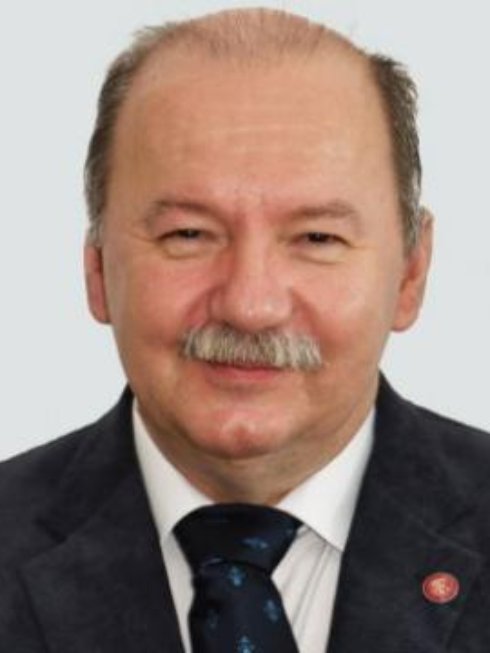
Dr. Michele Caselle is a Researcher at the Karlsruhe Institute of Technology (KIT), specifically at the Institute for Process Data Processing and Electronics (IPE). He coordinates the program subtopic "Detection and Measurement" and "Beam Physics Instrumentation" within the Detector Technologies and Systems (MT-DTS) of the Helmholtz Association. He serves as Principle Investigator in the TANGERINE and ACCLAIM innovation programs, Local coordinator of the PANDA experiment at GSI, and is a member of the International Research Program RD 50 at CERN and the CMS experiment at CERN. Dr. Caselle obtained his Master's Degree in electronic engineering with a specialization in microelectronics from the Polytechnic of Bari in 1998, followed by a PhD in microelectronics from the same institution in 2006. He completed a Post-Doctoral position at the Physics Department of the University and INFN Bari (2006-2008). Prior to joining KIT in 2011, he worked at CERN's Microelectronics Group (2008-2011) and held positions at GSI including Head of Department for Experiment Electronics (2019). His research focuses on advanced silicon sensors and electronic design , high-density interconnection technologies and packaging , commissioning of complex detector systems , and high-resolution beam diagnostics . Dr. Caselle has led research groups designing and producing cutting-edge silicon detectors for large physics experiments at CERN and GSI, including the CMS pixel detector for the Phase 1 upgrade. He has also developed beam diagnostic detector systems for synchrotron and free electron laser accelerator machines, and data acquisition systems for next-generation photon science experiments. Dr. Caselle's recent publications demonstrate a strong focus on detector technologies, particularly in silicon-based detectors, data acquisition systems for particle physics experiments, and the application of machine learning techniques to accelerator physics problems. His work spans both theoretical development and practical implementation of detector systems for major international experiments. As Principle Investigator for the TANGERINE and ACCLAIM programs, Dr. Caselle leads efforts in next-generation silicon detectors and the application of artificial intelligence and machine learning to scientific challenges. His coordination of the national program subtopic within the Helmholtz Association's Detector Technologies and Systems highlights his leadership role in advancing detector technologies across Germany. Dr. Caselle has been instrumental in developing several key detector systems, including the KALYPSO line camera for MHz repetition rate applications, the ToASt ASIC for the PANDA experiment's strip detectors, and radiation-hardened silicon sensors for high-luminosity environments. His work bridges the gap between fundamental detector research and practical implementation in major physics experiments.