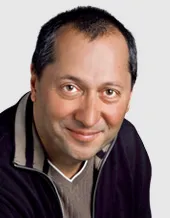
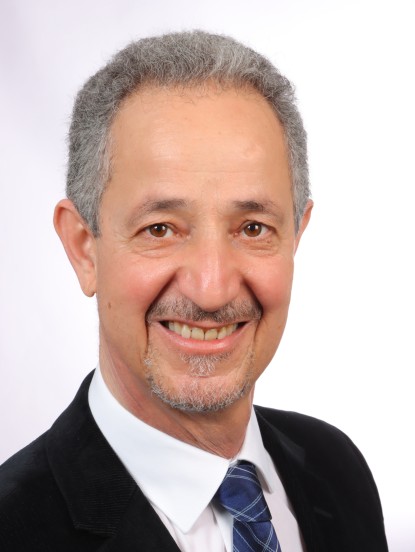
Prof. Dr. Tobias Gemmeke is a University Professor at RWTH Aachen University's Faculty of Electrical Engineering and Information Technology, leading the Chair of Integrated Digital Systems and Circuit Design. His work focuses on neuromorphic computing, hardware accelerators, and energy-efficient electronics. He has pioneered advancements in FPGA-based computational neuroscience simulators, neuromorphic processor architectures, and sensor integration for industrial and medical applications. Research interests include time-domain computing, ReRAM reliability, and co-optimization of neural networks with hardware. Notable contributions include the neuroAIx framework for accelerated neuroscience simulations and energy-efficient ASIC designs for post-quantum cryptography. He actively explores memristive devices and domain generalization techniques for edge computing. Recent publications highlight innovations in spiking neural networks, sensor systems for plain bearings, and time-domain compute-in-memory engines. His work bridges theoretical neuroscience with practical hardware implementations, emphasizing scalability and real-time performance.
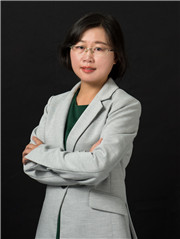
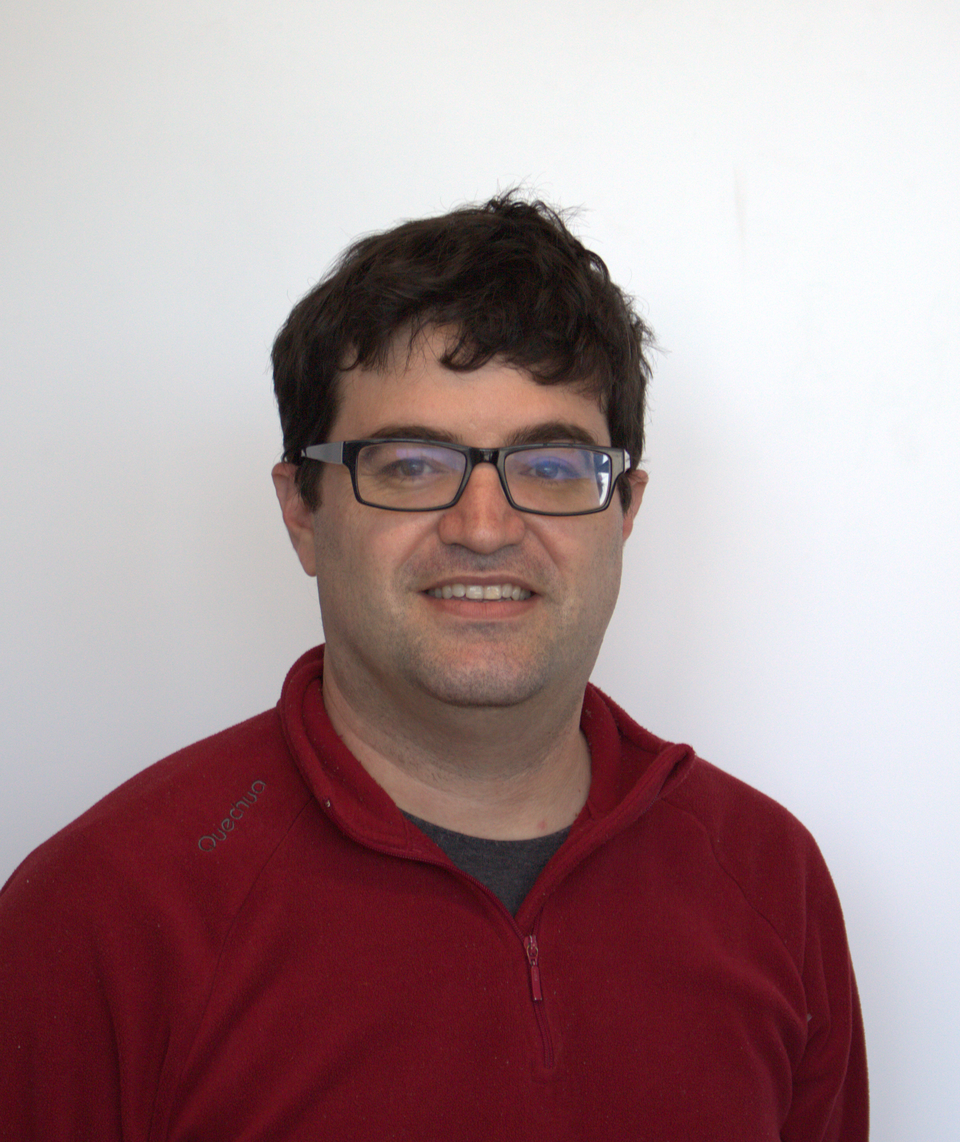
Associate Professor Hu Yunfei is affiliated with the School of New Materials and New Energy at Shenzhen University of Technology , where she leads the New Energy Systems and Smart Microgrids Laboratory . She is a member of the China Renewable Energy Society and Guangdong Solar Energy Association . PhD in Materials Processing Engineering (2005), South China University of Technology Bachelor of Engineering (2000), South China University of Technology Her research focuses on new energy systems , solar-storage direct-flexible systems , and high-efficiency photovoltaic devices , including perovskite solar cells , tandem solar cells , and transparent conductive oxides . Her work spans fundamental materials science and applied energy systems. The 15 most recent publications highlight her expertise in polycrystalline silicon thin films , transparent conductive oxides , perovskite solar cells , and optoelectronic materials . These works reflect trends in improving solar cell efficiency, stability, and manufacturing scalability. She has led projects such as the development of consumer solar power optimizers , optical performance testing for bifacial solar panels , and industrial collaborations on silicon ribbon substrates . Her projects are funded by institutions like the Norwegian Science Foundation and National Natural Science Foundation of China . At Shenzhen University of Technology, she oversees the New Energy Systems and Smart Microgrids Laboratory , integrating advanced materials and system design for renewable energy applications.
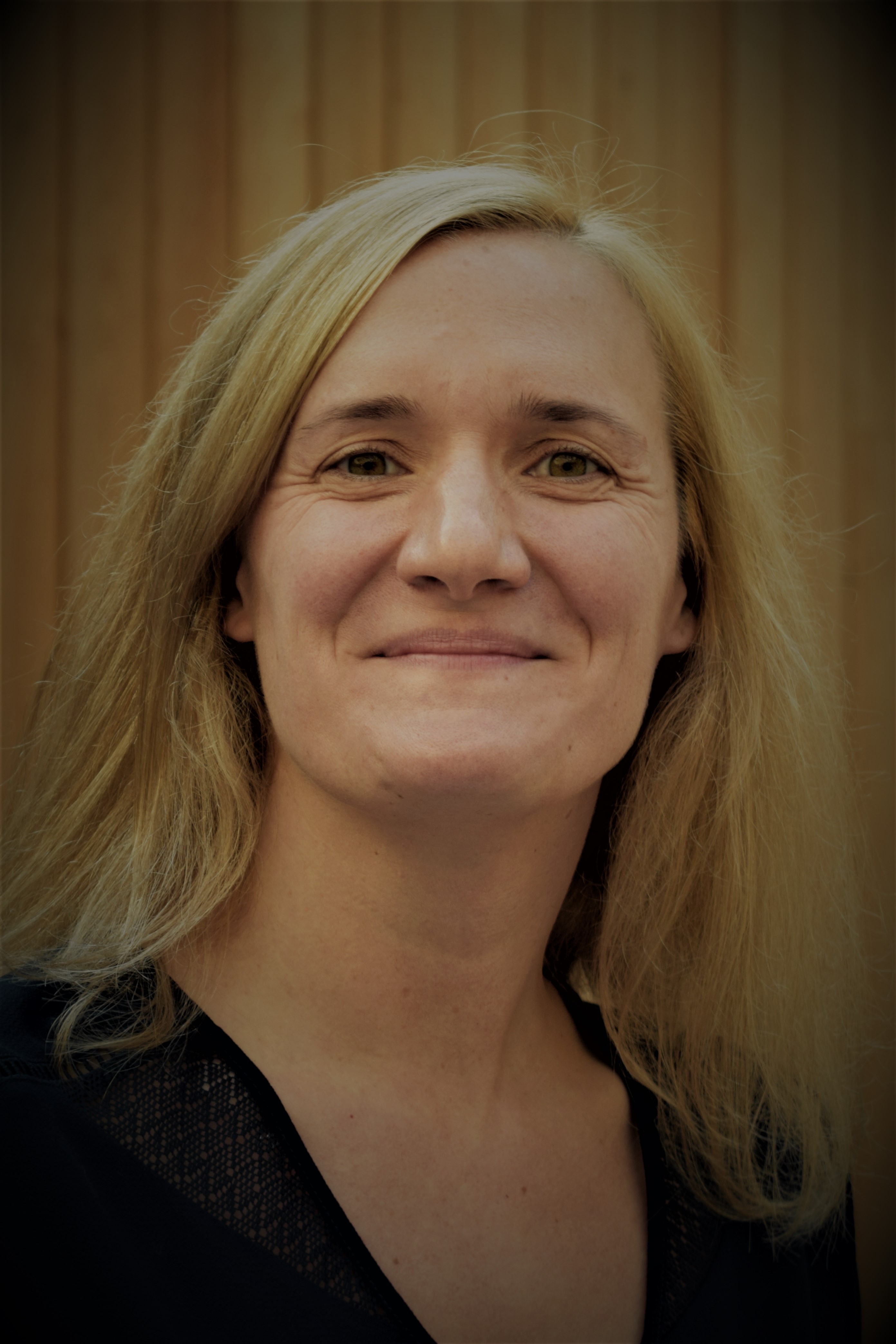
Prof. Gabriele Schrag holds the Professorship of Microsensors and Actuators at the Technical University of Munich (TUM), within the TUM School of Computation, Information and Technology. Her research focuses on MEMS (Micro-Electro-Mechanical Systems), including microsensors, actuators, and their applications in acoustics, microfluidics, and bioengineering. She has pioneered work in virtual prototyping for system-level modeling to enhance device robustness and performance. Education: PhD (summa cum laude) from TUM on 'Modeling coupled effects in microsystems' Habilitation in sensor systems technology (2018) Acting head of the Chair of Technical Electrophysics (2018-2023) Research emphasizes acoustic MEMS transducers , electrohydrodynamic printing , and physics-based modeling . Notable projects include developing piezoelectric MEMS microphones with corrugated membranes and integrated micropump systems. Awards include the Bavarian Prize for Good Teaching (2021) and Eurosensors Fellow Award (2019). Her work bridges virtual prototyping with real-world applications , addressing challenges in miniaturization, energy efficiency, and sensor integration for medical and industrial systems.
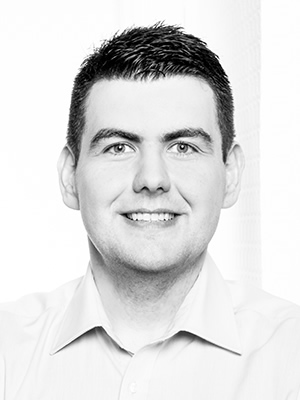
Stefan Hougardy is a Professor at the Research Institute for Discrete Mathematics, part of the Mathematisch-Naturwissenschaftliche Fakultät at the University of Bonn. He is actively engaged in research and teaching, with a focus on discrete mathematics and combinatorial optimization. He contributes to academic governance through roles in examination boards, teaching mentoring, and faculty committees. Stefan Hougardy's research lies at the intersection of theoretical computer science and practical optimization. His primary interests include approximation algorithms, the Traveling Salesman Problem (TSP), Steiner trees, graph theory, and VLSI design automation. He develops efficient algorithms for NP-hard problems and analyzes their theoretical performance guarantees. His work often bridges theory and application, particularly in electronic design automation and mathematical programming. His recent publications demonstrate a strong focus on the complexity and approximation of combinatorial optimization problems. Key themes include the analysis of local search heuristics like k-opt for TSP, edge elimination techniques, fast matching algorithms, and optimal legalization in chip design. His work combines rigorous theoretical analysis with practical implementation and computational experiments. MPC 'Outstanding Paper of the Year' Award 2024 Stefan Hougardy supervises graduate students and leads seminars on discrete mathematics and optimization. He is involved in the Bonn International Graduate School of Mathematics and the Hausdorff Center for Mathematics, contributing to doctoral education and mentoring. While specific grant details are not listed, his sustained research output and leadership roles suggest active funding support. He also contributes to curriculum development and academic quality assurance through various institutional committees. He is affiliated with the Research Institute for Discrete Mathematics at the University of Bonn, a leading center for combinatorial optimization and algorithmic research. The institute is closely linked with the Hausdorff Center for Mathematics, fostering collaboration in discrete and applied mathematics.
Paul R. Genssler is a Dr.-Ing. researcher at the Chair of AI Processor Design (AI-Pro) within the Technical University of Munich (TUM), actively advancing hardware solutions for artificial intelligence under Prof. Hussam Amrouch. His work bridges computer engineering and emerging technologies, focusing on overcoming fundamental limitations in conventional computing architectures through brain-inspired paradigms. His research spans critical domains in next-generation computing: Hyperdimensional Computing for robust pattern recognition and bioinformatics applications Neuromorphic and In-Memory Computing architectures for energy efficiency Reliability engineering for emerging memory technologies (FeFET, etc.) Quantum computing support systems including cryogenic embedded electronics Machine learning-driven transistor aging prediction and mitigation Analysis of his 15 most recent publications (2023-2024) reveals a dominant trend toward hyperdimensional computing as a unifying framework for addressing reliability challenges in emerging technologies. His work consistently integrates in-memory computing techniques to bypass von Neumann bottlenecks while targeting real-world applications like genome matching and unsupervised learning. A significant portion focuses on error-resilient implementations for unreliable nanoscale devices, demonstrating exceptional cross-stack expertise from transistor physics to algorithm design. As a core member of TUM's AI Processor Design group affiliated with the Munich Institute of Robotics and Machine Intelligence (MIRMI), Genssler collaborates extensively on projects spanning cryogenic quantum control systems, FPGA-based AI resilience, and monolithic 3D integration. The team operates at the intersection of semiconductor physics, computer architecture, and machine learning, with strong industry connections evident through publications at DATE, ASP-DAC, and ICCAD.
Sani Nassif is a Research Fellow at the Technical University of Munich (TUM) under the Rudolf Diesel Industry Fellowship, hosted by Professor Ulf Schlichtmann. With 28 years of experience at Bell Labs and IBM Research, he has led teams in integrated circuit modeling, simulation, statistical analysis, and optimization. Research Interests: His work bridges integrated circuit technology with cross-disciplinary applications in medicine. Key areas include variability analysis in semiconductor manufacturing, low-power circuit design, and reliability engineering for nano-scale systems. He focuses on applying machine learning and statistical methods to solve challenges in energy-efficient computing and biomedical systems. Selected Publications: His research spans circuit variability trends, leakage current modeling, and reliability frameworks for nano-era systems. Work includes foundational studies on SRAM failure analysis and CMOS scaling limitations. Scientific Awards: He is recognized as an IEEE Fellow IBM Master Inventor (75 patents) Rudolf Diesel Industry Fellow
Prof. Dr.-Ing. Marc Reichenbach serves as the Chair of Integrated Systems at the Institute for Applied Microelectronics and Data Technology at the University of Rostock. His office is located at Albert-Einstein-Straße 26, 18059 Rostock, Room 102 (1st floor), with contact information including telephone (0381) 498 7270 and email marc.reichenbach@uni-rostock.de. Professor Reichenbach's research focuses on the intersection of hardware design and artificial intelligence, with particular expertise in memory technologies and computing architectures. His work spans several key areas: Development of specialized computer architectures for deep learning applications Advanced VLSI design and CPU architecture Emerging memory technologies, particularly RRAM (Resistive Random-Access Memory) FPGA-based acceleration systems Hardware implementations for neural networks and AI applications Analysis of Professor Reichenbach's recent publications (2023-2025) reveals a strong focus on memory computing technologies, particularly RRAM-based systems. His work demonstrates expertise across multiple dimensions of computer architecture including ASIC design, FPGA acceleration, and novel memory systems. The publications show a clear trajectory toward implementing AI and machine learning capabilities directly in hardware, with applications ranging from edge computing to satellite systems. A significant portion of his recent work addresses the challenges of implementing neural networks using emerging memory technologies, focusing on efficiency, reliability, and performance optimization. Professor Reichenbach teaches several advanced courses including: Computer architectures for deep learning applications Project seminar Embedded Systems Advanced VLSI Design (Advanced CPU Design) His research group appears to be actively engaged in several cutting-edge projects related to hardware acceleration for AI applications, memory computing, and embedded systems design. The group collaborates on projects involving digital twins for hardware systems, real-time operating systems for heterogeneous architectures, and specialized computing systems for various applications from medical devices to drone technology.
Dr. Emmanouil Dimakis is a Researcher and Group Leader in the Spectroscopy department at the Helmholtz-Zentrum Dresden-Rossendorf (HZDR). His research focuses on semiconductor nanowires, plasmonics, and optoelectronics, with emphasis on strain engineering, heterostructure design, and advanced spectroscopic techniques such as THz and infrared nanospectroscopy. His work explores electronic and optical properties of nanomaterials, including III-V semiconductor systems, InGaN/GaN quantum wells, and core-shell nanostructures. Key themes include understanding strain effects on material performance, developing high-electron-mobility nanostructures, and optimizing optoelectronic devices for near-infrared applications. Dimakis' publications highlight innovations in nanowire growth methodologies, nonlinear plasmonic responses, and time-resolved analysis of carrier dynamics under extreme conditions. His group employs cutting-edge techniques like probe-corrected HRSTEM and THz pump-probe spectroscopy to uncover fundamental material behaviors. Despite no listed awards or grants in the provided text, his contributions to nanomaterials research and spectroscopic characterization are evident through his prolific publication record spanning over two decades. His research group at HZDR continues to advance the frontiers of semiconductor physics and nanotechnology.
Nele Mentens is a full professor at both KU Leuven and Leiden University, where she leads cutting-edge research in applied cryptography, hardware security, and secure embedded systems. At KU Leuven, she is affiliated with the Faculty of Engineering Technology and the Electrical Engineering Department (ESAT), leading the Emerging Technologies, Systems & Security (ES&S) research group at the Diepenbeek campus. Simultaneously, she holds a full professorship at Leiden University’s Leiden Institute of Advanced Computer Science (LIACS), focusing on applied cryptography and security. She has been instrumental in numerous national and international research initiatives, including Horizon Europe and NWO-funded projects. Full Professor, KU Leuven (since 2023) Full Professor, Leiden University (since 2020) Associate Professor, KU Leuven (2014–2023) Post-doctoral Researcher & Lecturer, KHLim / KU Leuven (2007–2014) Ph.D. in Engineering Science, KU Leuven (2007) M.Sc. in Electrical Engineering, KU Leuven (2003) Her research focuses on secure and efficient hardware design, particularly for cryptographic applications on FPGAs, reconfigurable architectures, IoT security, and neuromorphic computing. She explores physical attack resistance, side-channel analysis protection, and trusted computing architectures, with applications in healthcare, industrial monitoring, and endpoint AI. Her work bridges theoretical cryptography with practical hardware implementations, emphasizing energy efficiency and real-time performance. The 15 most recent publications reflect a strong trend toward secure, energy-efficient, and intelligent embedded systems. Topics include neuromorphic AI accelerators, trusted IoT architectures, dynamic reconfiguration for side-channel protection, and secure medical data processing. These works span disciplines such as computer architecture, cybersecurity, digital design, and embedded systems, with a focus on hardware-software co-design and real-world deployment. Nele Mentens has received recognition for her contributions, including: Best Paper Award, DATE'16 Best Paper Nomination, AsianHOST'17 Best Paper Award, CHES'19 She has supervised over 15 Ph.D. students and post-docs, both current and former, and has served as principal investigator in approximately 25 funded research projects. Her work has attracted significant grants from Horizon Europe, NWO, FWO, and national innovation programs. She actively contributes to the academic community through editorial roles in top journals and leadership in major conferences. Nele Mentens leads the ES&S research group at KU Leuven and collaborates closely with LIACS at Leiden University. Her team includes Ph.D. students, post-docs, and research experts working on projects like NimbleAI, NeuroSoC, and TrustedIoT. She has also established secure electronics labs through infrastructure grants and maintains strong international ties with institutions such as EPFL, Ruhr University Bochum, and ETH Zurich.
Abdelhak M. Zoubir is a Professor of Signal Processing and Head of the Signal Processing Group at Technische Universität Darmstadt, Germany. He has held leadership roles including Head of the Department of Electrical Engineering and Information Technology (2012–2014 and 2020–2022), and President of the European Association for Signal Processing (EURASIP, 2017–2018). His research focuses on statistical signal processing with applications in radar imaging, biomedical engineering, and automotive systems. Zoubir has authored over 500 publications and is a Fellow of IEEE and EURASIP. He currently leads projects on radar communication integration, robust signal processing algorithms, and radiation-hardened sensor development. Education: Dipl.-Ing. (BSc/MSc) from Fachhochschule Niederrhein and Ruhr-Universität Bochum, followed by a Dr.-Ing. (PhD) in Electrical Engineering from Ruhr-Universität Bochum (1992). Research Interests: Bootstrap techniques, robust detection/estimation, cooperative sensor networks, radar for landmine detection, and automotive safety systems. He has pioneered methods in robust statistical signal processing, including low-rank matrix completion and sparsity-aware algorithms. Recognition: Recipient of the IEEE Meritorious Service Award (2018), IEEE Signal Processing Magazine Best Paper Award (2017), and the M. Barry Carlton Award (2014). He has been a keynote speaker at major conferences such as ICASSP and EUSIPCO, and served as Editor-in-Chief of the IEEE Signal Processing Magazine (2012–2014). Current Projects: Focus on automotive radar signal processing, radiation-hardened sensors (MALTA), and distributed learning robustness. His work bridges theoretical advancements with practical applications in defense, healthcare, and automotive industries.
Dr. Hongrong Hu is a Research Fellow at the Institute of Nanotechnology, Karlsruhe Institute of Technology (KIT), Germany, affiliated with the Electronic Devices and Systems research unit. Her work focuses on advancing printed memristive technologies for next-generation memory applications. Her research expertise spans: Memristive Devices and Resistive Random-Access Memory (ReRAM) Printed Electronics Fabrication (Inkjet/Laser Printing) Non-Volatile Memory Systems Metal-Oxide Semiconductor Materials High-Entropy Compounds for Memory Neuromorphic Computing Hardware Analysis of her 2021-2025 publications reveals a strategic progression from fundamental device characterization (e.g., noise properties in printed transistors) toward sophisticated material engineering (high-entropy Prussian Blue analogs, metal-organic frameworks) and neuromorphic applications. Her work consistently bridges materials science, electrical engineering, and nanofabrication to solve scalability challenges in printed memory devices. Scientific recognition: No awards or fellowships documented in available sources Dr. Hu's academic mentoring and grant activities are not publicly detailed, though her collaborative publications suggest active participation in KIT's research ecosystem. She contributes to the Electronic Devices and Systems unit's mission of developing innovative electronic solutions through printed and flexible technologies for real-world applications.
Houpeng Chen is a Research Professor at the Chinese Academy of Sciences, specifically affiliated with the School of Microsystem and Information Technology in the Department of Microelectronics. With over two decades of research experience since the early 2000s, Chen has established himself as a leading expert in memory systems and circuit design, particularly in the areas of Phase Change Memory and neuromorphic computing. Chen's research primarily focuses on advanced memory technologies, with particular emphasis on Phase Change Memory (PCM) systems, neuromorphic computing architectures, and analog circuit design for memory applications. His work spans from fundamental circuit design for memory systems to advanced computing architectures that leverage novel memory technologies. A significant portion of his recent work explores in-memory computing paradigms and brain-inspired computing systems, demonstrating a strategic shift toward next-generation computing architectures that address the limitations of traditional von Neumann systems. Analysis of Chen's publication record shows a clear evolution from traditional circuit design toward more innovative memory-based computing architectures. His recent work demonstrates strong expertise in 3D cross-point memory systems, in-memory computing, and neuromorphic hardware implementations. The research shows consistent quality with publications in top-tier IEEE journals and conferences, indicating strong recognition within the semiconductor and memory research community. As evidenced by the authorship patterns in his publications, Chen has successfully mentored numerous graduate students and junior researchers who have gone on to become first authors on significant publications. His collaborative network includes extensive work with Zhitang Song, Qian Wang, and Xi Li, suggesting a well-established research group with strong internal collaboration.
Albi Mema is a researcher affiliated with the Chair of AI Processor Design (AI-Pro) at Technische Universität München (TUM). His work focuses on emerging technologies for AI applications, including neuromorphic hardware, reliability engineering, and quantum computing. University: Technische Universität München Department: Chair of AI Processor Design (AI-Pro) Key research areas include: Emerging Technologies for AI Neuromorphic Hardware Reliability in Semiconductor Devices Quantum Computing RISC-V Architecture Machine Learning Computer-Aided Design His recent publications address fault-tolerant hyperdimensional computing, analog computing for AI, FeFET-based neuromorphic systems, and compact majority gate design using FDSOI technology. No scientific awards are mentioned in the provided text.
Oliver Bringmann is a full Professor and head of the Chair of Embedded Systems at the University of Tübingen, Germany, and a member of the board of directors at the FZI Research Center for Information Technology. His research integrates embedded-system design, energy-efficient AI accelerators, dependable automotive perception, and medical AI for capsule endoscopy. Education & Career Ph.D. in Computer Science, University of Tübingen, 2001 Diploma in Computer Science, University of Karlsruhe (KIT) Head, Chair of Embedded Systems, University of Tübingen (since 2012) Deputy spokesperson & spokesperson, Dept. of Computer Science, University of Tübingen (2014-2022) Board of Directors, FZI Research Center for Information Technology Research Interests Bringmann’s group pioneers hardware/software co-design for ultra-low-power Edge-AI , developing RISC-V based accelerators, compiler-aware neural-architecture search, and real-time perception systems for autonomous driving and medical devices. Key topics include: Energy-efficient AI architectures (“Edge AI”) and custom accelerator generation Robust collective perception under adverse weather (LiDAR, camera, V2X fusion) Timing/power-predictable embedded software and system-on-chip design automation Hardware-assisted security and safety for automotive & IoT systems AI-driven capsule endoscopy localization and anomaly detection Recent Publication Trends His 2024-2025 articles reveal a strong shift toward robust multimodal perception for automated driving (snow, fog, collective LiDAR fusion) and Edge-AI medical devices (capsule endoscopy with multi-task CNNs). Core contributions span dataset generation (SCOPE, SnowyLane), safety metrics (LSM), and fast performance modeling for DNN accelerators. Professional Service & Projects Executive/Steering Committees: IEEE/ACM DATE, CODES+ISSS, CASES, ITSS conferences EU CATRENE EDA roadmap chapter lead (Embedded Software & ESL-to-RTL) Principal investigator in Scale4Edge, OCEAN12, enerDAG and other national projects on energy-efficient sensorics and secure energy trading. His group maintains extensive collaborations with automotive and semiconductor industry, focusing on dependable, energy-aware embedded intelligence.
Prof. Dr.-Ing. Guillermo Payá Vayá leads the Chair for Chip Design for Embedded Computing at Technical University of Braunschweig's Faculty of Electrical Engineering, Information Technology, and Physics. His research focuses on processor architecture design, FPGA/ASIC implementations, and optimization techniques for embedded systems, particularly in high-performance, low-power, and radiation-hardened computing domains. Primary research interests include: Application-Specific Instruction Set Processors (ASIPs) and compiler co-design Radiation effects characterization and fault-tolerant hardware Ultra-low-power processor architectures for embedded AI Hardware acceleration of neural networks and computer vision algorithms Memory subsystem optimization and parallel computing techniques Recent publications demonstrate strong emphasis on radiation-hardened electronics (35% of recent works), AI accelerator design (27%), and ultra-low-power systems (20%), with growing interest in biomedical applications. Experimental validation through FPGA prototyping and semiconductor testing is a consistent methodology across research domains. Leads research team investigating: Radiation-tolerant FPGA architectures (Trumann, Weide-Zaage) Vector processor optimization (Gesper, Thieu) Nano-scale controller design (Weißbrich) AI-hardware co-design (Kautz, Beyer)