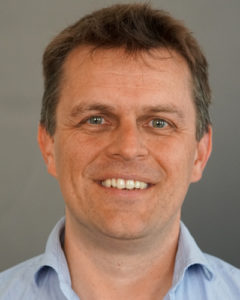
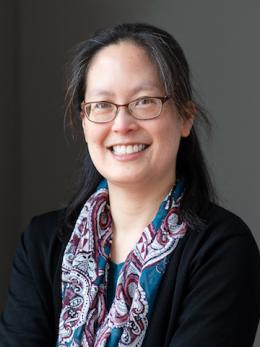
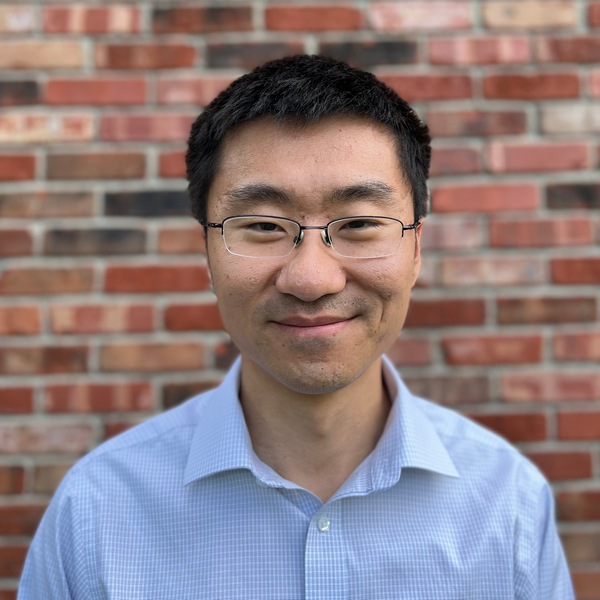
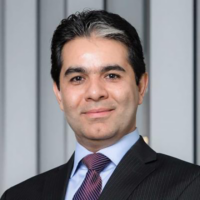
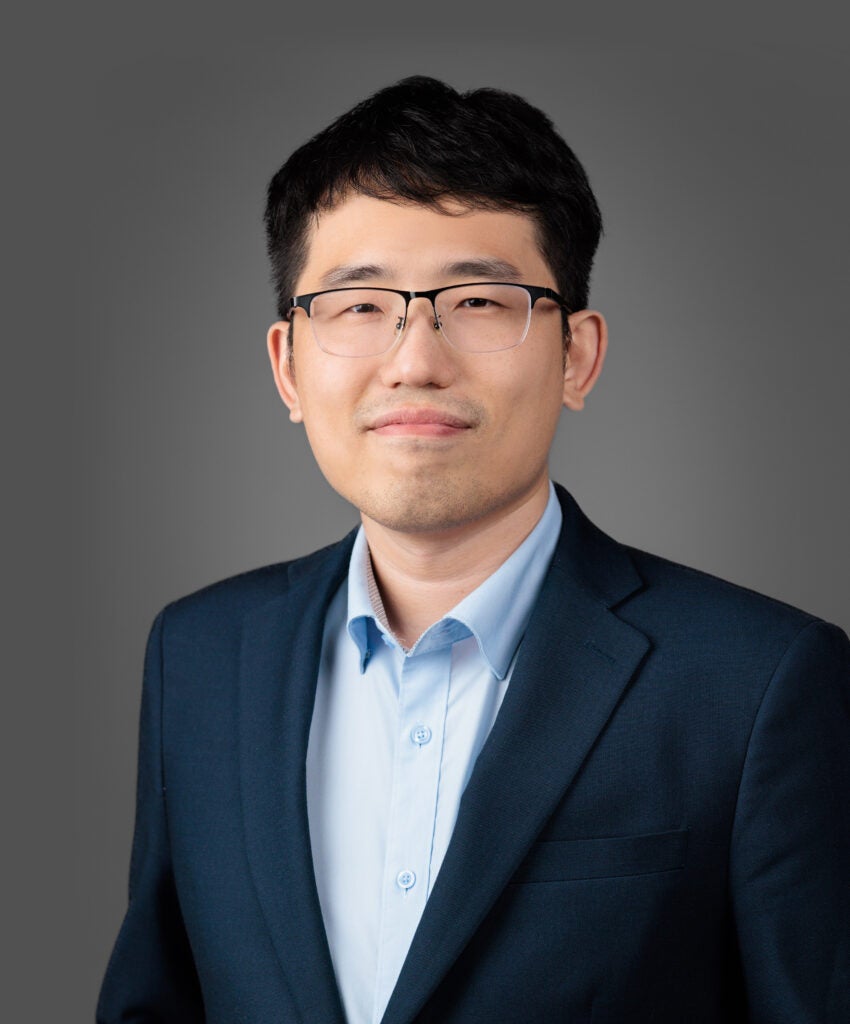
Dr. Renjie Gu is a Research Fellow at the University of Western Australia (UWA), affiliated with the Microelectronic Research Group (MRG) in the School of Electrical, Electronic and Computer Engineering. He holds an ARC Super Science Fellowship and specializes in molecular beam epitaxy (MBE) growth of semiconductor materials for infrared detectors, lasers, and solar cells. His work contributes to UN Sustainable Development Goals related to affordable and clean energy. Education: PhD in Semiconductor Materials (Chinese Academy of Sciences, 2012). Research focuses on MBE epitaxial growth, thin film characterization, and applications in optoelectronic devices. His recent publications (2024) highlight advancements in HgCdTe film growth, terahertz spectroscopy for carrier mobility analysis, and infrared sensing technologies. Awards: ARC Super Science Fellow (Microelectronic Research Group) Collaborations: Active research networks in Australia and globally, focusing on infrared materials and sensor technologies. Labs/Teams: Core member of UWA's Microelectronic Research Group (MRG), leading MBE-based semiconductor research initiatives.
Andreas Baumgartner is a leading researcher in quantum electronics and nanoelectronics at the University of Basel. He currently serves as a Group Leader and Head of the SNI PhD School, with prior roles as Senior Scientist (since 2014) and Postdoctoral Fellow. His work focuses on quantum transport, superconductivity, spintronics, and topological materials, leveraging advanced nanofabrication and cryogenic techniques. Key projects include Cooper pair splitting, Majorana bound states, and quantum dot-based qubits. Education: PhD in Physics (ETH Zurich, 2005), Diploma in Interdisciplinary Science (ETH Zurich, 2000). Awards include EPSRC and Swiss National Science Foundation support. His lab develops ultra-clean carbon nanotube and semiconductor nanowire devices, with contributions to quantum computing hardware and graphene spintronics. Research emphasizes experimental probes of quantum phenomena: high-resolution electrical measurements, cryogenics down to 10 mK, and strain engineering. Recent advancements include long-distance qubit coupling, twisted trilayer graphene superlattices, and photon-mediated qubit interactions. Collaborative efforts with institutions like Kavli Institute and CERN highlight his interdisciplinary impact.
Marek Kojdecki is a Professor at the Military University of Technology, specializing in materials engineering with a focus on crystalline microstructure analysis, liquid crystals, and advanced material characterization. His work bridges applied physics and materials science, particularly in semiconductor materials, nanomaterials, and ceramic composites. He has published over 100 peer-reviewed articles, supervised 1 promoted thesis, and led 6 research projects. His research employs cutting-edge techniques such as X-ray diffraction, mobility spectrum analysis, and composite method measurements. Key achievements include studies on mullite microstructure in ceramics, quantum transport in topological heterojunctions, and optical properties of liquid crystals. Research Interests: Liquid crystal dynamics, nanocrystalline materials, semiconductor epilayers, X-ray diffraction modeling, and material characterization. Technical Expertise: Advanced microscopy, thin film fabrication, and computational material modeling. His work has contributed to advancements in electronic materials, optoelectronic devices, and ceramic processing technologies. Notable methods developed include the complementary interference wedge method for liquid crystal analysis and regularization techniques for inverse problems in material characterization.
Yumi Ijiri is the Francis D. Federighi Professor of Natural Sciences and Professor of Physics at Oberlin College, part of the College of Arts & Sciences. She holds a BA from Princeton University (1991), and MS (1994) and PhD (1996) from Cornell University. Her research focuses on synthesizing and understanding novel magnetic materials, including nanoparticles, nanocrystalline alloys, and exchange-biased systems. Techniques include polarized small-angle neutron scattering and collaborations with institutions like Carnegie Mellon University and Lawrence Livermore National Laboratory. Key research areas include nanomagnetism, magnetostrictive materials, and biomedical applications of magnetic nanoparticles. She has led NSF-funded projects on nanoparticle magnetic interactions and has been a principal investigator on grants totaling over two decades. Notable collaborations include work with Sara Majetich (nanoparticle properties), Scott McCall (Fe-Ga alloys), and Maciej Zborowski (biomedical applications). Current Projects: Magnetostrictive materials for sensors, ferrite nanoparticle assemblies Grants: NSF RUI (2016–present), NASA (2004–2005), ACS-PRF (multiple periods) Teaching includes courses like Materials Physics (PHYS 340), Mechanics and Relativity (PHYS 110), and co-developed curricula such as the FYSP 143 seminar. She advises graduate and undergraduate researchers, including notable advisees Alex Yu ’23, Emily Everhart ’22, and Aidan Khelil ’22. Awards include NRC/NIST Postdoctoral Research Fellowship (1996–1998) and ACS-PRF summer fellowships. Her work bridges fundamental physics with applied technologies, emphasizing interdisciplinary collaboration.
Jia Wang is an Associate Professor in the Department of Physics at Umeå University, Sweden. Their research focuses on low-dimensional semiconductor materials, including organic, inorganic, and hybrid systems, with applications in energy conversion, optoelectronics, and biomedicine. They specialize in luminescent nanomaterials such as quantum dots and carbon nanodots, particularly exploring sustainable synthesis methods using biomass-derived precursors. Key research themes include developing carbon dots for biomedical applications (e.g., neurite outgrowth promotion), optoelectronic devices (e.g., LEDs with high color purity), and energy-efficient materials. Their work emphasizes environmental sustainability, leveraging green chemistry principles and renewable resources. Publications highlight innovations in nanomaterials engineering, including ligand engineering for perovskite quantum dots and the development of metal-free TADF emitters for light-emitting electrochemical cells. Collaborations span materials science, chemistry, and biomedical engineering. Teaching includes master-level courses on solar cells, reflecting expertise in energy conversion technologies. Research is conducted via the OPEG (Organic and Perovskite Electronics Group) section at Umeå, with ongoing projects on novel materials for next-generation optoelectronic devices.
Andrew Meng is an Assistant Professor in the Department of Physics at the University of Missouri. His research focuses on semiconductor crystal growth for optoelectronic devices and advanced material characterization using transmission electron microscopy (TEM). He earned his Ph.D. from Stanford University. Research Interests: Ferroelectric materials and their applications in memory devices and sensors Epitaxial growth of thin films, nanowires, and nanostructures via chemical vapor deposition Method development in TEM, including 4D-STEM for strain mapping and in-situ electrical biasing Key Research Themes: Novel ferroelectrics based on aluminum nitride alloys Dielectric breakdown and resistive switching mechanisms Structural characterization of materials for neuromorphic computing and piezoelectric applications His work bridges fundamental materials science with device engineering, emphasizing nanoscale phenomena and their technological implications.
Dr. Mehdi Narimani is an Associate Professor in the Department of Electrical and Computer Engineering at McMaster University, holding the Canada Research Chair in High-Power Converters and serving as the director of the High-Power Electronics Lab (HiPEL). His expertise spans power electronics, high-power conversion, EV fast chargers, and medium-voltage motor drives. He has authored over 160 publications and 13 patents, with research focusing on novel converter topologies, control strategies, and applications in EV charging and renewable energy systems. Education: B.Sc., M.Sc. in Electrical Engineering (Isfahan University of Technology, Iran) Ph.D. in Electrical and Computer Engineering (University of Western Ontario, Canada) Research Interests: Dr. Narimani’s work emphasizes high-power converter systems, medium-voltage motor drives, EV fast charging technologies, and power electronics integration in smart grids. His lab develops innovative solutions for energy-efficient power conversion and EV infrastructure, with a focus on reducing costs and improving reliability through advanced topologies and control techniques. Publications & Trends: Recent work highlights advancements in ultra-fast EV charging stations, medium-voltage architectures, and fault-tolerant motor drives. His research bridges theoretical control methods (e.g., model predictive control) with practical implementations in high-power systems. Awards & Recognition: NSERC Canada Research Chair (Tier 2) McMaster University Scholar (2022) Multiple Best Paper Awards (Journal of Power Electronics, IEEE Conferences) Advising & Grants: Supervises graduate students in power electronics and EV systems. Secured funding through NSERC, industry partnerships, and Canada Research Chair initiatives. Collaborates with industry on projects like EV charger design and renewable energy integration. Labs & Teams: Leads the High-Power Electronics Lab (HiPEL), focusing on advanced converter systems, wireless EV charging, and smart energy solutions. Collaborates with cross-disciplinary teams on projects involving more electric aircraft and community energy systems.
Dr. Mingyang Wei is an Assistant Professor in the Department of Materials Science and Engineering at the National University of Singapore (NUS). He holds a B.Sc. in Physics from Peking University (2016) and a Ph.D. in Electrical Engineering from the University of Toronto (2020). Prior to joining NUS, he was a scientist at École Polytechnique Fédérale de Lausanne (EPFL), Switzerland (2021-2024). His research focuses on hybrid organic-inorganic semiconductors for energy-conversion technologies, including perovskite solar cells, optoelectronic devices, and advanced interface engineering. Awards: Canadian Governor General’s Gold Medal (2020), Marie Skłodowska-Curie Fellowship (2021), Clarivate Highly Cited Researcher (2022–2023), NUS Presidential Young Professor (2024) Research interests: Hybrid heterostructure design for energy-efficient optoelectronics Advanced spectroscopic analysis of interfacial properties Stable perovskite-based photovoltaic and light-emitting devices Key contributions include developing crystal capping layers for black-phase perovskites and self-assembled bilayers for thermal stability. His work spans 20+ high-impact publications in journals like Nature , Science , and Advanced Materials . Current openings exist for postdoctoral researchers and graduate students in materials chemistry, semiconductor physics, and optoelectronics.
Sam N Coday is an Assistant Professor in the Department of Electrical Engineering and Computer Science (EECS) at MIT. His research focuses on advanced power converter technologies for aerospace, space, and high-density applications. He leads the Coday Research Group, which develops innovative solutions for radiation-tolerant systems, GaN-based converters, and multilevel converter architectures. His work emphasizes high-efficiency power conversion , miniaturization of passive components , and robust operation in extreme environments . Key areas include resonant switched-capacitor converters, flying capacitor multilevel topologies, and wireless power transfer for battery charging. Recent publications highlight advancements in space robotics power systems, hybrid DC-DC converters for aviation, and radiation-hardened electronics. Coday's team collaborates on flight-qualified hardware for electric aircraft and space applications, prioritizing both theoretical analysis and practical implementation.
Sergey Simak is a Professor and Head of Unit at Linköping University, affiliated with the Department of Physics, Chemistry and Biology (IFM), specifically within the Theoretical Physics (TEOFY) and Theory and Modelling divisions. His research focuses on computational and theoretical approaches to understanding advanced functional materials. His research interests lie at the intersection of computational materials science and theoretical physics , particularly in ab initio methods , phase transitions , high-pressure materials , and energy-related functional materials . He develops and applies advanced modeling techniques to predict and understand the behavior of complex solid-state systems, including dynamically disordered materials and high-temperature alloys. The recent publications highlight a strong trend in using first-principles simulations combined with machine learning to enhance materials thermodynamics and discover novel compounds under extreme conditions. His work spans from fundamental magnetic phase diagrams in iron to the synthesis of hydrogen-rich silicates and optimization of perovskite optoelectronic devices, reflecting a broad yet cohesive research program in energy materials and sustainable technologies . Scientific recognition includes: Major research funding recipient from the Swedish Research Council (nearly SEK 97 million, 2019) Sergey Simak leads a research unit focused on theory and modeling, contributing to national and international collaborations. He has secured significant grants supporting computational infrastructure and team development. While formal advisees are not listed, his leadership role and publication record suggest active mentorship within the research group. He is part of the Theory and Modelling research environment at IFM, which develops mathematical models and computational methods to understand natural phenomena, particularly in materials science and condensed matter physics.
Feng Wang is an Associate Professor and Docent at Linköping University, affiliated with the Department of Physics, Chemistry and Biology (IFM) within the Faculty of Science and Engineering. He leads research in materials chemistry for renewable energy, particularly in perovskite solar cells and doped organic semiconductors. Associate Professor, Linköping University (2023–present) Assistant Professor, Linköping University (2015–2017) Marie Skłodowska-Curie Individual Fellow, Linköping University (2013–2015) Visiting Postdoc, École polytechnique fédérale de Lausanne (2017–2018) Education: PhD, The Chinese University of Hong Kong, 2012 Docent, Linköping University, 2022 Feng Wang's research focuses on materials for next-generation solar cells , including lead-based and lead-free perovskites, as well as doped organic semiconductors. His work addresses key challenges in stability, efficiency, and processability, with applications in building-integrated and flexible photovoltaics. He explores defect engineering, strain regulation, and novel doping strategies to improve device performance and longevity. His recent publications, including in Nature , Advanced Materials , and Science , reflect a strong trend toward enhancing operational stability and commercial viability of perovskite devices. Themes include strain control, redox management, tandem configurations, and sustainable materials development. His work bridges fundamental materials chemistry with practical device engineering. Scientific Awards and Recognition: Marie Skłodowska-Curie Individual Fellowship Feng Wang has successfully secured competitive research grants from major funding bodies such as the Swedish Research Council (VR) , Vinnova , EU Marie Skłodowska-Curie Actions , STINT , FORMAS , Carl Tryggers Foundation , and Olle Engkvists Stiftelse . He mentors students and researchers in his lab and is actively involved in peer review for international funding programs, including EU Horizon and the National Science Centre of Poland. He is also a co-founder of LinXole AB , a startup commercializing stable hole transport materials for perovskite solar cells, demonstrating his commitment to translating research into real-world applications. He is part of the Electronic and Photonic Materials (EFM) division and leads a multidisciplinary team focused on solution-processed optoelectronic devices. The group combines fundamental science with innovation in energy materials, aiming to advance both scientific understanding and technological deployment.
Prof. Lambert Alff is an affiliate member in the Department of Materials Science at Technische Universität Darmstadt. His research focuses on advanced materials engineering, particularly in thin film technology, memristive systems, and energy storage solutions. He specializes in epitaxial growth techniques (Molecular Beam Epitaxy, Pulsed Laser Deposition) and investigates properties of ferroelectric oxides, superconductors, and nanomaterials. His work spans applications in microwave devices, neuromorphic computing, and high-performance batteries. Key research areas include defect engineering in perovskite oxides, spin dynamics in magnetic thin films, and radiation effects on electronic devices. He collaborates on projects like the WAKeMeUP initiative, exploring defect-stabilized materials and phase transitions under extreme conditions. His lab develops tunable varactors, memristive memory arrays, and hybrid materials for environmental remediation. Alff's team employs advanced characterization tools such as in-situ TEM, 4D-STEM, and X-ray spectroscopy. His recent studies address challenges in high-frequency electronics (sub-6 GHz), superconducting RF cavities, and stable Li-ion cathodes through surface modification strategies.
Nathan O'Brien is an Associate Professor in the Department of Physics, Chemistry and Biology (IFM) at Linköping University. His research focuses on materials chemistry, with particular emphasis on the synthesis and application of metal-based precursors for thin film deposition techniques such as Atomic Layer Deposition (ALD) and Vapor Deposition. He has contributed significantly to the development of novel triazenide-based precursors for semiconductor materials like indium nitride and gallium nitride, addressing challenges in high-frequency electronics and optoelectronics. Key research interests include inorganic chemistry, semiconductor materials engineering, and the design of cost-effective precursors for advanced thin film technologies. His work bridges fundamental chemical synthesis with applied materials science, aiming to improve the quality and scalability of electronic materials. Notable achievements include the development of a zinc triazenide precursor for vapor deposition and the synthesis of semi-transparent SrTaO₂N photoanodes with GaN underlayers. These innovations highlight his expertise in both materials synthesis and functional device applications. Dr. O'Brien collaborates extensively with researchers in chemistry and physics, contributing to interdisciplinary projects at LiU. His publications reflect a strong focus on thin film growth mechanisms, precursor thermal stability, and semiconductor material characterization.
Kristoffer Almdal is a Professor in the Department of Chemistry, Technical University of Denmark (DTU), specializing in Physical Chemistry with a focus on Polymers and Functional Interfaces. He has held significant leadership roles including Head of Section at DTU and Head of Department at Risø National Laboratory, and has been a professor at DTU since 2008, indicating continued active status. PhD in Polymer Chemistry and Analysis, University of Copenhagen (1985–1989) MSc in Physical Organic Chemistry, University of Copenhagen (1977–1985) His research centers on polymer synthesis, particularly anionic polymerization, and the self-organization of block copolymers—linear and branched—with applications in functional materials, sensors, and biomaterials. He investigates mesophase structures, rheology, polymer degradation, and interfaces in composites using advanced analytical methods like small angle scattering and size exclusion chromatography. Recent publications (2024–2025) highlight work in eco-friendly nanogels for wound care, fatigue in epoxy resins, biomass-derived carbon aerogels for energy storage, and phase change materials in 3D-printable construction. These reflect a strong trend toward sustainable, multifunctional materials with applications in healthcare, energy, and construction. The research integrates fundamental polymer physics with practical engineering challenges, often through interdisciplinary collaboration. Kristoffer Almdal actively supervises PhD students in diverse projects, including: Synthesis of ABC-miktoarm star block copolymers Ion pairing in polyelectrolytes 3D printing with phase change materials Acoustic polymer lenses for ultrasound Block copolymer patterning of 2D materials He has delivered invited and keynote talks on polymer degradation, elongational flow, and self-organization, demonstrating recognition in the field. His work contributes to UN Sustainable Development Goals related to sustainable materials and clean energy. While no specific awards are listed, his extensive publication record (433 outputs), patents, and leadership in funded research projects underscore his impact. He is involved in multiple research groups and collaborative networks focused on polymer science, materials engineering, and sustainable technologies. His lab emphasizes cross-disciplinary innovation, bridging chemistry, physics, and engineering to develop next-generation functional materials.
Rakesh Agrawal is the Winthrop E. Stone Distinguished Professor of Chemical Engineering at Purdue University's College of Engineering. His research focuses on sustainable chemical processes, energy systems, and advanced materials. Key affiliations include the Sustainability Engineering and Environmental Engineering programs. He actively contributes to committees such as the Dean's Awards Committee and institutional awards and honors initiatives. His research interests span chalcogenide perovskite synthesis, energy-efficient distillation systems, photovoltaic technologies (especially agrivoltaics), and electrification of chemical plants. Notable work includes developing low-temperature perovskite fabrication methods, optimizing distillation configurations via MINLP formulations, and advancing agrivoltaic systems for dual energy and crop productivity. Recent publications emphasize breakthroughs in BaZrS3 synthesis, electrified ethylene cracking towers, and energy storage strategies for renewable integration. His work bridges chemical engineering fundamentals with real-world applications in sustainability and materials innovation. Dr. Agrawal collaborates extensively on projects involving solution-processed semiconductors, electron microscopy adaptations for material analysis, and process intensification. His lab focuses on translating laboratory discoveries into scalable industrial and environmental solutions.