معرفی
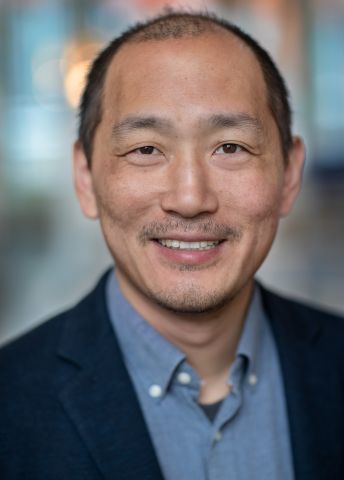
Feng Wang is an Associate Professor and Docent at Linköping University, affiliated with the Department of Physics, Chemistry and Biology (IFM) within the Faculty of Science and Engineering. He leads research in materials chemistry for renewable energy, particularly in perovskite solar cells and doped organic semiconductors.
- Associate Professor, Linköping University (2023–present)
- Assistant Professor, Linköping University (2015–2017)
- Marie Skłodowska-Curie Individual Fellow, Linköping University (2013–2015)
- Visiting Postdoc, École polytechnique fédérale de Lausanne (2017–2018)
Education:
- PhD, The Chinese University of Hong Kong, 2012
- Docent, Linköping University, 2022
Feng Wang's research focuses on materials for next-generation solar cells, including lead-based and lead-free perovskites, as well as doped organic semiconductors. His work addresses key challenges in stability, efficiency, and processability, with applications in building-integrated and flexible photovoltaics. He explores defect engineering, strain regulation, and novel doping strategies to improve device performance and longevity.
His recent publications, including in Nature, Advanced Materials, and Science, reflect a strong trend toward enhancing operational stability and commercial viability of perovskite devices. Themes include strain control, redox management, tandem configurations, and sustainable materials development. His work bridges fundamental materials chemistry with practical device engineering.
Scientific Awards and Recognition:
- Marie Skłodowska-Curie Individual Fellowship
Feng Wang has successfully secured competitive research grants from major funding bodies such as the Swedish Research Council (VR), Vinnova, EU Marie Skłodowska-Curie Actions, STINT, FORMAS, Carl Tryggers Foundation, and Olle Engkvists Stiftelse. He mentors students and researchers in his lab and is actively involved in peer review for international funding programs, including EU Horizon and the National Science Centre of Poland. He is also a co-founder of LinXole AB, a startup commercializing stable hole transport materials for perovskite solar cells, demonstrating his commitment to translating research into real-world applications.
He is part of the Electronic and Photonic Materials (EFM) division and leads a multidisciplinary team focused on solution-processed optoelectronic devices. The group combines fundamental science with innovation in energy materials, aiming to advance both scientific understanding and technological deployment.