معرفی
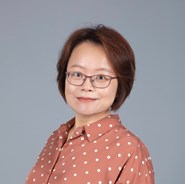
Xiaoke Liu is an Associate Professor and Docent at Linköping University, affiliated with the Department of Physics, Chemistry and Biology (IFM) within the Faculty of Science and Engineering. His research focuses on luminescent materials for electronic and photonic applications, particularly light-emitting diodes (LEDs), including organic, perovskite, and carbon-dot variants.
His research interests span luminescent materials, exciplex-based OLEDs, perovskite LEDs, and carbon-dot optoelectronics. He investigates the fundamental mechanisms of exciplex formation, designs thermally activated delayed fluorescence (TADF) materials, and develops stable, high-efficiency perovskite emitters. His work emphasizes material design, defect passivation, and device engineering to improve efficiency and operational stability.
The recent publication trends highlight a strong focus on perovskite LEDs, especially blue and mixed-halide systems, with significant contributions to lattice reconstruction, post-evaporation passivation, and lead-free alternatives. His work also includes foundational studies on exciplex emission in OLEDs and reabsorption effects in organic semiconductors, demonstrating a broad impact across optoelectronic materials.
Scientific recognitions include:
- Outstanding Reviewer for Materials Horizons
- Top Peer Reviewer in Materials Science and Cross-Field
Xiaoke Liu has secured competitive research grants from Vinnova, EU Marie Skłodowska-Curie Actions, STINT, Swedish Research Council (VR), and the Carl Tryggers Foundation. He collaborates extensively with international institutions, including the University of Cambridge and Nanyang Technological University. While no students are listed, he is actively involved in major collaborative projects and contributes to high-impact research in sustainable and efficient optoelectronic devices.
He is a key member of the Electronic and Photonic Materials (EFM) research group at Linköping University, which focuses on advanced materials for next-generation photonic devices. His lab engages in synthesis, characterization, and device fabrication of novel semiconducting materials, with strong emphasis on both fundamental understanding and practical applications.