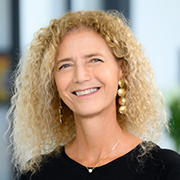
Yu Huang is an Assistant Professor of Computer Science at Vanderbilt University with a secondary appointment in the Department of Teaching and Learning at the Peabody School of Education. She is affiliated with the Institute for Software Integrated Systems, the Frist Center for Autism and Innovation, the Vanderbilt Lab for Immersive AI Translation (VALIANT), and the Vanderbilt LIVE Learning Innovation Incubator. Her research focuses on human-centered AI for software engineering, combining human cognition with machine intelligence to enhance software development processes. Educated at the University of Michigan (PhD, 2021), University of Virginia (MS, 2015), and Harbin Institute of Technology (BS, 2011), her work spans software engineering, human factors, AI, and medical imaging. Key projects include the MIND Lab, studying programmer expertise and cognitive processes, and the HumanAISE workshop on Human-Centered AI for Software Engineering. Huang has received significant recognition, including the 2025 ICPC Vaclav Rajlich Early Career Achievement Award and three ACM SIGSOFT Distinguished Paper Awards. Her research is supported by NSF, GitHub, and Vanderbilt initiatives. She advises numerous graduate and undergraduate students, emphasizing diversity and innovation in programming education.
Yves Bourgault is a Full Professor in the Department of Mathematics and Statistics at the University of Ottawa. He holds a MSc and PhD from Laval University. His research focuses on computational fluid dynamics, numerical methods, finite element techniques, and continuum mechanics modeling, with applications in cardiac electrophysiology and ecological systems. Dr. Bourgault has supervised several graduate students, including Edward Boey (co-supervised), Sana Keita, Saint-Cyr Koyagurebo-Ime, and Kak Choon Loy. His work integrates advanced numerical techniques to address complex problems in biomedical engineering, environmental science, and mathematical physics. Key methodologies include finite element methods, deferred correction schemes, and anisotropic mesh adaptation. His research group is part of the Applied Mathematics division at the University of Ottawa, emphasizing interdisciplinary applications. Recent work explores climate change impacts on ecological systems, cardiac tissue modeling using high-resolution MRI data, and robust numerical methods for reaction-diffusion equations. Publications span topics such as bidomain models for cardiac electrophysiology, fluid-structure interaction in heart mechanics, and mathematical modeling of fuel cells. His contributions bridge theoretical numerical analysis with real-world biomedical and environmental challenges.
Soroosh Sorooshian is a Professor at the Samueli School of Engineering , University of California, Irvine, with joint appointments in Civil and Environmental Engineering and Earth System Science . He serves as Founding Director of the Center for Hydrometeorology and Remote Sensing (CHRS) and holds the Samueli Endowed Chair in Engineering . His expertise spans hydrometeorology, climate-water interactions, remote sensing applications, and water resource management in arid regions. Education : Ph.D. in Engineering (1978), Engineer Degree in Systems Engineering (1977), M.S. in Operations Research (1973), B.S. in Mechanical Engineering (1971). Leadership & Affiliations : Member of US National Academy of Engineering , International Academy of Astronautics , and multiple scientific bodies (AAAS, AGU, AMS, IWRA). Former advisor to NASA, NOAA, and UNESCO initiatives. Recent research focuses on machine learning integration for hydrological modeling , satellite precipitation product development , and climate change impact assessments . Key trends include deep learning for bias correction , multi-sensor precipitation fusion , and atmospheric river hydrology in California. Awards include the AGU Horton Medal , NASA Distinguished Public Service Medal , and Prince Sultan Bin Abdulaziz International Water Prize . He consults on urban flooding and surface hydrology challenges. Scientific Honors : Chinese Academy of Sciences Einstein Professorship (2014) UNESCO Great Man-Made River Water Prize (2007) AMS Walter Orr Roberts Lecturer (2009) Multiple Distinguished Educator Awards Advisory Roles : Served on committees for NASA, DOE, and World Climate Research Programme's Hydrology Commission.
Dr. Boyin Ding is an Associate Professor at the University of Adelaide , serving as Academic Director at Haide College and researcher in the Mechanical Engineering department within the Faculty of Sciences, Engineering and Technology. He leads the Wave Energy Research initiative established in 2014, while also contributing to Robotics and Biomechanics through his work with the Flinders Medical Device Research Institute. Research Areas: Ocean Wave Energy Harvesting Control Systems for Renewable Energy 6DOF Robotic Testing Spine Biomechanics Transnational Education Programs Key Collaborations: Australia-China Joint Research Centre for Offshore Wind & Wave Energy Acoustics, Vibration and Control Research Group Scientific Awards: Australian Endeavour Fellowship Malcolm Kinnaird Engineering Excellence Award (2012) His recent publications focus on hybrid offshore energy systems, nonlinear hydrodynamics in wave energy converters, and biomechanical testing technologies. He has developed control algorithms for floating offshore wind-wave systems and pioneered 6DOF robotic platforms for medical applications. As an eligible PhD supervisor, he actively collaborates with global industries and academic institutions.
Dr. Oliver Kennedy is an Associate Professor in the Department of Computer Science and Engineering at the University at Buffalo's School of Engineering and Applied Sciences. He serves as Co-Director of Graduate Studies and leads the Online Data Interactions (ODIn) Lab. His research focuses on databases, programming languages, and user interfaces for data science, with particular emphasis on scalable compilers and managing uncertainty in data. Kennedy holds a PhD in Computer Science from Cornell University (2011), MS from Cornell (2008), and dual BS degrees in Computer Science and Computer Engineering from NYU and Stevens Institute of Technology (2005). His work bridges theoretical computer science with practical data management challenges. His recent publications demonstrate a strong focus on improving database query processing, uncertainty management in data systems, and developing practical tools for data integration and exploration. Awarded the NSF CAREER Award in 2018, Kennedy's research has significant implications for efficient data processing in scientific and commercial applications.
Ehsan Modiri is a researcher at the Department of Hydrosystem Modelling , Helmholtz Centre for Environmental Research (UFZ), Germany. His work focuses on climate change impacts on hydrological systems, drought monitoring, and environmental modeling using advanced computational frameworks. Affiliation: UFZ - Helmholtz Centre for Environmental Research Department: Hydrosystem Modelling Research Themes: Climate Change, Droughts, Hydrological Forecasting, Water Resource Management Research Interests: Modiri specializes in understanding hydrological responses to climate change, particularly in drought dynamics and soil moisture variability. His work bridges observational data with sophisticated modeling frameworks to improve predictability of water balance components under warming scenarios. Scientific Contributions: Recent publications highlight his role in developing high-resolution drought simulations, evaluating hydrological model performance, and analyzing groundwater responses to global warming. He participates in large-scale European hydrological projects and collaborates on climate-hydrology integration initiatives.
Carl-Mikael Zetterling is a Professor and Head of Department at Kungliga Tekniska Högskolan (KTH) in Stockholm, Sweden, affiliated with the School of Electrical Engineering and Computer Science (ICT) and the Electronics and Embedded Systems department. His research focuses on process technology and device design for high-temperature, high-power silicon carbide (SiC) electronics, expanding into SiC-based analog and integrated circuits. He has authored over 300 publications, including books on SiC process technology and plagiarism prevention. Dr. Zetterling has held leadership roles such as Vice Dean of the School of ICT (2013–2017) and teacher representative on KTH's faculty board. He has collaborated internationally at Stanford University, Kyoto University, and Kyoto Institute of Technology. His work addresses applications in extreme environments, including Venus exploration and fusion reactor monitoring, with a focus on radiation tolerance and thermal resilience. The 15 most recent publications highlight trends in wide bandgap semiconductors, gamma irradiation effects on SiC devices, and high-temperature integrated circuits. His articles span structural health monitoring with machine learning, novel SiC diode designs, and radiation-hardened electronics. Key contributions include advancements in self-aligned contacts, trench MOSFETs, and compact modeling for extreme conditions. While no formal awards are listed, his roles in technical program committees (TMS Electronic Materials Conference, IEEE SISC Conference) and editorial work demonstrate significant academic service. He teaches courses ranging from digital design to high-temperature electronics, overseeing degree projects in embedded systems, communication, and nanotechnology.
Mehrtash Harandi is an Associate Professor in the Department of Electrical and Computer Systems Engineering at Monash University. He joined Monash in 2018 after five years at Canberra Research Laboratory-NICTA working with Prof. Richard Hartley and Prof. Fatih Porikli, and earlier at Queensland Research Laboratory-NICTA with Prof. Brian Lovell. His research focuses on machine learning, computer vision, and geometric learning with applications in medical imaging and diffusion models. Recent Research Trends (2025): 3D Gaussian splatting compression, diffusion transformers for visual correspondence, hyperbolic geometry in hierarchical structures, and robust learning from noisy labels. Scientific Awards: Outstanding Reviewer, CVPR'21 Advising Highlights: Mentored students contributing to papers at ICCV'24, CVPR'25, ICLR'25, and Nature Machine Intelligence. Labs & Teams: Collaborates with Data61-CSIRO, ARC, and US Air Force Research Laboratory.
Shiva Jahangiri is an Assistant Professor in the Department of Computer Science and Engineering at Santa Clara University's School of Engineering. His research focuses on Big Data Management Systems, Databases for AI/ML, and Query Optimization. He leads the DBIS Lab, which explores database internals, vectorized data processing, and open-source projects like Apache AsterixDB. Education: Ph.D. in Computer Science from the University of California, Irvine; M.S. in Computer Science (Data Science) from the University of Southern California. Current courses taught include Advanced Programming, Advanced Database Systems, and Introduction to Database Systems. He advises Ph.D. and Master’s students on topics like Vector Databases, Query Scheduling, and Resource Management. Recent research trends involve optimizing group-by/aggregation operators, schema inference for semi-structured data, and memory management in complex join queries. His work bridges theoretical advancements with practical implementations in open-source systems. DBIS Lab activities include student participation in senior design projects, directed research, and volunteer roles. The lab emphasizes industry collaboration for hands-on experience in database systems development.
Carlos Lopezosa is a Visiting Professor at the University of Barcelona (UB) under a Margarita Salas postdoctoral fellowship. Previously, he held an Associate Professor position at the Pompeu Fabra University (UPF), where he taught across the Faculty of Communication, including Journalism, Advertising, and Audiovisual Communication. He also coordinated the Online Master's in SEO/SEM at the Barcelona School of Management (UPF). His research focuses on web visibility strategies (SEO, voice search, social media curation), qualitative methodologies (systematic reviews, semi-structured interviews), and AI applications in digital journalism. He is affiliated with the UB's Faculty of Information and Audiovisual Media, contributing to research groups like Professorat GIDD. His work bridges academic research with practical media strategies, emphasizing ethical AI integration and algorithmic transparency. Key research areas include news curation, AI-driven data analysis, and digital media ethics. Lopezosa has published extensively in journals like Future Internet , DOXA Comunicación , and El Profesional de la Información , with over 50 peer-reviewed articles since 2018. His current projects explore AI's role in newsrooms, Google News algorithms, and multidimensional journal evaluation frameworks. Education: Doctor in Information Sciences Research Interests: SEO strategies, content curation, AI in media, systematic reviews Grants: Margarita Salas Postdoctoral Fellowship (UB) His work often addresses challenges in digital media visibility, ethical AI implementation, and the evolving role of algorithms in news dissemination. Lopezosa collaborates with institutions like the CRICC research center and frequently presents at international conferences on digital media trends.
Simon Clematide is an Academic Associate at the Department of Computational Linguistics within the Faculty of Arts and Social Sciences at the University of Zurich, where he has been actively engaged in research and teaching since the early 2000s. His work spans computational linguistics, natural language processing, and text mining with a particular focus on historical document processing, multilingual applications, and practical implementations of machine learning techniques. Dr. Clematide's research interests encompass Natural Language Processing , Computational Linguistics , Text Mining , Machine Learning , Sentiment Analysis , Named Entity Recognition , and Historical Document Processing . His interdisciplinary approach bridges computer science with humanities applications, particularly in analyzing historical newspapers and multilingual corpora. His work demonstrates strong expertise in developing practical NLP systems that address real-world challenges in document analysis and language processing. Over the past five years, his publication record reveals a consistent focus on historical text processing, multilingual NLP applications, and shared task competitions. His research shows particular strength in named entity recognition for historical documents (CLEF HIPE shared tasks), grapheme-to-phoneme conversion (SIGMORPHON shared tasks), and OCR post-processing for historical newspapers. The interdisciplinary nature of his work is evident in collaborations spanning computer science, linguistics, history, and geography. Dr. Clematide has been instrumental in organizing and participating in numerous shared tasks including CLEF-HIPE (2020-2022), SIGMORPHON (2017-2021), and CoNLL-SIGMORPHON (2017-2020), where his team achieved multiple first and second places. His teaching portfolio includes courses on Text Mining, Machine Learning for NLP, Deep Learning in Language Technology, and Sentiment Analysis, demonstrating his commitment to educating the next generation of computational linguists. He has led or participated in diverse research projects including NFP 77, impresso, Citizen Linguistics Projects (tonaccent.ch, dindialaekt.ch), SPARCLING, KTI project with Eurospider, and biomedical text mining initiatives (MANTRA, SASEBio). His interdisciplinary work extends to collaborations with material scientists and social scientists on concept extraction and text zoning applications. Dr. Clematide has contributed to the development of several computational tools and resources, including finite-state morphology systems for Rumansh Grishun, Standard German, and Swiss German, as well as the CLab web-based virtual laboratory for computational linguistics. His work on crowdsourcing OCR ground truth for heritage corpora demonstrates practical solutions to real-world digitization challenges.
Professor Tova Milo is the Chair for Information Management at the School of Computer Science, Tel Aviv University, leading the prominent Databases Lab (DB Group). Her research spans databases, big data management, crowd-based data sourcing, and business process querying, with significant contributions to data integration and semi-structured data systems. Her research interests focus on innovative approaches to data management challenges through machine learning integration, crowd computing, and business process analysis. Key projects include Business Process Querying (BPQ) for analyzing BPEL specifications, MoDaS for crowd-based data management, and PROX for data provenance summarization. Her work bridges theoretical foundations with practical applications in fraud detection, recommendation systems, and data cleaning. Analysis of her recent publications reveals strong trends in human-in-the-loop data management systems, with growing emphasis on crowd integration for data cleaning and knowledge acquisition. Her research increasingly combines traditional database theory with machine learning techniques for scalable big data processing, while maintaining focus on business process modeling and provenance tracking. ACM PODS Alberto O. Mendelzon Test-of-Time Award (2010) ERC Advanced Investigators grant MoDaS (2011) The Weizmann Prize for Exact Sciences (2017) VLDB Women in Database Research award (2017) IEEE TCDE Impact award (2022) ISF Breakthrough Research Grant (2022) Doctorate Honoris Causa, University of Zurich (2023) ACM Fellow Member of Academia Europaea Professor Milo has advised over 30 graduate students including PhD candidates like Yael Amsterdamer and Ohad Greenshpan, and numerous MSc students working on projects including MoDaS, BPQ, and EDOS. Her research has been supported by major grants including the ERC Advanced Investigators grant and ISF Breakthrough Research Grant. She actively collaborates with industry partners including IBM and Microsoft, particularly in business process management standards. She directs Tel Aviv University's Databases Lab, which maintains the DB Group with multiple research streams including business process querying (BPQ), crowd-based data management (MoDaS), and self-adaptive data dissemination (EDOS/COLT). The lab operates from the Schreiber Building (M-20) and maintains strong international collaborations, particularly with European institutions through the ERC-funded MoDaS project.
Teng Wu is a Professor and Director of Graduate Studies in the Department of Civil, Structural and Environmental Engineering at the School of Engineering and Applied Sciences, University at Buffalo . His research focuses on wind engineering, hurricane risk assessment, and climate change adaptation in infrastructure systems. PhD, Civil Engineering, University of Notre Dame (2013) MS, Civil Engineering, University of Notre Dame (2012) MS, Bridge Engineering, Tongji University (2010) BS, Civil Engineering, Tongji University (2007) Minor, Financial Engineering, Fudan University (2006) Teng Wu's research spans multiple domains including Wind Engineering , Hurricane Engineering , Structural Engineering , and Climate Change Adaptation . He specializes in nonlinear aerodynamics, performance-based wind design, and computational fluid dynamics applications to infrastructure resilience. His recent publications focus on machine learning applications for storm surge prediction, wind-induced structural response analysis, and climate change-informed infrastructure recovery frameworks. Key methodologies include hierarchical deep neural networks, knowledge-enhanced models, and reinforcement learning-based control systems. Contact: tengwu@buffalo.edu | Office: 226 Ketter Hall, Buffalo, NY 14260
Dr. Tom Aben is a Researcher at Tilburg University's Tilburg School of Economics and Management (TiSEM), specifically within the Department of Information Systems and Operations Management. His work focuses on the intersection of digital transformation, supply chain management, and data governance in complex organizational settings, with particular emphasis on collaborative networks and critical infrastructure management. Dr. Aben's research interests center around purchasing and supply management (PSM) in multi-party networks, data sharing solutions, and collaborative governance approaches. He investigates how organizations can effectively manage digital transformation in critical infrastructure contexts, with particular attention to contract design, trust-building mechanisms, and network governance structures. His work often addresses societal challenges through collaborative approaches across public and private sectors, contributing to United Nations Sustainable Development Goals related to sustainable infrastructure and innovation. His recent publications reveal a consistent focus on how digitalization transforms traditional buyer-supplier relationships and necessitates new governance approaches. Aben's research shows particular expertise in data sharing within critical infrastructure networks, examining how organizations jointly develop data clauses and navigate the challenges of information asymmetry in digital environments. His work has significant implications for both academic theory and practical implementation of collaborative governance models. Dr. Aben has received recognition for his contributions to the field, including: Nomination for the 2021 Tilburg University Impact Award for the NWO/NGinfra LONGA VIA project Nominee for the Best PhD Dissertation Award in 2023 Currently, Dr. Aben is actively involved in the VIA AUGUSTA research project (2022-2026), which focuses on leveraging System-of-Systems approaches to infrastructure management. Previously, he contributed to the Longavia project (2018-2022) examining legal and organizational aspects of data-driven innovations in infrastructure management. He has also organized academic events such as the workshop 'Moving Towards Cross-Sectoral Collaboration: Challenges and Opportunities of 'Joint' Action' in December 2024, demonstrating his leadership in advancing knowledge in his field. His research spans multiple sectors including critical infrastructure management, healthcare, and public administration, with a particular focus on Dutch contexts but with implications that extend internationally. Dr. Aben frequently collaborates with researchers including Wendy van der Valk, Luc van de Sande, and David Wodak, indicating strong research networks both within Tilburg University and with external partners.
Zheng Li is an Assistant Professor in the Department of Agricultural and Resource Economics at North Carolina State University. His research focuses on econometric methodologies with applications in agricultural economics, resource management, and policy analysis. He holds expertise in nonparametric estimation, quantile regression, and structural econometric modeling. Key research interests include analyzing agricultural production risks, evaluating policy impacts on housing markets, and developing advanced statistical techniques for mixed data types. His work bridges econometric theory with practical applications in environmental, urban, and transportation sectors. Recent publications explore topics such as lung cancer detection via biomedical sensing technologies, ridesharing platform incentives, and pandemic effects on real estate markets. Methodologically, his contributions span kernel-based specification tests, bootstrap methods for heavy-tailed data, and monotonicity-constrained estimation techniques. No scientific awards or formal advisees are listed. His research often intersects with interdisciplinary challenges, reflecting a commitment to innovative solutions in applied economics and data science.